






Breaking News






Australia Commits $8 Billion To Nuclear Submarine Hub Shaping Indo-Pacific Power Balance.
Australia has announced an unprecedented investment of $8 billion to modernize and expand the Henderson shipyard near Perth, Western Australia, as reported by Reuters on September 13, 2025. This defense infrastructure program, part of the AUKUS security pact signed in 2021 with the United States and the United Kingdom, is designed to prepare the country for the arrival of nuclear-powered submarines in the next decade. The budget is part of a broader restructuring of Australian defense spending, which has surged to record levels under the current Labor government. The latest contract follows last year’s A$127 million ($84 million) upgrade initiative at Henderson, underscoring its long-term role as the central maintenance hub for the future submarine fleet.
Follow Army Recognition on Google News at this link
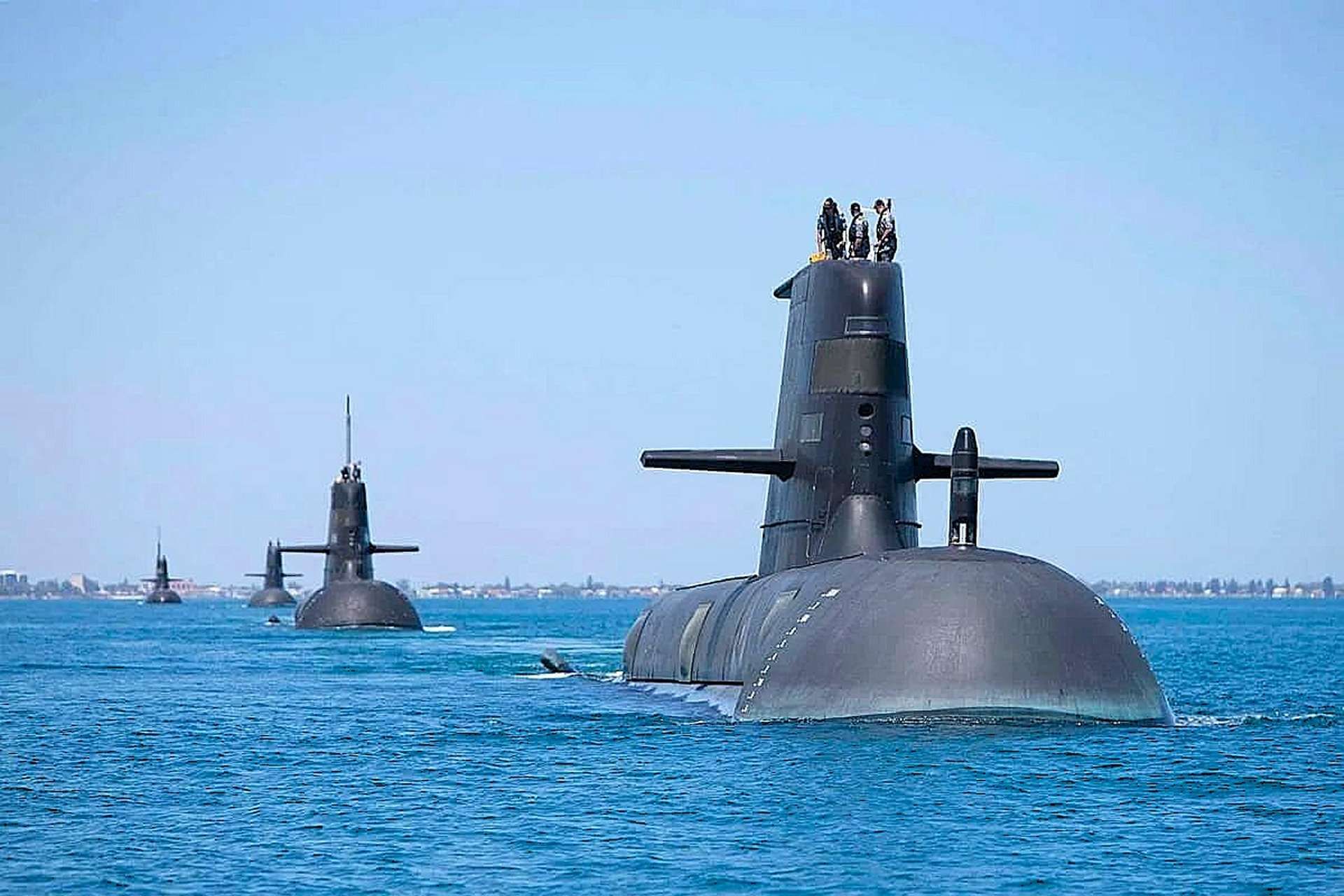
This massive investment signals Australia’s determination to adapt its defense posture to its “strategic moment.” By transforming Henderson into a nuclear submarine hub and shipbuilding precinct, Canberra is not only ensuring the sustainment of its future fleet but also embedding itself more deeply in allied deterrence architectures (Picture source: Royal Australian Navy)
The Henderson project sits at the core of the trilateral AUKUS agreement, valued at hundreds of billions of dollars, under which Australia will first acquire several U.S. Virginia-class attack submarines before co-developing with Britain a new generation AUKUS-class submarine. The investment extends beyond nuclear submarine facilities, with Henderson also tasked to produce new landing craft for the Australian Army and general-purpose frigates for the Navy, potentially supporting around 10,000 jobs. Operationally, this represents a turning point for Australia, which until now lacked infrastructure for nuclear-powered vessels. Historically, the development resembles Britain’s decision in the Cold War era to build and maintain its own nuclear submarine fleet, a move that altered its maritime defense posture for decades.
Comparatively, this investment provides Canberra with capabilities on par with leading naval powers. Unlike conventional submarine bases in Southeast Asia, Henderson’s new high-security dry docks and sustainment centers will allow Australia not only to host its own fleet but also to service allied vessels, with U.S. and U.K. submarines expected to rotate through from 2027. Such integration deepens interoperability and creates a forward-operating hub similar in significance to Guam or Diego Garcia. For allies, this reinforces collective deterrence and ensures operational depth across the Indo-Pacific.
From an analytical perspective, the scale of the Henderson investment also highlights the industrial and political dimension of AUKUS. While the pact is often framed in purely military terms, its success relies equally on shipbuilding capacity, skilled labor, and long-term bipartisan support in all three countries. Australia’s decision to anchor billions into domestic infrastructure reflects both a strategic hedge, ensuring autonomy in sustainment, and a signal to Washington and London that it is ready to carry its share of the burden. It also points to a broader shift in defense planning: deterrence is no longer only about acquiring platforms, but about building the industrial ecosystems necessary to keep them operational for decades.
Strategically, the Henderson investment carries direct implications for the balance of power with China. By the 2030s, the presence of nuclear-powered submarines in Western Australia will provide Australia and its allies with a stealthy, long-range strike capability able to counter Chinese naval expansion in the South China Sea and beyond. It also represents a geostrategic anchor for the U.S. Indo-Pacific Command, offering both sustainment and forward deployment options. At the geopolitical level, the project strengthens AUKUS cohesion despite ongoing reviews in Washington, with bipartisan U.S. congressional support signaling recognition of its role in strategic competition with China.
This massive investment signals Australia’s determination to adapt its defense posture to its “strategic moment.” By transforming Henderson into a nuclear submarine hub and shipbuilding precinct, Canberra is not only ensuring the sustainment of its future fleet but also embedding itself more deeply in allied deterrence architectures. The facility’s dual role, servicing submarines while building new vessels, cements it as a cornerstone of Australia’s naval strategy, shaping the Indo-Pacific security environment for decades to come.
Written by Teoman S. Nicanci – Defense Analyst, Army Recognition Group
Teoman S. Nicanci holds degrees in Political Science, Comparative and International Politics, and International Relations and Diplomacy from leading Belgian universities, with research focused on Russian strategic behavior, defense technology, and modern warfare. He is a defense analyst at Army Recognition, specializing in the global defense industry, military armament, and emerging defense technologies.