






Breaking News






US may recreate a military base in Ecuador to counter rising Chinese influence in Latin America.
On June 3, 2025, Ecuador's National Assembly approved a constitutional reform allowing foreign military bases to be established in the country. This decision ends a 16-year-long prohibition enshrined in the 2008 Constitution. The measure was initiated by President Daniel Noboa in 2024 as part of a broader security campaign against powerful drug cartels, which he claims are responsible for the unprecedented levels of violence Ecuador is facing. For the United States, this development could represent a strategic opportunity to re-establish a military presence in a key location between Colombia and Peru, near the Pacific coast and in relative proximity to the Panama Canal, at a time of growing regional competition with China.
Follow Army Recognition on Google News at this link
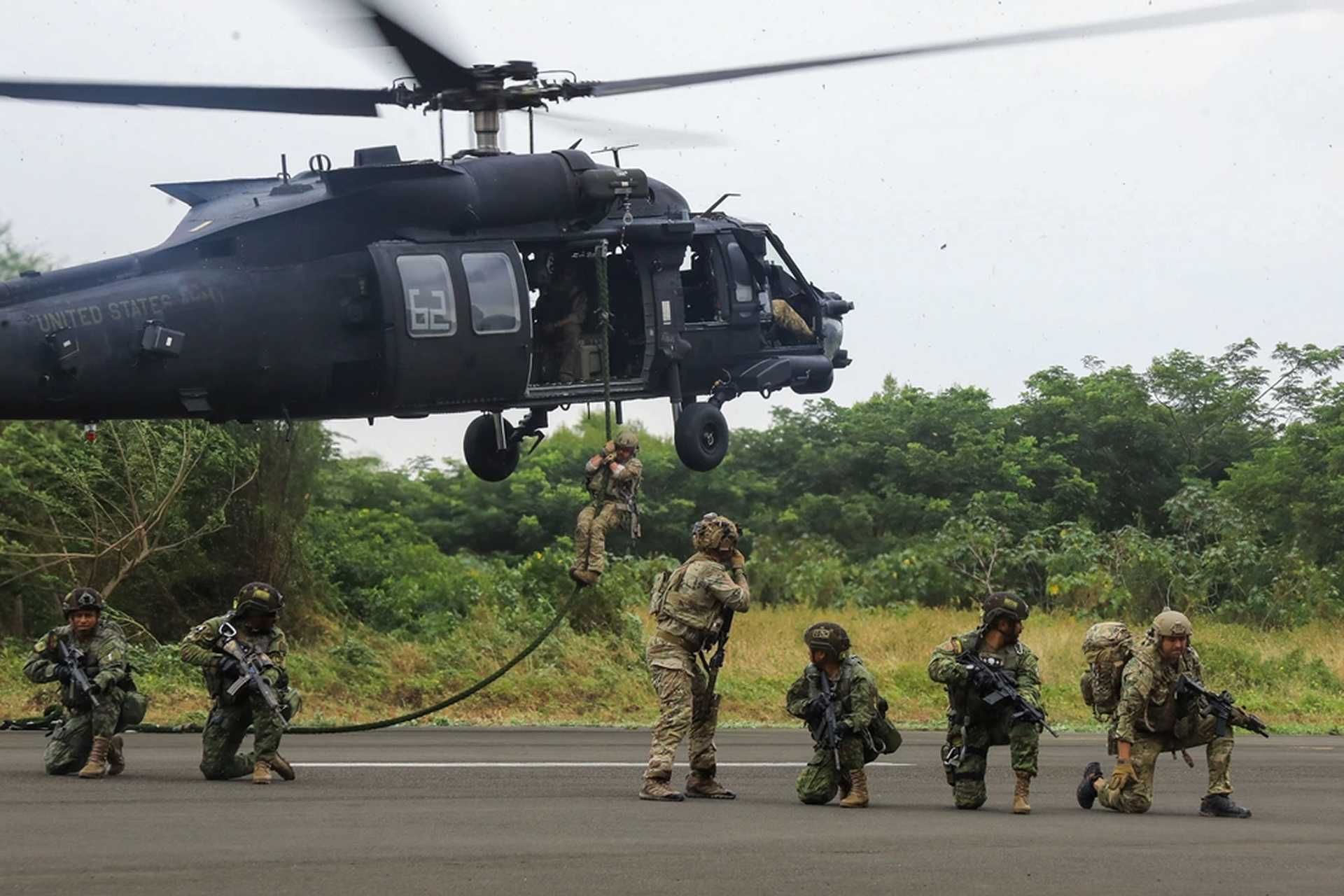
Ecuador hosted a U.S. Forward Operating Location (FOL) at Eloy Alfaro International Airport in Manta from 1999 until 2009, which was primarily used for anti-narcotics surveillance missions over the eastern Pacific. (Picture source: US DoD)
According to the reform’s text, passed in the second plenary debate with 82 votes in favor, 60 against, and six abstentions out of 151 members, the objective is to “strengthen international cooperation in the fight against transnational organized crime” by permitting “strategic cooperation, intelligence sharing, and technology transfer.” The Assembly emphasized that such collaboration would enhance the state's operational capacities and help restore national security. The constitutional change will now be examined by the Constitutional Court and must then be ratified via a popular referendum, the date of which has yet to be set. President Noboa, who secured reelection in May 2025, has declared Ecuador to be in a state of internal armed conflict, granting the armed forces authority to intervene in public spaces and prisons. Citing figures estimating 40,000 active gang members affiliated with at least 20 organized groups linked to international cartels, Noboa argues that Ecuador cannot address the crisis alone.
At the start of 2025, the country recorded a homicide rate of one killing per hour, with drug traffickers battling for control over routes that transit through Ecuador’s Pacific ports. In February, Noboa indicated he would invite special forces from allied countries and later confirmed plans for collaboration with Israeli intelligence. He also disclosed discussions with Erik Prince, founder of Blackwater, to reinforce internal operations. In March, Noboa met with former U.S. President Donald Trump in Florida to discuss potential American military support. Chinese media sources revealed that Ecuador’s defense ministry signed an agreement with the Manta Port Authority to build a new 150-meter dock and expand the port by over 700 square meters, reportedly with U.S. backing, further indicating preparatory steps for future basing arrangements.
Previously, Ecuador hosted a U.S. Forward Operating Location (FOL) at Eloy Alfaro International Airport in Manta from 1999 until 2009. This base, authorized during President Jamil Mahuad’s administration, housed around 400 U.S. military personnel and was primarily used for anti-narcotics surveillance missions over the eastern Pacific. It played a significant role in tracking drug trafficking routes originating in the Andes and bound for Central and North America. However, growing domestic resistance emerged, criticizing the presence as a breach of sovereignty and a source of indirect involvement in Colombia’s internal conflict. President Rafael Correa, elected in 2006, capitalized on these concerns and refused to renew the U.S. lease. In 2008, Article 5 of the new Constitution declared Ecuador a territory of peace and explicitly banned foreign military bases. The withdrawal of U.S. forces in 2009 marked the end of a decade-long American presence and reshaped Ecuador’s foreign defense policy.
In recent years, China has significantly expanded its military and strategic footprint in Latin America through a multifaceted approach that combines economic investments, infrastructure development, and defense cooperation, challenging traditional U.S. defense partnerships in the region. Between 2009 and 2019, China exported approximately $634 million in major military hardware to Venezuela, Argentina, Bolivia, Ecuador, and Peru, including aircraft and armored vehicles, and has actively pursued the sale of its Chengdu J-10C fighter jets to countries like Colombia and Brazil. It has also established dual-use facilities like the Espacio Lejano Station in Argentina, operated by the People's Liberation Army's Strategic Support Force, raising concerns about potential military applications. Additionally, China's involvement in building and controlling critical infrastructure, such as the COSCO-operated Port of Chancay in Peru, has strategic implications, prompting U.S. officials to express concerns over Beijing's growing military and economic footprint in Latin America.
Ecuador’s strategic location has consistently attracted international military interest. Positioned between Colombia and Peru, two of the world's largest cocaine producers, Ecuador lies on the Pacific coast with maritime access that is crucial for both legal commerce and illicit trafficking. Its proximity to the Panama Canal, a linchpin of global maritime trade, further enhances its geopolitical value for both the United States and China. During World War II, the United States maintained military facilities in the Galápagos Islands and other coastal regions to defend the canal and surrounding maritime routes. In recent years, renewed strategic competition in the Western Hemisphere, especially with China’s increasing investments in Panamanian infrastructure, has placed added emphasis on Ecuador as a potential security partner for the United States and its allies. Noboa’s outreach to the U.S., as well as his government’s apparent alignment with Israeli and private Western military entities, signals a deliberate pivot back to close defense cooperation with traditional Western powers.
The state of Ecuador’s armed forces also influences this shift. The Ecuadorian Army comprises approximately 25,650 personnel and includes specialized units for jungle warfare and urban operations. The Navy, with 9,400 personnel and two submarines, focuses on coastal and island security, especially around the Galápagos. The Air Force, which had relied heavily on aging Russian equipment, is undergoing modernization. On June 2, 2025, Ecuador received two Airbus H225M helicopters from France under a $90 million contract for five units to replace its Mi-171 fleet. In addition, the United States approved a $64 million sale of M4A1 rifles and accessories and allocated $13 million through U.S. Southern Command to modernize Ecuadorian radar infrastructure. In 2024, Ecuador ordered 137 Mbombe-6 armored vehicles from South Africa, Israeli Tiger-2s, and received 45 MDT-Armor David 4×4 vehicles and six Mbombe 6×6 units. Despite this, the armed forces remain stretched by internal security missions, including the deployment of 1,500 troops to the Amazon in May 2025 to combat guerrilla-linked illegal mining. Limited budgets, corruption issues, and logistical deficiencies continue to undermine readiness and deployment capabilities.
The reestablishment of foreign military bases in Ecuador, if ratified by referendum, would mark a fundamental shift in the country’s defense posture and carry implications far beyond its borders. Strategically, it would offer the United States and other partners renewed access to the eastern Pacific, strengthening efforts against transnational drug networks and illegal maritime activities. It could also allow for closer monitoring of Chinese influence in nearby maritime corridors and regional infrastructure. Economically, such bases might stimulate local development through construction, employment, and service demand, especially in port cities like Manta. However, the reintroduction of foreign troops risks reigniting public debates over sovereignty, neutrality, and constitutional limits. Regionally, it could reshape security dynamics, potentially drawing responses from neighboring countries and extra-regional actors. Ultimately, the outcome of the referendum will decide whether Ecuador embarks on a new phase of defense integration with international allies or maintains its post-2009 principle of military self-reliance and territorial neutrality.