






Breaking News






US Army Expands Integrated Air Defense with New Patriot Battalions and Advanced Radar Systems.
In an official statement released on July 18, 2025, the U.S. Army announced a plan to expand its air defense capabilities by establishing up to four additional battalions equipped with the Patriot system. This strategic decision is intended to address the growing intensity of aerial and ballistic threats in multiple operational areas while easing the increasing burden placed on existing units. One of these new battalions will be specifically tasked with protecting Guam, a key U.S. territory in the architecture of missile defense in the Indo-Pacific region.
Follow Army Recognition on Google News at this link
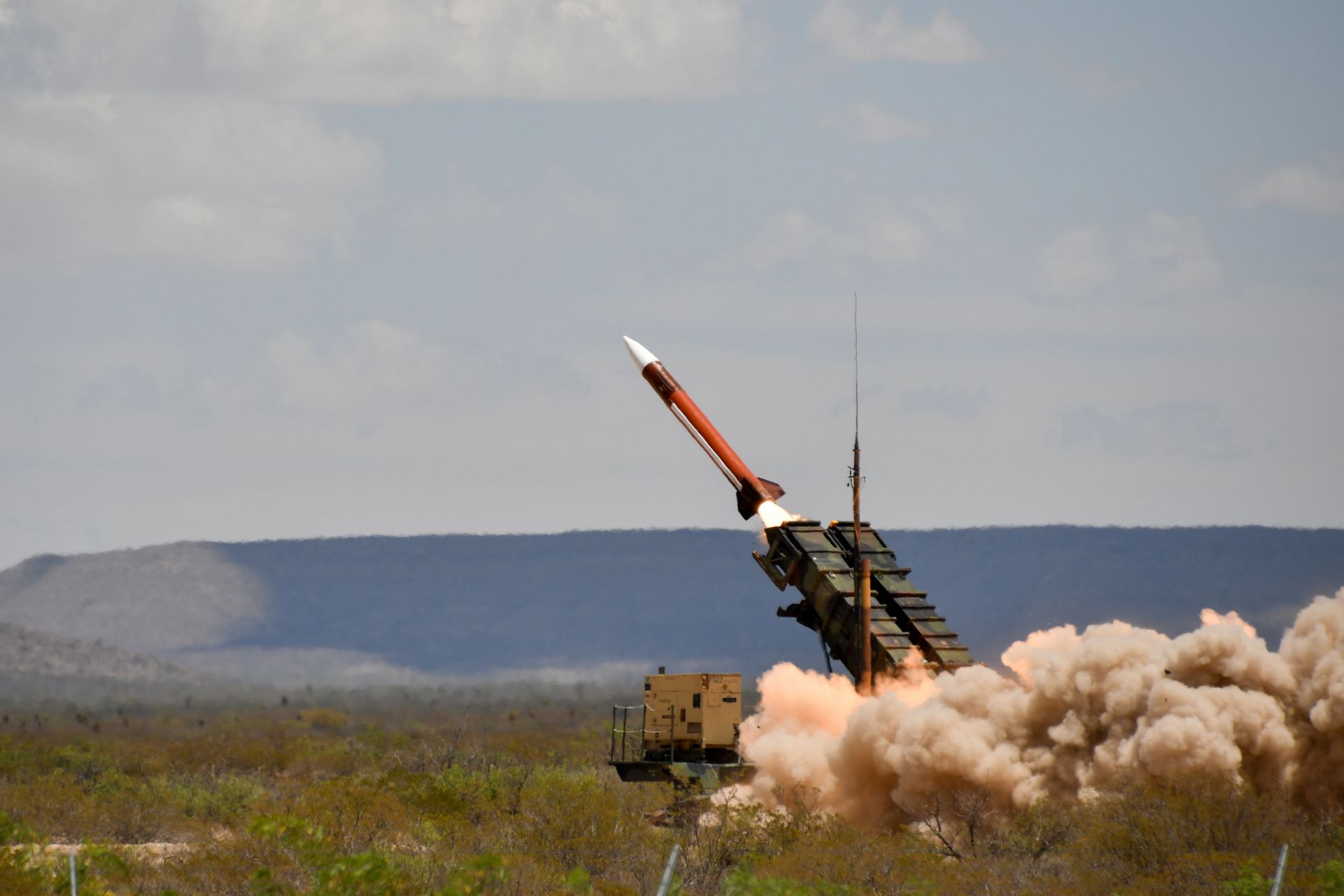
This deployment is part of a broader effort to accelerate the modernization of U.S. Army capabilities, including the integration of new radar technologies and next-generation command systems (Picture source: US DoD)
This deployment is part of a broader effort to accelerate the modernization of U.S. Army capabilities, including the integration of new radar technologies and next-generation command systems. With the introduction of the LTAMDS (Lower Tier Air and Missile Defense Sensor) into both current and future Patriot units, the Army seeks to enhance not only the range and accuracy of its surface-to-air defense but also to shift its doctrinal framework toward a more flexible, dispersed, and networked configuration. This adjustment reflects a notable evolution in U.S. defense planning in response to increasingly complex aerial threats, including hypersonic weapons, low-flying cruise missiles, and short-range ballistic strikes.
The Patriot system, known for its role in missile interception, has long been a foundational element of U.S. air defense. It combines surveillance radars, a command center, and interceptor missiles to counter a range of airborne targets. This capability was recently demonstrated in Qatar, where a Patriot battery successfully intercepted missiles targeting Al Udeid Air Base. The MIM-104 Patriot is a long-range, surface-to-air missile system developed in the United States to engage various aerial threats, including tactical ballistic missiles, cruise missiles, and aircraft. First deployed in the 1980s, it has since become a central component of U.S. and allied air defense architectures. The Patriot system is modular and mobile, equipped with a multifunctional AN/MPQ-53 or AN/MPQ-65 radar using an active electronically scanned array, with electronic counter-countermeasures and an Identification Friend or Foe (IFF) system. This radar enables detection, tracking, target illumination, and fire control. The AN/MSQ-104 command post manages the system, calculates missile trajectories, and directs launches. Each battery includes several M901 launchers capable of carrying four PAC-2 or sixteen PAC-3 missiles, which use active radar guidance and hit-to-kill technology.
Technically, the PAC-2 missile measures 5.8 meters in length, weighs 900 kg, and carries a 90 kg explosive warhead, with a range of 70 kilometers and a ceiling above 24 kilometers. The PAC-3 prioritizes direct impact interception, featuring a lighter payload but higher velocity and improved accuracy. The system is mounted on M860 semi-trailers towed by M983 HEMTT 8x8 trucks, offering high mobility in various terrains. A complete configuration includes an EPP-III power unit and OE-349 antenna mast for communications. Its ability to engage multiple targets simultaneously, respond rapidly, and operate within command and control networks keeps it relevant in modern air defense doctrine.
The central component of this modernization is the introduction of the LTAMDS radar. Designed to replace the AN/MPQ-65, LTAMDS provides full 360-degree radar coverage, unlike the earlier system, which was limited to 270 degrees. This technical enhancement significantly increases the Patriot system’s detection and engagement capabilities, especially against low-altitude cruise missiles, hypersonic threats, and short-range ballistic missiles. LTAMDS also expands both vertical and horizontal tracking range, offering 85 kilometers of coverage in all directions.
The integration of LTAMDS with the Army’s Integrated Battle Command System (IBCS) allows the Patriot battalions to be reorganized into more modular, adaptive, and interoperable formations. This approach is not limited to radar upgrades; it also transforms the tactical employment of the units. Batteries can now be more widely dispersed across operational areas, enhancing coverage without requiring a proportional increase in force structure. In effect, this change could double the operational capacity of the fifteen existing Patriot battalions without increasing their total number.
Recent tests conducted at White Sands Missile Range in New Mexico have confirmed the technical readiness of the LTAMDS. Two successful evaluation launches validated the radar's expected performance in operational conditions. These results mark a critical step toward broader fielding of the system across U.S. forces.
This capability expansion occurs within a broader doctrinal shift. The U.S. Army is increasingly emphasizing the role of air defense in multi-domain operations. This concept requires close coordination among land, air, and naval components to address complex, simultaneous threats. Rather than maintaining a posture focused solely on fixed-point defense, the U.S. Army is aiming to incorporate air defense into a more dynamic operational framework, supporting maneuver and limiting adversary freedom of action.
By expanding its Patriot capabilities, integrating next-generation radars, and adopting networked command systems, the U.S. Army is undertaking a fundamental transformation of its air defense architecture. This effort seeks to ensure a durable advantage in the face of evolving aerial threats while making units more adaptable and better integrated into the broader joint force structure.