







Breaking News




Ukraine’s MITS Industries debuts in Denmark to deliver integrated battlefield-proven drone and counter-drone systems.
MITS Capital announced the creation of MITS Industries at Defense Tech Valley 2025 in Lviv, registering the new firm in Denmark and bringing together Ukrainian subsystems makers including Tencore, Infozahyst and Unwave. The venture pitches repeatable, integrated UGV, SIGINT and EW packages with production slots, spares and training, aiming to speed European procurement and reduce front-line logistics and blue-on-blue spectrum friction.
Ukrainian MITS Capital has announced the creation of MITS Industries during the Defense Tech Valley 2025 gathering in Lviv, presenting it as a private defense tech prime built for Ukraine and for European customers who need drone and counter-drone capacity at scale. The new company is incorporated in Denmark, a practical choice that opens doors inside the European Union while keeping the heart of production and engineering tied to Ukraine’s wartime ecosystem. The list of companies involved is familiar to units at the front: Tencore contributes its tracked unmanned ground vehicles, Infozahyst brings long experience in signals intelligence and radio monitoring, and Unwave adds electronic warfare hardware and control software that stitches it all together. The aim is to put proven Ukrainian subsystems under one roof, integrate them tightly, and ship repeatable packages that armies can field quickly without spending months on bespoke integration.
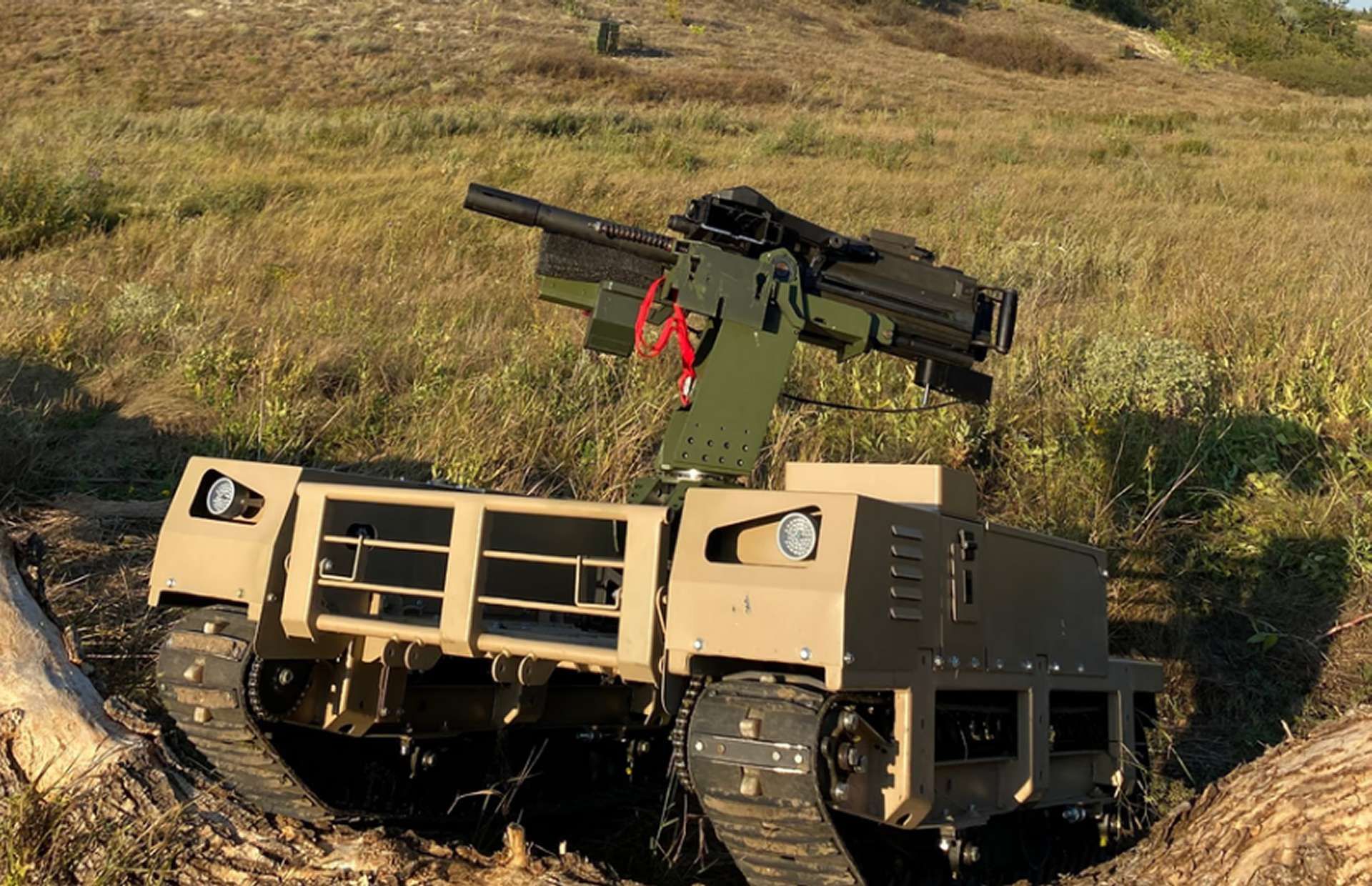
MITS Capital has launched MITS Industries, a Danish-registered defense tech prime uniting Ukrainian leaders in unmanned ground vehicles, signals intelligence, and electronic warfare to deliver integrated drone and counter-drone solutions for Ukraine and European allies (Picture source: Tencore).
On the hardware side, Tencore’s compact tracked carriers sit at the center of the ground picture. These are low-profile, front-line UGVs that carry ammunition and batteries, tow light trailers, evacuate wounded over short distances, and accept modular mounts for sensors or small weapons where authorized. The hulls are designed for quick maintenance by line units, with accessible drive modules, replaceable track sections, and standardized power buses for payloads. Communication rails accommodate common tactical radios and mesh links, which makes them easier to fold into mixed networks where different brigades use different vendors. UGVs that can crawl into a shelled street with fresh battery packs for small drones keep sorties going after manned resupply would be too hazardous. But the same platform, fitted with a stabilized sensor head, can provide a low and persistent surveillance node.
Infozahyst's catalog has covered wide frequency spans for years, with receivers, analyzers, and software that help operators detect drone control links, map emitters in cluttered airwaves, and build the habits that reduce friendly interference. A recurring request from field units has been simple: shorten the loop from detection to action. That means making sure the radio team does is not isolated. Infozahyst’s contribution inside a prime is not only hardware, it is the interfaces that pass reliable cues to fires, to loitering munitions teams, or to an EW crew that needs to know when to hold emissions and when to flood a channel.
Trench units still ask for backpack and rifle-style jammers, and those remain necessary. But the operational picture has shifted to coordination. Unwave’s control software heads in that direction, allowing planners to manage a mix of portable sets, vehicle mounts, and rooftop arrays without blinding the brigade’s own drones. Taken together, these building blocks form a modular kill chain that Ukrainian formations already recognize. A UGV moves supplies and sensors forward, the SIGINT cell marks out hostile controllers and busy bands, and the EW team shapes the air, denying control or confusing navigation during a narrow attack window. The project behind MITS Industries is to deliver this as a managed package, production slots and spares, and fielding kits with training baked in.
The front has normalized rapid updates to firmware, tactics, and spectrum use. Units want gear that can keep up without a fresh contract every time a waveform shifts. A Danish-registered prime with Ukrainian core engineering can place volume orders for components that frequently bottleneck, test new software builds on representative rigs, and roll those updates into the next shipment. A crawler that brings forward hot batteries saves an hour of exposure for a resupply team. A deconflicted spectrum plan that actually holds in a dense urban block reduces lost drones and cuts blue on blue interference or a control interface that an ordinary soldier can teach to the next rotation in an afternoon is valuable.
European governments are rearming while juggling questions of industrial policy and security of supply. Ukraine is producing practical answers because the feedback loop is measured in days. Registering the new entity in Denmark lowers friction for contracts inside the EU and makes cooperation with American primes easier to structure. At the same time, keeping design and much of the production anchored in Ukraine preserves the cost and speed advantages that have made Ukrainian drone makers so competitive. It also signals a preference for partnership rather than piecemeal acquisitions that strip teams of their autonomy. If more Ukrainian firms join under the same roof, the offering widens to include maritime surface drones, fixed-wing reconnaissance, and deeper software stacks that automate targeting handoffs.
Several NATO members on the eastern flank keep warning that timelines are tight. They want counter-UAS layers that can be refreshed every quarter, not once per procurement cycle. They want logistics tools that reduce risk to soldiers on predictable routes and want kits that arrive interoperable enough to work on day one. A private prime that consolidates Ukrainian specialists and packages them for export is at least one answer to that pressure.
Written by Evan Lerouvillois, Defense Analyst, Army Recognition Group.
Evan studied International Relations, and quickly specialized in defense and security. He is particularly interested in the influence of the defense sector on global geopolitics, and analyzes how technological innovations in defense, arms export contracts, and military strategies influence the international geopolitical scene.