






Breaking News





U.S. Marines Compete During a Drone Exercise to Destroy an Armored Vehicle in Japan.
U.S. Marines with III Marine Expeditionary Force conducted an intensive attack drone competition and live demonstration at Camp Schwab, Okinawa. The event underscores how small, low-cost unmanned attack systems are becoming standard tools for Marine Corps operations in the Indo-Pacific.
U.S. Marines assigned to III Marine Expeditionary Force conducted an intensive attack drone competition and live demonstration at Camp Schwab, Okinawa, Japan, marking a significant step in the institutionalization of small unmanned aircraft systems configured for strike missions within the Marine Corps. The event brought together operators from across the 3rd Marine Division with the objective of certifying a new generation of drone pilots, instructors, and payload specialists capable of employing unmanned systems in high-intensity combat scenarios.
Follow Army Recognition on Google News at this link
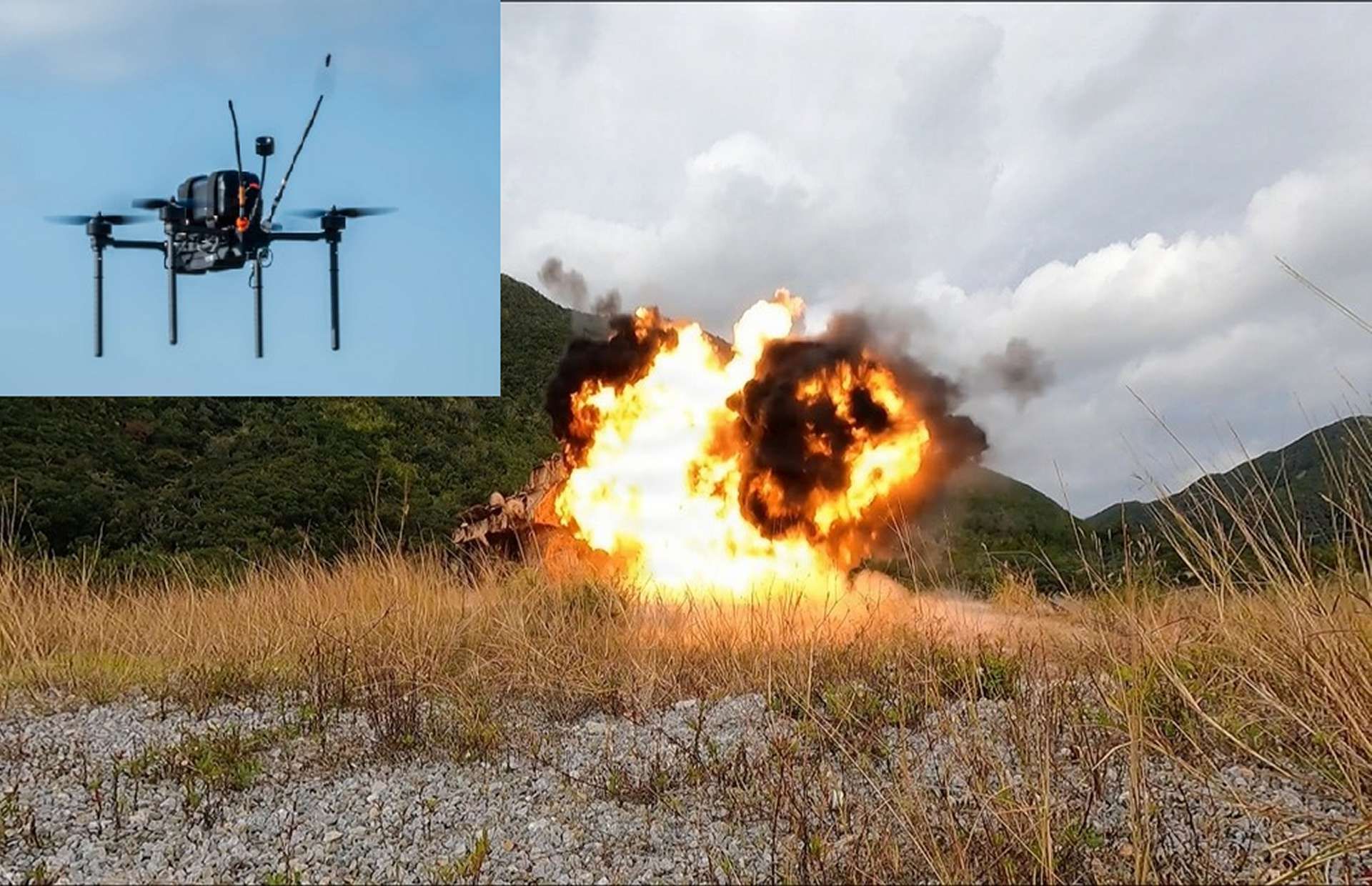
U.S. Marines with III Marine Expeditionary Force conduct a live attack drone demonstration at Camp Schwab, Okinawa, as part of a competition designed to certify operators and instructors in small unmanned strike systems, strengthening III MEF lethality and readiness for future Indo-Pacific combat operations (Picture source: U.S. DoW).
Over two weeks, Marines were challenged through a series of progressively complex scenarios that mirrored real-world battlefield conditions. Using first-person view attack drones, participants executed simulated strike missions against designated targets, emphasizing precision navigation, rapid target acquisition, and effective payload delivery. The competition format introduced time pressure, electronic interference simulations, and dynamic mission changes to replicate the uncertainty expected in future conflicts across the Indo-Pacific theater.
The drones employed during the demonstrations reflected the Marine Corps’ growing focus on low-cost, modular platforms that can be rapidly adapted for multiple roles. Configured primarily for strike missions, the systems demonstrated the ability to transition between reconnaissance, target designation, and attack profiles with minimal reconfiguration. Marines trained extensively on payload integration, arming procedures, and safe employment techniques, reinforcing the balance between lethality and operational control.
A central outcome of the event was the certification of Marines as attack drone operators and instructors. By expanding its internal pool of qualified trainers, III MEF is laying the groundwork for rapid dissemination of unmanned strike expertise across subordinate units. This approach reduces reliance on external training pipelines and ensures that operational knowledge evolves alongside emerging tactics and technologies.
The event stressed that attack drones are no longer viewed as niche capabilities but as integral components of infantry and expeditionary operations. Certified instructors are expected to return to their parent units and immediately begin training additional Marines, accelerating the adoption of unmanned strike concepts at the platoon and company levels.
The live demonstration also highlighted how attack drones fit within the broader framework of Marine Corps Force Design 2030. As the service shifts toward distributed operations and stand-in forces, small unmanned systems provide a means to extend sensing and striking power without exposing Marines to unnecessary risk. In a contested maritime environment, these capabilities offer commanders flexible options to disrupt adversary formations, conduct precision strikes, and support maneuver elements operating across wide areas.
From a strategic perspective, III MEF’s emphasis on attack drone proficiency reflects the operational realities of the Indo-Pacific region, where long distances, complex terrain, and advanced adversary defenses demand innovative solutions. The competition at Camp Schwab demonstrated not only technical proficiency but also a cultural shift within the force toward embracing unmanned systems as standard tools of combat.
As the Marine Corps continues to refine doctrine and training for unmanned strike operations, the III MEF attack drone competition stands as a clear signal of intent. By investing in people, platforms, and instruction, the Marines are ensuring they remain adaptable, lethal, and ready to operate in the most demanding environments anticipated in future conflicts.