






Breaking News






U.S. Defense Secretary Hegseth Directs U.S. Army to Accelerate Development and Fielding of Long-Range Missile Systems.
On April 30, 2025, U.S. Secretary of Defense Pete Hegseth issued an official memorandum to senior Pentagon leadership outlining a directive focused on transforming the U.S. Army and comprehensive acquisition reform. The directive instructs the U.S. Army to accelerate the development and fielding of long-range missile systems capable of striking moving land and maritime targets, and to achieve dominance in the electromagnetic and air-littoral domains by 2027. This announcement marks a significant strategic step in aligning U.S. Army modernization efforts with the demands of future high-end, multi-domain warfare.
Follow Army Recognition on Google News at this link
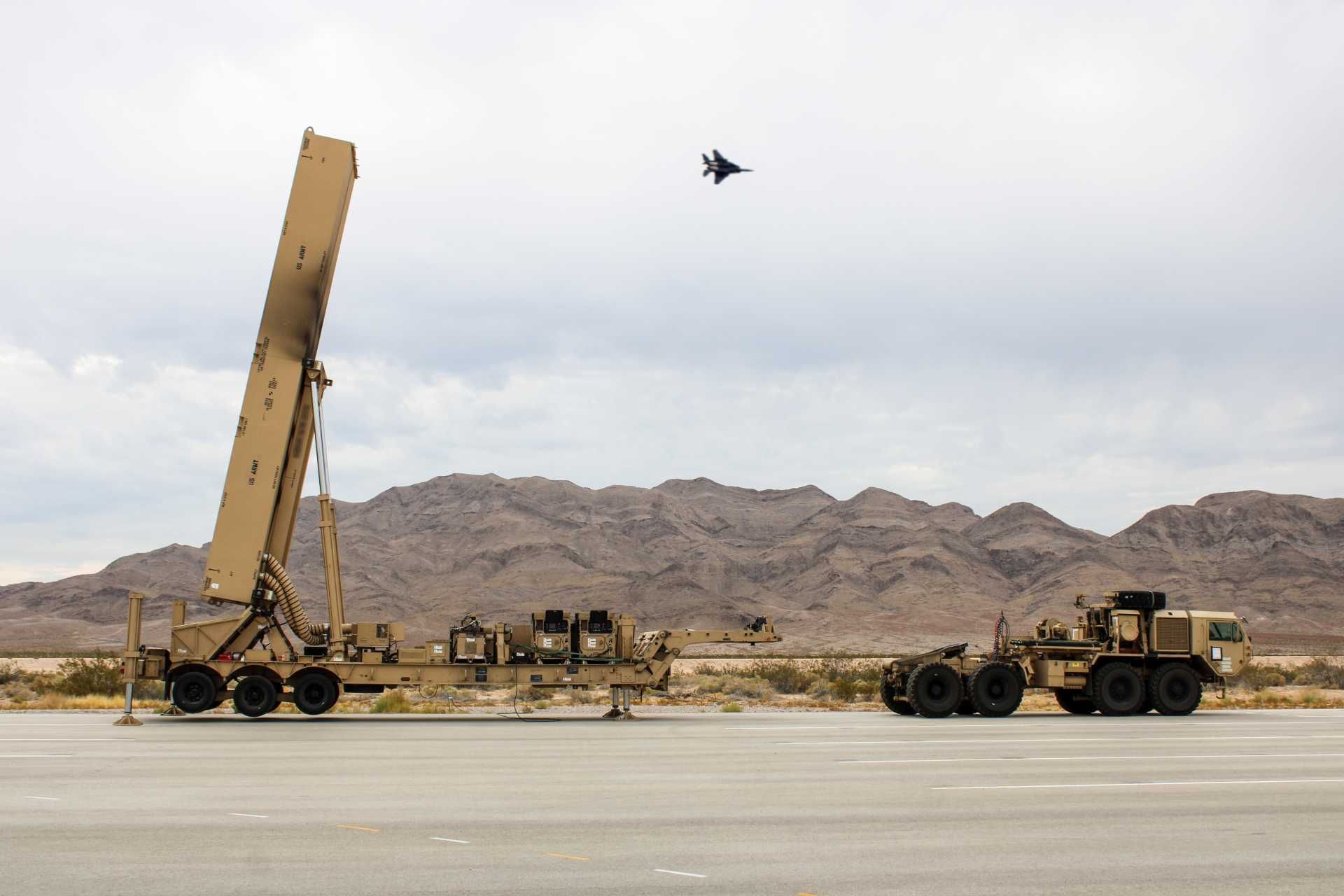
The U.S. Army’s Dark Eagle hypersonic missile system, officially designated as the Long-Range Hypersonic Weapon (LRHW), represents a key component of the Army’s push for long-range precision strike capabilities by 2027. (Picture source: U.S. DoD)
As part of this broader effort, the U.S. Army is actively developing a Medium-Range Ballistic Missile (MRBM) capability to close existing range gaps and counter the increasing threat posed by adversary missile systems. This emerging program, believed to fall under the U.S. Army’s Long-Range Precision Fires (LRPF) modernization portfolio, is focused on delivering a new class of missile systems capable of engaging targets at ranges between the current Precision Strike Missile (PrSM) and the developmental Long-Range Hypersonic Weapon (LRHW) such as the Dark Eagle Hypersonic Missile. The MRBM initiative reflects a critical operational requirement to bridge the capability gap in mid-tier strike distances while expanding the U.S. Army’s ability to contribute to joint and multi-domain operations.
This bold directive is further supported by substantial legislative momentum. The U.S. Army is set to receive nearly $639 million in additional congressional funding dedicated specifically to the development, production, and deployment of next-generation MRBMs. This funding is embedded in a broader $150 billion emergency defense spending package currently being advanced in Congress, aimed at accelerating readiness across all service branches.
According to budget documentation obtained by Army Recognition, this funding is distributed across four targeted areas: $175 million for production capacity expansion for Army MRBMs; $50 million to accelerate the development of medium-range anti-ship ballistic missile variants; $114 million for the production of next-generation MRBMs; and $300 million for broader MRBM production efforts. The scale and focus of this funding underline a national-level commitment to reestablishing the U.S. Army's long-range strike capabilities, with a particular emphasis on maritime target engagement—an increasingly critical mission set in Indo-Pacific scenarios.
Operationally, the U.S. Army has already begun demonstrating progress. During the Valiant Shield 24 exercise in the Indo-Pacific region, the Army successfully launched a PrSM from an Autonomous Multi-Domain Launcher (AML) against a moving maritime target. This test marked a historic milestone as the first operational deployment of both the PrSM and AML outside the continental United States. It confirmed the system’s growing relevance for joint operations and maritime interdiction. Further developments, including the PrSM Increment 2—featuring a multimode seeker for engaging moving targets—are now scheduled for fielding by 2027, one year earlier than initially projected. This system will provide commanders with a high-precision, long-range option in dynamic and denied environments.
Concurrently, the U.S. Army is accelerating efforts to achieve electromagnetic spectrum dominance. In collaboration with 3dB Labs, the service is developing the Spectrum Situational Awareness System (S2AS), a software suite designed to give battlefield commanders real-time insight into electromagnetic operating conditions. This technology will enhance survivability, situational awareness, and tactical control in congested and contested signal environments.
Complementing S2AS is the Electromagnetic Battle Management – Joint (EMBM-J) platform, a cloud-based command and control interface that unifies electronic warfare, cyber operations, and spectrum management capabilities into a single operational picture. The U.S. Army’s growing investment in EMS tools reflects a clear recognition that control of the spectrum is not merely an enabler—but a decisive factor in future conflict.
Together, these initiatives form the core of a broader modernization vision: a U.S. Army equipped to deliver long-range precision effects, dominate the spectrum, and integrate seamlessly into joint and coalition operations. Secretary Hegseth’s directive, combined with congressional funding and technological progress, signals a rapid and deliberate shift in how the U.S. Army will operate in future conflict zones. It no longer seeks to adapt incrementally but is positioning itself to lead in multi-domain warfare.
With strategic threats mounting and technological competition accelerating, the message is clear: the U.S. Army will not remain static. By 2027, it intends to be fielding the capabilities required to project force, ensure access, and dominate across land, sea, air, and the electromagnetic spectrum.