










Sweden Moves to Modernize Patria XA 203 Armoured Vehicles With Remote Weapon Readiness Upgrades.
Sweden has tasked its Defence Materiel Administration to procure a new round of upgrades for 58 Patria XA 203 armoured 6x6 vehicles, with work starting in 2026 in Finland. The move strengthens protected mobility and crew survivability as Sweden balances legacy fleet life extension with large scale new vehicle deliveries for NATO era readiness.
According to information published by the Finnish Patria Group, on 19 December 2025, Sweden has tasked its Defence Materiel Administration FMV to procure a new round of modifications for the Swedish Army’s Pansarterrängbil 203 armoured 6x6 vehicles, better known as the Patria XA 203. Patria says the work will be carried out at its Hämeenlinna facility in Finland, will begin in early 2026, and will cover 58 vehicles. The company frames the decision as part of an ongoing mid life upgrade effort for the overall Patgb 203 fleet, originally delivered to Sweden in the early 2000s.
Follow Army Recognition on Google News at this link

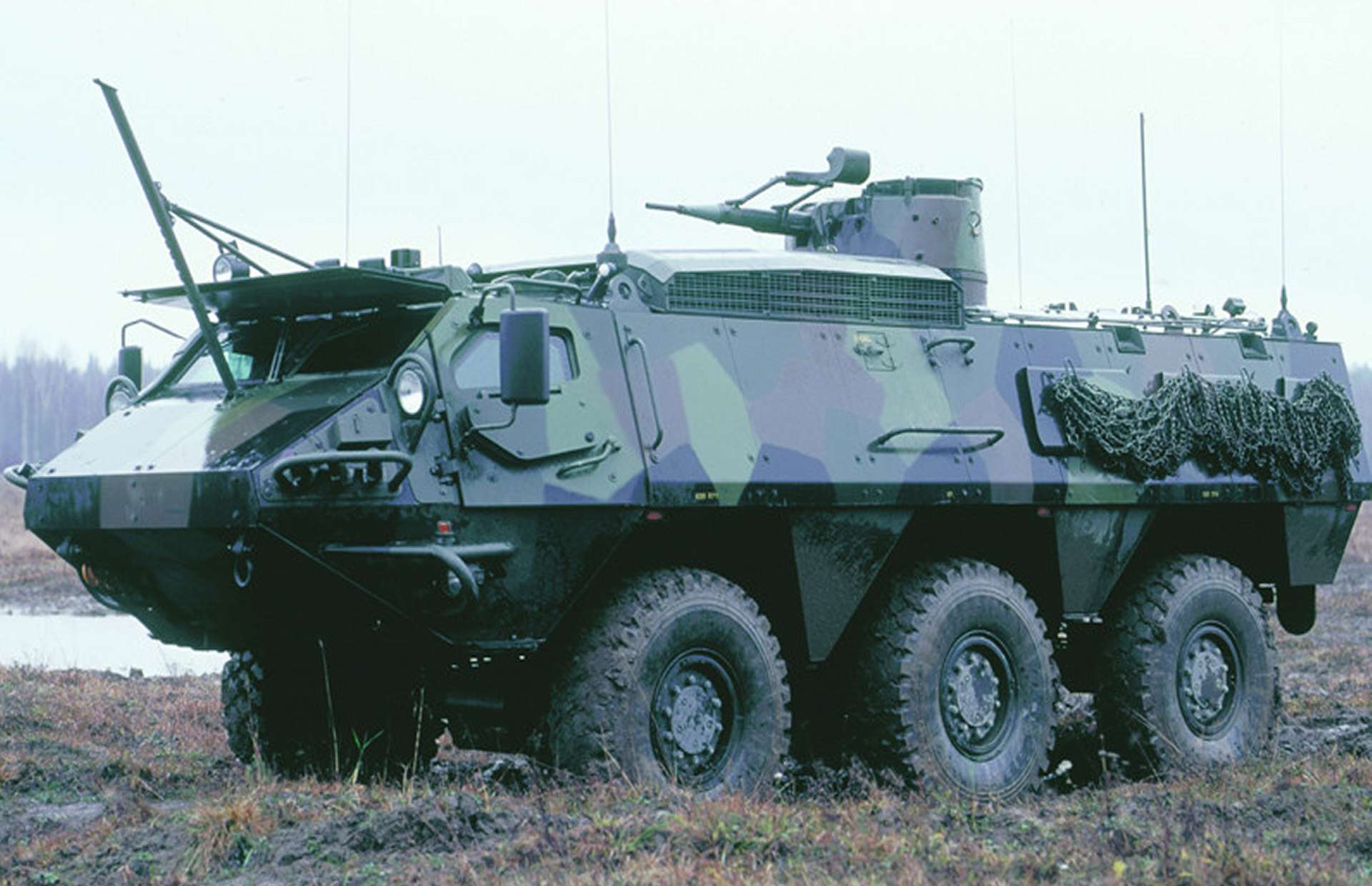
Sweden has ordered upgrades for 58 Patgb 203 armoured 6x6 vehicles, introducing remote weapon station readiness to extend their service life and improve crew protection, fire control, and operational effectiveness as a bridge capability while newer Patgb 300 vehicles are delivered (Picture source: Patria).
Patgb 203 is a heavier, protection-focused evolution of the Finnish XA family, fielded by Sweden primarily as a protected troop transport and mission carrier. In Swedish service, it exists in multiple configurations, from troop transport and command variants to repair, ambulance, and specialist payloads. Open technical data for the Patgb 203A and 203B series points to a 7.68 m long vehicle around 22.5 tonnes gross weight, powered by a Valmet 612 diesel rated at about 202 kW, paired with an Allison automatic transmission, with a road range around 600 km and speeds in the mid 90 km/h class. Protection is typically described as designed for heavy small arms and fragments, with add-on armour reaching the 14.5 mm class in some configurations, while the vehicle retains a useful 1.5 m fording capability for Nordic terrain.
Sweden’s own description of the Patgb 203A underlines the vehicle’s original operational logic: international missions where escort and overwatch matter, with practical fit such as extra lighting, external loudspeaker, additional power outlets, and other mission enablers that reflect long convoy days and checkpoint routines. The 203A family is also notable for its legacy yet still relevant armament choice, a 20 mm autocannon in a roof weapon housing adapted from the retired Pansarbandvagn 302, with smoke launchers mounted on the chassis. That setup gave Swedish crews a hard-hitting option for deterrence and suppressive fire, but it still leaves the gunner dependent on the protection level of the roof installation and the tactical posture of the vehicle.
What changes with the new contract is the explicit focus on Remote Weapon Station readiness. Patria does not publish a component list, but making an older vehicle genuinely RWS-ready normally means structural provisions on the roof, power and data routing, operator station integration, and the electrical margin to support stabilized sensors and controls. Patria says the modifications will enhance the capabilities of the Patgb 203 fleet, and company representatives underline that the contract reflects confidence in Patria’s ability to execute complex vehicle modifications on in-service platforms.
Operationally, RWS readiness is less about a single mount and more about changing how a formation fights from protected mobility. Sweden already uses its Vapenstation 01 concept on newer platforms such as Patgb 360, and the Swedish Armed Forces notes that this station supports different weapon options, commonly a 12.7 mm heavy machine gun, with sensors providing both day and night sights. Translating that style of engagement to additional Patgb 203 variants would let crews observe, identify, and engage while remaining under armour, which is decisive for convoy escort, urban movement, perimeter security, and rapid reaction tasks where exposure at the roofline is punished by snipers, drones, or fragments. It also improves fire control in poor visibility, short halts, and moving engagements, and it opens the door to more consistent integration of modern radios, battle management tools, and electronic protection kits that demand stable power and clean wiring.
This 58-vehicle action also sits in a longer Swedish life extension story. In early 2022, Patria disclosed an FMV awarded upgrade contract valued at roughly EUR 28 million covering around 168 Patria XA 202 and XA 203 vehicles, with engine, chassis, electrical, and hydraulic enhancements intended to add decades of service life, and with completion targeted for the end of 2025. Read together, the timeline suggests Sweden is not merely patching a legacy fleet, but progressively rebasing it to remain dependable and upgradeable through the late 2020s.
At the same time, Sweden is clearly buying new protected mobility in parallel, not instead. Patria announced in December 2025 that FMV had placed an additional order for 94 Patria 6x6 vehicles, designated Patgb 300 in Sweden, on top of 321 ordered in 2024, for a total of 415 vehicles to be delivered during 2025 to 2030, with substantial input from Swedish industry. That delivery window is long enough that Stockholm cannot afford a capability dip, especially while expanding units and raising readiness expectations, so keeping Patgb 203 tactically relevant looks like a deliberate bridge. It is also a hedge: even after Patgb 300 arrives in volume, upgraded Patgb 203s can remain valuable as command, support, training, and specialist carriers, freeing newer hulls for frontline motorized battalions.