






Breaking News






South Korea to Supply Composite Armor to Boost Protection of Türkiye’s Altay Tank.
On May 24, 2025, South Korea’s Samyang Comtech officially secured export approval to supply advanced ballistic armor for Türkiye’s Altay main battle tank. As reported by South Korea’s Defense Acquisition Program Administration (DAPA), this marks the company’s first direct international armor contract for a foreign-developed tank. Developed with inspiration from the K2 Black Panther, the Altay symbolizes Ankara’s ambition to field a modern, battle-ready MBT fleet. The move reflects deeper cooperation between Korean and Turkish defense industries amid growing regional demands for indigenous, resilient armored platforms.
Follow Army Recognition on Google News at this link
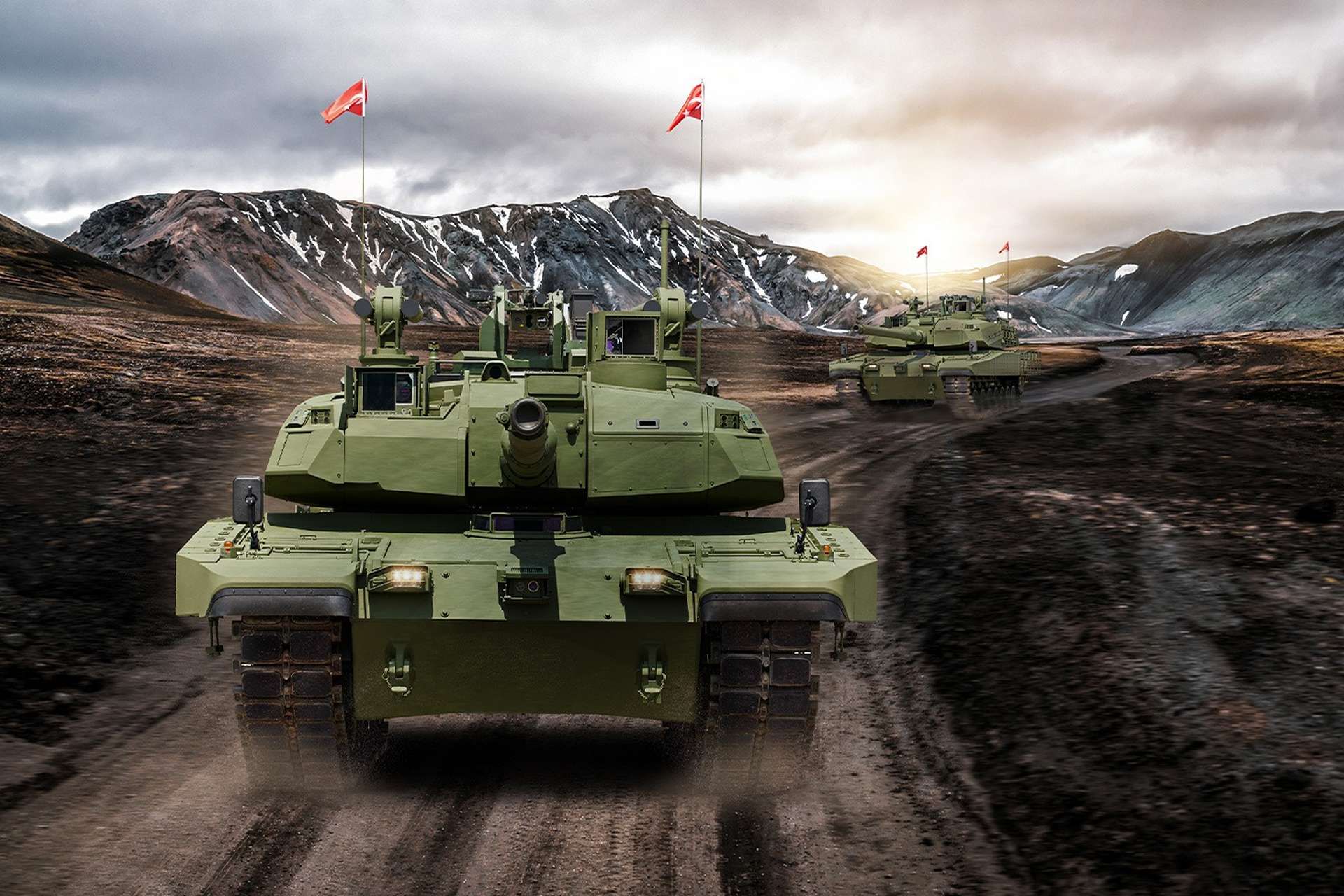
The Altay tank, armed with foreign-sourced armor in its initial iterations, represents more than just an armored vehicle: it is a symbol of Türkiye’s defense industrial ascent and regional military ambitions. (Picture source: BMC)
The Altay main battle tank, a flagship program of Türkiye’s land warfare modernization effort, draws from South Korea’s K2 Black Panther in both design and technological lineage. Samyang Comtech, the exclusive armor supplier for the K2 since 2009, will now provide its ceramic composite armor, based on silicon carbide and proprietary compounds, for early Altay production units. This armor system is known for its high ballistic protection, comparable to armor packages on tanks like the American M1 Abrams and German Leopard 2. Though developed domestically by Türkiye’s Roketsan in later production stages, the initial series of Altay tanks, designated T1, will reportedly use imported armor components, before full localization is achieved. Samyang’s production process integrates design, testing, and mass manufacturing into a seamless pipeline, underlining the firm's strategic value in high-end defense materials.
The Altay’s development has faced notable delays due to engine procurement challenges and the complex localization of key technologies, including armor. While Roketsan’s Ballistic Protection Center (BKM) is actively producing Turkish composite armor and integrating it with the Aselsan-developed AKKOR active protection system (APS), the first tanks off the line will rely on Korean armor as part of a transitional phase. This mirrors historical precedents like the South Korean K2’s initial engine sourcing from Germany before eventual domestication. The use of Samyang Comtech armor provides a tested, field-proven solution ensuring the T1 variant meets immediate operational demands while Türkiye finalizes full-scale local production.
Strategically, the Altay tank, armed with foreign-sourced armor in its initial iterations, represents more than just an armored vehicle: it is a symbol of Türkiye’s defense industrial ascent and regional military ambitions. For South Korea, this contract validates its defense SME capabilities and extends its geopolitical reach through dual-track industrial partnerships. The mutual interest in tank development highlights a broader trend of strategic defense cooperation among middle powers seeking autonomy in major weapons programs. For NATO and defense analysts, the Altay’s hybrid supply chain illustrates the complex interdependence and gradual decoupling dynamics reshaping global defense procurement patterns.
By integrating Samyang Comtech’s Korean-made armor into the first Altay tanks while Roketsan finalizes its indigenous protection solutions, Türkiye demonstrates a pragmatic path to self-reliance without sacrificing operational timelines. This dual-approach, balancing international expertise and national capability, underscores how strategic defense partnerships remain vital even as countries pursue domestic industrial independence. Samyang’s breakthrough export deal not only cements its status as a global armor supplier but also reflects the evolving architecture of 21st-century land warfare collaboration.