






Breaking News






South Korea Deploys K9A1 Howitzer and Chunmoo MLRS in Live-Fire Drill Near North.
Amid rising inter-Korean tensions, the South Korean military conducted a large-scale artillery drill this week in Gangwon Province, close to the disputed maritime border with North Korea. According to a report published by Yonhap News Agency on April 18, 2025, South Korean forces deployed dozens of artillery systems and fired over 600 shells during the nighttime operation, taking place as Pyongyang continues to escalate its military activities in the Demilitarized Zone (DMZ).
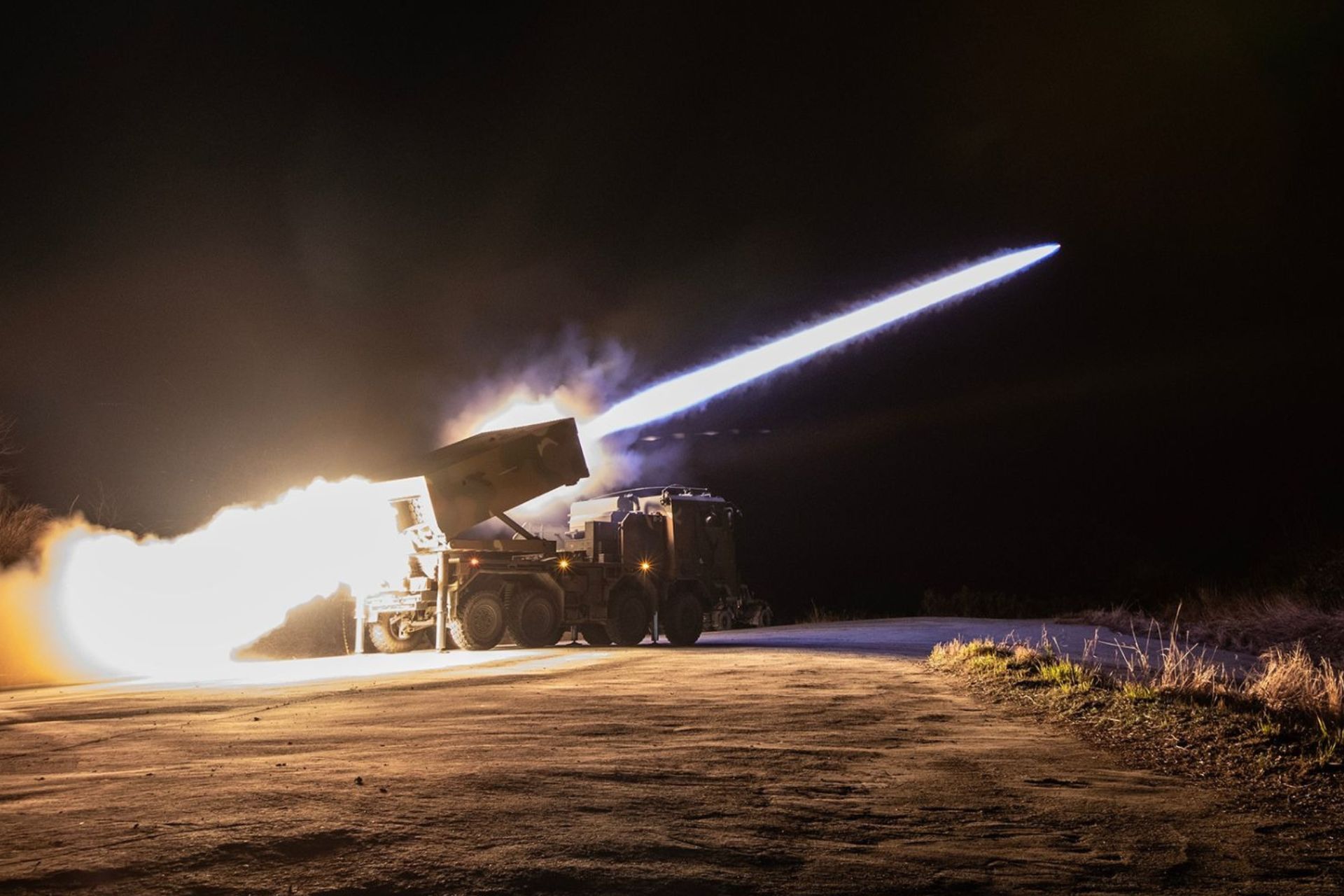
This live-fire drill was intended to strengthen the army’s immediate response capabilities in the event of surprise attacks from the North. (Picture source: ROK Army)
The operation, which lasted two days beginning Thursday, April 18, was carried out in the coastal area of Goseong under the command of the South Korean Army’s 3rd Corps. The shells were launched into the East Sea, remaining south of the Northern Limit Line (NLL), the de facto maritime boundary between the two Koreas. This live-fire drill was intended to strengthen the army’s immediate response capabilities in the event of surprise attacks from the North.
Among the equipment deployed was the K9A1 Thunder, a 155mm tracked self-propelled howitzer featuring a digital fire control system and reinforced armor. The K9A1 is capable of delivering precision strikes at distances of up to 40 kilometers. It was supported by the K55A1, another 155mm tracked system derived from the American M109 platform, which remains in service for indirect fire support in mechanized units.
The drill also included the K105A1, a 105mm wheeled self-propelled artillery system valued for its enhanced mobility and suitability for rapid deployment in difficult terrain. Additionally, the K239 Chunmoo multiple launch rocket system was employed for its capacity to fire various types of rockets, including 130mm projectiles capable of saturating wide target areas with coordinated salvos.
To complement these artillery systems, counter-battery radar and reconnaissance drones were deployed. These assets were used to detect and locate simulated enemy fire and assess strike effects in real time. The exercise demonstrated an integrated approach combining firepower with advanced surveillance and targeting capabilities, as part of South Korea’s preparedness against potential North Korean provocations.
This was the second such artillery exercise near the NLL since Seoul suspended the Comprehensive Military Agreement (CMA) in June 2024. The CMA, originally signed in 2018, had prohibited artillery drills within an 80-kilometer maritime buffer zone in the East Sea. South Korea cited repeated provocations by North Korea—including the launch of trash-filled balloons and GPS jamming—as reasons for the suspension. North Korea had previously declared in November 2023 that it no longer recognized the agreement and would resume all military activities against what it called “the little bastards of the so-called Republic of Korea.”
Back in June 2024, shortly after the CMA was nullified, South Korean forces conducted a similar exercise involving 290 projectiles launched from Chunmoo systems, K9 howitzers, and Spike anti-tank guided missiles. The latest drill more than doubled that volume, signaling an escalation in South Korea’s military posture near the maritime frontier.
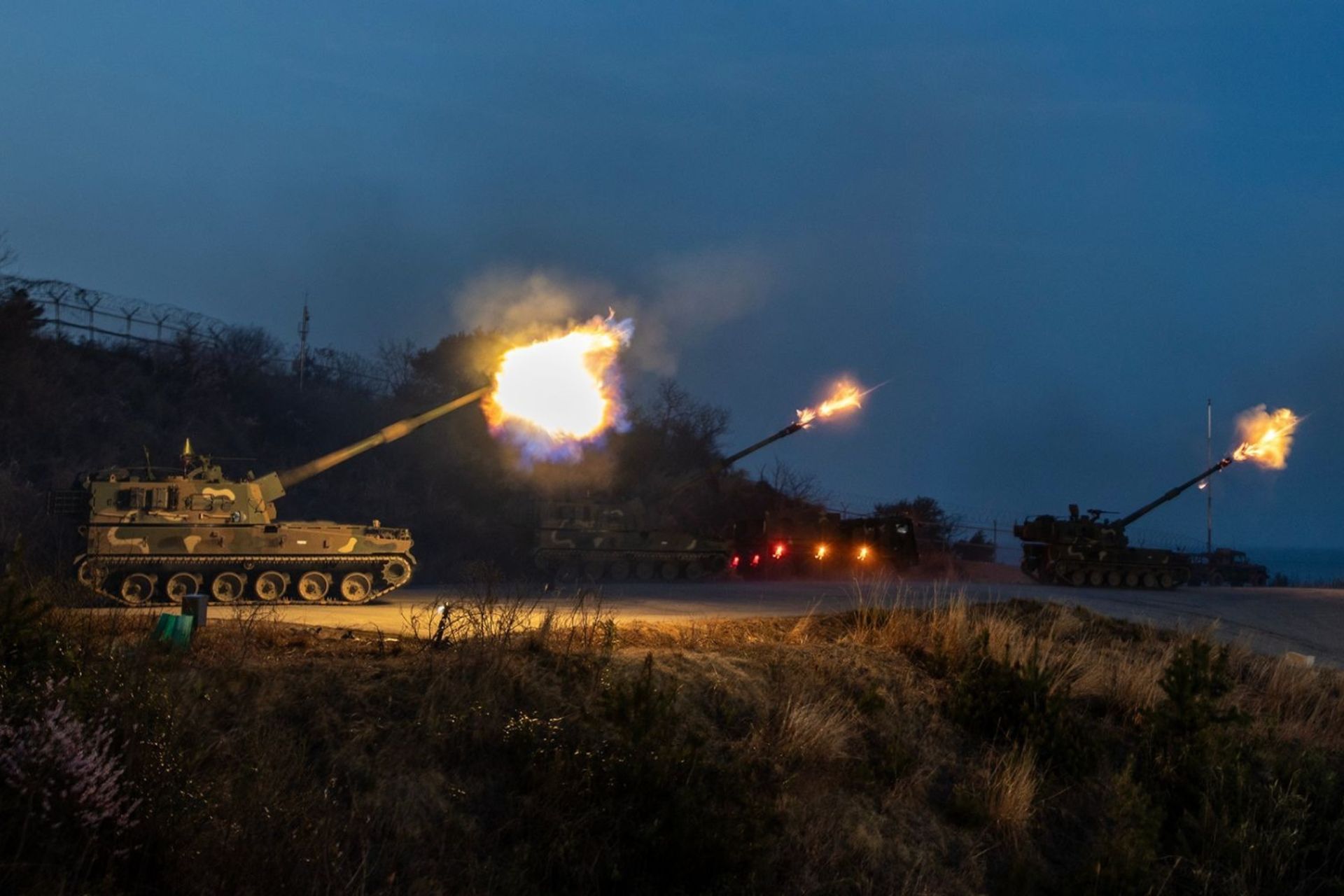
Among the equipment deployed was the K9A1 Thunder, a 155mm tracked self-propelled howitzer featuring a digital fire control system and reinforced armor (Picture source: ROK Army)
In preparation for the drill, South Korean authorities issued safety alerts and public notifications to residents five days in advance. A navigation warning was also issued two days before the firing. During the exercise, emergency response teams were stationed at key ports and beaches, and the Coast Guard coordinated with the army to secure surrounding waters and minimize risks to civilian maritime traffic.
The exercise took place amid heightened tensions on the Korean Peninsula. On April 8, approximately ten North Korean soldiers briefly crossed the Military Demarcation Line (MDL) in the Goseong area before retreating after warning shots were fired by South Korean troops. During a visit to the region on Thursday, Gangwon Province Governor Kim Jin-tae called for “stronger countermeasures against future North Korean provocations.” Acting President Han Duck-soo also instructed the military to maintain maximum readiness, amid concerns that North Korea could attempt to exploit the political uncertainty following the recent removal of President Yoon Suk-yeol from office.
Ultimately, this artillery drill underscores Seoul’s intention to maintain a credible deterrent posture against persistent threats from Pyongyang, while strictly managing operational safety to prevent unintended escalation. In such a volatile border environment, even limited military incidents can carry significant strategic consequences. South Korea continues to pursue a balance between military preparedness and cautious crisis management in a region where each demonstration of force is closely scrutinized.