






Breaking News





Should Marine Corps Consider Adopting M10 Booker Tank Abandoned by US Army?.
In June 2025, as the U.S. Army officially announced the cancellation of the M10 Booker light tank program, two Marine Corps officers published an op-ed calling for its reconsideration. In a piece for Task & Purpose, Lieutenant Colonels John J. Dick and Daniel D. Phillips, commanding officer and executive officer of the 3rd Light Armored Reconnaissance Battalion, advocated for the adoption of the M10 Booker by the U.S. Marine Corps. For them, the Army’s decision represents a strategic opportunity for the Marines, who had phased out their M1A1 Abrams tanks in 2020 as part of the “Force Design 2030” restructuring plan.
Follow Army Recognition on Google News at this link
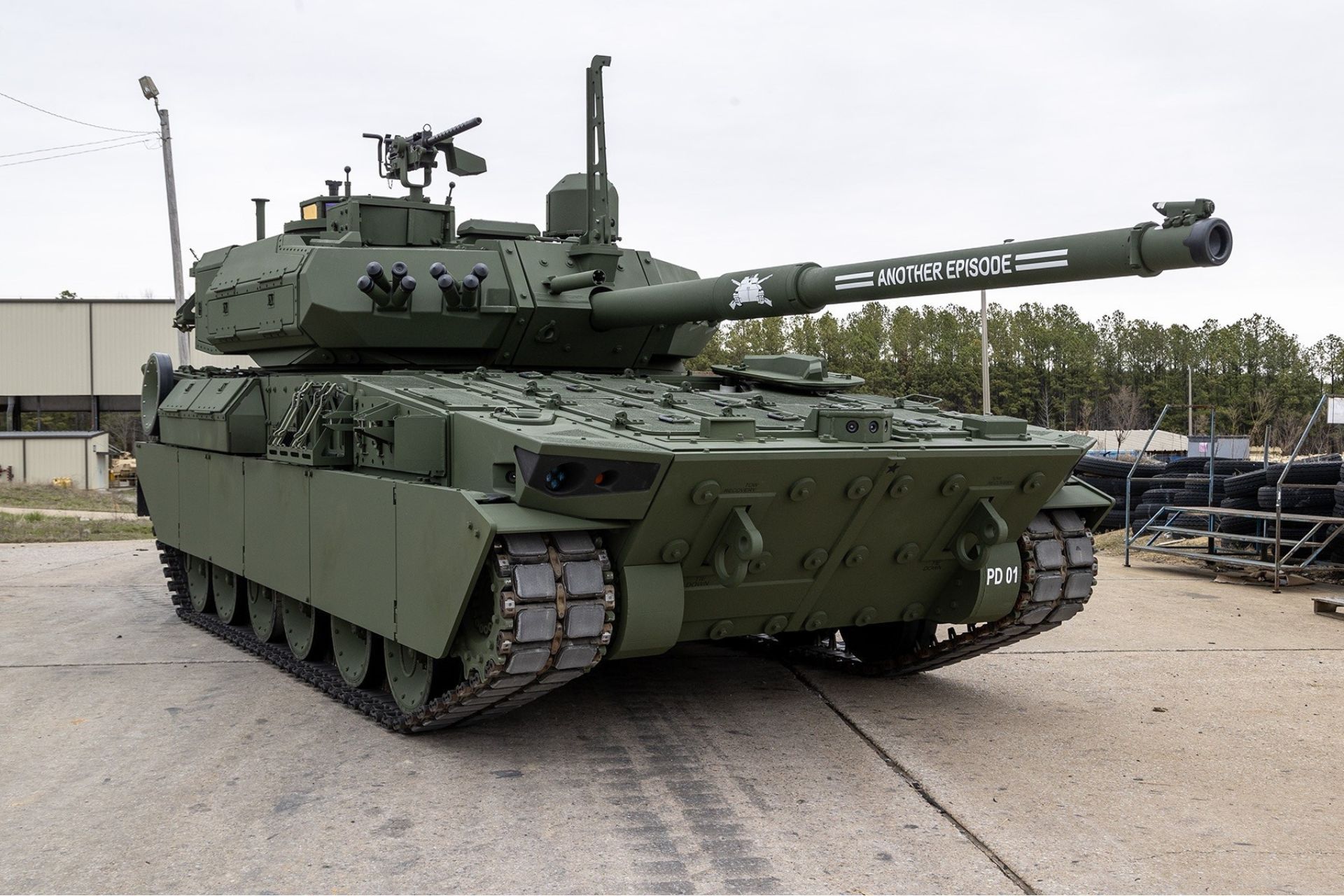
The M10, with its firepower and ballistic protection, would provide capabilities for close-range engagement that are currently lacking (Picture source: US DoD)
Developed by General Dynamics Land Systems under the Mobile Protected Firepower (MPF) program, the M10 Booker was designed to fill the gap left by the retirement of the M551 Sheridan and provide Infantry Brigade Combat Teams with organic direct fire capability. Armed with a manually loaded 105 mm gun capable of firing APDS and HE rounds up to 4 km, it is also equipped with a 7.62 mm coaxial machine gun, a 12.7 mm commander’s machine gun, and advanced thermal sights. Its tracked configuration, Horstman hydro-pneumatic suspension, and 800 hp MTU diesel engine provide high mobility across difficult terrain, with a top speed of 65 km/h and a range of 305 km. Weighing up to 42 tons in full configuration, the vehicle remains airliftable by C-17 and compatible with the Marine Corps’ amphibious transport systems.
The Army's decision to cancel the program, driven by budgetary considerations and doctrinal shifts, opened the door to a potential reassignment of the platform. Since retiring the Abrams, the Marine Corps has focused on lighter, more agile formations tailored to contested environments, particularly in the Indo-Pacific. However, this emphasis on mobility and unmanned systems has created a gap in direct fire support and survivability in close combat. That is the gap the two Marine officers aim to address by advocating for the M10 Booker’s integration into future mobile reconnaissance battalions.
In their view, current platforms like the ULTV and LAV-25 are insufficient against modern armored threats and armed drones. The M10, with its firepower and ballistic protection, would provide capabilities for close-range engagement that are currently lacking. It would enable reconnaissance units not only to detect and report enemy positions but also to fix and neutralize them - an approach aligned with the concept of “offensive reconnaissance” emphasized in recent Marine Corps doctrine.
One of the M10 Booker’s advantages lies in its immediate availability. Already tested and in production, it could be transferred to the Marine Corps under several options: no-cost transfer from the Army, joint procurement with service-specific modifications, or an independent rapid acquisition program. In all scenarios, its moderate weight, diesel propulsion, reduced maintenance demands, and operational autonomy align well with expeditionary logistics constraints.
However, the authors stress a key logistical consideration: the Marine Corps must avoid replicating the Army’s centralized support model, which depends heavily on contractors. They argue for a modular approach, including field repair kits, 3D-printable components, and maintenance procedures that can be handled at the unit level. The goal is to maintain operational effectiveness without overburdening the logistical footprint.
This type of solution is not without precedent. In the 1980s, the Marine Corps adopted the LAV-25 after its rejection by the Army, making it a core element of mechanized forces for four decades. The M10 could follow a similar path. In today’s contested theaters, reconnaissance units must not only observe but also deny the enemy freedom of movement. The Booker could restore that direct engagement capability.
The debate over the M10 Booker highlights a broader issue of balancing mobility, firepower, and sustainability within expeditionary forces. While it may not have met the U.S. Army’s expectations, it could become, according to the two officers, the missing link in a reconnaissance force ready for combat. If the Marine Corps aims to retain its credibility in forward operations, it may soon need not just sensors, but firepower - and the M10 Booker could fulfill that role.