






Breaking News






Report: Japan to Massively Integrate Turkish and US Drones to Secure Strategic Islands by 2026.
The Japanese government is preparing the budget for the next fiscal year with plans to allocate more than 1 trillion yen, or approximately 6.3 billion US dollars, for the acquisition of drones for the Self-Defense Forces. This initiative, reported by government sources on August 12, 2025, is part of a strategy aimed at rapidly strengthening the offensive and reconnaissance capabilities of the Ground, Maritime, and Air Self-Defense Forces. Among the options under consideration is the purchase of cost-effective Turkish drones, whose effectiveness has been demonstrated in the conflict between Ukraine and Russia.
Follow Army Recognition on Google News at this link
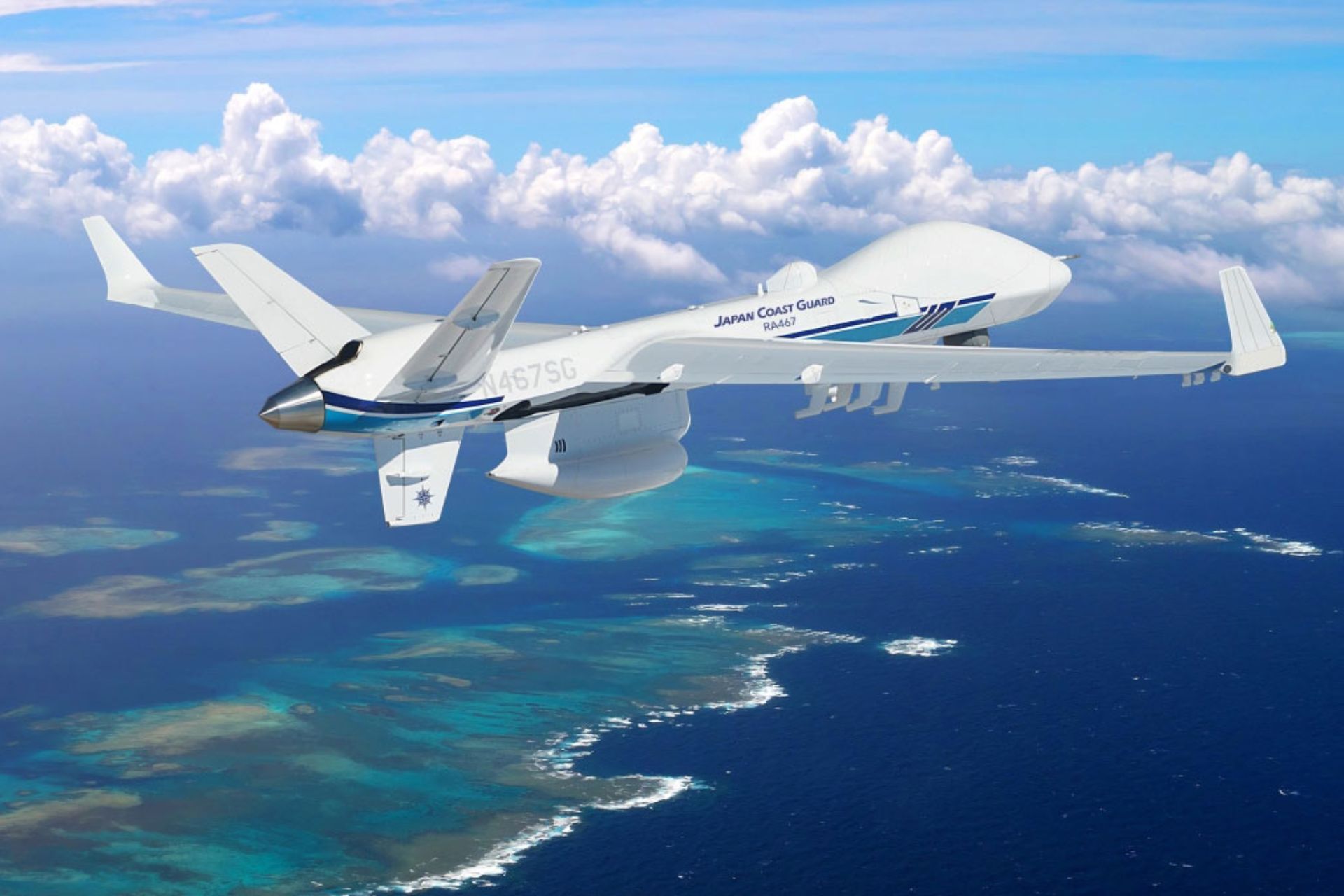
Japan intends to continue acquiring large, long-endurance surveillance drones, such as the US-made MQ-9B SeaGuardian already in service, for maritime and coastal monitoring (Picture source: GA-ASI)
While Tokyo’s long-term goal is to develop its drone industry, the immediate priority is the rapid deployment of existing systems to meet urgent operational needs. This approach stems from a clear policy decision to increase the numerical strength of the forces rather than focusing solely on high-technology equipment. As a senior official noted, “the strategy is based on numerical superiority rather than qualitative superiority.”
In April 2025, the Ministry of Defense established a dedicated team to study the integration of drones into future military operations. The force development plan, adopted in 2022, identifies these systems as a key means of limiting human losses during missions. This guiding document now shapes capability planning, in a context where the war in Ukraine has heightened awareness among states of the importance of such assets.
The models under consideration cover several categories. Light “kamikaze” drones, also referred to as loitering munitions, could be acquired in large numbers, with particular interest in the Turkish KARGU, as well as Israeli, Australian, and Spanish models. These systems, designed to strike directly at enemy targets, have the advantage of being relatively low-cost and rapidly deployable. In parallel, Japan intends to continue acquiring large, long-endurance surveillance drones, such as the US-made MQ-9B SeaGuardian already in service, for maritime and coastal monitoring. In the medium term, domestic programs led by Mitsubishi Heavy Industries in cooperation with the Acquisition, Technology and Logistics Agency aim to develop artificial intelligence–equipped combat support drones, with trials scheduled to begin in 2025.
The current Japanese budget already reflects an increase in these investments. For the 2025 fiscal year, 41.5 billion yen, or about 261 million US dollars, has been allocated for the purchase of large MQ-9B SeaGuardian drones, primarily for maritime surveillance. In addition, 3.2 billion yen, or about 20 million US dollars, is allocated to smaller attack drones intended to strengthen the defense of the southwestern islands, a strategically significant area given regional tensions.
The decision to make large investments in imported drones represents a compromise between immediate operational effectiveness and the development of domestic industry. While local production could provide greater strategic autonomy in the medium term, the time required for design and manufacturing makes it necessary to use foreign solutions to fill current capability gaps. Potential suppliers include Turkish and American manufacturers capable of delivering proven systems on short notice.
This policy of building capacity through volume is part of a broader modernization effort for the Self-Defense Forces, which face a security environment marked by tensions in the East China Sea and the need to monitor extensive maritime and aerial zones. The integration of different categories of drones, from long-range reconnaissance models to tactical strike systems, is expected to enable Tokyo to optimize operational coverage while reducing the exposure of human crews.
Japan’s commitment to invest more than 1 trillion yen in drones from 2026 reflects a doctrinal shift toward building a force that combines responsiveness, flexibility, and resilience to address threats. By diversifying its procurement with proven foreign models such as the KARGU and MQ-9B, while preparing domestic development, Tokyo aims to create an unmanned aerial capability able to respond effectively to the security challenges of the coming decades.