






Breaking News






Report: China May Match with US and Russia in Intercontinental Nuclear Missile Arsenal by 2030.
According to information published by the Stockholm International Peace Research Institute (SIPRI) on June 16, 2025, China is narrowing the gap with the United States and Russia in terms of intercontinental ballistic missile (ICBM) capabilities. The European think tank reported that China is developing the fastest-growing nuclear arsenal in the world and could reach parity in the number of ICBMs with the two traditional nuclear superpowers by 2030. SIPRI noted that China currently possesses at least 600 nuclear warheads and has been adding approximately 100 warheads annually since 2023, reflecting a strategic objective to strengthen its nuclear deterrence and international standing.
Follow Army Recognition on Google News at this link
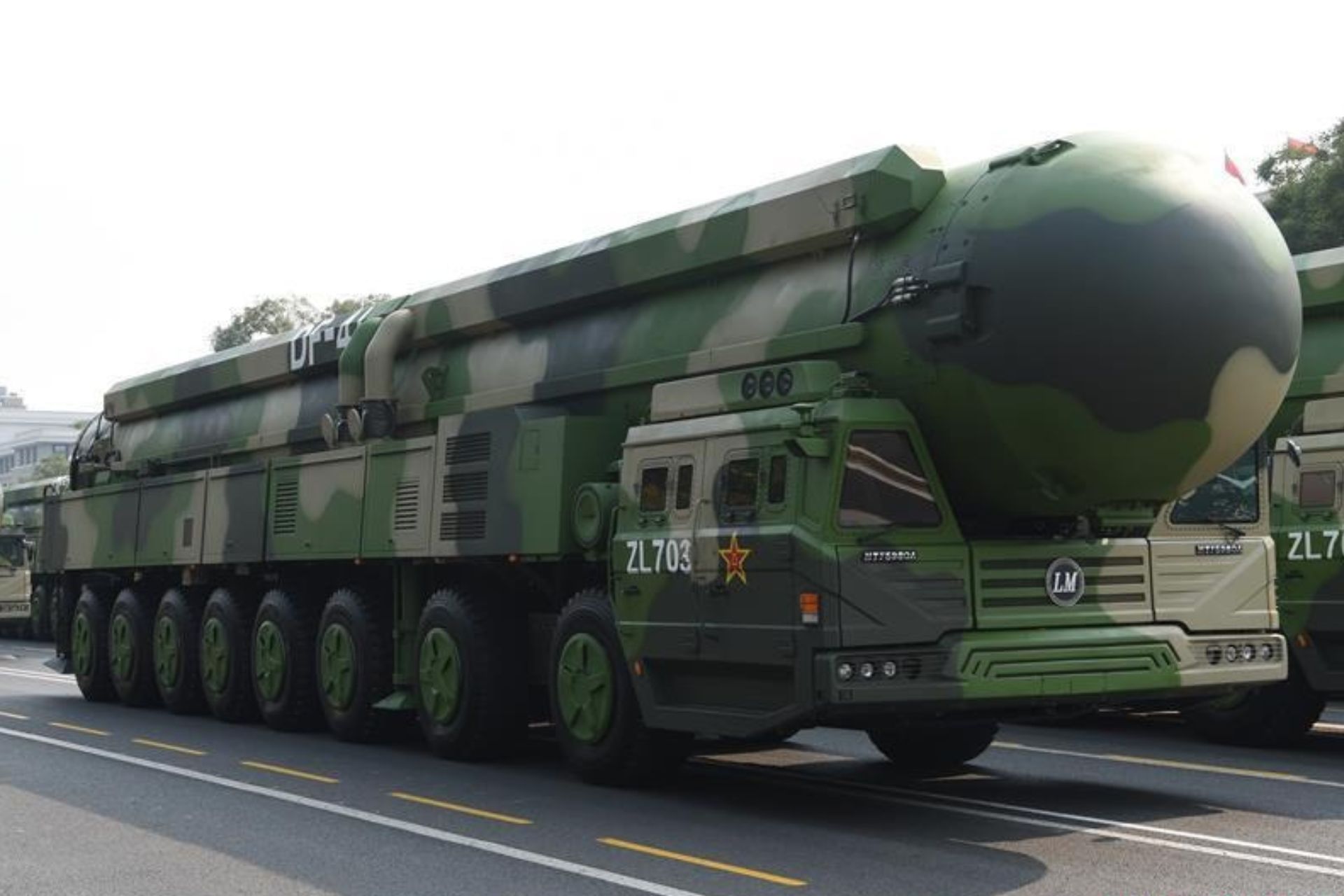
China’s arsenal consists of an increasing mix of solid- and liquid-fueled missiles, deployed from both fixed silos and mobile platforms (Picture source: China MoD)
In its latest report, SIPRI stated that China increased its nuclear stockpile from 410 warheads in 2023 to 500 at the beginning of 2024, and then to over 600 by mid-2025. These figures align with assessments by the U.S. Department of Defense, which also estimates China’s operational nuclear arsenal has surpassed 600 warheads, with a target of reaching 1,000 by 2030. Despite a possible future parity in missile platforms, China will continue to lag behind the United States and Russia in total warhead count. SIPRI projects China could possess up to 1,500 warheads by 2035, compared to 5,177 for the United States and 5,459 for Russia, who together account for nearly 90% of the world’s nuclear weapons.
Technically, China’s arsenal consists of an increasing mix of solid- and liquid-fueled missiles, deployed from both fixed silos and mobile platforms. The most advanced intercontinental missile, the Dong Feng-41 (DF-41), is central to this modernization effort. With a range exceeding 12,000 km, the DF-41 is designed to carry up to ten independently targetable nuclear warheads (MIRVs). The older DF-5B, a liquid-fueled model still in service, also features MIRV capabilities, while its upgraded version, the DF-5C, enhances strategic resilience through deployment in hardened silos. In parallel, the mobile DF-31A and DF-31AG systems provide China with a flexible and less detectable second-strike capability.
The strategic relevance of China’s expanding arsenal was recently emphasized by former U.S. President Donald Trump, who in February 2025 expressed concern over the pace of China’s nuclear development. He advocated for initiating denuclearization talks with China and Russia, warning that China could achieve parity with the United States within five to six years. In response, Chinese foreign ministry spokesperson Guo Jiakun reiterated that China’s nuclear policy is strictly defensive and maintained at the minimum level necessary for national security. Guo also urged Washington and Moscow to make substantial reductions to their arsenals to create conditions conducive to multilateral nuclear disarmament.
This development represents a strategic shift in the global nuclear balance. If current trends persist, China’s emergence as a nuclear power with comparable missile capabilities, though not yet in total warheads, will likely reshape arms control negotiations and security policies among major nuclear states. The accelerated pace of China’s nuclear development, coupled with the expansion of missile silo fields in regions such as Xinjiang and Inner Mongolia, indicates a move toward a more robust deterrence posture potentially aimed at competing directly with U.S. and Russian strategic doctrines.