






Breaking News






Polish Air Force intercepts Russian Su-24 bomber conducting dangerous maneuvers over Baltic Sea.
As reported by Defence24, on the evening of May 22, 2025, a Russian Su-24 tactical bomber conducted what Polish authorities described as dangerous maneuvers over international waters in the Baltic Sea. Acting under NATO command, the Combined Air Operations Centre in Europe ordered the Polish Air Force’s quick reaction alert pair to intercept the Russian aircraft. Polish pilots located, intercepted, and repelled the Su-24, which was flying in a manner characterized by the Polish Minister of Defence, Władysław Kosiniak-Kamysz, as intentional rather than accidental. The interception took place entirely within international airspace over the Baltic Sea. According to Kosiniak-Kamysz, this response formed part of Poland’s role within NATO structures, with the Polish pair executing the order issued by the Alliance’s operational command in Europe.
Follow Army Recognition on Google News at this link
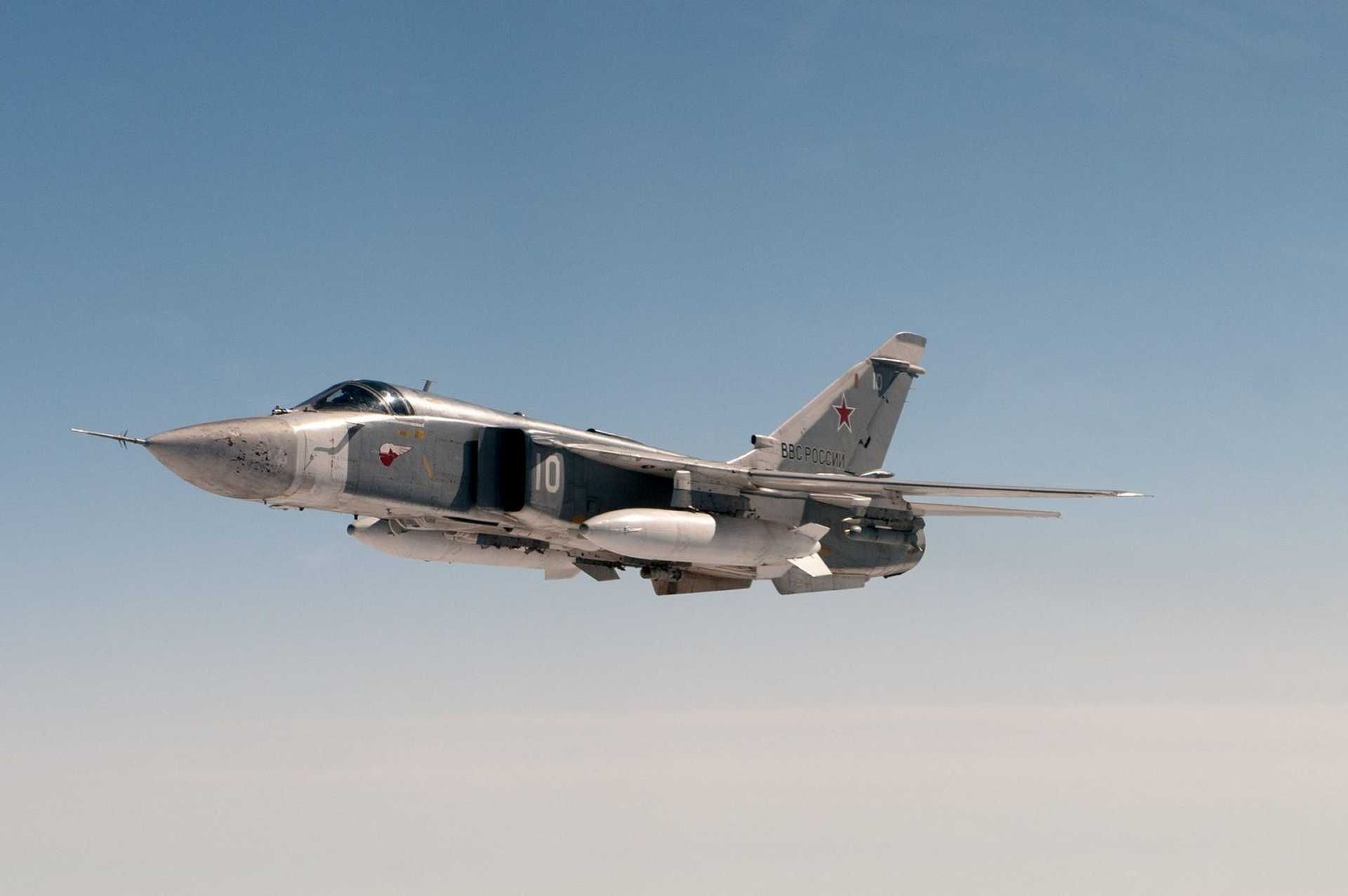
Over the past six months, NATO has experienced a notable increase in intercepts of Russian military aircraft near its airspace, particularly over the Baltic Sea and surrounding regions. (Picture source: Russian social media)
During a press conference held in Kraków on May 23, 2025, Kosiniak-Kamysz emphasized that the deterrence of hostile maneuvers by the Russian Federation in the Baltic is a collective task for the entire North Atlantic Treaty Organization. He stated that Poland would advocate at the upcoming NATO summit in The Hague for the extension and institutional reinforcement of the “Baltic Sentry” mission, an initiative already involving the participation of several NATO member navies and tasked specifically with safeguarding underwater cables, pipelines, and other forms of infrastructure at risk from sabotage or interference. As confirmed by Polish authorities, the hydrographic ship ORP Heweliusz was dispatched to collect data in response to suspicious Russian naval movements, and this data is currently under analysis with support from Polskie Sieci Elektroenergetyczne (PSE), the state-owned electricity transmission operator. The results may influence future NATO planning for infrastructure protection missions at the upcoming NATO summit.
The aircraft involved in the interception, the Su-24, is a supersonic, all-weather tactical bomber developed in the Soviet Union and introduced into service in 1974. It is equipped with a variable-geometry wing, twin Lyulka AL-21F-3A engines, and a side-by-side seating arrangement for its two-person crew. With a combat range of approximately 615 kilometers in low-level attack configuration and the ability to carry up to 8,000 kilograms of ordnance across nine hardpoints, the Su-24 has been employed extensively by Russian forces in various conflicts. Although the Su-24 is being progressively replaced by the Su-34 in Russia’s aerospace forces, around 260 Su-24M and Su-24MR aircraft remain in Russian service as of 2025. The Su-24 variant likely involved in the May 22 incident would be capable of operating without flight plans or transponder signals and without communicating with air traffic control, a behavior frequently cited in recent NATO reports.
The interception of the Su-24 forms part of a broader pattern of Russian military aviation activity near NATO airspace. Between 2023 and 2025, NATO has repeatedly scrambled fighter aircraft to respond to Russian planes flying near Alliance borders, particularly over the Baltic region. In 2023 alone, NATO conducted over 300 such intercepts, most of them over the Baltic Sea. These Russian aircraft frequently operated without activated transponders, without submitting flight plans, and without maintaining radio contact with civilian air traffic controllers, thereby presenting potential hazards to civilian aviation. Although most of these intercepts did not involve violations of NATO airspace and remained professional in execution, the number and persistence of such encounters have contributed to a heightened alert posture across NATO's eastern front.
Throughout 2024, NATO noted a shift in the types of aircraft intercepted. The number of Russian fighter and bomber intercepts declined, while surveillance and transport aircraft flights increased. This shift has been tentatively attributed to the redistribution of Russia’s more advanced combat aircraft to support operations in Ukraine. The Baltic region remained the principal area of activity for these intercepts. Quick Reaction Alert (QRA) forces from multiple NATO member states maintained a continuous presence to respond to Russian flights. These incidents underscore the need for persistent monitoring of airspace and reinforce the operational relevance of NATO’s air policing missions, especially along the eastern borders adjacent to Kaliningrad Oblast and Belarus.
In the first half of 2025, several other incidents reaffirmed the continuing need for air policing along NATO's northeastern flank. In April, Swedish fighter jets, operating under NATO command, intercepted a Russian reconnaissance aircraft flying near Polish airspace over the Baltic Sea. Within the same month, RAF Typhoons based at Malbork, Poland, were scrambled twice within 48 hours to intercept Russian Il-20M aircraft departing from Kaliningrad. Notably, on April 24, Swedish JAS 39 Gripens, recently integrated into NATO’s Enhanced Air Policing mission, conducted their first interception of a Russian Il-20M. These missions highlighted the operational coordination between NATO allies and the increasing integration of new members into common defense structures.
Additional incidents in May 2025 contributed to the evolving threat landscape. On May 13, a Russian Su-35 fighter jet briefly violated Estonian airspace during a maritime event involving the sanctioned tanker “Jaguar.” This prompted a diplomatic protest from the Estonian government and illustrated the difficulty of distinguishing between military and quasi-civilian provocations in the Baltic context. Such events show the intersection of airspace violations, naval movements, and hybrid tactics involving the “shadow fleet.” On May 22, the same day as the Su-24 interception, Polish fighter jets responded to that aircraft’s dangerous maneuvers, further illustrating the growing tempo of NATO responses.
The interception of the Su-24 and the associated maritime incident involving the “shadow fleet” thus reflect the dual nature of threats confronting NATO in the Baltic Sea. They also illustrate the operational importance of Poland within the alliance. The Polish Air Force currently operates 48 F-16C/D Block 52+ multirole fighters and has begun receiving FA-50GF light combat aircraft from South Korea. These will be upgraded to the FA-50PL standard starting in 2025, including enhancements such as an AESA radar. Poland is also preparing for the arrival of 32 F-35A Block 4 aircraft, with initial deliveries scheduled through Ebbing Air National Guard Base in the United States for pilot training, and later to operational bases in Poland between 2026 and 2030. Meanwhile, the legacy fleet of MiG-29s and Su-22s is gradually being withdrawn, with some units earmarked for transfer to Ukraine.
In this context, the May 22 interception highlights the enduring role of legacy Russian aircraft like the Su-24 in regional military signaling. Although the type is aging and has already been retired from some services, it continues to operate in frontline roles and in proximity to NATO territory. The aircraft’s characteristics, including its capacity for low-level penetration, large payload, and the ability to fly without cooperative engagement protocols, make it a consistent participant in NATO intercept missions. The Su-24’s continued activity underscores Russia’s reliance on its legacy platforms for conducting operations near alliance borders, and reinforces the broader imperative of maintaining NATO’s deterrence posture in the Baltic Sea region.