






Breaking News






Poland Secures $780M U.S. Javelin Anti-Tank Missile Deal to Boost NATO Eastern Flank Defense.
Poland will acquire more than 2,500 U.S.-made Javelin anti-tank missiles and 253 lightweight launch units in a $780 million deal, strengthening NATO’s eastern flank as tensions with Russia and Belarus grow.
The U.S. State Department has approved a $780 million Foreign Military Sale of more than 2,500 U.S. Javelin anti-tank missiles and 253 lightweight command launch units to Poland, underscoring Washington’s commitment to NATO’s eastern defenses as regional tensions with Russia and Belarus persist.
Follow Army Recognition on Google News at this link
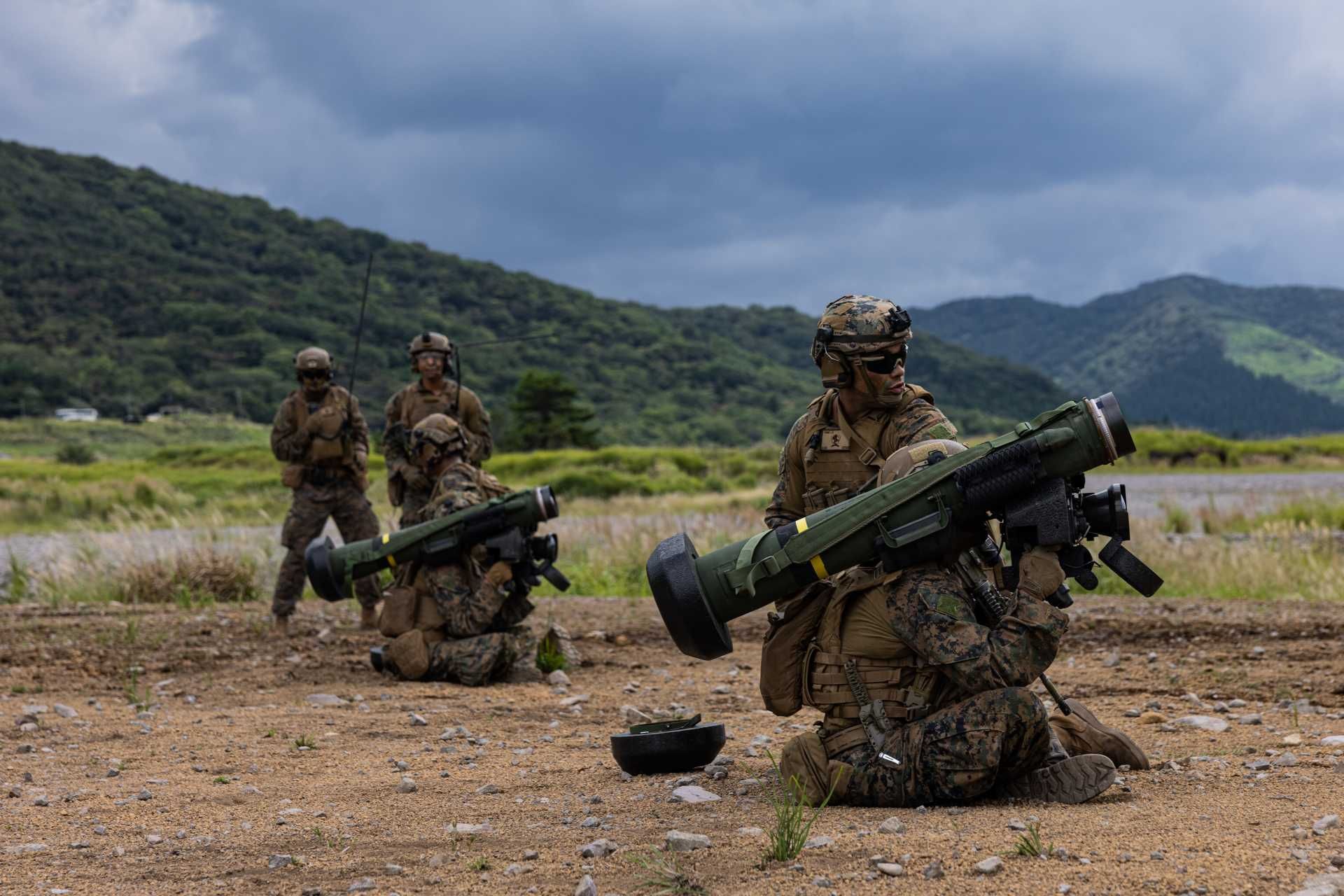
U.S. Marines from the 12th Littoral Combat Team, 12th Marine Littoral Regiment, 3rd Marine Division, ready an FGM-148 Javelin for live fire during Exercise Resolute Dragon 25 at the Hijudai Maneuver Area in Oita Prefecture, Japan, on September 15, 2025. (Picture source: U.S. Department of War)
According to a notification by the Defense Security Cooperation Agency (DSCA), the approval was issued on September 18, 2025. The proposed package includes Javelin anti-tank missile simulation rounds, battery coolant units, tool kits, spare parts, U.S. Government and contractor technical assistance, and transportation services. With this procurement, Poland will reinforce its national anti-armor capabilities, improve interoperability with NATO forces, and enhance its capacity to deter aggression along its eastern border with Belarus and Russia.
The principal contractors for this deal are RTX Corporation, based in Arlington, Virginia, and Lockheed Martin, located in Tucson, Arizona, the long-standing U.S. defense partners behind the Javelin system. No offset agreement has been proposed at this stage, but Polish defense procurement officials are expected to initiate negotiations for potential technology transfers or industrial participation as part of Warsaw’s strategic goal to expand its domestic defense production capacity.
The FGM-148F Javelin represents the latest generation of one of the most combat-proven anti-tank guided missile systems in the world. The missile features a tandem high-explosive anti-tank (HEAT) warhead capable of defeating explosive reactive armor (ERA) and penetrating advanced composite and steel armor on main battle tanks. Unlike earlier models, the FGM-148F variant incorporates a multi-purpose warhead (MPWH) that improves lethality not only against armored vehicles but also against bunkers, light fortifications, and personnel under cover. The Javelin’s signature top-attack flight profile enables the missile to strike tanks where their armor is thinnest on the turret roof, providing a critical battlefield advantage.
With a range of up to 4 kilometers (2.5 miles), the FGM-148F operates using an advanced imaging infrared seeker that locks onto the target before launch and requires no further operator input, classified as "fire-and-forget" technology. This allows infantry units to relocate immediately after launch, minimizing their exposure to return fire and enhancing survivability in high-threat environments. The missile’s soft-launch capability also makes it ideal for urban warfare and confined spaces, as it can be fired safely from enclosed positions such as buildings or bunkers.
Equally critical to the system’s performance is the inclusion of 253 Javelin Lightweight Command Launch Units (LWCLUs), which are designed to reduce the burden on dismounted troops while expanding target detection capabilities. Compared to the legacy CLU, the LWCLU is approximately 30 percent lighter and integrates upgraded thermal sensors and day optics with a new high-resolution display. The digital interface improves target acquisition speed, identification range, and operator situational awareness. The LWCLU can also function independently as a reconnaissance and surveillance tool, further extending its tactical utility beyond missile engagement roles.
The timing and scale of the sale are strategically significant. Since Russia’s full-scale invasion of Ukraine in 2022, Poland has rapidly accelerated its defense modernization program, acquiring Abrams main battle tanks, HIMARS rocket launchers, Patriot air defense systems, and Apache attack helicopters. The addition of thousands of modern anti-tank missiles will further solidify Poland’s position as the largest and most capable land power on NATO’s eastern frontier. Javelin systems will be fielded across Poland’s Territorial Defense Forces, mechanized infantry brigades, and likely assigned to NATO-integrated battle groups positioned in the Baltic region and the Suwałki Gap.
This acquisition also serves a broader operational purpose: to ensure that Polish forces are fully interoperable with U.S. and allied units during joint exercises and real-world deployments. With Ukraine’s battlefield experiences underscoring the enduring relevance of portable, precision-guided anti-armor systems, Poland’s move to expand its Javelin arsenal positions it to respond more effectively to both conventional and hybrid threats in contested environments.
From an industrial perspective, this order will help sustain production lines in the United States amid surging global demand for guided munitions. Lockheed Martin has already expanded production at its Troy, Alabama facility, while RTX continues to invest in Arizona-based component manufacturing. The Poland deal follows similar Javelin transfers to Lithuania, Latvia, and Estonia, and highlights the growing role of European NATO members in strengthening the Alliance’s forward deterrence architecture.
At $780 million, this transaction marks one of the largest international acquisitions of U.S. Javelin anti-tank missiles to date. More importantly, it reinforces a growing trend in U.S. foreign military sales policy: enabling frontline partners with combat-proven, deployable systems that contribute directly to the collective defense of NATO territory.
Written by Alain Servaes – Chief Editor, Army Recognition Group
Alain Servaes is a former infantry non-commissioned officer and the founder of Army Recognition. With over 20 years in defense journalism, he provides expert analysis on military equipment, NATO operations, and the global defense industry.