







Breaking News




Poland Confirms 2 Billion Euro Anti-Drone Fortifications Along Belarus Border.
Poland, on December 27, 2025, confirmed plans to deploy a new generation of anti-drone fortifications along its eastern border within 24 months, a program valued at more than €2 billion. The effort underscores how NATO frontline states are rapidly adapting their defenses to counter unmanned aerial threats highlighted by Russia’s war in Ukraine.
Poland has formally approved a sweeping counter-unmanned aerial system defense program that will see layered anti-drone fortifications installed along its eastern frontier, according to Polish defense officials. The €2 billion-plus initiative, scheduled for completion within two years, is intended to blunt repeated Russian UAV incursions into Polish airspace and to harden NATO’s eastern flank against the types of drone-enabled surveillance and strike operations that have become routine in Ukraine.
Follow Army Recognition on Google News at this link
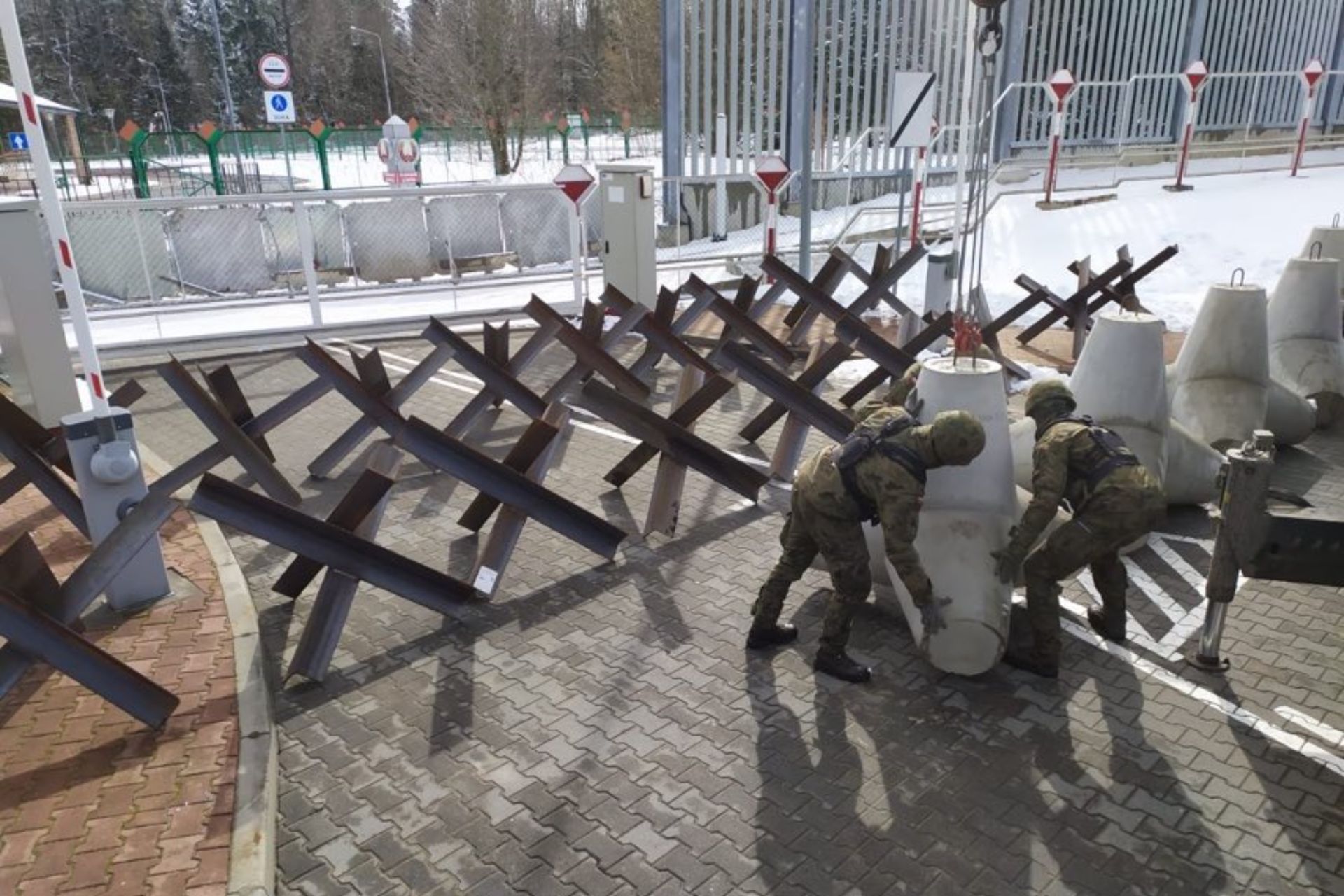
New anti-drone architecture will be integrated into an older defensive line constructed more than a decade ago, but now fundamentally upgraded to address low-altitude, low-signature aerial threats that traditional air defense systems struggle to detect and engage (Picture source: Polish MoD)
In an interview conducted in Warsaw, Deputy Defence Minister Cezary Tomczyk stated that initial operational capabilities are expected within roughly six months, with full system completion scheduled within two years. Polish defense officials familiar with the project said the new anti-drone architecture will be integrated into an older defensive line constructed more than a decade ago, but now fundamentally upgraded to address low-altitude, low-signature aerial threats that traditional air defense systems struggle to detect and engage.
The system is designed around a layered defense concept combining detection, identification, disruption, and destruction. At the sensor level, the fortifications are expected to employ short-range 3D surveillance radars optimized for slow and small targets, capable of detecting Group 1 to Group 3 drones at ranges of 10 to 30 kilometers depending on altitude and radar cross-section. These sensors will be fused with electro-optical and infrared cameras to provide visual confirmation and reduce false alarms in cluttered border environments such as forests and wetlands along the Podlasie region.
For kinetic engagement, the system will integrate rapid-fire machine guns and medium-caliber cannons mounted on stabilized platforms. Defense sources indicate that weapons in the 12.7 mm and 23 to 35 mm class are being evaluated, offering effective engagement envelopes from several hundred meters out to approximately 3 to 4 kilometers. These guns are intended to counter slow-flying reconnaissance drones and loitering munitions, while short-range missile systems with infrared or radar guidance will provide an additional layer against faster or higher-altitude threats, extending the engagement range beyond 5 kilometers.
Non-kinetic elements form a central pillar of the project. Electronic warfare systems will be deployed to jam satellite navigation signals such as GPS and GLONASS, as well as command-and-control datalinks operating in common military and commercial frequency bands. Polish officials note that such systems have proven highly effective in Ukraine, where electronic attack can force drones to crash, return to their launch point, or lose targeting accuracy without the risks associated with live fire in populated areas.
Tomczyk acknowledged that some components, particularly multi-barrel machine gun systems, are intended strictly for extreme crisis or wartime conditions due to the inherent danger of falling projectiles. The accelerated timeline follows a September 2025 incident in which more than a dozen suspected Russian drones penetrated Polish airspace, prompting airport closures, the scrambling of fighter jets, and localized damage after several platforms were engaged. At the time, Foreign Minister Radosław Sikorski described the unarmed drones as an attempt by Moscow to probe Polish reactions without triggering open conflict, a tactic consistent with hybrid operations observed elsewhere along NATO’s eastern flank.
Funding for the anti-drone fortifications will come primarily from European sources under the SAFE Security Action for Europe defense loan program, supplemented by national budget contributions. The investment aligns with Poland’s broader Eastern Shield initiative, which includes physical fortifications and surveillance enhancements along the borders with Belarus and the Russian exclave of Kaliningrad. As part of this effort, special logistics hubs will be established in every border municipality, pre-positioned with barriers, engineering equipment, sensors, and power systems that can be deployed within hours in response to a sudden escalation.
Since the beginning of the war in Ukraine, Poland has moved steadily toward a war-readiness posture. Defense spending has risen to 4.7 percent of GDP, one of the highest levels in the European Union, enabling accelerated procurement of tanks, artillery, air defense systems, and now counter-UAS infrastructure. Polish security services have also reported an increase in suspected sabotage and arson linked to Russian intelligence networks, reinforcing concerns about sustained hybrid pressure rather than immediate large-scale invasion.
For Warsaw, the €2 billion anti-drone fortification program is both a military necessity and a strategic signal. By investing in integrated sensors, electronic warfare, and layered kinetic defenses along its eastern border, Poland is positioning itself as a hardened NATO frontline state, prepared to counter today’s drone-driven provocations while deterring far more serious threats in the years ahead.