






Breaking News






Poland Asserts Its Role as a Central European Military Leader with K2 Tank Deployment in Slovakia.
Poland carried out the first international deployment of its K2 Black Panther main battle tanks during the multinational military exercise 'Slovak Shield 25,' held in Slovakia in May 2025. The event carries both symbolic and operational significance, reflecting Warsaw's effort to adapt its defense posture to evolving regional threats in an increasingly tense Eastern European context. The tanks involved in this deployment were recently assigned to the 1st Tank Battalion of the 9th Armored Cavalry Brigade in Braniewo, the primary unit operating the new fleet, and were mobilized just six months after entering service.
Follow Army Recognition on Google News at this link
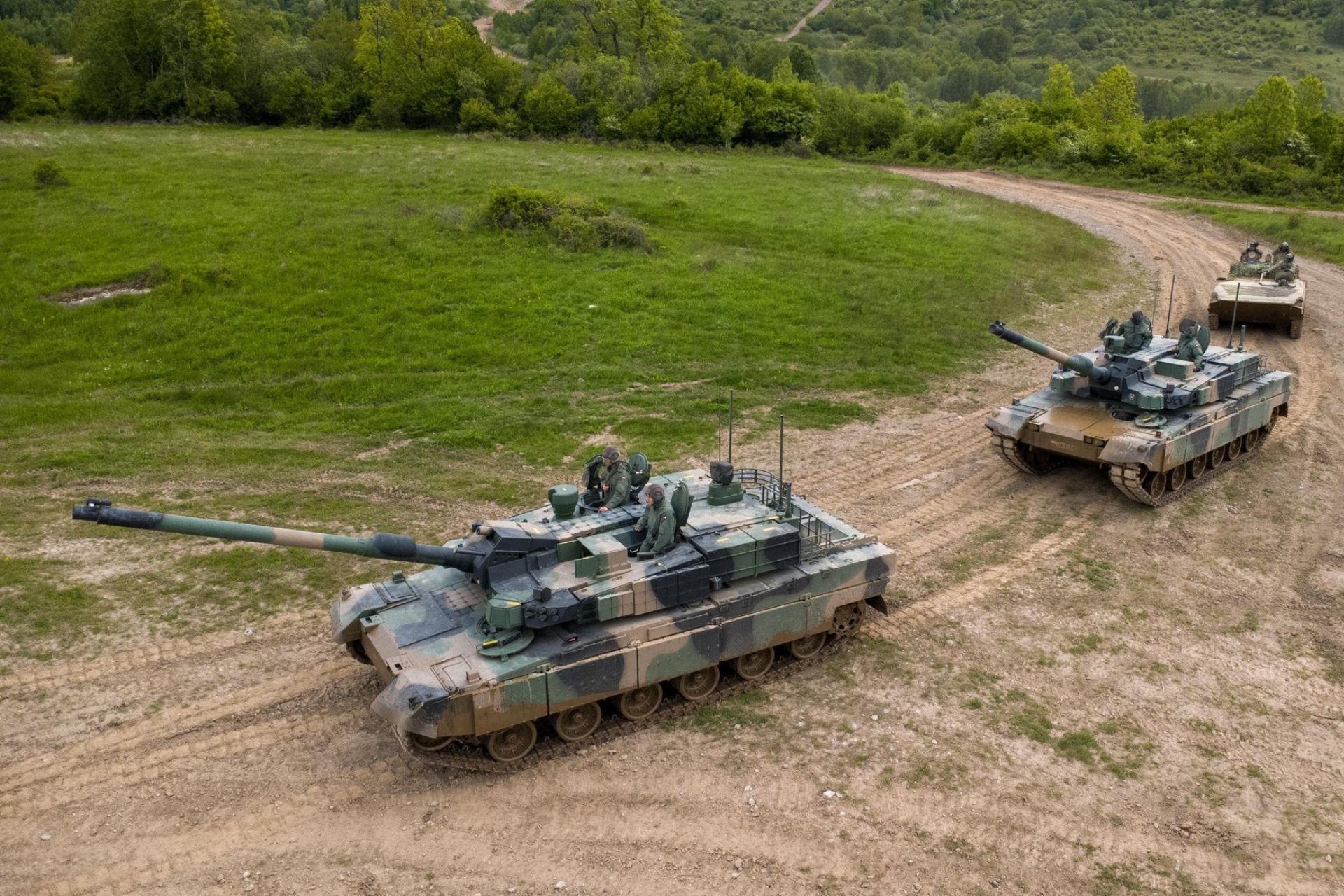
The Slovak exercise also highlighted the logistical effectiveness of the Polish Armed Forces, which transported the tanks using low-loader trailers operated by the 16th Logistics Regiment (Picture source: Polish MoD)
This rapid deployment illustrates the accelerated development of Poland’s land forces, launched with the July 2022 contract for 180 K2 tanks from South Korean manufacturer Hyundai Rotem. As of now, 110 units have been delivered, with the remaining 70 expected by the end of the year. These vehicles are being distributed within the 16th Pomeranian Infantry Division, which includes the mechanized brigades of Gieżycko, Bartoszyce, and Braniewo. A portion has also been allocated to the Army Training Center in Poznań for crew training. Poland thus becomes the first European country to operationally deploy the K2 within a NATO multinational context, underscoring its ability to rapidly integrate advanced systems and its intent to play a central role in regional military cooperation.
The Slovak exercise also highlighted the logistical effectiveness of the Polish Armed Forces, which transported the tanks using low-loader trailers operated by the 16th Logistics Regiment. Beyond its military scope, the deployment carries political and industrial weight. Slovakia is currently considering replacing its aging fleet of T-72M1 tanks and may procure up to 104 modern vehicles, with the K2PL, a Polish-adapted version of the K2 still in development, among the leading candidates. The live demonstration of South Korean-built K2 tanks under Polish operation could influence Bratislava’s procurement decisions and support the development of strategic industrial cooperation between the two countries. Through this visibility, Poland seeks to position itself as a regional hub for the production, maintenance, and export of next-generation armored vehicles, in the context of its reinforced partnership with Seoul.
The K2 Black Panther, designed by South Korea’s Agency for Defense Development (ADD), represents a fourth-generation technological advance in heavy armor. Powered by a 1,500-horsepower engine, the tank reaches speeds of up to 70 km/h and can overcome extreme terrain, including 60% gradients, trenches nearly 3 meters wide, and water depths exceeding 4 meters using a snorkel system. It's fully adjustable ISU hydropneumatic suspension allows the tank to modify its ground clearance and inclination, improving firing precision and reducing visibility depending on terrain conditions. It is a highly mobile and resilient platform suited for contemporary combat scenarios.
Its primary weapon is a 120 mm L/55 smoothbore cannon with an autoloader capable of firing 15 rounds per minute. It supports a range of advanced munitions, including KSTAM top-attack guided rounds designed to engage hidden targets. The main gun is complemented by a 7.62 mm coaxial machine gun and a 12.7 mm heavy machine gun. The entire weapons system is guided by an advanced fire control system that includes millimeter-wave radar, laser rangefinders, meteorological and thermal sensors, and stabilization algorithms that ensure accurate fire while on the move. The K2 is also equipped with C4I technology, enabling real-time coordination with other vehicles and enhancing situational awareness and tactical responsiveness.
In terms of protection, the tank is fitted with layered composite armor, explosive reactive armor (ERA) modules, and the KAPS active protection system, which can detect and disrupt incoming threats. Additional defensive equipment includes optical and infrared decoys (VIRSS), laser and radar warning sensors, jamming systems, missile detectors, and an automatic fire suppression system. Combined with its automation and communication systems, the K2 aligns with modern operational standards for high-intensity conflicts.
Simultaneously, East Front News issue #46 highlighted other aspects of Poland’s military capability expansion. Notably, a cooperation agreement between Huta Stalowa Wola (HSW) and U.S. manufacturer Allison Transmission was signed to localize gearbox production in Poland, particularly for combat vehicles such as the Borsuk. This strategic relocation aims to secure Poland’s defense supply chain and increase the autonomy of its defense industrial base.
Furthermore, the U.S. State Department’s approval of Poland’s purchase of 1,400 GBU-39/B precision-guided bombs, valued at $180 million, marks another step in reinforcing NATO’s eastern flank. These GPS-guided munitions, deployable from F-16s and future F-35s, expand the operational scope of Poland’s air force in precision strike and deterrence roles. The Defense Security Cooperation Agency (DSCA) emphasized that this sale supports U.S. foreign policy and strengthens European collective security.
On the domestic front, internal security remains a key priority. On May 21, 2025, the Polish Sejm voted to extend for 60 days the temporary suspension of the right to seek asylum at the Belarusian border, citing concerns over orchestrated migration pressures from Minsk and Moscow. The measure, adopted by a large parliamentary majority, aims to prevent irregular flows and counter hybrid tactics threatening national and European stability, while maintaining humanitarian exceptions for vulnerable individuals.
Regionally, tensions remain high. Peace talks held in Istanbul on May 16 between Russian and Ukrainian representatives yielded no substantial progress, with Moscow’s demands remaining unacceptable to Kyiv. While a prisoner exchange was proposed, Poland, adhering to its proactive defense posture, continues to monitor the situation closely while consolidating its role as a forward-positioned NATO member.
The operational deployment of K2 Black Panther tanks in an international setting reflects a fundamental shift in Poland’s strategic posture. Supported by advancing technology, a growing defense industrial base, and an assertive defense policy, Warsaw is gradually establishing itself as a key regional military power. By strengthening its deterrence capabilities, industrial sovereignty, and credibility within NATO, Poland is emerging as a central actor in the security architecture of Central and Eastern Europe.