






Breaking News






Lithuania Pushes For Local Assembly Of CV90 Infantry Fighting Vehicle To Expand Regional Cooperation.
On August 21, 2025, Lithuania advanced discussions with BAE Systems Hägglunds on a potential acquisition of CV90 infantry fighting vehicles, as reported by the Lithuanian Ministry of National Defence. Talks in Sweden brought together Deputy Minister of National Defence Orijana Mašalė and representatives of the Swedish manufacturer, focusing not only on procurement but also on the possibility of relocating assembly lines to Lithuania. This move is presented as both a military necessity and an economic opportunity, strengthening industrial cooperation within NATO. The prospect highlights how Lithuania intends to modernize its forces in line with NATO requirements while fostering a long-term defense-industrial base.
Follow Army Recognition on Google News at this link
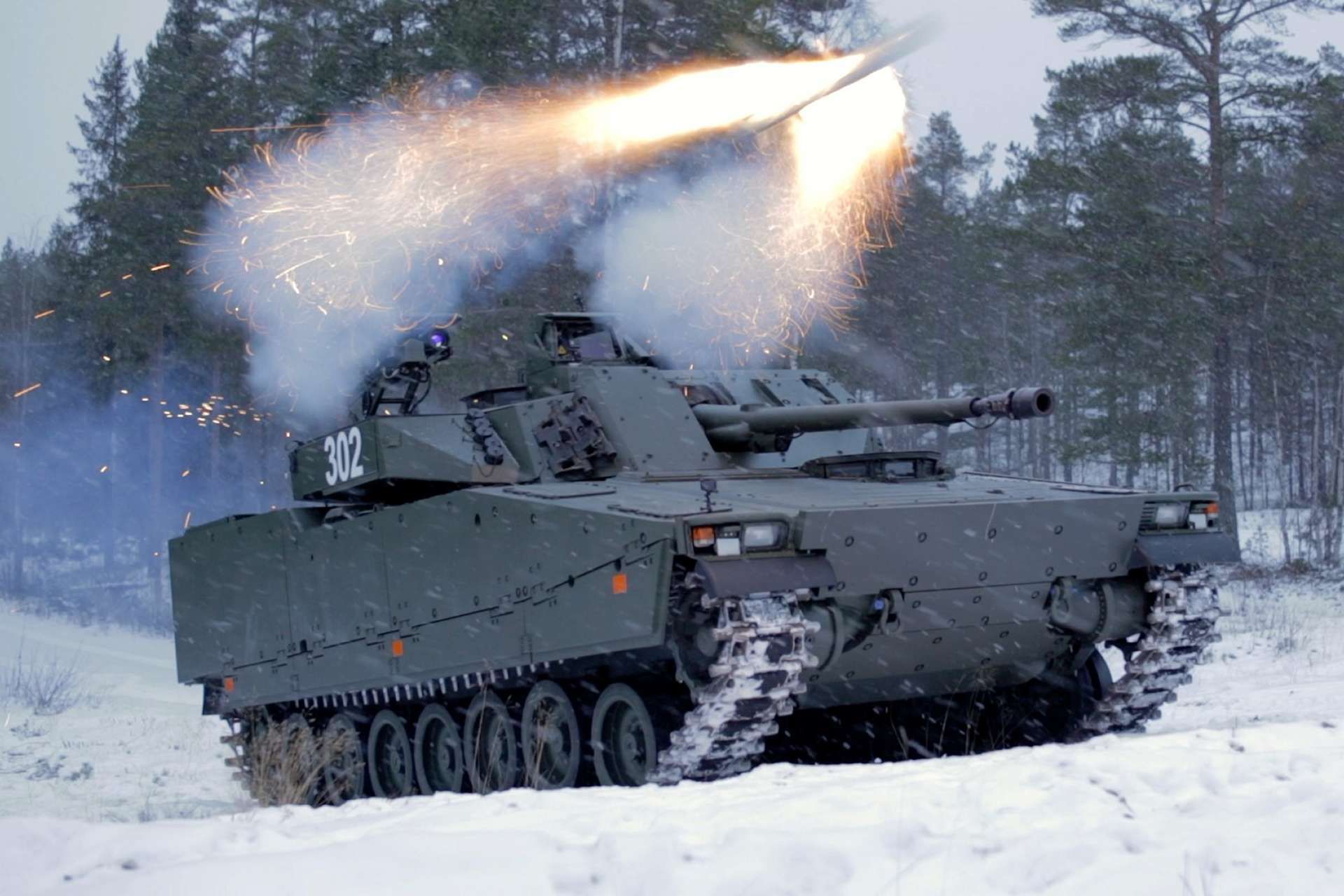
Lithuania’s dialogue with BAE Systems Hägglunds reflects a dual-track ambition: reinforcing its armed forces with a combat-proven infantry fighting vehicle while anchoring itself more deeply into NATO’s industrial and operational ecosystem (Picture source: BAE Systems)
The CV90, developed in Sweden in the early 1990s, is a tracked infantry fighting vehicle designed to combine firepower, mobility, and protection. Continuously upgraded, the latest versions feature advanced armor packages, digitalized command systems, and modular turrets capable of mounting various weapon calibers up to 120mm. The vehicle has proven itself in multiple European armies and more recently in combat in Ukraine, where its survivability and adaptability were tested against modern Russian threats.
The development of the CV90 followed a path similar to other NATO IFVs such as Germany’s Puma or the American Bradley, but it has stood out for its modular approach and strong export record across northern and central Europe. Lithuania’s interest is directly linked to the regional experience of its neighbors Finland, Norway, and Estonia, who already operate the vehicle. Compared to alternatives, the CV90 offers not only a mature platform but also compatibility with NATO-standard munitions and combat doctrines, a decisive advantage for joint operations.
Strategically, Lithuania’s potential acquisition carries implications beyond a simple fleet renewal. By pursuing local assembly, Vilnius signals its ambition to join the wider European defense-industrial supply chain, reducing dependence on external maintenance and ensuring national-level readiness. The move also enhances Baltic resilience against Russian pressure, anchoring Lithuania more firmly into NATO’s collective defense architecture. Deliveries scheduled from 2028 would align with the country’s goal of bringing its mechanized division to full operational capability by 2030, a deadline framed by NATO’s broader force posture in Eastern Europe.
From a budgetary perspective, Lithuania is leveraging a multinational procurement framework initiated in June 2025, when Defence Minister Dovilė Šakalienė signed a protocol of intent in Brussels alongside Finland, Sweden, Norway, Estonia, and the Netherlands. This joint acquisition is expected to reduce costs through economies of scale while ensuring synchronized deliveries. Previous contracts for CV90 have ranged from modernization packages worth several hundred million euros in Norway to new vehicle acquisitions exceeding €1 billion in the Netherlands, underscoring the scale of investment required. While no final figure has yet been disclosed for Lithuania, the ambition to add local assembly suggests that part of the expenditure will be reinvested in Lithuanian industry, creating skilled jobs and boosting technological expertise.
Lithuania’s dialogue with BAE Systems Hägglunds reflects a dual-track ambition: reinforcing its armed forces with a combat-proven infantry fighting vehicle while anchoring itself more deeply into NATO’s industrial and operational ecosystem. If concluded, the deal would represent not only a step toward achieving the 2030 readiness goal but also a structural investment in Lithuania’s long-term defense and economic resilience, marking a decisive phase in the Baltic state’s military modernization.