






Breaking News






Kongsberg Secures €100 Million Contract to Equip Denmark with Advanced NSM Coastal Defence System.
Denmark has signed a contract worth more than EUR 100 million with Kongsberg Defence and Aerospace for the Naval Strike Missile Coastal Defence System. The move strengthens Danish sea denial capabilities as security pressure rises across the Baltic and North Sea.
On 17 December 2025, Denmark took a major step in strengthening its maritime defence posture by signing a contract worth more than EUR 100 million with Kongsberg Defence & Aerospace for the Naval Strike Missile Coastal Defence System (NSM CDS). This acquisition comes as Copenhagen accelerates investments in sea denial and critical infrastructure protection in an increasingly contested Baltic and North Sea environment. By adding a modern, land-based anti-ship missile capability to its existing naval and air assets, Denmark aims to close key gaps in its coastal defence architecture, deepen defence-industrial ties with Norway and join a select group of NATO allies fielding mobile coastal artillery able to engage high-value naval and land targets at long range.
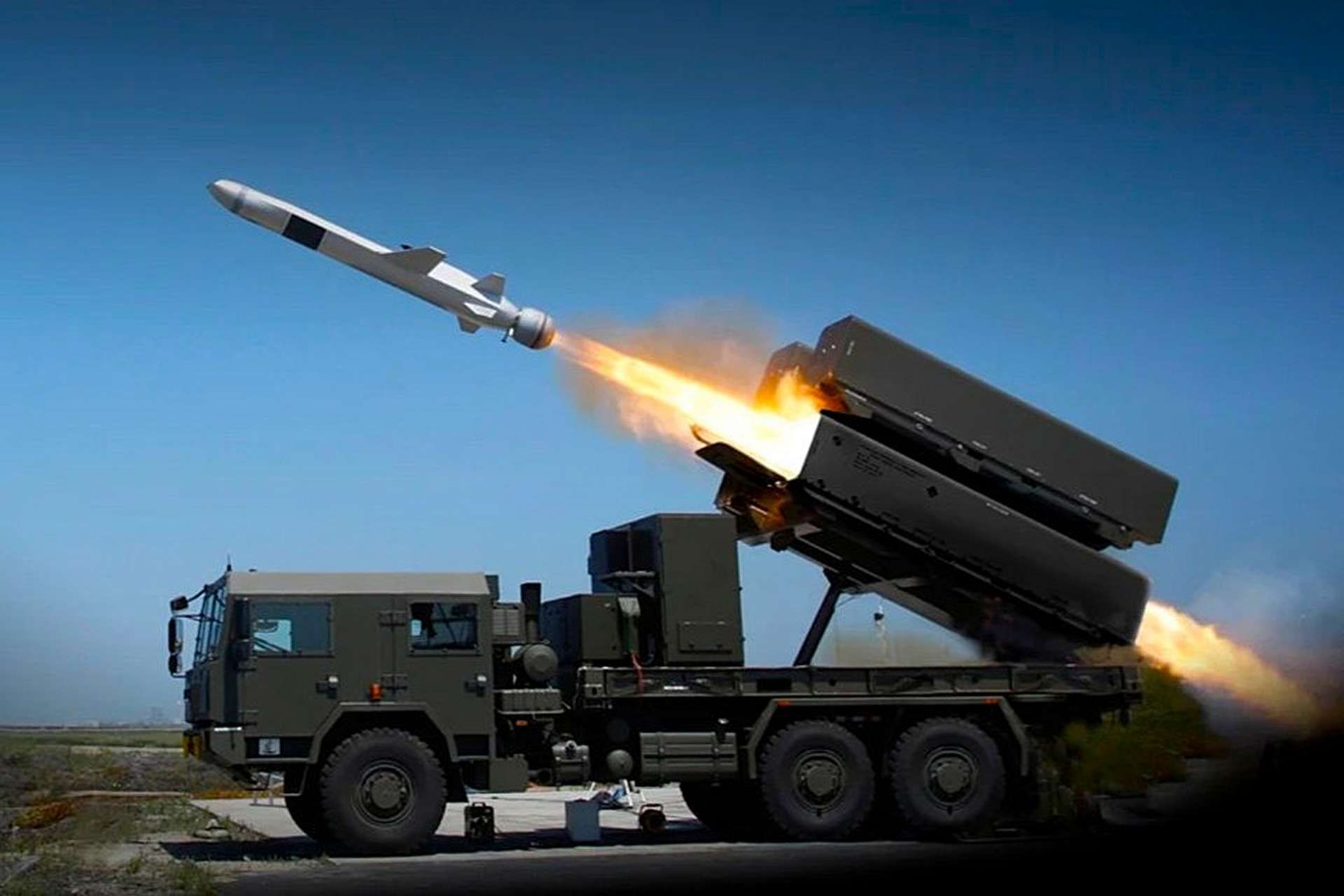
Denmark has signed a more than EUR 100 million contract with Kongsberg to field the NSM Coastal Defence System, boosting land-based anti-ship deterrence in the Baltic and North Sea (Picture Source: Kongsberg)
At the core of the programme lies the NSM CDS, a ground-based coastal defence solution designed around the Naval Strike Missile and a modular, network-centric command architecture. The system combines a fire control centre providing battle management, command, control, communications, computers and information (BMC4I) with mobile launch vehicles carrying canisterised NSM rounds, and can integrate sea-surveillance radars and external sensors as required. This architecture allows the system to be tailored to national requirements and connected to existing Danish command networks, sensors and effectors, turning the NSM batteries into a fully integrated component of the national joint fires system rather than a stand-alone capability.
The Naval Strike Missile itself is central to the operational value of the Danish acquisition. NSM is a long-range, sea-skimming, subsonic cruise missile with a passive imaging infrared seeker, autonomous target recognition and advanced terminal manoeuvres designed to evade modern shipborne defences. It can engage both naval and selected land targets, including infrastructure such as depots, command facilities, sensor sites and coastal air-defence positions, as well as ships berthed alongside in harbour. For Denmark, this dual sea-land role translates into a flexible tool for sea denial, protection of maritime approaches and defence of critical coastal infrastructure, including ports, energy installations and undersea connectivity nodes that have become focal points in the current strategic environment.
Beyond the missile, the NSM CDS is characterised by an advanced real-time network with a “plug and fight” philosophy. Up to four fire control centres can be linked, fusing data from organic sea-surveillance radars and external sources via tactical data links such as Link 11, Link 16 and JREAP to produce a shared maritime situational picture. Each fire control centre can control multiple launchers and engage up to 12 targets, and a networked configuration can manage up to 48 concurrent NSM engagements with coordinated time-on-target profiles and salvo management. For the Danish armed forces, this means the ability to rapidly mass effects from dispersed launch units along the coastline, while remaining difficult to detect and target. It also opens the door to deeper integration with allied maritime and air assets that share NATO-standard data links in the Baltic and North Sea theatre.
Strategically, Denmark’s decision to field NSM CDS must be read alongside its recent procurement of NASAMS for ground-based air defence, which together mark a comprehensive effort to harden national territory and approaches against both air and maritime threats. The introduction of a modern coastal artillery system strengthens NATO’s northern flank by extending anti-ship coverage from the Baltic Sea, through the Danish Straits and into the North Sea, a region that is critical for the reinforcement of the Alliance and for the protection of undersea energy and data infrastructure. Kongsberg notes that the acquisition will significantly expand the geographic footprint of NSM CDS, creating a contiguous belt of land-based NSM users from Poland through Denmark and across the Atlantic with the United States Marine Corps. In operational terms, this reduces the freedom of manoeuvre of any hostile navy in the area, particularly that of Russia, whose Baltic Fleet and long-range naval assets would face increased risk when operating near NATO-controlled littoral zones.
The purchase also carries broader geopolitical and defence-industrial implications. Denmark becomes the fifth NATO nation to adopt NSM CDS, after Poland, the United States/US Marine Corps, Romania and Latvia, reinforcing a trend towards standardisation around the NSM family for both surface combatants and coastal batteries. This convergence facilitates interoperability in planning, logistics, training and targeting among allies, and creates a common missile ecosystem across key maritime approaches to Russia’s Western Military District. At the same time, the contract supports the Scandinavian defence industrial base at a moment when European states are seeking to increase missile production capacity and reduce dependence on non-European suppliers. With NSM production lines expanding, including planned capacity in the United Kingdom, allied navies and armies will have access to a scalable supply of a single missile type that can be deployed from ships, aircraft and ground vehicles.
By choosing NSM CDS, Denmark is effectively locking in a long-term coastal defence concept built around mobility, networking and alliance integration rather than static coastal artillery. Mobile launchers able to disperse, shoot and relocate under the cover of terrain and electronic silence present a much more complex targeting picture than fixed batteries, and when connected to NATO sensor networks they can contribute to collective sea-control and sea-denial efforts well beyond Danish territorial waters. In a context marked by the war in Ukraine, heightened Russian naval activity, recurring concerns about hybrid threats and the vulnerability of undersea infrastructure, a system capable of delivering precise strikes against both ships at sea and critical shore-based nodes sends a clear message that maritime coercion around the Danish Straits would entail significant risk and uncertainty.
The NSM Coastal Defence System contract signals a qualitative shift in Denmark’s approach to coastal and maritime security: from limited national sea-denial assets to a fully networked, alliance-interoperable coastal missile force able to shape the balance of power in the Baltic and North Sea. By pairing a stealthy, autonomous anti-ship missile with a modern, modular command architecture and embedding it within NATO’s broader deterrence posture, Copenhagen is not only closing a critical capability gap but also contributing to collective efforts to deter and, if necessary, defeat naval aggression in Northern Europe’s congested and strategically vital waters.
Written by Teoman S. Nicanci – Defense Analyst, Army Recognition Group
Teoman S. Nicanci holds degrees in Political Science, Comparative and International Politics, and International Relations and Diplomacy from leading Belgian universities, with research focused on Russian strategic behavior, defense technology, and modern warfare. He is a defense analyst at Army Recognition, specializing in the global defense industry, military armament, and emerging defense technologies.