






Breaking News





Israel Halts Imminent Strike on Iran’s Nuclear Facilities Under US Pressure.
According to The New York Times, Israel was preparing to launch a large-scale military operation against Iranian nuclear facilities as early as May 2025. However, the plan was put on hold following a decision by U.S. President Donald Trump. After several months of internal deliberations within his administration, Trump chose to initiate a new diplomatic track with Tehran aimed at curbing its nuclear program. This shift came amid rising regional tensions, with Iran weakened both militarily and economically, yet showing signs of openness to indirect negotiations.
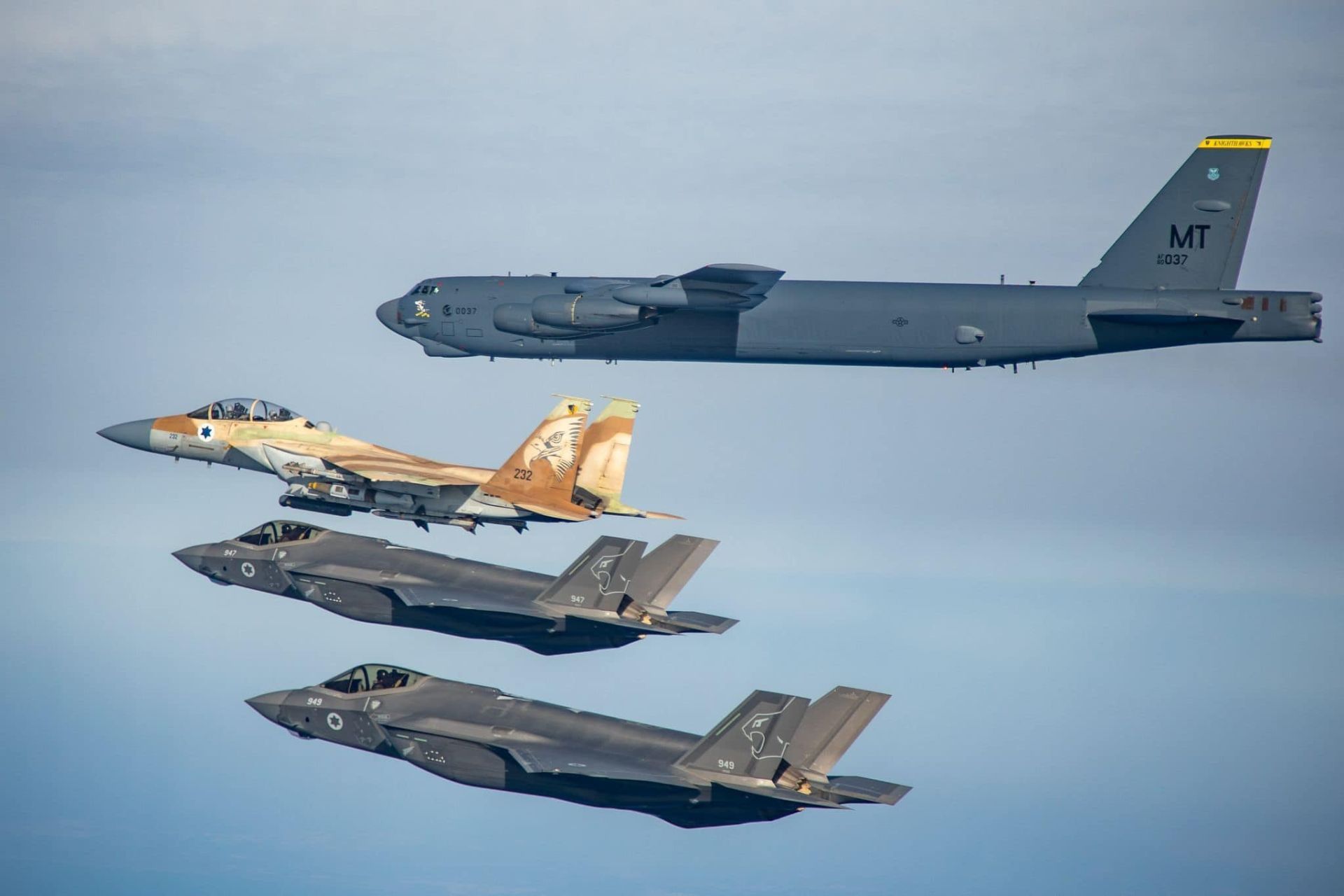
To conduct the strike, Israel planned to rely primarily on its airpower, deploying F-35I Adir and F-15I Ra'am fighter jets to target Iranian nuclear infrastructure while neutralizing air defense systems (Picture source: IDF)
Sources close to the Israeli government indicated that the goal of the proposed operation was to delay Iran’s nuclear advancement by at least a year. However, to be truly effective and mitigate the risk of a major Iranian retaliation, the operation required active support from the United States. While some American officials, including General Michael E. Kurilla, commander of CENTCOM, appeared open to providing logistical and operational backing, others voiced concern about the risk of a regional escalation. Director of National Intelligence Tulsi Gabbard notably presented an assessment warning that an increase in American military presence could trigger a broader conflict.
To conduct the strike, Israel planned to rely primarily on its airpower, deploying F-35I Adir and F-15I Ra'am fighter jets to target Iranian nuclear infrastructure while neutralizing air defense systems. These aircraft, with extended range and precision strike capabilities, were expected to penetrate deep into Iranian airspace. However, targeting heavily fortified sites such as Natanz and Fordow would require bunker-busting bombs like the GBU-28 or GBU-57, which are held exclusively by the United States, making U.S. cooperation essential. An initial plan that combined airstrikes with commando raids was also considered but later abandoned due to time constraints.
In parallel, Israeli authorities intended to employ electronic warfare and cyberattacks to disrupt Iran’s command and control networks and degrade integrated defense systems. These capabilities, previously tested in past operations, were expected to complement the broader air campaign. Given the scale of the operation, enhanced defensive measures were also planned to counter potential Iranian reprisals or attacks from allied groups such as Hezbollah. Israel readied its Iron Dome, David’s Sling, and Arrow missile defense systems, while the United States had repositioned assets in the region, including THAAD and Patriot batteries, two aircraft carriers (Carl Vinson and Harry S. Truman), and several B-2 stealth bombers stationed at Diego Garcia.
The Israeli target list focused on Iran’s most critical nuclear facilities. The Natanz complex, home to thousands of uranium-enriching centrifuges, was a primary objective. Deeply buried and protected by multiple layers of reinforced concrete, Natanz posed a significant challenge requiring specialized munitions. Fordow, located beneath a mountain near Qom, was considered even more difficult to reach and houses advanced centrifuges capable of enriching uranium to near-weapons-grade levels. Additional targets included the uranium conversion center at Isfahan and missile fuel production facilities.
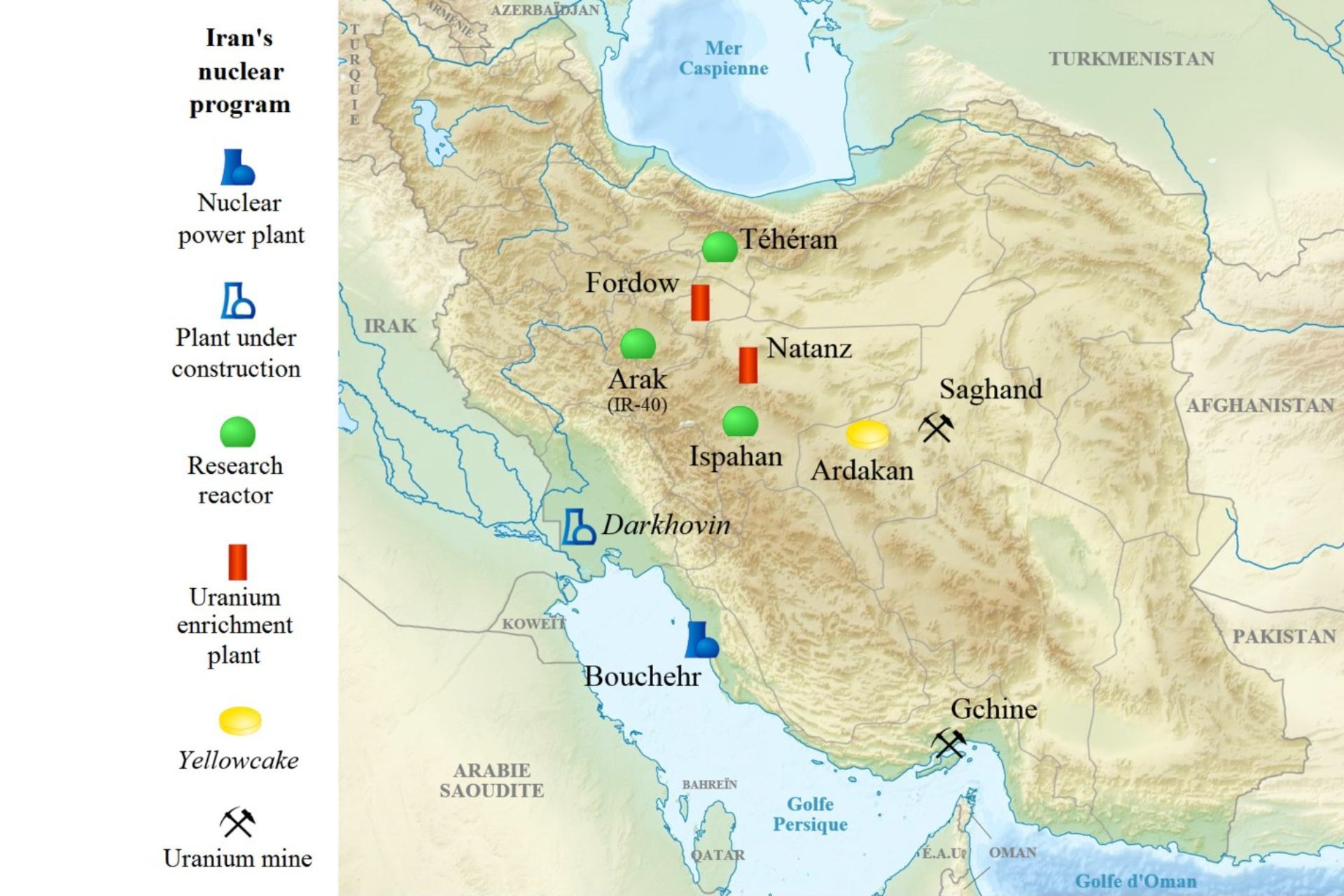
The Israeli target list focused on Iran’s most critical nuclear facilities (Picture source: WikiCommons)
Before engaging these targets, Israel would have had to disable Iran’s remaining air defense systems, particularly the Russian-made S-300 batteries. The overarching goal was to disrupt Iran’s nuclear and ballistic missile capabilities while limiting its ability to mount an effective counterstrike. The urgency of the plan was reinforced by Israeli military gains in 2024, including the destruction of weapons depots and air defense assets in Syria and Iran, the weakening of Hezbollah, and the collapse of the Assad regime, a key ally of Tehran.
However, as Israeli Prime Minister Benjamin Netanyahu was visiting the White House in early April, Donald Trump publicly announced the reopening of negotiations with Iran, thereby freezing any coordinated military action for the time being. Although Trump denied explicitly “pushing back” against Israeli plans, he made clear his preference for a diplomatic resolution while emphasizing that military options remained on the table should talks fail. This announcement coincided with the formal ratification of a 20-year strategic partnership between Iran and Russia, signed in January and recently approved by President Vladimir Putin. The agreement adds further complexity to the regional security equation.
Amid ongoing uncertainty, Israel has continued to prepare for potential conflict. The Israeli Air Force recently conducted drills simulating Iranian missile strikes on strategic infrastructure as part of an operational readiness exercise. On the American side, newly appointed U.S. Ambassador to Israel, Mike Huckabee, delivered a strong message, asserting that Iran poses a direct threat to both Israel and the United States. Israeli President Isaac Herzog also condemned Iran’s regional ambitions and reliance on proxy forces, reiterating that Israel would not allow Tehran to acquire nuclear weapons.
Meanwhile, CIA Director John Ratcliffe traveled to Jerusalem to meet with Prime Minister Netanyahu and Mossad Director David Barnea. Discussions covered multiple scenarios, including the resumption of covert operations, stricter enforcement of economic sanctions, and the formulation of a revised military plan—with or without U.S. participation. While U.S.-Iran talks are expected to resume soon, the precise parameters of a potential agreement remain unclear, and the Trump administration continues to apply maximum pressure while keeping open the option of a negotiated solution.
In conclusion, Trump’s decision to temporarily withhold support for an Israeli strike on Iran reflects a strategic choice to prioritize diplomacy in an increasingly volatile environment. While reinforcing its military posture in the region and keeping the threat of force on the table, the United States is seeking to gauge Tehran’s intentions within a limited timeframe. Yet, the fragility of the situation, combined with persistent regional tensions and strategic stakes for Israel, suggests a period of heightened instability where any misstep could reignite the prospect of a broader conflict.