






Breaking News






German Army Orders New IRIS Goggles with Thermal and Augmented Reality Features to Improve Troop Vision in All Conditions.
On June 26, 2025, the German Bundestag approved the procurement of IRIS thermal clip-on systems, a digital imaging product jointly developed by Theon and Berlin-based Andres Industries AG, marking a key step in Germany’s battlefield digitization strategy. As reported by Hartpunkt, this procurement goes beyond traditional thermal or night vision devices, with IRIS forming part of the new A.R.M.E.D. family of systems aimed at enhancing tactical awareness and survivability. With an initial investment of €49 million and additional options expected to push the total beyond €200 million, the decision represents a significant capability boost for Bundeswehr troops, particularly infantry.
Follow Army Recognition on Google News at this link
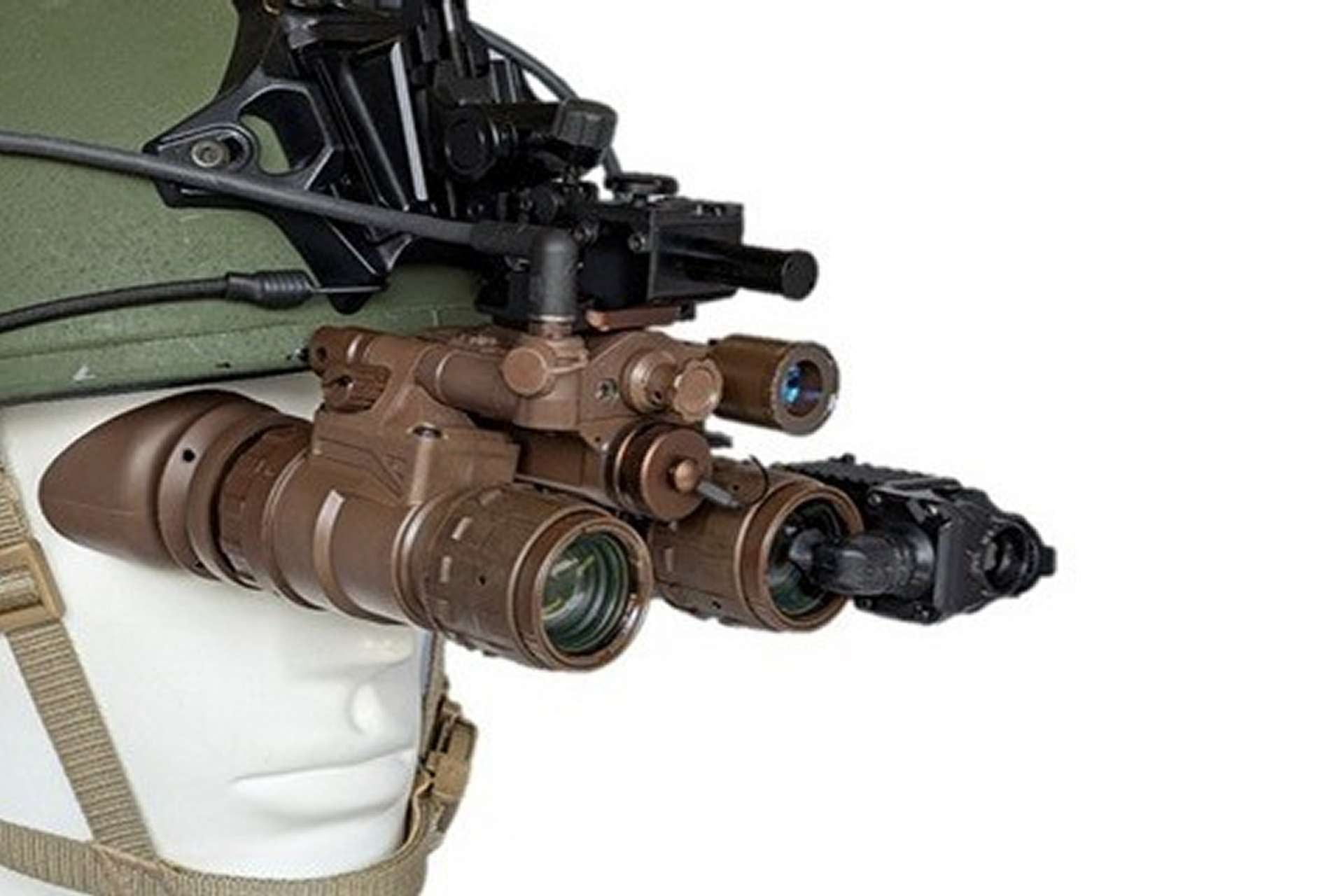
The Bundestag’s green light for the IRIS procurement not only equips German infantry with a cutting-edge sensor solution but also symbolizes a deeper structural shift: the transition from analog, line-of-sight combat optics to fully networked, multi-spectral battlefield awareness systems (Picture source: THEON)
The IRIS clip-on thermal imaging device is designed to work seamlessly with the Bundeswehr’s standard “cross-sectional” night vision goggles, particularly the Theon Mikron, already deployed in over 66,000 units. Rather than replacing existing optics, the IRIS enhances them by fusing intensified imagery with thermal overlays, allowing for real-time detection of camouflaged or stationary targets, even in dense or wooded terrain where traditional image intensification reaches its limits. The fused image generated by IRIS improves target acquisition, recognition, and engagement speed, factors critical in asymmetric and low-visibility environments.
Thermal clip-on systems have historically been used in limited scope for special forces or reconnaissance units, but their widespread integration into general infantry marks a shift in modern European land warfare. IRIS sets itself apart from legacy solutions through its fusion of two technologies, thermal and image intensification, and its advanced configuration supporting augmented reality (AR) overlays and integration with battlefield apps such as ATAK. This bridges the sensor-effector gap and supports a broader digital command and control environment. While similar fusion optics exist globally, including those from FLIR Systems or Safran, IRIS offers NATO compatibility and modularity tailored for interoperability within European defense programs.
Geostrategically, the decision underscores Germany’s intent to digitize its tactical edge within the NATO framework while strengthening cooperation with Belgium under the aegis of OCCAR. As modern conflict theaters demand faster sensor-to-shooter loops and enhanced survivability for infantry operating in complex terrain, urban, forested, or contested, the deployment of fused vision devices becomes a force multiplier. Militarily, the IRIS systems are expected to be prioritized for dismounted troops in forward and reconnaissance roles, providing them with the situational dominance once reserved for specialized units.
From a financial standpoint, the Bundestag has allocated an initial €49 million from the Bundeswehr’s Sondervermögen (Special Fund), securing 4,375 IRIS systems including support and training. However, the framework agreement allows for significantly more units, and options could raise the total procurement value above €200 million. This approach allows scalable acquisition depending on operational feedback and budget cycles, while also anchoring domestic industry participation via Andres Industries. Theon’s role as a supplier with established ties to German procurement further reflects the EU’s strategic intent to consolidate intra-European defense supply chains.
The Bundestag’s green light for the IRIS procurement not only equips German infantry with a cutting-edge sensor solution but also symbolizes a deeper structural shift: the transition from analog, line-of-sight combat optics to fully networked, multi-spectral battlefield awareness systems. By embracing fused night and thermal imagery with augmented reality and digital battle management integration, the Bundeswehr is redefining close-combat engagements and infantry survivability in 21st-century warfare.