






Breaking News






French Army Turns to Tactical Combat Drones to Redefine Battlefield Firepower.
As contemporary conflicts increasingly demand a balance between mass and technology, the 1st Marine Infantry Regiment (1er RIMa) stands out for its early integration of tactical combat drones. By organizing a dedicated drone squadron fully embedded within its operational structure, the regiment demonstrated the relevance of a light, agile, and algorithmic engagement model during the multinational Hedgehog 2025 exercise held in Estonia. This initiative, recognized by the French Army Inspectorate General for its doctrinal innovations, represents a shift in combined-arms warfare in contested environments.
Follow Army Recognition on Google News at this link
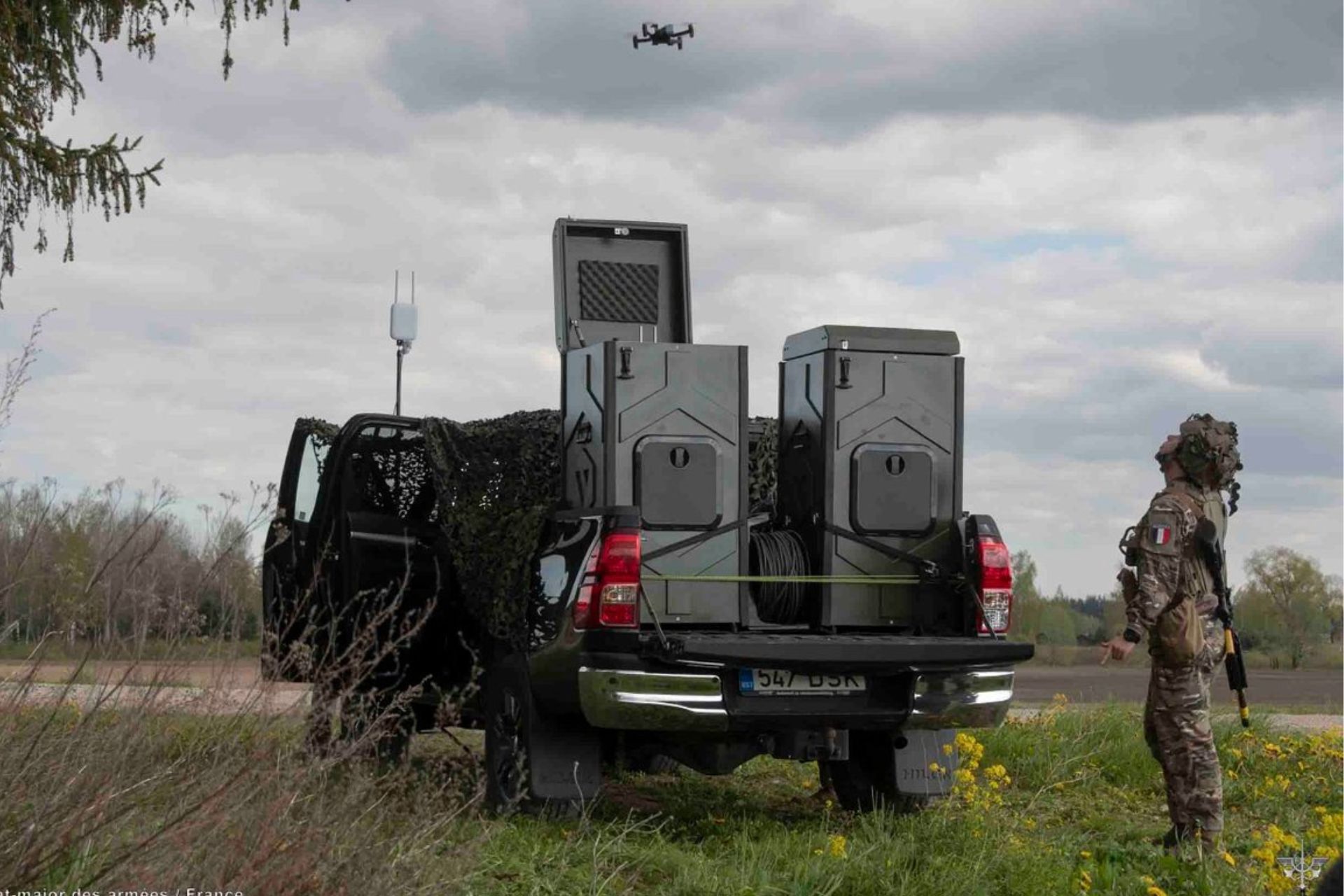
The 1er RIMa has deployed a tactical drone squadron that demonstrated, during Exercise Hedgehog 2025, a new cost-effective and data-driven approach to modern battlefield operations for the French Army (Picture source: X Channel @1er_RIMa)
This operational outcome is part of a broader strategic framework, shaped by the recent parliamentary report titled “Mass and High Technology” by deputies Thomas Gassilloud and Damien Girard. The report argues for mandatory training of all officers and NCO cadets in assembling and operating personal FPV (first-person view) drones from the beginning of their education. It also advocates expanding drone schools modeled on the one recently opened by the French Army. It is within this context of field experimentation that the 1er RIMa structured its drone squadron into three specialized platoons.
The first, focused on “acquisition and surveillance,” employs eBee Vision drones capable of detecting enemy movements at a distance. These platforms are supported by artificial intelligence algorithms designed to enhance target detection and identification. The intelligence is then relayed to the command platoon via a Starlink connection, before the “contact drone” platoon acts on designated targets. This tactical chain is built on rapid response cycles, decentralized coordination, and cost-efficiency.
During Exercise Hedgehog 2025, this approach yielded tangible results. Two U.S. Bradley armored vehicles were neutralized in a simulated engagement without the use of expensive Akeron MP anti-tank missiles, which cost nearly €200,000 each. The regiment reports that this unit, comprising only 5% of a combined-arms tactical group's personnel, could account for up to 20% of the simulated losses inflicted. This asymmetry highlights the potential of such drone formations as force multipliers.
The regiment describes the unit as “discreet and mobile,” able to disrupt adversary operations through surprise while integrating seamlessly into broader tactical maneuvers. An official video released by the Ministry of Armed Forces and shared by the 1er RIMa shows reconnaissance, identification, and strike phases coordinated in wooded and semi-urban environments.
This experimental model echoes lessons from Ukraine, where inexpensive drone swarms, combined with artificial intelligence, have altered the conduct of combat. By aligning with these operational trends, the French Army aims to remain tactically unpredictable while maintaining cost control. However, the use of Starlink as a communications link has prompted concerns over strategic autonomy, with some observers calling for sovereign alternatives in the medium term.
The 1er RIMA’s drone squadron illustrates a deeper transformation in land warfare. It reflects a doctrinal shift toward sensor-driven, data-enabled combat that reduces reliance on manpower and budgetary resources. While its broader adoption remains to be determined, this model suggests that tactical innovation often begins at the unit level,and in this case, it has proven effective.