






Breaking News






FLASH INFO: U.S. deploys 11 warships and 15,000 troops near Venezuela as regional tensions escalate.
The United States has deployed 11 warships, about 15,000 troops, and the carrier USS Gerald R. Ford off the coast of Venezuela, according to a December 1 Newsmax video report. The large-scale posture strengthens U.S. deterrence and fast response options across the Caribbean.
A substantial U.S. naval force is now operating off Venezuela’s coast, with a December 1 video report from Newsmax showing 11 warships, roughly 15,000 troops, and the U.S. Navy USS Gerald R. Ford aircraft carrier moving into position. The outlet cites on-site footage and briefings from officials who say the fully armed Ford group is carrying more than 100 aircraft and is supported by over 4,000 tons (8 million pounds) of munitions, a configuration the Pentagon views as a flexible platform for deterrence, crisis support, and regional stability.
Follow Army Recognition on Google News at this link
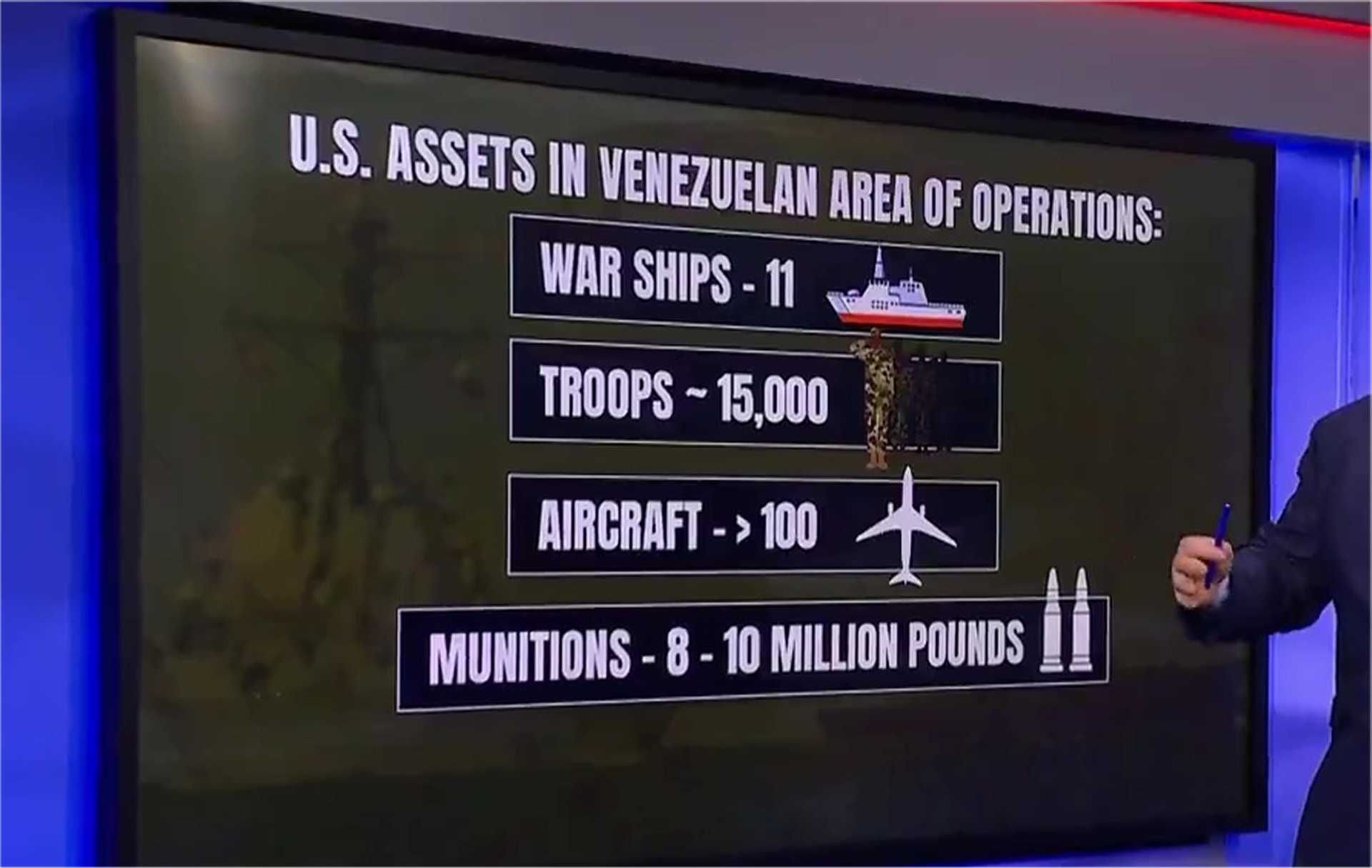
A Newsmax video report detailing the deployment of 11 U.S. Navy warships and 15,000 troops off the coast of Venezuela as part of a high-readiness naval operation, December 1, 2025. (Picture source: NEWSMAX video report footage)
U.S. News channel Newsmax revealed exclusive footage and commentary from aboard the U.S. Navy USS Gerald R. Ford aircraft carrier just weeks before its deployment, including a segment featuring Secretary of the Navy John Phelan, who confirmed the strike group had been training for this exact mission profile. The carrier, the largest and most technologically advanced in the U.S. fleet, can launch combat aircraft every 60 seconds, and its two nuclear reactors provide unmatched speed and endurance. The vessel is flanked by a lethal contingent of Arleigh Burke-class destroyers, many armed with dozens of Tomahawk cruise missiles, capable of crippling enemy airbases and strategic infrastructure within minutes of a launch order.
While the Pentagon publicly frames the mission as a large-scale counter-narcotics operation — targeting cartel-linked drug boats originating from Venezuelan waters — the scale and proximity of the naval presence suggest broader strategic objectives. President Donald Trump’s recent unilateral declaration of Venezuelan airspace as a U.S.-enforced no-fly zone adds an unmistakable layer of geopolitical escalation. Defense analysts note that such a declaration, absent regional or United Nations coordination, constitutes a profound shift in U.S. policy toward Venezuela and potentially sets the stage for kinetic enforcement.
Multiple defense sources have confirmed that “warning orders” have been issued to U.S. forces in the region, a step that places units on heightened alert for potential military engagement. The use of language such as “full-spectrum readiness” within internal communications implies that airstrikes, blockades, or targeted raids are being considered under expanded rules of engagement. Following the U.S. government’s formal designation of several Venezuelan-affiliated drug cartels as foreign terrorist organizations, the legal threshold for preemptive or retaliatory action has significantly lowered.
The Maduro regime has responded with predictable defiance, activating coastal radar stations, moving naval assets into defensive positions, and deploying unmanned surveillance systems across key maritime approaches. In a televised statement, Maduro accused the United States of preparing a “maritime siege” and warned of “asymmetrical retaliation” should U.S. forces violate Venezuelan sovereignty. While Venezuelan naval and air assets remain largely outdated and limited in number, military analysts caution that even a miscalculated engagement could ignite a broader regional crisis.
This operation, reportedly dubbed Southern Spear, marks the largest U.S. naval mobilization in the Western Hemisphere since the 2003 invasion of Iraq. Officials at U.S. Southern Command have remained tight-lipped, citing operational security, but confirmed that coordination with intelligence, special operations, and logistical elements is ongoing. The presence of electronic warfare and ISR (intelligence, surveillance, reconnaissance) platforms in the area further suggests a multi-domain approach that could include cyber and signal disruption components.
Army Recognition is closely following developments in this evolving crisis. Exclusive follow-up reports will feature original analysis, satellite imagery, and interviews with regional military officials and U.S. naval officers familiar with the mission’s classified objectives.