






Breaking News






European Agreement to Produce Modernized DM22 Anti-Tank Mines in response to Armored Threat from the East.
On April 9, 2025, in Brussels, Germany, Latvia, and Norway signed a multilateral agreement for the joint procurement of DM22 directional anti-tank mines, as reported by the Bundeswehr. Announced during the 115th session of NATO’s Conference of National Armaments Directors (CNAD), the initiative reflects a growing European effort to consolidate defense procurement, in line with guidance from both NATO and the European Union.
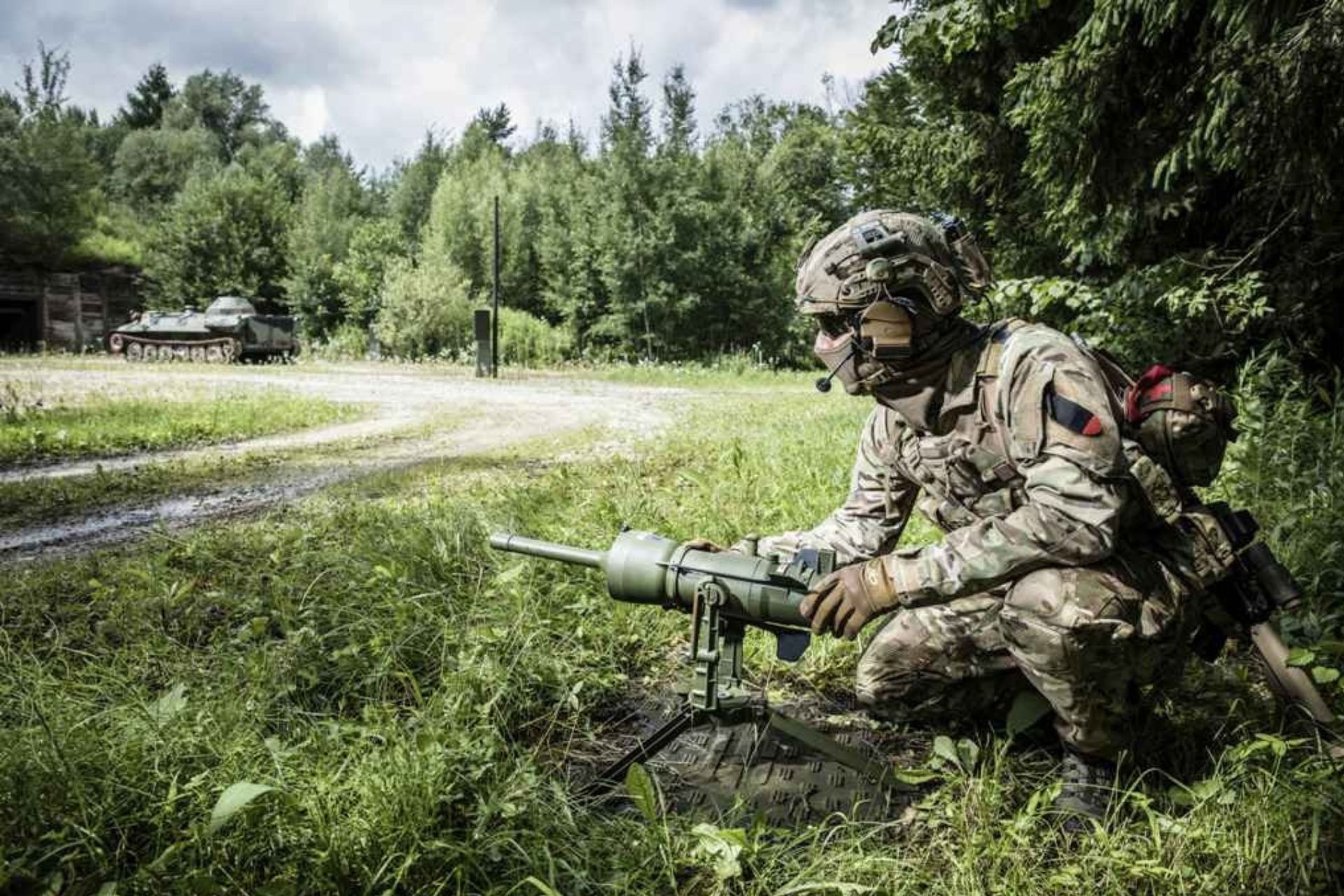
Technically, the DM22 is a directional mine weighing under 10 kg, equipped with a tandem-shaped charge warhead of 1.5 kg capable of penetrating up to 600 mm of homogeneous rolled armor, including reactive armor (Picture source: MBDA)
The latter, through the EDIRPA mechanism (European Defence Industry Reinforcement through common Procurement Act), actively encourages EU Member States to coordinate their acquisitions to accelerate capability development while supporting the European defense industry. This trilateral agreement allows participating countries to access the DM22 via Germany’s framework contract, avoiding the need for separate negotiations with the manufacturer.
This approach follows a trend initiated by Germany in 2023, when Berlin notified KNDS Deutschland of a framework contract for the optional production of at least 123 Leopard 2A8 main battle tanks—an initiative that directly benefited the Netherlands, the Czech Republic, and Lithuania. Similarly, Germany decided in November 2023 to restart production of the DM22 after more than two decades of interruption. This decision came after the Bundestag approved a €68 million budget to replenish Bundeswehr stocks following deliveries of these mines to Ukraine. The initial contract, awarded by the Federal Office of Bundeswehr Equipment, Information Technology and In-Service Support (BAAINBw) to TDW GmbH—an MBDA Deutschland subsidiary based in Schrobenhausen—covers 2,600 units, with an option for 10,000 additional systems intended for pooled export orders. More than a year later, Berlin extended the agreement to Riga and Oslo. Other nations have already expressed interest in joining this initiative.
Technically, the DM22 is a directional mine weighing under 10 kg, equipped with a tandem-shaped charge warhead of 1.5 kg capable of penetrating up to 600 mm of homogeneous rolled armor, including reactive armor. Designed to strike the flanks of armored vehicles at 40 to 60 meters, it is activated when a fiber optic cable laid on the ground is broken, eliminating the need for the vehicle to drive directly over the mine. The system allows a single mine to cover wide areas, including choke points, and can be redeployed in a matter of minutes if not triggered. Initially fielded by the Bundeswehr in 1988 as the DM12, the mine was later upgraded to the DM22 configuration to comply with the Ottawa Convention by adding a self-neutralization mechanism after 40 days. TDW is now rebuilding the production line, as new components—different from those used two decades ago—are required, necessitating recertification of the updated system. The first units are scheduled for delivery in 2027, a year later than originally planned.
This restart goes beyond replicating the historical model. TDW is considering several upgrades: replacing the fiber optic cable with acoustic, infrared, or vibration sensors for improved target identification; adding network capabilities between mines; remote arming and disarming; and the potential inclusion of a man-in-the-loop interface. These enhancements could lead to the development of intelligent minefields and remain compatible with the current DM22s due to the system’s modular architecture. According to Vice Admiral Carsten Stawitzki, National Armaments Director at the German Ministry of Defence, the agreement is a practical demonstration of efficient and responsive procurement for allied forces. He also noted that other countries could join the initiative, strengthening NATO interoperability and enhancing European industrial resilience in the face of contemporary threats.
The decision to resume DM22 production marks a strategic shift, driven by the operational realities of today’s battlefields, especially since Russia’s invasion of Ukraine in 2022. These mines had been sidelined due to the post-Cold War reduction in tensions and constraints imposed by international agreements such as the Ottawa Convention. However, the Ukrainian conflict has demonstrated the effectiveness of anti-tank mines against armored formations, particularly Russian columns. Their ability to block, slow down, or neutralize heavy vehicles at relatively low cost makes them relevant once again for militaries needing to quickly fill capability gaps. Technical updates—like the 40-day self-neutralization feature—also help align these systems with humanitarian standards while preserving tactical value.
Within this context, DM22 deployment is particularly effective for defending mandatory passage points, delaying mechanized advances, or reinforcing defensive lines in wooded or urban areas where surprise and terrain restrictions are key. Their role is relevant both in territorial defense within Europe and in NATO forward deployment or expeditionary missions. The resumption of their production thus responds to two pressing needs: providing an immediate response to armored threats and reinforcing a resilient, scalable European industrial base.