






Breaking News






EDEX 2025: China showcases FN-16 missile in Egypt as both sides deepen military cooperation.
China presented its FN 16 man-portable air defense system at Egypt’s EDEX 2025 exhibition as part of a wider portfolio of short-range and low-altitude interceptors.
China presented its FN-16 man-portable air defense system (MANPADS) at the EDEX 2025 exhibition, as part of a broader effort to expand its defense presence in Egypt. The display also reflects Cairo’s recent efforts to diversify its defense suppliers, which included the procurement of Chinese HQ-9B air defense systems.
Follow Army Recognition on Google News at this link
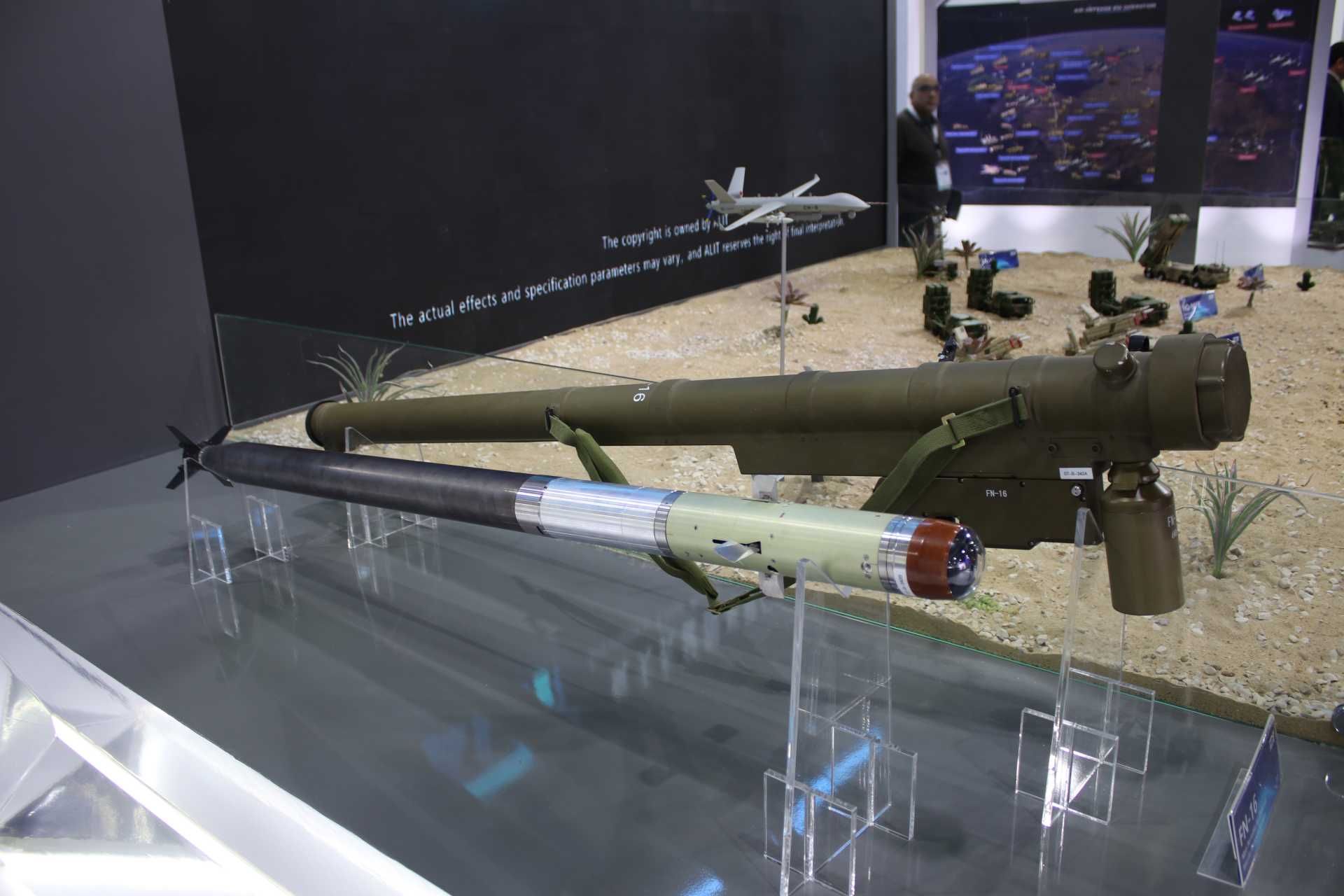
China’s strategy appears oriented toward offering Egypt a full-spectrum air defence package, in which the FN-16 is proposed as a short-range interceptor complementing long-range systems like the HQ-9B. (Picture source: Army Recognition)
China’s efforts to sell military equipment to Egypt have increased significantly in recent years, as Cairo has moved to diversify its suppliers beyond traditional Western and Russian sources. Sales and cooperation deals reportedly include long-range air defence systems, such as the acquisition of the Chinese HQ-9B surface-to-air missile system, confirmed in 2025. This trend coincides with broader political and strategic rapprochement between the two countries, driven by shared economic interests and by Egypt’s concern over restrictions often imposed by Western arms suppliers. Cairo’s turn towards Chinese suppliers reflects a desire to obtain advanced air defence capabilities without the constraints associated with some Western export regimes. The sale of systems such as HQ-9B may open the door to further acquisitions from China’s defence portfolio, potentially including J-10 fighter jets or WJ-700 drones. The presence of Chinese defence firms at exhibitions and in manufacturing cooperation with Egyptian defence industry stakeholders may further increase the likelihood of future such deals.
China publicly revealed the FN-16 at the 7th Zhuhai Airshow at the end of 2008 to succeed the FN-6, which entered service in the early 2000s. Changes include an infrared and ultraviolet dual-color, quasi-imaging seeker, as well as the combination of laser proximity fuze and impact fuze to strengthen decoy resistance and allow all-direction engagement against aircraft, helicopters, UAVs, and cruise missiles. It offers a reaction time of 5 seconds, an interception altitude between 10 and 3,800 meters, and an interception range from 0.5 to 5.5 kilometers. Single-shot kill probability is stated as 0.8 against aircraft and 0.7 against cruise missiles, and the system is described as having a reliability of 0.90 or higher, according to available technical data. The FN-16 can achieve a flight velocity of at least 600 meters per second in cruising flight and sustain overloads of at least 18 g to pursue maneuvering targets.
Being used by the Chinese Army and by several friendly countries, the FN-16 can be mounted on shoulder launchers, vehicles, small boats, or helicopters. The FN-16 components include a battery cooling unit, a tube assembly (containing the launch tube and missile), a launching mechanism, an optical sight, and a night sight. Specifications list a missile diameter of 72 millimeters, a length not exceeding 1,600 millimeters, a missile weight not exceeding 11.5 kilograms, and a total combat equipment weight not exceeding 18 kilograms with an overall length of 1.7 meters. The guidance system is described as an "infrared and ultraviolet dual color rosette scan quasi-imaging" seeker with at least 95 percent guidance accuracy within a 1.5-meter diameter when engaging helicopters and at least 95 percent within a specific zone against jets.
The broader FN family includes the earlier FN-6, which is a third-generation passive infrared MANPAD system developed by the Shanghai Academy of Spaceflight Technology, under China Aerospace Science and Technology Corporation. It has a complete weight of 16 kilograms, a missile weight of 10.77 kilograms, a length of 1.495 meters, and a diameter of 72 millimeters. The FN-6 can reach speeds of 360 meters per second head-on and 300 meters per second in tail chase and can engage targets within ranges from 500 to 6,000 meters and altitudes from 15 to 3,500 meters. Variants include the FN-6A, a system mounted on a Dongfeng EQ2050 chassis with two quadruple launchers, a fire control system combining infrared, laser, and TV sensors, and an optional 12.7 millimeter machine gun, and the FB-6A and FB-6C versions that distribute radar and missiles across two vehicles. The HN-6 further developed the concept by incorporating a protective seeker cap, tripod-mounted firing stations with seats and ballistic shields, and a revised fire control sight, while maintaining the core intercept envelope of the FN-16. These systems have appeared in conflicts including the Syrian Civil War, the Iraq conflict between 2013 and 2017, the internal conflict in Myanmar, and the Russo-Ukrainian War, where FN missiles have been used by Ukraine to down at least one Kalibr cruise missile.
Bangladesh also operates the FN-16, while Pakistan received 806 FN-6 units between 2010 and 2016 and 1,191 FN-16 units between 2018 and 2021, with an additional purchase of 295 portable missiles identified for the 2017 to 2018 period. The motivation behind Pakistan’s acquisition of the FN-16 could be linked to the introduction of AH-64E Apache helicopters by the Indian Army, which created a need for systems with stronger resistance to infrared countermeasures compared to earlier helicopters. Additional operators of the FN missiles include Qatar, Sudan, Malaysia, Namibia, and Peru, along with non-state groups such as the Peshmerga, Free Syrian Army, Islamic State, Kachin Independence Army, and United Wa State Army. In China, a training scenario from November 2025 featured a Chinese soldier locking onto a low-altitude target at about 1,800 meters despite the release of multiple flares.
The Egyptian Air Defense Forces have historically relied on older-generation MANPADS, such as the Ayn al-Saqr, a local variant of the 9K32 Strela-2, the Soviet-era 9K38 Igla, and the U.S.-made Stinger. The Strela-2 is a first-generation, shoulder-launched MANPADS introduced in 1968, with a passive uncooled infrared seeker, a typical effective range up to about 3.7–4.2 kilometers, and a ceiling roughly between 1,500 and 2,300 meters depending on variant; its simple IR guidance makes it vulnerable to basic countermeasures and limits its effectiveness against fast jets or targets deploying decoys. The 9K38 Igla, introduced in 1983, improved seeker sensitivity and guidance logic, its missile reaching ranges near 5.0–5.2 kilometers with altitude engagement up to roughly 3,500 meters, and offers better resistance to infrared countermeasures than Strela-2 due to dual-detector IR seeker and improved warhead and fuzing options. By contrast, the FN-16 represents a significant upgrade in guidance, counter-countermeasure resilience, engagement flexibility, and likely effectiveness against helicopters, small aircraft, UAVs, or cruise missiles compared to these Soviet missiles, but would also require adjustments in training, logistics and air defense integration.
When compared to its U.S. counterpart, the Stinger is a relatively light MANPADS by Western standards and has been widely deployed and upgraded since the 1980s. With its quasi-imaging seeker, however, the FN-16 appears designed to address some of the limitations typical of older infrared-only missiles, offering an “all-direction” engagement capability that improves resistance against decoy flares or infrared countermeasures. The declared technical specifications of the FN-16 suggest a performance comparable to or superior to the Stinger to counter low-altitude, maneuvering, or countermeasure-equipped threats. For tactical versatility, both could be shoulder-mounted, as well as being launched by vehicles, boats, or helicopters. While both systems remain short-range and short-altitude interceptors, the FN-16 seems optimized for modern low-altitude threats, including UAVs, helicopters, and cruise missiles, whereas the Stinger possesses a mature design and retains its value, but may be more limited in future environments.
Written by Jérôme Brahy
Jérôme Brahy is a defense analyst and documentalist at Army Recognition. He specializes in naval modernization, aviation, drones, armored vehicles, and artillery, with a focus on strategic developments in the United States, China, Ukraine, Russia, Türkiye, and Belgium. His analyses go beyond the facts, providing context, identifying key actors, and explaining why defense news matters on a global scale.