







Breaking News




Chile receives Colombian Copper 4x4 armored vehicles to boost high altitude tactical mobility.
According to information published by Infodefensa on June 19, 2025, the Chilean Army is reinforcing its ground mobility and protection capabilities through the acquisition of 70 armored Copper 2.8 TDI 4×4 light tactical vehicles, procured from Colombian manufacturer Armor International via Salfa for US$ 13.5 million under Project Alfil II. This procurement, part of the broader Project Alfil II modernization effort, reflects Chile’s strategic focus on enhancing operational readiness in response to evolving regional security threats. Deployed primarily in the country’s northern and southern macrozones, these vehicles are designed to provide armored mobility for internal security, border surveillance, and high-altitude operations across complex terrain.
Follow Army Recognition on Google News at this link
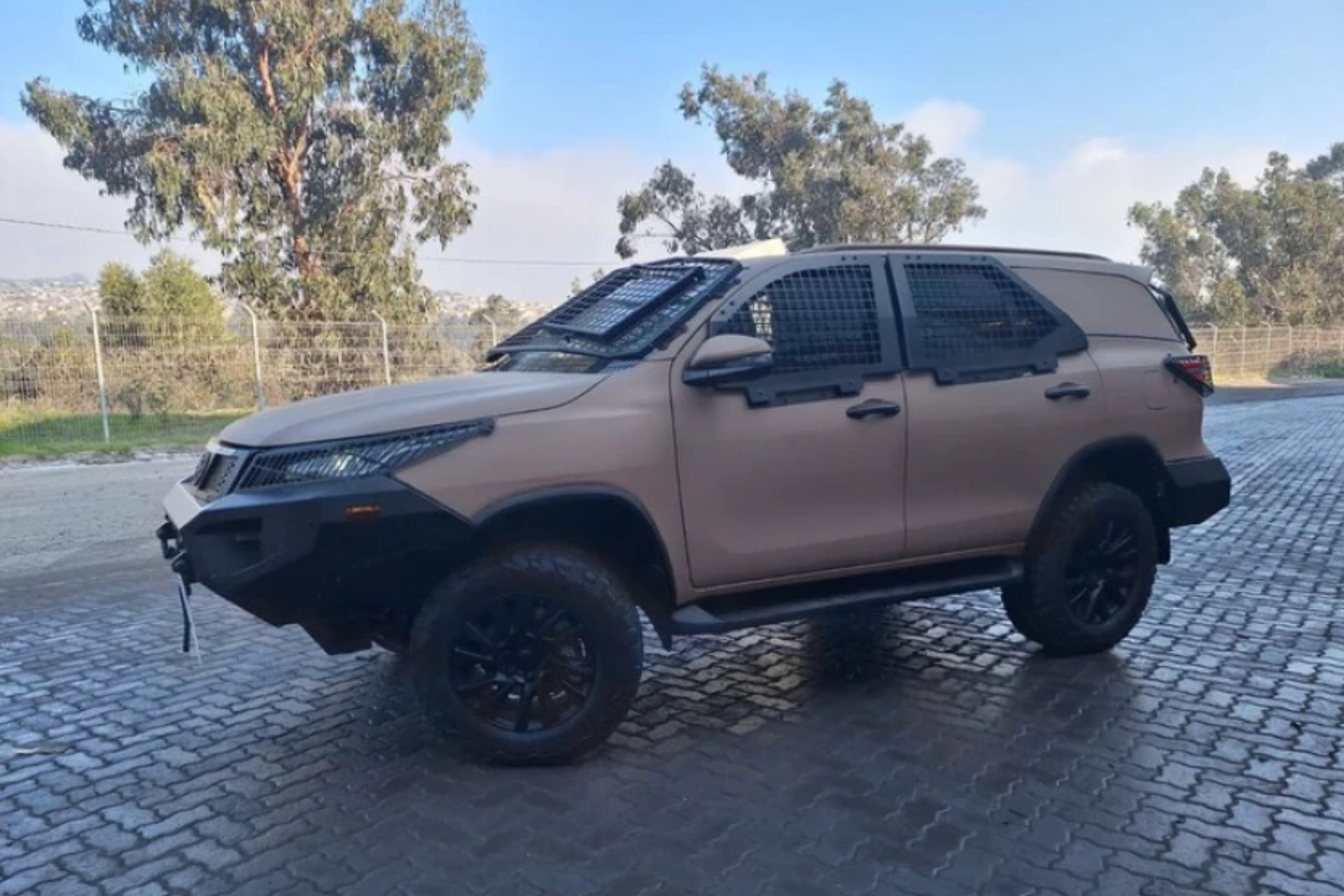
A Copper 2.8 TDI armored 4×4 vehicle delivered to the Chilean Army, designed for high-risk and off-road missions. (Picture source: Chilean Army)
These vehicles, featuring full 360° ballistic protection, Euro III-compliant turbodiesel engines, and robust high-altitude performance, are scheduled for phased delivery to units in Chile’s northern and southern macrozones in the second half of 2025. In April 2025, a delegation from Chile’s Institute for Research and Control (IDIC) conducted static and dynamic off-road trials in Colombia, including tests above 4,000 meters, as confirmed by Divisional General Guillermo Altamirano. These trials ensured the vehicles meet performance and protection standards in the country’s demanding geography.
Technically, the Copper 2.8 TDI is powered by a Euro III turbodiesel engine delivering approximately 131 to 135 horsepower and torque of 360 to 385 Newton-meters. The powertrain is supported by a Bosch rotary VE fuel pump operating at 900 bar and Honeywell WG or VGT turbochargers, depending on the configuration. The platform provides full 360° ballistic protection through advanced composite armor materials and features a rugged four-wheel-drive chassis with high ground clearance for excellent off-road mobility. Internally, the Copper is configurable for a range of missions including troop transport, logistics, or command-and-control, making it highly adaptable for both conventional and asymmetric operations.
This acquisition forms part of a broader modernization effort underway across Latin American militaries, with Peru advancing its own ambitious defense upgrades. The Peruvian Army has recently introduced 32 Light Armoured Vehicles from General Dynamics Land Systems-Canada and is moving forward with plans to acquire up to 178 refurbished U.S. Stryker infantry carrier vehicles through the Foreign Military Sales program. Additionally, Peru is negotiating to purchase up to 100 Hyundai Rotem K2 Black Panther main battle tanks. These initiatives are aimed at replacing obsolete platforms and creating a more modern, flexible, and rapidly deployable ground force.
Peru’s strategic environment underscores the urgency of these modernization programs. The country remains engaged in long-term counter-insurgency operations against remnants of the Shining Path in the VRAEM region. It also faces persistent threats from transnational criminal networks involved in drug trafficking, illegal mining, and smuggling, especially in remote border zones. In recent years, the Peruvian government has declared multiple states of emergency to manage large-scale civil unrest and transport strikes. In response, Peru has adopted a multisectoral national defense policy aimed at integrating military capabilities with civil resilience, infrastructure protection, and cyber defense measures.
In this context, Chile’s acquisition of the Copper 2.8 TDI under Project Alfil II reflects a shared regional trend toward enhanced operational mobility, protection, and rapid force projection. These vehicles, along with new logistics trucks, missile systems, and modern armor platforms, mark a strategic shift toward multi-domain readiness, as regional militaries adapt to a complex threat landscape that blends traditional military concerns with internal security, hybrid warfare, and disaster response missions.