






Breaking News






Breaking News: US might purchase Ukrainian drones following new defense talks to prepare for future wars.
As reported by the BBC on August 19, 2025, Ukrainian President Volodymyr Zelensky stated in Washington that the United States would buy Ukrainian drones, which would provide funding for domestic production of these systems. Speaking after talks with US President Donald Trump and European leaders at the White House, he outlined the agreement as a component of Ukraine’s security guarantees under negotiation. Zelensky emphasized that Ukrainian companies would gain the financial resources to continue and expand production once exports begin, and he stressed that this was essential given the role drones play in the war with Russia. The announcement coincided with discussions of broader packages involving US weapons, European financing, and new industrial partnerships.
Follow Army Recognition on Google News at this link
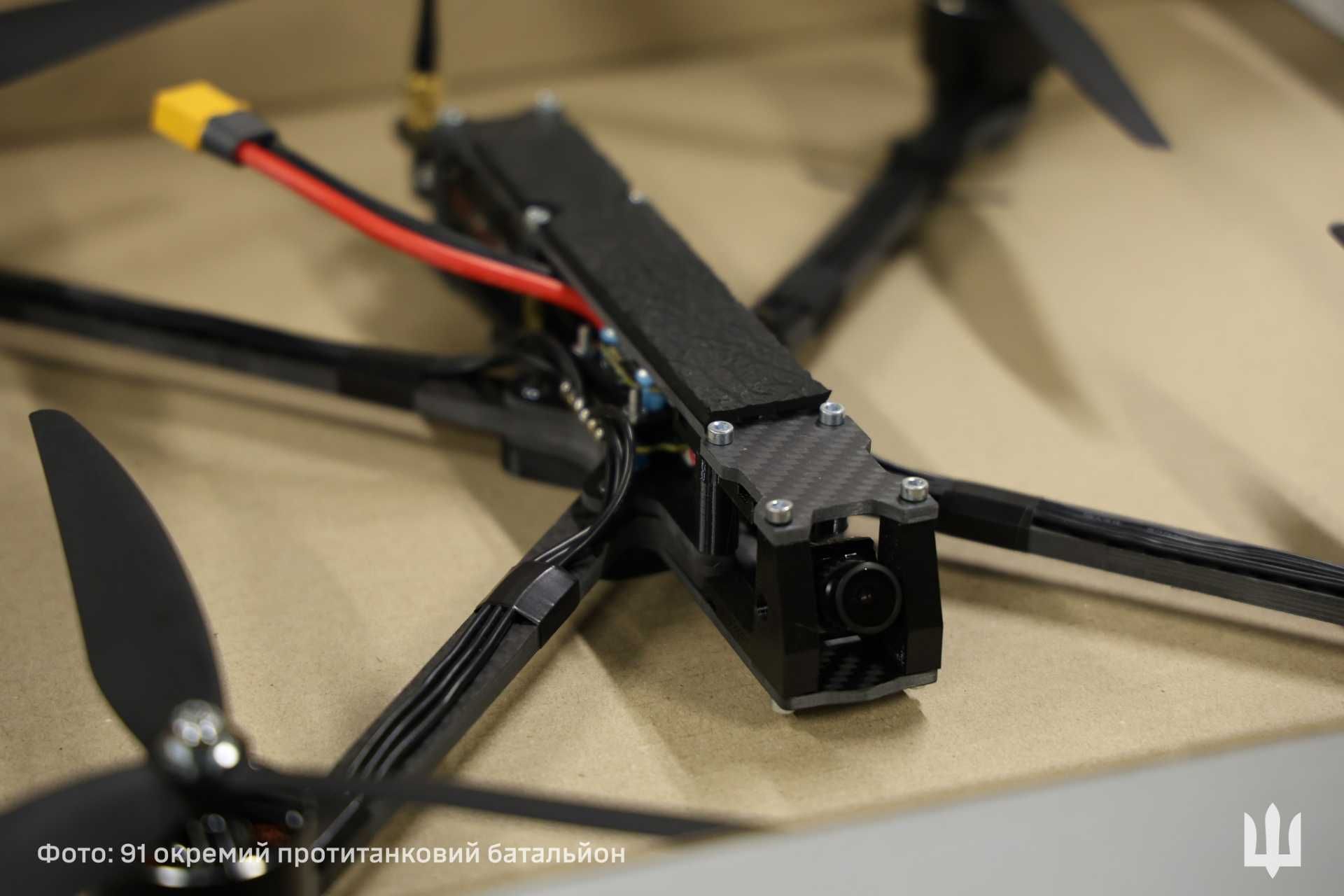
Small quadcopters adapted to drop munitions provide near-real-time reconnaissance and precision strikes for Ukrainian soldiers, while fixed-wing platforms such as Leleka-100, PD-2, Shark, and Raybird-3 extend surveillance deep into the rear and feed digital fire-control networks (Picture source: Facebook/91optb)
Zelensky explained that the agreement to sell drones to the United States was part of a wider framework that included a US weapons package valued at $90 billion, targeting systems that Ukraine does not produce, such as aircraft and advanced air defense platforms. Multiple reports described Ukraine’s written proposal as involving a $100 billion purchase of US weapons financed by European partners and a $50 billion joint drone production deal with Washington. He noted that precise details of the security guarantees, including the structure of weapons commitments, would likely be finalized within seven to ten days. This framework was presented as having three elements: sustaining Ukraine’s armed forces, acquiring foreign-produced weaponry, and ensuring reliable domestic drone production. In remarks to reporters, Trump said that the US role would focus on selling rather than giving weapons, while European leaders underlined the need to establish conditions for a ceasefire before advancing negotiations with Russia.
The White House meetings occurred shortly after Trump’s summit in Alaska with Russia’s President Vladimir Putin, which had not yielded a ceasefire agreement. Trump indicated that he had a 40-minute call with Putin following the Zelensky talks, during which he discussed arranging a bilateral meeting between the Russian and Ukrainian leaders, followed by a trilateral that would include the United States. French President Emmanuel Macron was heard in an off-camera conversation with Trump in which the US president said Putin “wants to make a deal,” though no venue or date was agreed. German Chancellor Friedrich Merz said publicly that he could not envision another meeting without a ceasefire, while NATO Secretary General Mark Rutte explained that security guarantees were being coordinated by British Prime Minister Keir Starmer and Macron with the participation of around 30 countries, including Japan and Australia. Zelensky himself did not repeat earlier calls for an immediate ceasefire, instead prioritizing the establishment of long-term guarantees and financing for Ukraine’s defense sector.
Documents reviewed by the Financial Times detailed Ukraine’s proposals, including the refusal to concede territory to Russia, the rejection of a Russian suggestion that Ukraine withdraw from parts of Donetsk and Luhansk in exchange for freezing the frontline, and the insistence that such a step would expose Dnipro to rapid attack. The proposals also called for full compensation for wartime damage, potentially through $300 billion in frozen Russian sovereign assets, and conditioned any sanctions relief on Russia’s compliance with a peace agreement. Zelensky said part of the security guarantee would involve a weapons deal valued at $90 billion and confirmed that a drone production agreement worth $50 billion was under discussion. European leaders attending the meetings supported Ukraine’s position against territorial concessions, with Merz drawing a comparison by saying such a demand would be equivalent to asking the United States to give up one of its own states. Meanwhile, ongoing Russian strikes on Kharkiv, Zaporizhzhia, and Odesa underscored the urgency of Kyiv’s requests, as drone and missile attacks caused multiple civilian casualties and damage to energy infrastructure.
The agreement to sell drones to the United States comes at a time when Ukraine’s domestic drone sector has grown substantially since 2022. Before the invasion, Ukraine had a limited number of manufacturers, but by 2025 more than 500 firms were involved in production, creating a diverse range of systems from small quadcopters to long-range strike drones. Government initiatives such as the “Army of Drones” program, tax exemptions, and grants through the Brave1 incubator supported rapid scaling of production. In 2024, contracts were reported for 1.6 million drones valued at approximately ₴114 billion, and by early 2025 Deputy Defense Minister Ivan Havryliuk said that monthly deliveries had reached 200,000 units, up from about 20,000 in early 2024. President Zelensky separately announced plans to produce 30,000 long-range drones during 2025. This surge in production capacity has made Ukraine a leading producer of certain classes of drones, while the prospective US purchases would provide export demand that helps sustain and professionalize the industry.
Operational use of drones has become central to Ukraine’s strategy. Small quadcopters such as DJI Mavics, adapted for reconnaissance and improvised strikes, provide direct support to infantry, while fixed-wing systems like Leleka-100, PD-2, and Shark perform long-range surveillance and artillery spotting. The US supplied over 700 Switchblade loitering munitions and around 1,800 Phoenix Ghost drones, while Poland provided Warmate loitering munitions, enabling Ukrainian forces to strike armor and fortified positions at standoff distances. Ukraine also developed widespread use of FPV racing drones converted into attack platforms costing only a few hundred dollars, which by 2023 were estimated to account for a high proportion of Russian equipment losses in some sectors. Long-range drones such as the UJ-22, Bober, and Antonov’s Lyuty have been employed in strikes against targets inside Russia, including oil facilities and airbases. Reports have described large-scale operations such as “Operation Spider Web,” in which over 100 drones were launched in coordinated attacks on Russian bombers, though the exact outcomes remain contested.
Foreign partnerships have reinforced these efforts. Turkey’s Baykar delivered around 50 Bayraktar TB2 systems early in the war and later committed $100 million to build a factory, service center, and training facilities in Ukraine to co-produce TB2 and Akıncı drones. The United States not only delivered reconnaissance drones and loitering munitions but also co-developed the Phoenix Ghost system with Ukrainian input. European allies provided micro-drones like the Black Hornet, heavy lift drones such as the Malloy T-series, and reconnaissance assets including ScanEagle and Vector systems, while Poland supplied additional FlyEye and Warmate drones through direct deliveries and crowdfunding campaigns. Public initiatives in countries such as Lithuania and Poland raised millions of euros for drone procurement, and firms like Terminal Autonomy developed low-cost long-range drones such as the AQ-400 Scythe, with a range of 750 kilometers and unit costs around $30,000, partly supported by international investors. These measures collectively expanded Ukraine’s UAV fleet while embedding it in international supply and development networks.
At the same time, Ukraine has had to counter extensive Russian drone use. Russia deployed Iranian-supplied Shahed-136 drones in large numbers against Ukrainian cities, as well as domestically produced systems such as the Lancet loitering munition and Orlan reconnaissance UAVs. In response, Ukraine built a layered defense combining kinetic systems such as Germany’s Gepard self-propelled anti-aircraft guns and improvised machine-gun teams with portable electronic warfare devices, anti-drone rifles, and backpack jammers like the “Patelnya.” Networks of acoustic and radio-frequency sensors, including systems supplied by Dedrone, provide early warning of incoming UAVs. Physical barriers such as overhead netting have been used at depots, roads, and trenches to intercept low-flying drones, while experimental countermeasures include drone-on-drone interception and autonomous ground robots. The interaction between Ukrainian defenses and Russian adaptations, such as Shaheds modified to resist GPS jamming, has created a continuous cycle of measures and counter-measures that forces both sides to adjust their technologies rapidly.
The US decision to purchase Ukrainian drones is significant both for Ukraine’s defense industry and for the United States and its allies. For Ukraine, it secures predictable revenue for production lines, integrates its manufacturers into allied procurement frameworks, and ensures that drones developed under wartime conditions are standardized for long-term use. For the United States, it provides access to combat-tested systems, supports American military needs in a field where officials acknowledge technology gaps, and demonstrates alignment between procurement policy and lessons from Ukraine’s battlefield. The arrangement also links directly to the wider weapons package under negotiation, which includes requests for at least 10 US Patriot systems and other equipment critical for air defense. Taken together, the weapons purchases, the drone production agreement, and the security guarantees sought in Washington are intended to build a framework that prevents further aggression and positions Ukraine to sustain its defense capabilities well beyond the present phase of the conflict.