






Breaking News






Breaking News: Türkiye Activates Aselsan’s Steel Dome Multi-Layered Integrated Air Defense System.
On August 27, 2025, Türkiye officially activated its homegrown Steel Dome project, a multilayered air and missile defense architecture developed by ASELSAN, as reported by the company. The announcement, made during the “Foundations for the Next 50 Years” ceremony at ASELSAN’s Gölbaşı Technology Base and attended by President Recep Tayyip Erdoğan, marks both the delivery of critical defense systems and the launch of the largest defense industry investment in the country’s history. The event coincided with ASELSAN’s 50th anniversary and brought together top national leadership, including the Minister of National Defense Yaşar Güler, Secretary of Turkish Defence Industries Prof. Dr. Haluk Görgün, ambassadors, and senior executives from leading defense firms.
Follow Army Recognition on Google News at this link
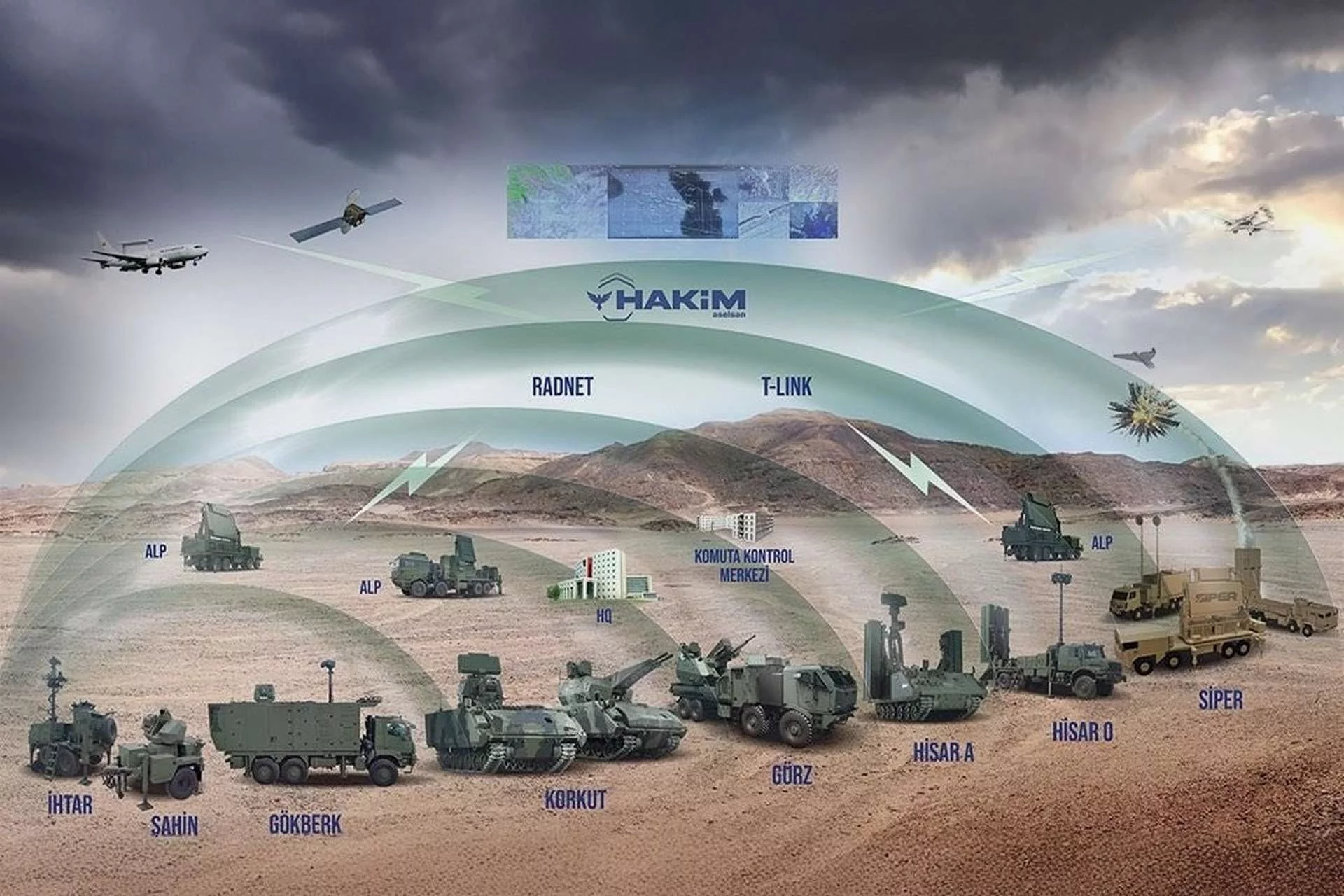
Steel Dome emerges as both shield and symbol: a national missile defense architecture built at scale, consolidating independence in defense production while reinforcing Türkiye’s skies (Picture source: ASELSAN)
A central highlight of the ceremony was the delivery of 47 key components of the Steel Dome valued at USD 460 million, including air defense, electronic warfare, and radar systems such as the long-range SİPER, the HİSAR short- and medium-range interceptors, the KORKUT mobile gun system, the PUHU electro-optical platform, and the ALP advanced radar family. These deliveries underline Ankara’s ambition to shield all 783,000 square kilometers of its territory under a domestically built, AI-supported protective umbrella. Demonstrating integrated capabilities, ASELSAN’s ASELFLIR-600 electro-optical system live-streamed the Steel Dome handover from BAYKAR’s AKINCI UAV, showcasing real-time surveillance and sensor-to-shooter integration.
At its core, Steel Dome is conceived as a comprehensive “system of systems,” structured in layers that extend from counter-unmanned aerial systems to high-altitude interceptors. The close-range architecture integrates C-UAS solutions such as the KORKUT 25 with 25 mm airburst munitions, the İHTAR and KANGAL jammer families, the ŞAHİN 40x53 mm airburst system, and the EJDERHA AD high-power electromagnetic weapon. Very low-altitude defense is ensured through the KORKUT SPAAG family, the GÜRZ system with 35 mm guns effective up to 4 km, the BURÇ 30 mm system reaching 1+ km, modernized 35 mm anti-aircraft guns, and the KORKUT C-RAM dedicated to countering rockets, artillery, and mortars. At low altitude, the HİSAR-A with a 15+ km range, the portable Sungur missile with 8 km reach, and improved variants of GÜRZ and BURÇ provide coverage against UAVs, helicopters, and aircraft. The medium-altitude segment is covered by HİSAR-O, capable of intercepting targets beyond 25 to 40 km, and the Gökdemir system, while the high-altitude layer relies on successive versions of the long-range SİPER interceptor co-developed by Roketsan and ASELSAN, extending from over 100 km in Block I to 180 km in Block III, positioning Türkiye alongside operators of strategic systems such as Patriot and SAMP/T.
Like its effector layers, Steel Dome integrates a wide spectrum of radars tailored to each mission profile. Short-range detection and C-UAS surveillance are provided by the AURA 100-G and AURA 200-G AESA radars, complemented by the STR 400-G specialized in rocket, artillery, and mortar detection. Medium-range coverage includes the KALKAN 400-G associated with the HİSAR-O system, the KALKAN 200-G supporting KORKUT and HİSAR-A, and the ALP 100-G low-altitude multirole AESA radar. Long-range surveillance and fire control rely on the ALP 300-G and 310-G radars as principal strategic assets, as well as the AKREP 1000-G, serving as the multifunction fire control radar for SİPER. In addition to kinetic interceptors and radars, electronic warfare systems such as KORAL and PUHU are embedded within the architecture, providing passive detection capabilities and disrupting the combat effectiveness or self-defense systems of incoming threats. This combination of kinetic, electronic, and sensor-based layers forms the backbone of Steel Dome, enabling Türkiye to establish a fully integrated national air and missile defense shield extending across land, sea, and mobile formations.
Further strengthening the architecture, ASELSAN used the occasion of IDEF 2025 to unveil new components: Ejderha anti-drone systems, Koral-200 electronic warfare modules, the autonomous Gürz vehicle, and the Turan digital backbone, designed to counter asymmetric threats and electronic attacks. These enhancements illustrate how Steel Dome is not a single weapon but an interconnected network in which radars detect, sensors track, missiles intercept, electronic warfare disrupts, and mobile gun systems provide close-in protection.
The Steel Dome program reflects Türkiye’s drive for strategic autonomy after long-standing frustrations in NATO over access to missile defense systems. The U.S. refusal to sell Patriot batteries and the subsequent controversy over Russian S-400 procurement pushed Ankara to intensify indigenous R&D. Since its formal launch in August 2024, Steel Dome has transitioned rapidly from trials to initial deployment in 2025, supported by accelerated serial deliveries. ASELSAN leads the integration of radars and sensors, Roketsan supplies the missile portfolio, TÜBİTAK-SAGE develops seekers and guidance kits, Havelsan provides command-and-control software, and MKE ensures sustained artillery and munitions supply. Collectively, these institutions have contributed to reducing foreign dependency from 80% in the early 2000s to around 20% today.
The ceremony also underscored ASELSAN’s broader industrial ambitions. President Erdoğan inaugurated the Oğulbey Technology Base, a USD 1.5 billion investment covering 6.5 million square meters, equivalent to 900 football stadiums,set to become ASELSAN’s largest site and the centerpiece of its next 50 years. Dedicated primarily to Steel Dome development, it will also house research, testing, and production facilities. In parallel, 14 new facilities worth USD 280 million were opened, including an Air Defense Systems Design Office, Radar Production and Integration Facility, Advanced Engineering Materials R&D Center, Guided Munitions Design Facility, and Avionics Integration Hangar. Together, these projects expand ASELSAN’s capacity by 40% and establish Europe’s largest integrated air defense facility.
Strategically, the activation of Steel Dome carries weight far beyond Türkiye’s borders. In a regional environment shaped by conflicts in Gaza, tensions with Iran, and instability in Lebanon, Ankara signals a doctrine of deterrence. The message is clear: no adversary should contemplate an attack without facing multiple, layered interceptors, radars, and electronic countermeasures. Militarily, Steel Dome provides Türkiye with a credible missile defense shield for metropolitan centers, energy hubs, and military installations, while offering the basis for potential regional cooperation.
Steel Dome thus emerges as both shield and symbol: a national missile defense architecture built at scale, consolidating independence in defense production while reinforcing Türkiye’s skies. With serial deliveries expanding, new facilities under construction, and directed-energy weapons entering the architecture, Türkiye demonstrates that its sovereignty will be protected by its own means, and that its defense industry is positioning itself as a global alternative in the decades ahead.