







Breaking News




Breaking News: Taiwan Conducts First HIMARS Test in Amphibious Counterattack Drill as Deterrence Against China.
On Monday, May 12, 2025, Taiwan conducted the first-ever live-fire test of the M142 HIMARS system during the annual "Thunder" military exercise, held at the Jiupeng military base in Pingtung County, as reported by The Liberty Times. This drill was part of a broader set of coordinated maneuvers titled "Thunder," "Divine Eagle," and "Divine Bow," aimed at testing the effectiveness of precision strike systems and interoperability between the branches of Taiwan’s armed forces. Against a backdrop of ongoing geopolitical tensions with Beijing, the scenario simulated a counterattack to repel a potential amphibious landing by the Chinese navy on Taiwan’s eastern coast, reflecting the island’s intent to acquire fast, mobile, and long-range strike capabilities.
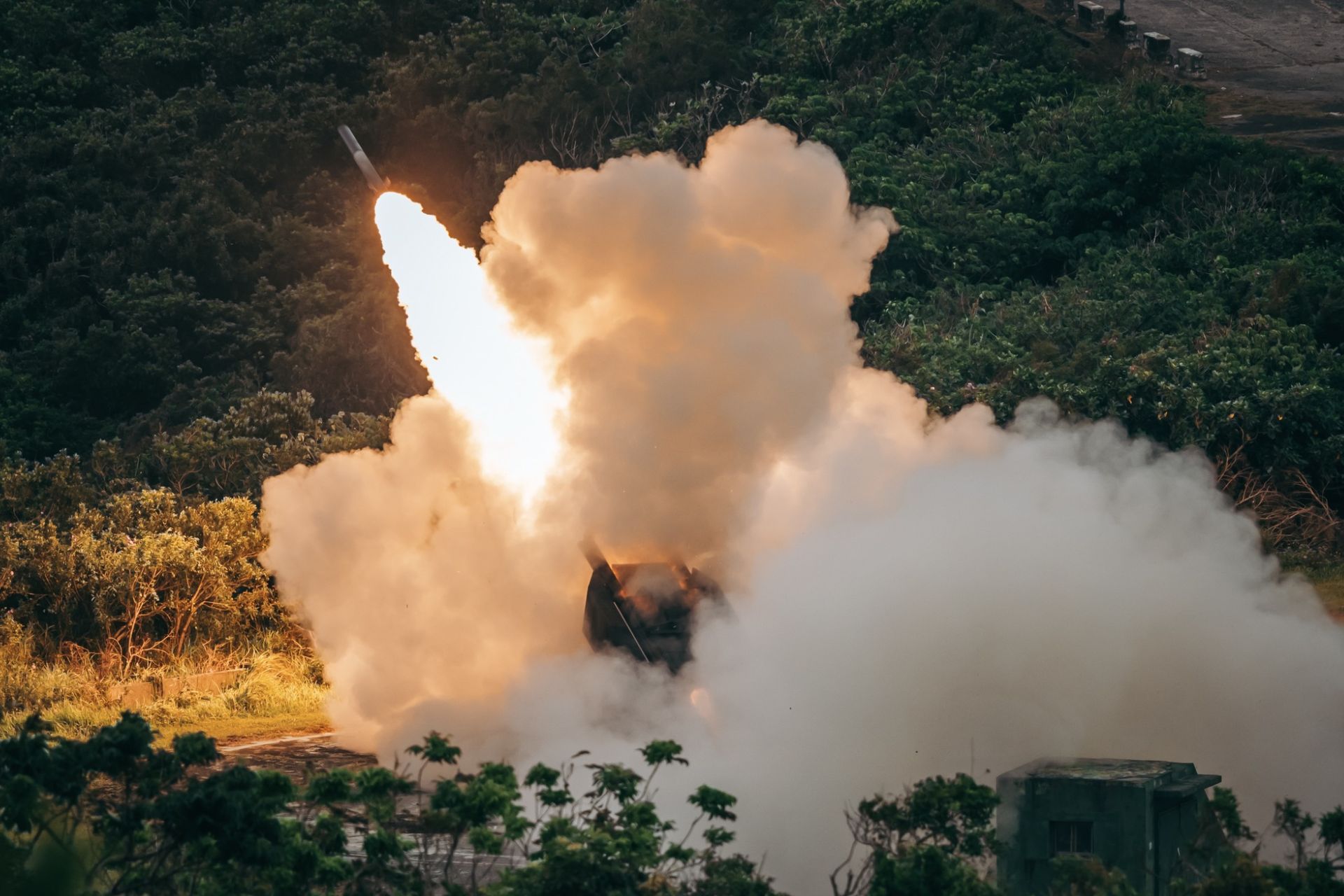
The introduction of HIMARS and the full-scale deployment of the RT-2000 both illustrate Taiwan’s commitment to aligning its defense strategy with rapid-response (Picture source: Youth Daily News From X Channel @stoa1984 )
The key moment of the day was marked by the inaugural firing of the HIMARS system, which launched seven guided rockets, M30 and M31, with ranges between 70 and 94 kilometers. This test demonstrated the system’s ability to engage strategic targets from a significant distance and quickly relocate to avoid enemy retaliation. The M142 HIMARS is mounted on a 6x6 FMTV truck chassis, features an armored cabin for a three-person crew, and can carry either six GMLRS rockets or one ATACMS tactical missile with a maximum range of 300 kilometers. Its digital fire control system allows for high accuracy and can be operated with a reduced crew, making it well-suited for asymmetric engagements or preemptive strikes against landing forces or radar installations.
Alongside this first operational use of HIMARS, spectators witnessed a large-scale demonstration of firepower from the domestically developed Thunderbolt-2000 (RT-2000) multiple rocket launcher system, produced by the National Chung-Shan Institute of Science and Technology (NCSIST). At dawn, Taiwan’s artillery units fired six consecutive salvos of 200 rockets, totaling over 2,000 projectiles within a few hours. Despite poor weather conditions, including heavy clouds and intermittent rain, the exercise proceeded without interruption, demonstrating the RT-2000's operational reliability under realistic field conditions.
The RT-2000 is a high-mobility, truck-mounted 8x8 rocket launcher system capable of firing different types of munitions depending on the mission profile: 117 mm rockets for short-range targets, 180 mm rockets for medium-range engagements, and 230 mm guided rockets with a range of approximately 45 kilometers. The system is designed to saturate a designated area with a high volume of fire in a short time, making it particularly effective against troop concentrations or incoming equipment. During the exercise, the intensity and volume of the barrage underscored Taiwan’s capacity to deliver rapid area denial fire in the event of an attempted landing.
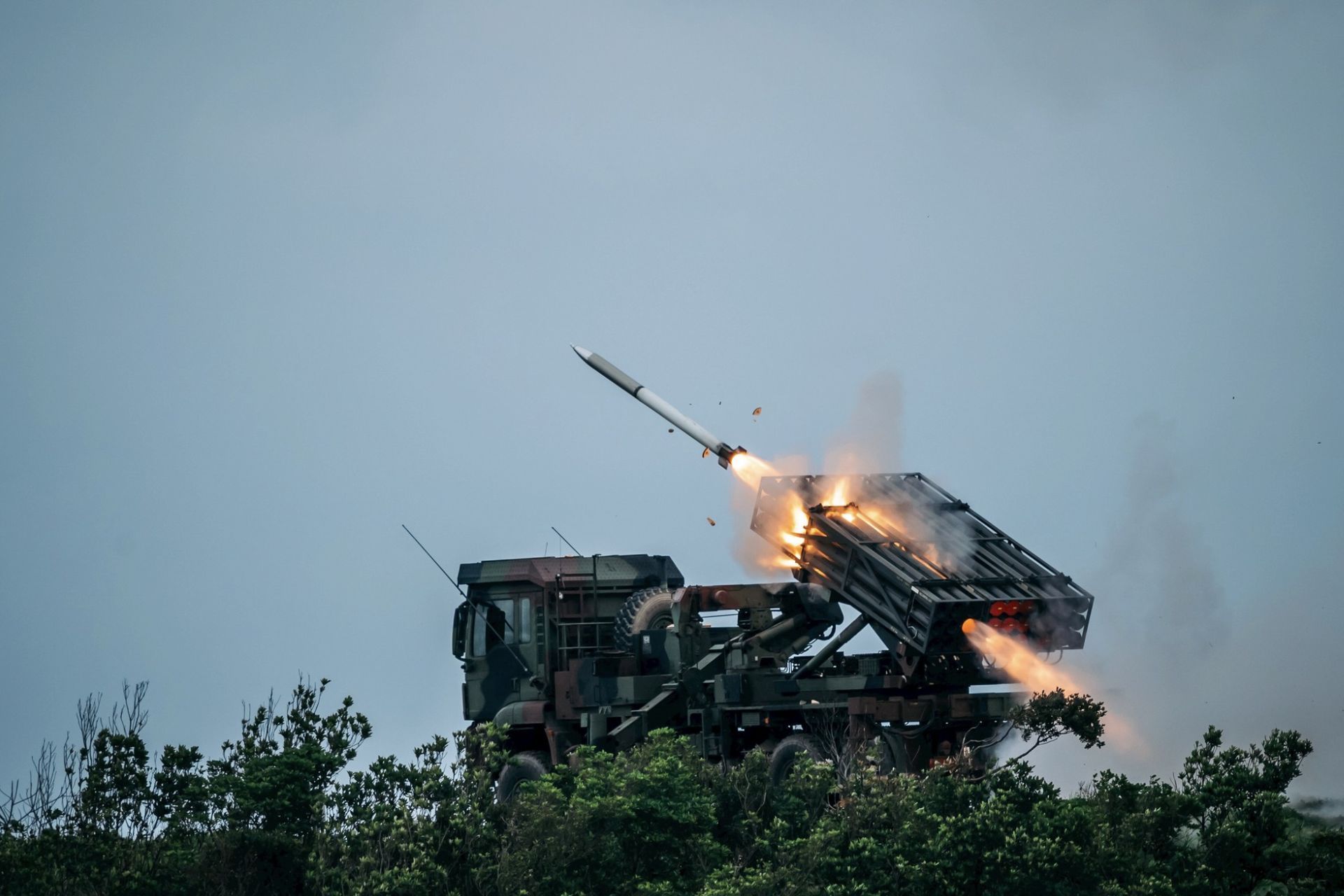
Alongside this first operational use of HIMARS, spectators witnessed a large-scale demonstration of firepower from the domestically developed Thunderbolt-2000 (RT-2000) multiple rocket launcher system (Picture source: Youth Daily News From X Channel @stoa1984 )
The demonstrations attracted significant attention from military analysts and defense enthusiasts. Some expressed anticipation over the possibility of further HIMARS firings in the coming days, depending on weather conditions. Taiwan’s military confirmed that the next phases of the drill would include live-fire launches of Stinger surface-to-air missiles under the “Divine Bow” program and firing exercises by Air Force Special Forces helicopters as part of “Divine Eagle,” reflecting a joint-force approach across land and air components.
Strategically, the deployment of HIMARS marks a deeper cooperation between Taiwan and the United States. In 2020, Taiwan signed a contract for 29 HIMARS launchers. The first batch of 11 systems, along with two training simulators, was delivered in 2024. In January 2025, the first shipment of 16 ATACMS missiles was received, with the remaining 18 HIMARS units scheduled for delivery by 2026. Taiwan’s decision to cancel a previously planned acquisition of 40 Paladin M109A6 self-propelled howitzers in favor of additional HIMARS indicates a strategic shift toward lighter, more mobile, and interoperable artillery assets.
The introduction of HIMARS and the full-scale deployment of the RT-2000 both illustrate Taiwan’s commitment to aligning its defense strategy with rapid-response, precision-strike capabilities that are harder to counter. In the early stages of a potential conflict, these systems could play a crucial role in disrupting enemy assault forces before they reach shore. Their ability to engage targets at standoff distances, coupled with tactical mobility, forms a central element of Taiwan’s asymmetric defense doctrine, which aims to inflict immediate damage and complicate enemy operations.
The first live-fire HIMARS test at Jiupeng and the saturation fire demonstration by the RT-2000 represent a turning point in Taiwan’s artillery modernization. This combination of precision strike and area saturation capabilities strengthens the island’s defensive posture and sends a clear signal to both Beijing and international partners regarding Taipei’s determination to defend its territory using tested technologies integrated within a multi-domain deterrence strategy.