







Breaking News




Breaking News: Indonesia and France Nearing Deal for 12 Rafale jets with Submarines and Howitzers.
During a press conference held in Jakarta on May 28, 2025, during President Emmanuel Macron’s state visit to Indonesia, France and Indonesia expressed their intent to strengthen their strategic defense partnership. The French president announced that advanced discussions could lead to a new order of Rafale fighter jets for Jakarta, in addition to the initial contract signed in 2022. This development comes as the two nations mark the 75th anniversary of their diplomatic relations, underscoring a growing military cooperation.
Follow Army Recognition on Google News at this link
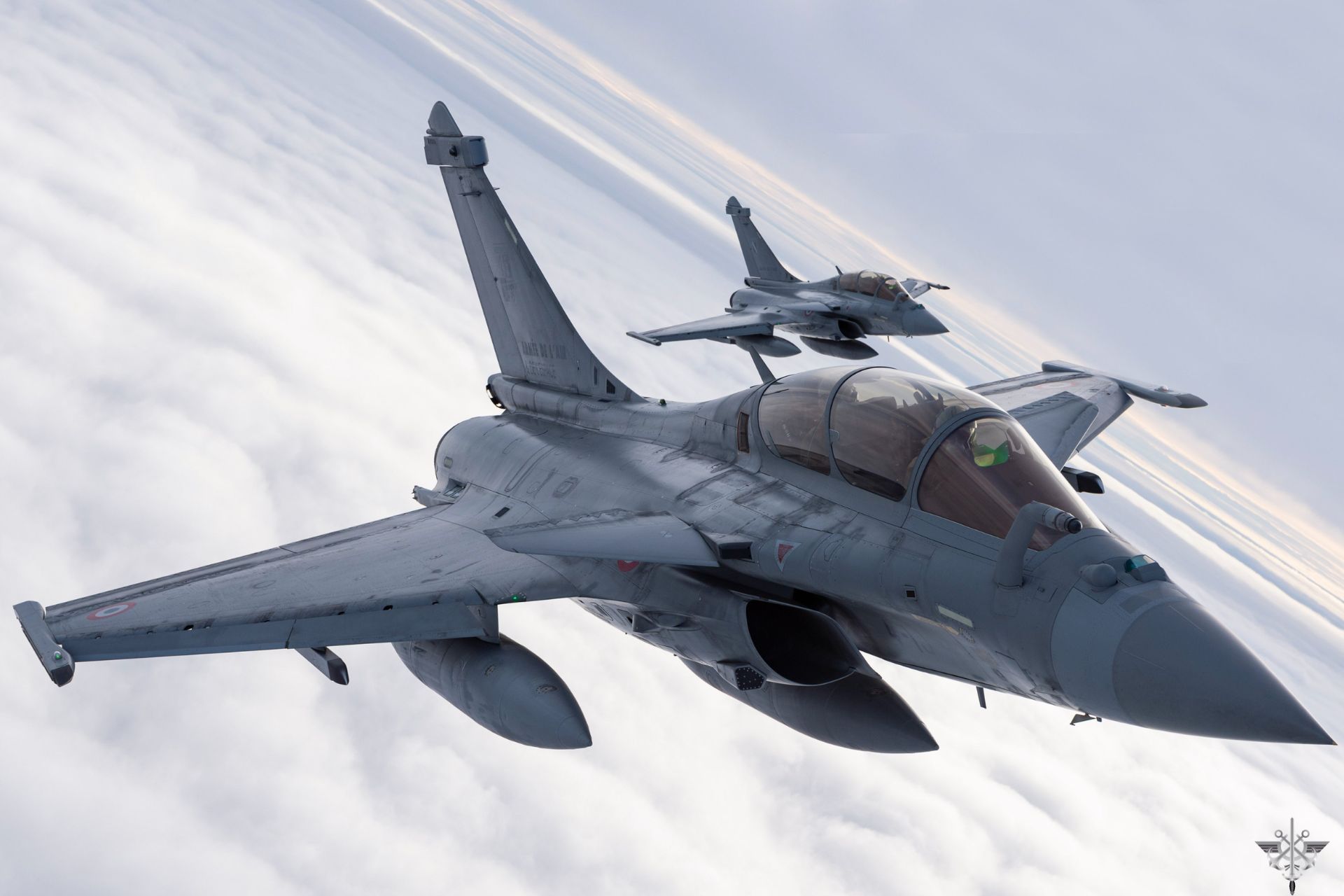
Indonesia may add up to 16 Rafale fighter jets to its fleet, expanding on its existing 42-aircraft deal with Dassault Aviation signed in 2022 and implemented in phased deliveries. (Picture source: French MoD)
The potential order would cover approximately a dozen additional Rafale aircraft, with the final figure expected to range between 8 and 16 units, depending on Indonesia’s defense budget allocations. If finalized, this new batch would complement an existing acquisition program with Dassault Aviation, involving 42 Rafales divided into three contractual tranches. The agreements were implemented in stages: 6 aircraft in February 2022, 18 in August 2023, and 18 in January 2024.
As of now, no Rafale aircraft have been delivered to Indonesia. The first units are expected in early 2026. Meanwhile, operational cooperation is developing between the two air forces, including the regular participation of French aircraft in "Pegase" power projection missions in the region. These deployments contribute to familiarizing Indonesian forces with the Rafale’s tactical environment and capabilities, while also strengthening bilateral coordination at the doctrinal and logistical levels.
The Rafale is a multirole fighter aircraft powered by two M88-2 engines, reaching speeds up to Mach 1.6 and a maximum range of 3,700 kilometers. Its avionics include the RBE2 AESA radar, the SPECTRA electronic warfare system, and the OSF forward-looking infrared sensor, enabling advanced detection, protection, and engagement capabilities. With a payload capacity of 9 tonnes across 14 hardpoints, the aircraft can conduct air-to-air, air-to-ground, and reconnaissance missions in a single sortie.
The aircraft to be delivered to Indonesia are expected to include Rafale C (single-seat) and Rafale B (two-seat) variants, likely in F3R or F4 standard configurations. These versions support a wide range of munitions, including MICA and METEOR air-to-air missiles, SCALP cruise missiles, Exocet anti-ship missiles, AASM guided bombs, and an internal 30 mm cannon. This weapons capability would provide Indonesia with a versatile and credible strike force tailored to a variety of regional scenarios.
On the naval front, Jakarta may also move forward with activating a contract for two Scorpene submarines from Naval Group, selected in April 2024. These conventionally powered submarines offer extended autonomy and would bolster Indonesia’s current submarine fleet, which consists of three Type 209-class units. The loss of the KRI Nanggala-402 in 2021 highlighted the need for fleet modernization. The Scorpene offers more recent technology with improved stealth, endurance, and sensor systems.
In parallel with its air and naval programs, Jakarta is considering a new purchase of Caesar self-propelled howitzers from KNDS France. Already in service with the Indonesian Army, this artillery system has proven effective, and a new order would enhance Indonesia’s ground firepower, especially in complex operational environments such as mountainous or island territories where mobility and accuracy are essential.
Indonesia’s security environment presents multiple challenges, including ongoing tensions in the South China Sea, piracy in the Strait of Malacca and the Makassar Strait, and internal risks linked to instability and terrorism. Expanding its fleet of Rafale jets, while modernizing naval and artillery systems, would enable Indonesia to better safeguard its airspace and maritime territory, while reinforcing its strategic autonomy in a rapidly evolving Indo-Pacific region.