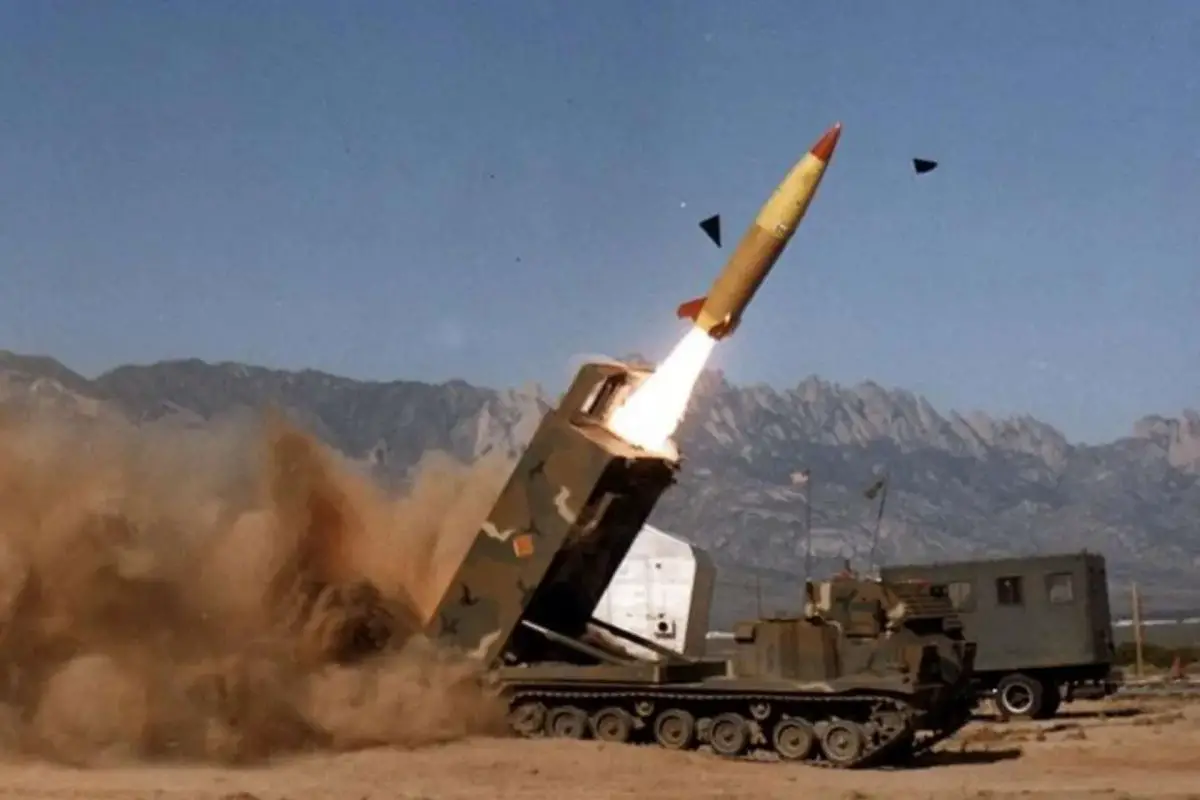
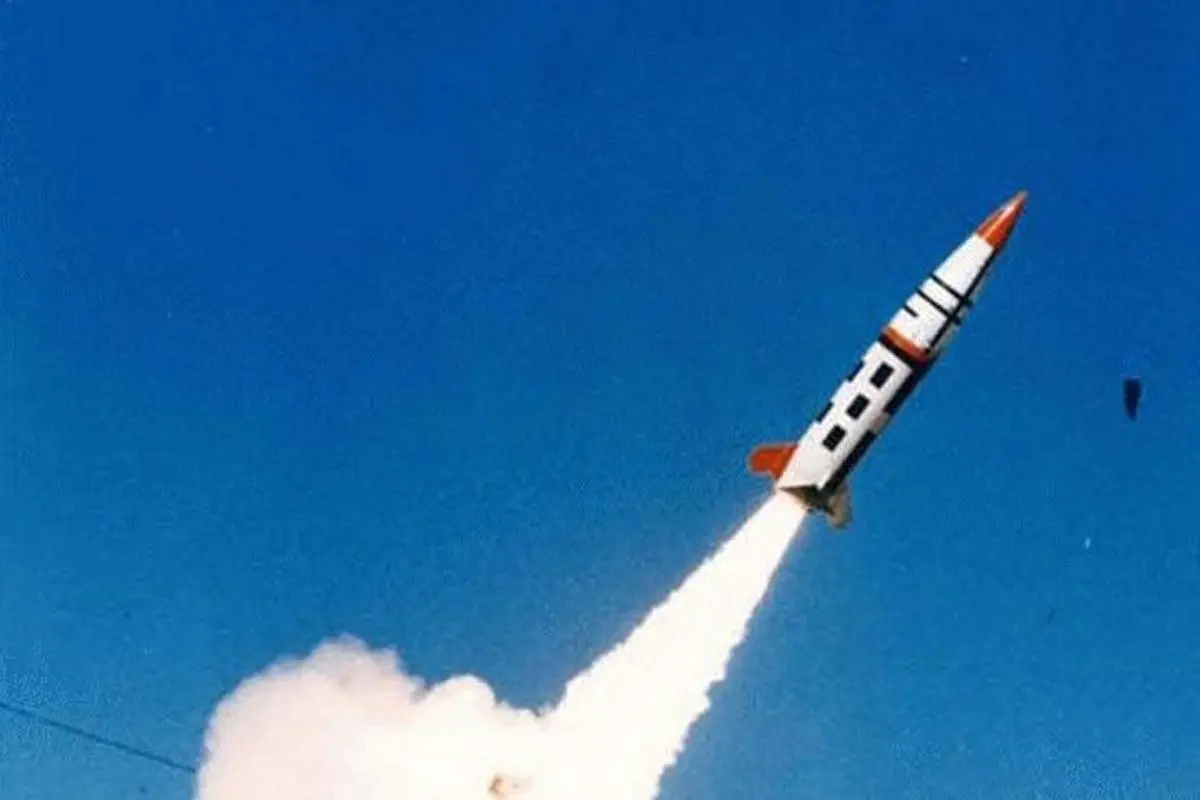
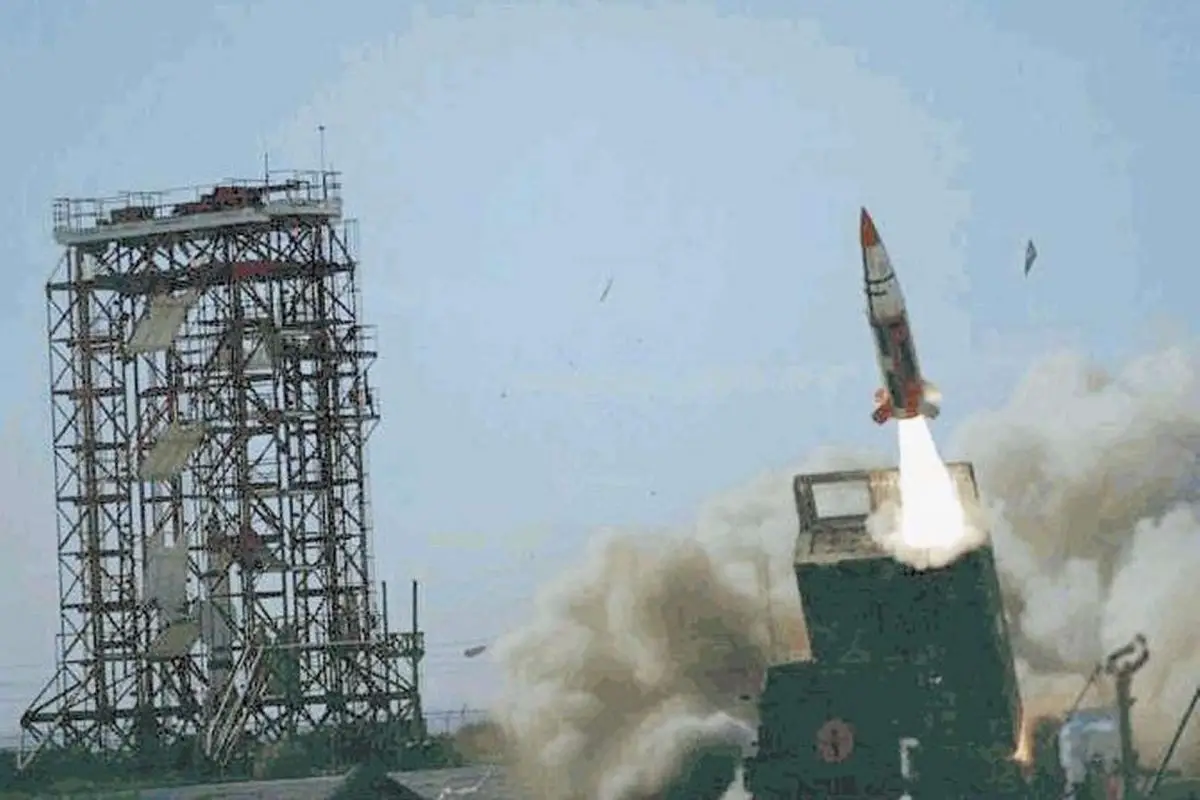
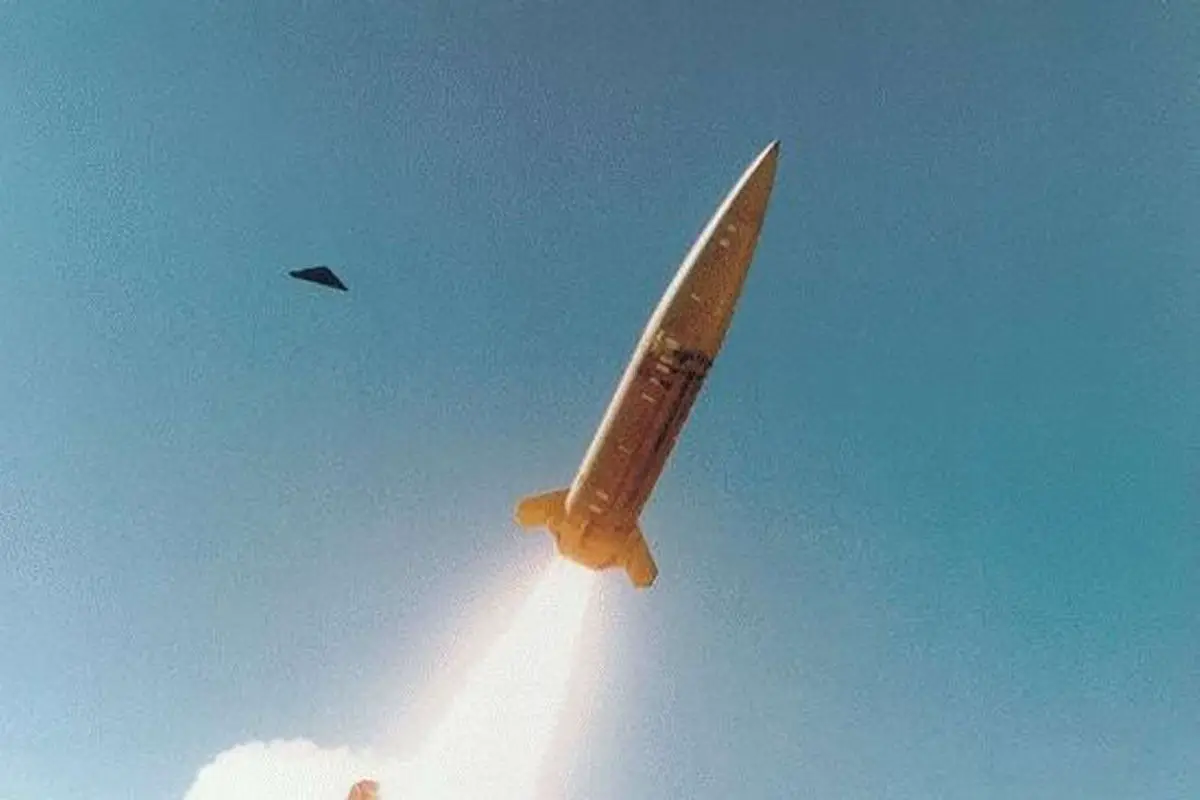
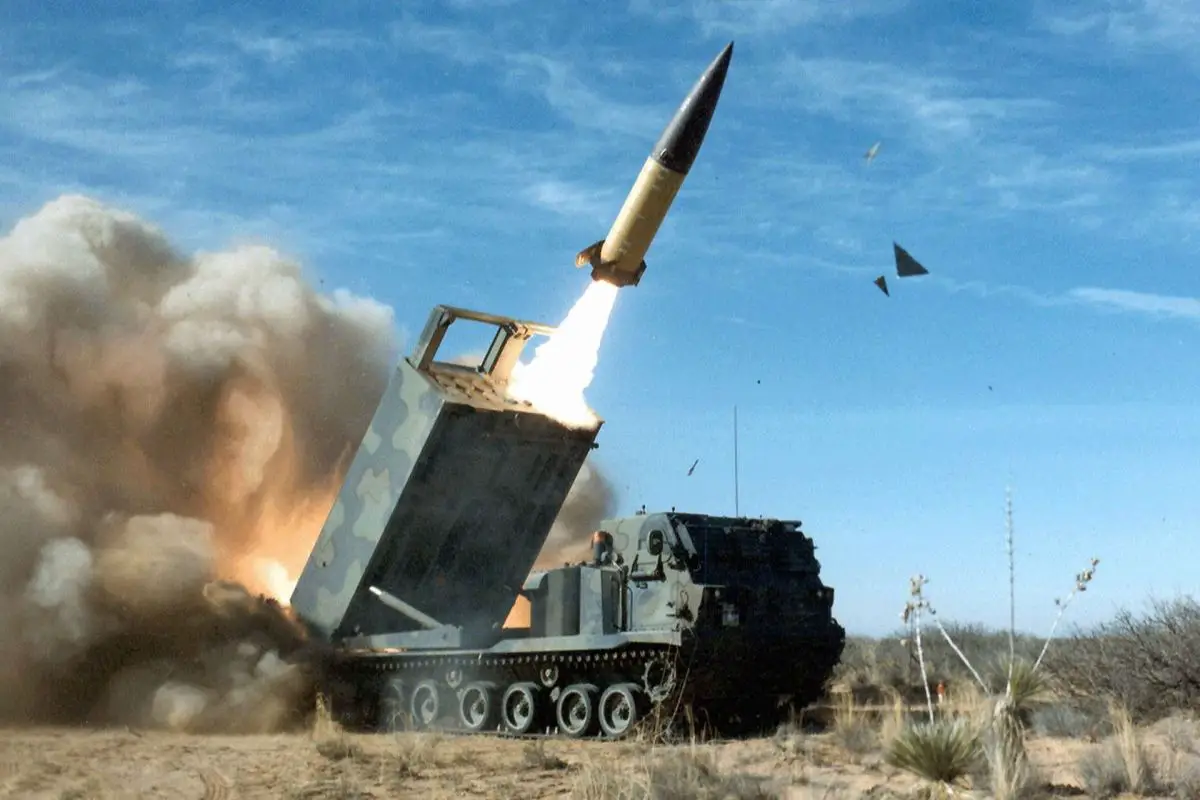
The M39 Army Tactical Missile System (Army TACMS/ATACMS) is the first operational generation of the U.S. Army's ATACMS family of conventionally armed, surface-to-surface semi-ballistic missiles. Developed to replace the conventionally armed MGM-52 Lance in the deep-strike role, the system was designed to engage high-value targets beyond the range of conventional artillery and battlefield rocket systems. The early family comprised the M39 Block I, armed with M74 Anti-Personnel/Anti-Materiel (APAM) submunitions; the extended-range M39A1 Block IA, which introduced GPS-assisted inertial guidance and a reduced M74 payload; and ATACMS Block II, a developmental anti-armor version designed to deliver 13 Brilliant Anti-Tank (BAT) autonomous submunitions.
Country users :
The United States was the original operator of the M39 and M39A1 ATACMS. Initial fielding of the M39 was accelerated during Operation Desert Shield, with the first unit deployed to Saudi Arabia in August 1990. The missile made its combat debut during Operation Desert Storm when A Battery, 6th Battalion, 27th Field Artillery launched the first two ATACMS missiles fired in combat on 18 January 1991. A total of 32 M39 missiles were fired during the campaign.
The M39A1 Block IA was developed during the 1990s as an extended-range evolution of Block I. It incorporated GPS updates into the existing inertial-navigation architecture and reduced the M74 payload to extend range. U.S. Army acquisition documentation indicated that Block IA fielding would begin in fiscal year 1998.
ATACMS Block II was developed for attacks against moving armored formations and surface-to-surface missile transporter-erector-launchers. The program progressed through engineering development and into low-rate initial production, with a production contract awarded in August 2001. However, the U.S. Army terminated funding for the BAT-equipped ATACMS in late 2003 before the MGM-164A achieved full operational status.
Ukraine became an operator of the M39 after the United States transferred APAM-equipped ATACMS missiles in 2023. The missiles first used by Ukrainian forces in October 2023 were identified through open-source analysis as short-range M39 Block I missiles. The United States subsequently supplied Ukraine with longer-range ATACMS, although publicly available authoritative U.S. documentation has not consistently identified those missiles specifically as the M39A1 rather than other extended-range ATACMS configurations.







Technical Data
-
Design
The M39-series ATACMS uses a cylindrical, single-stage missile configuration approximately 4.0 m long and 0.61 m in diameter, with an aerodynamic fin span of approximately 1.4 m. The missile is enclosed in a sealed launch pod designed for the MLRS launcher architecture. Internally, ATACMS incorporates separate payload, guidance and control, propulsion and associated electronic sections. The missile's onboard system performs navigation, guidance, autopilot and flight-control functions. Four aerodynamic control fins positioned around the control section provide steering during flight. FAS describes the Block II control fins as being positioned 90 degrees apart. Launch weight varies according to missile configuration and payload. Open-source technical references commonly give approximately 1,670 kg for the M39 Block I, approximately 1,320 kg for the M39A1 Block IA, and approximately 1,480 kg for ATACMS Block II.
-
Propulsion
The M39, M39A1 and ATACMS Block II employ a single-stage solid-propellant rocket motor. FAS describes the missile propulsion architecture as incorporating a solid-propellant motor and associated ignition equipment, with Block IA and Block II retaining the basic Block I control and propulsion systems. The major increase in range from M39 Block I to M39A1 Block IA was achieved primarily by substantially reducing the APAM payload while retaining the basic Block I propulsion system. The addition of GPS-assisted inertial guidance did not itself generate the additional range but provided the improved navigation accuracy required for effective engagements at the extended distances reached by Block IA. Publicly available references commonly describe ATACMS flight speed as approximately Mach 3. This figure should be regarded as an approximate open-source maximum or representative velocity rather than a constant speed throughout the missile's complete semi-ballistic trajectory.
-
Warheads
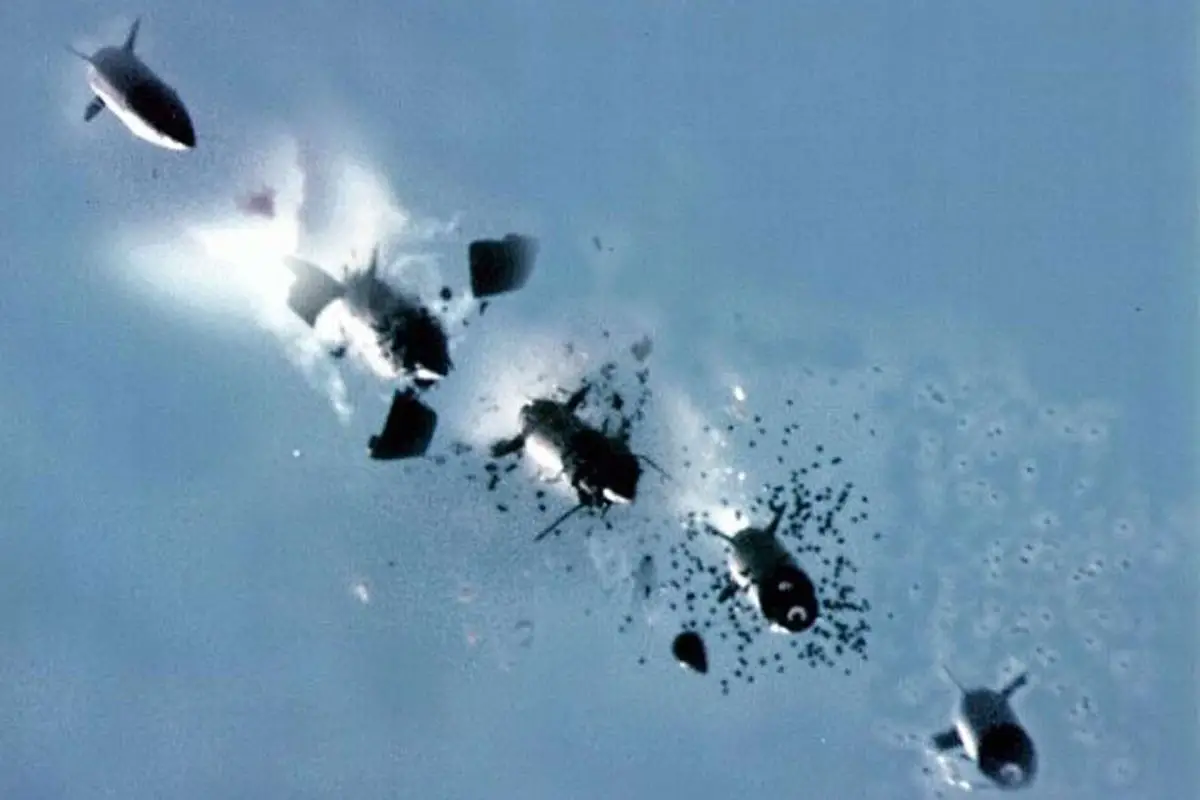
The M39 Block I carries an APAM cargo warhead containing a nominal 950 M74 submunitions, with a reported payload mass of approximately 560 kg. During the terminal phase, the missile opens the payload section and disperses the M74 bomblets over the target area. Centrifugal force and aerodynamic effects assist dispersion. Each M74 contains Composition B explosive within a steel casing and incorporates incendiary material. Upon impact, the casing produces high-velocity fragments effective against personnel, missile rounds, truck tires, radar antennas, thin-skinned vehicles and other soft or lightly protected materiel. The M74 is not designed to penetrate armored fighting vehicles. The M39A1 Block IA retains the same basic APAM concept but substantially reduces the payload to approximately 275 M74 submunitions, commonly rounded to approximately 300 in contemporary U.S. program descriptions. The reduced payload has a reported mass of approximately 160 kg and is a principal factor enabling the extended-range performance of Block IA. ATACMS Block II carries 13 BAT autonomous anti-armor submunitions in a payload reported at approximately 268 kg. After release, each BAT operates as an unpowered aerodynamic glider, using passive acoustic sensing for initial target detection and imaging-infrared guidance for terminal engagement.
-
Guidance Systems
The M39 Block I uses a self-contained inertial navigation and guidance system. The missile calculates its flight path autonomously after launch and uses its aerodynamic control surfaces to make corrections while following its programmed trajectory. Because Block I does not require GPS satellite updates, its navigation is independent of external satellite-navigation signals during flight. The M39A1 Block IA incorporates an embedded GPS receiver into its inertial-navigation architecture. GPS navigation updates are integrated with inertial data to reduce accumulated navigation errors and improve accuracy at extended ranges. According to FAS, if GPS becomes unavailable, Block IA continues with inertial guidance and maintains approximately Block I accuracy. ATACMS Block II uses the Block IA guidance and inertial-navigation architecture augmented by onboard GPS. The ATACMS carrier guides the payload to the programmed release region, after which the BAT submunitions conduct autonomous acquisition and terminal engagement using their own acoustic and imaging-infrared sensors. Precise official Circular Error Probable figures for the M39 and M39A1 are not stated in the principal publicly available U.S. Army and FAS documentation used for this technical data sheet. Secondary open-source sources publish estimated CEP values, but these should not be treated as officially confirmed U.S. Army performance figures.
-
Combat Use
The M39 Block I made its combat debut during Operation Desert Storm in 1991. Initial Army TACMS fielding had been accelerated during the preceding Gulf deployment, with the first operational unit sent to Saudi Arabia in August 1990. On 18 January 1991, A Battery, 6th Battalion, 27th Field Artillery fired the first two Army TACMS missiles ever launched in combat. Between 18 January and 28 February 1991, U.S. Army Central Command reported the expenditure of 32 Army TACMS missiles. Targets included surface-to-air missile sites, logistics facilities, artillery and rocket battery positions and tactical bridges. A total of 105 Army TACMS missiles had been deployed to Southwest Asia. M39 and M39A1 missiles remained in the U.S. inventory for years after their introduction. Aging stocks subsequently became candidates for the ATACMS Service Life Extension and modification program, under which APAM-equipped M39 and M39A1 missiles were converted into unitary-warhead configurations. The modification replaced the cluster-submunition payload with a single 500-pound-class warhead and incorporated refurbishment and modernization of missile components. The M39 returned to combat use in Ukraine in 2023 following the transfer of APAM-equipped ATACMS from the United States. Ukrainian forces first publicly employed ATACMS in October 2023. Open-source examination of missile remnants and strike effects identified the initial weapons as the shorter-range M39 Block I configuration. ATACMS Block II has no documented operational combat use. Although the BAT-equipped missile progressed through development, testing and low-rate initial production, termination of U.S. Army funding in late 2003 prevented MGM-164A from achieving full operational status.


Photo Gallery