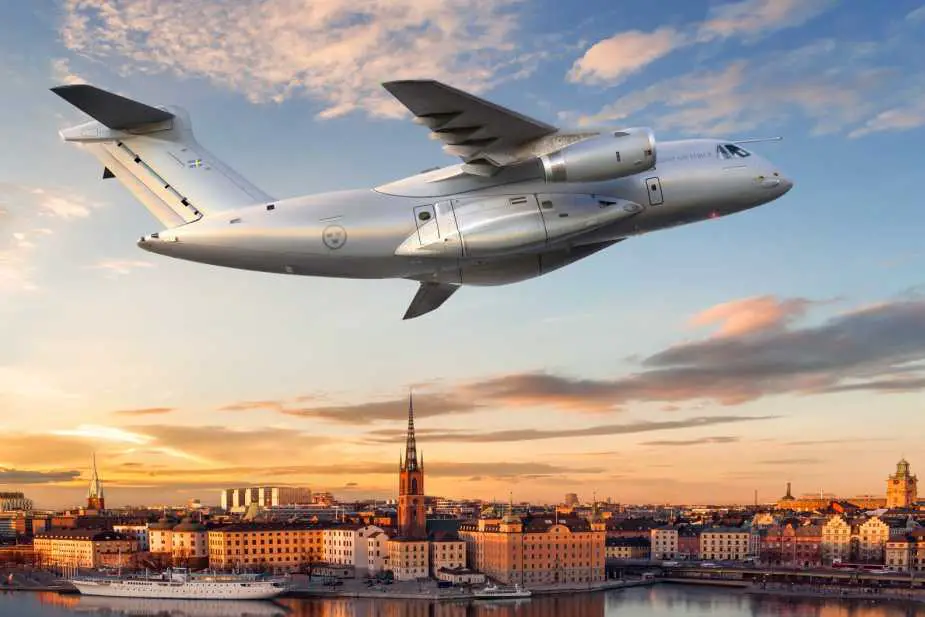
Transport aircraft.
C-390 Millennium (Embraer).

The C-390 Millennium is a jet-powered military transport aircraft manufactured by the Brazilian company Embraer to perform tactical airlift missions while replacing part of Brazil's aging C-130 Hercules fleet. Unlike most aircraft in its class, the C-390 was designed from the outset around commercial turbofan engines, full fly-by-wire flight controls, and a digital mission architecture, enabling higher cruise speed, shorter mission times, and lower crew workload. The aircraft is produced in transport (C-390) and tanker-transport (KC-390) configurations for logistics, airborne assault, aerial refueling, humanitarian assistance, medical evacuation, firefighting and special operations support. Since entering operational service in 2019, it has secured orders from Brazil and ten other countries, making it one of the most successful military aircraft ever developed by the Brazilian aerospace industry.
Country users: Brazil, Portugal, Hungary, Czech Republic, South Korea, Austria, the Netherlands, Sweden, Slovakia, Uzbekistan, United Arab Emirates, and Greece.
Description
The C-390 originated from the Brazilian Air Force's KC-X requirement, which sought a replacement for the C-130 fleet with substantially greater speed, payload efficiency and mission flexibility while maintaining tactical airlift capability. Embraer officially launched the program in April 2009 after several years of preliminary design studies. The first prototype was rolled out at Gavião Peixoto on October 21, 2014, followed by its maiden flight on February 3, 2015. Development involved a comprehensive flight-test campaign covering structural loads, flutter, cargo airdrop, assault landings, air-to-air refueling, icing, hot-and-high operations, low-speed handling and military mission qualification. The aircraft entered Brazilian Air Force service in September 2019 after completing a dual civil and military certification process.
Unlike many military transports derived from civilian aircraft, the basic C-390 was certificated under FAA 14 CFR Part 25 airworthiness standards through the Brazilian civil aviation authority, while military certification added requirements covering tactical flight envelopes, cargo airdrop, defensive systems, military communications and operational survivability. This dual-certification approach allowed Embraer to apply civil certification practices to improve safety, reliability and maintainability while validating military-specific capabilities separately. Unlike several transport aircraft in the same payload class, the C-390 uses high-bypass turbofan engines, enabling significantly higher transit speeds while maintaining tactical airlift capabilities, aerial delivery, medical evacuation, humanitarian relief, search and rescue, special operations and aerial refueling missions. According to Embraer, the aircraft can be reconfigured for different mission profiles in less than three hours, reducing fleet requirements while increasing aircraft utilization rates.
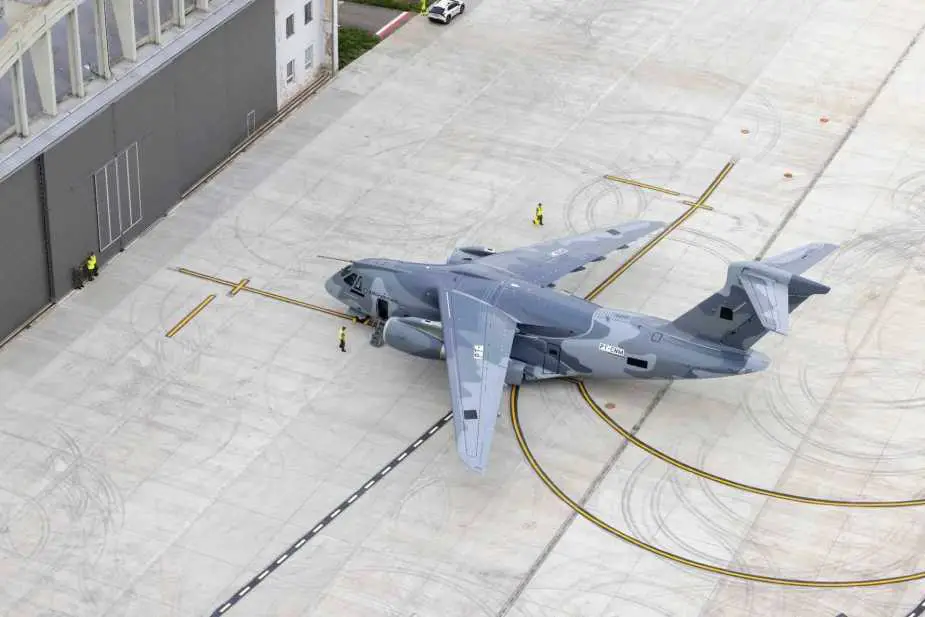
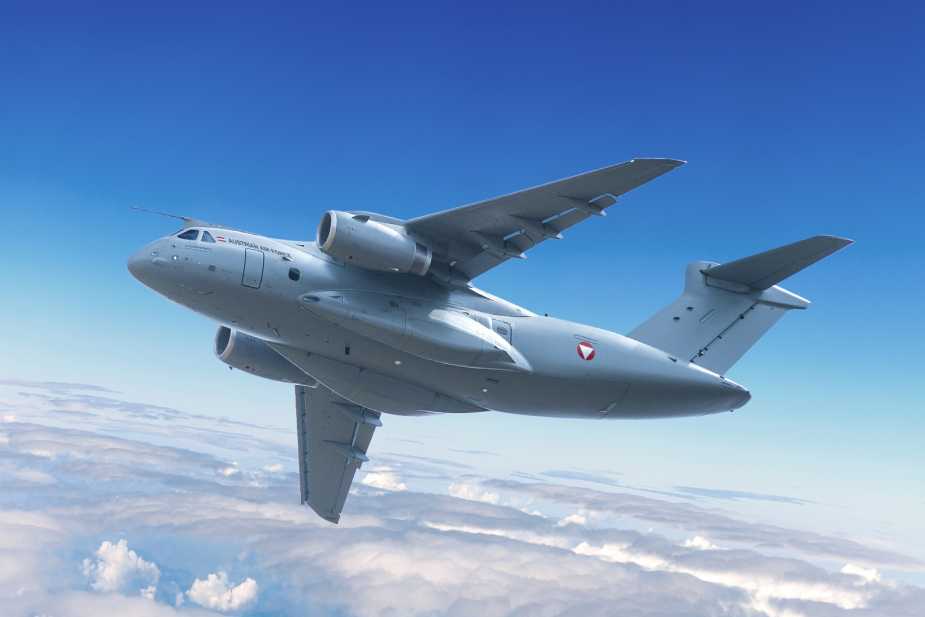
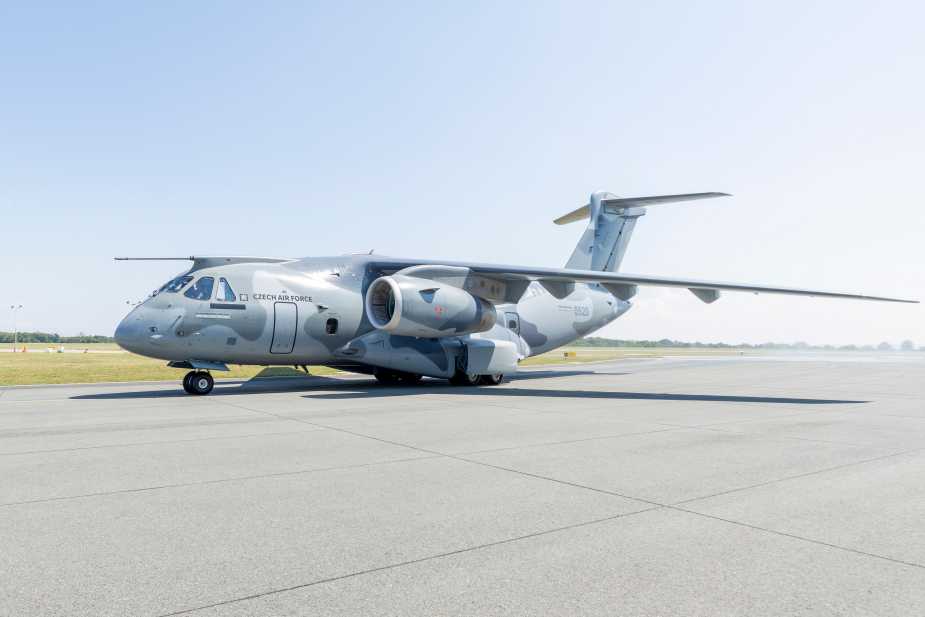
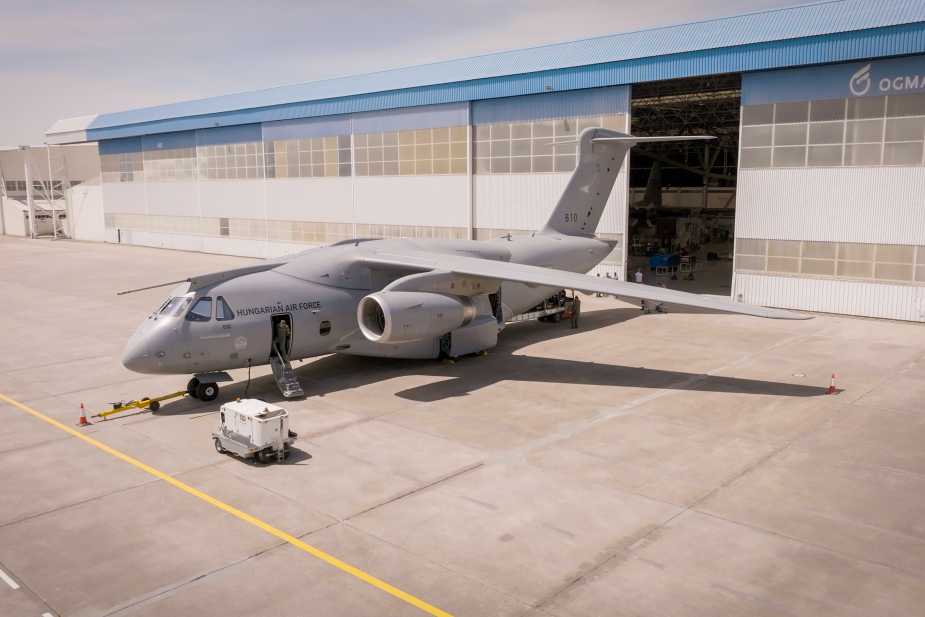
Structurally, the C-390 adopts a high-wing configuration with a T-tail, a hydraulically operated rear ramp, and a reinforced cargo floor. The aircraft was specifically designed to operate from short, austere, semi-prepared, damaged, and unpaved runways: the engines are mounted well above the wing root to reduce foreign object ingestion during operations from gravel, dirt, and semi-prepared runways. The landing gear was engineered specifically for repeated operations on austere airfields and to distribute loads on relatively soft surfaces. The C-390 is capable of operating under harsh climatic conditions, including hot deserts, humid tropical regions, and Antarctic environments, while maintaining high maneuverability on limited airfields with minimal infrastructure. Under representative tactical conditions, it can depart from a 4,000-ft semi-prepared runway carrying a 12-tonne payload over a 500-nautical-mile mission.
Mission flexibility was a primary design objective, as the C-390 Millennium was developed around a 169 m³ cargo compartment capable of rapidly transitioning between mission profiles in less than three hours. The aircraft can perform strategic and tactical airlift, cargo transport, troop deployment, combat offload, aerial assault, aerial resupply, air-to-air refueling, humanitarian assistance, medical evacuation, search and rescue, aerial firefighting, and special operations without requiring extensive modifications between missions. Cargo loading is supported by an integrated Cargo Handling System (CHS) incorporating software-controlled pallet locks, roller trays, cargo guidance rails, restraint systems, hydraulic stabilizer struts, and an onboard cargo winch. Moreover, the cargo floor is structurally rated to transport concentrated loads of up to 26 metric tons (57,320 lb) or distributed loads of 23 metric tons (50,706 lb).
As of July 2026, the C-390 Millennium has established itself as Embraer's most successful military export program. The aircraft has secured firm orders or official selections for 60 aircraft from Brazil (19), Portugal (6), Hungary (2), the Czech Republic (2), the Netherlands (5), Austria (4), the Republic of Korea (3), Sweden (4), Slovakia (3), Uzbekistan (2), the United Arab Emirates (10) and Greece (3), reflecting strong demand from both NATO and non-NATO operators seeking to replace aging C-130 fleets. Several European air forces selected the C-390 because its maximum cruise speed of Mach 0.8, 26-tonne payload capacity and multi-mission architecture enable faster strategic deployment while preserving tactical airlift capability from semi-prepared airfields. Compared with legacy turboprop transports such as the C-130, the higher transit speed allows more sorties to be generated over a given period, increasing operational availability and reducing fleet size requirements for equivalent transport output.
C-390 Millennium variants:
- C-390 Millennium: Standard tactical and strategic transport aircraft, with the "C" standing for Cargo.
- KC-390 Millennium: Multi-role tanker transport with a Cobham hose-and-drogue aerial refueling system capable of acting as a tanker or a receiver. In 2011, when the Brazilian Air Force decided that aerial refueling would become a core capability of the C-390, the designation changed to KC-390, with K standing for tankers, like in the U.S. Air Force.
- C-390 IVR: Intelligence, Surveillance and Reconnaissance (ISR) version under development by Brazil and Portugal.
- C-390 MPA (Maritime Patrol Aircraft): Dedicated maritime patrol and anti-submarine warfare variant under joint development by Embraer, the Brazilian Air Force and the Portuguese Air Force. Planned mission systems include a maritime surveillance radar, EO/IR turret, sonobuoy launchers, acoustic processing suite, magnetic anomaly detector (optional), electronic support measures, and the ability to employ anti-ship missiles, lightweight torpedoes, and search-and-rescue equipment.
- KCV-390 Millennium: Czech Air Force designation of the KC-390.
- Palletized Stand-Off Strike: Embraer is developing a palletized modular roll-on/roll-off weapon system, enabling the transport aircraft to double as a stand-off strike platform. A partnership with Anduril Industries is exploring the launch capability of the Barracuda family of cruise missiles/loitering munitions directly from the C-390 cargo hold.
- MEDEVAC configuration: Roll-on/roll-off medical evacuation installation supporting up to 74 litters with medical attendants.
- Firefighting configuration: This configuration uses the Modular Airborne Fire Fighting System II (MAFFS II), a roll-on/roll-off module installed in the cargo compartment without permanent aircraft modifications. The system can carry and release up to 11,000 liters of water or fire retardant in approximately 5 seconds, while more recent Brazilian Air Force data cites an operational capacity of approximately 12,000 liters of water discharged in 7 seconds following system refinements.
- Search and Rescue: Configured for combat search and rescue with EO/IR sensors and mission consoles.
Technical Data
-
Design
The C-390 Millennium is built around a high-wing configuration with a T-tail and rear loading ramp optimized for tactical and strategic airlift missions. Its unobstructed cargo compartment measures 18.50 m in length, 3.45 m in width and 2.95 m in minimum internal height, providing a usable cargo volume of 169 m³. The continuous-width cargo bay accommodates standard NATO pallets, ISO containers, tracked and wheeled armored vehicles, helicopters, medical evacuation modules and oversized military equipment without structural modifications. A long rear loading ramp reduces loading angles for heavy vehicles, while hydraulic stabilizer struts and an integrated powered cargo winch enable autonomous loading operations with minimal ground support equipment. The modular internal layout allows rapid reconfiguration between cargo transport, troop transport, aeromedical evacuation and aerial delivery missions.
The airframe was engineered from the outset for sustained operations from austere and semi-prepared airfields. It complies with MIL-B-8866B requirements for damaged and unprepared runways and is qualified for repeated operations from CBR-4 soft-field surfaces. The reinforced structure, four-wheel bogie landing gear with low-pressure tires, brake-by-wire system and high-mounted engines improve mobility on gravel, sand, snow, ice and damaged pavements while reducing the risk of foreign object damage. Under tactical conditions, the aircraft can operate from a 4,000 ft (1,219 m) semi-prepared runway while carrying a 12-ton payload over 500 nautical miles. The wing incorporates high-lift devices, including slats and large flaps, to improve short-field performance, while the damage-tolerant structure and rugged landing gear support repeated assault landings in harsh climatic environments ranging from hot deserts and tropical regions to Antarctic conditions.
-
Avionics
The C-390 Millennium is equipped with an integrated digital avionics architecture centered on the Collins Aerospace Pro Line Fusion flight deck. The cockpit incorporates large-area configurable multifunction displays, multifunction keyboard panels, cursor control panels, digital mission management computers, electronic checklists, and communications systems compliant with current CNS/ATM requirements. Dual head-up displays combined with synthetic and enhanced vision systems improve situational awareness during day, night and degraded visibility operations, while Night Vision Imaging System compatibility is incorporated throughout the cockpit. An optional third crew member mission station can be installed for complex missions such as aerial refueling, search and rescue, and special operations.
Mission avionics integrate the Gabbiano Tactical Radar T-20, providing weather mapping, navigation, air-to-air surveillance, air-to-ground operation, Spotlight Synthetic Aperture Radar imaging and high-resolution ground mapping. The aircraft also incorporates mission computers, Continuous Computed Drop Point (CCDP) software for precision cargo delivery, secure communications, navigation systems supporting low-level tactical flight, electro-optical and infrared sensor compatibility, and an integrated Onboard Maintenance System that continuously monitors aircraft health and records faults to reduce maintenance time between sorties. Optional survivability equipment includes radar warning receivers, missile warning sensors, laser warning receivers, chaff and flare dispensers, directional infrared countermeasures (DIRCM), ballistic protection and an On Board Inert Gas Generating System, enabling the aircraft to operate in high-threat environments.
-
Engine and flight capabilities
Power is provided by two International Aero Engines V2500-E5 turbofan engines, each producing 139.4 kN (31,330 lbf) of thrust, enabling the KC-390 Millennium to achieve a maximum speed of Mach 0.93 (988 km/h) and a normal cruise speed of Mach 0.80 (870 km/h). The aircraft has a maximum takeoff weight of 86,999 kg and a maximum payload of 26,000 kg, with a range of 2,000 km carrying the full payload, 2,720 km with a 23,000 kg payload, and 5,020 km with a 14,000 kg payload. Ferry range reaches 6,240 km, extending to 8,460 km with auxiliary fuel tanks, while the service ceiling is 11,000 m (36,000 ft).
High-lift devices and fly-by-wire flight controls provide a stall speed of 104 knots (193 km/h IAS), controlled descent rates of up to 9,000 ft/min, and short-field performance, allowing tactical operations from semi-prepared runways with takeoff distances of 1,100 m for tactical missions, 1,300 m under normal operating conditions and 1,630 m for heavy logistics missions. In the KC-390 tanker configuration, wing-mounted Cobham probe-and-drogue refueling pods can transfer fuel at rates of up to 1,500 liters per minute from an internal fuel capacity of 35,000 kg, while the aircraft can also receive fuel in flight to extend its operational endurance.
-
Onboard equipment
The C-390 Millennium is equipped with mission equipment that allows rapid adaptation to a wide range of military and humanitarian operations without permanent aircraft modifications. The aircraft can be fitted with Cobham 912E wing-mounted aerial refueling pods capable of transferring up to 400 US gallons (1,500 liters) of fuel per minute, roll-on/roll-off auxiliary fuel tanks, a removable aerial firefighting system carrying up to 3,000 gallons of fire retardant, Rafael electro-optical/infrared (EO/IR) mission pods for search and rescue and maritime patrol, and an integrated Cargo Handling and Aerial Delivery System supporting 463L pallets, CDS bundles, Type-V platforms and precision airdrop operations using Continuous Computed Drop Point (CCDP) software.
Optional survivability equipment includes a comprehensive self-protection suite comprising radar warning receivers (RWR), missile approach warning systems (MAWS), laser warning systems (LWS), chaff and flare dispensers, directional infrared countermeasures (DIRCM), ballistic armor, an Enhanced Vision System (EVS), an On Board Inert Gas Generating System (OBIGGS), and an optional third crew member mission station for aerial refueling and special mission management, enabling the aircraft to operate effectively in contested environments while supporting transport, tanker, search and rescue, medical evacuation, firefighting and special operations missions.

The C-390 Millennium is capable of taking off from a 4,000 ft (1,219 m) semi-prepared soft airstrip while carrying a 12-tonne payload on a 500 nautical mile (926 km) mission.
Specifications
-
Type
Medium tactical and strategic multi-mission military transport aircraft
-
Country users
Brazil, Portugal, Hungary, Czech Republic, South Korea, Netherlands, Austria, Sweden, Slovakia, Uzbekistan, United Arab Emirates, Greece
-
Designer Country
Brazil
-
Avionics
Collins Aerospace Pro Line Fusion digital cockpit, dual HUDs, Leonardo Gabbiano T-20 tactical radar, fly-by-wire flight controls, synthetic/enhanced vision, integrated mission management system
-
Crew
2 pilots + 1 loadmaster
-
Cargo capability
Up to 26,000 kg payload (23,000 kg distributed load), 80 troops, 64 paratroopers, 7 NATO 463L pallets, 24 CDS bundles, 3 to 4 light vehicles or 1 to 2 heavy vehicles, 1 Black Hawk helicopter, or up to 74 stretchers for MEDEVAC missions.
-
Maximum take-off weight
87,000 kg
-
Maximum Speed
470 kt (870 km/h; Mach 0.80)
-
Range
2,000 km with 26 t payload; 2,720 km with 23 t payload; ferry range 6,240 km; 8,460 km with internal auxiliary tanks.
-
Dimensions
Length: 35.2 m; Wingspan: 35.05 m; Height: 11.84 m.