



Navy - Naval Exercises
-
U.S. Navy and Marines Demonstrate Amphibious Warfare Backbone in Pacific Exercise
 {loadposition bannertop}{loadposition sidebarpub}
The U.S. Navy announced that the Boxer Amphibious Ready Group and the 11th Marine Expeditionary Unit завершed an extended integrated training exercise on February 6, 2026, following nearly three weeks at sea off Southern California. The event highlighted how large-deck amphibious ships remain central to Marine Corps expeditionary warfare and rapid crisis response.
According to information released by the U.S. Navy, the Boxer Amphibious Ready Group, operating alongside the 11th Marine Expeditionary Unit, completed an extended integrated training exercise in the Pacific Ocean on February 6, 2026. Conducted from January 21, 2026, through early February within U.S. 3rd Fleet waters, the at-sea period tested command and control, aviation operations, and ship-to-shore maneuver in a demanding maritime environment. Navy officials described the exercise as more than a certification event, emphasizing its role in validating how amphibious forces are employed in real-world expeditionary scenarios.
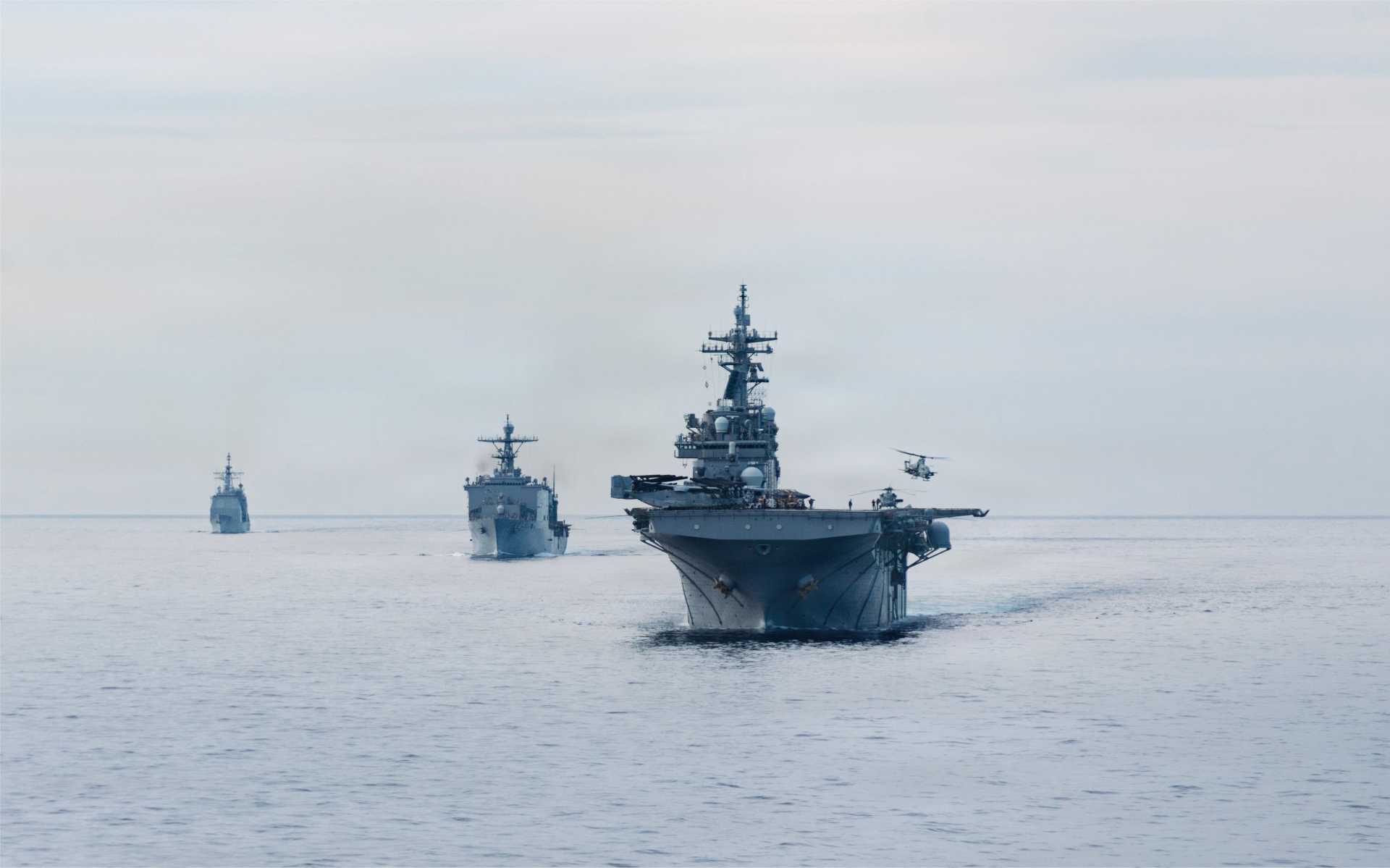
Follow Army Recognition on Google News at this linkThe Boxer Amphibious Ready Group, escorted by the Ticonderoga-class guided-missile cruiser USS Princeton (CG-59), executes a simulated strait transit in the Pacific Ocean on January 27, 2026. The maneuver strengthened Navy-Marine Corps integration and force protection procedures as the 11th Marine Expeditionary Unit conducted high-end integrated training operations in the U.S. 3rd Fleet area of responsibility. (Picture source: U.S. Department of War)
At the center of the formation was the Wasp-class amphibious assault ship USS Boxer (LHD 4), which functions as a floating airbase and command hub for Marine expeditionary forces. The LHD is essential to Marine Corps operations because it enables the launch and recovery of fixed-wing and rotary-wing aircraft, including F-35B fighters and MV-22B Ospreys, without reliance on land-based runways. During the exercise, Boxer provided the aviation platform required for sustained air assault operations, aviation strike coordination, and command and control of widely dispersed forces. This capability is fundamental to Marine doctrine, which prioritizes speed, vertical maneuver, and the ability to mass combat power from the sea at a time and place of the U.S. choosing.
Operating in close coordination with Boxer, the San Antonio-class USS Portland (LPD 27) illustrated the complementary role of the amphibious transport dock in modern Marine Corps operations. Unlike the aviation-centric LHD, the LPD is optimized for surface and subsurface movement of troops, vehicles, and equipment. Its well deck supports landing craft and amphibious combat vehicles, while its internal spaces are configured to embark a reinforced infantry battalion with organic logistics and command elements. For the 11th MEU, Portland served as a maneuver and sustainment platform, enabling ship-to-shore movements critical to seizing and holding terrain in contested littoral environments.
The Whidbey Island-class dock landing ship USS Comstock (LSD 45) further expanded the ARG’s surface assault capacity, particularly for heavy equipment and vehicle transport. Together, the LHD, LPD, and LSD formed a layered amphibious system that allowed Marine commanders to choose between vertical assault, surface assault, or a combination of both. This flexibility is a defining strength of U.S. amphibious forces and was deliberately stressed during the exercise through rapid transitions between aviation raids, amphibious vehicle assaults, and distributed maritime security operations.
For the U.S. Marine Corps, conducting this type of integrated exercise is essential, not optional. Amphibious operations are among the most complex missions in military warfare, requiring precise synchronization between naval fires, aviation, surface connectors, logistics, and ground maneuver. The company-sized helicopter raids conducted in Barstow, California, and Yuma, Arizona, as well as the amphibious combat vehicle raid at Camp Pendleton, were designed to validate the Marines’ ability to project power far inland while remaining supported from the sea. These scenarios directly reflect real-world contingencies in which Marines may be required to rapidly seize key terrain, evacuate civilians, or disrupt adversary operations before heavier joint forces arrive.
The exercise also reinforced why the LHD and LPD combination remains strategically significant as the Marine Corps adapts to concepts such as Expeditionary Advanced Base Operations and distributed maritime operations. While future doctrine emphasizes smaller, more dispersed units, those forces still depend on large amphibious ships for initial entry, sustainment, aviation support, and medical care. Without LHDs and LPDs, the Marine Corps would lose its ability to deploy a self-contained, scalable combat force capable of immediate action worldwide.
From an operational readiness standpoint, the Boxer ARG and 11th MEU used this at-sea period to apply lessons learned from previous deployments while introducing more complex and demanding mission sets. According to Navy and Marine Corps officers involved, the focus was on decision-making under pressure, degraded communications, and rapid re-tasking of forces, all conditions expected in high-end conflict. The exercise confirmed that the ARG-MEU team remains the nation’s only standing forcible-entry capability, a role that is increasingly significant as access to overseas bases becomes more limited.
Homeported at Naval Base San Diego and assigned to Amphibious Squadron 1, the Boxer Amphibious Ready Group now moves forward with a refined and validated operational framework. By fully integrating the unique strengths of the LHD and LPD into Marine air-ground task force operations, the 11th MEU demonstrated why amphibious forces remain a cornerstone of U.S. military power, providing decision-makers with credible options in crises, competitions, and conflicts.
Written by Alain Servaes – Chief Editor, Army Recognition Group
Alain Servaes is a former infantry non-commissioned officer and the founder of Army Recognition. With over 20 years in defense journalism, he provides expert analysis on military equipment, NATO operations, and the global defense industry.
-
Exclusive: UK Aircraft Carrier Strike Group spearheads largest-ever British military engagement in Australia
 {loadposition bannertop}{loadposition sidebarpub}
In a significant display of joint military strength and technological innovation, the United Kingdom has deployed its Carrier Strike Group 25 (CSG25) to lead the British contribution to Exercise Talisman Sabre 2025, the largest multinational military exercise ever conducted on Australian soil. This high-profile engagement marks a pivotal moment in the UK’s global deployment strategy, highlighting the nation’s enduring commitment to Indo-Pacific security and deeper cooperation with its AUKUS partners, Australia and the United States. The operation also serves as a key phase of Operation Highmast, the UK's strategic initiative to reinforce international partnerships and project power across critical global regions.
Follow Army Recognition on Google News at this linkUK Carrier Strike Group 25, led by British Royal Navy HMS Prince of Wales aircraft carrier, sails alongside allied vessels during Exercise Talisman Sabre 2025, showcasing integrated naval power with British F-35B jets overhead and Royal Marines conducting amphibious operations along the Australian coast. (Picture source: British MoD)
Over 3,000 British troops from the British Royal Navy, British Army, and Royal Air Force are deployed across Australia as part of Operation Highmast, a strategic global mission that underscores Britain’s military reach and enduring Indo-Pacific commitment. CSG25’s participation marks the first time a UK-led multinational carrier group has taken part in the biennial exercise, which this year involves 35,000 personnel from 19 nations, with activities spanning Western Australia, the Northern Territory, Queensland, New South Wales, and for the first time, Papua New Guinea.
The Carrier Strike Group 25 represents the British Royal Navy’s premier expeditionary force and the most powerful expression of UK maritime power projection. At its core is HMS Prince of Wales, one of Britain’s Queen Elizabeth-class aircraft carriers and among the most advanced warships in the world. Supporting the flagship are Royal Navy Type 45 destroyer HMS Diamond, the Type 23 frigate HMS Portland, and Royal Fleet Auxiliary vessels RFA Fort Victoria and RFA Tidesurge. The group is protected from beneath the waves by an Astute-class attack submarine, ensuring multi-domain coverage. The embarked air wing includes F-35B Lightning II stealth fighters, operated by both the Royal Air Force and Royal Navy Fleet Air Arm, along with Merlin and Wildcat helicopters supporting anti-submarine warfare, airborne early warning, and maritime strike missions. Royal Marines from 42 Commando and specialized detachments from the British Army and RAF provide additional amphibious, littoral, and airborne capabilities, making CSG25 a highly flexible and lethal task force.
British Navy aircraft carrier HMS Prince of Wales, serving as the flagship of the Carrier Strike Group, is playing a central role in integrating advanced warfighting technologies and multinational cooperation. In a major leap forward for undersea warfare, the Royal Navy, in coordination with its AUKUS allies, is conducting experimental trials with Extra Large Uncrewed Underwater Vehicles (XL-UUVs) operated remotely from shore-based control centers. These trials are designed to push the boundaries of remote naval operations and mark a first-of-its-kind capability demonstration within the AUKUS framework.
In parallel, the Defence Science and Technology Laboratory (DSTL), through its Resilience, Autonomy, and AI Technology collaboration, has led a groundbreaking integration of artificial intelligence algorithms into the battlespace. These AI-enabled systems are being trialed in realistic combat scenarios, autonomously detecting and engaging simulated threats. The use of these systems in a coalition environment reflects a significant step toward fully integrated AI-powered warfare, enabling future forces to maintain superiority across complex operational theatres.
The CSG25 is also enhancing joint amphibious operations with Australian and US forces. Royal Marines, operating with Australian amphibious specialists and US Marines, are conducting beach landing and urban warfare simulations. RAF Voyager aircraft are providing strategic airlift and refueling capabilities, while British Army Ranger units train alongside their Indo-Pacific counterparts, reinforcing ground force interoperability in jungle and desert terrains.
The collaboration between the British vy and the Australian Defence Force reflects a strategic alignment in securing one of the world’s most vital maritime corridors. As regional dynamics grow increasingly complex, cooperation between the UK and Australia is essential for ensuring open sea lines of communication, countering grey-zone threats, and deterring state and non-state actors seeking to disrupt international maritime order. For the Royal Navy, operating alongside the Royal Australian Navy in exercises such as Talisman Sabre strengthens combined naval proficiency, enhances operational trust, and supports shared security objectives across the Indo-Pacific. This partnership plays a crucial role in upholding freedom of navigation and maintaining regional stability in a maritime environment that underpins global trade and energy flows, which are critical to both nations.
This year’s iteration of Talisman Sabre not only reaffirms the UK's defence ties under AUKUS but also reinforces a broader strategic shift under Britain's Plan for Change, which includes a pledge to raise defence spending to 2.6% of GDP. The operation sends a strong signal about Britain’s intent to remain a leading player in global security, supporting regional allies in countering rising challenges to the international rules-based order.
With its advanced maritime assets, commitment to interoperability, and integration of next-generation technologies, the UK Carrier Strike Group is setting a new benchmark for joint coalition warfare and multinational readiness in the Indo-Pacific. Exercise Talisman Sabre 2025 stands as a key milestone not only in UK military engagement but also in reshaping how allied forces prepare for future high-threat environments.
-
Frigates from British and New Zealand Navies Practice High Value Naval Tactic to Shield Carrier Group
 {loadposition bannertop}{loadposition sidebarpub}
According to information published by the UK Ministry of Defence on July 5, 2025, the British Royal Navy’s flagship aircraft carrier HMS Prince of Wales, accompanied by the Type 23 frigate HMS Richmond and the Royal New Zealand Navy's frigate HMNZS Te Kaha, conducted Barrier Operations training while deployed on Operation Highmast 2025. The coordinated drills focused on “barrier ops,” a high-value naval tactic where escort ships maneuver into strategic positions to intercept or deter incoming threats, such as hostile surface combatants, from targeting the carrier or key vessels within a strike group.
Follow Army Recognition on Google News at this linkBritish Royal Navy HMS Richmond and HMNZS Te Kaha from New Zealand Navy maneuver alongside during Barrier Operations training with HMS Prince of Wales as part of Operation Highmast 2025. (Picture source: UK MoD)
HMS Prince of Wales is a Queen Elizabeth-class aircraft carrier and the largest and most advanced warship currently in British Royal Navy service. Designed for global power projection, it serves as a floating airbase capable of launching F-35B Lightning II stealth fighters and multiple helicopter types while housing state-of-the-art command and control systems. HMS Richmond, a Duke-class Type 23 frigate, specializes in anti-submarine warfare but also fulfills general escort and maritime security missions with her advanced sonar, Sea Ceptor missile system, and 4.5-inch naval gun. HMNZS Te Kaha, an Anzac-class frigate from the Royal New Zealand Navy, has recently undergone combat system upgrades, enhancing her radar, weapons, and command suite to operate effectively in complex coalition environments.
HMNZS Te Kaha (F77) is an Anzac-class frigate serving in the Royal New Zealand Navy and represents one of the most capable surface combatants in New Zealand's maritime fleet. Commissioned in 1997 and extensively modernized in recent years, Te Kaha is equipped with upgraded surveillance radar, combat management systems, and advanced missile capabilities, including the integration of the Lockheed Martin CMS 330 combat system and the MBDA Sea Ceptor surface-to-air missile. Designed for multirole operations, the frigate is capable of conducting air defense, surface warfare, and maritime security missions. Her participation in international exercises and deployments, such as Operation Highmast 2025, reflects New Zealand’s commitment to regional security and its ability to operate seamlessly alongside larger allied naval forces.
Barrier Operations, or “barrier ops,” are a tactical maneuver used by naval task groups to create a dynamic defense screen against surface threats. This involves escort ships repositioning into key interception points between a high-value unit, like an aircraft carrier, and a simulated enemy vessel. The operation is designed to delay, deter, or defeat any approaching threat before it reaches its target. Ships participating in barrier ops may act as decoys or interceptors, utilizing onboard sensors, communication systems, and weaponry to neutralize the threat. The success of such operations relies on precision timing, real-time threat assessment, and seamless command coordination, making it a critical capability in high-threat maritime environments.
This training evolution is a core warfighting discipline within the British Royal Navy Carrier Strike Group (CSG) concept. By executing barrier operations in a dynamic maritime scenario, the participating ships demonstrated advanced interoperability and combat coordination. The scenario tested the ability of frigates to rapidly reposition and form a defensive screen, essential to protecting high-value units like HMS Prince of Wales during real-world operations. The exercise was carried out in a simulated threat environment designed to emulate modern maritime conflict conditions, including high-speed approach vectors and multidomain threats.
Operation Highmast is the British Royal Navy’s most expansive deployment of 2025, mobilizing a multinational task group through key maritime theaters including the Mediterranean, the Arabian Gulf, and onward to the Indo-Pacific. The mission encompasses a wide spectrum of naval capabilities, ranging from carrier-based air power projection to anti-submarine warfare and maritime security operations. With participation from over a dozen allied navies, the deployment showcases the United Kingdom’s strategic commitment to freedom of navigation and collective security in contested maritime zones.
The inclusion of HMNZS Te Kaha in this phase of training underlines the close operational ties between the United Kingdom and New Zealand, reinforcing the strategic alignment among Five Eyes partners in maintaining rules-based order in the Indo-Pacific. The British Royal Navy emphasized that exercises like this one are not only about tactical readiness but also about affirming unity and deterrence through presence and cooperation at sea. As the HMS Prince of Wales leads the Carrier Strike Group across some of the most vital maritime corridors globally, such high-end warfighting drills signal to both allies and potential adversaries the depth of coalition naval proficiency and readiness.
-
U.S. and Indian Naval Forces Deepen Strategic Cooperation Through Joint Amphibious Exercise
 {loadposition bannertop}{loadposition sidebarpub}
From April 4 to April 11, 2025, the United States and India conducted Exercise Tiger Triumph 2025, a high-profile bilateral tri-service military drill focused on advancing interoperability, joint operational readiness, and humanitarian assistance and disaster response (HADR) capabilities. Held along India’s eastern seaboard near Kakinada Beach in the Bay of Bengal, this year’s edition of the exercise underscored the growing defense partnership between the world’s two largest democracies and their shared commitment to a free, open, and resilient Indo-Pacific region.
Follow Army Recognition on Google News at this linkIndian Army soldiers from the 4/8 Gurkha Rifles Infantry Battalion, 91st Infantry Brigade, maneuver in a Mahindra Armored Light Specialist Vehicle alongside a BMP-II Sarath amphibious infantry combat vehicle during a large-scale amphibious landing drill conducted as part of Exercise Tiger Triumph at Kakinada Beach, Andhra Pradesh, India, on April 11, 2025. (Picture source: U.S. DoD)
Tiger Triumph is the only tri-service India-U.S. exercise, involving integrated participation from land, sea, and air components. In 2025, the exercise brought together approximately 3,000 personnel and over a dozen military platforms from both countries, reaffirming the scale and strategic depth of this defense collaboration. This year marked the fourth iteration of the exercise and the most advanced to date, incorporating new dimensions such as autonomous systems innovation and enhanced command-and-control architecture.
Central to the exercise was a large-scale amphibious landing operation at Kakinada Beach, led by the Indian Army’s 4/8 Gurkha Rifles Infantry Battalion, part of the 91st Infantry Brigade. Indian troops deployed ashore in Mahindra Armored Light Specialist Vehicles (ALSVs) and BMP-II Sarath amphibious infantry combat vehicles, demonstrating the mobility and combat effectiveness required in HADR and coastal operations. Their actions were closely synchronized with assets from the Indian Navy, including the INS Jalashwa (L41)—a landing platform dock that served as the primary amphibious command ship. The INS Mumbai (D62), INS Gharial (L23), INS Shakti (A57), and P-8I maritime patrol aircraft rounded out India’s naval participation, highlighting a robust maritime capability tailored to both combat support and humanitarian missions.
On the U.S. side, the Whidbey Island-class dock landing ship USS Comstock (LSD 45) spearheaded amphibious operations, launching Landing Craft Air Cushion (LCAC) vessels to deploy U.S. Marines from the 1st Light Armored Reconnaissance Battalion onto the beachhead. The Arleigh Burke-class guided-missile destroyer USS Ralph Johnson (DDG 114) provided additional firepower and maritime security during the operation. A P-8A Poseidon conducted ISR missions, while the U.S. Air Force C-130J and Indian Air Force C-130J aircraft executed coordinated airdrop missions to simulate logistics support to disaster-struck zones. Complementing these assets were a U.S. Army platoon, a medical platoon, a Civil-Military Operations Center, and a Multi-Domain Task Force Combined Information Effects Fusion Cell, emphasizing the comprehensive, whole-of-force approach both nations brought to the exercise.
The maritime dimension of Tiger Triumph 2025 highlighted the maturing defense relationship between the Indian and U.S. navies. With a mutual focus on maintaining maritime domain awareness, freedom of navigation, and stability in the Indo-Pacific, the exercise provided a practical scenario for operational alignment in amphibious warfare, logistics coordination, and maritime security. Both navies have steadily strengthened ties through exercises such as Malabar and institutional agreements like the Communications Compatibility and Security Agreement (COMCASA). Tiger Triumph adds a crucial amphibious and humanitarian component to these engagements, reflecting the growing role of naval forces in regional crisis response and disaster relief.
Rear Admiral Greg Newkirk, Commander of Task Force 70 and the lead U.S. officer in the exercise, remarked, “Tiger Triumph 2025 is a culmination of years of trust-building and operational alignment. Our ability to project power, provide humanitarian assistance, and operate under a unified command framework is essential to preserving peace and stability in the Indo-Pacific.”
Further reinforcing this cooperation were coordinated airdrop operations by U.S. and Indian Air Force C-130J Super Hercules aircraft, which delivered critical supplies to the beachhead. Field hospitals and logistics points were quickly established by combined medical and engineering teams, simulating an immediate response to a regional natural disaster.
A key innovation in this year’s exercise was the first-ever subject matter exchange on autonomous systems, led by INDOPACOM J85 and the Defense Innovation Unit (DIU). This groundbreaking session brought together U.S. and Indian industry leaders, military planners, and government officials to explore the application of autonomous technologies to solve real-world warfighter challenges. The exchange marked the beginning of the U.S.-India Autonomous Systems Industry Alliance (ASIA), announced earlier in February 2025 by President Donald Trump and Prime Minister Narendra Modi. This initiative aims to deepen industrial defense ties and promote joint development and integration of next-generation autonomous systems in future military operations, including Tiger Triumph 2026 and beyond.
As climate change, regional instability, and natural disasters pose increasing threats to the Indo-Pacific, exercises like Tiger Triumph are essential for building joint preparedness and fostering trust between strategic partners. The integration of cutting-edge technology, combined with the execution of complex amphibious operations and multinational coordination, affirms the U.S.-India defense relationship as a vital pillar of regional security architecture. With the participation of U.S. 7th Fleet—the Navy’s largest forward-deployed numbered fleet—and India’s expanding blue-water capabilities, Tiger Triumph 2025 stands as a robust demonstration of two powerful democracies united in their vision for a secure, rules-based Indo-Pacific.
-
US Navy Matthew Perry cargo ship provides logistic support USS Essex Landing Helicopter Dock
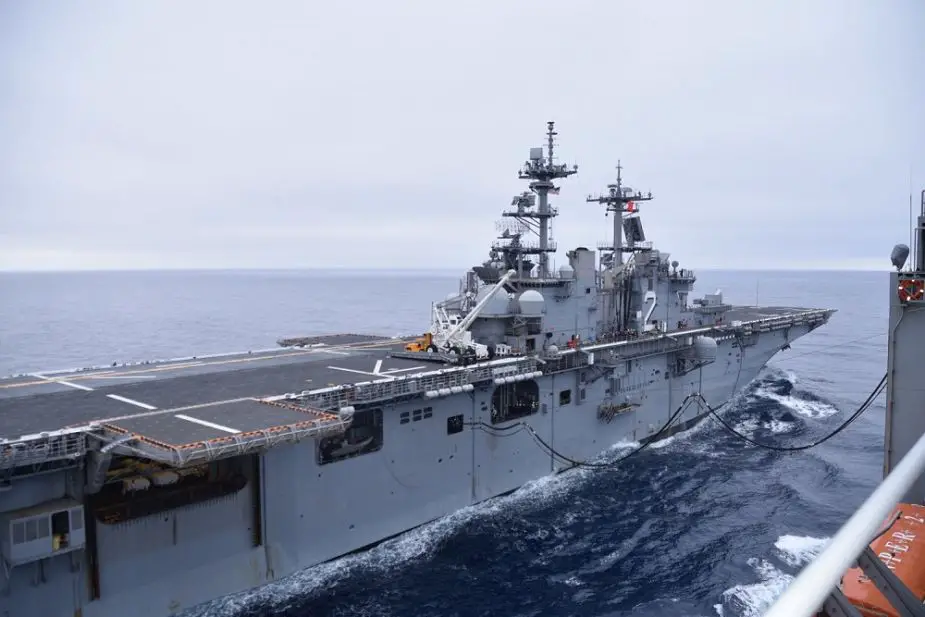
U.S. Navy Military Sealift Command (MSC) dry cargo/ammunition ship USNS Matthew Perry provided logistics services to the ships of the USS Essex Amphibious Readiness Group as they conducted pre-deployment exercises and qualifications, off the coast of Southern California,
-
Russian Navy Buyan-M class Project 21631 corvette Zelenyy Dol conducts combat mission in Baltic Sea
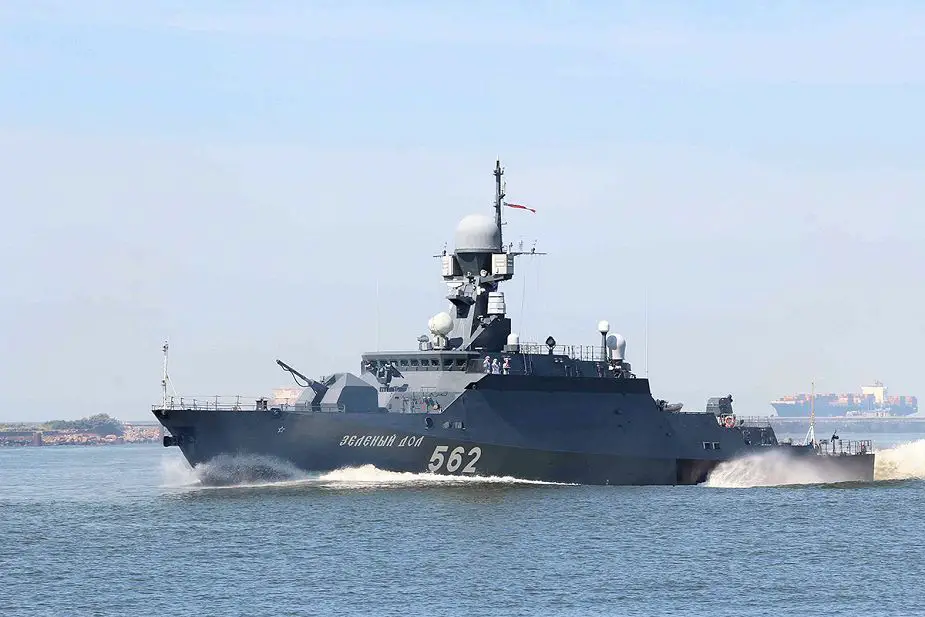
According to a Tweet of the Russian Ministry of Defense, published on May 4, 2020, Russian Navy Buyan-M class Project 21631 corvette Zelenyy Dol conducts combat training missions in the Baltic Sea.
-
Flight operations for US Navy USS America LHA 6 amphibious assault ship with MH-60S helicopter

The U.S. Navy USS America (LHA 6) amphibious assault ship conducts flight operations with MH-60S Sea Hawk helicopter from the America Expeditionary Strike Group, 31st Marine Expeditionary Unit team.
-
US Navy Amphibious assault ship USS Essex LHD 2 conducts flight operations with MV-22 aircraft

During its deployment in the eastern Pacific Ocean, the US Navy Wasp-class amphibious assault ship USS Essex (LHD 2) conducts flight operations with MV-22 Osprey tiltrotor aircraft.
-
US Navy Coastal Riverine Squadron TEN FORWARD have conducted maneuvers and training in Djibouti

U.S. Navy sailors assigned to Coastal Riverine Squadron TEN FORWARD, forward-deployed to Camp Lemonnier, Djibouti, have conducted maneuvers and training with 34-foot Dauntless Sea Ark patrol boat while on patrol near the Port of Djibouti, April 18, 2020.
-
Arleigh Burke-class guided-missile destroyer USS Mustin has conducted replenishment operation in Philippine Sea

On May 1, 2020, U.S. Navy sailors aboard the Arleigh Burke-class guided-missile destroyer USS Mustin (DDG 89) deployed in the Philippine Sea have conducted replenishment operation as sea with the dry cargo and ammunition Ship USNS Alan Shepard (T-AKE 3).
-
Photo Report : 35th Belgian Navy Days in Zeebrugge
Photo & Video Report : 35th Belgian Navy Days in Zeebrugge The 35th Belgian Navy Days were held at the Zeebrugge naval base on July 1st and 2nd 2016. For two days visitors could board several vessels from the Belgian Navy fleet and other European navies vessels. Navy Recognition attended the event and brings you a photo and video report.
 -
Indian Navy Demonstrated its Blue Water Capabilities during TROPEX-2015 Exercise
Indian Navy Demonstrated its Blue Water Capabilities during TROPEX-2015 Exercise The Indian Defence Minister Shri Manohar Parrikar said the Indian Navy must remain a superior Force in the Indian Ocean Region and the Government will give all support to the Navy so that it becomes a truly Blue Water Navy. Addressing the sailors and officers of the INS Vikramaditya after witnessing two days’ of Theatre Readiness Operational Level Exercise (TROPEX-2015)...
 -
Iranian Navy Testing its Latest Systems during Large Joint Exercise
Iranian Navy Testing its Latest Systems during Large Joint Exercise Different units of the Iranian Army's Ground Force, Navy, Air Force and Air Defense started six days of large joint military exercises codenamed Mohammad Rasoulallah started last week in Iran. It cover an area of 2.2 million square kilometers from the East of the Strait of Hormuz to the Southern parts of the Gulf of Aden. Several naval systems were unveiled or test-fired during the drills.
-
Video and photo coverage: Catamaran 2014 large joint amphibious exercise with CVN, LHD, LPD
Video and photo coverage: Catamaran 2014 large joint amphibious exercise with CVN, LHD, LPD From October 13 to 26, French forces (as well as British ones at staff level) take part in a large-scale operational exercise simulating an expeditionary amphibious operation in a crisis situation. The joint maneuvers take place in the western Mediterranean and the French Riviera. The French Navy (Marine Nationale) invited Navy Recognitionto cover the exercise: We could witness some of the amphibious assault, we then got on board an EDA-R (L-CAT) to reach the Mistral LHD at sea and the pinnacle of the event was a tour on board the Charles de Gaulle aircraft carrier.
 -
French Navy International Fleet Review / 70th Anniversary of the Landing in Provence
French Navy International Fleet Review / 70th Anniversary of the Landing in Provence On August 15th 2014, the French Navy (Marine Nationale) organizes an International Fleet review between Cannes and Toulon to commemorate the 70th anniversary of the allied landing in Provence.
 -
Photo Report : 34th Belgian Navy Days in Zeebruges
Photo Report : 34th Belgian Navy Days in ZeebrugesThe 34th Belgian Navy Days were held at the Zeebruges naval base on July 5th and 6th 2014. For two days, under a thick layer of clouds occasional showers, visitors could board several vessels from European navies as well as a command ship from the U.S. Navy. Navy Recognition attended the event and brings you a photo report.