






Breaking News




Saudi Arabia Positions World Defense Show as Global Hub for Defense Partnerships.
The World Defense Show is emerging as a major international defense exhibition, designed to support Saudi Arabia’s strategic transformation and defense sector growth. According to CEO Andrew Pearcy, the event aims to connect global defense companies, investors, and military leaders on a single international platform.
The World Defense Show (WDS) is steadily positioning itself as a major international show for the defense industry, bringing together manufacturers, military leaders, and investors from around the world. Andrew Pearcy, Chief Executive Officer of the event, said the exhibition was created to support Saudi Arabia’s broader strategic transformation while establishing a global platform for defense cooperation and industrial partnerships. By convening industry leaders, procurement officials, and technology innovators in one venue, the show aims to strengthen international defense dialogue and accelerate new business opportunities across the sector.
Follow Army Recognition on Google News at this link
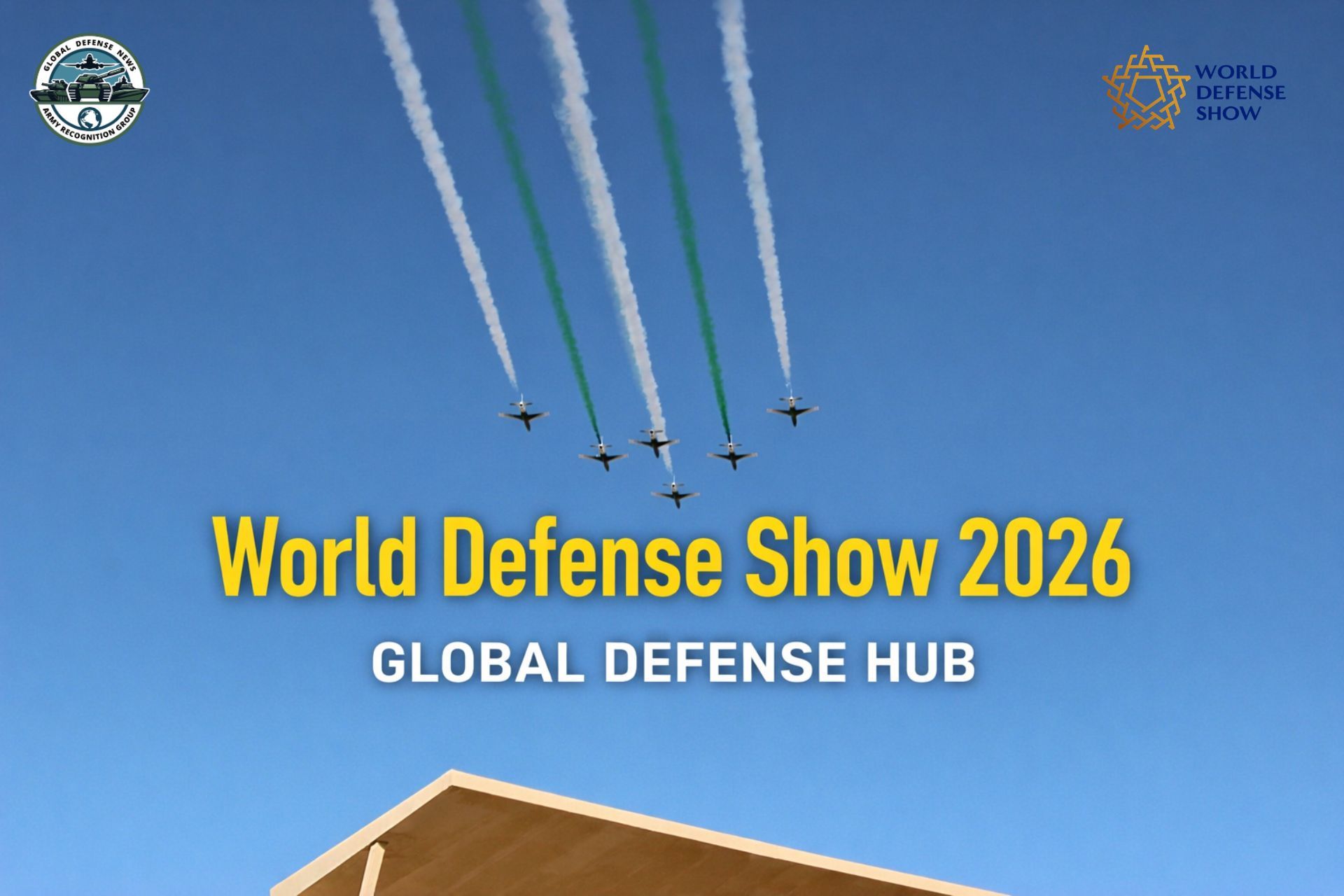
The World Defense Show is structured around five operational domains: land, air, sea, space, and security. (Picture source: Army Recognition)
The third edition of the exhibition takes place within the framework of Saudi Arabia’s Vision 2030 strategy. One of the central objectives of this national program is the localization of 50 percent of the Kingdom’s defense spending, a goal that requires the development of a domestic industrial base able to produce, maintain, and integrate advanced military systems. In this context, the World Defense Show serves both to support the growth of the local defense sector and to attract international partners interested in cooperating with Saudi companies.
Andrew Pearcy explains that the ambition of the exhibition is to position itself as a leading global event dedicated to defense. The approach combines the presentation of Saudi Arabia’s growing industrial capabilities with the creation of opportunities for foreign companies seeking partnerships or long-term industrial cooperation within the Kingdom. The event therefore operates as a meeting point between the operational needs of Saudi Arabia and the wider international defense industrial ecosystem.
The organization of the exhibition reflects the changing nature of modern military operations. The World Defense Show is structured around five operational domains: land, air, sea, space, and security. This multi-domain approach highlights the increasing importance of integrated capabilities across different operational environments. Modern armed forces rely on interconnected architectures that combine sensors, platforms, and command networks in order to improve situational awareness and operational coordination.
As a result, the exhibition does not focus solely on the presentation of individual platforms. It also seeks to demonstrate how different technologies interact and operate together. Integration between systems has become a central theme within the defense sector, particularly as military organizations move toward networked operations and multi-domain command structures.
Live demonstrations represent one of the defining elements of the World Defense Show. Dedicated display areas allow visitors to observe aerial demonstrations involving fighter aircraft, while land demonstration zones present military vehicles, unmanned systems, and other ground platforms operating in dynamic scenarios. These demonstrations are designed to provide a practical illustration of system performance while highlighting how different capabilities can operate in coordination during modern military operations.
In addition to the technological dimension, the exhibition aims to create conditions that facilitate business exchanges. Dedicated meeting spaces enable companies, government representatives, and defense delegations to hold discussions and explore potential cooperation projects. Andrew Pearcy emphasizes that this environment is an essential component of the event, which is intended to function as a platform supporting both industrial collaboration and commercial dialogue.
Since its first edition, the exhibition has experienced steady expansion. Andrew Pearcy notes that the event has grown by 58 percent since its launch, reflecting increasing demand from defense companies and international delegations. This growth illustrates the expanding role of Saudi Arabia within the global defense industry and the growing interest of international companies in the opportunities offered by the Kingdom.
Two factors help explain this expansion. Saudi Arabia occupies a strategic geographic position linking Europe, Asia, and Africa, which naturally supports its role as a regional meeting point for international defense actors. At the same time, large-scale investments associated with Vision 2030 are creating an environment that encourages industrial cooperation and technology development within the Kingdom. The exhibition also includes several specialized areas that highlight emerging technologies and industrial sectors. The Future Defense Lab provides a dedicated space for innovation, bringing together start-ups, technology firms, universities, and research institutions. This area focuses on technologies that could shape future military capabilities while encouraging interaction between research organizations and defense companies.
A naval zone has also been introduced to showcase maritime technologies and autonomous systems designed for naval operations. Additional areas focus on unmanned systems and emerging technologies. A supply-chain zone provides opportunities for local companies seeking investment or industrial partnerships to engage with international firms interested in supporting the growth of the Saudi defense ecosystem.
Across the different sections of the exhibition, visitors can observe a wide spectrum of capabilities. The air domain features a range of platforms including fighter aircraft and advanced aerial systems supported by flight demonstrations. Land display areas present military vehicles, drones, and robotic platforms through dynamic demonstrations that combine ground and aerial elements. Looking ahead, the organizers of the World Defense Show are already examining how the exhibition may evolve in future editions. Held every two years, the event is regularly adapted to reflect changes in defense technologies and operational concepts. Andrew Pearcy notes that the space domain could receive increased attention in the coming years, as space-based capabilities continue to play a growing role in communication, surveillance, and military operations.
Through the combination of operational demonstrations, technological innovation, and opportunities for industrial cooperation, the World Defense Show continues to develop as a platform that connects defense stakeholders from different regions while reflecting the evolving priorities of the global defense sector.