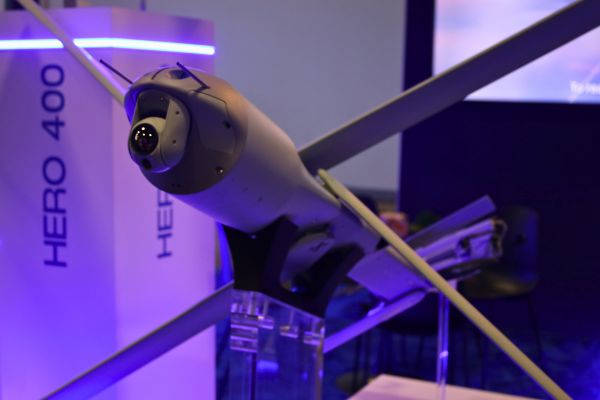
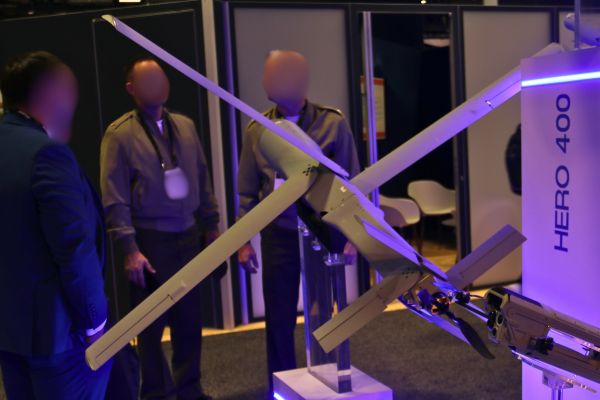
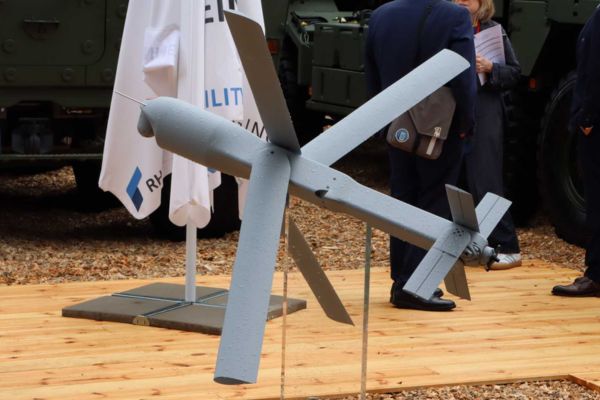
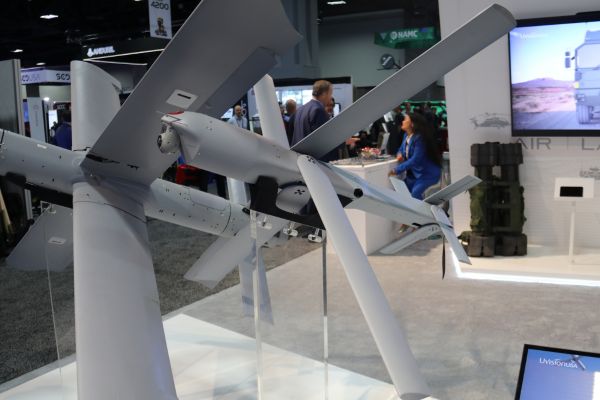
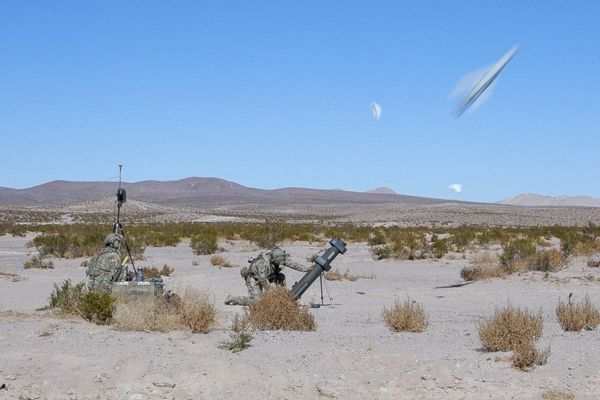
The HERO 120 is a medium-range anti-tank loitering munition developed by Israeli company UVision Air Ltd. Designed to provide frontline units with independent intelligence, surveillance, and reconnaissance capabilities combined with precision strike capability beyond line of sight, it can search for, identify, track, and engage armored vehicles, light vehicles, fortified positions, and other high-value tactical targets.
Country users: Israel, United States







Technical Data
-
Armament
The HERO 120 functions as both the aerial vehicle and the weapon. It carries a 4.5 kg warhead primarily intended for anti-tank missions and the engagement of protected tactical targets. The system can accommodate different warhead types to adapt its terminal effect to the target. Available configurations include anti-tank, anti-personnel, multipurpose, and enhanced-blast warheads. The lethality modules can be replaced to adapt the munition to different mission profiles.
The HERO 120 also features configurable detonation modes, including impact, proximity, and delay settings. These modes allow the terminal effect to be adapted to the target being engaged. Terminal guidance is provided by a stabilized electro-optical/infrared payload combined with advanced image processing. The operator receives imagery from the operational area and can select and track a stationary or moving target through the terminal phase of the engagement.
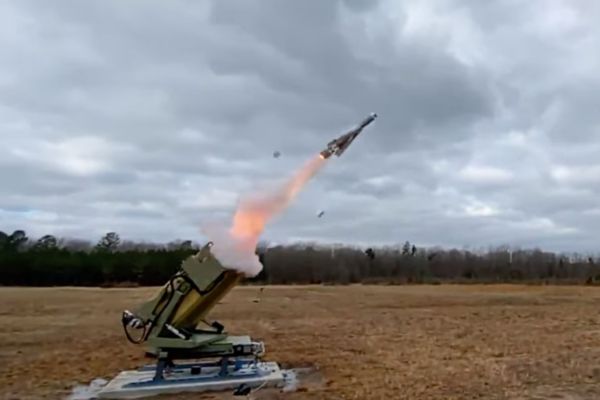
The HERO 120 also incorporates AI-assisted tracking and can be equipped with optional Automatic Target Recognition (ATR) capability to assist with target recognition. The operator retains control over the engagement decision. The munition is pneumatically ejected from its launch canister. After leaving the canister, its aerodynamic surfaces deploy and electric propulsion provides power for the remainder of the flight. -
Design
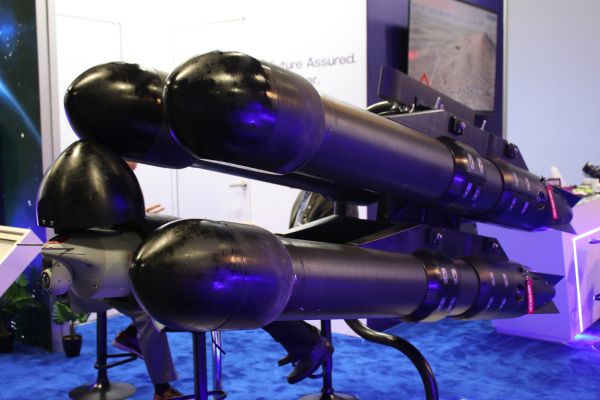
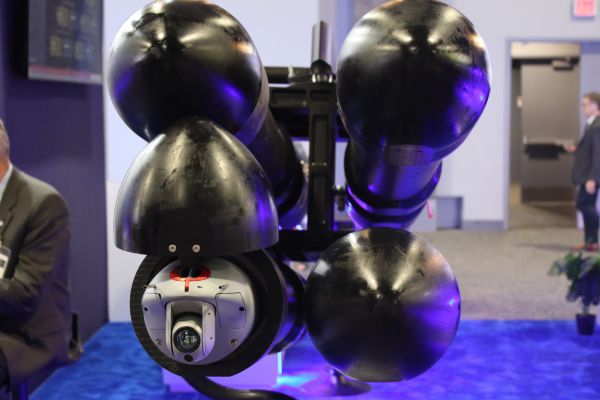
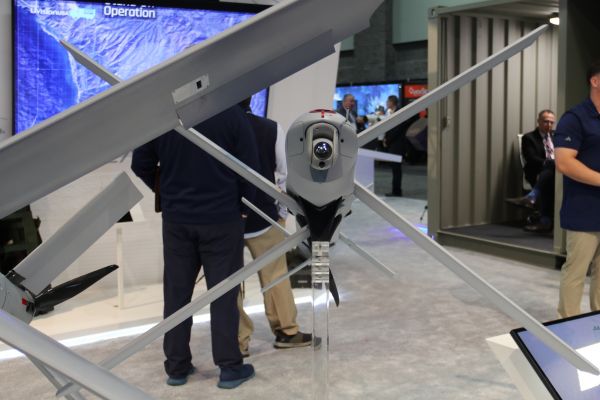
The HERO 120 uses a compact aerodynamic airframe with folding surfaces for storage inside a transport and launch canister. Once the munition is ejected from the canister, its aerodynamic surfaces deploy for transit to the operational area and subsequent loitering flight. The forward section incorporates a stabilized electro-optical and infrared payload used for observation, target identification, tracking, and terminal guidance. The HERO 120 also incorporates a flight computer, navigation equipment, image-processing systems, target-tracking functions, and communications equipment required for mission control.
An electric propulsion system drives a propeller after the pneumatic launch phase. This arrangement contributes to reduced acoustic and thermal signatures during flight. The HERO 120 is controlled through a Fire Control Unit. The unit enables the operator to receive imagery from the munition, manage the mission, select a target, and supervise the terminal phase. Control can also be transferred to another compatible station when required by the operational configuration. -
Propulsion
The HERO 120 is powered by an electric motor driving a propeller. The propulsion system supports transit to the operational area followed by a loitering phase during which the operator can search for, identify, and track targets. The HERO 120 has a maximum range of up to 60 km and an endurance of up to 60 minutes. It has a weight of 24 kg. These characteristics allow it to operate beyond direct line of sight while retaining sufficient flight time to observe the target area before engagement.
This loitering munition can be operated from ground positions and integrated with tactical vehicles, armored vehicles, naval vessels, and helicopters. Its launch arrangements support employment by dismounted units as well as mechanized formations and naval or airborne platforms. The HERO 120 is designed to continue its mission in environments where GPS reception is unavailable or degraded. It can also operate in demanding climatic conditions, including low temperatures and Arctic environments. -
Mission Systems and Sensors
The HERO 120 carries a stabilized electro-optical/infrared EO/IR payload providing observation and target-acquisition capabilities. The system can conduct intelligence, surveillance, and reconnaissance tasks before engaging a target. The EO/IR payload is combined with advanced image processing to assist in tracking stationary and moving targets. An AI-based tracker can maintain target tracking, while an optional ATR capability can assist with automatic target recognition.
The HERO 120 uses a secure Beyond Line of Sight (BLOS) communications link with AES-256 encryption. This link supports exchanges between the munition and the control station, including mission commands, imagery, and information required to manage the engagement. The system can be integrated into command-and-control architectures and external ISR systems. It can transmit imagery and mission information to the tactical network and use information from other sensors as part of a distributed detection and engagement chain.
The HERO 120 also supports control handover. A munition launched from one platform or by one unit can be transferred to another compatible operator to continue the mission, surveillance, or engagement. Automated functions assist navigation, loiter management, target tracking, and adjustment of the attack profile. The operator can modify the mission, abort an attack, return to loitering flight, select another target, or conduct another engagement attempt.


Photo Gallery