



Foxhound 4x4 LPPV
Light Protected Patrol Vehicle United Kingdom
Description
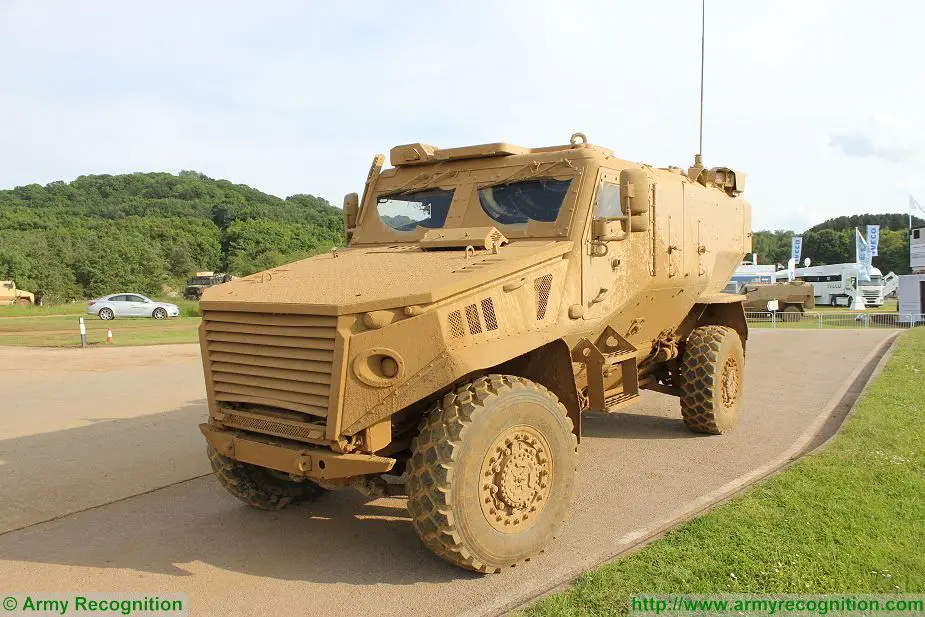
The Foxhound is the British variant of the American Ocelot which is designed and manufactured by the Company Force Protection, now a branch unit of General Dynamics. The Foxhound is a development to meet the requirements of the British Army for a new Light Protected Patrol Vehicle (LPPV) to replace the Land Rover Snatch. The use of the vehicle has been the subject of criticism by the media, politicians and the families of some casualties in both the Afghan and Iraqi areas of British operations. The British MoD purchased two Ocelot Foxhound vehicles for testing in April 2010. The invitation to tender was issued in May 2010. In September 2010, the Ocelot LPPV was selected under the program against the contender Supacat and NP Aerospace consortium's SPV400. In the British army, the Ocelot vehicle has received the name of Foxhound. The British Ministry of Defence made an initial order for 200 Foxhound vehicles in November 2010, and a further 100 were requested late last year as part of a £400m package. The Foxhound is used in the British army as light patrol vehicle offering high levels of mobility and protection. Foxhound will be used for troop movement on dismounted operations, mobile patrolling, convoy protection, quick reaction force, route protection and cordon and search operations. The Foxhound is now deployed in Afghanistan with the British army forces. The Foxhound can be transported in military transport aircraft C-17, C-130 or CH-47 helicopter underslung. According to information released by the British Army, on July 2020, the Foxhound has been upgraded for operational deployment in Bosnia and Herzegovina.
Foxhound LPPV variants:
- Foxhound cargo: rear side of the chassis is fitted with a cargo area
- Foxhound open top: the vehicle has an open-top
Technical Data
| Armament |
|
In standard configuration, the Foxhound has no armament, but it can be fitted with small open roof turret armed with 7.62 mm machine gun or remote weapon system. The British army Foxhound is equipped with two swivel stations armed with 7.62 mm machine gun mounted on each side on the top of the hull.
|
| Design and protection |
|
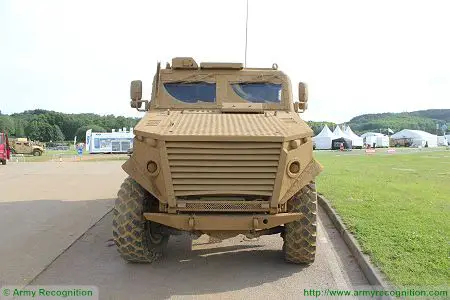
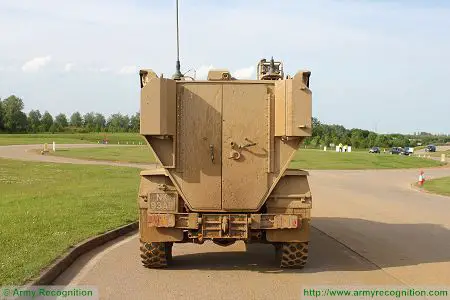
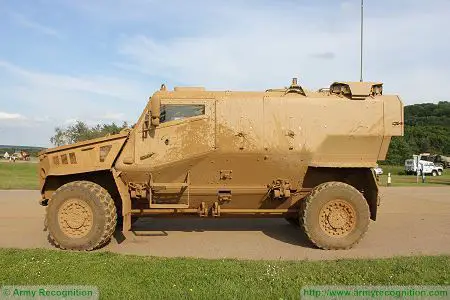
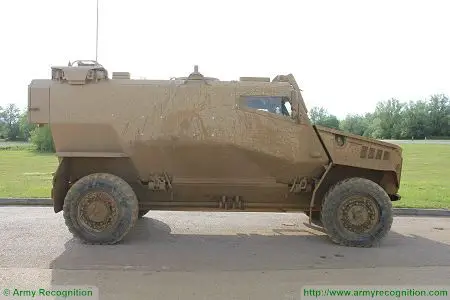
The layout of the vehicle is similar to a light tactical vehicle with the engine at the front, the crew compartment in the middle and the troop area at the rear. The design is modular, and all of the components can be removed easily. The protective pod where up to six people can sit is interchangeable to allow easy modification according to the vehicle's role. The Foxhound LPPV has a crew of two consisting of commander and driver and can carry four fully equipped troops who are seated to either side in the rear on individual seats facing inwards. The hull vehicle of the vehicle provides protection against small arms firing and shell splinters. The Foxhound has a V-shaped hull which increases protection against land mines and IEDs blast. The crew and the commander have a single door mounted on each side of the hull. Driver and commander are provided with two large bulletproof windows at the front, and one small to each side of the hull. Two additional doors are fitted at the rear of the troop compartment that allows infantry soldiers to enter and leave quickly the vehicle. Two hatches are mounted on the top of the hull. In option, the Foxhound can be fitted with add-on armour kit to increase protection against RPG (rocket-propelled grenade) and EFP (explosively formed penetrator).
|
| Mobility |
| The Foxhound LPPV is motorized with Steyr-Daimler-Puch 3.2l engine. It is a six-cylinder, four-stroke diesel engine with turbocharger coupled with a 6-speed automatic transmission ZF 6HP28. The Foxhound has a maximum payload of 2,000 kg and the vehicle can run at a maximum road speed of 110 km/h with a maximum range of 600 km. The vehicle also boasts an extremely effective night-time capability; while its engine can be removed in the space of just 20 minutes should any mechanical problems arise. |
| Accessories |
| Each member of the vehicle is seated on a seat which is not attached on the floor but to the roof and sides and fitted with a five-part seat harness and headrest protection. These seats provide higher crew survivability against mine blast explosion. Foxhound is equipped with infrared technology and thermal-imaging and has three screens inside the cab that offer a 360-degree view around the vehicle for high levels of situational awareness. In option the Foxhound can be fitted with CTIS (Central Tire Inflation System), a system provides control over the air pressure in each tire of a vehicle as a way to improve performance on different surfaces and self-recovery winch mounted at the front of the vehicle. |
Specifications
| Armament | Armor |
| One 7.62mm in option. | V-hull, blast-protection technology and land mines and IEDs STANAG 4569 level 2 |
| Country users | Weight |
| United Kingdom | 7,500 kg |
| Designer Country | Speed |
| United States - United Kingdom | 110 km/h maximum road speed |
| Accessories | Range |
| Infrared night vision technology and thermal imaging. In option, Central Tire Inflation System and self-recovery winch. | 600 km |
| Crew | Dimensions |
| 2 + 4 | Length, 5.34 m ; Width, 2.07 m; Height, 2.34 m |
Details View
 |
 |
 |
 |
Pictures - Video