|
| |
|
|
| |
| Description |
|
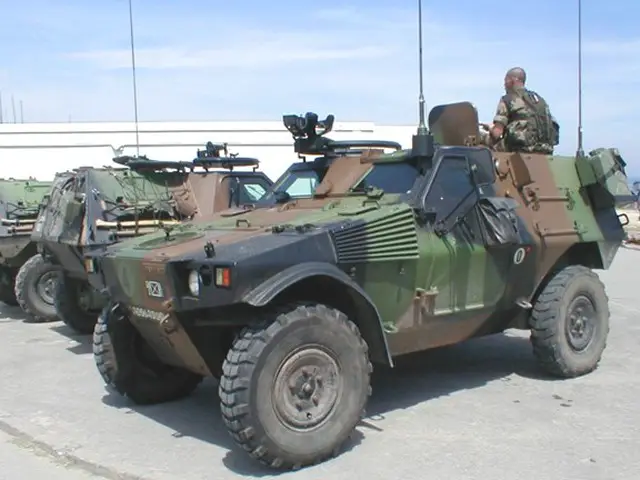
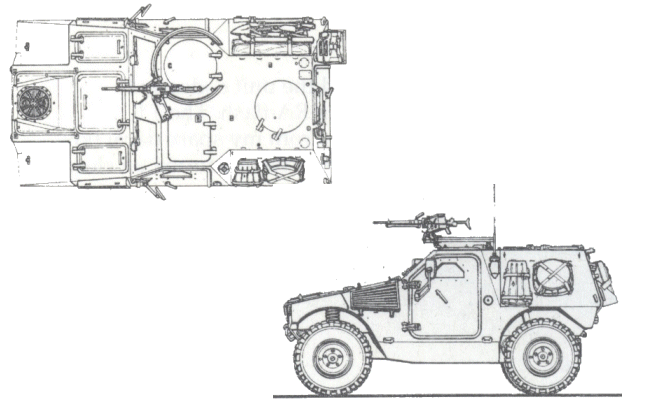
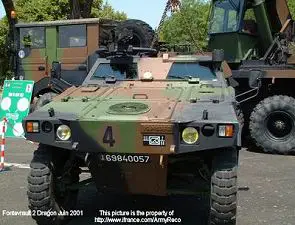
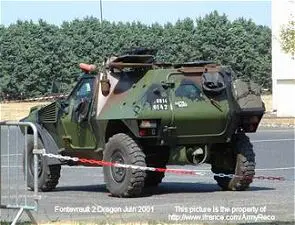
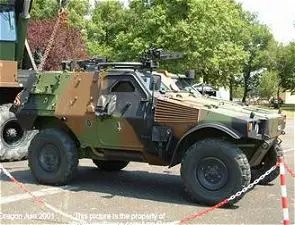
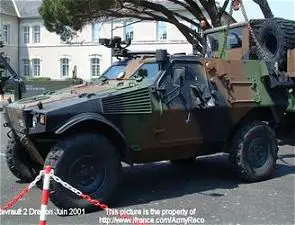
The VBL (Véhicule Blindé Léger) light armoured is a 4x4 wheeled chassis vehicle designed and manufactured by the French Company Panhard. It was designed to combine the agility of the Peugeot VLTT liaison vehicle with adequate protection against small arms fire, artillery fragments, mines, and NBC weapons. The VBL is fully amphibious and can swim at 5.4 km/h; it is also air transportable by C-130, C-160 and A400M. The VBL was developed during the 1980s and entered operational service in France in 1990. It has a fuel consumption of 16 liters per 100 km. By December 1995, the French Army had ordered 922 VBL vehicles, this includes prototypes, preproduction vehicles and trials vehicles and includes two long wheel-base models.
|
| |
|
Variants :
|
|
VBL MILAN: Anti-tank medium range (up to 2000 metres) combat. Uses one MILAN missile fire unit and six missiles, with a MIRA Thermal camera.
VBL ERYX: Anti-tank short-range (up to 600 metres) combat. Uses one ERYX missile fire unit and four missiles, as well as MIRABEL thermal goggles. Its secondary weapon is a ring-mount fitted with a 7.62 mm machine gun (1400 rounds).
VB2L POSTE DE COMMANDEMENT: Command version. It operates a VHF system with two PR4G radios, a HF System with one SSB radio for long-range and a Radio/intercom system for the crew. Its armament is a ring-mount fitted with a 7.62 mm machine gun (1400 rounds). Specific equipment: A work station with map board and folding table, additional batteries to meet the requirements of the radio and auxiliary services giving up to 8 hours additional endurance, and a folding seat for 4th crew member.
VBL RECO 12.7: Reconnaissance and troops engagement. Operates 1 VHF transmitter/receiver (French version), radio/intercom system and one M2 machine gun on ring-mount protected by side armour. Optional equipment : multiple launcher for anti-personnel grenades FLY-K (PL 127) - Rate of fire : 375 rounds/minute - muzzle velocity: 244 m/s, Effective range : against an area: 2200 m; against point target: 1500 m, Fragmentation effect : 15 m - armour penetration: 50 mm.
VBL AT4CS: Anti-tank very short range (<250 meters). Operates 1 or 2 VHF transmitter/receivers, radio/intercom system, and a x 84 mm AT4CS munitions in a ready-use configuration capable of penetrating 550 mm of armour (armoured vehicles without additional protection) or 1.5 m of concrete. Usable dismounted or in confined spaces). Secondary weapon: One ring-mount fitted with a 7.62 mm machine gun (1400 rounds).
ULTRAV M11: NBC (Nuclear Biological Chemical) reconnaissance version for the US Army
Greek Army VBLVBL TOW: Anti-tank long range (up to 3750 metres). Radio equipment: 1 or 2 VHF transmitter/receivers. Armament: One infantry-type single TOW tube: Day/night operation using integral night sight system (4 missiles). Secondary weapon: One ring-mount fitted with a 7.62 mm machine gun (2000 rounds).
VBL ALBI-MISTRAL: Air defense (currently developed). Radio equipment: 2 VHF PR4G transmitter/receivers (1 for tactical links; 1 for firing system data transmission). Armament: Twin-round ALBI turret firing the MISTRAL "fire-and-forget" air defense missile, 6 missiles including 2 on the fire unit. Secondary weapon: One semi-circular rail fitted with a 7.62 mm machine gun (1200 rounds).
VBL (à flancs redressés) CANON: With an automated 20 mm turret. Radio equipment: 1 VHF transmitter/receiver. Armament: MK 20 Rh 202 automatic 20 mm cannon (Rate of fire: 1000 rounds/minute, Elevation range: -10° to +45°, Rounds carried: 260, Munitions loaded: 160 (60 left, 100 right), Sight: ZEISS PERI-Z-16, Optional equipment associated with the turret: laser range finder, thermal imager).
VBL TOURELLE FERMEE: With a 12.7 mm remotely controlled turret. Radio equipment: 1 or 2 VHF transmitter/receivers. Armament: 12.7 mm or 7.62 mm machine gun or automatic 40 mm grenade launcher (Munition capacity: 600 rounds, day/night camera, laser rangefinder).
|
|
| |
|
|
|
|
| |
| Armament |
|
The commander has a single-piece circular hatch cover that opens to the rear, a circular ring is mounted around the hatch. A 7.62 mm machine gun can be fitted to this ring.
|
| Protection |
|
The hull of the Panhard VBL is of all-welded THD steel that varies in thickness from 5 to 11 mm with the engine at the front and the crew compartment at the rear. A single door that opens to the front is mounted to each side of the hull, the upper part is equipped with a small bulletproof window.
|
| Propulsion |
|
The VBL is motorized with Peugeot XD 3T, 4-cylinder turbocharged diesel developing 105 hp at 4,150 rpm, coupled to ZF automatic transmission with 3 forward and 1 reverse gears.
|
| Accessories |
|
Standard equipment includes an NBC (nuclear, biological, chemical) protection system and passive night-vision equipment. All production VBLs are fitted with a central tire-pressure regulation system and power steering, but there are many options including an NBC system and air-conditioning system. A tire-pressure regulation system is fitted as standard. This allows the driver to adjust the tire pressure to suit the terrain being crossed. The VBL is fully amphibious after two minutes of preparation and is propelled in the water by a single propeller mounted under the hull rear. Before entering the water a trim vane is erected manually at the front of the vehicle.
|
| |
| Specifications |
| |
|
Armament
|
|
Basic version with 7.62 mm or 12.7 mm machine gun
|
|
Country user
|
|
Benin, Botswana, Cambodia, Cameroun, Djibouti, France, Gabon, Greece, Indonesia, Kuwait, Oman, Mexico, Niger, Nigeria, Portugal, Qatar, Rwanda, et Togo.
|
|
Designer Company
|
|
Panhard
|
|
Accessories
|
|
Adjustable tire pressure, gas dispensers, searchlight
|
|
Crew
|
|
2 to 3 soldiers
|
|
|
Armor
|
|
STANAG Level 1 7.62x51 and shell splinters.
5 to 11.5 mm armor
|
|
Weight
|
|
3,500 to 4,000 kg
a
a
a
|
|
Speed
|
|
100 km/h
|
|
Range
|
|
600 km
a
|
|
Dimensions
|
|
Length: 3,80 m; Width: 2,02 m; Height: 1,70 m
|
|
|
| |
|
|
| |
|
|
| |
|
|
|
|
|