| a |
| |
Defense Industry Technology - Tactical Communication Networks
|
|
| |
|
| |
| Thursday,
August 1, 2013, 6:00 AM |
| |
| Defense
White Paper on Cognitive Tactical Communication Networks |
Ari
Hulkkonen1, Reima Kettunen1, Juha Ylitalo1, Marko Höyhtyä2,
1Elektrobit Wireless Communications Ltd, Tutkijantie 7, 90570 Oulu, Finland
2VTT Technical Research Centre of Finland, Kaitoväylä 1, 90571
Oulu, Finland |
Abstract—Cognitive
Radio (CR) has been an intensive topic of research in recent years. Its
main applications range from the utilization of TV white spaces to interoperability
between large communication systems in all layers. Tactical communication
systems that have to operate in hostile radio environments with interference,
jamming and rapidly changing network topology share many common challenges
with civilian cognitive radio. This has been recognized by defense organizations,
and many related research activities have also targeted the utilization
of cognition in tactical communications.
I. INTRODUCTION
Cognitive radio (CR) systems obtain information about their environment
to adjust their operation adaptively to provide required services to end
users. Regarding spectrum use, future wireless systems equipped with cognitive
radio capabilities could dynamically access new frequency bands, and at
the same time protect higher-priority users on the same bands from harmful
interference [3]. For future mobile communication systems, cognitive radio
techniques present a promising opportunity for cost-efficient access to
spectrum bands to meet growing user demand. The emergence of CR techniques,
especially in the terrestrial domain, has recently played a significant
role in wireless research.
The focus in CR research has remained strongly on terrestrial civilian
networks, although activities such as Software and Cognitive Radio for
European Defense (SCORED) addressed the same issue from the point of view
of military communications. In addition to terrestrial applications such
as utilizing the unused frequencies, known as white spaces in between
high-power TV-transmitters, cognitive radio has been proposed to other
applications such as LTE to allow more efficient spectrum utilization
and frequency sharing between terrestrial and satellite systems. Research
has been carried out in this field and it has been found that the key
issue is to either avoid or manage the interference between systems sharing
the spectrum, which also applies to tactical communications. In fact,
cognitive radios, due to their inherent environment sensing and transmission
adaptation capabilities, are perfect communication platforms to construct
tactical communication systems.
|
|
|
|
| II.
COGNITIVE RADIO
Future wireless communications will demand radio technologies providing
significantly higher capacity, bit rates and flexibility than existing
systems. In addition, wireless access should cover the entire population,
including rural and distant areas.
Cognitive Radio has been an active topic of research for some years now.
CR technologies have been proposed to improve spectrum occupancy by exploiting
the unused parts of the spectrum without interfering with primary users
who have either higher priority or legacy rights [4], [3]. Cognitive radio
provides a promising technique for wireless systems to resolve these issues,
but it still has many challenges to overcome.
Cognitive radios are aware of their environment and the available resources.
They learn from the environment and adapt to variations in the environment
in real time. In many cases, awareness of the environment equals awareness
of the radio spectrum obtained through its own active measurements or
from external sources such as public databases [1].
Spectrum awareness is not the only thing that can guide cognitive operation
[2]. Time, space, and energy are other possible radio resources to be
aware of and guide operation. Relaying and various Multiple-Input and
Multiple-Output (MIMO) methods can be used opportunistically to exploit
spatial opportunities [2]. As an example, sensing combined with beamforming
could give more accurate information about spectrum use in the vicinity.
In addition to being aware of surrounding environment and current situation,
the cognitive radios also need mechanisms to utilize the information.
Cognition can be applied in multiple layers starting from physical layer
adaptation including antennas, radio resource management on link layer
controlling the spectrum deployment in time and frequency domains and
network functionality comprising routing including selection of the used
radio system.
Figure 1 shows a general cognitive cycle for characterizing the operations
of cognitive radio system (CRS). According to the definition, CRS has
the capabilities of obtaining knowledge, adjusting according to the knowledge
and learning from the results. The definition is broad and detailed techniques
for creating the CRS functionalities have not yet been defined. |
|
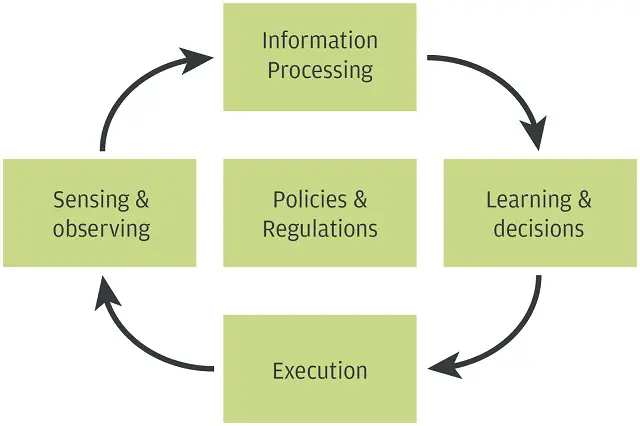
Figure 1: The cognitive cycle
|
|
| III.
COGNITIVE RADIO IN TACTICAL COMMUNICATIONS
Tactical communications networks are operated in a dynamically changing
environment, where interference and sudden changes in the network configuration
and radio parameters take place. However, with traditional Combat Net
Radios (CNR) it is rather challenging to guarantee a specific performance
level for users as the system parameters have to be fixed and agreed beforehand.
Problems were first limited through well-performed frequency planning,
and later the introduction of wideband radios featuring automatic frequency
allocation solved many issues with co-site interference.
Since the introduction of voice transmission, the required information
bandwidth has increased drastically. Today, the communication systems
transfer images, video and data in addition to voice and data messages
between users, thus increasing the throughput and capacity requirements
to a new level. The introduction of MIMO and multicarrier techniques has
provided more throughput and system capacity but the spectral efficiency
has become a problem as the systems require more bandwidth anyway.
Cognitive radio offers new possibilities to further enhance the performance
of a modern tactical communication system by introducing methods and mechanisms
to avoid interference and interception, improve system-wide spectral efficiency
and allow more flexible resource utilization. In addition to terrestrial
wireless links, satellites, UAVs and wired connections are combined in
a hybrid system (Figure 2).
|
|
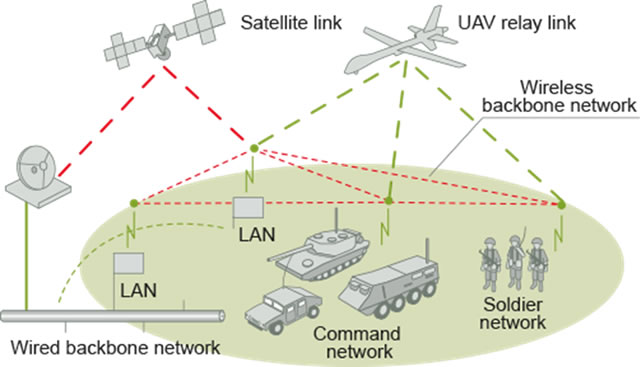
Figure 2: A Cognitive Tactical Communications Network
|
|
| In
addition to industry driven projects targeting common applications, research
activities have been carried out to study the applicability of cognitive
radio to military communications. As an example, Defense Advanced Research
Projects Agency (DARPA) has launched several programs related to cognitive
radio in the United States. DARPA’s neXt Generation Program (XG)
aims to develop theoretical solutions for dynamic control of the spectrum,
technologies and subsystems that enable reallocation of the spectrum and
prototypes to demonstrate applicability to legacy and future military
radio systems. Interested reader may look at some tactical network design
aspects across the protocol stack from [6].
In Europe, EU-funded projects such as ARAGORN and SENDORA, activities
funded by the European Space Agency (ESA) such as the ACROSS [5], and
national projects and programs such as TRIAL have developed cognitive
radio solutions. In addition, the European Defence Agency (EDA) has launched
its own projects to support the development of CR and its applicability
to military communications. An example of such an activity is SCORED (Military
Software-Defined Radio capabilities including applying Cognitive Radio-based
Spectrum Management in the Security and Defence domains).
Elektrobit has participated in numerous of these projects and is currently
developing technology and solutions that allow deployment of cognitive
radio functionality in practical applications. Following years of active
work on MIMO and multicarrier technologies that provided a significant
increase in the throughput of wireless links, cognitive radio is today
one of the key technologies supporting the rapidly increasing requirements
for system capacity. While spectrum resources are limited and bands have
become more and more crowded, there is a need for methods that allow more
efficient utilization of radio resources.
|
|
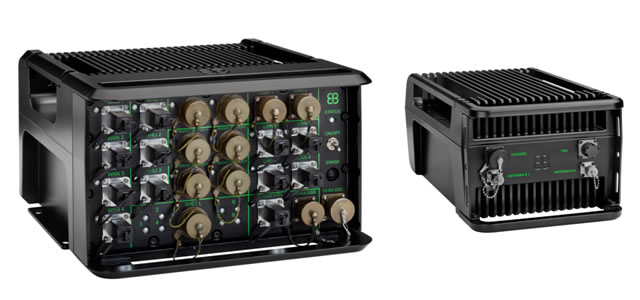
Figure 3: EB Tactical Router and the Radio Head Unit
|
|
| IV.
EB TACTICAL WIRELESS IP NETWORK (TAC WIN)
The EB Tactical Wireless IP Network (TAC WIN) is a complete solution to
building a tactical communications mobile ad hoc network for vehicle and
stationary applications. With TAC WIN battle groups can create high-data-rate
wireless IP networks as backbones to support C2 data transmission during
operations. The flexibility to use the EB solution in different frequency
bands and network topologies provides cost effectiveness, ease of use
and efficiency in various tactical communication scenarios. The EB Tactical
Wireless IP Network is built with these basic components: the Tactical
Router and the Radio Head Unit. (Figure 3).
TAC WIN can be deployed as an independent network or as part of a larger
operative network supporting a great variety of applications and physical
equipment connected to the same flexible and dynamic mobile ad hoc network
with high-speed connections comparable to commercial internet services
TAC WIN provides flexible routing functionality and interfaces to establish
the connection between nodes and to other systems using either wireless
or cable/fibre communications. The wireless interface is provided by the
router’s integrated SDR baseband section that allows various military
or commercial waveforms to be run, depending on the customer’s requirements.
|
|
| V.
REFERENCES
[1] M. Höyhtyä, A. Hekkala, and A. Mämmelä, “Spectrum
awareness: techniques and challenges for active spectrum sensing,”
in Cognitive Wireless Networks, edited by F. Fitzek and M. Katz, pp. 353-372,
Springer, 2007.
[2] F. H. P Fitzek and M. Katz, editing, Cognitive Wireless Networks,
Springer, 2007.
[3] S. Haykin, “Cognitive radio: Brain-empowered wireless communications,”
IEEE Journal on Selected Areas in Communications, vol. 25, pp. 201–220,
February 2005.
[4] J. Mitola III and G. Q. Maguire, Jr., “Cognitive radio: Making
software radios more personal,” IEEE Personal Communications, vol.
6, pp. 13–18, Aug. 1999.
[5] M. Höyhtyä, J. Kyröläinen, A. Hulkkonen, J. Ylitalo,
and A. Roivainen, “Application of cognitive radio techniques to
satellite communication,” in Proc. DySPAN, pp. 540¬–551,
October 2012.
[6] O. Younis, L. Kant, A. McAuley, K. Manousakis, D. Shallcross, K. Sinkar,
K. Chang, and K. Young, "Cognitive Tactical Network Models",
IEEE Communications Magazine, pp.70-77, October 2010. |
|
| |