
- Details
- Written by: Administrator
- Category: Defence & Security Industry Technology
- Hits: 3593










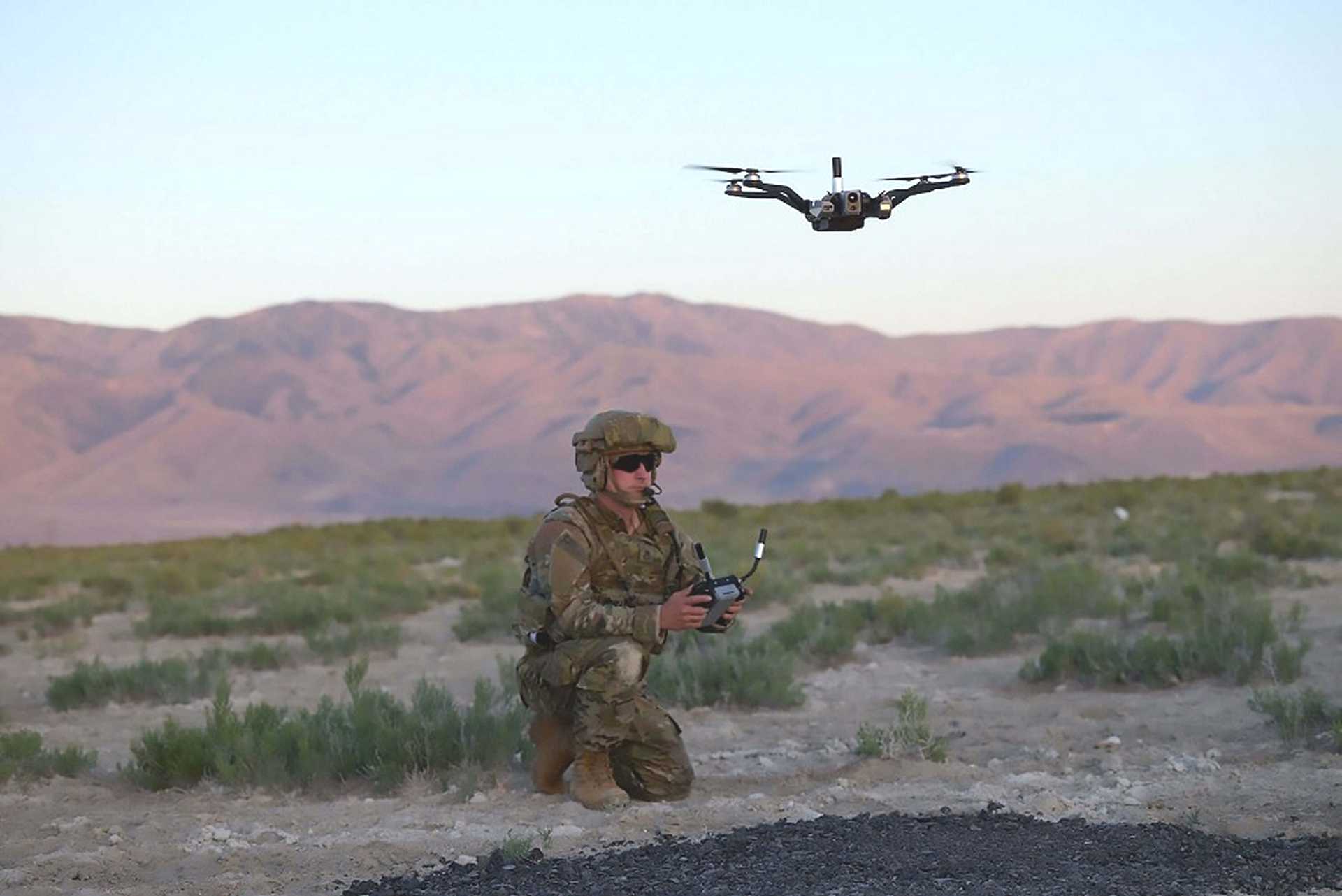
The U.S. Army is rapidly accelerating the deployment of advanced Small Uncrewed Aircraft Systems (SUAS) as part of its Short-Range Reconnaissance (SRR) program to equip frontline units with combat-proven aerial technologies adapted for the rapidly evolving realities of modern warfare. Under the framework of its Transformation in Contact (TiC) initiative, the U.S. Army is fielding platforms like the Skydio X10D to bolster battlefield intelligence, increase force protection, and maintain overmatch in future high-threat environments.
Follow Army Recognition on Google News at this link
The U.S. Army advances Short-Range Reconnaissance capabilities with cutting-edge SUAS deployed to Transformation in Contact Brigades. (Picture source: U.S. DoD)
Delivered to the 1st Battalion, 101st Airborne Division less than a month after its request, the Skydio X10D exemplifies next-generation tactical drone design. This quadrotor SUAS is built around a high-performance autonomy engine supported by artificial intelligence and integrated with modular payloads. It features a ruggedized airframe and multiple sensor configurations, including a narrow field-of-view color electro-optical (EO) sensor, a wide field-of-view EO sensor, and a thermal infrared sensor, allowing for both day and night ISR operations. Its autonomy stack enables GPS-denied navigation, obstacle avoidance in complex terrain, and the ability to fly pre-programmed or dynamically updated missions without manual piloting, which is crucial for operations in dense urban or heavily forested areas. The X10D is also compliant with U.S. Department of Defense security requirements, making it a fully NDAA-compliant and Blue UAS-listed system.
The urgency behind the U.S. Army’s accelerated deployment of these drones is strongly linked to recent battlefield lessons, particularly drawn from the ongoing war in Ukraine and other high-intensity conflicts. In Ukraine, commercial and military-grade drones have reshaped frontline tactics, enabling asymmetric advantages by providing constant reconnaissance, target acquisition, and even direct strike capabilities. Small drones have proven effective in locating enemy positions, adjusting artillery fire in real time, conducting damage assessments, and identifying safe passages through mined terrain, roles now considered indispensable in modern combat. The U.S. Army is closely studying these developments and understands the need to equip its units with similar or superior capabilities to avoid tactical disadvantages.
These battlefield insights have led to a profound doctrinal shift within the U.S. Army. SUAS are no longer considered supplementary tools. They are now critical components of the modern digital battlefield. The SRR program’s Tranche 2 rollout, which includes systems like the Skydio X10D and Teal Drones’ Black Widow, is shaped by urgent operational requirements and soldier-driven feedback. Both systems are being integrated directly into TiC brigades, which serve as the testing and refinement arm for new tactics and equipment in realistic scenarios.
Another key driver behind the U.S. Army’s push is the increasing threat of peer and near-peer adversaries who are rapidly improving their drone arsenals and electronic warfare capabilities. By accelerating SUAS deployment, the U.S. Army aims to outpace potential adversaries in ISR dominance and tactical flexibility. Additionally, these drones enhance force protection by reducing the need for dangerous manned reconnaissance patrols and enabling safer stand-off surveillance.
The multi-vendor strategy pursued by the U.S. Army ensures sustained innovation and flexibility. By engaging both traditional defense firms and emerging American drone manufacturers like Skydio and Teal, the U.S. Army is creating a competitive environment that rapidly delivers mission-tailored solutions to the field. It also ensures that the platforms can be continuously upgraded with new sensors, software, and communications systems as threats evolve.
This transformation is not limited to hardware. Through field experimentation with SUAS in TiC brigades, the U.S. Army is also developing new tactical playbooks, integrating networked reconnaissance, and refining mission planning tools that reflect the new realities of drone-saturated battlefields.
In short, the accelerated deployment of the Skydio X10D and similar platforms is a strategic response to a transformed global combat landscape. The U.S. Army is not just modernizing. It is adapting its doctrine, structure, and culture to ensure dominance in a future where drones are not a luxury but a necessity. Army Recognition will continue to provide in-depth coverage of this evolving capability set and its impact on force projection and battlefield outcomes.
- Details
- Written by: Administrator
- Category: Defence & Security Industry Technology
- Hits: 7422
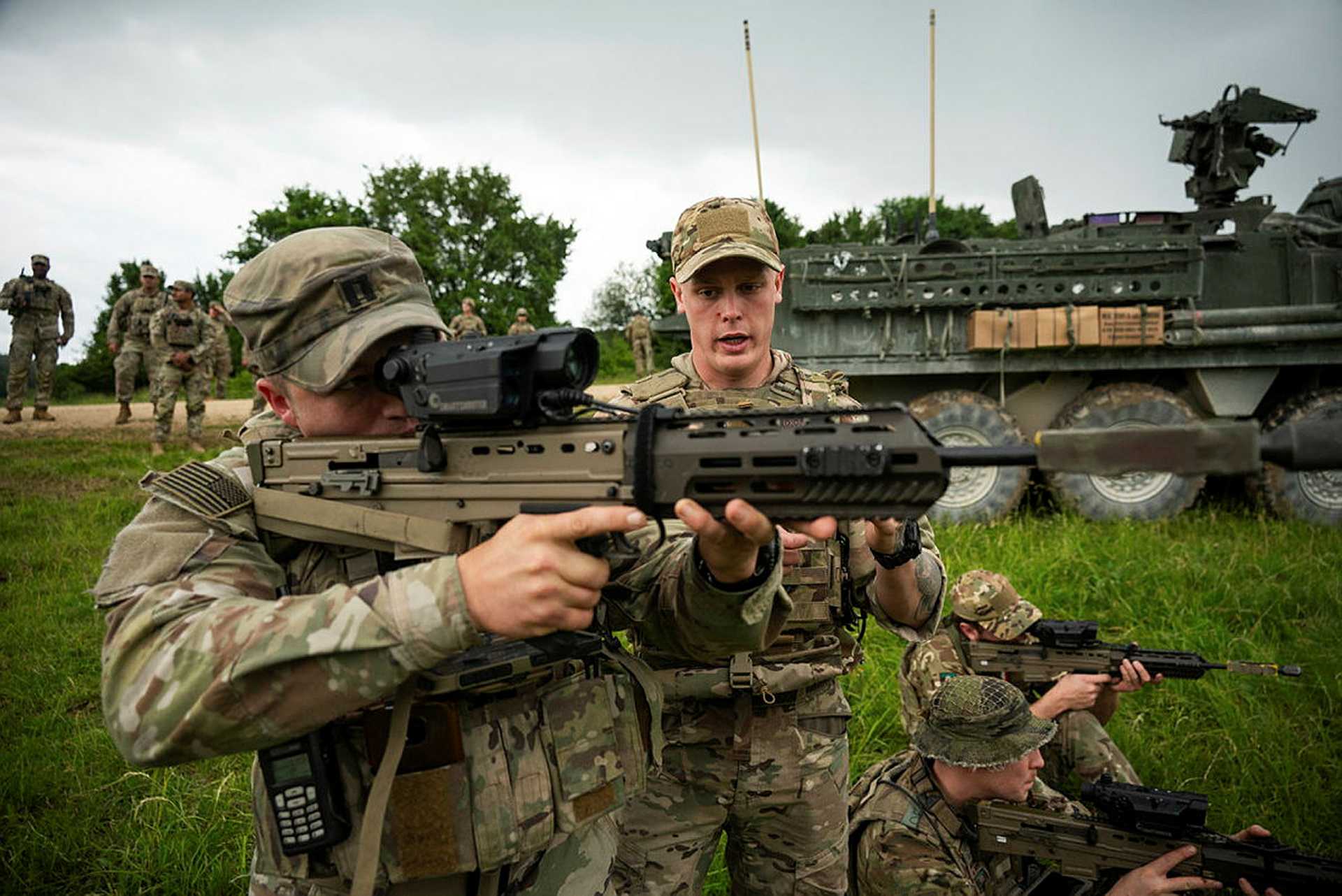
According to recent images released by the British Ministry of Defence on June 6, 2025, British Army soldiers demonstrated the SmartShooter SMASH X4 Fire Control System mounted on SA80A3 assault rifles during Project Flytrap at the Joint Multinational Readiness Center, Hohenfels Training Area, in Hohenfels, Germany. The pictures showed a British Army SA80A3 rifle fitted with the SMASH X4 sight in an operational training environment, confirming the system’s field deployment within frontline units.
Follow Army Recognition on Google News at this link
U.S. Army Capt. David Smith, commander of Lightning Troop, 3rd Squadron, 2nd Cavalry Regiment (left), tests the SmartShooter SMASH X4 fire control system mounted on a British Armed Forces SA80A3 rifle during Project Flytrap at the Joint Multinational Readiness Center, Hohenfels Training Area, Germany, June 6, 2025. (Picture source: British MoD)
This new capability is designed to enhance the British Army soldiers' response to the growing threat posed by hostile drones on the modern battlefield, particularly small and low-flying UAVs that are difficult to engage with conventional optics.
The SMASH X4, developed by Israeli company SmartShooter, is a precision fire control system that integrates a 4x magnification optical scope with advanced electro-optical sensors, real-time image processing, and AI-based fire control algorithms. The system enables automatic target detection, acquisition, and tracking. Once a target is locked, the SMASH X4 ensures the weapon fires only when perfectly aligned with the target, thereby maximizing the probability of a successful hit. This “one shot one kill” concept is especially critical against drones, which are often fast, small, and capable of erratic flight patterns that challenge conventional aiming techniques.
Unlike traditional optics, the SMASH X4 transforms a standard rifle into a smart weapon system capable of executing precision engagements against aerial threats and other difficult targets. It not only enhances individual lethality but also reduces collateral damage by increasing shot accuracy. The SMASH X4 is effective in day and night conditions and supports both kinetic engagements and reconnaissance assistance through its integrated tracking capabilities. Its design allows seamless integration onto NATO-standard Picatinny rails, making it compatible with a wide range of small arms.
The SA80A3, the latest upgrade in the long-serving SA80 rifle family, is the British Army’s standard 5.56mm NATO bullpup assault rifle. This version incorporates significant improvements, including a monolithic upper receiver with extended Picatinny rails, enhanced durability, improved barrel harmonics, and better ambidextrous handling. It was specifically updated to meet the modern soldier’s need for modularity and to support advanced optics and targeting systems like the SMASH X4. The combination of the SA80A3’s mechanical improvements and the precision capabilities of the SMASH X4 creates a powerful, next-generation rifle platform suited for the complexities of modern warfare.
The British Ministry of Defence signed the initial procurement contract for the SMASH X4 during the Land Warfare Conference held on June 26–27, 2023. The £4.6 million agreement was awarded to Viking Arms Ltd, a UK-based defense supplier, and covers the delivery of 225 SMASH X4 units to Very High Readiness units in the British Army. The contract includes a five-year framework to expand supply based on operational requirements, with a potential total value of up to £20 million. This scalable approach ensures flexibility for equipping dismounted elements of the Royal Navy and Royal Air Force in addition to the Army.
The integration of the SMASH X4 system marks a strategic advancement in the British Army’s approach to countering low-cost, high-impact threats like commercial and military drones. By giving dismounted soldiers the ability to neutralize drones with precision and confidence, the Army is bridging the gap between infantry and advanced anti-drone technology. This development reinforces the UK's broader modernization objectives and showcases a commitment to delivering cutting-edge battlefield solutions to its frontline troops. As drone warfare continues to evolve, the SMASH X4-equipped SA80A3 rifle offers a decisive advantage in securing tactical airspace and protecting ground forces in future operations.
- Details
- Written by: Administrator
- Category: Defence & Security Industry Technology
- Hits: 16274
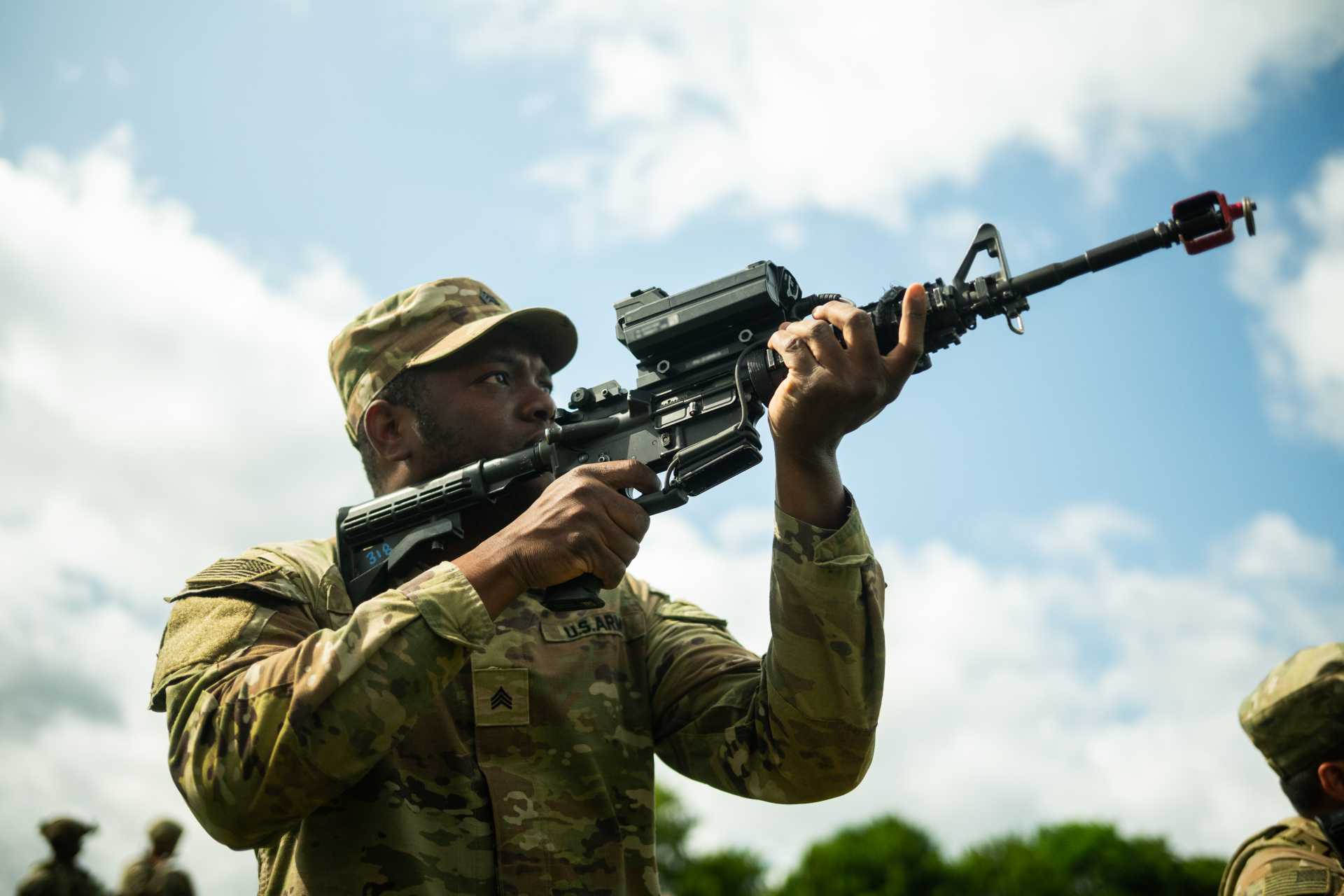
U.S. Army enhances individual counter-drone capabilities by integrating the Smartshooter SMASH 2000L attached to an M4A1 assault rifle. On June 6, 2025, during Project Flytrap at the Joint Multinational Readiness Center in Hohenfels, Germany, a soldier from the 3rd Squadron, 2nd Cavalry Regiment demonstrated the use of this advanced fire control optic during a live training event. The exercise underscored a tactical transformation in modern infantry warfare, introducing precision counter-drone engagement to the level of a single dismounted soldier.
Follow Army Recognition on Google News at this link
A U.S. soldier from the 3rd Squadron, 2nd Cavalry Regiment aims through a Smartshooter SMASH 2000L sight mounted on an M4A1 rifle during Project Flytrap at the Joint Multinational Readiness Center in Hohenfels, Germany, on June 6, 2025. (Picture source: U.S. DoD)
In direct response to evolving aerial threats, the U.S. Army awarded Smart Shooter Ltd. a $13 million contract in May 2025 for the supply of SMASH 2000L systems. The agreement falls under the Army’s Transformation In Contact (TIC 2.0) initiative, a strategic program focused on rapidly fielding next-generation technologies to frontline units. This contract marks the beginning of a formal procurement phase for SMASH systems, following years of evaluation, field testing, and limited operational deployment. Smart Shooter CEO Michal Mor emphasized the system's growing relevance, stating that it provides maneuvering forces with a significant tactical advantage by transforming standard rifles into precision anti-drone platforms.
The SMASH 2000L is developed and produced by Smart Shooter Ltd., a defense technology company based in Yagur, Israel. The firm specializes in fire control systems designed to improve small arms accuracy and lethality in complex battlefield environments. The SMASH 2000L represents a lightweight, compact iteration of the company’s proven SMASH technology, specifically engineered for integration with standard assault rifles such as the M4A1. It allows operators to effectively engage not only ground targets but also small unmanned aerial systems (sUAS), which pose growing threats in modern combat zones.
The core of the SMASH 2000L system lies in its electro-optical targeting suite paired with an AI-driven fire control mechanism. Using onboard sensors and imaging software, the system scans for aerial or terrestrial targets, locks onto them using advanced computer vision algorithms, and calculates ballistic solutions in real time. Once the operator designates a target and applies trigger pressure, the SMASH system controls the exact moment of firing, ensuring the round is discharged only when a direct hit is assured. This trigger control, known as “one shot one hit,” eliminates human-induced error from recoil, movement, or stress, dramatically enhancing engagement precision.
Weighing approximately 1.1 kg, the SMASH 2000L retains the tactical mobility required for infantry missions while bringing capabilities traditionally reserved for vehicle-mounted or stationary systems. The unit includes a day sight, a built-in targeting computer, and is compatible with standard optics mounts. It has been combat-tested in various conflict zones and is in use with several NATO-aligned countries for counter-drone and special operations roles. The system can also operate in semi-automatic or manual modes, depending on mission requirements and rules of engagement.
Project Flytrap provides a realistic, multinational training framework for evaluating cutting-edge military technologies. By deploying the SMASH 2000L in a dynamic operational setting, the U.S. Army is assessing not only its technical effectiveness but also its interoperability with existing infantry doctrine and equipment. The field trial reflects a broader strategic objective: enabling every soldier to act as an autonomous counter-UAS node, capable of defending against low-cost, high-risk aerial threats in real time.
This successful deployment may signal a shift in procurement and operational planning across allied ground forces. The rising use of drones by both state and non-state actors has elevated the importance of responsive, decentralized air defense at squad and platoon levels. Recent combat experiences from Ukraine and Israel have underscored the urgency of equipping infantry units with this kind of precision fire control system. In Ukraine, commercial and military-grade drones have been used extensively for reconnaissance, fire correction, and strike missions. Both Russian and Ukrainian forces have turned off-the-shelf UAVs into frontline weapons, deploying them in swarms or individually to drop munitions or crash into soft targets. These drones have become a daily hazard for dismounted troops, often appearing at low altitude and striking before conventional defenses can respond.
In Israel, the Israel Defense Forces have faced similar threats during recent urban and cross-border engagements. Militants have used modified quadcopters and first-person view drones to deliver explosives directly onto IDF patrols, vehicles, and outposts. These attacks often take place in tight urban environments where heavy air defense systems cannot operate. In such situations, individual soldiers equipped with fast-reacting, automated fire control optics like the SMASH 2000L are the last and only line of defense against incoming threats.
The modern battlefield is no longer defined solely by tanks and artillery but increasingly by the presence of low-cost, hard-to-detect aerial systems capable of deadly effects. The SMASH 2000L gives every U.S. soldier the ability to meet these threats with precision and autonomy. It shifts the advantage back to the operator by providing a technological edge in a domain previously reserved for larger and more complex systems. With the increasing use of drones in asymmetric warfare, such as in the Sahel, the Caucasus, and Southeast Asia, the ability to counter these threats at the individual level has become not only desirable but essential.
- Details
- Written by: Administrator
- Category: Defence & Security Industry Technology
- Hits: 4922
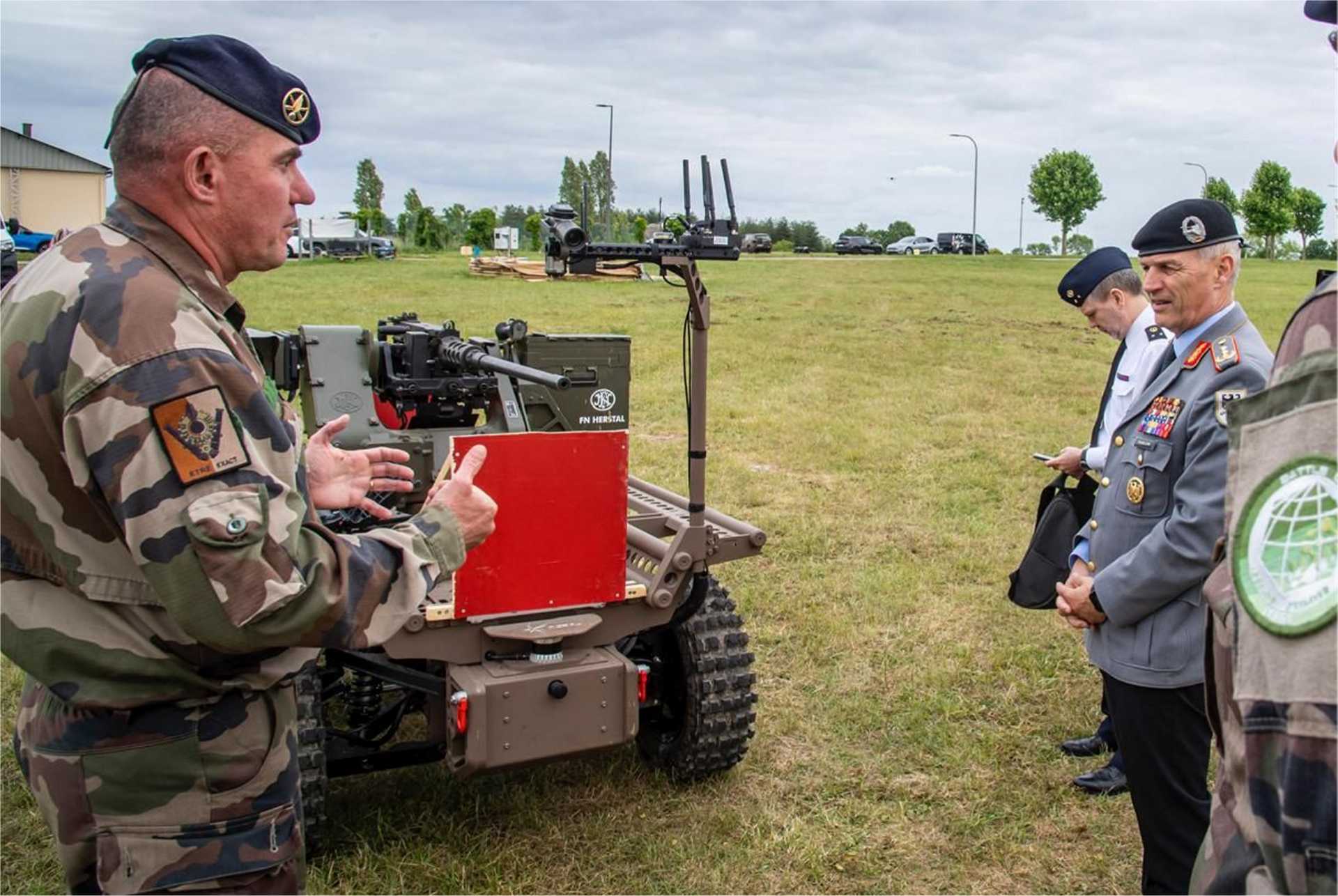
The French Army is accelerating the development and integration of robotic systems for modern ground combat with the unveiling of the AUROCHS 4x4 Unmanned Ground Vehicle (UGV), equipped with a FN DEFNDER® Medium Remote Weapon Station from Belgian manufacturer FN Herstal, armed with a 12.7mm heavy machine gun. This robust platform is designed for high-intensity operations and offers a blend of firepower, mobility, and autonomy aligned with the evolving needs of future battlefields.
Follow Army Recognition on Google News at this link
A French officer from the STAT (Technical Section of the French army) presents the AUROCHS UGV armed robotic platform to international military delegations during a live demonstration. (Picture source: French STAT)
Developed by the French-German Research Institute of Saint-Louis (ISL) in close collaboration with the French Army Staff (EMAT) and the German Bundeswehr Planning Office (PlgABw), AUROCHS showcases a series of technological advances. A standout feature is its unique ability to navigate without relying on satellite-based systems such as GPS or Galileo. Instead, it employs a proprietary image-based navigation system that uses an onboard database of visuals combined with real-time input from onboard cameras, allowing for autonomous and precise route tracking even under conditions of signal jamming.
Fully interoperable with the Scorpion Information and Combat System (SICS), AUROCHS can be seamlessly integrated into digital battlefield networks. It is capable of obstacle avoidance without manual control and demonstrates superior off-road capabilities thanks to its advanced suspension, electrically driven independent wheels, and selectable single or dual steerable axles. These features provide it with exceptional agility, maneuverability, and all-terrain endurance.
The UGV is not limited to combat support roles. Designed with multi-mission versatility in mind, it can transport up to two logistics pallets or be adapted for medical evacuation with a stretcher, capitalizing on its suspended chassis to enhance patient comfort during transit. These features make AUROCHS an ideal robotic mule for external operations where autonomous logistics and casualty evacuation are critical.
Mounted on the AUROCHS is the FN DEFNDER® Medium Remote Weapon Station, a battle-proven solution from FN Herstal that significantly enhances the firepower and survivability of unmanned systems. Designed to accommodate a range of weapon calibers up to 12.7mm, the DEFNDER® Medium offers high-precision engagement while allowing the operator to remain safely protected at a distance. Its fully stabilized platform and integrated optronics suite provide day and night targeting capabilities, automatic target tracking, and firing on the move, all of which are critical when mounted on mobile robotic platforms.
Equipping UGVs like AUROCHS with a system such as the DEFNDER® Medium transforms the role of unmanned vehicles from purely logistical or reconnaissance assets into fully combat-capable platforms. It allows for remote engagement of enemy positions, defensive perimeter control, convoy escort duties, and fire support for infantry units, without placing human operators at risk. The combination of remote lethality and unmanned mobility is especially valuable in contested areas where traditional manned platforms face high exposure to ambush, mines, or improvised explosive devices.
The increasing use of UGVs such as AUROCHS reflects a broader transformation in modern land warfare, where unmanned systems are becoming essential force multipliers. For land forces operating in complex environments, UGVs provide critical advantages by enhancing operational tempo, reducing risk to personnel, and extending the reach of dismounted units. Whether performing resupply under fire, conducting reconnaissance in denied areas, providing suppressive fire from protected positions, or executing casualty evacuations, UGVs reduce exposure and preserve combat power.
In the future, robotic platforms like AUROCHS are expected to play a central role in hybrid manned-unmanned teams, where they operate in tandem with infantry units, armored vehicles, and aerial drones to deliver coordinated effects on the battlefield. Their ability to integrate seamlessly into tactical networks and operate autonomously opens the door to more adaptive and resilient combat formations. As doctrines evolve and the demand for faster, safer, and more flexible ground capabilities increases, UGVs will likely become indispensable tools across conventional, asymmetric, and urban warfare scenarios.
AUROCHS stands at the forefront of this evolution, embodying the strategic vision of a next-generation robotic asset ready to transform how modern armies project force, sustain operations, and protect soldiers in the most demanding combat environments. The integration of the FN DEFNDER® Medium RWS ensures that it is not only a logistics or support tool, but a potent and autonomous combat platform built for the realities of future warfare.
- Details
- Written by: Administrator
- Category: Defence & Security Industry Technology
- Hits: 11522
According to information published by Russian media, on June 2, 2025, during a defense conference recently held in St. Petersburg, Russia unveiled a new directed-energy weapon identified as a laser anti-drone rifle. This innovative system immediately attracted strong attention from military specialists and defense analysts for its potential to transform frontline drone defense radically. Designed specifically to counter the growing threat of small unmanned aerial vehicles, the new laser rifle introduces a new dimension of portability, precision, and stealth in laser-based warfare.
Follow Army Recognition on Google News at this link
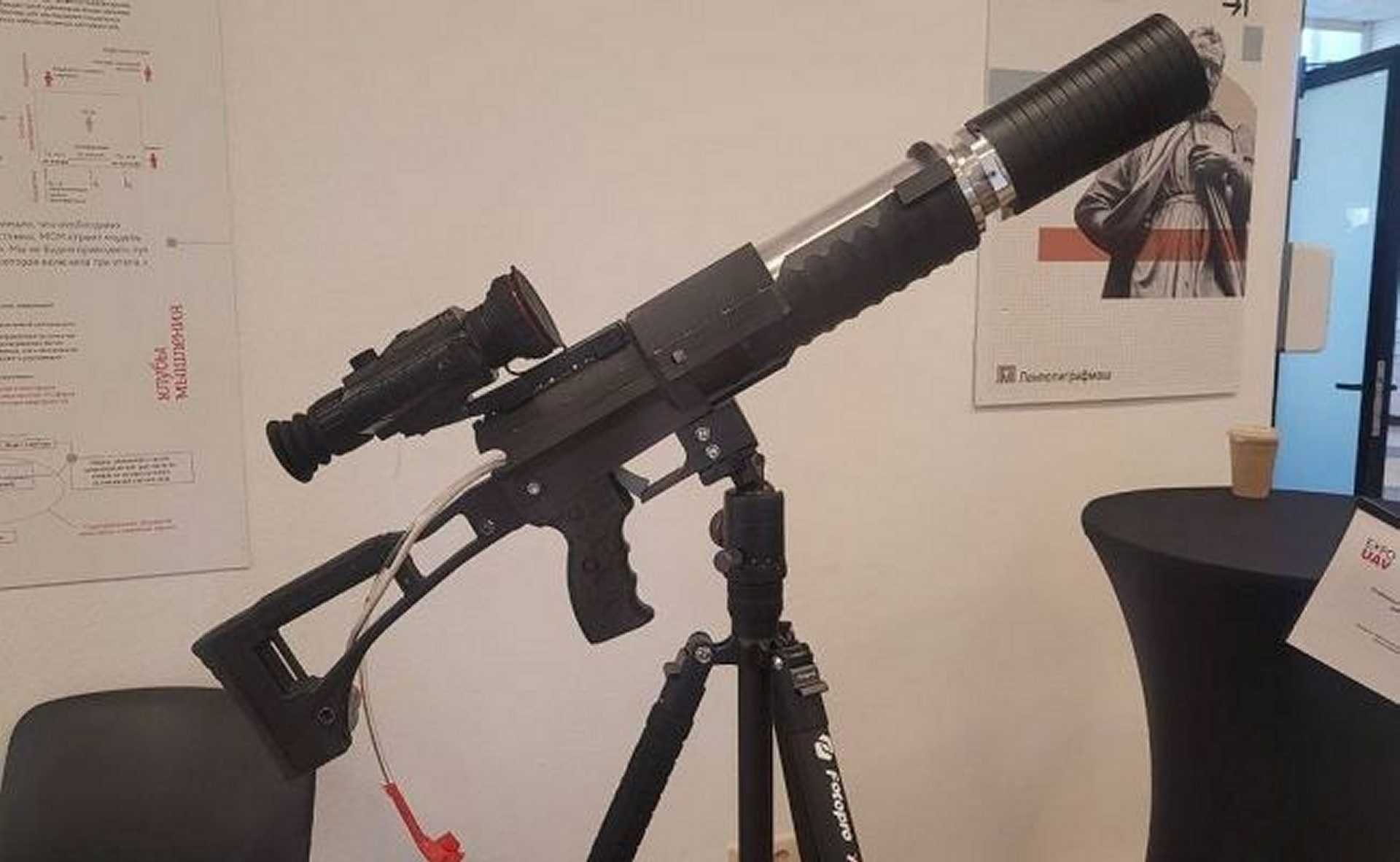
Russian-made laser anti-drone rifle displayed during a defense conference in St Petersburg, designed for silent precision targeting of FPV First Person View and kamikaze drones at close range. (Picture source: Russian media)
The new Russian-made laser anti-drone rifle has an effective engagement range of 500 m. It is purpose-built to neutralize first-person view (FPV) drones, which have become one of the most dangerous and cost-effective offensive tools in modern conflicts, particularly in the ongoing Russia–Ukraine war. With battlefield skies increasingly saturated by low-cost drones used for reconnaissance and kamikaze strikes, the demand for efficient, affordable, and rapid-response countermeasures has intensified. Traditional air defense systems are often economically unsustainable when engaging inexpensive aerial threats, which has prompted a global shift toward compact and precise laser solutions.
Operating through thermal ablation, the weapon's high-energy laser beam can rapidly heat the surface of a drone, melting its exterior structure and destroying key internal components in a matter of seconds. In cases involving suicide drones, the beam can trigger midair detonation of their warheads, neutralizing the threat before impact and significantly reducing collateral damage. Russian developers have underlined the cost-efficiency of this system, which requires no physical ammunition, offers minimal maintenance demands, and enables a high number of engagements per charge.
One of the most notable features of the laser anti-drone rifle is its tactical stealth. The beam is invisible to the naked eye, produces no flame or radar-emitting signal, and generates noise under 40 decibels, making it quieter than a whisper. This ensures its operations remain completely undetected by opposing forces. In many cases, enemy drone operators simply witness their control feed cut off, without any awareness of the source of interference. Russian engineers describe this effect as "silent hunting," a tactical advantage highly prized in today's contested environments.
From an operational standpoint, the laser rifle is designed for infantry deployment. It is lightweight, recoil-free, and ergonomically optimized, requiring no specialized training or significant physical strength. Its plug-and-play functionality allows rapid adaptation in high-mobility units. Currently, it is the only publicly displayed portable laser anti-UAV weapon in Russia and remains in a testing phase. However, its expected deployment will focus on close-range engagements where rapid interception is vital.
The development of this laser anti-drone rifle is directly influenced by the operational challenges observed during the Russia–Ukraine war, where the widespread use of FPV and kamikaze drones by both sides has pushed conventional air defense systems to their limits. Portable directed-energy weapons offer a scalable, low-cost alternative to missile-based interceptors and electronic warfare systems. They provide soldiers on the ground with immediate, accurate, and silent engagement capabilities against aerial threats that continue to grow in number and sophistication.
As the nature of drone warfare advances, Russia’s introduction of this laser anti-drone rifle marks a significant leap in its military modernization efforts. Its combination of stealth, precision, and economy positions it as a promising asset in future conflict zones. Defense observers will closely follow its field performance and potential mass deployment as Russia seeks to integrate advanced directed-energy systems into its frontline combat units.
- Details
- Written by: Administrator
- Category: Defence & Security Industry Technology
- Hits: 5061
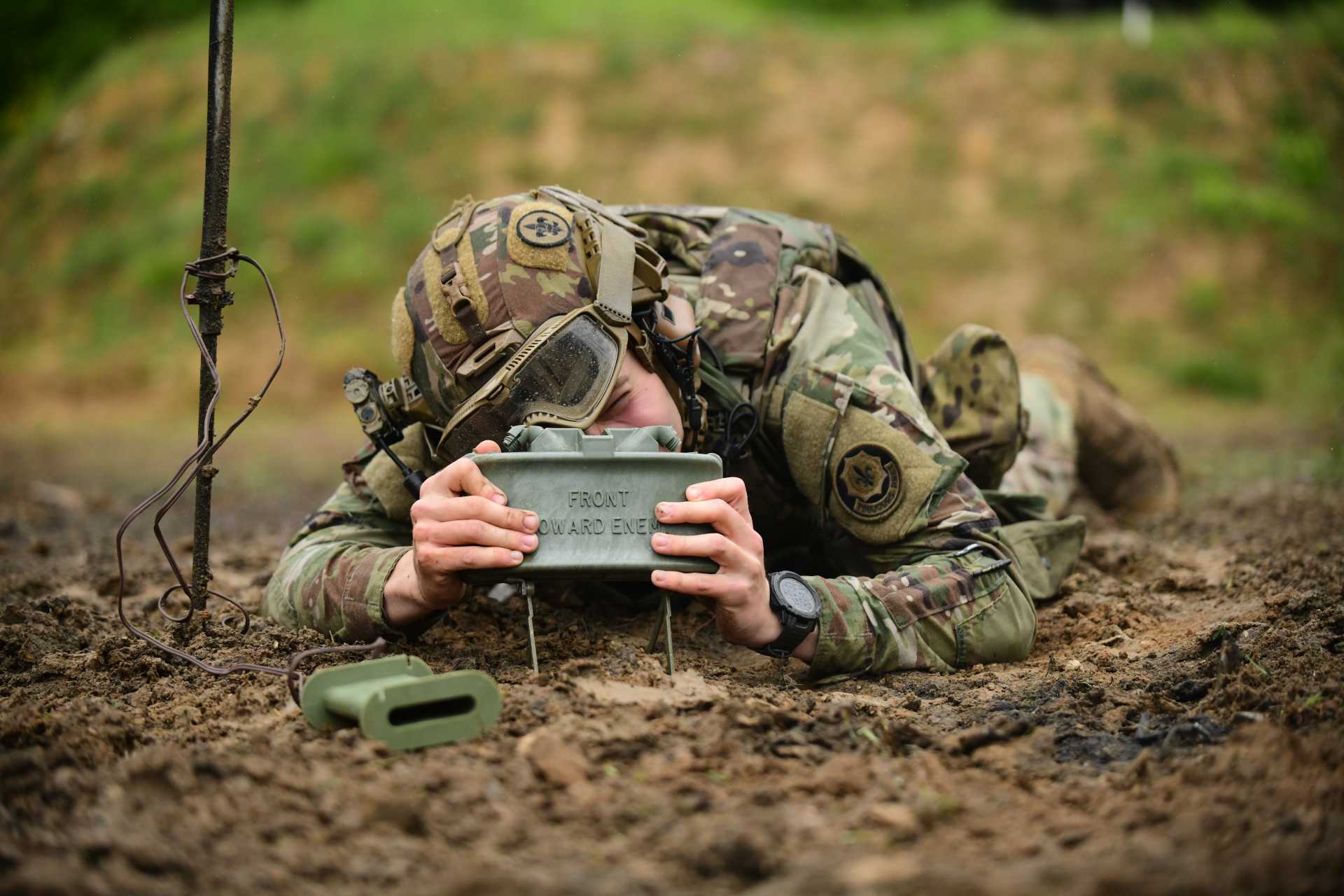
According to information published by the U.S. Department of Defense, on May 28, 2025, the M18A1 Claymore anti-personnel land mine remains a key component of U.S. combat capability, as demonstrated during a live-fire exercise at the 7th Army Training Command’s Grafenwoehr Training Area in Germany. In this exercise, Pfc. Eric Larson of the 2nd Cavalry Regiment’s Regimental Engineer Squadron deployed and aimed the Claymore mine, underscoring its continued role in enhancing force protection and lethality. The U.S. Army’s ongoing use of the Claymore highlights its enduring relevance in modern military operations, both within NATO’s forward defense strategy and in broader conventional and irregular warfare scenarios.
Follow Army Recognition on Google News at this link
U.S. Army Pfc. Eric Larson of the Regimental Engineer Squadron, 2nd Cavalry Regiment, positions and aims an M18A1 Claymore anti-personnel mine during a training exercise at the 7th Army Training Command’s Grafenwoehr Training Area on May 28, 2025. (Picture source: U.S. DoD)
The M18A1 Claymore mine has been a cornerstone of U.S. military engineering since its official adoption in the 1960s, following a development program initiated in response to the challenges of the Korean War. Named after the Scottish two-handed sword for its wide arc of destruction, the Claymore was designed by Norman MacLeod and first saw extensive combat use during the Vietnam War. In Southeast Asia, U.S. infantry relied heavily on the Claymore’s ability to deliver controlled, devastating firepower against enemy infiltration along jungle trails and defensive perimeters. Soldiers could deploy it quickly along likely avenues of enemy approach, and with its command-detonated mechanism, eliminate ambushes or halt charges with precise timing.
Throughout decades of service, the Claymore has earned a formidable reputation from Vietnam to Iraq and Afghanistan, where its simple design and brutal effectiveness were credited with saving countless lives during base defenses, convoy halts, and combat patrols. Its ability to inflict maximum damage with minimal friendly exposure made it particularly effective in close terrain and counter-insurgency settings where speed, surprise, and lethality are paramount.
From a technical standpoint, the M18A1 Claymore is a directional anti-personnel mine with a curved rectangular plastic body containing approximately 680 grams of Composition C-4 explosive. Embedded within the mine’s face are 700 steel balls, each 3.2 mm in diameter, arranged in front of the explosive charge. Upon detonation—initiated manually via an M57 firing device and M4 electric blasting cap—the explosion projects the steel balls in a 60-degree horizontal arc with a lethal range of 50 meters, and a danger zone extending beyond 100 meters. The mine's design allows it to be mounted on the ground, affixed to obstacles, or positioned at variable angles using its integrated scissor-type folding legs.
Tactically, the Claymore is favored for its precision and user-controlled detonation. Unlike pressure-triggered mines, it is command-detonated, offering the operator full control over its engagement, thus significantly reducing the risk of unintended casualties or fratricide. It is typically employed in defensive perimeters, ambush setups, choke points, and base protection schemes. When integrated into layered defense strategies, the Claymore enables soldiers to deny enemy access to critical terrain, delay advances, and channel hostile forces into predetermined kill zones.
In dismounted infantry operations, the Claymore enhances small unit lethality, especially during reconnaissance and patrol missions. Its lightweight, compact form allows troops to carry multiple units, rapidly deploy them, and initiate defensive or offensive actions without the need for complex systems or heavy logistical support. Moreover, its psychological deterrent effect is profound—enemy forces, aware of its presence, are often forced to change tactics or slow their advance, buying valuable time for maneuver units or reinforcements.
Despite the proliferation of new-generation munitions and sophisticated battlefield technologies, the M18A1 Claymore mine continues to be a critical asset for the U.S. armed forces. Its unmatched combination of tactical flexibility, reliability, and lethal effectiveness ensures that it remains a key enabler in modern combat scenarios. Whether defending forward positions in Europe, securing temporary encampments in hostile terrain, or conducting counter-insurgency operations, the Claymore offers unmatched utility for the warfighter. As demonstrated by its regular inclusion in high-readiness training programs like those of the 2nd Cavalry Regiment, the Claymore mine endures not as a relic of the past, but as a versatile and essential weapon tailored for today’s complex and fluid battlefield conditions.
- Details
- Written by: Administrator
- Category: Defence & Security Industry Technology
- Hits: 19084
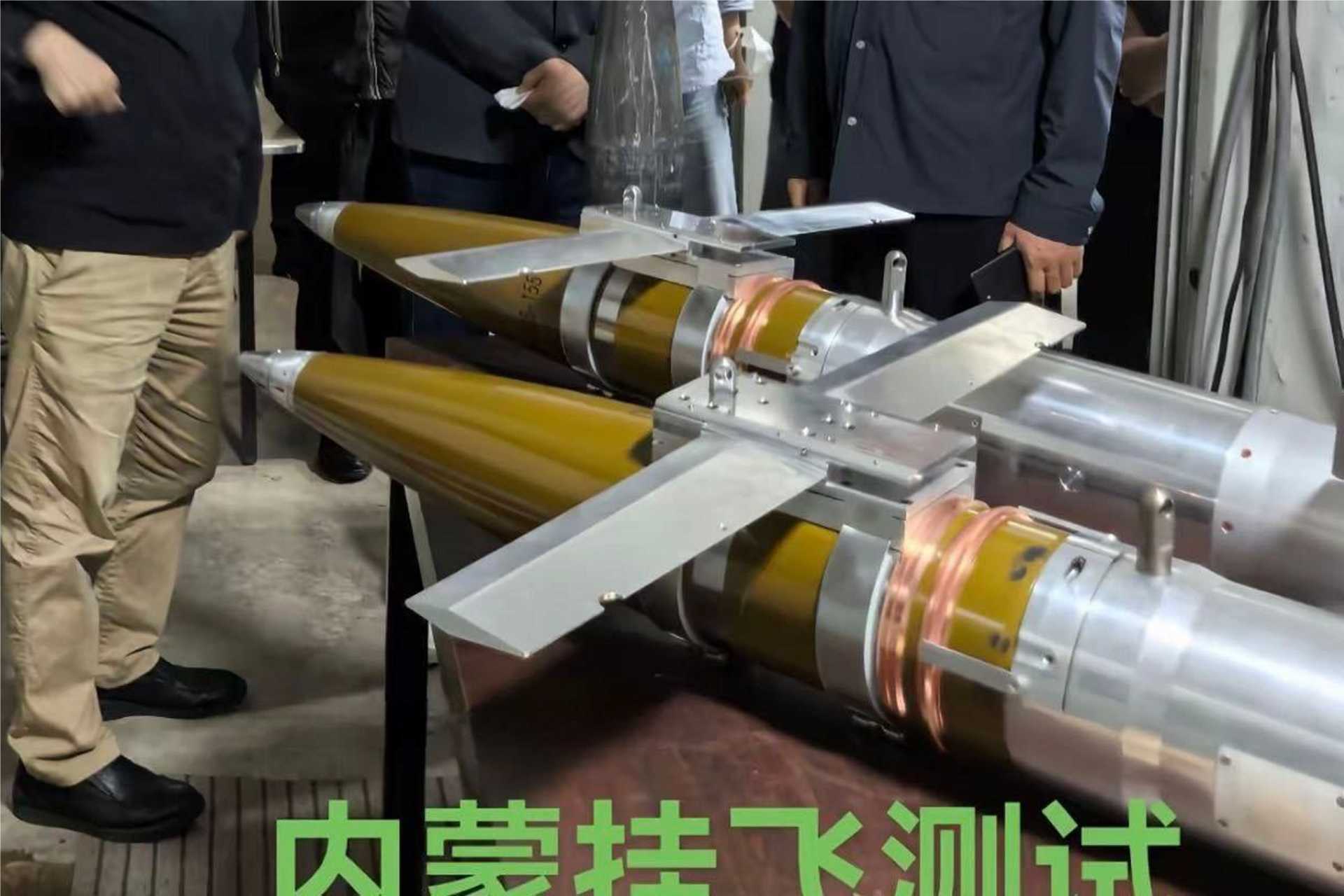
According to pictures released on social networks in May 2025, a Chinese defense company has developed an advanced modular system capable of converting standard 155mm and 152mm artillery shells into precision-guided glide bombs. The images depict artillery shells retrofitted with sophisticated aerodynamic kits including foldable wings, tail fins, and a nose-mounted guidance module. This innovation marks a significant leap in battlefield adaptability, enabling conventional artillery munitions to be launched from unmanned aerial vehicles (UAVs), helicopters, or fixed-wing aircraft as precise standoff weapons.
Follow Army Recognition on Google News at this link
An artillery shell fitted with a Chinese-developed modular guidance kit, featuring foldable wings and tail fins, transforming it into a kamikaze drone-ready precision glide bomb. (Picture source: China Social Network)
A precision-guided glide bomb is an air-launched munition designed to achieve accurate target engagement over extended distances. Unlike traditional bombs that follow a ballistic arc, glide bombs utilize aerodynamic lift through attached wings to extend their range. Once released from an aircraft at altitude, typically between 5,000 and 6,000 m, these bombs can travel up to 50 km, adjusting their flight path using a combination of inertial navigation systems (INS) and satellite positioning such as GPS or China's BeiDou. This makes them especially valuable for engaging defended or high-value targets while keeping the launch platform at a safe distance.
The Chinese system brings this technology to a new class of weapons by adapting legacy artillery rounds rather than creating entirely new air-launched bombs. The transformation involves several key physical modifications. A guidance unit is affixed to the shell’s nose, incorporating navigation electronics and flight control software. Foldable wings are mounted mid-body or rearward, designed to deploy automatically upon release, while the tail section features control surfaces connected to micro-servo actuators. These components operate in concert to provide aerodynamic stability and precise steering throughout the bomb’s descent.
What makes this development particularly strategic is its potential battlefield application, especially when viewed through the lens of the ongoing war in Ukraine. The conflict has highlighted the operational impact of glide bombs and kamikaze drones, with both Ukrainian and Russian forces employing improvised and industrial solutions to deliver conventional payloads with remarkable precision. This Chinese innovation fits directly into that tactical space, allowing modified artillery shells to be carried by UAVs and used as guided kamikaze munitions. Once launched, they can independently navigate to a target and detonate on impact, serving as highly accurate, cost-effective weapons for deep strike missions.
Such systems offer immense value for saturation attacks and swarming tactics, particularly in environments where electronic warfare, dense air defenses, or logistical constraints limit the use of expensive missile platforms. The low cost of converting existing artillery rounds into precision-guided aerial munitions means that military units can field large quantities of these weapons quickly. Furthermore, their compatibility with legacy calibers such as 152mm used by former Soviet-aligned militaries suggests strong export potential, especially to nations already equipped with similar artillery inventories.
From a strategic standpoint, this innovation represents a merging of artillery and airpower, providing a flexible alternative to missile systems without sacrificing accuracy. It also offers a modular, scalable solution for modern militaries looking to enhance their strike capabilities without incurring the high costs of new munitions development. For China's defense industry, this development underscores an ongoing emphasis on hybrid systems that maximize utility across platforms, while responding directly to the evolving nature of modern warfare shaped by drone usage, precision engagement, and asymmetric conflict dynamics.
The conversion of artillery shells into glide bombs is not only a technical feat but a tactical asset. It empowers forces to adapt legacy ammunition into modern guided weapons, increases operational reach, and introduces a new layer of flexibility in air-to-ground strike doctrine. As warfare continues to evolve toward networked and unmanned operations, systems like these will likely play a pivotal role in shaping the future battlefield.
- Details
- Written by: Jérôme Brahy
- Category: Defence & Security Industry Technology
- Hits: 7996
On May 20, 2025, the Russian state corporation Rostec announced via its Telegram account that the BT-3F amphibious armored personnel carrier (APC), developed on the chassis of the BMP-3F, entered the stage of state trials. These tests follow the completion of preliminary trials in 2022 and will validate the BT-3F’s stated performance across various environments, both on land and in water. The trials include live-fire assessments while the vehicle is stationary, in motion, and afloat, and will evaluate its mobility, combat system reliability, and environmental tolerance.
Follow Army Recognition on Google News at this link
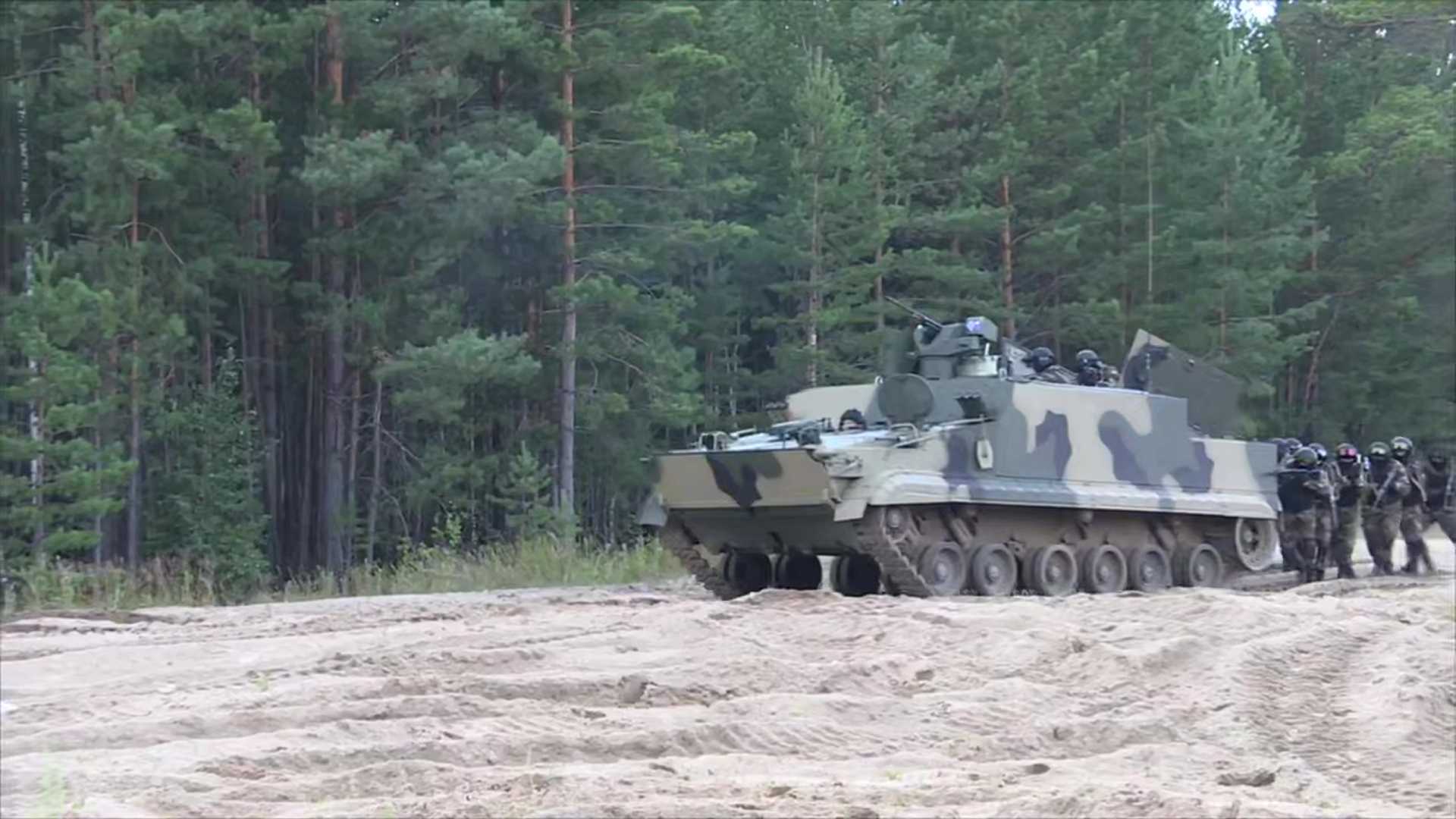
The development of the BT-3F began around 2010 as an initiative to create a tracked amphibious platform suitable for Russian and foreign markets, particularly to meet Indonesia’s interest in replacing its aging BTR-50 fleet. (Picture source: Rostec)
Although the BTT-3F trials were announced earlier, only now has the vehicle officially entered this decisive stage. Without successful completion, the BT-3F cannot be adopted into the Russian Armed Forces inventory, although it has already been approved for export.
The BT-3F was developed by the Special Machine-Building Design Bureau (SKBM), part of Kurganmashzavod under Rostec. Development began around 2010 as an initiative to create a tracked amphibious platform suitable for Russian and foreign markets, particularly to meet Indonesia’s interest in replacing its aging BTR-50 fleet. Between 2010 and 2012, the design underwent subsystem development and validation. The prototype was presented at the Army-2016 military forum and subsequently underwent sea trials and firing tests, confirming its amphibious characteristics, resistance to small arms and fragmentation, and suitability for coastal operations. In 2019, Indonesia signed a contract to acquire 21 BT-3Fs, marking the first export order of the vehicle. This occurred after Indonesia had already procured 54 BMP-3Fs between 2010 and 2014. Variants were later shown with Arctic adaptations, such as wider tracks for enhanced mobility in snow, and others included heavier weapon stations, including options for a 30mm autocannon.
The BT-3F is a tracked, fully amphibious armored vehicle with a declared combat weight between 18.5 and 18.9 tonnes. Its chassis measures 7 to 7.15 meters in length, with a width between 3.15 and 3.3 meters, and a height of approximately 3 meters. The ground clearance is 450 mm. The vehicle is powered by a UTD-29 or UTD-29T four-stroke, multi-fuel, direct-injection diesel engine with an output of 450 to 500 horsepower, using a dry sump lubrication system. This engine allows a top road speed of 70 km/h, a water speed of 10 km/h, and an operational range of 600 kilometers. The vehicle remains buoyant for up to seven hours in sea conditions of up to three Beaufort scale points. It features a hydromechanical four-speed transmission, torsion bar suspension, and hydraulic shock absorbers. The BT-3F can be transported via IL-76 and An-124 aircraft, by ship or rail, and even under-slung by a Mi-26 helicopter.
The BT-3F accommodates a crew of two, consisting of a commander and a driver, and can carry up to 14 fully equipped infantry personnel. Troops are seated on energy-absorbing, folding seats equipped with five-point harnesses, designed to reduce injuries from landmine explosions and rough terrain. Entry and exit are supported through roof hatches and side doors. An integrated air conditioning system (KBM-3M2) ensures internal climate regulation up to +50°C, while an OV65 heating system supports cold-weather operations. Additional onboard systems include nuclear, biological, and chemical (NBC) protection, a fire suppression system, smoke grenade launchers, and a thermal camouflage system. A visual monitoring suite includes six TV cameras and one thermal imaging camera, providing all-around situational awareness for the crew.
The vehicle’s primary armament is housed in a remotely operated DPV-T combat module mounted on the roof. This module can be configured with different weapon systems, including a 12.7mm 6P49 Kord heavy machine gun, a 14.5mm machine gun, or a 40mm automatic grenade launcher. The DPV-T module includes day and night vision, a thermal imaging channel, and a laser rangefinder. The turret can traverse 360° and elevate between -5° and +75°, with electronically controlled aiming from within the vehicle. Additional armament includes two forward-mounted PKT 7.62mm machine guns with 4,000 rounds (2,000 per gun). An anti-tank variant allows for the integration of the Kornet-E guided missile system. Ammunition counters and diagnostic systems are included in the module. The hull provides ballistic protection compliant with STANAG 4569 Level 4, rated to resist 14.5mm armor-piercing rounds.
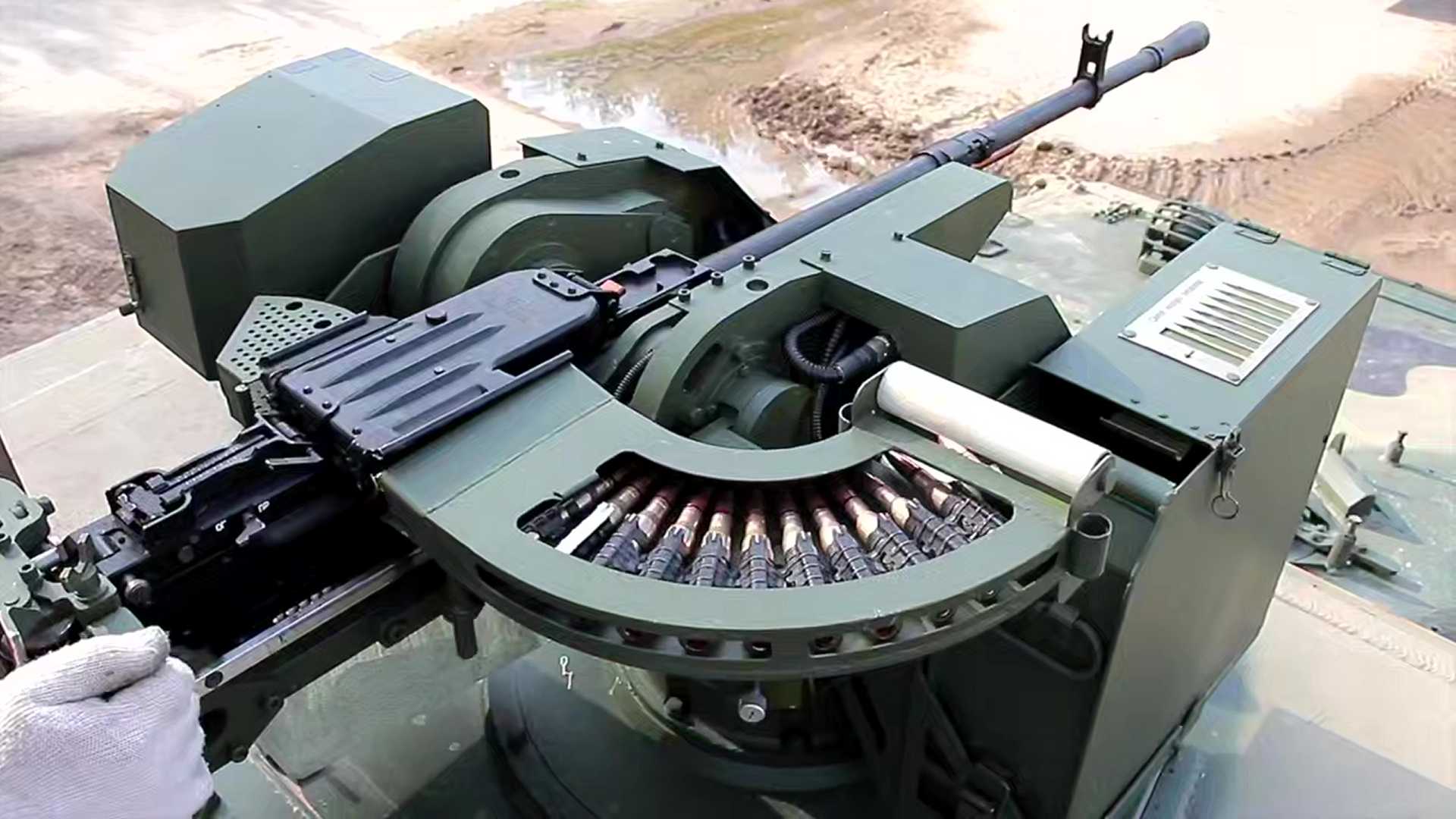
The BT-3F’s main armament is housed in a remotely operated DPV-T combat module, which could be equipped with different weapon systems, including a 12.7mm heavy machine gun, a 14.5mm machine gun, or a 40mm automatic grenade launcher. (Picture source: Rostec)
Despite its features, Russian analysts have noted that the BT-3F exhibits limitations inherited from the BMP-3 platform. Key criticisms include suboptimal mine protection, limited armor against modern threats, and awkward troop dismount procedures due to engine placement. Analysts also emphasize the lack of standard external armor packages, which they argue should be included to improve survivability. Some commentators suggest the BT-3F’s capabilities were appropriate for 2016 but may no longer be aligned with current battlefield requirements after nearly a decade of development. They propose that modular add-on armor and internal layout adjustments are needed to maintain operational relevance.
Export success began with Indonesia, where Rosoboronexport secured the first BT-3F sale. The Indonesian order, confirmed in 2019, included 21 vehicles and followed prior deliveries of BMP-3Fs. Rosoboronexport stated that the BT-3F design incorporated feedback from Indonesian experience with the BMP-3F. The export variant includes upgrades such as enhanced tropical climate systems and tailored interior configurations. Rosoboronexport highlighted Indonesia's careful selection process and its ongoing cooperation with Russia in the defense and civil sectors. These include truck delivery contracts via a KAMAZ subsidiary and exports of medical equipment. The BT-3F joins a broader history of Russian arms exports to Indonesia, which since 1992 have included BTR-80A APCs, Su-type fighters, Mi helicopters, and Kalashnikov rifles. Total defense transfers from Russia to Indonesia have surpassed $2.5 billion.
In addition to standard configurations, other BT-3F variants have been proposed. These include a reconnaissance and command version, and platforms configured with a 30mm cannon. The vehicle’s large internal volume allows for equipment integration, such as command posts or supply transport. Although not yet adopted by the Russian military, its modularity and commonality with BMP-3 series vehicles may reduce lifecycle costs and simplify training. The BT-3F is also reported to be of interest to several other countries, including Kuwait, Cyprus, and the UAE, all of which operate amphibious or coastal forces.
At the present stage, state trials will determine if the BT-3F meets domestic military criteria. These evaluations are set to test mobility, firepower, and survivability under conditions simulating operational use. While the vehicle has reached export readiness, formal Russian Army adoption depends on successful state evaluation. No delivery schedules to domestic units have yet been announced. If trials are successful and concerns are addressed, the BT-3F may proceed to serial production as a replacement for older systems like the BTR-80 in marine infantry units.
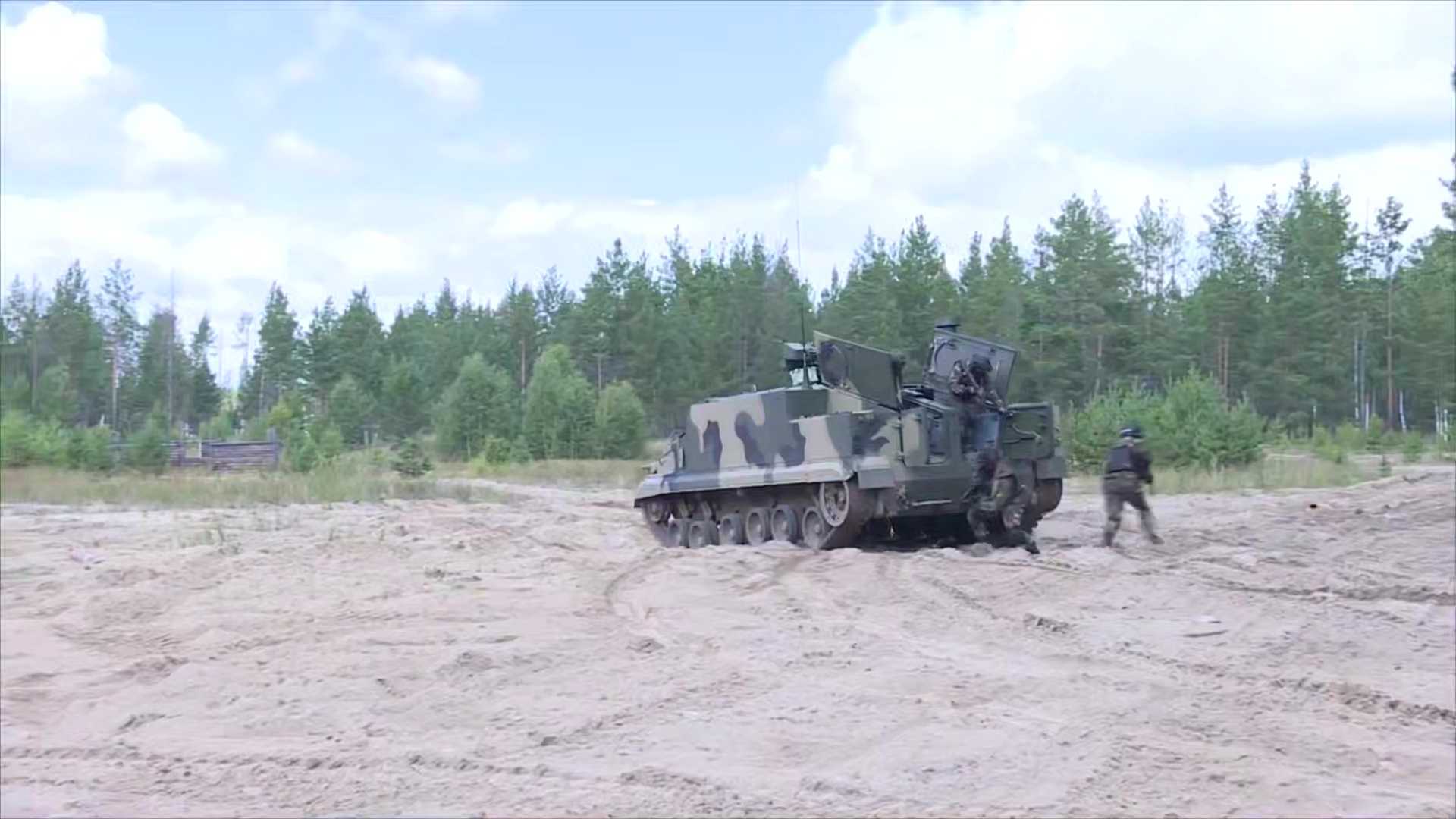
The BT-3F accommodates a crew of two, consisting of a commander and a driver, and can carry up to 14 fully equipped infantry personnel. (Picture source: Rostec)
Read more: Russia Begins Trials of New BT-3F Combat Vehicle to Boost Amphibious Warfare Capabilities
- Details
- Written by: Administrator
- Category: Defence & Security Industry Technology
- Hits: 5600
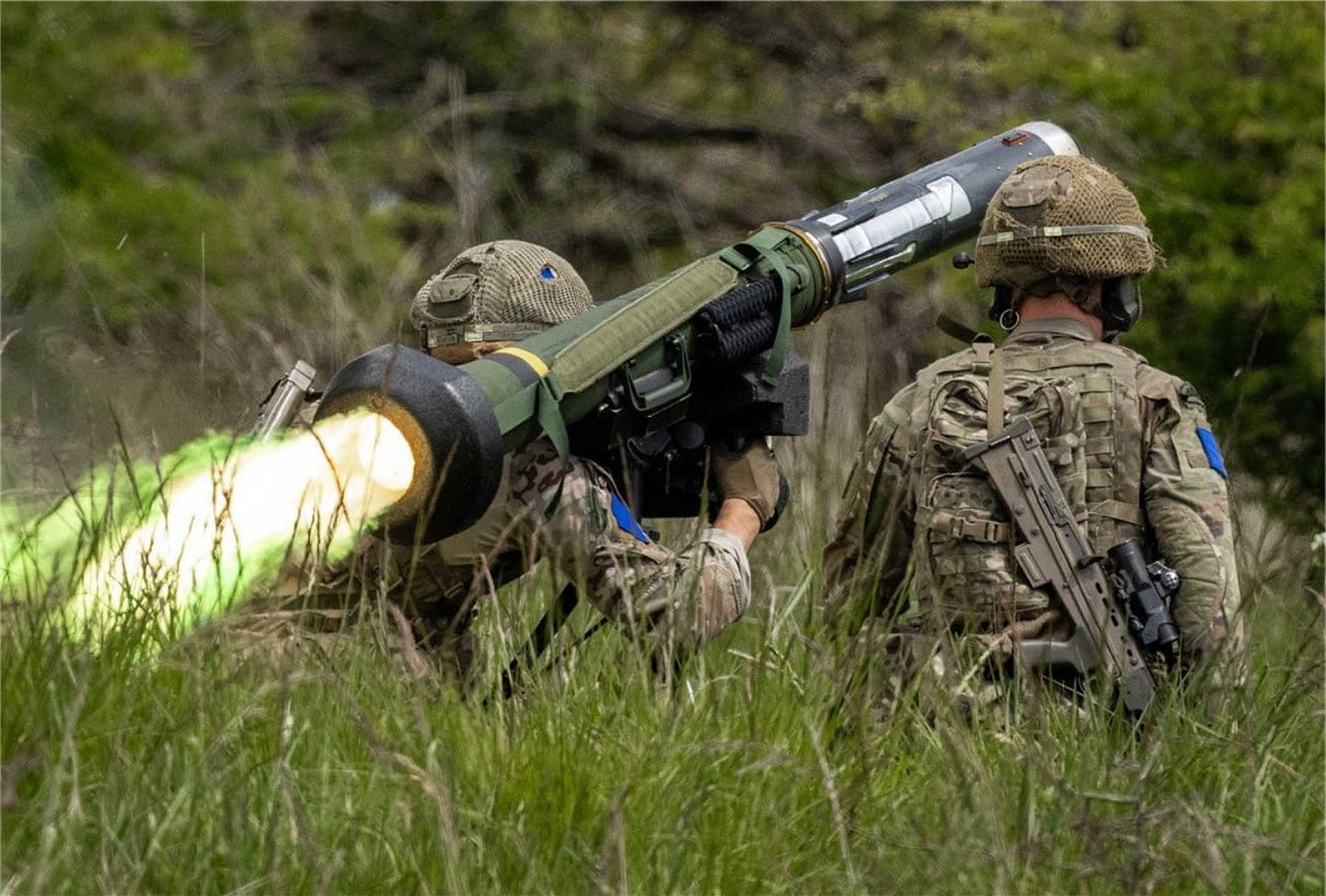
The British Army has successfully conducted the first live-fire exercise employing the Javelin Lightweight Command Launch Unit (LWCLU) at an extended range, marking a significant milestone in the anti-tank weapon’s operational deployment. Conducted on Salisbury Plain, a military training area in UK, the engagement achieved a record distance of 4 km, effectively demonstrating the LWCLU’s enhanced battlefield capabilities and long-range precision against armored threats.
Follow Army Recognition on Google News at this link
First live-fire test of the Javelin Lightweight Command Launch Unit by British forces achieves a 4km engagement on Salisbury Plain. (Picture source: Raytheon)
The Javelin missile system, co-developed by Raytheon and Lockheed Martin under the Javelin Joint Venture (JJV), is one of the world’s most advanced man-portable fire-and-forget anti-tank weapons. Known for its top-attack profile and high precision, the Javelin is capable of destroying a wide range of targets including heavily armored vehicles, bunkers, and fortifications. It utilizes an infrared homing guidance system that allows the operator to fire and then immediately seek cover, enhancing survivability on the battlefield. The Javelin system has seen extensive operational use, proving its effectiveness in various conflict zones, from Iraq and Afghanistan to Ukraine.
The newly developed Javelin Lightweight Command Launch Unit represents a significant evolution in the system’s battlefield utility. The LWCLU is designed to maximize tactical flexibility by reducing the weight and size of the launcher without compromising performance. Compared to the legacy Block I Command Launch Unit, the LWCLU is 30 percent smaller and 25 percent lighter, making it much easier for dismounted soldiers to carry during extended operations. In addition to its ergonomic improvements, the LWCLU offers a substantial technological upgrade. It doubles the range of target detection and recognition, significantly increasing situational awareness and engagement options for operators. The system provides both day and night imaging capabilities through its integrated thermal and day sights, enabling accurate targeting in diverse operational conditions. Furthermore, it is fully compatible with all existing and future Javelin missile variants, ensuring interoperability and long-term viability within evolving defense arsenals.
The United Kingdom is a key industrial partner in the Javelin program, supplying critical components for the missile system. Current projections indicate a substantial increase in production, with output expected to reach 3,960 Javelin rounds annually by 2026 and 900 LWCLUs by 2030. This production ramp-up is anticipated to contribute approximately £56 million per year to the UK economy at current rates, with further economic benefits expected as output expands. The collaboration also supports domestic defense manufacturing and underscores the UK's strategic role in international defense supply chains.
This successful long-range firing test serves as a clear indication of the British Army's modernization efforts and its commitment to fielding highly capable, mobile, and lethal infantry units. The integration of the LWCLU into operational units enhances the overall effectiveness of the Javelin system and provides a critical edge in future ground combat scenarios. The trial reaffirms the British Army’s commitment to rapid modernization and battlefield overmatch. Conducted by soldiers from the Parachute Regiment, the event demonstrates the growing synergy between cutting-edge defense industry innovation and frontline military capabilities.
This extended-range LWCLU test not only highlights British operational readiness and innovation but also strengthens the transatlantic industrial partnership with the United States. It underscores the mutual commitment to developing next-generation technologies that ensure strategic advantage in future conflicts. As the British Army and JJV continue to collaborate, this successful 4km shot stands as a global benchmark, redefining what is possible in modern anti-tank warfare.
- Details
- Written by: Administrator
- Category: Defence & Security Industry Technology
- Hits: 7454
According to information published by Turkish media outlet TürkiyeToday on May 17, 2025, HAVELSAN’s unmanned ground vehicle (UGV), Barkan, which entered service with the Turkish Armed Forces in 2023, is now transitioning to serial production following a strategic decision by Türkiye’s Presidency of Defense Industries (SSB). This decision follows Barkan’s proven performance in field operations and its successful evolution through continuous upgrades and feedback from operational deployments.
Follow Army Recognition on Google News at this link
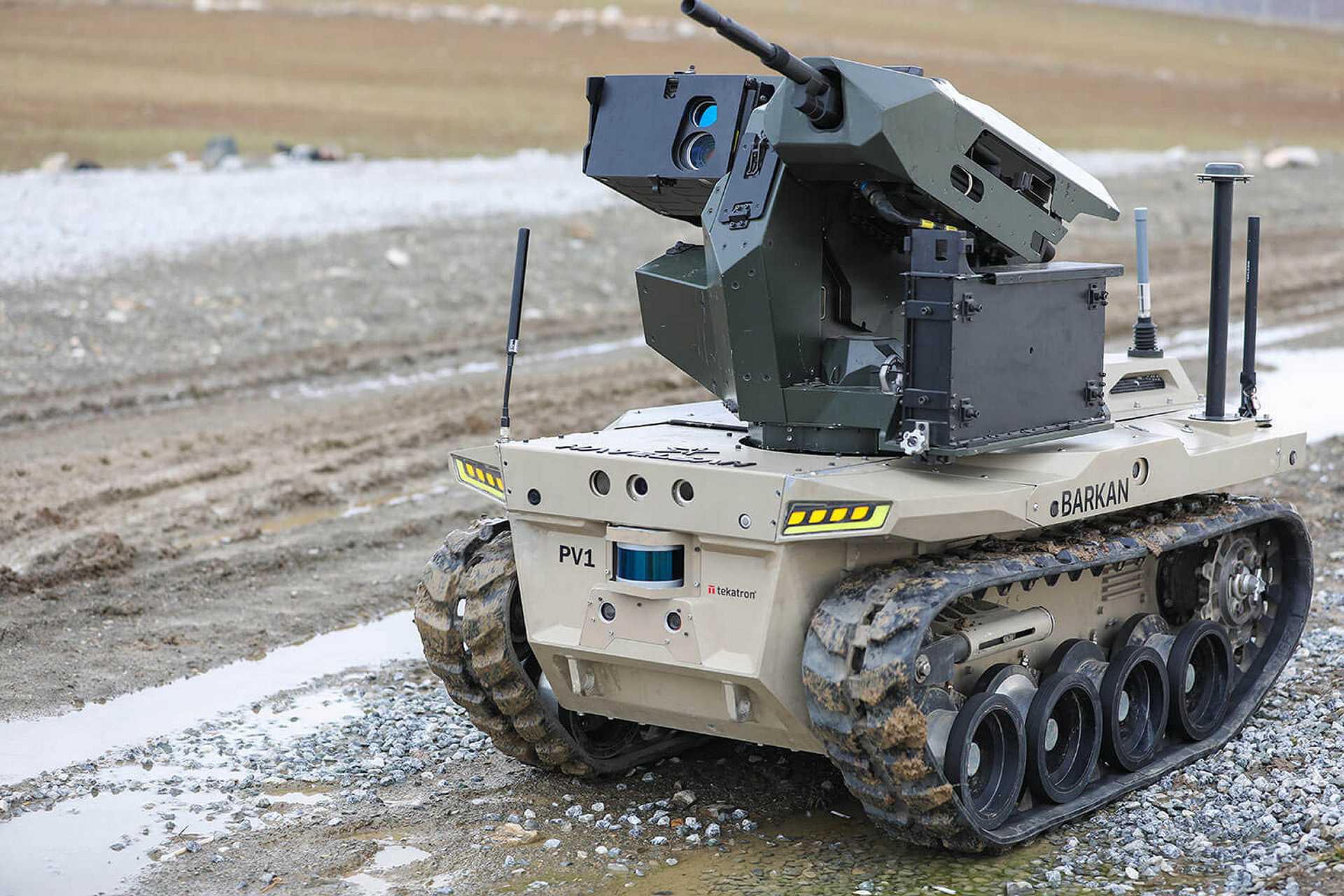
HAVELSAN’s Barkan unmanned ground vehicle (UGV) on display during a live demonstration, showcasing its modular weapon systems and advanced autonomous capabilities developed for multi-role combat and support missions. (Picture source: Havelsan)
HAVELSAN, a leading Turkish defense and technology company, designed and produced the Barkan UGV as a versatile battlefield support platform. Developed to serve as a vital assistant for field personnel, Barkan enhances mission success while minimizing personnel losses and reducing overall operational costs. The platform is especially distinguished by its emphasis on firepower and flexibility, enabling it to perform a wide range of military tasks. These include tactical overwatch, medical evacuation, and the detection of chemical, biological, radiological, and nuclear (CBRN) threats. Barkan’s rugged construction and operationally proven features allow it to function effectively in challenging terrain and under adverse weather conditions.
Barkan incorporates both remote-controlled and autonomous capabilities, making it suitable for a variety of tactical scenarios. It features a swarm operation infrastructure that allows it to conduct joint missions with other unmanned ground and aerial vehicles, all controlled from a central command system. This interoperability enhances battlefield awareness, force coordination, and operational effectiveness. The UGV’s modular design enables it to be easily adapted for mission-specific payloads, supporting tasks such as armed reconnaissance, close protection, and intelligence, surveillance, and reconnaissance (ISR). With its stealth profile and high maneuverability, Barkan can be deployed in high-risk areas to deliver essential firepower and real-time multi-sensor intelligence.
Barkan has already demonstrated notable achievements in armament integration. It has been successfully equipped with the RDS40-AGL 40 mm automatic grenade launcher developed by Repkon Defence, mounted using the Trakon Lite Remote Controlled Weapon Station produced by Unirobotics. Moreover, the vehicle has carried out successful test launches of the Roketsan METE laser-guided mini missile, showcasing its capacity for precision strike operations in the field.
In a landmark development, the Barkan-2 variant has become the first in its class to launch loitering munitions, often referred to as kamikaze drones. This capability allows Barkan to engage enemy targets beyond the line of sight, significantly expanding its tactical reach and strategic utility in modern combat zones.
Barkan’s operational efficiency was further demonstrated during Türkiye’s Winter Exercise 2025. In this demanding military drill, the UGV executed complex missions under extreme cold conditions, exhibiting exceptional mobility, target precision, and seamless coordination with other unmanned platforms. Additionally, the vehicle has logged more than 1,000 km across snow-covered, muddy, and uneven terrain, confirming its durability, reliability, and resilience in real-world conditions.
Internationally, HAVELSAN has begun expanding the reach of the Barkan UGV through strategic partnerships. A recent cooperation agreement with Egypt’s Kader Advanced Industrial Factory will enable the co-production of UGVs tailored to the operational needs of the Egyptian military. This collaboration also includes technical support and technology transfer from HAVELSAN, further establishing Türkiye’s role as a global provider of high-tech defense solutions.
The technical specifications of the HAVELSAN Barkan base platform underscore its operational capabilities in several key areas. The vehicle has a maximum speed of 12 km/h, allowing it to maneuver effectively in tactical environments without compromising stability. Its compact dimensions, measuring 90 cm in width, 140 cm in length, and 99 cm in height, make it suitable for operations in confined or complex terrains where larger vehicles might struggle to operate efficiently. Weighing 380 kg without payload, Barkan offers a payload capacity ranging from 200 to 400 kg, enabling it to carry a diverse array of mission-specific equipment, sensors, and weapon systems. It is powered by an electric motor propulsion system, providing quiet and efficient operation suited for stealth missions. The vehicle can operate continuously for up to 8 h, ensuring sustained mission effectiveness in the field.
Barkan is designed for portability and rapid deployment, and its operational temperature range spans from –20 °C to +52 °C, confirming its capability to function reliably in both extreme cold and high-heat environments. One of its standout features is its swarm infrastructure, which allows the UGV to perform coordinated missions alongside other land and aerial unmanned systems, all under a centralized command structure. This advanced interoperability makes Barkan a powerful asset in multi-platform, networked battlefield operations.
The move to serial production of Barkan highlights the successful integration of advanced robotic systems into Türkiye’s defense forces. As Barkan continues to evolve through further enhancements and international collaborations, it is set to play a transformative role in shaping the future of unmanned ground warfare, both domestically and globally.
- Details
- Written by: Administrator
- Category: Defence & Security Industry Technology
- Hits: 20522
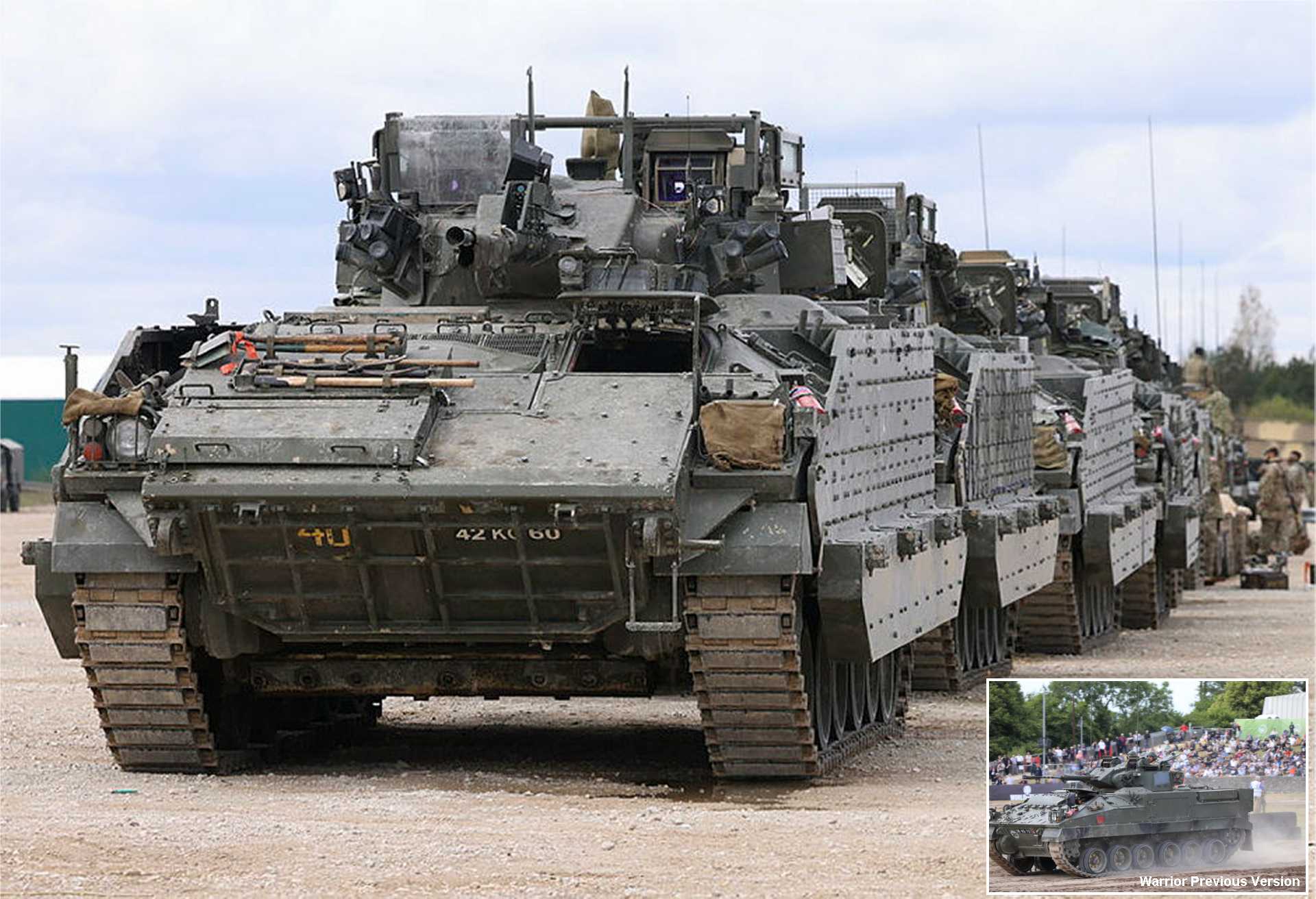
An upgraded version of the British Army MCV-80 Warrior Infantry Fighting Vehicle (IFV) is being deployed during military exercise Hedgehog in Estonia. Exercise Hedgehog (ExHH25), conducted from May 9 to 24, 2025, is part of the Operation Razoredge series of deployments supporting NATO’s eastern flank. Pictures showing the new version of the British Warrior IFV were released on May 9, 2025, revealing visible modifications and an enhanced protection suite in action with British Army mechanized infantry on the ground.
Follow Army Recognition on Google News at this link
The latest version of the Warrior Infantry Fighting Vehicle takes part in NATO's Exercise Hedgehog. Note the new armor package and improved crew visibility system. Inset image: the standard Warrior before modifications. (Picture source: UK MoD)
The Warrior MCV-80 IFV (Infantry Fighting Vehicle) program began in the early 1970s to provide the British Army with a modern tracked armored vehicle capable of delivering infantry support alongside main battle tanks. Developed by GKN Sankey, the Warrior entered service in 1987 and quickly became the cornerstone of the British Army’s armored infantry battlegroups. Over 1,000 units were delivered in various configurations, including infantry carriers, command posts, recovery vehicles, and artillery observers. The Warrior has proven itself in combat during the Gulf War, the Iraq War, and operations in Afghanistan, where it demonstrated outstanding reliability and adaptability across diverse battlefield conditions.
Originally constructed with an aluminum alloy hull, the Warrior was designed to offer protection against small arms fire and artillery fragments while maintaining a low weight for improved mobility. While effective in earlier conflicts, its passive armor was not intended to withstand advanced threats such as tandem-charge rocket-propelled grenades or modern anti-tank guided missiles. During deployments in Iraq and Afghanistan, applique armor kits were added to increase survivability, but these solutions remained limited against the increasingly complex threat landscape of the modern battlefield.
According to an exclusive analysis by the Army Recognition editorial team based on the pictures released by the British MoD on May 9, 2025, the enhanced Warrior IFV features significant changes to its armor layout. Additional armor plates are now installed on the front and sides of the hull, extending over the upper section and protecting the vehicle’s suspension system. These previously exposed areas now benefit from reinforced shielding. Although the Ministry of Defence has not officially confirmed the armor's exact composition, its structure suggests a modular protection package with elements resembling Explosive Reactive Armor, or ERA. This type of armor works by detonating outward upon impact, disrupting the penetration power of shaped-charge warheads and reducing the effectiveness of high-explosive anti-tank munitions or precision drone strikes. Compared to the original aluminum structure, this upgrade drastically improves survivability in both urban and open terrain engagements.
Another noticeable enhancement is the reconfiguration of the turret. The roof now features an open ring mount system equipped with bullet-resistant windows, likely constructed of armored glass. These new vision blocks improve situational awareness and allow the crew to monitor threats across the battlefield while remaining protected from small arms fire. The ring mount may also support a light machine gun or observational device, offering greater flexibility in asymmetric combat operations.
Beyond its protective upgrades, the Warrior retains its essential battlefield performance. The vehicle is powered by a Perkins V-8 Condor diesel engine producing 550 horsepower, enabling a top speed of 75 kilometers per hour and a range of approximately 660 kilometers. Its primary weapon is a 30mm Rarden cannon, supported by a coaxial 7.62mm machine gun, both housed in a two-man turret. Over the years, incremental improvements to fire control and thermal imaging systems have kept the Warrior tactically relevant.
While the Warrior Capability Sustainment Programme (WCSP) was officially cancelled in 2021, the deployment of this upgraded version reflects the British Army’s strategic decision to retain and modernize part of the existing Warrior fleet. This approach ensures operational continuity and combat readiness while next-generation platforms such as the Boxer 8x8 and Ajax IFV continue to undergo integration.
The Warrior’s operational role extends far beyond that of a simple troop transport. It is designed to lead mechanized infantry formations, operate alongside main battle tanks such as the Challenger 2 and 3, and deliver effective fire support in complex multi-domain operations. It is regularly used for convoy security, flank protection, forward reconnaissance, and urban assault missions. Its tracked mobility allows it to traverse difficult terrain, giving it a tactical advantage in both conventional and hybrid warfare environments.
The MCV-80 Warrior IFV continues to be the backbone of the British Army’s mechanized infantry units. Its recent improvements in armor and crew protection reaffirm its utility on today’s battlefield and highlight the vehicle’s adaptability in the face of new and emerging threats. Its deployment at Exercise Hedgehog 2025 serves not only as a validation of these upgrades but also as a signal of the UK’s enduring commitment to NATO and its readiness to respond swiftly and decisively to any potential threat along the alliance’s eastern flank.
- Details
- Written by: Administrator
- Category: Defence & Security Industry Technology
- Hits: 7549
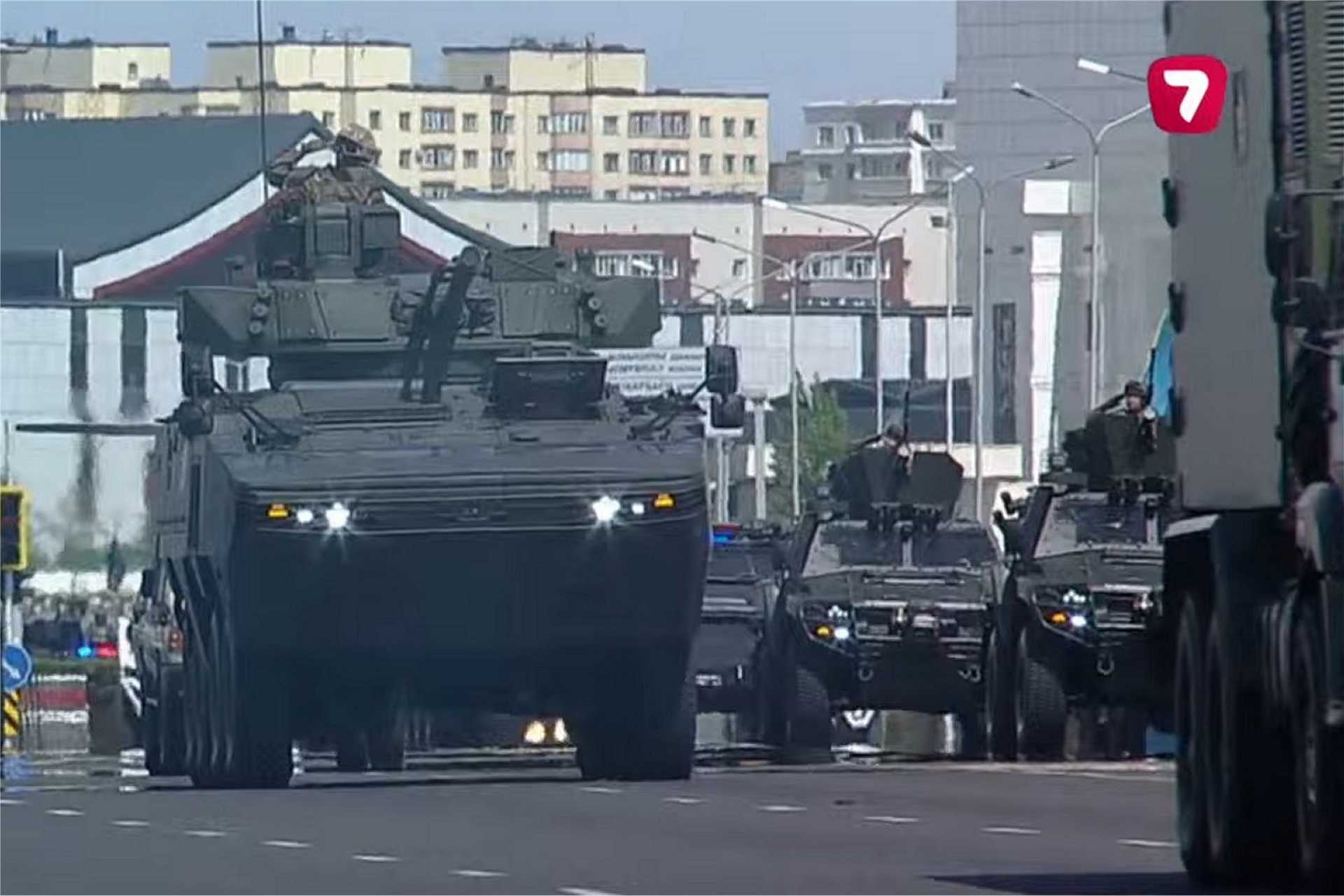
On May 7, 2025, during Kazakhstan’s annual military parade, the Taymas 8x8 infantry fighting vehicle made its first public appearance, marking the official introduction of a new domestically branded combat platform blending Turkish, Chinese, and local technologies. The vehicle is built on the Turkish Otokar Arma 8x8 chassis and is equipped with a turret believed to be derived from China’s Norinco VN20 program, according to a detailed technical analysis by Army Recognition. While conflicting claims have emerged online suggesting the turret might be the VN11 or even ASELSAN’s Nefer, Army Recognition’s assessment, based on visual features and known configurations, supports the VN20 origin. The unveiling during the national parade signals Kazakhstan’s ambition to showcase its growing military-industrial capabilities on the regional stage.
Follow Army Recognition on Google News at this link
Kazakhstan’s new Taymas 8x8 IFV Infantry Fighting Vehicle rolls through Almaty during the annual military parade on May 7, 2025. (Picture source: Kazakhstan National TV footage)
The Taymas 8x8 is a modern infantry fighting vehicle designed for high mobility, heavy firepower, and multi-role adaptability. It utilizes the Arma 8x8 platform developed by Türkiye’s Otokar, known for its battlefield-proven modular structure. The turret system mounted on the Taymas resembles the VN20’s heavier configuration: a two-man turret armed with a 100mm cannon, a 30mm coaxial autocannon, anti-tank missile launchers (likely HJ-12), and a remote-controlled weapon station on top. This combination provides comprehensive capabilities ranging from infantry support to armored threat neutralization, aligning with firepower doctrines similar to Russia’s BMP-3 and China’s ZBD-04A.
The Taymas 8x8 project emerges from Kazakhstan’s broader ambition to expand its defense industrial base while leveraging strategic ties with Türkiye and China. Otokar Central Asia assembles Arma platforms locally, while Kazakhstan has collaborated with ASELSAN on T-72 upgrades, showing a continued pattern of trilateral cooperation. Integrating Norinco turrets into the vehicle reflects a pragmatic procurement strategy, allowing Kazakhstan to bypass export limitations from Western suppliers while maintaining high-caliber firepower and modularity. The Taymas provides a platform well-suited to both open-terrain operations and urban conflict, aligning with Kazakhstan’s security priorities on its northern and eastern borders.
Strategically, the Taymas represents Kazakhstan’s pivot toward hybrid systems that combine proven designs with local production and regional partnerships.While official budget figures have not been disclosed, the domestic assembly of chassis and integration of Chinese turrets likely keeps costs in check, while also supporting local employment and industrial capacity. Similar concepts exist elsewhere, such as the Emirati Rabdan IFV, which combines a Patria AMV chassis with a BMP-3 turret, or Indonesia’s Pandur II, equipped with a Belgian turret. However, Kazakhstan’s offering stands out for its 8x8 configuration, high firepower, and confirmed local participation. Although there have been no public announcements of foreign sales, its debut during the national military parade and industrial involvement from Otokar Central Asia suggest export ambitions in the near future.
Kazakhstan’s introduction of the Taymas 8x8 during its 2025 military parade is not merely a display of military hardware, it is a declaration of intent. Through the combination of Turkish mobility, Chinese firepower, and Kazakh production, the Taymas signals a growing capacity for independent defense innovation. This platform symbolizes Kazakhstan’s emergence as a credible and sovereign actor in the evolving global defense landscape.
- Details
- Written by: Administrator
- Category: Defence & Security Industry Technology
- Hits: 4983
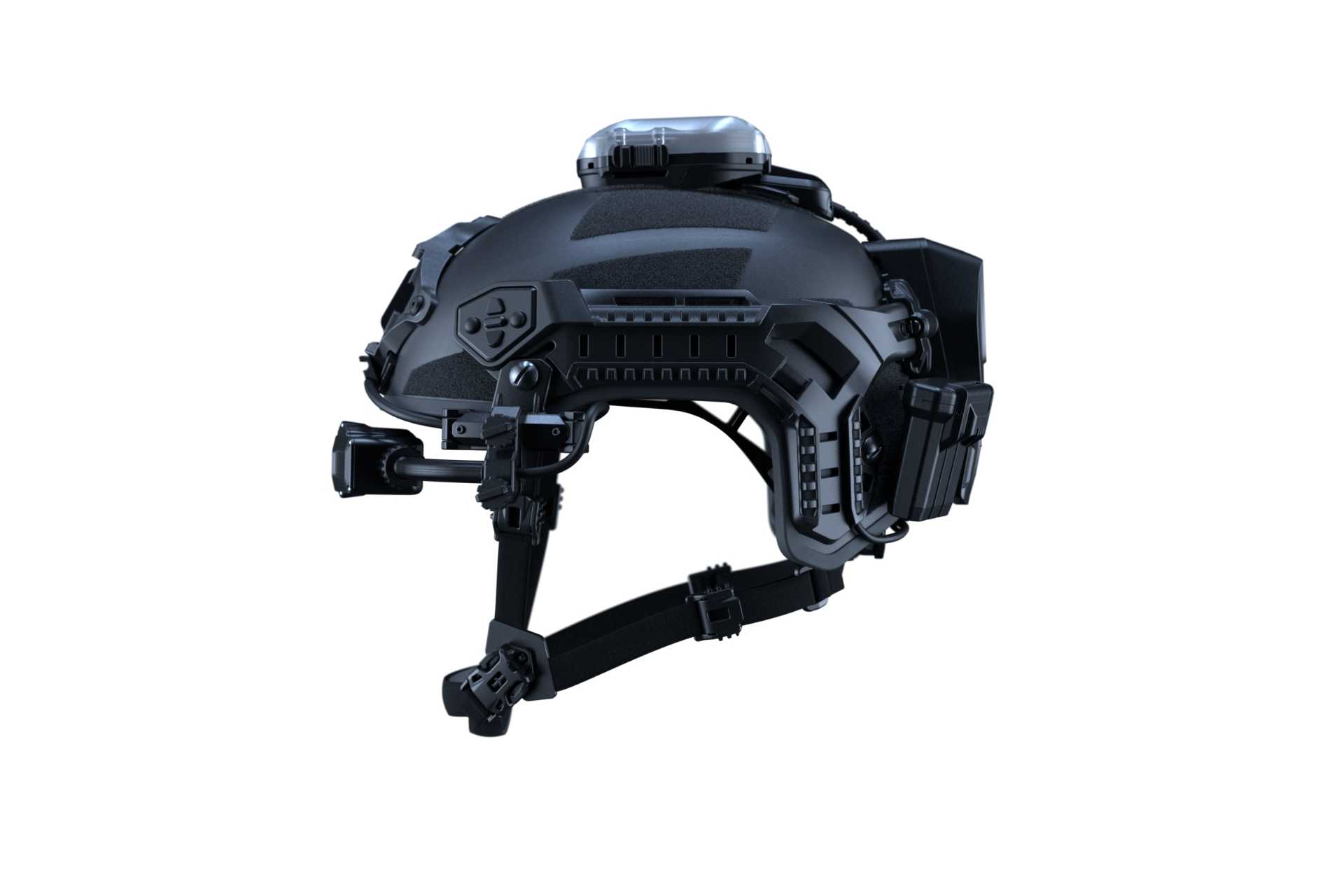
At SOF Week 2025, taking place in Tampa, Florida, United States, from May 5 to 7, 2025, the global defense and special operations community gathers to showcase the most advanced technologies shaping the future of modern warfare. At the heart of this year’s event, Galvion launches its groundbreaking CORTEX™ smart head system integration platform, setting a new standard for tactical headgear. Revealed at Booth #349, the CORTEX platform represents a bold leap forward in operational integration, merging cutting-edge hardware and intelligent software to equip Warfighters with real-time data access, enhanced situational awareness, and mission-adaptable capabilities—all through a seamlessly integrated headborne system.
Follow Army Recognition on Google News at this link
The new CORTEX™ platform by Galvion transforms combat helmets into intelligent, connected mission systems for Special Operations Forces. (Picture source: Galvion with editing of Army Recognition Group)
The newly unveiled CORTEX system is not just an upgrade—it’s a complete transformation of the combat helmet into a high-performance edge computing node. Designed to bring processing power, data connectivity, and energy management directly to the soldier’s head, CORTEX enables frontline operators to make faster, more informed decisions in the heat of battle. Built around a powerful compute module with an internal battery and a custom Android-based operating system, the platform integrates directly into Galvion’s flagship Caiman® helmet, turning it into a smart hub for modern battlefield needs.
Every element of the CORTEX platform has been engineered with modularity and human-centered design in mind. Its architecture includes an integrated accessory network for synchronized power and data management, and it supports multiple communications protocols—including USB, ISW, Bluetooth, and Wi-Fi—to ensure full system interoperability. The system also features a sensor and emitter pod with an open-source interface, allowing for seamless integration of third-party technologies such as sensors, smart optics, and other mission-critical devices.
Among its most distinctive features is a low-profile, auto-detecting VAS mount, enabling smooth integration with night vision devices and heads-up displays (HUDs), while supporting software-enabled augmented reality (AR) overlays. A tactile 4-key controller is built directly into the helmet for intuitive navigation and system interaction, enabling operators to control functions rapidly without breaking visual contact with the environment.
One of the most game-changing aspects of CORTEX is the integration of Galvion’s proprietary AlertCentr™ application, which provides direct, tactile access to ATAK (Android Team Awareness Kit) functionality. This feature allows Warfighters to view mission data and execute ATAK commands without needing to reach for or visually engage with their End User Device (EUD), significantly reducing cognitive load and improving responsiveness in dynamic situations.
The CORTEX system has been developed over several years in close collaboration with Tier 1 special operations units, incorporating real-world feedback and rigorous testing. Customized versions of the system—with tailored software and hardware—have already been delivered to select international customers for operational trials. Designed as a one-size-fits-all solution, CORTEX features adjustable components to accommodate a wide range of helmet sizes and is compatible not only with Galvion’s Caiman® and Hellbender™ platforms but also with selected non-Galvion head systems.
With the debut of CORTEX at SOF Week 2025, Galvion firmly positions itself at the forefront of soldier system integration, redefining the role of the combat helmet in the digital battlespace. No longer a passive piece of protection, the helmet becomes a central node of operational intelligence, capable of supporting enhanced decision-making, communications, and situational awareness—all without compromising mobility or comfort. As elite units across the world seek smarter, more adaptive gear, Galvion’s CORTEX offers a scalable and future-ready solution tailored to the realities of high-tempo, tech-driven combat operations.
- Details
- Written by: Administrator
- Category: Defence & Security Industry Technology
- Hits: 19954
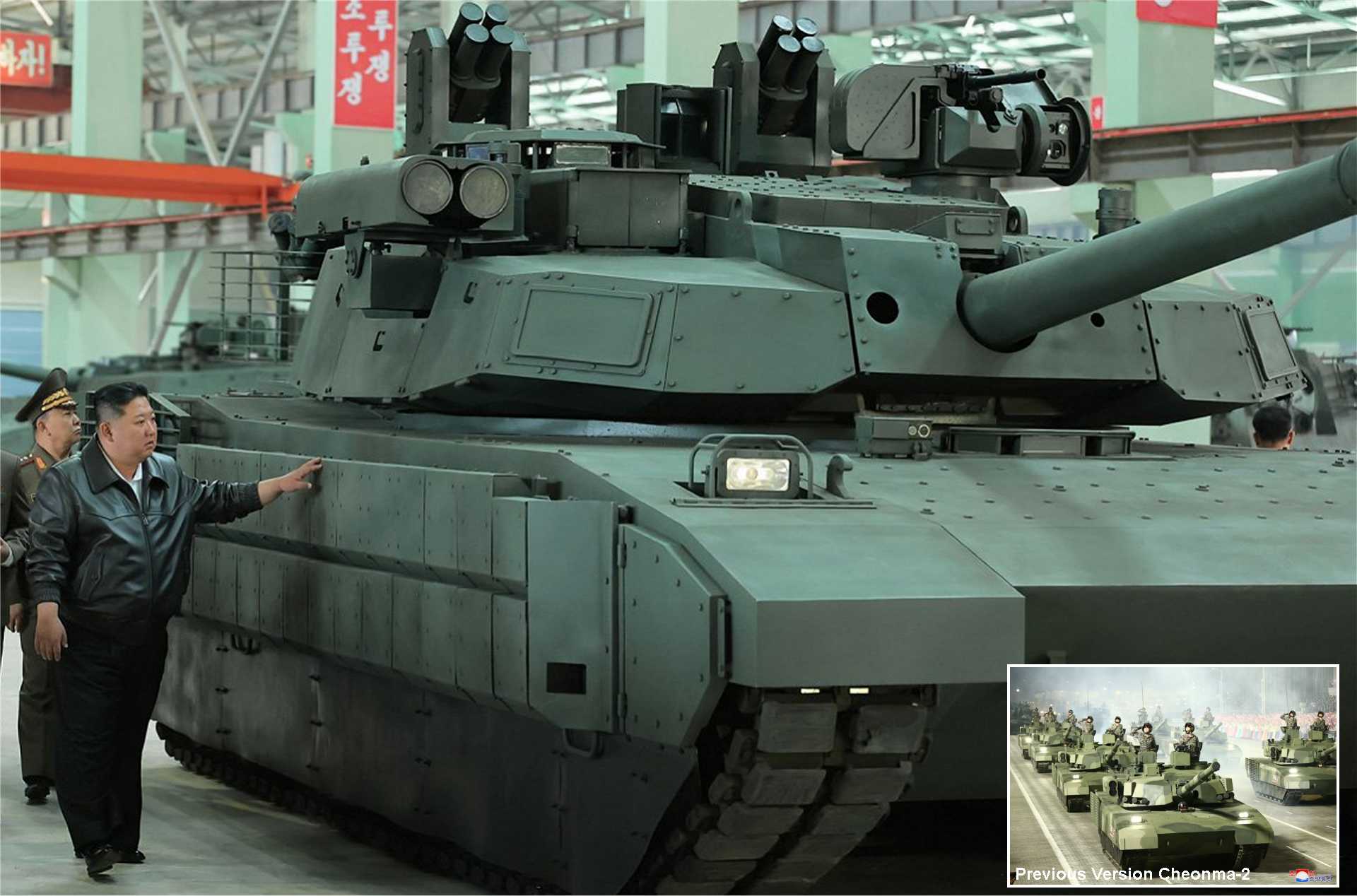
Following the recent release of images on North Korean social media platforms on May 3, 2025, new insights have emerged into the latest version of the Cheonma-2, also referred to as the M2020, North Korea's domestically developed main battle tank. These photos, taken during a visit by Supreme Leader Kim Jong Un to a defense production facility, reveal a significantly upgraded platform compared to the version first unveiled in the 2020 military parade celebrating the 75th anniversary of the Workers' Party of Korea.
Follow Army Recognition on Google News at this link
The new version of North Korea’s Cheonma-2 main battle tank, unveiled in May 2025, features advanced protection systems, improved turret design, and modernized optics. Inset: the original 2020 version, highlighting key upgrades in firepower and survivability. (Picture source: Social Network)
The new Cheonma-2 follows a conventional main battle tank layout, with the driver positioned centrally at the front of the hull, the turret mounted in the middle, and the powerpack housed in the rear. While the chassis retains the general configuration of the earlier model, the turret design shows a notable resemblance to South Korea’s K2 Black Panther. This may indicate either reverse-engineering or conceptual imitation, a pattern that has previously been seen in North Korean armored vehicle development.
One of the most critical advancements in this new iteration is the apparent integration of a modern Active Protection System (APS). Visual cues suggest the presence of radar modules and countermeasure launchers that resemble components of Israel's Iron Fist APS, produced by Elbit Systems. These systems are designed to detect incoming projectiles, such as anti-tank missiles and RPGs, and launch countermeasures to neutralize the threat before impact. Mounted on the turret roof are two groups of four counter-missile launchers, likely intended to deploy interceptors or decoy flares upon threat detection. These upgrades reflect a strategic emphasis on crew survivability and defense against modern top-attack and tandem-warhead threats.
Complementing these defenses is a newly installed remotely operated weapon station (ROWS) located on the left side of the turret, armed with a 12.7mm heavy machine gun. This system allows the crew to engage aerial and infantry threats without exposing themselves. The right side of the turret houses two launchers for anti-tank guided missiles (ATGMs), which provide additional long-range anti-armor capability, significantly boosting the tank’s offensive versatility.
Optical systems have also been upgraded, with new sensors seamlessly integrated into the turret armor. A central panoramic sight on the turret roof offers the commander a full 360-degree field of view, enhancing target acquisition, situational awareness, and battlefield management. Compared to its predecessor, the new Cheonma-2 features reinforced frontal armor, suggesting an effort to increase protection against kinetic and chemical energy projectiles. The sides of the hull are now fitted with advanced Explosive Reactive Armor (ERA) and additional armored skirts that protect the suspension system, increasing resistance to mines and improvised explosive devices (IEDs).
To bolster defense in close-quarters or urban environments, the tank retains the use of wire cage armor (slat armor) on the rear sections of the turret and hull. This is a relatively low-cost method to defeat RPGs and shaped-charge warheads, and its continued presence indicates North Korea’s concern over asymmetric anti-tank threats.
In terms of firepower, while the exact caliber has not been officially confirmed, the main gun appears to be a 125mm smoothbore cannon, in line with Russian and Chinese tank standards. This gun likely supports both conventional armor-piercing and high-explosive ammunition, and may be compatible with ATGM rounds fired through the barrel, a capability typical of Eastern bloc designs. The inclusion of modern fire control systems, though speculative, would be essential to achieving accuracy comparable to current generation MBTs.
When compared to other contemporary main battle tanks such as South Korea’s K2 Black Panther, Turkey’s Altay, Germany’s Leopard 2A8, France’s Leclerc XLR, or the American M1A2 SEP V3, the Cheonma-2 still lags in terms of digital networking, mobility, and possibly fire control sophistication. The K2, for example, features advanced composite armor, a highly automated fire control system, and a hydro-pneumatic suspension for superior cross-country mobility. The Leopard 2A8 integrates Trophy APS, fully digital battlefield integration, and state-of-the-art optics. The Leclerc XLR has been upgraded with enhanced digital command systems and a new remotely operated turret-mounted machine gun. At the same time, the M1A2 SEP V3 emphasizes survivability through improved armor and counter-IED measures, along with advanced thermal sights and new data-link capabilities.
In conclusion, the development of the latest Cheonma-2 main battle tank underscores North Korea’s determination to modernize its armored forces despite its economic constraints and international sanctions. This newest version reflects an ambitious attempt to incorporate features commonly found in advanced Western and Asian MBTs, such as active protection systems, improved modular armor, modern optics, and remote weapon stations. While the visual and conceptual similarities to tanks like the K2 Black Panther, Leopard 2A8, and M1A2 SEP V3 are apparent, the Cheonma-2 likely falls short in terms of system integration, electronic warfare capabilities, and real-world battlefield performance.
Nevertheless, the Cheonma-2 represents a significant leap forward for North Korean armor doctrine. By integrating components that mimic high-end APS technologies and upgrading survivability and firepower, North Korea is clearly attempting to narrow the qualitative gap with its technologically superior adversaries. The tank’s enhancements suggest a growing awareness of modern battlefield threats, particularly from precision-guided munitions and UAV-assisted targeting.
However, without the combat-proven reliability, logistical support structures, or advanced sensor fusion found in its Western counterparts, the Cheonma-2 remains more of a regional threat than a global contender. Still, its deployment will force South Korea and allied forces to account for a more capable North Korean armored threat, potentially shifting tactical calculations in any future confrontation on the Korean Peninsula.

- Details
- Written by: Administrator
- Category: Defence & Security Industry Technology
- Hits: 15724
According to information published by Defense Express on April 29, 2025, Ukraine introduced a new generation anti-tank mine, TM-2025. This new system is a domestically developed evolution of the Soviet-era TM-62, enhanced with modern engineering improvements such as a 3D-printed electromechanical fuse, updated casing, and additional mechanisms to resist deactivation attempts. The emergence of the TM-2025 underscores Ukraine's continued efforts to modernize its defense capabilities under the pressures of ongoing conflict.
Follow Army Recognition on Google News at this link
Close-up view of Ukraine’s new TM-2025 anti-tank mine, highlighting its updated metal casing, modular design for auxiliary fuses, and the advanced MPEM-1 electromechanical fuse featuring 3D-printed components. (Picture source: Telegram video footage)
The Russian TM-62, on which the TM-2025 is based, is one of the most widely deployed Soviet-designed anti-tank mines. Introduced in the early 1960s, the TM-62 is a large, circular mine typically equipped with a mechanical pressure fuse such as the MVCh-62 or MVP-62, and it is capable of penetrating heavy armored vehicles with its substantial explosive payload. Designed primarily for conventional warfare, the TM-62 has been used extensively in multiple conflicts across Europe, the Middle East, and Asia. Its simple design, robust effectiveness, and the ability to use a variety of fuses made it a versatile platform. Over time, many countries, including Ukraine, have stockpiled and modified these mines to meet modern warfare needs.
The TM-2025 has already been sighted in active service on the front lines, indicating its deployment in current military operations. At first glance, it closely resembles the TM-62 due to its metal casing, but several upgrades differentiate it from its predecessor. Among the most notable changes is the redesigned mine body, which features smoother contours and an internal compartment that allows for the installation of an auxiliary side detonator. This new configuration makes the mine significantly more resistant to disarmament, as the secondary fuse increases the complexity and danger of any neutralization attempt.
These design changes are not purely defensive. The modified structure of the TM-2025 also enables greater versatility, including easier conversion for use in drone-deployed attacks or for mounting on engineering vehicles. This modularity reflects a broader shift in Ukrainian defense production—aimed not only at improving performance but also at increasing tactical adaptability across different combat scenarios.
The relevance of the TM-2025 extends far beyond its role as a traditional anti-tank mine. In the context of Ukraine’s ongoing conflict, the capacity to repurpose mines as payloads for unmanned ground vehicles (UGVs) and aerial drones has become a strategic necessity. Ukrainian forces have increasingly relied on unmanned systems to deliver explosive payloads to enemy positions or vehicles while minimizing the exposure of personnel. Mines like the TM-62 have already been adapted by Ukrainian engineers for this purpose, and the TM-2025, with its improved modular design and fuse options, significantly enhances this capability. Its potential for integration into drone warfare platforms allows for precise, remotely operated attacks on enemy armor or fortifications, often behind the front lines or in hard-to-reach areas.
One of the most innovative aspects of the TM-2025 is its new Ukrainian-made fuse, the MPEM-1. Unlike the conventional MVCh-62 or MVP-62 mechanical fuses used in the TM-62, the MPEM-1 is electromechanical and incorporates components produced via 3D printing. While technical specifics of the MPEM-1 remain undisclosed, visual evidence suggests it offers more reliable performance and greater resistance to environmental stressors or tampering. The use of additive manufacturing in the production of critical mine components represents a notable advancement in Ukraine’s capacity to rapidly prototype and scale production of advanced battlefield equipment.
Serial numbers and naming conventions indicate that the TM-2025 entered production in 2025. Its deployment is a response not only to battlefield requirements but also to logistical and industrial realities. The TM-62 mine remains one of the most widely used explosive devices in Ukraine, not just in its original form but also as a base for improvised explosive devices, demolition charges, and even landing platforms for multicopter drones. The TM-2025’s updated structure and improved fuse system offer better performance in all these roles.
By upgrading a widely available legacy system with contemporary enhancements, Ukraine has managed to create a mine that is more effective, harder to neutralize, and capable of serving multiple purposes in a dynamic combat environment. The TM-2025 reflects how Ukraine’s defense sector is blending traditional designs with modern innovation to meet the immediate needs of war while preparing for future challenges.
Read more: Technology: Ukraine Develops TM-2025 Anti-Tank Mine with 3D-Printed Smart Fuse
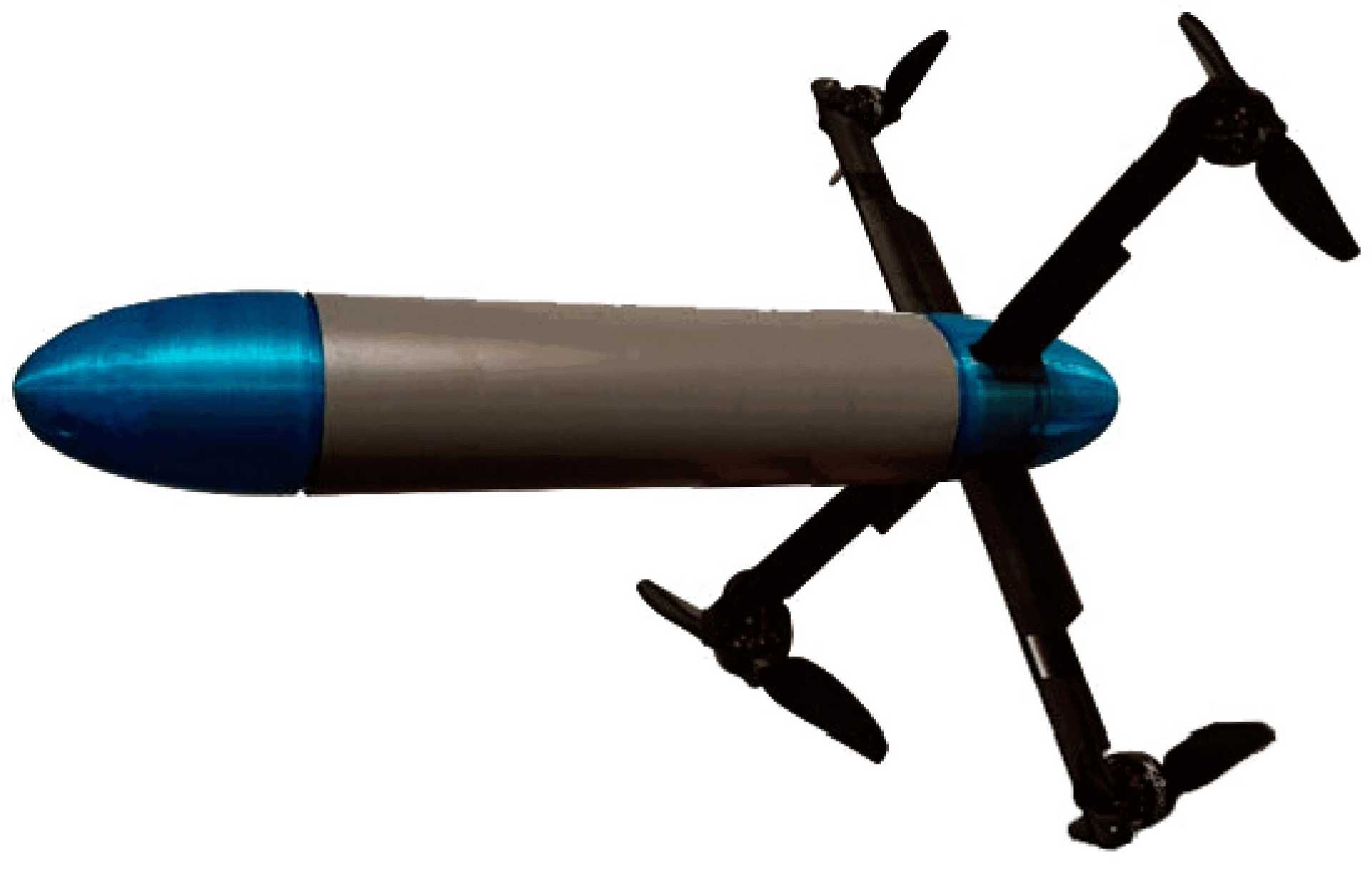
- Details
- Written by: Administrator
- Category: Defence & Security Industry Technology
- Hits: 8614
On April 30, 2025, Andrei_bt, a well-known defense analyst on the X platform (formerly Twitter), reported that the Russian defense enterprise Fakel Machine-Building Design Bureau has developed a new anti-UAV missile tailored specifically to counter the growing threat of small unmanned aerial vehicles (UAVs). Fakel, known for its legacy in designing some of Russia’s most advanced air defense systems such as the Osa, Tor, and S-300, has shifted its focus to fill a critical capability gap on the modern battlefield: the interception of low-cost, low-speed, mini-class drones used for reconnaissance, artillery correction, and loitering munitions, including kamikaze drones.
Follow Army Recognition on Google News at this link
The new Russian anti-drone missile, developed by Fakel Machine-Building Design Bureau, features a lightweight X-shaped airframe and electric propellers, designed to intercept small, low-cost UAV threats on the modern battlefield. (Picture source: Andrei_bt X account)
While highly capable against conventional threats such as aircraft, helicopters, and precision-guided munitions, the Russian military's current air defense architecture faces significant limitations when addressing the proliferation of small, inexpensive UAVs. Although technologically advanced, systems like the Pantsir-S1, Tor-M2, and Buk-M3 are costly to operate and maintain. Their missiles, such as the 9M330, 9M338, and similar variants, were never optimized for short-range engagements against small, slow, or hovering aerial targets. These systems also operate with a high-speed missile profile, which introduces a minimum engagement range and reaction time that makes it difficult to effectively neutralize drones flying at low altitude and velocity in close proximity to ground forces.
Furthermore, the economic asymmetry between these high-cost interceptors and low-cost commercial or semi-commercial drones presents a strategic vulnerability. On the frontlines in Ukraine and other modern conflict zones, mass-produced or modified commercial drones costing a few hundred dollars can disrupt artillery accuracy, conduct real-time surveillance, and deliver explosive payloads. Using a missile that costs tens of thousands of dollars to shoot down a $500 drone is not only unsustainable but also depletes valuable air defense inventories that are needed for higher-tier threats.
Recognizing this imbalance, the development of Fakel’s anti-UAV missile responds directly to the need for a scalable, cost-efficient, and lightweight solution to neutralize mini-drones in a tactical environment. This new system deviates from traditional missile architecture by adopting a drone-like configuration. It features an X-shaped airframe with electric pusher propellers, folding wings for compact storage, and an inertial navigation system combined with an optoelectronic homing head. This allows for flexible launch profiles—both vertical and inclined—and precise mid-course corrections based on target movement.
The missile's lightweight construction—20 to 35 times lighter than current ultra-short-range missiles—makes it ideal for tactical deployment. With the ability to pack 3–5 transport and launch containers into a soldier’s standard loadout under 10 kg, it becomes a truly man-portable air defense tool. This empowers infantry units at the squad and platoon level with an organic counter-drone capability, reducing dependence on larger air defense assets.
Additionally, the production cost of this missile is estimated to be 20–25 times lower than that of existing interceptors in the Russian arsenal. This affordability facilitates mass production and allows for a distributed deployment model across frontline units, closing the gap between strategic air defense systems and localized drone threats.
The introduction of such a system suggests that Russia has recognized the evolving nature of aerial threats and is adapting its defense-industrial strategy accordingly. Rather than relying solely on high-tier systems, the integration of low-cost, flexible anti-drone solutions reflects a pragmatic shift toward layered and adaptive defense. As drone warfare becomes an enduring feature of modern combat, Fakel’s innovation represents a timely and necessary evolution in Russia’s air defense doctrine. It ensures that tactical units are equipped to address a wide spectrum of threats, from advanced guided weapons to the most rudimentary UAVs now shaping the realities of conflict.
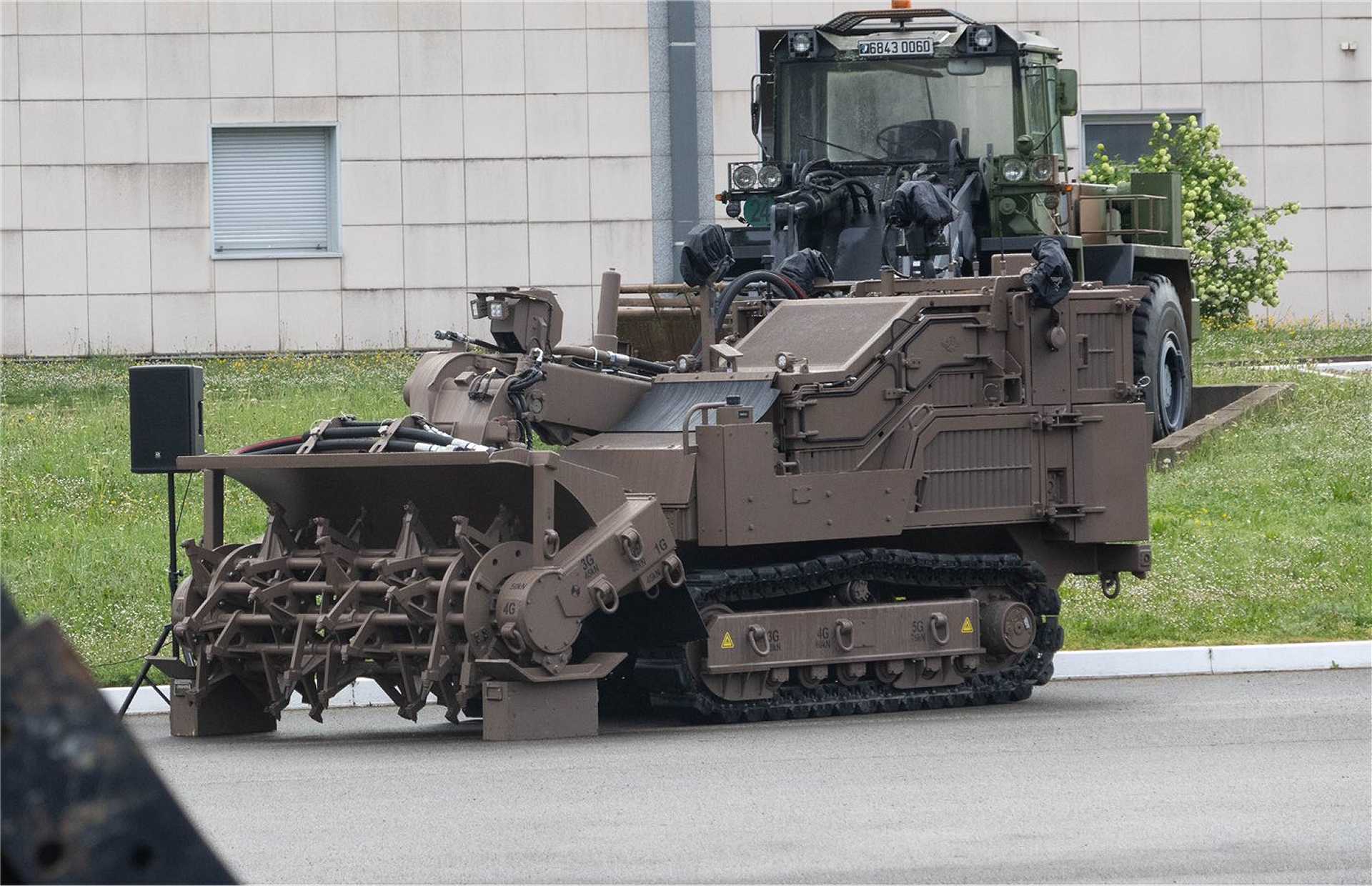
- Details
- Written by: Administrator
- Category: Defence & Security Industry Technology
- Hits: 6734
The French Army continues to modernize its engineering capabilities with the induction of new-generation combat engineering vehicles into the 19th Engineer Regiment of the French Army. These modern platforms, which include a specially configured version of the Griffon 6x6 armored vehicle tailored for engineer missions and the advanced SDZ (Zone Demining System) robotic demining tracked vehicle, are set to replace the aging EBG (Engin Blindé du Génie - Engineer Armored Vehicle) fleet base on the AMX-30 tank tracked chassis. This transition represents a major leap forward in both tactical mobility and counter-explosive capabilities within the French armed forces.
Follow Army Recognition on Google News at this link
The French army's 19th Engineer Regiment is now equipped with the SDZ robotic vehicle for high-efficiency mechanical mine clearance, enhancing force protection and operational mobility. (Picture source: French army 19th Engineer Regiment)
The engineer variant of the Griffon 6x6 multi-role armored vehicle enhances operational flexibility by integrating tools and systems specific to engineering and EOD operations. Maintaining the high mobility, protection, and networked command systems of the baseline Griffon, this variant supports a wide array of field engineering tasks, from fortification to mine clearance support. It is designed to enable combat engineers to accompany frontline troops in high-threat environments while benefiting from armored protection and digital integration under the SCORPION program.
At the forefront of this technological evolution is the SDZ (Zone Demining System), a next-generation robotic tracked vehicle that sets new benchmarks in autonomous mine clearance. Developed to perform high-speed mechanical demining across contaminated environments, the SDZ combines rugged engineering with advanced control systems to meet both military and humanitarian clearance needs.
Technically, the SDZ is engineered for both power and precision. It features a robust tracked chassis with steel and rubber-padded treads that offer strong mobility on diverse terrain. With a ground clearance of 479 mm and a maximum speed of 10 km/h, it can operate efficiently in challenging field conditions. The vehicle alone weighs 9,500 kg, while its full configuration with the demining tiller reaches 12,000 kg. Its dimensions—5.90 meters in length with the tiller and 2.85 meters in width—make it compact enough for operational deployment yet wide enough to effectively clear broad lanes through mined areas.
At its core, the SDZ is powered by a Deutz 250 horsepower diesel engine, which offers both high performance and fuel efficiency. With a fuel tank capacity of 325 liters, the vehicle is capable of extended field operations without frequent refueling, a crucial feature in sustained military or humanitarian missions.
Its mine-clearing capacity is particularly noteworthy. The SDZ can penetrate up to 30 centimeters in depth and clear a 2.1-meter wide path at a minimum rate of 500 square meters per hour. This high throughput makes it ideal for rapid route clearance ahead of advancing mechanized units or for opening up access in post-conflict zones. Its design complies with CWA 15044 standards, under which it was tested using live anti-personnel and anti-tank mines. The result: a 100% neutralization rate, either by detonation or destruction, validating its operational reliability.
For operational safety and versatility, the SDZ is entirely remotely controlled, either via visual line-of-sight or from within armored vehicles. It is equipped with GPS navigation and high-resolution cameras, providing operators with full situational awareness and the ability to execute complex maneuvers under cover. The vehicle’s onboard console offers a full spectrum of commands, ensuring precise control over all functions and tools, even in hostile environments.
One of the SDZ’s most distinctive attributes is its modularity. It is capable of deploying an array of interchangeable tools, including a flail, auger, backhoe, segregator bucket, standard bucket, and dozer blade. This flexibility allows the SDZ to not only clear mines but also relocate or destroy explosive ordnance, excavate defensive positions, and remove battlefield debris, making it a true multi-role asset for modern engineer regiments.
With the integration of both the Griffon engineer variant and the SDZ into its force structure, the 19th Engineer Regiment is now equipped to execute complex engineering tasks at a much higher tempo and with improved force protection. These systems enhance the Army’s ability to conduct breach operations, secure routes, and enable recovery and development in post-conflict scenarios—ranging from road and infrastructure repair to restoring agricultural use in once-contaminated areas.
This capability upgrade falls directly under the umbrella of the SCORPION modernization program, France’s overarching effort to digitize and network its land forces. It ensures the French Army maintains a strategic edge in explosive threat mitigation and battlefield support across multi-domain operations.
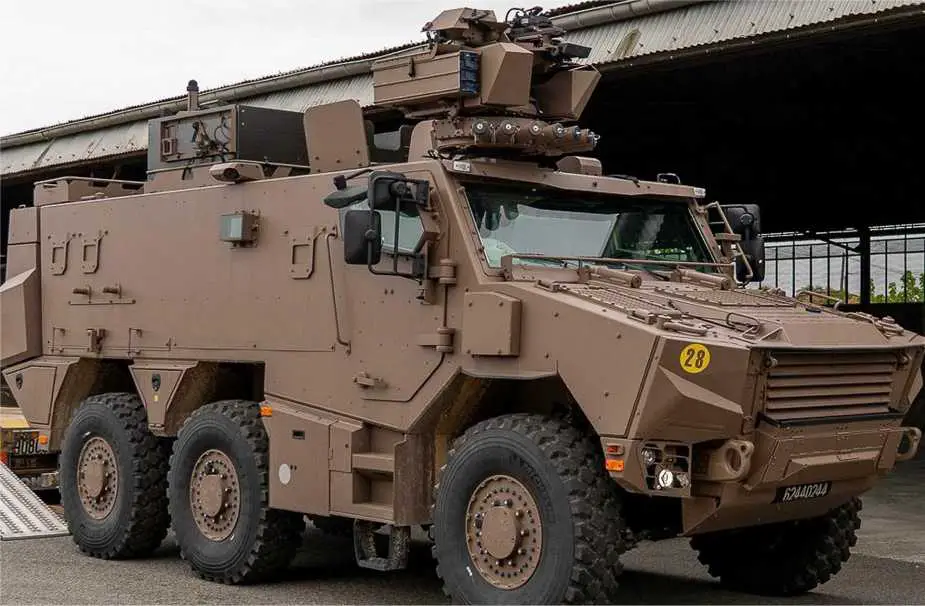
The new engineer variant of the Griffon 6x6 armored vehicle, now deployed with the 19th Engineer Regiment, tailored for combat support and EOD operations. (Picture source: French Army 31st Engineer Regiment)
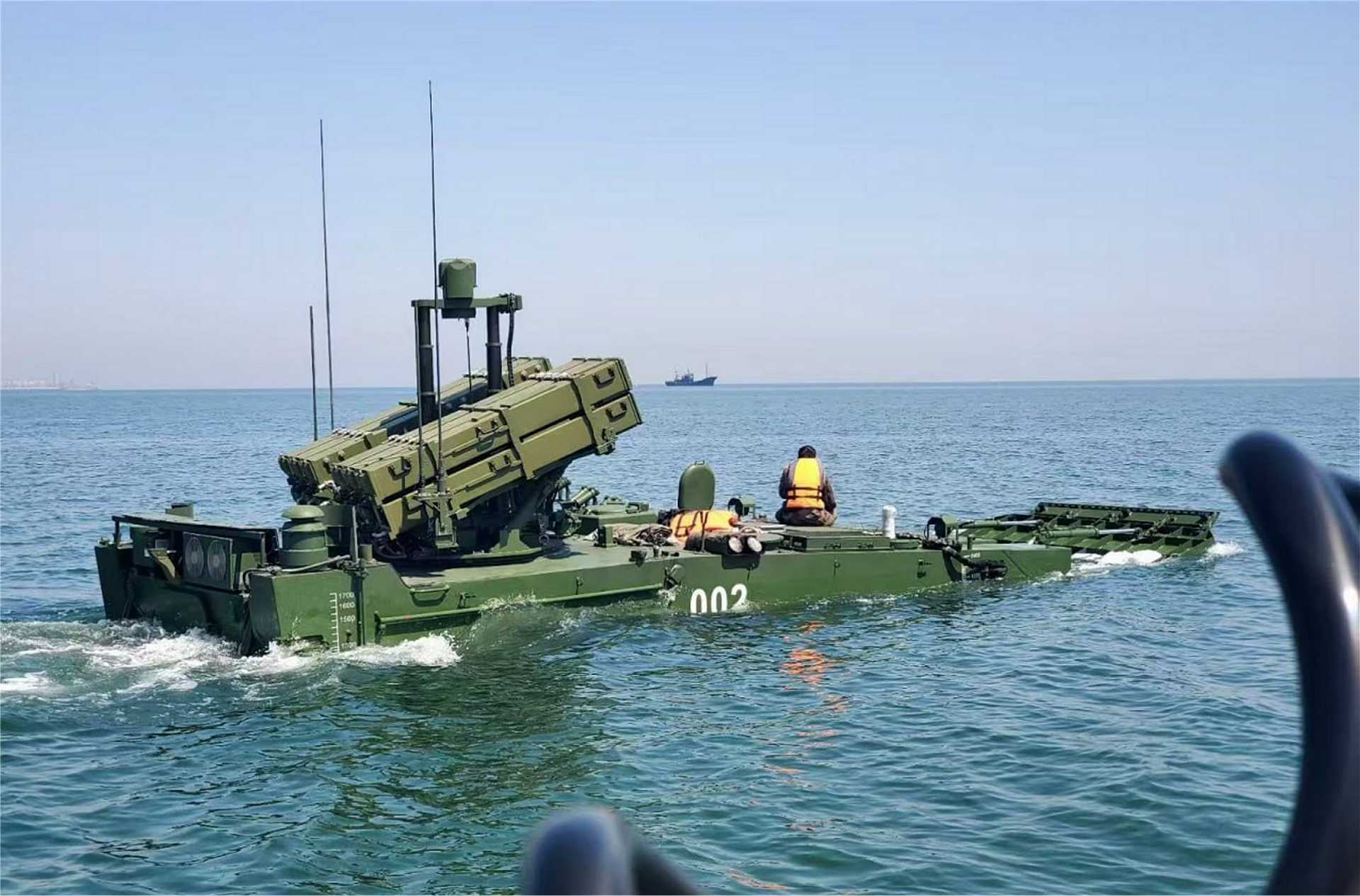
- Details
- Written by: Administrator
- Category: Defence & Security Industry Technology
- Hits: 8753
On April 27, 2025, newly released imagery on Telegram revealed China’s latest advancement in amphibious warfare: a self-propelled anti-tank missile system integrated onto the tracked chassis of the ZTD-05 amphibious assault vehicle. Armed with the powerful HJ-10 Anti-Tank Guided Missile (ATGM) system, this vehicle marks a significant step in the modernization of the People's Liberation Army Navy Marine Corps (PLANMC), enhancing its ability to conduct precision strikes against armored targets during sea-to-shore operations.
Follow Army Recognition on Google News at this link
The latest ZTD-05-based anti-tank missile vehicle undergoing sea trials, equipped with dual blocks of HJ-10 anti-tank guided missiles. (Picture source: Telegram)
The ZTD-05 amphibious light tank, developed by the Chinese defense company Norinco, is a highly mobile and seaworthy vehicle designed for rapid deployment from amphibious assault ships. Its aluminum alloy hull, reinforced with composite armor, provides protection against small arms fire and shell fragments while maintaining a lightweight profile essential for amphibious missions. Powered by a high-performance diesel engine, the ZTD-05 reaches speeds of up to 65 km/h on land and between 28 to 30 km/h in water, using twin waterjets for exceptional maritime maneuverability.
In this new anti-tank configuration, an advanced missile launch module has replaced the traditional 105mm gun turret. The turret is fitted with two blocks of six containerized missile launchers, each housing a single HJ-10 missile. This setup gives the vehicle twelve ready-to-fire missiles, significantly boosting its ability to deliver sustained, long-range anti-armor firepower. The enclosed containerized design protects the missiles from environmental exposure and allows for quick rearming in combat conditions.
The HJ-10 missile, also known as the AFT-10 in its export variant, is one of China's most advanced long-range ATGMs. It is designed to defeat modern main battle tanks and fortified structures using a tandem high-explosive anti-tank (HEAT) warhead capable of penetrating over 1,200 mm of rolled homogeneous armor (RHA) after defeating explosive reactive armor (ERA). With a maximum effective range of approximately 10 kilometers, the HJ-10 provides a critical standoff capability, enabling engagement of enemy armor formations from safe distances.
Guided by a sophisticated system combining inertial navigation, imaging infrared (IIR) or television guidance, and a two-way fiber-optic data link, the HJ-10 offers multiple engagement modes. It can operate in fire-and-forget mode, allowing the missile to home in on its target autonomously. Alternatively, operators can use man-in-the-loop guidance to adjust the missile’s trajectory in real-time, even allowing post-launch retargeting. This flexibility is particularly valuable in complex battlefield environments, where threats may be concealed or repositioning rapidly. The system’s ability to strike targets from defilade positions also enhances its survivability and tactical surprise.
The introduction of this amphibious anti-tank platform significantly enhances the firepower and operational reach of China's naval infantry. It allows PLANMC units to engage enemy armor and fortifications from offshore or during inland advances without the need for direct exposure. This capability is particularly relevant in potential conflict zones such as the Taiwan Strait or South China Sea, where amphibious operations would require rapid, high-precision strikes against hardened targets.
Strategically, the new ZTD-05-based anti-tank missile system reflects the PLA’s broader shift toward modular, network-enabled, and precision-strike warfare. By integrating advanced ATGM capabilities into a fast, amphibious chassis, China is equipping its marine forces with the tools to dominate in complex, multidomain combat environments. As part of the ongoing modernization of the PLA, this vehicle not only strengthens China's anti-access/area denial (A2/AD) posture but also redefines the role of amphibious platforms in high-intensity warfare.
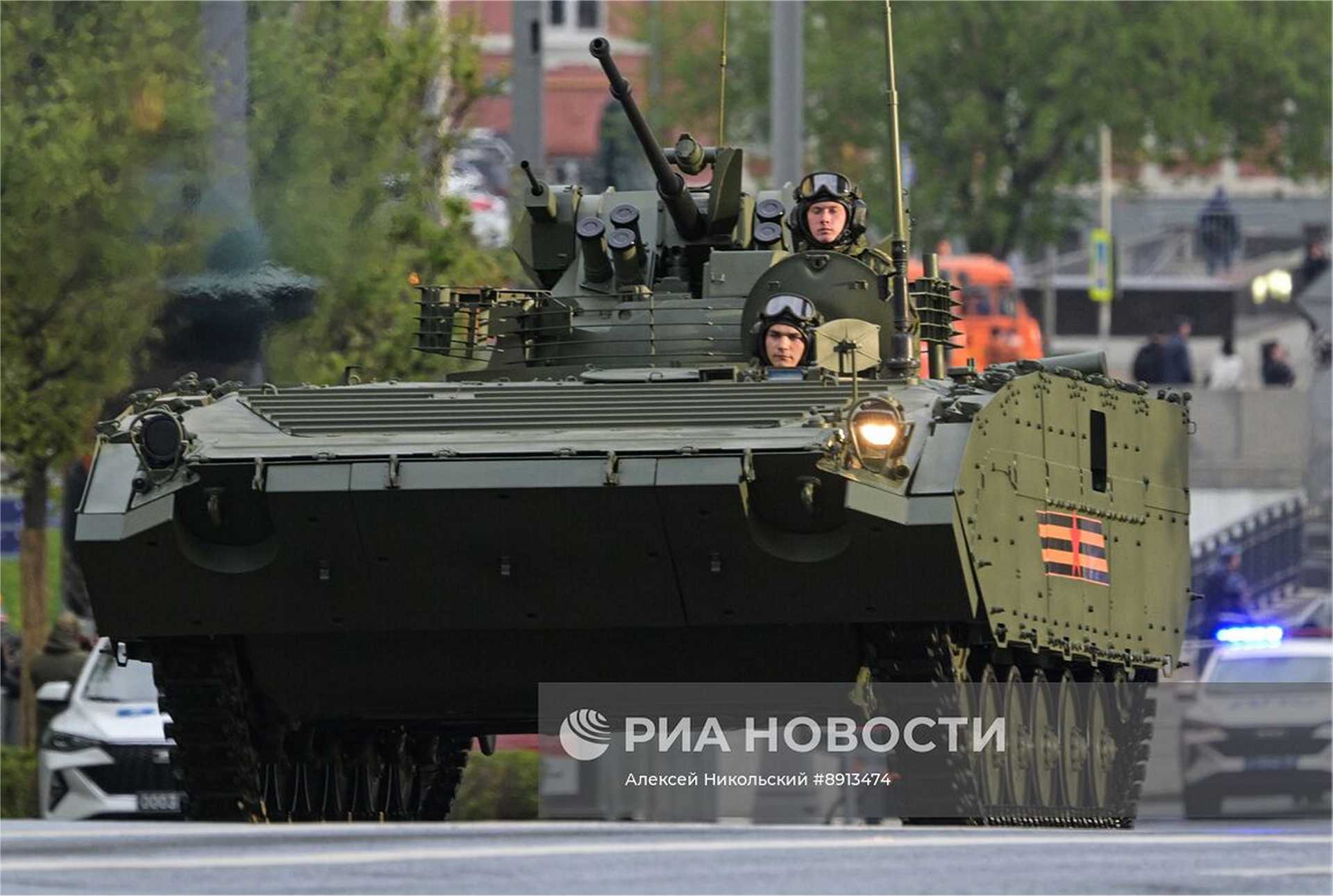
- Details
- Written by: Administrator
- Category: Defence & Security Industry Technology
- Hits: 10975
On April 29, 2025, during the rehearsal for the 80th anniversary of Victory in the Great Patriotic War, the Russian Army publicly revealed a newly upgraded version of its legacy infantry fighting vehicle (IFV), the BMP-1, now further developed into an enhanced variant of the BMP-1AM "Basurmanin" featuring a new armor protection package. This latest version introduces significant improvements over previous iterations, especially in survivability, with the integration of explosive reactive armor (ERA) plates, additional side armor, and cage armor around the turret—upgrades that notably increase protection against modern battlefield threats.
Follow Army Recognition on Google News at this link
The newly upgraded BMP-1AM "Basurmanin" IFV Infantry Fighting Vehicle fitted with reactive armor and cage turret protection during the Victory Day parade rehearsal, April 29, 2025. (Picture source: RIA Novosti)
This unveiling underscores Russia’s continued commitment to extending the service life of its Cold War-era platforms through modular and scalable modernization programs, offering a striking contrast between the original Soviet design of the 1960s and this latest variant adapted for high-threat, modern combat environments.
Originally introduced in 1966, the Russian BMP-1 was the world’s first mass-produced Infantry Fighting Vehicle (IFV) designed to transport troops into battle while providing fire support through a 73mm 2A28 Grom cannon and an anti-tank guided missile launcher. It brought a revolutionary combination of mobility, firepower, and infantry integration to mechanized warfare. However, experience in combat—from the Middle East to Afghanistan—quickly revealed its shortcomings: insufficient armor against heavy machine guns and RPGs, an underpowered and low-velocity gun, cramped interior space with dangerous design flaws (including fuel tanks in the troop compartment), and inadequate optics and night-fighting equipment.
The latest BMP-1AM “Basurmanin” not only retains previous upgrades in firepower and electronics but now debuts with a new armor configuration to address the vehicle’s long-standing protection deficiencies. Unlike the original BMP-1, the new version is equipped with explosive reactive armor modules on the front and sides of the hull. These ERA blocks provide critical protection against shaped charges, such as those from RPGs and anti-tank missiles. Additionally, the hull features supplementary steel side plates, and the turret is encased in wire cage (slat) armor, designed to detonate incoming warheads before impact—especially effective against high-explosive anti-tank (HEAT) munitions. These protective measures dramatically increase the survivability of the vehicle in urban combat and hybrid warfare scenarios.
In terms of firepower, the BMP-1AM marks a decisive shift from the outdated 73mm Grom system. It is equipped with the BPPU-1 turret, taken from the BTR-82A armored personnel carrier, which includes a 30mm 2A72 automatic cannon and a 7.62mm PKTM coaxial machine gun. This setup offers a much greater rate of fire, higher accuracy, and a significantly more versatile engagement capability, particularly against infantry, light armored vehicles, and low-flying aircraft. The turret is also paired with modern targeting systems, including the TKN-4GA day/night sight, which enhances target detection and engagement under all visibility conditions—a significant improvement over the BMP-1’s basic optical setup.
Mobility and operational functionality have also been enhanced. The original UTD-20 diesel engine has been replaced with a more powerful UTD-20S1 engine, increasing output from 300 to 360 horsepower, which compensates for the additional weight of the new armor and ensures the vehicle maintains acceptable performance in maneuver warfare. The BMP-1AM also benefits from the integration of the R-168-25U-2 digital radio system, which enables secure, resistant, and modern communication between units—critical in a battlefield dominated by electronic warfare threats.
This modernization effort reflects the Russian military’s pragmatic approach to force renewal: instead of retiring thousands of aging BMP-1s, it is repurposing them with proven components from other platforms in its inventory. This hybridization strategy not only reduces logistical complexity but also cuts procurement costs while providing meaningful improvements in battlefield effectiveness.
The modernization from the original BMP-1 to the latest BMP-1AM “Basurmanin” illustrates a broader trend in military modernization—the value of scalable upgrades. The upgraded BMP-1AM is not on par with next-generation IFVs like the Kurganets-25, but it fills a crucial capability gap for Russia in areas where cost-effective, mass-deployable armor is required. Its combination of improved armor, firepower, mobility, and communication systems enables it to remain viable in modern and hybrid warfare environments.
In summary, the contrast between the Soviet-era BMP-1 IFV and the latest BMP-1AM “Basurmanin” is dramatic. The transition from thin steel plating to reactive and slat armor, from a low-velocity gun to a modern automatic cannon, and from analog systems to digital battlefield connectivity, demonstrates how deep modernization can transform a legacy platform into a capable asset for 21st-century warfare. This newly upgraded variant serves as a testament to Russia’s intent to retain military relevance through cost-effective innovation, breathing new life into one of the most iconic IFVs of the Cold War.
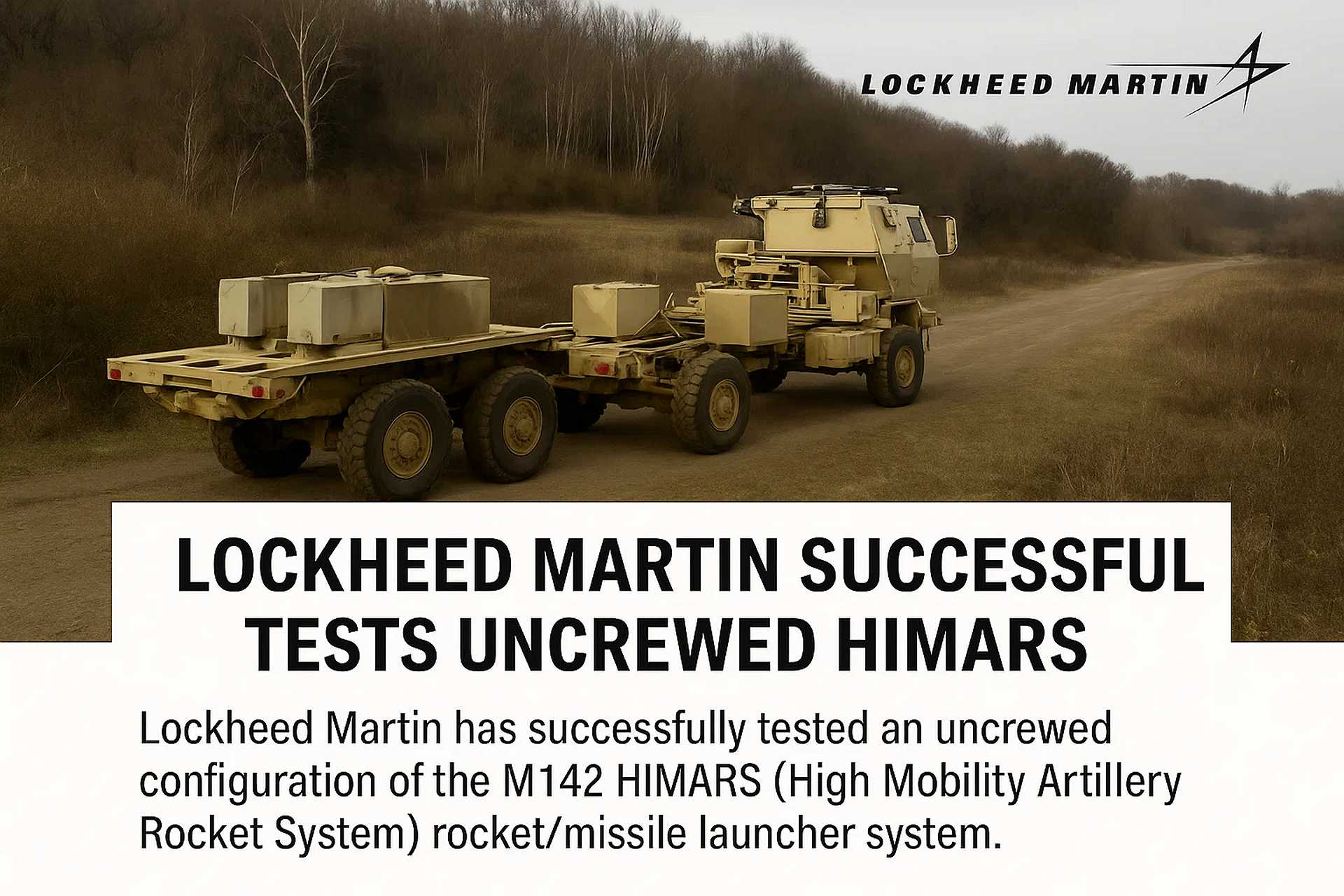
- Details
- Written by: Administrator
- Category: Defence & Security Industry Technology
- Hits: 6840
American Company Lockheed Martin revealed on April 28, 2025, through its official X account, that it has successfully tested an uncrewed configuration of the M142 HIMARS (High Mobility Artillery Rocket System) rocket/missile launcher system, employing passive sensor technologies to enable autonomous mission execution without active emissions. The demonstration validated the launcher’s ability to move, position, and engage targets without onboard personnel, marking a critical development in extending HIMARS capabilities for high-risk, high-intensity operational environments where rapid mobility, minimal electronic signature, and autonomous response are essential to mission success.
Follow Army Recognition on Google News at this link
Lockheed Martin demonstrates an autonomous M142 HIMARS launcher performing uncrewed navigation, targeting, and firing during the field test. (Picture source: Editing Army Recognition Group)
The test involved operating a M142 HIMARS (High Mobility Artillery Rocket System) rocket/missile launcher without an onboard crew, utilizing a novel suite of passive sensors. Unlike traditional active systems, which emit signals that adversaries can detect, these passive sensors allow the uncrewed HIMARS to perceive its environment without disclosing its location. This key feature enables stealthier operations, significantly increasing survivability on the modern battlefield. The system performed effectively during both daytime and nighttime conditions, demonstrating its all-weather, around-the-clock operational capability. The success of this test paves the way for a new generation of artillery platforms capable of remote, autonomous deployment while minimizing risk to human operators.
Lockheed Martin’s achievement is more than a technological feat—it represents a strategic shift toward greater autonomy in U.S. ground forces. The autonomous HIMARS could be deployed in high-threat environments where traditional crewed vehicles would face prohibitive risks. By integrating autonomous systems into the existing HIMARS fleet, the U.S. Army and Marine Corps would enhance force projection, reduce manpower exposure, and extend operational reach. It also aligns with broader Pentagon initiatives emphasizing manned-unmanned teaming and distributed lethality across multiple domains.
The M142 HIMARS is one of the U.S. Army’s most versatile and battle-proven artillery systems. Designed for rapid deployment and high mobility, HIMARS is a lightweight, wheeled launcher mounted on a 6x6 Family of Medium Tactical Vehicles (FMTV) chassis. It is operated by a small crew under normal conditions, typically three soldiers. Technically, the system can carry either a single pod of six Guided Multiple Launch Rocket System (GMLRS) rockets or one Army Tactical Missile System (ATACMS) missile. The GMLRS rockets offer precision strikes at ranges up to 70–80 kilometers, while the ATACMS missile can engage targets at distances up to 300 kilometers, depending on the variant. Future developments, like the Precision Strike Missile (PrSM), are expected to extend this range even further. Weighing around 16.2 tons, HIMARS can be transported by C-130 aircraft, enabling rapid deployment across global theaters. It is equipped with an advanced fire control system that allows quick target acquisition and fast shoot-and-scoot operations, critical for evading enemy counter-fire.
In operational terms, the main role of the M142 HIMARS is to provide highly mobile, precise, and responsive long-range fire support. Its missions include suppression and destruction of enemy artillery, air defenses, command posts, logistics hubs, and concentrations of enemy forces. HIMARS is crucial for conducting deep-strike missions against high-value targets well beyond the front lines, as well as offering immediate fire support to maneuvering ground forces. In recent conflicts, particularly in Ukraine, HIMARS proved decisive by enabling Ukrainian forces to hit Russian command centers and ammunition depots with pinpoint accuracy, disrupting logistics and command structures.
The development of unmanned ground combat systems is a rapidly growing priority for many armed forces worldwide. Autonomous and remotely operated vehicles are seen as critical to maintaining operational superiority in future conflicts, especially against near-peer adversaries equipped with sophisticated surveillance, electronic warfare, and precision-strike capabilities. In this context, unmanned systems provide tactical flexibility, resilience, and the ability to saturate battlefields with combat-effective assets without endangering valuable personnel. Whether through logistics support, surveillance, direct combat engagement, or artillery support, unmanned systems are increasingly regarded as force multipliers capable of shaping the outcomes of high-intensity conflicts.
For the HIMARS specifically, unmanned operation offers unique tactical and operational advantages. A fully autonomous HIMARS battery could be deployed into contested zones where GPS jamming, drone swarms, or long-range artillery would make traditional manned deployment too dangerous. It allows for greater dispersion of launch platforms, making them harder to target, while enabling rapid "shoot-and-scoot" tactics without the hesitation associated with crew safety. Autonomous HIMARS units can be pre-programmed or remotely commanded to move into position, fire precision strikes, and relocate before counter-battery fire can be effectively directed against them. This dramatically reduces enemy reaction time and enhances the survivability of U.S. and allied forces.
Moreover, unmanned HIMARS launchers could play a critical role in shaping future multi-domain operations (MDO). In a future battlefield where command and control systems must seamlessly connect air, land, sea, space, and cyber domains, autonomous artillery systems like the uncrewed HIMARS could operate as vital nodes within a dispersed, resilient, and rapidly adapting force structure. They could deliver massed fires in support of maneuver elements, contribute to anti-access/area denial (A2/AD) operations, or even support special forces and expeditionary units operating deep within enemy territory.
Lockheed Martin continues to position itself at the forefront of military innovation. The company emphasized that this uncrewed HIMARS system is a critical step toward fielding scalable, interoperable autonomous solutions that can be rapidly deployed across various operational theaters. Future developments are expected to focus on increasing the system’s decision-making capabilities, adaptive mission planning, and integration with network-centric warfare architectures, ensuring that autonomous HIMARS units can operate cohesively within larger joint force structures.
The success of this latest test with autonomous M142 HIMARS demonstrates that the future battlefield will likely be dominated by the interplay of manned and unmanned systems, where speed, stealth, and precision will define tactical advantage. With the advent of an autonomous variant, the M142 HIMARS' legacy as a revolutionary force-multiplier in modern artillery warfare appears set to continue well into the next generation of conflict.
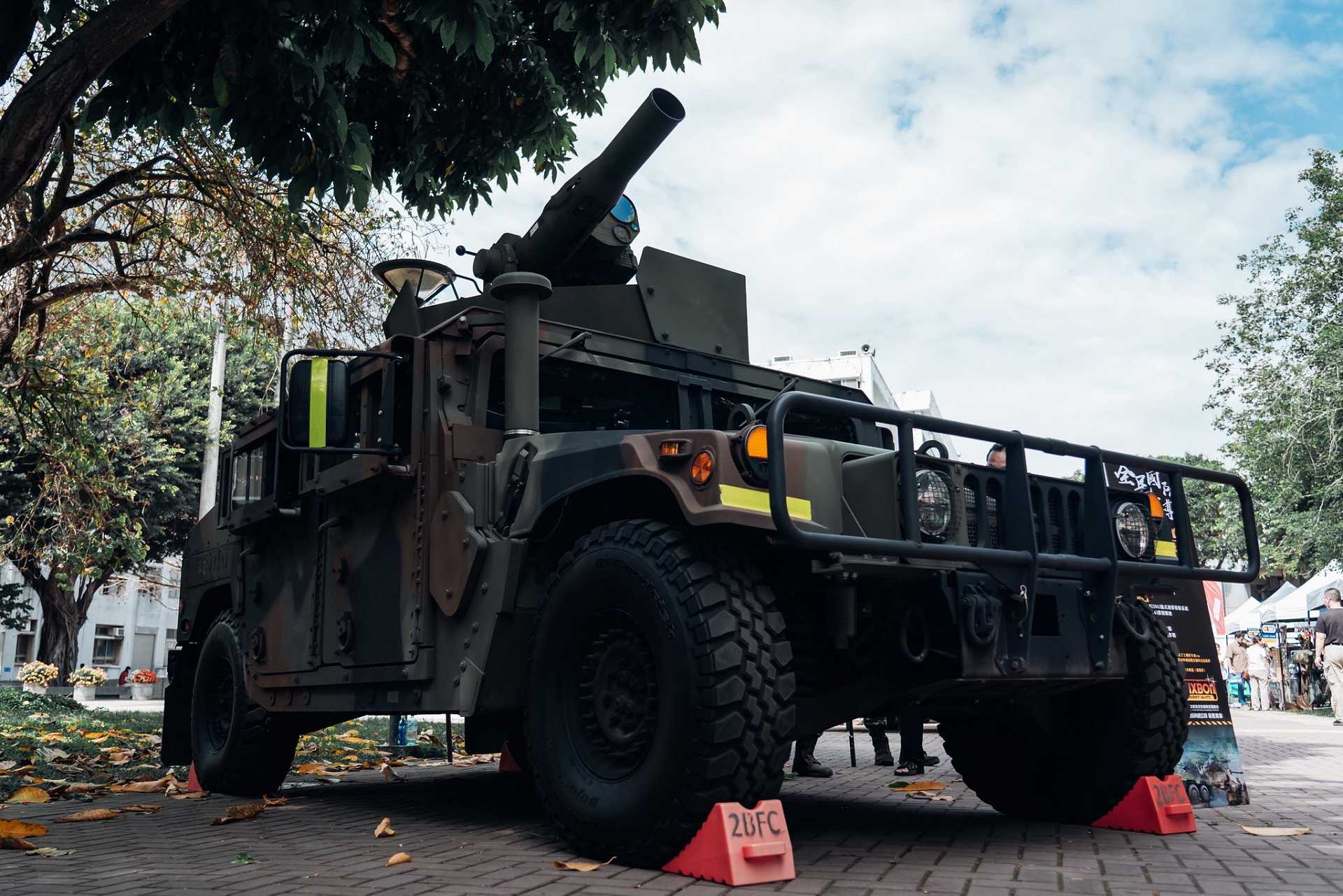
- Details
- Written by: Administrator
- Category: Defence & Security Industry Technology
- Hits: 9621
Taiwan has unveiled a significantly upgraded version of the U.S.-origin M1167 anti-tank Humvee, reinforcing its land forces' mobility and firepower against armored threats. The upgraded vehicle, recently showcased at Feng Chia University, reflects Taiwan's commitment to modernizing its military capabilities amid growing regional tensions.
Follow Army Recognition on Google News at this link
Taiwanese Army's upgraded M1167 anti-tank Humvee, featuring reinforced armor protection, bulletproof glass, and a new-generation TOW missile launcher with advanced day-and-night targeting systems, enhancing mobility and anti-armor capabilities. (Picture source: Taiwanese Army)
The U.S. M1167 is a specialized variant of the HMMWV (High Mobility Multipurpose Wheeled Vehicle) series, originally designed by AM General for the U.S. Army. Specifically tailored for anti-armor roles, the M1167 is typically equipped with a TOW (Tube-launched, Optically tracked, Wire-guided) missile launcher system. The TOW is a highly effective anti-tank guided missile that many armies have widely adopted for its long-range precision and its ability to defeat modern armored vehicles, including tanks fitted with explosive reactive armor. In its standard form, the M1167 carries the TOW missile system mounted on the roof, allowing for rapid targeting and engagement of enemy armor from a distance while utilizing the Humvee’s mobility to reposition after firing.
Taiwan's upgraded M1167 has been outfitted with substantial armor enhancements to improve the vehicle's battlefield survivability. The modifications include the integration of external bulletproof steel plates, significantly enhancing resistance against small-arms fire and shrapnel. The windows have been reinforced with bulletproof glass, providing increased safety for both gunners and passengers. This level of protection allows the crew to maintain a high level of alertness and readiness even while moving, enhancing their ability to respond swiftly to enemy contact.
Another key defensive improvement is the vehicle's fully armored tire system, which can effectively resist small-caliber ammunition fire. This feature ensures that the vehicle retains its mobility even when operating under hostile conditions, a vital capability for executing tactical maneuvers and evasive actions during combat scenarios. Inside the vehicle, a gunner protection belt system has been installed, offering 360-degree rotational support for the gunner. Beyond its functional advantage in allowing the shooter to engage threats from any direction, this system also provides waist support and the ability for short rests during long missions, thereby reducing crew fatigue in extended operations.
In addition to these armor enhancements, the vehicle now features a newly developed towed anti-tank missile launcher system, replacing or upgrading the standard TOW configuration. This modern launcher is equipped with advanced day-and-night observation capabilities and utilizes a high-precision sensor chip. These features dramatically enhance the target acquisition process and engagement accuracy, allowing the crew to operate effectively in a wide range of environmental and lighting conditions. The improvements to the missile system significantly bolster Taiwan’s anti-armor warfare capabilities, enabling the National Army to counter increasingly advanced enemy armored threats effectively.
The modernization of the M1167 underscores Taiwan’s strategic focus on upgrading existing U.S.-supplied military platforms with indigenous technologies tailored to its specific defense needs. By enhancing both survivability and lethality, Taiwan ensures that its forces remain agile, responsive, and capable of meeting modern battlefield challenges. This upgrade is part of a broader, ongoing effort to improve the island’s defense self-sufficiency and operational readiness amid the increasing complexity of regional security dynamics.
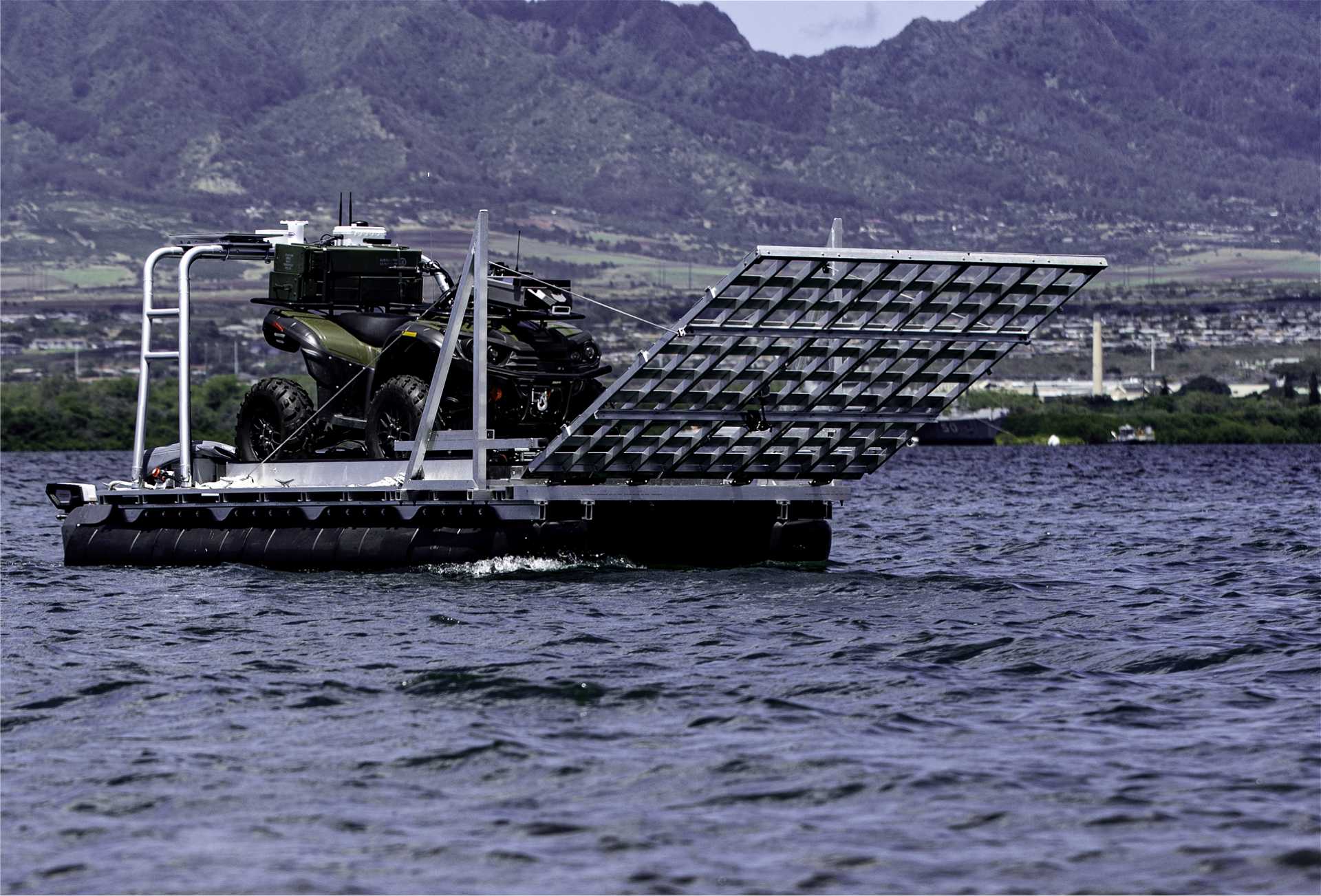
- Details
- Written by: Administrator
- Category: Defence & Security Industry Technology
- Hits: 19284
The U.S. Army has successfully tested an autonomous ship-to-shore resupply system as part of its Project Convergence Capstone 5 (PC-C5), showcasing how unmanned systems can reshape future military logistics. Conducted in April 2025, the test involved an Unmanned Surface Vessel (USV) autonomously transporting and offloading a supply-loaded Unmanned Ground Vehicle (UGV) onshore, demonstrating a fully automated operation from sea to land.
Follow Army Recognition on Google News at this link
An unmanned surface vessel (USV) navigates Pearl Harbor, Hawaii, during a Project Convergence Capstone 5 (PC-C5) rehearsal in April 2025. As part of the experiment, the USV successfully executed an autonomous ship-to-shore resupply mission, including the automated offloading of a supply-laden unmanned ground vehicle (UGV). (Picture source: U.S. DoD)
This capability is central to the U.S. Army’s broader modernization efforts, aimed at adapting to the evolving requirements of high-intensity, multi-domain warfare. The USVs involved in the demonstration featured advanced autonomy kits with GPS-based navigation, real-time sensor integration, obstacle avoidance, and secure communications. These features allow the vessels to operate independently, making dynamic decisions based on environmental data and mission needs without human control. Once ashore, the USV autonomously offloaded a UGV, which was also equipped to navigate and deliver supplies on land without human intervention.
The combination of USV (Unmanned Surface Vessel) and UGV (Unmanned Ground Vehicle) technologies provides a modular and scalable logistics platform that could play a vital role in supporting distributed operations in future combat scenarios. These autonomous systems enable the rapid delivery of ammunition, medical supplies, food, and fuel directly to forward positions in contested or denied environments—reducing the risk to personnel and minimizing the reliance on traditional manned convoys or rotary-wing aircraft, which are more vulnerable to enemy fire and surveillance.
Colonel William “Will” C. Arnold, Chief of Transportation at the Combined Arms Support Command, highlighted the importance of the test, noting that the Army is learning how to command and control these systems in realistic, joint-operational environments. This experimentation supports the broader transformation of logistics doctrine and battlefield support, in alignment with the Army’s shift toward more agile, technology-driven combat operations.
Project Convergence Capstone 5, hosted by the U.S. Army, is a culmination of joint and multinational experimentation designed to integrate personnel, technologies, and platforms across domains. It brings together the U.S. Army, Navy, Air Force, Marine Corps, Space Force, and allied nations in a coordinated effort to validate and refine new concepts of warfare. The 2025 iteration of PC-C5 focuses on data-driven decision-making, enhanced maneuver capabilities, and integrated operations across air, land, sea, space, and cyber domains.
The autonomous resupply test conducted at Pearl Harbor underscores the growing importance of robotics and autonomy in logistics operations. As future conflict scenarios demand speed, resilience, and the ability to operate in dispersed environments, such systems offer a practical and effective solution for sustaining forces on the battlefield. Particularly in regions like the Indo-Pacific, where operations may be spread across vast island chains, autonomous ship-to-shore logistics could become essential for maintaining supply lines under hostile conditions.
The successful test validates key technologies and reflects a strategic shift in how the U.S. Army plans to sustain future combat forces. By leveraging automation and unmanned platforms, the Army is taking critical steps toward reducing the logistical footprint of its operations, increasing survivability, and ensuring that future warfighters have the support they need—anytime, anywhere.
Read more: Exclusive: U.S. Army Conducts First Fully Autonomous Ship-to-Shore Resupply Operation
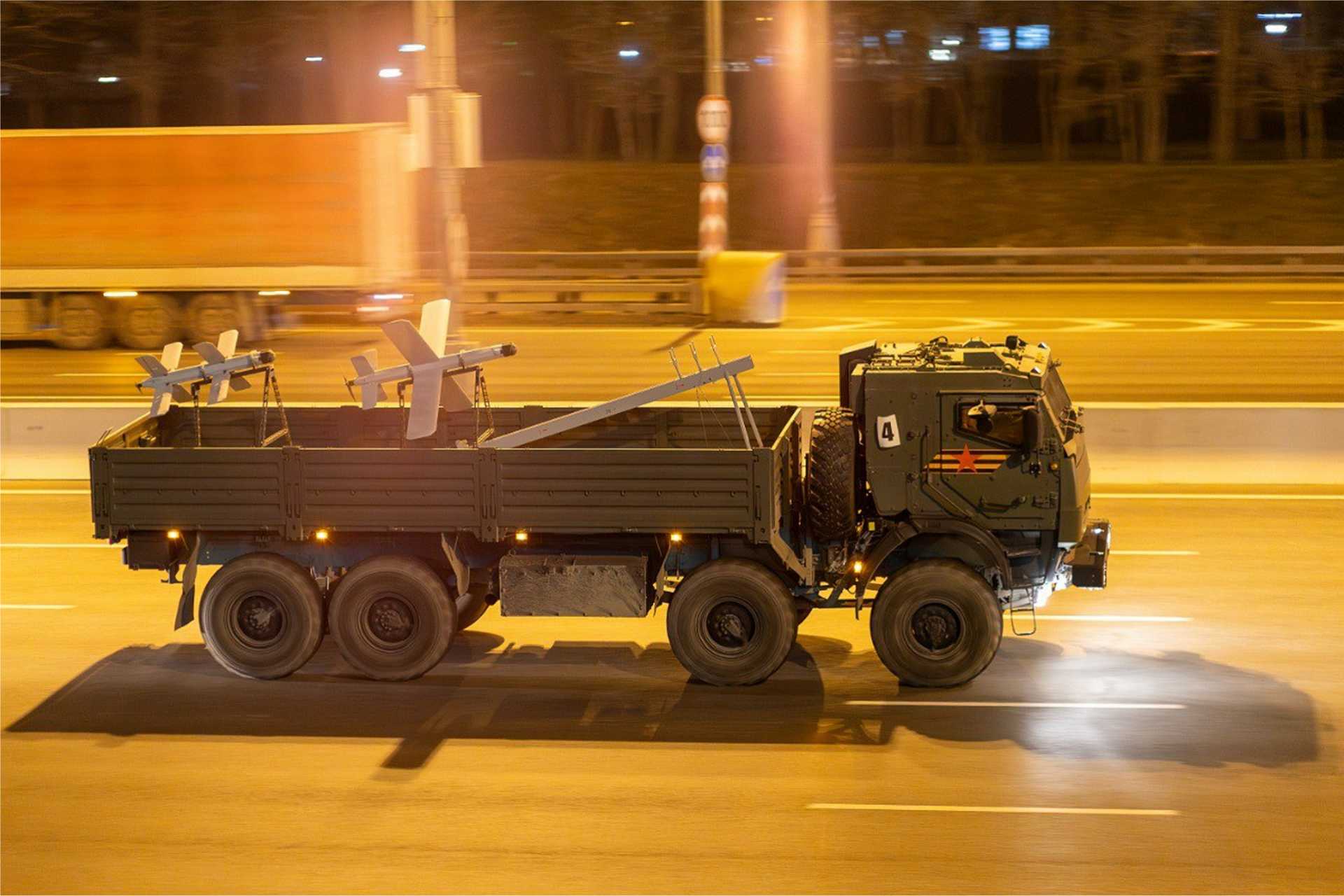
- Details
- Written by: Administrator
- Category: Defence & Security Industry Technology
- Hits: 7925
On April 20, 2025, a newly surfaced image from a night-time rehearsal for the upcoming 2025 Victory Day military parade in Moscow has revealed the presence of a previously unseen Russian army mobile launcher system for Lancet loitering munitions. Captured during preparations for the annual May 9, 2025, parade on Red Square, the picture showcases a KamAZ 8x8 military truck equipped with a custom launcher module—marking a significant evolution in the Russian Army’s approach to drone warfare.
Follow Army Recognition on Google News at this link
New Russian mobile launcher for Lancet loitering munitions mounted on a KamAZ 8x8 truck spotted during a night-time rehearsal for the 2025 Victory Day military parade on Red Square, Moscow. (Picture source: AGTF.ru)
According to the initial analysis conducted by the Army Recognition editorial team, the KamAZ heavy-duty chassis carries two Lancet loitering munitions positioned alongside a single rail launcher station integrated into the rear of the truck. This configuration clearly emphasizes rapid deployment and high mobility, providing Russian forces with a highly maneuverable platform capable of conducting launch-and-withdraw missions with minimal setup time.
The Lancet drone, developed by ZALA Aero (a subsidiary of the Kalashnikov Concern), has become one of the most prominent loitering munitions in the Russian inventory. Designed for precision strikes against enemy vehicles, artillery systems, and static defenses, the drone has seen extensive deployment in the ongoing war in Ukraine. Its relatively low cost, ease of deployment, and modular design make it a valuable tool in both conventional and asymmetric warfare. The Lancet is known for its endurance of up to 60 minutes, a strike range of approximately 40 kilometers, and a payload capable of disabling or destroying a range of military targets including artillery systems, radar units, and lightly armored vehicles. Equipped with electro-optical guidance systems and real-time video transmission, the drone enables operators to identify, track, and engage targets with a high degree of accuracy.
The role of the Lancet in the Ukraine conflict has been particularly noteworthy. Russian forces have employed the system to conduct precision strikes on high-value assets, such as Western-supplied howitzers including the M777 and Caesar systems, as well as Ukrainian radar installations and air defense systems. Its use in Ukraine demonstrated the strategic advantages of loitering munitions for disrupting enemy logistics and neutralizing static defenses without risking manned platforms. Numerous documented instances from the battlefield have shown Lancet drones successfully destroying targets with precision, often operating in tandem with reconnaissance UAVs like the Orlan-10 for real-time target acquisition and post-strike damage assessment. These tactics have allowed Russian forces to reduce their reliance on traditional artillery and airstrikes in certain scenarios, instead opting for stealthy, targeted drone attacks.
The unveiling of a mobile launcher variant based on the KamAZ 8x8 platform suggests a deliberate move by the Russian military to improve the survivability and flexibility of its drone launch systems. By placing the launch capability on a high-mobility platform, Russian forces can now deploy Lancet drones more rapidly and from concealed or constantly changing positions, reducing the risk of counterstrikes. This development directly reflects operational lessons drawn from Ukraine, where stationary drone launch sites were often vulnerable to enemy retaliation. The KamAZ 8x8 truck offers high off-road mobility and endurance, making it well-suited for deployment across a variety of terrains, from open fields to urban or mountainous environments.
The appearance of this new mobile Lancet loitering munition launcher system during a high-profile national event such as the Russian Victory Day military parade demonstrates technological progress and a statement of intent. It reinforces Russia’s commitment to integrating drone warfare into its broader military doctrine, particularly through the enhancement of tactical flexibility, speed, and adaptability on the modern battlefield. As the 2025 Victory Day parade approaches, additional advanced systems are expected to be unveiled, further showcasing the modernization efforts of the Russian Armed Forces.

- Details
- Written by: Administrator
- Category: Defence & Security Industry Technology
- Hits: 20889
The upcoming deployment of the U.S. Army’s Long-Range Hypersonic Weapon (LRHW), officially known as "Dark Eagle," represents a major turning point in the strategic landscape of modern warfare. Scheduled to enter service by the end of fiscal year 2025, the Dark Eagle system marks the United States' formal entry into the hypersonic missile race, a field already dominated by China and Russia. This move carries profound implications not only for the U.S. military’s capabilities but also for global strategic balance and deterrence.
Follow Army Recognition on Google News at this link
U.S. soldiers from Bravo Battery, 5th Battalion, 3rd Field Artillery Regiment, 17th Field Artillery Brigade, conduct ground maneuvers, ammunition transfers, and establish firing positions at Joint Base Lewis-McChord using the U.S. Army’s first prototype Long Range Hypersonic Weapon system. (Picture source: U.S. DoD)
The Long-Range Hypersonic Weapon (LRHW), nicknamed Dark Eagle, is the most advanced hypersonic weapon system developed by the U.S. Army. Designed as a land-based, truck-launched platform, it combines a two-stage solid-fueled booster system with the Common Hypersonic Glide Body (C-HGB), enabling the missile to travel at speeds exceeding Mach 5 and strike targets over 1,725 miles (2,775 km) away. What distinguishes hypersonic glide vehicles like the C-HGB is their ability to maneuver at high speeds during flight, making them exceptionally difficult to detect and intercept by existing air defense systems. This capability offers the U.S. a significant advantage in precision strike scenarios, especially in contested regions such as the Indo-Pacific or Eastern Europe.
The Dark Eagle system is being fielded with the 1st Multi-Domain Task Force of the U.S. Army, a unit tailored for operations across cyber, space, air, land, and sea domains. This strategic deployment aligns with the Pentagon's broader push to modernize its long-range fires capabilities and restore military parity with near-peer adversaries. The Army confirmed that the first full battery of Dark Eagle missiles will be operational in 2025, following the successful completion of an end-to-end flight test in December 2024 at Cape Canaveral. This test demonstrated the system’s technical readiness and cleared the path for field deployment.
On the global stage, the deployment of Dark Eagle is a calculated response to the rapidly growing hypersonic arsenals of China and Russia. Both nations have already fielded operational hypersonic weapons and integrated them into their strategic forces. China’s DF-17 missile system, first unveiled in 2019, features a hypersonic glide vehicle designed to penetrate advanced air defenses and threaten high-value targets such as aircraft carriers. It has a reported range of 1,500–2,000 kilometers and is now an integral part of the PLA (China) Rocket Force. Meanwhile, the PLA Navy has begun fielding the YJ-21, a ship-launched hypersonic anti-ship missile capable of striking at extended ranges.
Russia, similarly, has aggressively pushed forward with its hypersonic development. The Avangard hypersonic glide vehicle, which can be mounted on intercontinental ballistic missiles (ICBMs), is capable of reaching speeds of up to Mach 20 while performing evasive maneuvers. The Kinzhal, an air-launched ballistic missile, has seen use in real-world combat conditions, showcasing its operational maturity. These systems have significantly altered Russia’s strategic deterrence posture and added complexity to NATO’s defense planning.
By comparison, the United States has taken a more measured and technically cautious approach to hypersonic development. Years of delays and budgetary constraints slowed initial progress. However, with Dark Eagle nearing deployment and additional systems under development by the U.S. Navy and Air Force, the American hypersonic capability is beginning to take shape. Nevertheless, challenges remain. The Pentagon has acknowledged gaps in testing data, particularly concerning the survivability and combat effectiveness of hypersonic systems in real-world scenarios. There are also concerns about launch platform vulnerabilities and integration with joint command-and-control structures.
Despite these hurdles, the strategic significance of Dark Eagle cannot be overstated. Its deployment sends a strong signal to both allies and adversaries: the United States is now a credible actor in the hypersonic domain. In terms of deterrence, Dark Eagle provides the U.S. Army with a tool to strike time-sensitive, high-value targets deep inside denied areas, thereby neutralizing threats before they can be used. It also opens new possibilities for multi-domain operations, where land-based missile systems can support naval and air missions.
The U.S. Army's deployment of Dark Eagle in 2025 is more than a technological milestone—it's a strategic inflection point. It redefines the U.S. Army’s role in long-range precision fires and alters the calculus of power in an increasingly multipolar and contested world. As China and Russia continue to refine and expand their hypersonic arsenals, the arrival of Dark Eagle ensures that the U.S. is no longer a bystander in this critical race, but a formidable competitor with the capability to shape the battlefield of the future.

- Details
- Written by: Administrator
- Category: Defence & Security Industry Technology
- Hits: 10953
During a rehearsal for the 2025 Victory Day Parade in Alabino, Moscow Region, the Russian Army showcased a new mobile launcher system for its Geran-2 loitering munitions. This marks the first public appearance of such a system, underscoring Russia's growing emphasis on integrating unmanned aerial systems into frontline operations. This launcher's deployment signals technological adaptation and a strategic shift in modern warfare tactics driven by lessons learned from ongoing conflicts, particularly the war in Ukraine.
Follow Army Recognition on Google News at this link
The newly unveiled Russian mobile Geran-2 loitering munition launcher, mounted on a KamAZ-6350 8x8 truck, spotted during the Victory Day 2025 parade rehearsal in Alabino. This marks the first public appearance of the front-line drone strike platform designed for rapid deployment and increased battlefield mobility. (Picture source: Russian Social Network VK)
The Geran-2 loitering munition, believed to be a Russian-produced version of the Iranian Shahed-136, is a delta-wing drone that has gained prominence for its role in recent combat zones. Though initially manufactured in Iran, Russia has reportedly begun domestic production under the Geran-2 designation, potentially with modifications tailored to Russian operational requirements. This UAV is characterized by its relatively low cost, simplicity, and long-range capabilities. It measures approximately 3.5 meters in length with a wingspan of 2.5 meters and can carry a warhead weighing between 50 to 90 kilograms. Its maximum speed hovers around 180 km/h, with an operational range of up to 2,000 kilometers, enabling it to loiter over a designated area before targeting enemy assets. Recent versions have also been observed carrying thermobaric warheads, increasing their lethality against fortified positions and infrastructure.
The newly unveiled launcher is based on the robust KamAZ-6350 8x8 military truck, a platform well-regarded for its mobility and versatility. This vehicle has been modified to support loitering munition operations by integrating an armored cabin that protects the crew against small arms fire and shrapnel, making it suitable for deployment closer to the front lines. At the rear of the truck, a single rail launcher is installed for launching Geran-2 drones, with another munition mounted directly on the back of the system, ready for rapid redeployment.
The integration of Geran-2 drones with such mobile platforms presents several tactical advantages on the modern battlefield. The ability to swiftly reposition the launcher system complicates enemy targeting efforts and enhances survivability. Furthermore, proximity to the frontline reduces the time required for a drone to reach its target, increasing operational efficiency. This mobility, coupled with the drone's long range and precision strike capability, allows Russian forces to conduct dynamic and persistent surveillance-strike missions with relatively low logistical demands.
This development also reflects a broader trend in modern warfare—particularly highlighted by the Russian-Ukrainian conflict—where drones have emerged as indispensable tools for both strategic and tactical operations. The war has witnessed an exponential increase in the use of UAVs by both sides, ranging from reconnaissance and artillery correction to direct strike missions. Loitering munitions like the Geran-2 have played a significant role in targeting enemy air defenses, command posts, and logistical infrastructure, reshaping how militaries approach battlefield dominance. The widespread use of drones in Ukraine has demonstrated the need for mobile, flexible, and cost-effective systems capable of delivering rapid precision strikes without risking manned aircraft, further validating Russia's investment in platforms like the Geran-2 launcher.
As Russia continues to adapt and refine its use of unmanned systems, the unveiling of this mobile launcher marks a significant step in its evolution of drone warfare, blending mobility with precision lethality in response to the shifting demands of contemporary conflict.
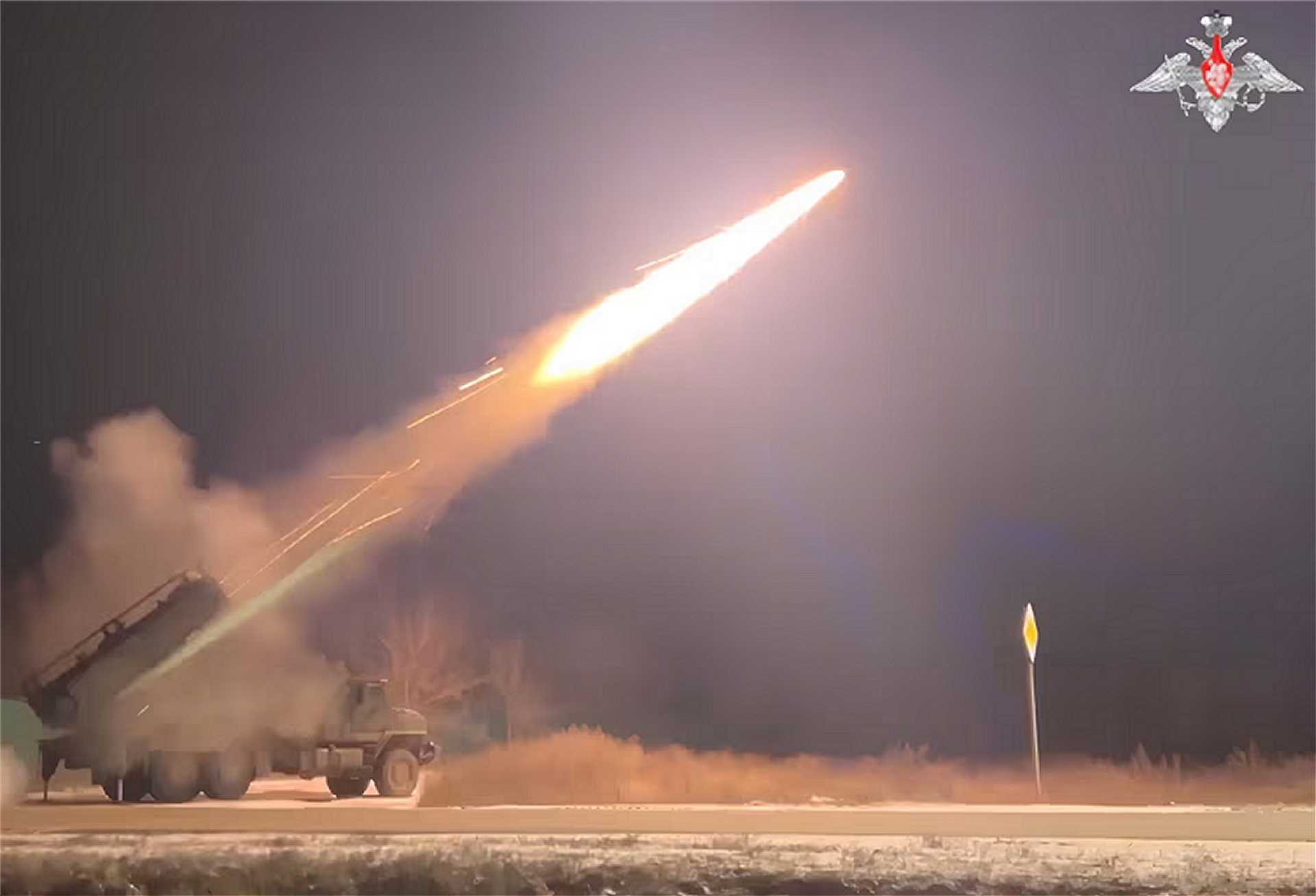
- Details
- Written by: Administrator
- Category: Defence & Security Industry Technology
- Hits: 16723
According to the latest information published by the Russian Ministry of Defense on April 17, 2025, Russia continues to enhance its artillery capabilities through the introduction of a new type of ammunition for its TOS-2 "Tosochka" heavy flamethrower system. The system is now being employed with deeply improved 220-mm TBS-3M thermobaric rockets, which have extended the system’s maximum firing range to 15 kilometers, up from the previous 12 kilometers. This marks a significant improvement in the system’s combat performance, offering increased operational depth and tactical safety for artillery crews without requiring modifications to the launcher itself.
Follow Army Recognition on Google News at this link
Russian TOS-2 Tosochka heavy flamethrower system fires a salvo of thermobaric rockets during combat operations in Ukraine. (Picture source: Russian MoD)
The extended range of the TBS-3M rockets has been achieved through technical refinements that include the use of a higher-impulse fuel charge and a slightly lighter thermobaric warhead. These enhancements allow the rocket to travel farther while retaining its destructive effectiveness. Thermobaric munitions function by dispersing a fuel-air aerosol before detonation, producing an intense explosion characterized by extreme heat and a powerful pressure wave. The upgraded TBS-3M rockets preserve the destructive characteristics of this weapon class, allowing for effective neutralization of enemy positions from safer standoff ranges.
Thermobaric weapons are known for their immense lethality in confined spaces such as bunkers, trenches, and urban environments. Upon detonation, the resulting blast consumes oxygen in the immediate area, creating a vacuum effect that can cause severe internal injuries even to those in protective cover. The heat can exceed 2,000 degrees Celsius, incinerating everything within the kill radius. Due to these effects, thermobaric munitions are often employed for area denial, bunker busting, and in combat scenarios where entrenched infantry must be neutralized swiftly and decisively.
The TOS-2 system itself remains a highly advanced platform, featuring a fully integrated automatic fire control system. It includes a thermal imaging sight, a ballistic computer, and a laser rangefinder, enabling precise target engagement within the optical horizon under a variety of environmental conditions. These onboard systems provide the crew with a modernized and responsive interface that improves battlefield effectiveness and decision-making speed.
For the first time, the Russian Ministry of Defense has released footage showcasing the interior of the TOS-2, revealing its digital command suite and ergonomically arranged operator stations. This internal modernization supports rapid response times and enhances operational efficiency during combat deployments.
One of the TOS-2’s most notable attributes is its ability to deliver devastating firepower over a broad area. Each vehicle is equipped with 18 launch tubes for 220-mm rockets, and a full salvo can saturate an area of approximately six hectares. The thermobaric warheads can neutralize all personnel and light fortifications within the blast zone, making it a formidable tool for suppression and psychological impact on the battlefield.
The TOS-2 is mounted on a Ural-63706-0120 6x6 wheeled chassis, offering improved mobility over tracked predecessors like the TOS-1A. This allows the system to maneuver more freely across various terrains and eliminates the need for external transport vehicles, thus enhancing its strategic and tactical deployment capabilities.
Notably, the TOS-2 saw its first confirmed combat use during the ongoing Russia–Ukraine conflict, where it was deployed in support of Russian ground offensives. Reports from the battlefield indicate that the system was used to target fortified Ukrainian positions and urban strongholds, demonstrating the platform’s ability to deliver rapid, large-scale destruction. This marked a significant milestone in the operational history of the TOS-2, transitioning it from a display piece at military parades and exercises to an active component of Russia’s modern artillery arsenal.
With the integration of the new TBS-3M thermobaric rockets, the TOS-2 "Tosochka" emerges as an even more lethal and versatile asset in the Russian military’s inventory. The increased range and preserved destructive power significantly bolster its role in contemporary warfare, particularly in scenarios requiring rapid, deep-strike capability, and overwhelming fire saturation against well-defended positions.

- Details
- Written by: Halna du Fretay
- Category: Defence & Security Industry Technology
- Hits: 7473
On March 25, 2025, the North Atlantic Treaty Organization took a new step in the modernization of its military capabilities by formalizing the acquisition of the Maven Smart System NATO (MSS NATO), an artificial intelligence-based warfare platform developed by the U.S. company Palantir Technologies Inc. The agreement, concluded between the NATO Communications and Information Agency (NCIA) and Palantir, introduces a strategic technological asset aimed at reinforcing Allied Command Operations (ACO) in an evolving global security environment.
MSS NATO stands out through its ability to automate intelligence fusion by cross-analyzing data from multiple sources, including sensors, satellites, ISR systems, and human reports (Picture source: NATO )
Resulting from close collaboration between NCIA, the Supreme Headquarters Allied Powers Europe (SHAPE), and Palantir, the MSS NATO system is designed to provide Alliance forces with a next-generation digital infrastructure adapted to the requirements of modern military operations. Introduced as a unified command and control solution, the system is built on the integration of advanced artificial intelligence technologies, including large language models (LLMs), generative AI, and machine learning. These capabilities significantly enhance intelligence fusion, situational awareness, operational planning, and the speed of decision-making processes.
According to Ludwig Decamps, General Manager of the NCIA, the acquisition demonstrates the Alliance's commitment to equipping its warfighters with technologies tailored to the realities of today’s battlefield. He emphasized that MSS NATO serves as a critical enabler for increasing the efficiency and responsiveness of Allied forces. The system is designed for secure and interoperable deployment, ensuring smooth integration into NATO’s existing operational structures and contributing to a more cohesive digital environment across the Alliance.
From an industrial perspective, Palantir highlights the strategic significance of this transatlantic collaboration. Shon Manasco, Senior Counselor at Palantir, stated that NATO’s adoption of MSS NATO reflects its intent to maintain technological superiority through the integration of disruptive solutions. He added that the system’s deployment at SHAPE signals a shared commitment to long-term strategic innovation within NATO’s institutional framework.
General Markus Laubenthal, Chief of Staff at SHAPE, affirmed this trajectory. He noted that ACO is positioning itself at the forefront of technological adoption with the objective of making NATO more agile, adaptable, and responsive to emerging threats. By enabling the operational use of complex data, MSS NATO supports this adaptive capability and provides a concrete advantage in the conduct of operations. He further emphasized that innovation has become inseparable from operational capability and that this platform directly addresses that operational imperative.
One of the most noteworthy aspects of the acquisition lies in the speed of the procurement process. In just six months, NATO defined its requirements, evaluated proposals, and finalized the agreement with Palantir. This accelerated timeline makes it one of the fastest procurements in NATO’s history and reflects an institutional push toward digital transformation, as well as a heightened awareness of the need to integrate disruptive technologies amid growing hybrid threats and intensifying competition for information dominance.
The system is expected to become operational within 30 days of the contract signing. Beyond its immediate deployment, MSS NATO will serve as a foundation for the integration of other emerging technologies. Its technical framework is designed to host additional capabilities such as advanced modeling, complex scenario simulation, and future AI models being developed across the Alliance. This modular architecture lays the groundwork for a continuous innovation ecosystem anchored in cooperation between North American and European technology bases.
MSS NATO stands out through its ability to automate intelligence fusion by cross-analyzing data from multiple sources, including sensors, satellites, ISR systems, and human reports. This automation produces a coherent and continuously updated tactical picture, strengthening commanders’ capacity to anticipate battlefield developments. Leveraging predictive algorithms, the system can identify adversarial behavior patterns, detect potential threats, and designate priority targets with improved precision. It also supports operational planning by offering analysis and simulation tools that allow rapid testing of various scenarios and adjustments based on evolving battlefield dynamics. Unlike more rigid systems, MSS NATO provides a flexible platform capable of integrating new AI modules, including generative models and LLMs, while maintaining high cybersecurity and resilience standards against digital threats. As an interoperable system, it promotes effective coordination across NATO’s military components, overcoming technological fragmentation among national systems. Moreover, its open architecture enables strategic scalability, making it a long-term infrastructure capable of incorporating future technologies in areas such as electronic warfare, cognitive warfare, and behavioral analysis.
In conclusion, NATO’s acquisition of the Maven Smart System from Palantir Technologies represents more than a technological upgrade. It marks a fundamental transformation in how the Alliance perceives, processes, and acts upon digital information in military contexts. By integrating artificial intelligence into its operational doctrine, NATO is advancing toward a model of decision superiority built on the secure and intelligent exploitation of data. MSS NATO stands as a central pillar of this strategy, reflecting a shared commitment by member states to remain at the forefront of technological evolution in an increasingly complex and unstable global security environment.
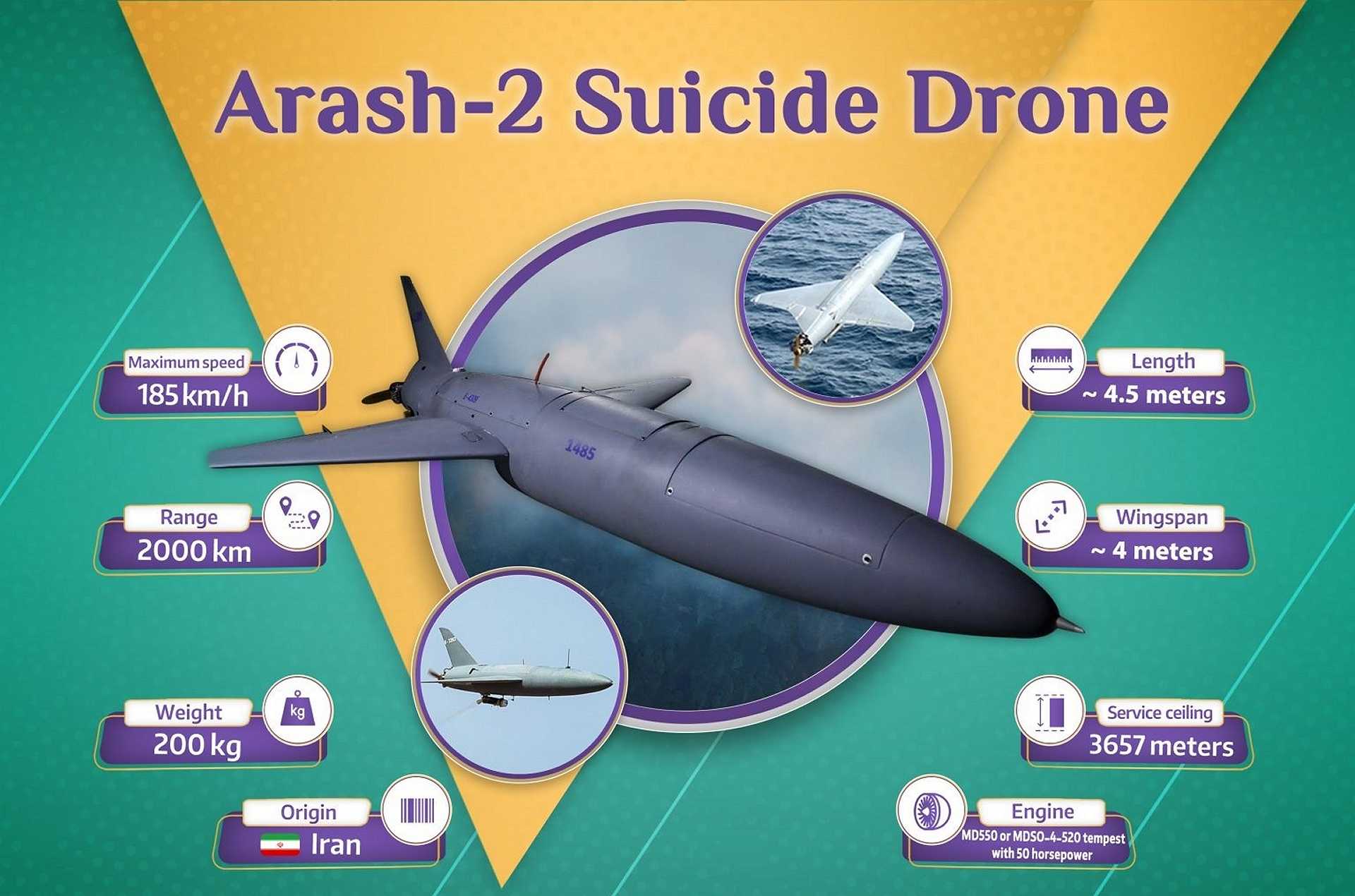
- Details
- Written by: Administrator
- Category: Defence & Security Industry Technology
- Hits: 9421
Iran has developed a new category of suicide drone with the introduction of the Arash-2, a long-range loitering munition capable of reaching targets up to 2,000 kilometers away. This drone marks a significant milestone in Iran's growing unmanned aerial capabilities, positioning the country among the global leaders in long-range UAV technology. Designed and mass-produced by Iran’s defense industry, the Arash-2 is regarded as one of the most advanced suicide drones in the world, offering high precision, radar evasion, and a powerful destructive capacity.
Follow Army Recognition on Google News at this link
The Iranian Arash-2 is a long-range suicide drone capable of striking targets up to 2,000 km, designed for high-precision attacks and radar evasion with significant destructive capability. (Picture source: Iran Media Agency)
Brigadier General Kioumars Heidari, commander of the Iranian Army Ground Forces, described the Arash-2 as a specialized weapon designed to perform precision strikes and suppress enemy air defense systems. Unlike earlier Iranian drones, the Arash-2 is engineered for both offensive kamikaze missions and electronic warfare roles. First introduced during military drills in 2020, the Arash-2 has been featured prominently in Iran’s armed forces exercises and strategic demonstrations, showcasing its long-range capabilities and operational readiness.
Technically, the Arash-2 is an upgraded version of the Arash-1 and shares visual similarities with the Kian-2 drone. However, the Arash-2 is equipped with a piston engine—specifically the MD550 or MDSO-4-520 Tempest, delivering 50 horsepower—which enables it to achieve speeds of up to 185 km/h. The drone has a length of 4.5 meters and a wingspan of 4 meters. It operates at altitudes up to 12,000 feet and is launched from truck-mounted box systems or with jet-assisted take-off (JATO) launchers, allowing flexible and rapid deployment in various terrains.
What sets the Arash-2 apart is its strategic targeting capability. General Heidari explicitly stated that the drone was developed with the goal of striking key Israeli cities, including Tel Aviv and Haifa, in the event of military confrontation. The drone is equipped with sophisticated guidance systems, capable of retrieving target information multiple times before executing its final strike. These features significantly enhance its precision and lethality, making it a central component in Iran's strategy of deterrence and asymmetric warfare.
The emergence of the Arash-2 has also raised serious concerns on the international stage. Western intelligence sources have reported that Iran may be expanding its drone cooperation with Russia, with speculation that Russian forces are being trained to operate the Arash-2 in Ukraine. If confirmed, this would extend Iran’s drone influence far beyond the Middle East and into global theaters of conflict, further destabilizing already tense geopolitical environments.
Moreover, the drone’s 2,000-kilometer range places a wide array of regional and foreign military installations within striking distance. U.S. military bases throughout the Gulf region, including in Qatar, Bahrain, and the UAE, as well as naval assets in the Persian Gulf and Arabian Sea, are all potential targets. The Arash-2's capacity for high-precision, radar-evading strikes introduces new threats to U.S. and allied forces, altering regional defense calculations and potentially complicating deterrence strategies.
Iran’s continued development of indigenous drone technologies like the Arash-2 reflects a broader ambition to achieve strategic autonomy in the face of long-standing sanctions and arms embargoes. By investing in advanced unmanned systems, Tehran seeks to level the playing field against technologically superior adversaries through cost-effective, asymmetrical tools of warfare.
The Arash-2 is not just another addition to Iran’s UAV arsenal—it is a transformative system that could redefine aerial strike doctrines in the region. Its emergence signals a shift in the strategic balance of power in West Asia and presents a growing challenge to the defensive posture of both regional adversaries and global military powers.
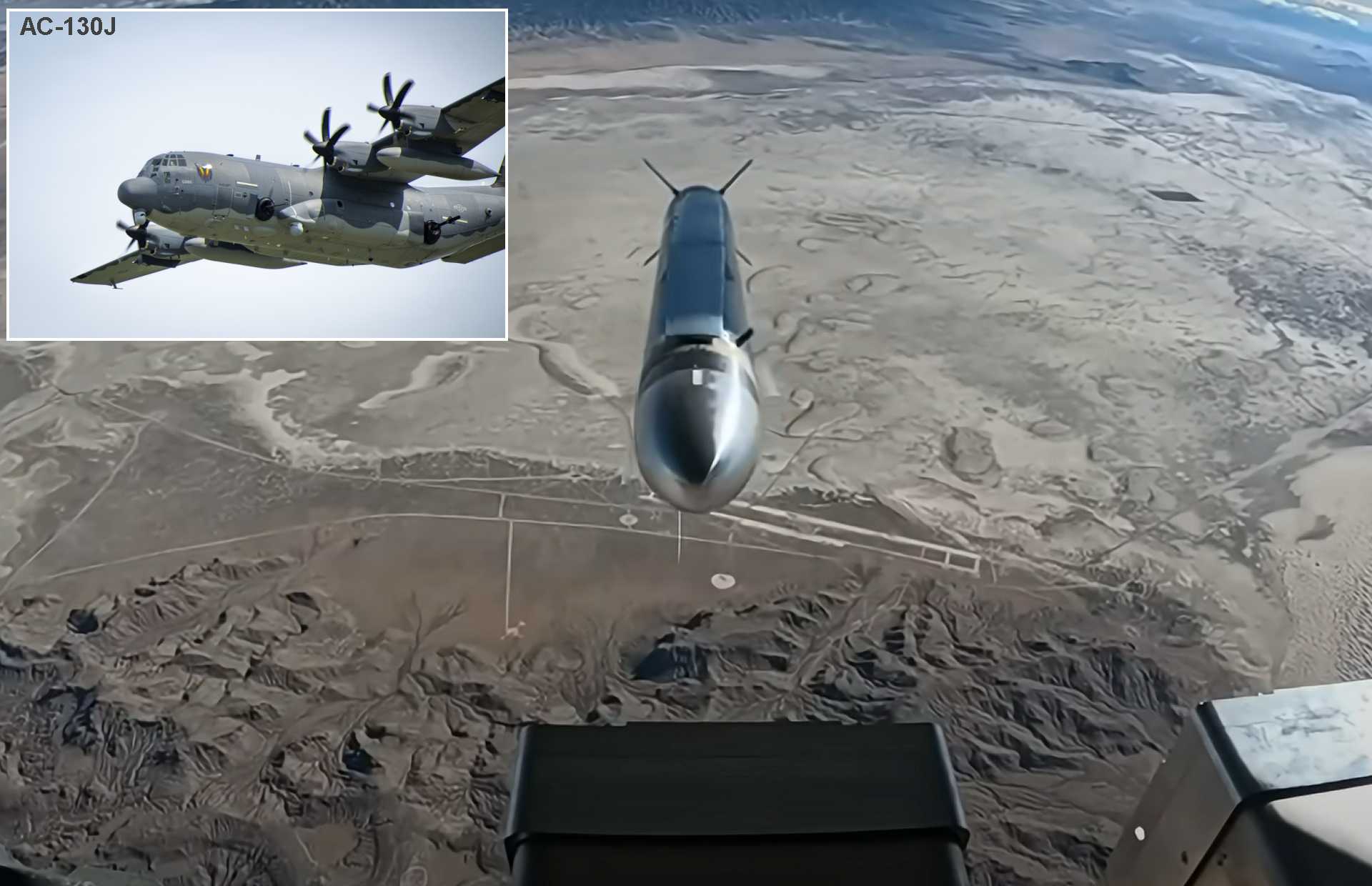
- Details
- Written by: Administrator
- Category: Defence & Security Industry Technology
- Hits: 3992
Leidos, an American defense and technology company based in Reston, Virginia, successfully completed a guided flight test of its Small Cruise Missile (SCM), known as Black Arrow, in November 2024. The test, carried out from an AC-130J Ghostrider gunship aircraft, validated multiple key operational parameters including aircraft compatibility, overall system performance, waypoint uplinks, guidance accuracy, and successful integration with the U.S. Naval Surface Warfare Center's Battle Management System (BMS).
Follow Army Recognition on Google News at this link
Leidos' Black Arrow Small Cruise Missile moments after release from an AC-130J Ghostrider during a successful flight test conducted in support of U.S. Special Forces strike capabilities. (Picture source: Leidos)
The Small Cruise Missile (SCM), also nicknamed Black Arrow, represents a new generation of compact, adaptable weaponry. Weighing in at around 90 kg (200 pounds), it is designed as a low-cost, mission-flexible delivery platform. Its modular construction allows for spiral upgrades, enabling it to handle a broad range of kinetic and non-kinetic missions. This flexibility is vital in today’s fast-evolving battlefield environments where adaptable and scalable strike capabilities are becoming essential. One of the Black Arrow’s standout features is its multi-platform deployment capability. It can be launched using a custom Ramp Launch Tube (RLT) from the cargo ramp of a C-130 aircraft, deployed in a palletized configuration, or released from conventional fixed-wing aircraft stores. This makes it especially useful for Special Operations Forces, where agility and adaptability are paramount.
Leidos, the developer of the Black Arrow, is one of the leading defense and IT contractors in the United States. With a workforce of approximately 48,000 employees globally, the company plays a vital role in supporting national security missions through advanced technological solutions in defense, civil, and health markets. Within the defense sector, Leidos is recognized for its work in systems engineering, software development, and integrated weapons platforms.
The AC-130J Ghostrider, from which the missile was launched, is the latest variant in the U.S. Air Force's family of gunship aircraft. This heavily armed aircraft is engineered for close air support, air interdiction, and armed reconnaissance missions. It incorporates the Precision Strike Package, which includes state-of-the-art mission management systems, electro-optical and infrared sensors, a communications suite, and both 30mm and 105mm cannons. It also features the ability to deploy precision-guided munitions, giving it unmatched versatility and firepower to support special operations missions, especially in contested or denied environments.
The test of the Black Arrow was conducted under a Collaborative Research and Development Agreement (CRADA) that includes Leidos, the United States Special Operations Command (USSOCOM), and the Air Force Special Operations Command (AFSOC). Speaking at the Special Air Warfare Symposium at Eglin Air Force Base in March 2025, Colonel Justin Bronder, USSOCOM Program Executive Officer for Fixed Wing, highlighted the significance of the SCM, stating that it is a key capability rapidly advancing AFSOC’s ability to close long-range kill chains—a critical function in modern high-threat theaters.
Model-based systems engineering practices underpin the development of Black Arrow and conforms to architecture standards advocated by the U.S. Air Force, including the Weapon Open System Architecture established by the Air Force Research Laboratory. This ensures not only cost-effectiveness and development speed but also compatibility and scalability across various operational platforms.
Leidos’ successful demonstration of the Black Arrow from an operational aircraft marks a crucial step toward rapidly fielding the missile system. With the rising importance of affordable mass and precision strike capabilities in modern warfare, Black Arrow stands out as a timely and strategically relevant solution designed to meet emerging threats with agility, precision, and operational flexibility.
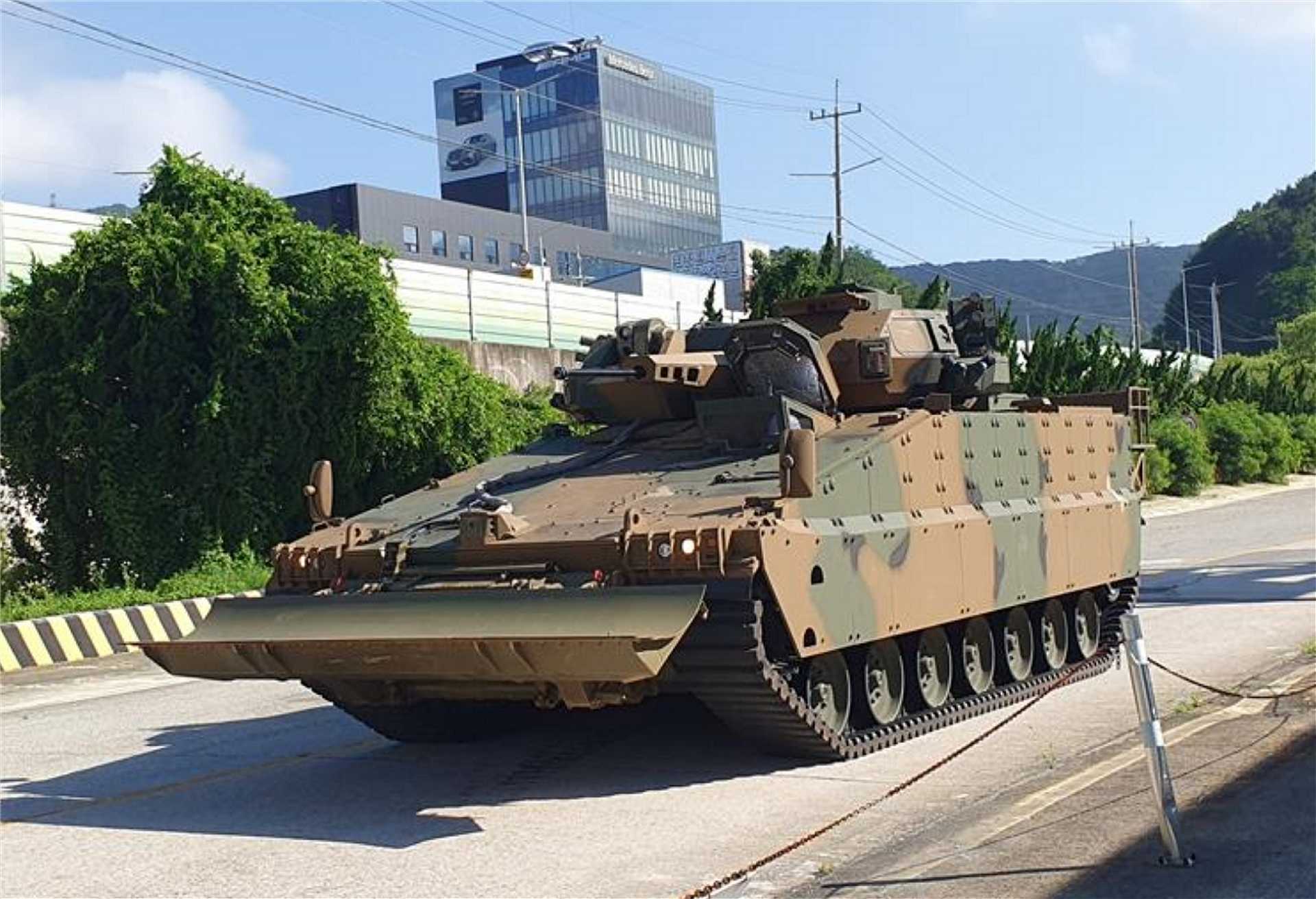
- Details
- Written by: Administrator
- Category: Defence & Security Industry Technology
- Hits: 7209
Pearson Engineering, a UK-based specialist in combat engineering systems, has been awarded a significant contract by Hanwha Defence Australia (HDA) for the supply of 131 combat dozer blades. These blades are set to be integrated with the Redback Infantry Fighting Vehicle (IFV), a next-generation combat vehicle selected by the Australian Defence Force under the LAND 400 Phase 3 program. The contract follows extensive Risk Mitigation Activities (RMA) conducted in Australia, where the combat dozer blade demonstrated its operational effectiveness and durability in challenging environments, affirming its readiness for full-scale deployment.
Follow Army Recognition on Google News at this link
A Redback Infantry Fighting Vehicle equipped with Pearson Engineering’s combat dozer blade, designed to enhance obstacle-clearing and battlefield mobility capabilities under Australia’s LAND 400 Phase 3 program(Picture source: Pearson Engineering)
The LAND 400 Phase 3 program is one of Australia’s most ambitious armored vehicle modernization projects. It aims to replace the aging M113 Armoured Personnel Carriers with up to 450 advanced Infantry Fighting Vehicles to enhance the Army’s close combat capability. After an intensive evaluation process, the Redback IFV (Infantry Fighting Vehicle)—developed by South Korea's Hanwha Defense—was chosen as the preferred platform. The Redback combines high levels of protection, mobility, and firepower, including an advanced 30mm cannon, active protection systems, and integrated C4ISR capabilities. It is designed to operate effectively in high-threat environments while ensuring the survivability of its crew and dismounts.
The integration of the combat dozer blade to the front of the Redback IFV significantly expands the platform’s utility, allowing it to perform a broader range of battlefield engineering tasks. Dozer blades mounted on the front of IFVs serve critical operational purposes, such as clearing battlefield obstacles, creating vehicle fighting positions, removing debris, and performing limited earthmoving activities. This enhances the tactical mobility of mechanized formations, especially in urban or rugged terrain where movement may be impeded by natural or man-made obstructions. It also enables rapid route clearance and the preparation of defensive positions without requiring the deployment of dedicated engineer vehicles, thereby increasing battlefield efficiency and responsiveness.
The dozer blade will be connected to the Redback via Pearson Engineering’s Vehicle Interface Kit, a modular system that enables rapid attachment and detachment of various types of Front-End Equipment (FEE). This interface is a central component of Pearson’s design philosophy, allowing operators to tailor the IFV for specific missions. Should operational needs evolve, the dozer blade can be replaced with other engineering systems such as mine ploughs, counter-IED rollers, or surface clearance devices without any additional mechanical redesign. This modularity ensures that the Redback remains future-proof and mission-adaptable.
As part of its Australian Industrial Content (AIC) commitment, Pearson Engineering is taking concrete steps to localize the supply and integration of the dozer blade system. A network of Australian suppliers has been established to handle component fabrication, hydraulic systems, electrical harnesses, assembly, and testing. This initiative is aligned with Australia’s strategic goal to strengthen sovereign defense manufacturing capabilities and foster long-term industrial self-reliance. By building M-AIT (Manufacturing, Assembly, Integration, and Test) capabilities in-country, Pearson is contributing not only to the effectiveness of the Australian Army but also to the growth and resilience of the national defense industry.
Pearson Engineering’s combat dozer blades are fielded globally across a wide range of armored vehicle platforms. Each system is specifically engineered to match the host vehicle’s physical configuration and operational requirements, reflecting a deep understanding of the diverse environments and mission profiles faced by modern military forces. The company's involvement in the LAND 400 Phase 3 program builds upon its established partnership with the Australian Defence Force, which also includes support for the LAND 907 program focused on the M1A2 Abrams Main Battle Tank and associated combat engineering vehicles. Through this contract, Pearson Engineering reinforces its role as a key enabler of mission success for combat vehicles deployed in demanding operational scenarios.
- Exclusive: U.S. Army’s M270A2 Rocket Launcher Achieves 400 km Strike Capability with PrSM Missile Test
- Technology: British Army's WEEVIL Robotic System To Revolutionize Mine Clearance on the Modern Battlefield
- Denmark Conducts Live-Fire with CV9035 MkIIIC One of the World's Most Advanced Infantry Fighting Vehicles
- GDLS Demonstrates Pandur SHORAD Next-Gen Air Defense with Moog RIwP turret in Live-Fire Demo