ArmyRecognition
  1. You are here:  
  2. Home
  3. News Archives
  4. Naval News Archives
  5. Uncategorised

Home

Details
Written by: zzam
Category: Uncategorised
Published: May 27, 2026
Hits: 65947

Army Recognition: Global Defense & Security News, Defense Exhibition Media<


View all news

Defense Web TV

View all videos


  • social
  • linkedin
  • youtube
  • instagram

Defense Briefing / Daily Newsletter

Subscribe

What are you searching for ?

Land Defense News


View all news

Defense Aerospace News


View all news

Naval Defense News


View all news

Defense Industry Intelligence

Explore Database

Global Military Equipment

Explore Database

Defense Intelligence
Focus / Analysis / Conflicts

View all news

EODH has become an Important Global Partner in the development, design and manufacturing of all types of Protection Systems in the Defense market.
Eurosatory 2026 International Defence and Security Exhibition land Airland Reference Army Recognition Official News Online Web TV
Otokar
Aselsan Tolun 300x90
FNSS Turkey global leader manufacturer of combat armored vehicles and weapon systems
John Cockerill Defense gun turrets from 25 to 120 mm caliber
Saha Expo 2026 International Defense Exhibition Turkey Istanbul
Future Forces Forum
MKE SAHA 2026
IVECO Defence Vehicles

View all

Popular articles
Defense Web TV

View all

Technical Focus

View all

Read more: Home

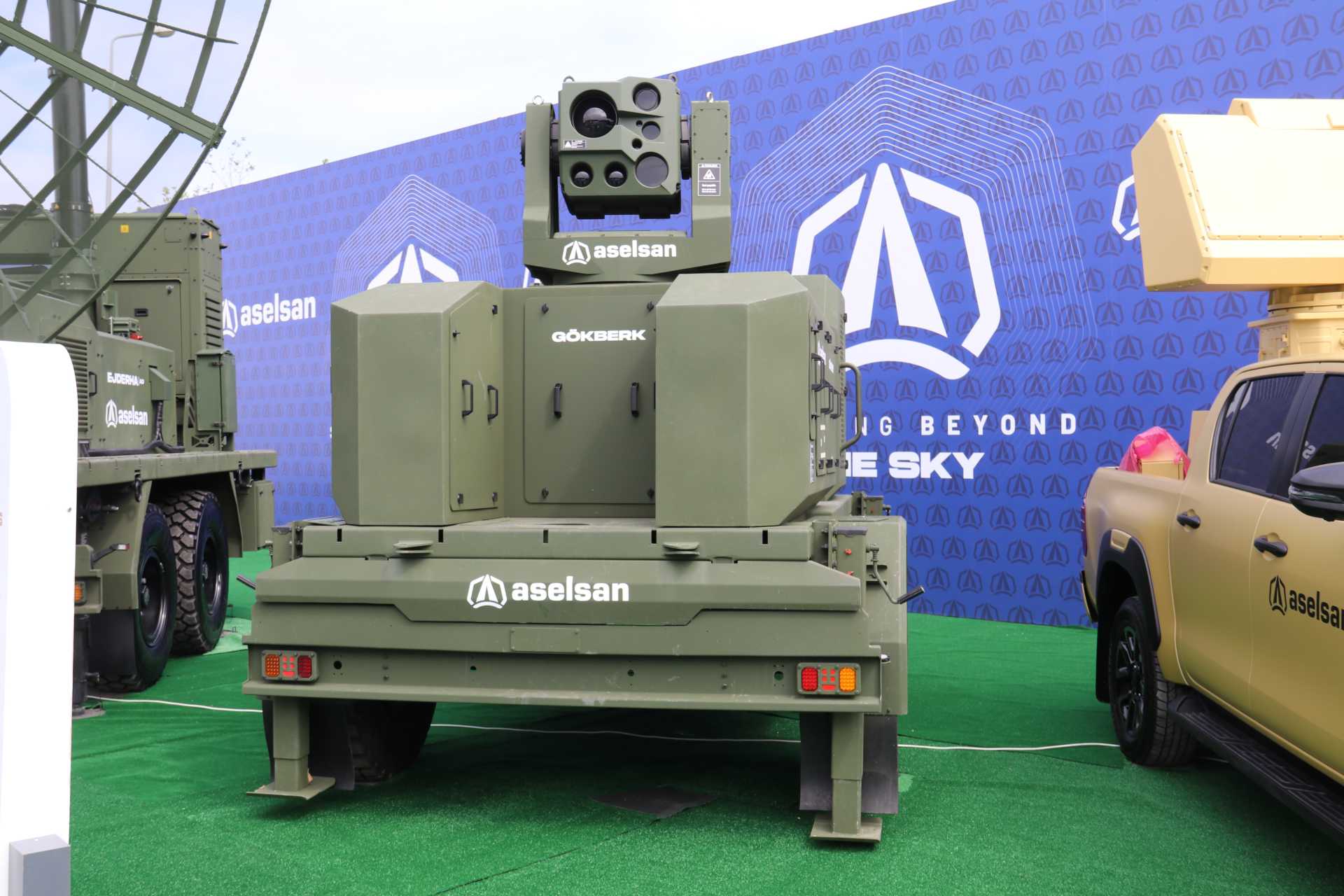
ASELSAN’s Gokberk 10 laser weapon system displayed at SAHA 2026 in Istanbul as part of Türkiye’s expanding Steel Dome multi-layered air defense architecture designed to counter drone and loitering munition threats.

Türkiye Unveils New Laser Weapon Air Defense System to Counter Mass Drone Attacks

Details
Written by: Administrator
Category: Uncategorised
Published: May 06, 2026
Hits: 2557
Saha Expo 2026 International Defense Exhibition Turkey Istanbul
Future Forces Forum
MKE SAHA 2026
IVECO Defence Vehicles
EODH has become an Important Global Partner in the development, design and manufacturing of all types of Protection Systems in the Defense market.
Eurosatory 2026 International Defence and Security Exhibition land Airland Reference Army Recognition Official News Online Web TV
Otokar
Aselsan Tolun 300x90
FNSS Turkey global leader manufacturer of combat armored vehicles and weapon systems
John Cockerill Defense gun turrets from 25 to 120 mm caliber

Turkish defense company ASELSAN unveiled a new generation of laser weapons, electronic warfare systems, and counter-drone technologies at the SAHA 2026 defense exhibition in Istanbul, signaling Türkiye’s push to expand its “Steel Dome” layered air defense network as militaries worldwide race to field combat-ready directed-energy weapons. The showcase highlights how counter-drone warfare is rapidly shifting toward laser interception systems designed to defeat mass UAV attacks at lower cost and with faster reaction times than conventional missile defenses.

Among the most important air defense systems presented was the Gokberk 10 laser weapon, a 10-kilowatt directed-energy system built to destroy drones with high precision while limiting collateral damage in urban combat zones, military installations, and critical infrastructure areas. The system reflects the growing global focus on scalable laser-based air defense technologies now being pursued by the United States, NATO allies, Russia, and China.

Related Topic: U.S. Navy Destroyer Deploys ODIN Laser Directed-Energy Weapon System During Operation Epic Fury

ASELSAN’s Gokberk 10 laser weapon system displayed at SAHA 2026 in Istanbul as part of Türkiye’s expanding Steel Dome multi-layered air defense architecture designed to counter drone and loitering munition threats. (Picture source: Army Recognition Group)


The unveiling of Gokberk 10 at SAHA 2026 demonstrates how the Turkish Defense industry is positioning directed-energy weapons as an operational component of future Turkish air defense strategy rather than an experimental capability. ASELSAN’s Gokberk 10 combines hard-kill laser engagement with advanced electro-optical detection and target-tracking systems to defeat small unmanned aerial systems, loitering munitions, and asymmetric low-altitude aerial threats while maintaining sustained firing capability without requiring repeated ammunition reloads.

The development reflects the growing importance of counter-drone warfare after conflicts in Ukraine, the Middle East, and the Caucasus demonstrated how inexpensive unmanned aerial vehicles can overwhelm conventional air defense systems. Traditional missile interceptors remain effective against aircraft and cruise missiles, but their high cost makes them increasingly unsuitable against large numbers of low-cost drones. Directed-energy weapons are therefore emerging as a critical solution because they offer near-instant engagement speed and significantly lower cost per shot.

Türkiye’s Steel Dome concept aims to integrate long-range missile defense systems, medium-range interceptors, radar networks, electronic warfare systems, and laser weapons into a unified command-and-control architecture. The objective is to create a layered defense network capable of responding simultaneously to cruise missiles, aircraft, loitering munitions, and drone swarms. ASELSAN’s growing role in electronic warfare and directed-energy systems indicates that Turkish defense planners increasingly view indigenous technologies as essential to reducing reliance on foreign suppliers.


High-energy laser weapons are rapidly becoming operational tools for modern militaries, capable of destroying drones and aerial threats with extreme precision at the speed of light. This video examines advanced directed-energy systems developed by the United States, NATO countries, Russia, China, and Türkiye, and explains how laser weapons are reshaping the future of air defense and warfare.


The Gokberk 10 appears optimized primarily for tactical counter-drone operations rather than broader anti-aircraft missions. A 10-kilowatt laser generally provides sufficient energy to disable or destroy quadcopters, reconnaissance drones, and loitering munitions by damaging sensors, control systems, or propulsion components. This power class also allows relatively compact integration suitable for mobile deployments around military bases, government facilities, airports, and critical infrastructure.

One of the system’s most important operational advantages is its ability to operate effectively in urban environments where collateral damage from missile interceptors or anti-aircraft gunfire can present serious risks. Laser weapons destroy targets through concentrated thermal energy rather than explosive fragmentation, making them particularly suitable for defending populated areas against small drones. This requirement has become increasingly important following repeated drone attacks against urban infrastructure and strategic facilities in recent conflicts.

The emergence of systems like Gokberk 10 parallels major developments in directed-energy weapons underway in the United States. The U.S. Army’s Directed Energy Maneuver-Short Range Air Defense (DE M-SHORAD) system integrates a 50-kilowatt laser onto a Stryker armored vehicle to counter drones, rockets, artillery rounds, and mortar threats. Developed by Lockheed Martin and Northrop Grumman, the system is intended to provide maneuver brigades with mobile protection against drone swarms and saturation attacks in contested environments.

The U.S. Navy has also accelerated deployment of ship-based laser weapons through the HELIOS directed-energy system integrated aboard Arleigh Burke-class destroyers. American military doctrine increasingly treats laser weapons as operationally necessary additions to layered air defense rather than future technologies. The Pentagon views directed-energy systems as a way to preserve expensive missile inventories while maintaining sustained defensive capability against mass drone attacks.

NATO countries are similarly expanding investments in counter-drone laser technologies following lessons learned from the Ukraine war. Germany’s Rheinmetall has tested high-energy laser systems capable of intercepting drones, artillery rounds, and mortar shells, while the United Kingdom continues development of the DragonFire laser weapon system for both land and naval operations. European defense planners increasingly regard directed-energy systems as essential for restoring favorable cost ratios in air defense operations against commercially derived drones adapted for military missions.

Unlike the more centralized Turkish model, NATO laser development remains divided among multiple national programs with varying procurement schedules and integration standards. Türkiye’s approach appears more unified, with ASELSAN and other domestic defense companies working toward a nationally controlled architecture integrating radar systems, electronic warfare assets, missile batteries, and directed-energy weapons into a single network.

Russia has also pursued directed-energy weapon technologies, although details surrounding operational deployment remain limited. Moscow’s Peresvet laser system is believed to focus primarily on strategic missions such as protecting critical military infrastructure and potentially disrupting satellite observation systems. During the war in Ukraine, Russian forces relied heavily on electronic warfare systems to jam drones, but repeated attacks by Ukrainian unmanned aerial vehicles exposed persistent vulnerabilities in Russian counter-drone defenses.

Russian industry has reportedly developed smaller tactical laser systems intended for battlefield drone interception, though independently verified operational data remains scarce. Compared to Western systems that emphasize precision engagement and integrated layered defense, Russian development appears more focused on supplementing electronic warfare capabilities and on defending strategic facilities.

China has emerged as one of the world’s most aggressive developers of exportable laser weapon systems. Chinese defense manufacturers have publicly displayed multiple mobile directed-energy weapons designed to neutralize drones, helicopters, and precision-guided munitions. Among the best known is the Silent Hunter laser system, reportedly operating in the 30-kilowatt class and already exported to several foreign operators.

Beijing’s approach emphasizes scalable manufacturing, export competitiveness, and integration with artificial intelligence-assisted targeting systems. China’s large industrial base and sustained investment in photonics technologies provide substantial advantages in rapidly expanding production capacity for directed-energy systems. Chinese manufacturers are increasingly positioning themselves as lower-cost alternatives to Western suppliers in the growing global market for counter-drone defense systems.

Compared to American and Chinese systems, ASELSAN’s Gokberk 10 occupies a more tactical and infrastructure-defense-oriented niche. Its relatively compact configuration and urban defense focus indicate a mission profile centered on protecting military bases, government facilities, border installations, and critical national infrastructure from low-altitude drone threats. This operational focus aligns closely with evolving battlefield realities, in which small unmanned aerial systems have become one of the most persistent and economically disruptive threats.

The unveiling of Gokberk 10 also highlights Türkiye’s broader ambition to expand its indigenous defense industrial base into advanced directed-energy warfare technologies. Ankara has steadily increased investment in domestic radar systems, electronic warfare equipment, missile programs, unmanned systems, and network-centric command architectures as part of a long-term strategy to achieve greater strategic autonomy and export competitiveness.

SAHA 2026, therefore, represents more than a defense exhibition for Türkiye’s directed-energy ambitions. The public presentation of Gokberk 10 demonstrates that Ankara intends to become an active participant in the rapidly evolving global competition over counter-drone laser warfare technologies. As drone saturation tactics continue transforming modern combat operations, laser systems such as Gokberk 10 are increasingly likely to become standard components of future air defense networks protecting military forces, urban centers, and strategic infrastructure.

Written by Alain Servaes – Chief Editor, Army Recognition Group
Alain Servaes is a former infantry non-commissioned officer and the founder of Army Recognition. With over 20 years in defense journalism, he provides expert analysis on military equipment, NATO operations, and the global defense industry.


Read more: Türkiye Unveils New Laser Weapon Air Defense System to Counter Mass Drone Attacks

Defense Aerospace News Archives

Details
Written by: Administrator
Category: Uncategorised
Published: November 13, 2025
Hits: 22378
Saha Expo 2026 International Defense Exhibition Turkey Istanbul
Future Forces Forum
MKE SAHA 2026
IVECO Defence Vehicles
Defense News archives
  • Aerospace Defense News Archives

    2024

Read more: Defense Aerospace News Archives

Naval News Archives

Details
Written by: Administrator
Category: Uncategorised
Published: September 05, 2025
Hits: 27833
Saha Expo 2026 International Defense Exhibition Turkey Istanbul
Future Forces Forum
MKE SAHA 2026
IVECO Defence Vehicles
Defense News archives
  • Naval Defense News Archives

    2024

Read more: Naval News Archives

Land Defense News Archives

Details
Written by: Administrator
Category: Uncategorised
Published: August 28, 2025
Hits: 28795
Saha Expo 2026 International Defense Exhibition Turkey Istanbul
Future Forces Forum
MKE SAHA 2026
IVECO Defence Vehicles
Defense News archives

Read more: Land Defense News Archives

Global defense Archives

Details
Category: Uncategorised
Hits: 32904
Saha Expo 2026 International Defense Exhibition Turkey Istanbul
Future Forces Forum
MKE SAHA 2026
IVECO Defence Vehicles
  • land defense news archives 001

    Defense News Archives

  • Aerospace News Archives

  • Naval News Archives


Read more: Global defense Archives

Sweden boosts ground based air surveillance with new Giraffe 4A radar deal

Details
Written by: Halna du Fretay
Category: Uncategorised
Published: June 17, 2025
Hits: 9682
Saha Expo 2026 International Defense Exhibition Turkey Istanbul
Future Forces Forum
MKE SAHA 2026
IVECO Defence Vehicles
EODH has become an Important Global Partner in the development, design and manufacturing of all types of Protection Systems in the Defense market.
Eurosatory 2026 International Defence and Security Exhibition land Airland Reference Army Recognition Official News Online Web TV
Otokar
Aselsan Tolun 300x90
FNSS Turkey global leader manufacturer of combat armored vehicles and weapon systems
John Cockerill Defense gun turrets from 25 to 120 mm caliber

According to information published by the Saab Press Centre on June 17, 2025, Swedish defense and aerospace company Saab has signed a major contract with the Swedish Defence Materiel Administration (FMV) to deliver Giraffe 4A radar systems along with associated support services to the Swedish Armed Forces. Valued at approximately 128 m€ (SEK 1.4 billion), the deliveries under this agreement are scheduled to take place between 2026 and 2027. This contract significantly strengthens Sweden’s mid-range radar sensor capabilities and supports its broader sensor system modernization strategy by integrating mobile, software-upgradable systems designed for long-term operational relevance.
Follow Army Recognition on Google News at this link

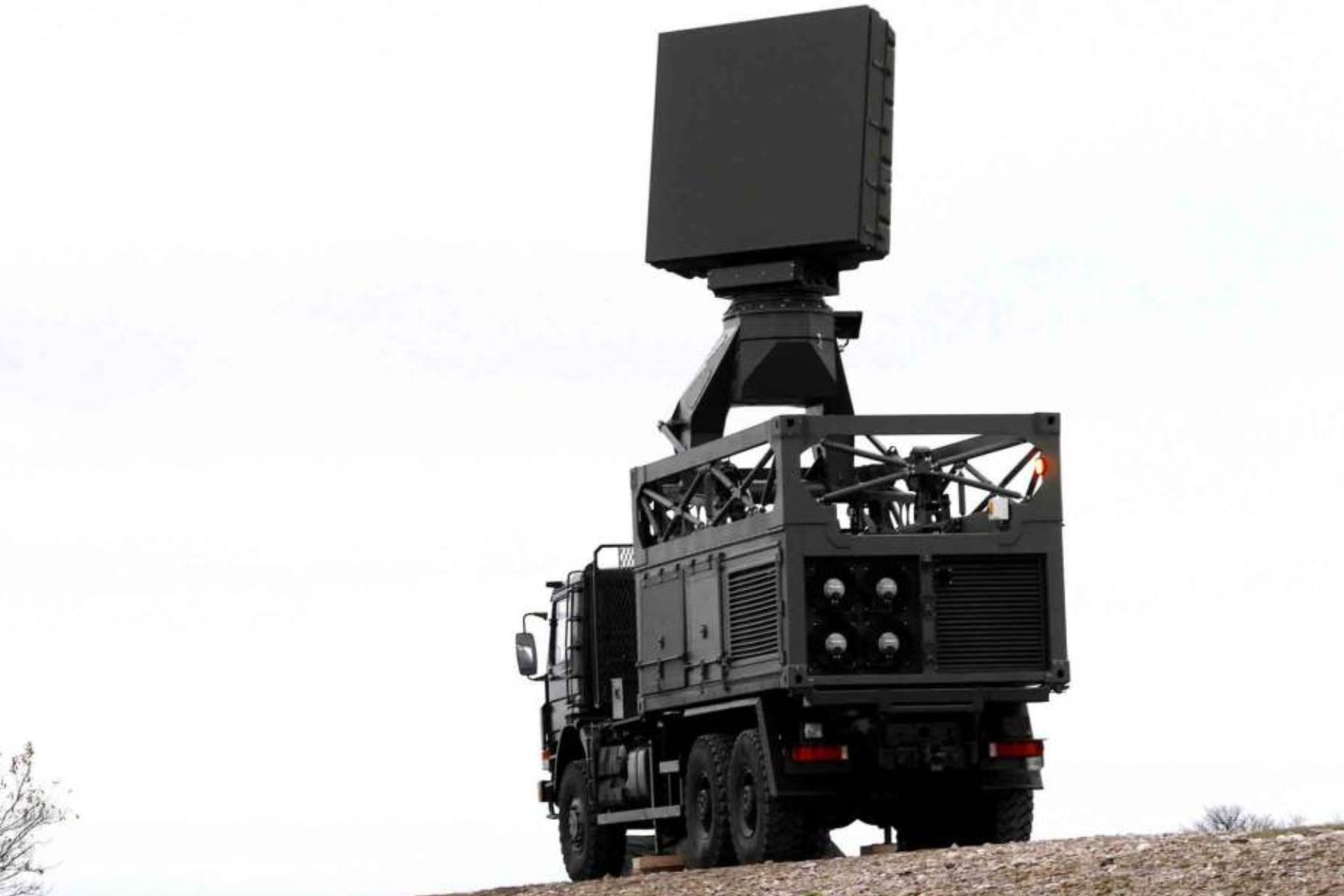
 Operating in the S-band and incorporating the latest Active Electronically Scanned Array (AESA) technology, the radar can detect and track hundreds of aerial and surface targets over a range exceeding 300 kilometers (Picture source: Saab)


Saab is a leading Swedish defense and security company specializing in advanced technologies across air, land, and naval domains. Renowned for its innovative radar and sensor solutions, Saab plays a key role in strengthening national and allied defense capabilities worldwide.

The Giraffe 4A is a state-of-the-art ground-based radar designed to perform simultaneous air surveillance and military air traffic control. Operating in the S-band and incorporating the latest Active Electronically Scanned Array (AESA) technology, the radar can detect and track hundreds of aerial and surface targets over a range exceeding 300 kilometers. Its rotating AESA antenna offers 360-degree coverage with superior update rates, and the system is capable of detecting low observable threats such as drones, cruise missiles, and RAM (Rockets, Artillery, Mortar) projectiles. Designed for network-centric operations, the radar is also equipped with built-in electronic counter-countermeasures (ECCM) and automatic target classification features, supporting enhanced situational awareness and interoperability across NATO and allied forces.

In the context of a rapidly deteriorating global security environment, characterized by the resurgence of near-peer threats and increasing reliance on aerial strike capabilities, Sweden’s acquisition of the Giraffe 4A reinforces its airspace sovereignty and resilience. This radar system provides a significant force multiplier by enabling early warning and quick response to aerial incursions, hybrid attacks, and drone swarms. As more nations modernize their air defense infrastructures to deter aggression and safeguard national borders, the Giraffe 4A stands out as a critical component of integrated air and missile defense networks. Its adoption not only elevates Sweden’s defense posture within the Nordic and Baltic regions but also serves as a benchmark for other European countries seeking agile, future-proof surveillance capabilities.

This contract also reflects Sweden’s broader strategic shift toward greater self-reliance in defense manufacturing and operational readiness amid growing geopolitical instability, particularly in the Baltic Sea and Arctic regions. With NATO membership now confirmed, Sweden is accelerating investments in interoperable and sovereign capabilities to meet alliance requirements while ensuring national control over critical technologies. Saab, as a cornerstone of Sweden’s defense industry, continues to expand its international footprint through the Giraffe radar family, which has already been selected by several NATO and partner nations, reinforcing its status as a globally competitive supplier of next-generation surveillance systems.


Read more: Sweden boosts ground based air surveillance with new Giraffe 4A radar deal

Russian Army Deploys in Ukraine Upgraded T-90M Tank with Enhanced Anti-Drone Protection

Details
Written by: office_zzam
Category: Uncategorised
Published: May 26, 2024
Hits: 12351
Saha Expo 2026 International Defense Exhibition Turkey Istanbul
Future Forces Forum
MKE SAHA 2026
IVECO Defence Vehicles
Breaking news
EODH has become an Important Global Partner in the development, design and manufacturing of all types of Protection Systems in the Defense market.
Eurosatory 2026 International Defence and Security Exhibition land Airland Reference Army Recognition Official News Online Web TV
Otokar
Aselsan Tolun 300x90
FNSS Turkey global leader manufacturer of combat armored vehicles and weapon systems
John Cockerill Defense gun turrets from 25 to 120 mm caliber
A new image circulating on Russian social media has revealed a significant upgrade to the Russian T-90M Main Battle Tank (MBT), a mainstay of the Russian Armed Forces. The updated version boasts advanced anti-drone measures, highlighting Russia's ongoing efforts to adapt to emerging threats on the Ukrainian battlefield.Follow Army Recognition on Google News at this link A picture was released on Russian Social Media showing the Russian army's upgraded T-90M main battle tank fitted with new anti-drone armor and counter UAVs system. (Picture source: Social Media) The photograph shows a Russian Army T-90M Main Battle Tank (MBT) equipped with an anti-drone visor and additional protective measures mounted around the turret and the rear of the hull. These enhancements are designed to counter the growing threat of FPV (first-person view) drones and loitering munitions, which have become increasingly prevalent in the conflict. Military analysts note that this upgrade is a direct response to the evolving tactics employed in Ukraine, where the use of drones has significantly altered the dynamics of ground warfare. By bolstering the T-90M's defenses, Russia aims to improve the survivability of its armored units and maintain its operational effectiveness. The T-90M is the latest generation of main battle tank in service with the Russian Armed Forces, representing a significant evolution from its predecessors in terms of combat capabilities and technological sophistication. Developed as an upgrade to the T-90 series, the T-90M integrates advanced features that enhance its performance on the modern battlefield. It is equipped with a new 125mm 2A82-1M smoothbore gun, which offers improved firing accuracy and the capability to launch anti-tank guided missiles. The tank also boasts an upgraded fire control system and enhanced targeting capabilities, allowing it to engage targets more precisely and effectively. In addition to its formidable armament, the T-90M features improved protection systems designed to withstand contemporary threats. It is equipped with Relikt explosive reactive armor (ERA), which provides superior defense against both kinetic and chemical energy projectiles. The tank can also be equipped with an active protection system (APS), which can detect and neutralize incoming anti-tank missiles and projectiles. These defensive measures are complemented by integrating advanced electronics and battlefield management systems, enhancing situational awareness and communication capabilities. With these enhancements, the T-90M stands as a cutting-edge platform in modern armored warfare, reflecting Russia's commitment to maintaining a technologically advanced and capable military force. The T-90M, already known for its robust design and advanced technology, now features a more comprehensive suite of protective measures. The anti-drone visor likely disrupts or destroys incoming drone threats, while the additional armor around critical areas such as the turret and hull rear enhances the tank's resilience against precision attacks. This development underscores Russia's commitment to modernizing its military hardware in response to new battlefield realities. As the conflict in Ukraine continues, innovations such as these will play a crucial role in shaping the future of armored warfare. Experts suggest that the upgraded T-90M could set a precedent for other nations facing similar threats, potentially influencing global military strategies and defense spending priorities. For now, the focus remains on the immediate impact these enhancements will have on the ongoing conflict and the broader implications for regional security. The release of the image and the subsequent discussion it has sparked within military circles indicate that Russia is not only aware of the challenges posed by modern warfare but is actively seeking solutions to maintain its strategic edge. As the situation in Ukraine evolves, the world will be watching closely to see how these technological advancements are implemented on the battlefield and what countermeasures might be developed in response.

Read more: Russian Army Deploys in Ukraine Upgraded T-90M Tank with Enhanced Anti-Drone Protection

Analysis: Russian soldier shots with 12 gauge a drone sign of a lack of counter drone system ?

Details
Written by: office_zzam
Category: Uncategorised
Published: May 26, 2024
Hits: 6769
Saha Expo 2026 International Defense Exhibition Turkey Istanbul
Future Forces Forum
MKE SAHA 2026
IVECO Defence Vehicles
Breaking news
EODH has become an Important Global Partner in the development, design and manufacturing of all types of Protection Systems in the Defense market.
Eurosatory 2026 International Defence and Security Exhibition land Airland Reference Army Recognition Official News Online Web TV
Otokar
Aselsan Tolun 300x90
FNSS Turkey global leader manufacturer of combat armored vehicles and weapon systems
John Cockerill Defense gun turrets from 25 to 120 mm caliber
A Russian soldier shot down a Ukrainian drone at long distance with a 12-gauge shotgun, a lucky success born out of desperation. This unusual wartime event highlights the importance of anti-drone warfare, which is becoming a significant battlefield issue today. However, before anti-drone warfare became more standardized, there were some rather haphazard attempts.Follow Army Recognition on Google News at this link Russian soldier shots down a Ukrainian UAV -full video at the end of article  (Picture source: Telegram channel ) Classic drone control Conventional drone control can be divided into two main categories: passive and active. Passive drone control uses non-offensive elements such as cope cages, anti-drone grids and nets. Cope cages, made up of fine-mesh mesh, are really geared to anti-drone bomber combat. As is the use of militarized civilian drones in the Ukraine conflict. The Ukrainians use small civilian drones to launch grenades or larger explosives. The Russians have invented an evolution to these cages: for several weeks now, tanks equipped with mine-clearing devices have been reinforced with a structure made of töle, wire mesh or metal parts covering the entire tank. These tanks have been dubbed turtle tanks. However, although initially effective to some extent, the psychological aspect of using such a structure on the front lines. Camouflage nets, on the other hand, play on the visual aspect of the vehicle or the position to be concealed, but do not really offer protection against the effect of drones. However, these passive solutions are often disposable, as their use implies their destruction. Ukrainian Brigade presented an upgraded version of M1A1 Abrams  (Picture source: 47th mech brigade ) active counter-measure  Jammers Jammers are the most commonly used method during conflicts, in the form of anti-drone rifles or electronic jammers. Jammers, which can be GPS or radio frequency, are effective tools against drones. Their purpose is to cut the link between the drone and its pilot, typically causing the drone to fall. Although initially less effective, this method has proven more effective with technological advancements, despite existing countermeasures like loitering munitions equipped with AI. However, the limitation of this system is its cost, making it less widespread. Laser Weapons Laser weapons are even more expensive but very promising. These systems are starting to be deployed, with many armament programs funding these technologies. The General Directorate of Armament (DGA) has launched a new project for the acquisition of a deployable modular anti-drone protection system (PARADE). The program involves an investment of €350 million over 11 years (including €70 million for the 2022-2025 period). This comprehensive system aims to provide permanent protection for military or civilian sites in France or in external theaters of operations. It must include an evolving C2 system, a radar, a goniometer, an optronic system, and a jamming system. The system must ensure automatic detection, characterization, identification, and neutralization of drones, day or night, and in all weather conditions, against drones emitting or not emitting electromagnetic waves. In the PARADE system, the laser will serve as a neutralization element in extreme urgency. For this purpose, the French SME CILAS has developed the HELMA-P system. The laser is mounted on a fixed or mobile turret (naval or land vehicle). It consists of a box mounted on a tripod containing a drone detection system, a tracking system, and a 2-kilowatt laser capable of neutralizing a drone within seconds up to one kilometer away. The laser burns or blinds the drone, preventing it from navigating. Highly precise and effective, it can detect small drones (less than 100 kg) up to 3 km away and destroy multiple drones in succession. Moreover, this anti-drone solution is resistant to jamming, but its use requires good weather conditions. This system aims to eventually equip vehicles of the Scorpion program. Anti-Drone Missiles The final point in active protection is similar to the active protection system that equips armored vehicles. It involves a radar detector that confirms the threat posed by the drone, followed by a hardkill system that neutralizes the drone by firing a missile. Both the Russians and Americans have developed such systems. Russian soldier spotted during 9th May parade with an Anti-drone rifle ( directed Jammer)   (Picture source: Telegram channel ) Exceptional Anti-Drone Efforts Shotgun Usage The 12-gauge shotgun is frequently used for various purposes by the military, often considered more of a tool than a weapon. Its variety of ammunition allows it to breach doors, stop light vehicles, or cover a large area with a spread of pellets. Consequently, the Belgians and French have experimented with using this tool, already in use by conventional and non-conventional forces, for anti-drone efforts. France uses standard-issue weapons as an effective means against aviation. In a video published on the Army's YouTube channel, anti-drone efforts are shown using a Browning M2 12.7 caliber machine gun. Rapid Fire Project In 2023, the RAPIDFire turret, a 40 mm rapid-fire cannon, will equip the Navy's force replenishment vessels (BRF). Developed by Nexter and Thales, it is capable of successively engaging multiple targets. Unlike American C-RAM systems, the RAPIDFire seeks precision rather than saturating an area with projectiles. Equipped with gyro stabilizers, autonomous calculations, and a selection of munitions adapted to the threat, it guarantees near-success with each shot. Rapid fire turret on naval configuration  presented by Thales  (Infography source: Thales ) Anti-Drone Eagles In France, the Air and Space Force quickly sought to protect its infrastructure from the civilian drone threat, leading to an experimental project involving eagles. The military trained and deployed eagles to intercept and destroy drones entering no-fly zones. The project was also tested by Switzerland and the Netherlands, both of which terminated the project due to the risks posed to the animals and humans below. Conclusion: which future for anti-drone system  In the field of anti-drone warfare, the most advanced countries are the United States and Israel, according to the Ministry of Defense. Since 2017, the U.S. military has been developing a rather remarkable anti-drone system. The Mobile Force Protection Program was created to protect "high-value" convoys. This system initially detects malicious drones using an X-band radar (ultra-high frequency). Then, artificial intelligence software attempts to identify the intentions of the aircraft. If it poses a threat, the second part of the system comes into play: a tube-shaped interception drone which, by firing streamers into the propellers of the threatening drone, causes it to fall. Fired from a moving vehicle, the interception drones can be reused. In Israel, by 2024, the military should have a ground-based system capable of shooting down rockets and drones. This involves an airborne laser, successfully tested at an altitude of 900 meters and within a one-kilometer radius. The military wants to refine the laser to intercept a drone up to 20 km away. To resume, humans won't be removed but technology aims to be autonomous.  Video:  Russian soldier destroying a ukrainian drone with 12 gauge rifle: 

Read more: Analysis: Russian soldier shots with 12 gauge a drone sign of a lack of counter drone system ?

Ukraine Upgrades US-Donated M1A1SA Tank with Kontakt-1 ERA Armor for Enhanced Protection

Details
Written by: office_zzam
Category: Uncategorised
Published: May 21, 2024
Hits: 6917
Saha Expo 2026 International Defense Exhibition Turkey Istanbul
Future Forces Forum
MKE SAHA 2026
IVECO Defence Vehicles
Breaking news
EODH has become an Important Global Partner in the development, design and manufacturing of all types of Protection Systems in the Defense market.
Eurosatory 2026 International Defence and Security Exhibition land Airland Reference Army Recognition Official News Online Web TV
Otokar
Aselsan Tolun 300x90
FNSS Turkey global leader manufacturer of combat armored vehicles and weapon systems
John Cockerill Defense gun turrets from 25 to 120 mm caliber
A recent picture circulating on social media reveals an American-made M1A1SA Main Battle Tank, donated by the United States to Ukraine, now equipped with additional armor. This tank features Kontakt-1 explosive reactive armor (ERA) mounted at the front of the hull, highlighting a significant enhancement in its protection against the current threats on the Ukrainian battlefield.Follow Army Recognition on Google News at this link Ukrainian Abrams M1A1SA tank upgraded with Soviet-made Kontakt-1 Explosive Reactive Armor mounted at the front of the hull. (Picture source X Account The Dead District) The M1A1SA (Situational Awareness) is an upgraded version of the M1A1 Abrams main battle tank, designed to enhance its electronics, situational awareness, and survivability. The upgrades include improved electronics that integrate with modern digital communication systems, such as updates to the tank's fire control system, communications equipment, and other electronic components. These enhancements are crucial for providing the tank crew with more accurate and timely information, enabling them to better understand and react to the battlefield environment. When it comes to survivability, the M1A1SA leaves no room for compromise. It features upgraded armor packages and other protective measures designed to withstand enemy fire and improvised explosive devices (IEDs) more effectively. The tank's ability to protect its crew is not just a feature, it's a promise. While the M1A1SA retains the same engine and basic mobility features as the original M1A1, minor improvements ensure better overall performance and reliability.  The Ukrainian army upgrades US M1A1 tanks with Kontakt-1 explosive reactive armor (ERA) to enhance their protection against modern threats, particularly anti-tank guided missiles (ATGMs) and other high-explosive anti-tank (HEAT) munitions. This decision is driven by the need for increased protection, as Kontakt-1 ERA provides an additional layer of defense against shaped charges and kinetic energy penetrators. By disrupting the penetration of incoming projectiles, this armor reduces the likelihood of catastrophic damage to the tank and improves crew survivability. Moreover, Ukrainian forces face a variety of advanced anti-tank weapons on the battlefield, including those used by adversaries in the region. Upgrading tanks with Kontakt-1 ERA helps to mitigate the effectiveness of these threats, offering better protection against the kinds of munitions most commonly encountered. Kontakt-1 is a well-established and widely used ERA system in the Ukrainian military, ensuring compatibility with their logistical and maintenance infrastructure. This familiarity and availability make it a practical choice for enhancing the defensive capabilities of the M1A1 tanks. Kontakt-1 explosive reactive armor (ERA) is a Soviet-developed system designed to improve the survivability of armored vehicles against modern anti-tank threats. Developed in the late 1970s and early 1980s, it became widely deployed on Soviet and later Russian tanks and other armored vehicles. Technically, Kontakt-1 consists of explosive-filled metal plates arranged in a layered configuration. When an incoming projectile strikes these plates, the explosive material detonates, causing the plates to rapidly move and disrupt the penetration of the projectile. The primary function of Kontakt-1 ERA is to counter the effects of shaped charges, such as those found in anti-tank guided missiles (ATGMs) and high-explosive anti-tank (HEAT) munitions. Shaped charges work by focusing the explosive energy into a narrow jet, which can penetrate thick armor. When Kontakt-1 detonates, it disrupts this focused jet, reducing its effectiveness and preventing it from penetrating the underlying armor. This disruption is achieved through the kinetic interaction between the moving plates and the penetrator, which either deforms or deflects the jet, thus diminishing its penetrating power. Kontakt-1 ERA also provides protection against kinetic energy penetrators, such as armor-piercing fin-stabilized discarding sabot (APFSDS) rounds, though it is primarily designed to counter HEAT threats. The additional layer of protection offered by Kontakt-1 ERA can significantly enhance the survivability of armored vehicles on the battlefield. In conclusion, adding Kontakt-1 explosive reactive armor (ERA) to the original M1A1SA main battle tank significantly enhances its battlefield survivability. This upgrade protects against modern anti-tank threats, such as shaped charges found in anti-tank guided missiles (ATGMs) and high-explosive anti-tank (HEAT) munitions. By disrupting the penetration mechanisms of these projectiles, Kontakt-1 ERA reduces the likelihood of catastrophic damage and improves crew safety. This enhancement is particularly valuable given the diverse and advanced anti-tank weaponry encountered on contemporary battlefields. Additionally, the widespread use and familiarity of Kontakt-1 within the Ukrainian military ensure compatibility and ease of integration, making it a practical and effective upgrade for the M1A1SA tanks.

Read more: Ukraine Upgrades US-Donated M1A1SA Tank with Kontakt-1 ERA Armor for Enhanced Protection

Page 1 of 6

  • 1
  • 2
  • 3
  • 4
  • 5
  • 6