
- Details
- Written by: Administrator
- Category: 2024
- Hits: 5632










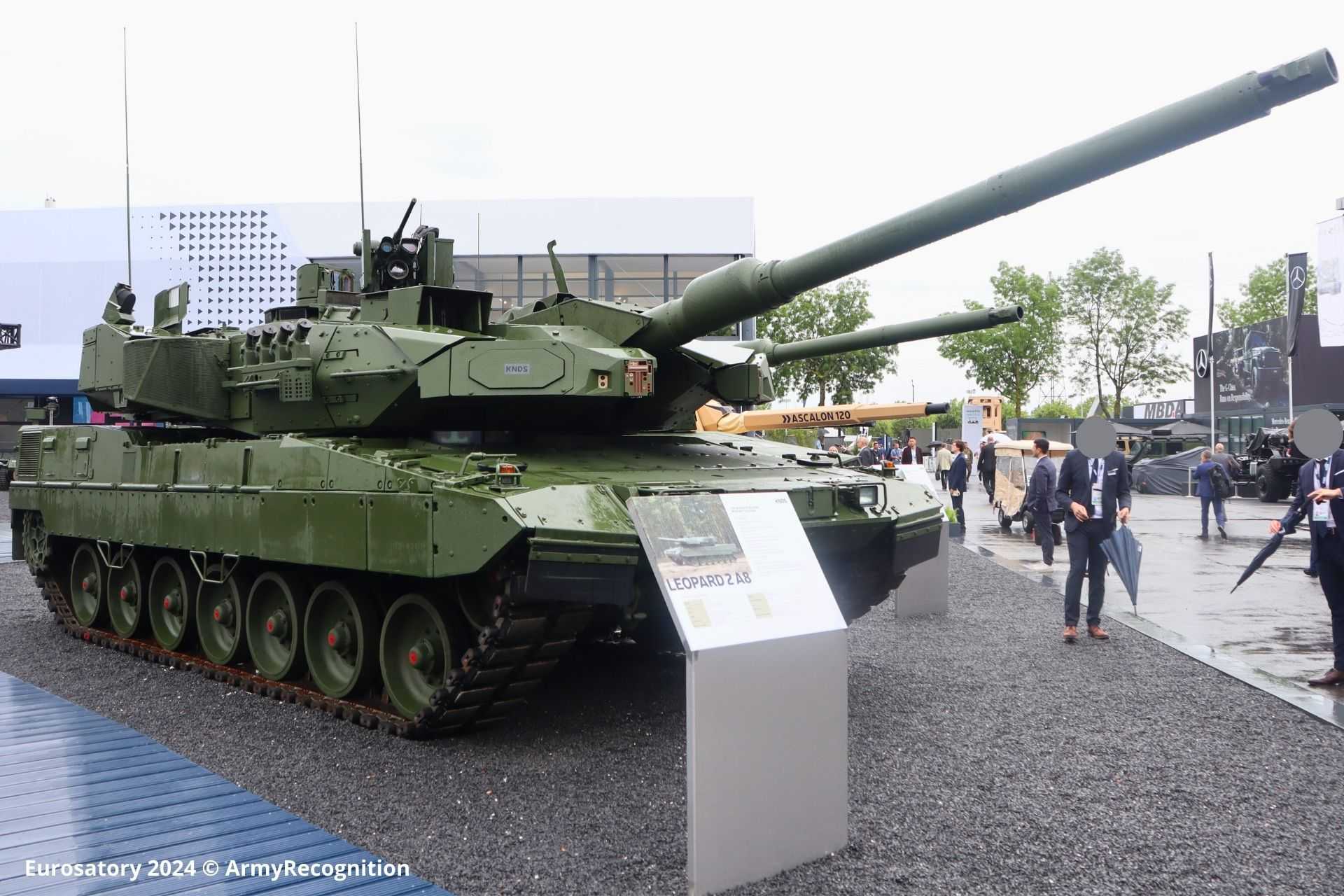
On December 19, 2024, KNDS Germany announced a groundbreaking defence acquisition deal with Lithuania, marking a historic step for the Baltic state. Lithuania has signed a contract to acquire 44 LEOPARD 2A8 main battle tanks, worth EUR 950 million. This deal not only elevates Lithuania's military capabilities but also represents a significant milestone for the country, as it is the first time in its history that Lithuania will establish its own tank unit. With this acquisition, Lithuania becomes the 23rd nation to operate the highly regarded LEOPARD 2 platform, one of the most advanced main battle tanks in the world.
Follow Army Recognition on Google News at this link
The LEOPARD 2A8 tank by KNDS is on display at the Eurosatory 2024 exhibition, showcasing cutting-edge advancements in armor protection and firepower. (Picture source: Army Recognition Group)
The contract was formalized by the Lithuanian Defence Materiel Agency (DMA) under the Ministry of National Defence and signed by the Federal Office of Bundeswehr Equipment, Information Technology and In-Service Support (BAAINBw) on behalf of the Lithuanian government. In addition to the 44 LEOPARD 2A8 tanks, the deal includes a comprehensive package of spare parts and logistics, ensuring that Lithuania’s new armoured force remains operational and well-supported for years to come.
Lithuania’s acquisition of the LEOPARD 2A8 is of particular importance because the country currently has no main battle tanks in its arsenal. Until now, Lithuania has relied on lighter armoured vehicles and infantry forces to defend its territory. The acquisition of the LEOPARD 2A8, the most modern version of the LEOPARD 2 family, represents a monumental leap in Lithuania’s military capabilities, providing it with state-of-the-art firepower, protection, and mobility. This acquisition drastically transforms Lithuania’s military landscape, adding significant deterrence and combat capability to its defence forces.
The LEOPARD 2A8 model is widely regarded as one of the most advanced tanks globally, and Lithuania is now poised to benefit from the tank's cutting-edge technology. Notably, the TROPHY active protection system (APS), which is integrated into the LEOPARD 2A8, offers the tank comprehensive 360-degree protection against modern anti-tank missiles, rockets, and even drones. This system, already deployed by countries like Germany and Norway, provides a robust defensive layer, ensuring the tank’s survivability in complex combat environments. It will significantly enhance Lithuania’s ability to protect its forces and strengthen its defence posture, especially in the face of increasing security threats in Eastern Europe.
This acquisition is not only a strategic leap for Lithuania but also has broader implications for European defence cooperation. It is the first implementation of the Common Procurement Agreement (CPA), a joint procurement initiative led by Germany and several European countries. Lithuania's participation in this procurement framework sets a precedent for other European nations to follow, streamlining the acquisition of advanced military equipment and improving the overall capability of NATO allies in the region.
Beyond the technical specifications, the importance of this acquisition also lies in Lithuania's growing role within NATO and its ability to contribute meaningfully to European security. The addition of 44 LEOPARD 2A8 tanks will allow Lithuania to field a modern armoured brigade, enhancing both its national defence and its capacity to participate in NATO operations. The tanks will improve interoperability with other NATO forces, ensuring that Lithuania is better equipped to defend its borders and collaborate with allies in multinational operations. This acquisition also represents a shift towards greater self-sufficiency for Lithuania, ensuring that it is less reliant on foreign support for its defence capabilities.
In conclusion, Lithuania’s procurement of the LEOPARD 2A8 tanks from KNDS Germany is a pivotal moment in the country’s defence modernization efforts. With the introduction of the most modern main battle tank in the LEOPARD 2 family, Lithuania is taking a significant step in transforming its military, adding critical firepower and protection to its forces. This acquisition enhances Lithuania's security and strengthens its role in NATO, contributing to the broader goal of safeguarding European security. The LEOPARD 2A8, with its advanced technologies like the TROPHY APS, ensures that Lithuania is equipped to meet modern combat challenges while reinforcing its commitment to Europe’s collective defence.
- Details
- Written by: Administrator
- Category: 2024
- Hits: 5656
U.S. Company Lockheed Martin achieved a significant milestone in autonomous systems development with successfully demonstrating an uncrewed capability using a surrogate HIMARS rocket launcher truck on December 4, 2024. This groundbreaking test highlights the company’s commitment to advancing the U.S. Army’s artillery modernization efforts by integrating innovative technology into combat-proven systems.
Follow Army Recognition on Google News at this link
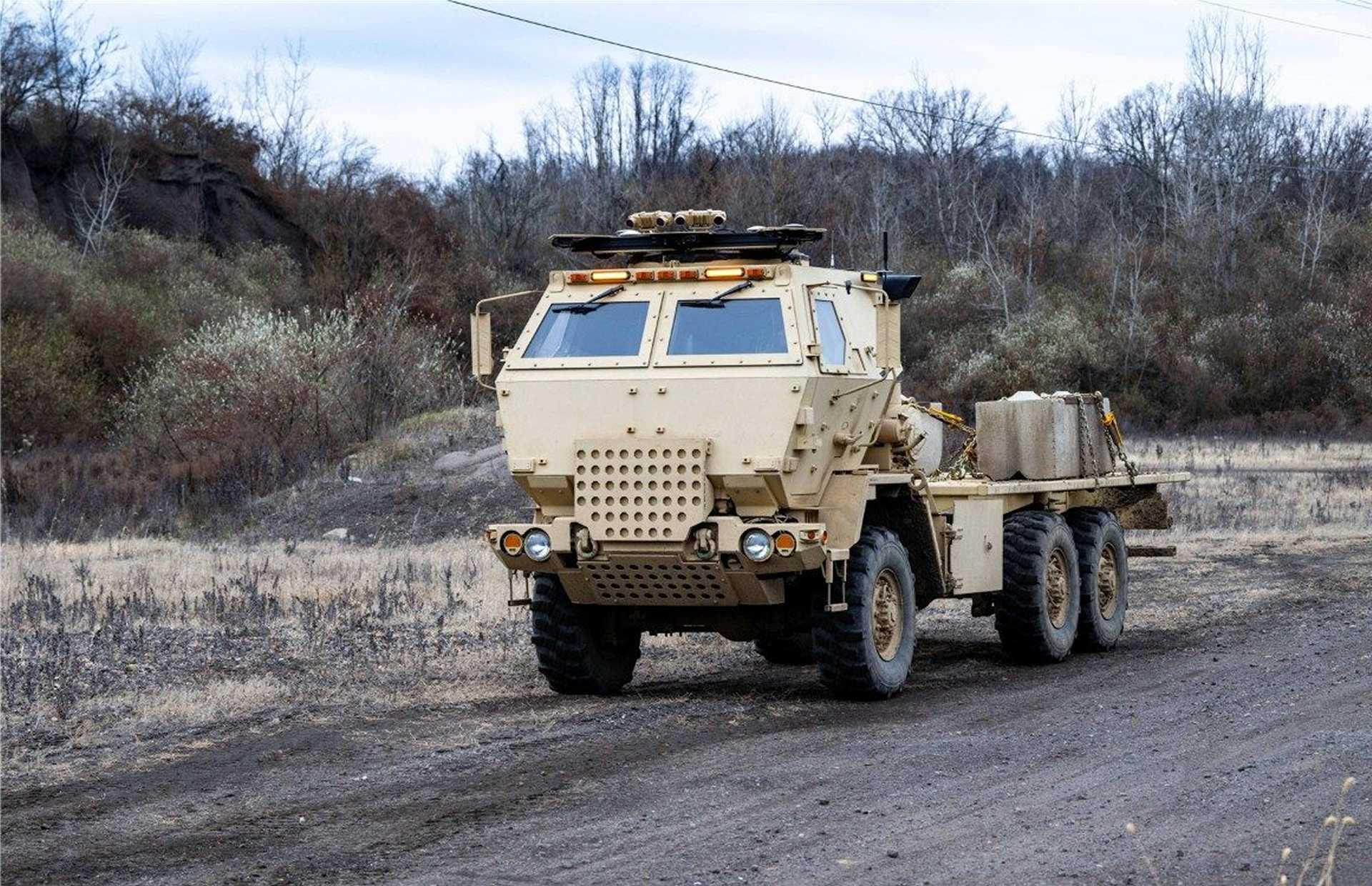
Lockheed Martin's surrogate HIMARS® launcher demonstrates autonomous navigation and operation during a groundbreaking test, showcasing the future of unmanned artillery systems for the U.S. Army. (Picture source: Lockheed Martin)
The demonstration showcased the surrogate HIMARS launcher’s ability to navigate autonomously without a driver, utilizing non-emitting perception sensors. This capability allows for seamless operations both day and night without the need for a crew, a crucial development for missions requiring flexibility and stealth in complex environments. Integrating this technology into the existing HIMARS fleet enhances its adaptability while maintaining compatibility with re-supply vehicles, enabling synchronized operations between manned and unmanned systems.
The U.S. Army’s vision for the future includes pairing manned HIMARS launchers with autonomous wingman systems, a concept designed to optimize artillery efficiency and operational flexibility. Lockheed Martin’s success in demonstrating autonomous capabilities is a significant step toward realizing this vision. The company’s approach not only upgrades the existing HIMARS fleet but also retains the option for crewed operations, maximizing the Army’s investment in its launcher systems.
“Our approach offers a unique solution that allows the Army to upgrade their existing HIMARS fleet with enhanced autonomous capability, while retaining the option for crewed operations,” said Becky Withrow, Business Development Director at Lockheed Martin. “This maximizes customer investment and provides the flexibility to adapt to changing mission requirements.”
The ongoing development of autonomous systems aligns with Lockheed Martin’s commitment to the Army’s 21st Century Security vision, which emphasizes agility and adaptability to counter emerging threats. Plans for 2025 include advancing mission planning activities to reduce the cognitive burden on soldiers interacting with autonomous systems. A follow-up demonstration in the latter half of 2025 will refine the technology further, underscoring the company’s dedication to delivering innovative solutions.
“At Lockheed Martin, we are proud to be at the forefront of developing technologies that support the Army's vision for a more agile and adaptable force,” said Tim Cahill, President of Lockheed Martin Missiles and Fire Control. “Advancing this technology for our combat-proven launchers is a testament to our dedication to delivering innovative solutions that empower our military to stay ahead of emerging threats.”
The importance of unmanned systems in modern warfare cannot be overstated. Lockheed Martin’s advancements in autonomous systems, such as the uncrewed HIMARS launcher, reflect a broader trend toward integrating unmanned combat systems into future battlefields. The modern battlefield is increasingly defined by the need for rapid adaptability, reduced risks to personnel, and enhanced precision, all of which are driving the adoption of autonomous technologies.
The ongoing war in Ukraine has underscored the critical role of unmanned systems in contemporary warfare, particularly in contested environments where human-operated systems face heightened vulnerabilities. In Ukraine, both sides have employed drones, autonomous vehicles, and robotic systems for surveillance, precision strikes, and logistical support. These systems have proven invaluable in navigating challenging terrains, conducting operations in high-risk zones, and minimizing human casualties.
Drawing lessons from this experience, the development of autonomous HIMARS capabilities represents a step toward equipping the U.S. Army with systems that can operate effectively in such contested environments. By reducing reliance on human crews, these technologies enhance survivability and operational effectiveness in scenarios where traditional systems may be compromised. Autonomous systems like the HIMARS launcher are not only cost-effective but also pivotal in maintaining operational tempo and delivering precision effects in multi-domain operations.
This achievement builds on Lockheed Martin’s extensive legacy in developing advanced autonomous and unmanned systems for the U.S. military and allied forces. The company continues to combine defense expertise with commercial best practices to deliver affordable, scalable, and cutting-edge solutions.
Recent advancements, including Sikorsky’s MATRIX™ flight autonomy system and Lockheed Martin Skunk Works’ successful crewed-uncrewed teaming missions using AI-controlled aircraft, further demonstrate the company’s leadership in integrating autonomous technologies across various platforms. These efforts aim to optimize operational flexibility, accelerate decision-making, and enhance collaboration between human and machine assets.
The integration of autonomous capabilities into the HIMARS fleet supports the U.S. Army’s all-domain deterrence strategy and operational modernization goals. Lockheed Martin’s innovative technologies ensure that the Army remains well-equipped to address evolving challenges, reinforcing its position as a global leader in defense innovation.
- Details
- Written by: Administrator
- Category: 2024
- Hits: 6554
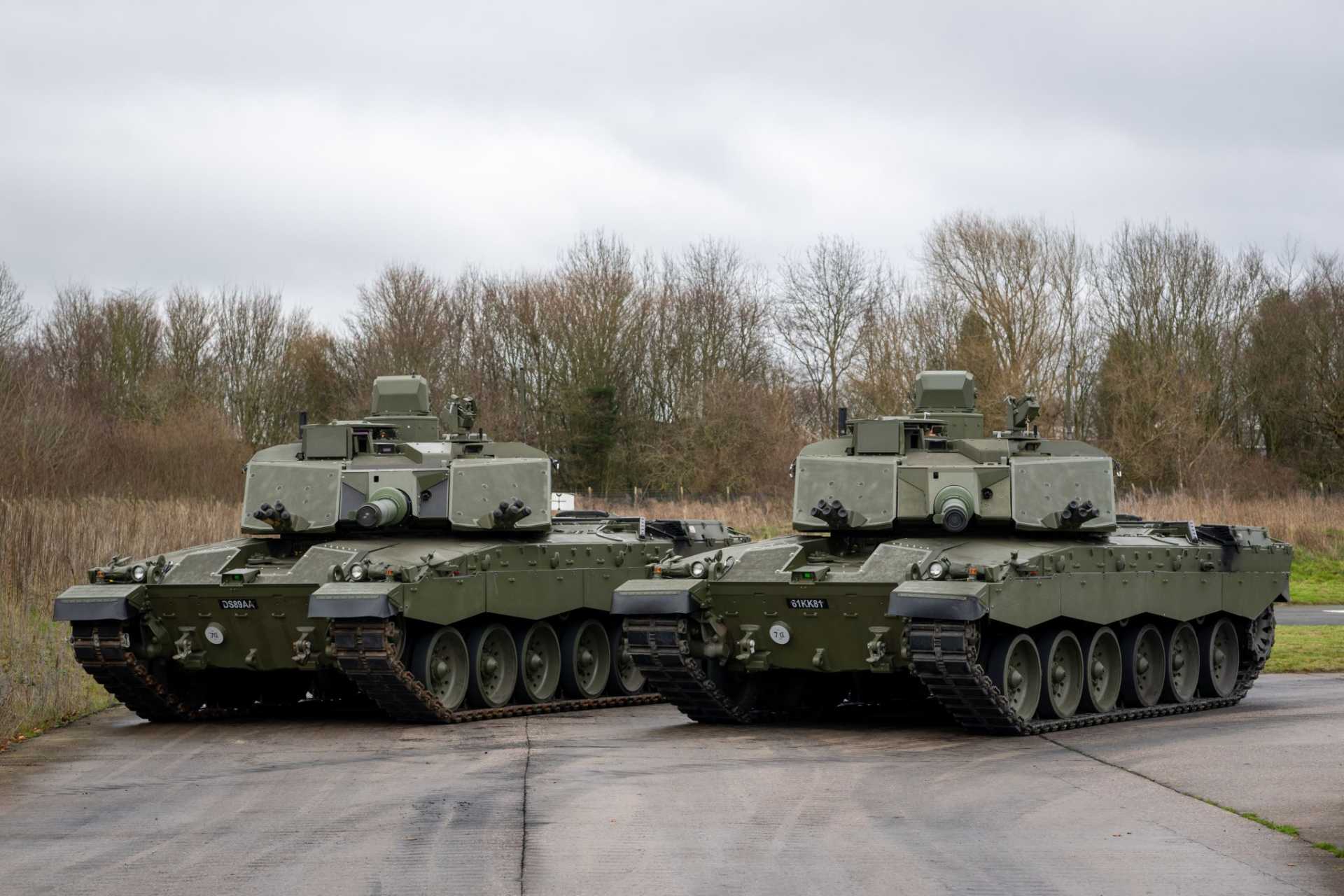
On December 20, 2024, Rheinmetall BAE Systems Land (RBSL) announced a significant milestone in the British Army's Challenger 3 tank program. Pre-Series vehicles 3 and 4 have successfully completed their commissioning phase and are now set to undergo extensive field trials. These trials will subject the tanks to a rigorous and demanding test plan to validate their performance and ensure their durability under operational conditions. This achievement represents a major step forward in the modernization of the British Army's armored capabilities.
Follow Army Recognition on Google News at this link
RBSL drives the Challenger 3 tank program forward as Pre-Series vehicles 3 and 4 complete commissioning, ready for rigorous field trials with the British Army. (Picture source: RBSL)
The Challenger 3 is an extensive upgrade of the Challenger 2 Main Battle Tank (MBT), designed to enhance its lethality, survivability, and adaptability for modern combat environments. It incorporates cutting-edge technology and advanced features to ensure it remains effective on the battlefield.
The Challenger 3 upgrade program stems from a £800 million contract awarded to RBSL in May 2021 by the UK Ministry of Defence. The program aims to upgrade 148 Challenger 2 tanks to the Challenger 3 standard. The first deliveries are scheduled for 2027, and full operational capability is expected by 2030. This program is a critical element of the UK’s broader Future Soldier initiative, which aims to modernize its armed forces to counter evolving threats and enhance interoperability with NATO allies.
Compared to the Challenger 2, the Challenger 3 introduces several significant advancements. It features a new Rheinmetall 120mm L55A1 smoothbore gun, replacing the older rifled gun. This allows the Challenger 3 to utilize NATO-standard kinetic energy munitions and programmable ammunition, providing vastly improved firepower against a wide range of targets. The tank also incorporates modular armor with provisions for the Trophy Active Protection System (APS), offering enhanced survivability against modern anti-tank threats such as missiles and rocket-propelled grenades.
The Challenger 3 tank benefits from a state-of-the-art digital architecture, which improves its command-and-control capabilities, speeds up data processing, and enables better integration with other battlefield systems. Its open systems approach also ensures the platform is future-proof, allowing for straightforward upgrades as technology evolves.
Mobility has also been enhanced with a more powerful engine and an upgraded suspension system, ensuring the tank can navigate challenging terrains and keep pace with mechanized units. Additionally, its advanced optics and sensors, including panoramic sights for both the commander and gunner, provide superior situational awareness, enabling effective target detection and engagement even in low-visibility conditions.
The newly delivered prototypes will now undergo intensive field trials, including live-fire exercises and mobility tests in diverse environments. These trials are crucial to validate the tank's design and identify any refinements needed before full-scale production begins. RBSL is committed to delivering the remaining four pre-series vehicles soon, ensuring the Challenger 3 program continues to move forward at pace.
Beyond its combat capabilities, the Challenger 3 program carries significant economic and strategic value for the UK. It sustains thousands of jobs within the defense industry and supports a robust domestic supply chain, fostering innovation and technological development across the sector.
The Challenger 3 MBT (Main Battle Tank) is poised to become a cornerstone of the British Army’s armored brigades, offering formidable capabilities to counter future threats. The British Army’s commitment to modernizing its forces ensures that it will remain a vital NATO partner and a leader in armored warfare, with the Challenger 3 exemplifying the next generation of battle-winning technology.

- Details
- Written by: Halna du Fretay
- Category: 2024
- Hits: 7510
During the Vietnam Defence Expo 2024 in Hanoi, the company 13 Mechanics and Chemicals, specializing in defense solutions, unveiled its new 70mm rocket launcher system. This system is designed to provide precise, powerful, and effective fire support in ground operations, the destruction of equipment and fortifications, and the neutralization of enemy infantry. Mounted on a lightweight vehicle, it integrates modern technologies into mobile platforms tailored to the demands of contemporary battlefields.
The rockets, measuring 950 to 975 mm in length and weighing around 10 kg with 4 to 4.5 kg fragmentation warheads, utilize proximity or impact fuses to achieve a range of 5 to 7 kilometers (Picture source: Army Recognition)
The system features a compact and efficient design. It includes forty launch tubes, each 1000 mm long, capable of firing 70mm rockets with remarkable speed. The system allows single shots, short bursts, or continuous firing, with the ability to launch all 40 rockets within just 20 seconds. The launcher’s total dimensions are 1200 mm by 1200 mm, and it uses a smoothbore barrel to enhance firing precision. The overall weight of the system, when empty, is under 600 kg, ensuring the mobility of the vehicle it is mounted on.
The system’s elevation angle ranges from 0° to 45°, with a maximum elevation rotation speed of 2° per second. It can also pivot 360°, with a rotation speed of up to 10° per second, offering high flexibility to adapt to different environments and targets. From a logistical perspective, the system can be deployed operationally in just 3 minutes, and reloading the 40 rockets takes between 4 to 6 minutes. The minimum crew required includes a commander and a launcher operator, with observation and control managed from a console inside the vehicle cabin.
The rockets used in this system possess notable technical characteristics. They measure between 950 mm and 975 mm in length, weighing approximately 10 kg, with warheads weighing between 4 and 4.5 kg. Equipped with explosive fragmentation warheads, they use proximity or impact fuses, allowing them to achieve a range of 5 to 7 kilometers. These specifications demonstrate the system’s ability to meet military operational needs in varied tactical scenarios.
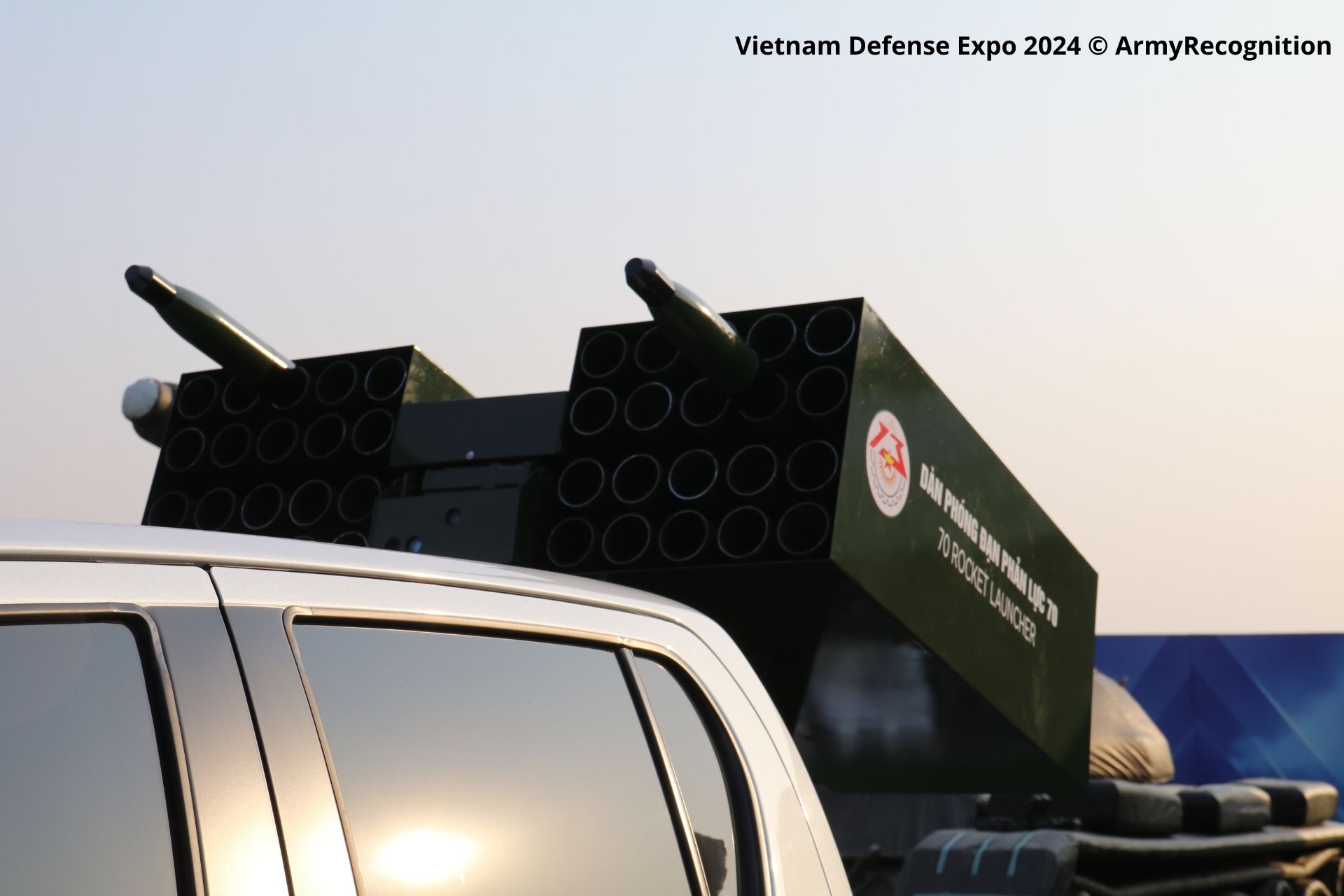
The 70mm rocket launcher developed by Vietnam stands out from its international counterparts due to its compact design and enhanced mobility (Picture source: Army Recognition)
The 70mm rocket launcher developed by Vietnam stands out from its international counterparts due to its compact design and enhanced mobility. Unlike heavier systems like the Czech RM-70, which uses 122mm rockets and requires an 8x8 truck chassis, the Vietnamese system is mounted on a lightweight vehicle, facilitating rapid deployment and adaptability to diverse terrains. This configuration also reduces operational costs and simplifies maintenance while maintaining effective area saturation capability through its 40 launch tubes.
For the Vietnamese armed forces, this system offers significant strategic advantages. Its range of 5 to 7 km suits local tactical requirements, enabling effective ground support operations without complex logistics. Additionally, the system’s rapid deployment and reloading enhance the military’s responsiveness, a critical factor in asymmetric combat scenarios or challenging terrain. By incorporating this rocket launcher, the Vietnamese army bolsters its capacity to conduct area saturation missions with greater flexibility, optimizing resource utilization.
The presentation of this rocket launcher at the Vietnam Defence Expo 2024 underscores 13 Mechanics and Chemicals’ ambition to establish itself as a key player in the market for modern defense systems. The company emphasizes a technology that is accessible, adaptable, and capable of meeting the needs of both national armies and international markets. With systems like this, the proliferation of vehicles equipped with similar technologies may increase, addressing growing demands for mobility and firepower on modern battlefields.
Read more: 70mm Rocket Launcher System in Vietnam an Innovation for Ground Support
- Details
- Written by: Halna du Fretay
- Category: 2024
- Hits: 5140
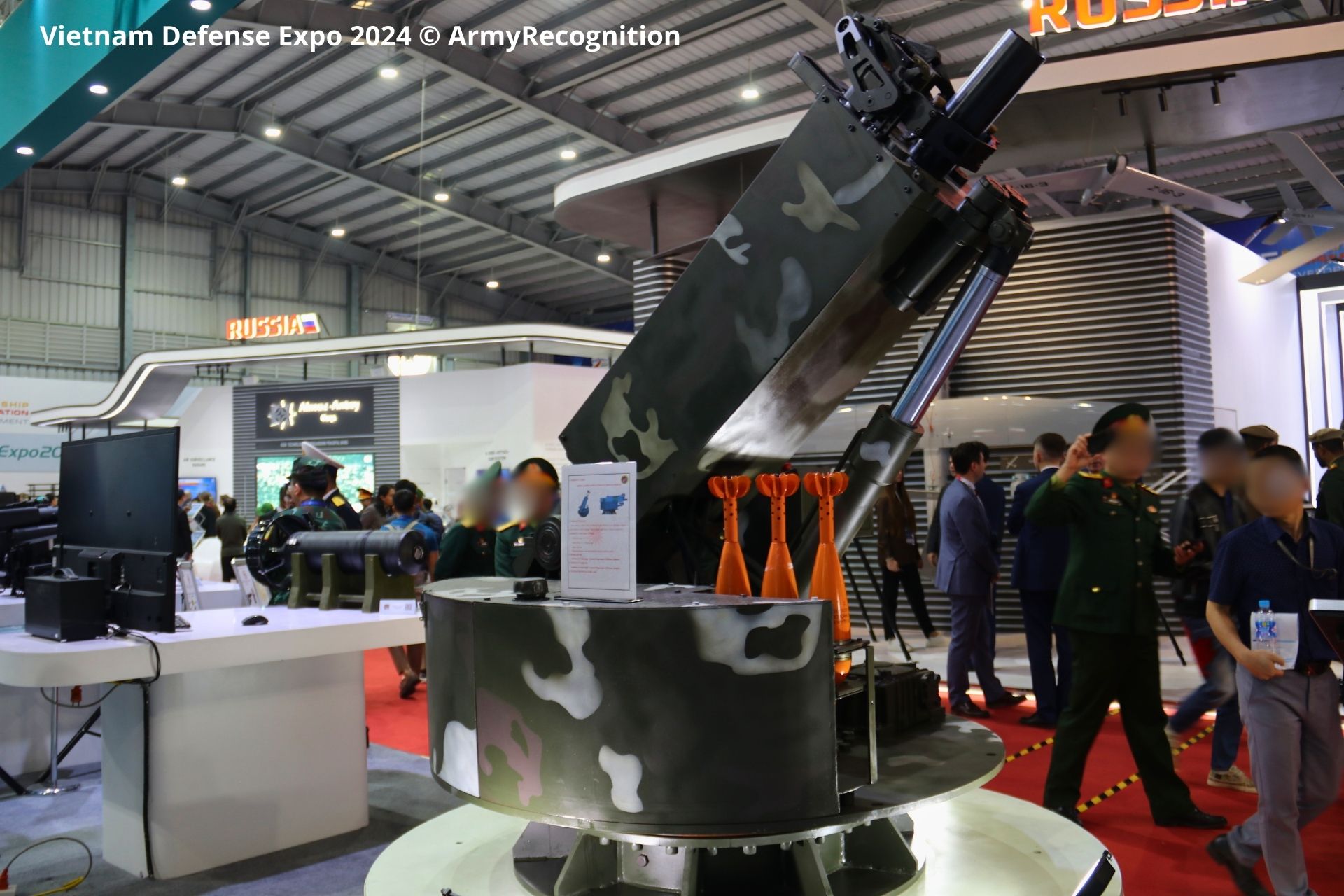
The Vietnam Army unveils its brand-new 100 mm semi-automatic mortar at the Vietnam Defence Expo 2024, held in Hanoi. This system, designed for vehicle mounting, highlights the country's technological advancements in the defense industry. The weapon stands out for its operational capabilities, modern integrated systems, and entirely local production, demonstrating Vietnam's ambitions to enhance its strategic autonomy and industrial capacity.
The 100 mm semi-automatic mortar offers a range of 6 to 10 kilometers and a firing rate of 6 to 10 rounds per minute, ensuring effectiveness in intensive operations (Picture source: Army Recognition)
The 100 mm semi-automatic mortar module has an operational range of 6 to 10 kilometers, providing effective battlefield coverage. Its firing rate varies between 6 and 10 rounds per minute, making it suitable for intensive operations. Weighing approximately 1.5 tons, the system is designed for rapid and easy deployment via vehicle mounting. It features a semi-automatic control system, ensuring optimized operation and improved accuracy under various operational conditions.
The development and production of this mortar were carried out by the Institute of Technology under the General Department of National Defense Industry. This institution has played a significant role in modernizing the country's defense capabilities, leveraging its engineering expertise to produce a system meeting modern standards. The year 2024 marks the official start of production for this system, reflecting Vietnam’s active role in the design and manufacture of defense equipment.
The 100 mm semi-automatic mortar differs from competitors like Thales’ 2R2M, Poland’s Rak, and Finland’s Nemo, primarily in its smaller caliber. While these systems employ 120 mm calibers, offering greater range and impact, the Vietnamese mortar emphasizes lighter design and improved maneuverability. For instance, the Rak and Nemo, equipped with fully automatic loading systems, achieve higher firing rates and advanced features like MRSI (Multiple Rounds Simultaneous Impact). In contrast, the Vietnamese system, with its lighter 1.5-ton weight, is particularly suited to light vehicles, facilitating faster deployment in varied operational environments.
Compared to heavier systems like Sweden’s Mjölner or Russia’s 2S9 Nona-S, which are mounted on tracked armored chassis and designed for multifunctional roles, the Vietnamese mortar is focused on specific tactical missions. Although its firing rate is competitive for a 100 mm caliber, it remains below the capabilities of 120 mm automatic mortars, which often incorporate more advanced technologies for battlefield efficiency. However, the Vietnamese mortar compensates for its relatively lower firepower with ease of use and potentially lower costs, making it an attractive solution for armed forces seeking economic and mobile options.
By introducing this 100 mm semi-automatic mortar, Vietnam underscores its efforts to strengthen its defense capabilities while positioning itself as a potential player in the international arms market. This system may attract interest from other countries aiming to modernize their arsenals with effective and cost-efficient solutions. The proliferation of this technology could diversify the options available on the global market while highlighting the growing capabilities of Vietnam's defense industry.
Read more: Vietnam Army Unveils its 100 mm Mortar Combining Mobility and Tactical Efficiency

- Details
- Written by: Administrator
- Category: 2024
- Hits: 4796
In December 2024, the Düsseldorf-based defense company Rheinmetall received an order to supply Ukraine with 20 additional Marder 1A3 infantry fighting vehicles (IFVs). These vehicles are slated for delivery in the first half of 2025, with funding provided by the German government. The contract is valued in the midrange double-digit million-euro bracket, further cementing Germany's commitment to supporting Ukraine in its ongoing conflict.
Follow Army Recognition on Google News at this link
A German-made Marder 1A3 infantry fighting vehicle in service with the Ukrainian Army, equipped with advanced features such as a laser rangefinder, provides enhanced battlefield precision and protection. (Picture source: Ukraine MoD)
This latest order comes as part of a sustained effort by Rheinmetall to bolster Ukraine’s military capabilities. To date, the company has supplied hundreds of Marder 1A3 IFVs to the Ukrainian armed forces, with the majority financed by the German government. Rheinmetall initiated the refurbishment of its Marder 1A3 stocks in spring 2022 at its own expense, ensuring the vehicles are combat-ready upon delivery.
The first batch of 20 Marder 1A3 vehicles was delivered in March 2023, and subsequent shipments have arrived regularly in double-figure batches. These vehicles are equipped with advanced features, including a laser rangefinder, which enhances the precision and efficiency of target engagement, making them highly effective on the modern battlefield.
Since the beginning of the war in Ukraine, Germany has provided 140 Marder infantry fighting vehicles sourced from both Bundeswehr and industry stocks. Ukrainian forces have employed the Marder 1A3 with notable success against Russian forces, leveraging its superior firepower, mobility, and protection. In the hands of Ukrainian soldiers, the Marder 1A3 has proven instrumental in various combat scenarios, from defensive operations to counter-offensives. The IFV's robust armor and efficient targeting systems have been particularly valuable in contested areas, enabling troops to engage effectively with enemy units while ensuring protection for infantry onboard.
The Marder 1A3 delivers a balanced combination of firepower, protection, and mobility, making it an essential asset in mechanized infantry operations. Its primary armament consists of the Rheinmetall MK 20 Rh202 20mm automatic cannon, capable of engaging both ground-based targets and low-flying aerial threats with precision. This weapon system is complemented by a 7.62mm coaxial machine gun for neutralizing infantry and lightly armored vehicles. Additionally, the IFV is equipped with smoke grenade launchers to obscure visibility and provide concealment during combat.
Protection is a key feature of the Marder 1A3, which has enhanced armor compared to earlier versions, offering robust defense against small arms fire, artillery fragments, and anti-tank weapons. Its reinforced hull and improved ballistic protection ensure the safety of both the crew and the infantry it transports.
Mobility is another defining characteristic of the Marder 1A3. Powered by a 600-horsepower MTU diesel engine, it can achieve up to 65 km/h on roads and easily traverse challenging off-road terrain. Its torsion bar suspension system provides stability and maneuverability, enabling it to operate effectively in varied environments.
The Marder 1A3 delivered to Ukraine includes an additional laser rangefinder for efficient and precise target engagement. This advanced targeting system, combined with its proven firepower and protection, has made the Marder 1A3 a highly effective tool for Ukrainian forces in their fight against Russian aggression.
The delivery of these 20 additional vehicles underscores Germany’s ongoing commitment to Ukraine. Beyond the Marder 1A3 IFVs, this support includes broader military aid aimed at strengthening Ukraine’s ability to resist aggression and defend its sovereignty. As the war continues, the delivery of advanced military equipment like the Marder 1A3 reflects the shared determination of Germany and its allies to uphold European security. With the latest order scheduled for 2025, Ukraine’s armored forces will receive a further boost, ensuring they remain equipped to counter evolving threats on the battlefield.
Read more: Germany Strengthens Ukraine's Infantry Units with New Delivery of 20 Marder 1A3 IFVs
- Details
- Written by: Administrator
- Category: 2024
- Hits: 5193
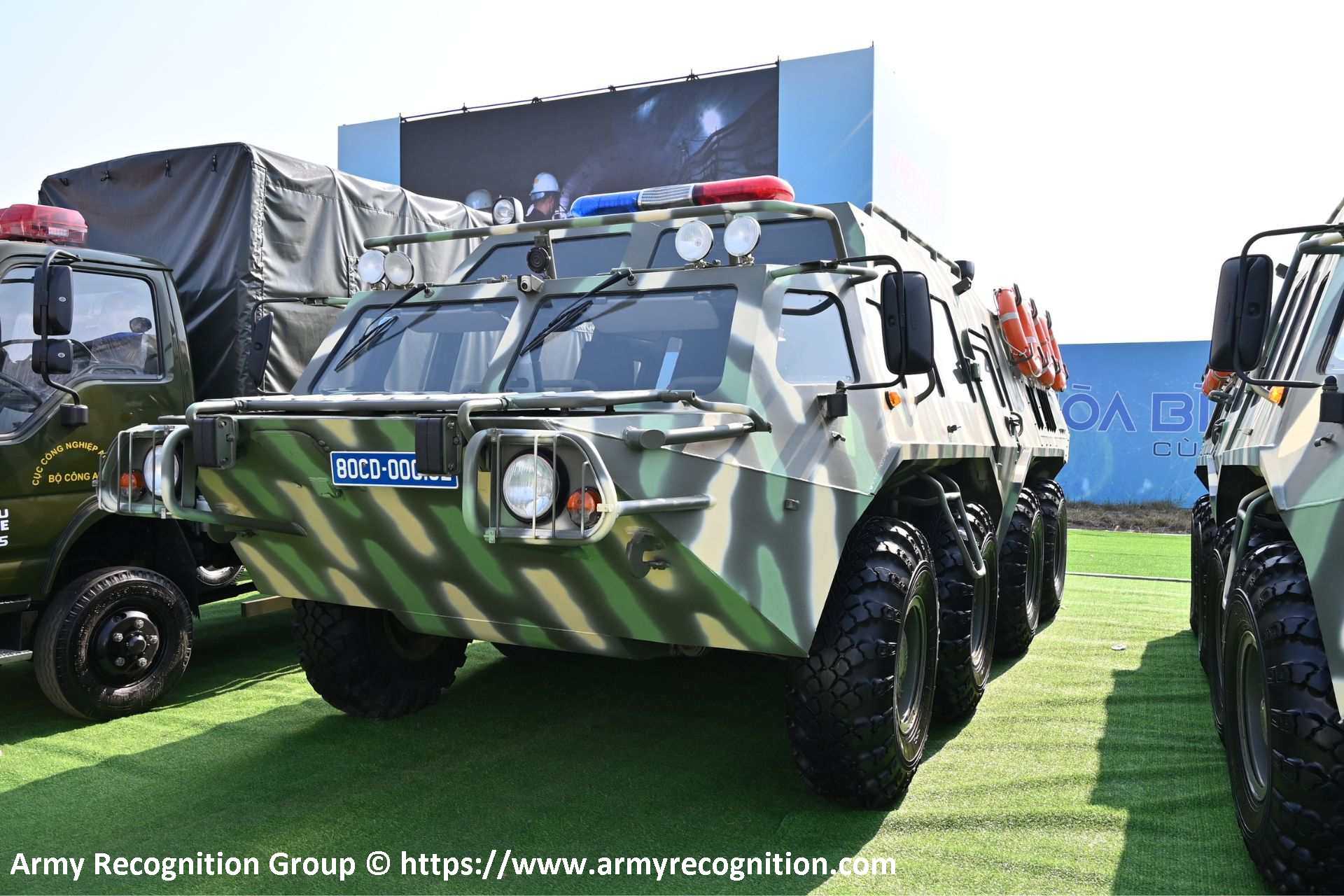
At the Vietnam Defence Exhibition, which took place in Hanooi from 19 to 22 December 2024, the Vietnamese armed forces demonstrated their amphibious combat capabilities, showcasing a wide range of vehicles and equipment designed for operations in water-dominated environments. Among the highlights was the Russian-made GAZ-5903, a versatile amphibious armored personnel carrier (APC) that underscores Vietnam’s ability to tackle operational challenges in its complex geographical terrain, including marshlands, rivers, and coastal areas.
Follow Army Recognition on Google News at this link
The Russian-made GAZ-5903 amphibious armored personnel carrier is on display at the Vietnam Defence Exhibition in Hanoi, highlighting the Vietnamese armed forces' capabilities in amphibious operations and terrain adaptability. (Picture source: Army Recognition Group)
Developed by the Gorky Automobile Plant (GAZ) during the Soviet era, the GAZ-5903 is a multi-terrain vehicle renowned for its robust design and adaptability. Its 6x6 wheel configuration, combined with amphibious capabilities, makes it a reliable asset for troop transport in areas inaccessible to standard vehicles. The vehicle is fully amphibious, utilizing onboard water jets or propellers for aquatic propulsion, allowing it to cross rivers and other water obstacles with ease. Offering basic ballistic protection against small arms fire and shrapnel, the GAZ-5903 ensures troop safety in hostile environments. Its ability to traverse muddy terrain, swamps, and snow makes it particularly well-suited for Vietnam's extensive riverine and coastal regions.
The inclusion of the GAZ-5903 in Vietnam's amphibious vehicle fleet reflects the nation’s emphasis on developing a modern force capable of operating across challenging terrains. With a coastline stretching over 3,200 kilometers and a vast network of rivers, amphibious capabilities are vital for Vietnam's defense strategy. These capabilities enable rapid troop deployment, logistical support, and effective response to both military and non-military challenges, such as natural disasters.
Vietnam’s amphibious strength also lies in its Marine Brigade, a specialized force within the Vietnam People’s Navy (VPN). This elite unit is central to safeguarding the country’s maritime interests, particularly in contested areas like the South China Sea. The Marine Brigade comprises several battalions trained in amphibious assault techniques, coastal defense, and rapid reaction to maritime threats. Although the exact number of personnel remains classified, the force is well-structured to undertake complex operations requiring coordinated land-sea maneuvers.
The Marine Brigade is equipped with a range of vehicles and weaponry that enhance its operational effectiveness. Its armored fleet includes amphibious APCs like the BTR-60 and PT-76 light tanks, which ensure seamless transitions between water and land. Artillery units are armed with 105mm and 122mm howitzers, providing fire support during assaults. Marines also carry modern rifles, machine guns, and anti-tank weaponry, ensuring flexibility in combat scenarios. The brigade works closely with the Navy’s fleet of landing ships, including Polnocny-class vessels, to enable rapid deployment during amphibious missions.
While the GAZ-5903 plays a vital role in troop transport, logistical support, and tactical operations in coastal and riverine regions, Vietnam’s broader amphibious modernization efforts aim to blend legacy platforms with newer technologies. This strategy reflects the country’s focus on strengthening its defense posture to address evolving security challenges, including territorial disputes and natural disasters.
The Vietnam Defence Exhibition provided a platform for the nation to showcase its robust amphibious capabilities, emphasizing their importance in maintaining sovereignty and security. The inclusion of the GAZ-5903 and the capabilities of the Marine Brigade highlight Vietnam’s strategic focus on adapting its military resources to meet the unique demands of its geographical and operational landscape. Together, they demonstrate the nation’s preparedness for future challenges in both defense and disaster response, ensuring operational readiness in water-dominated environments.
Read more: Vietnamese Armed Forces Showcase Amphibious Combat Capabilities with Russian GAZ-5903 APC
- Details
- Written by: Halna du Fretay
- Category: 2024
- Hits: 7509
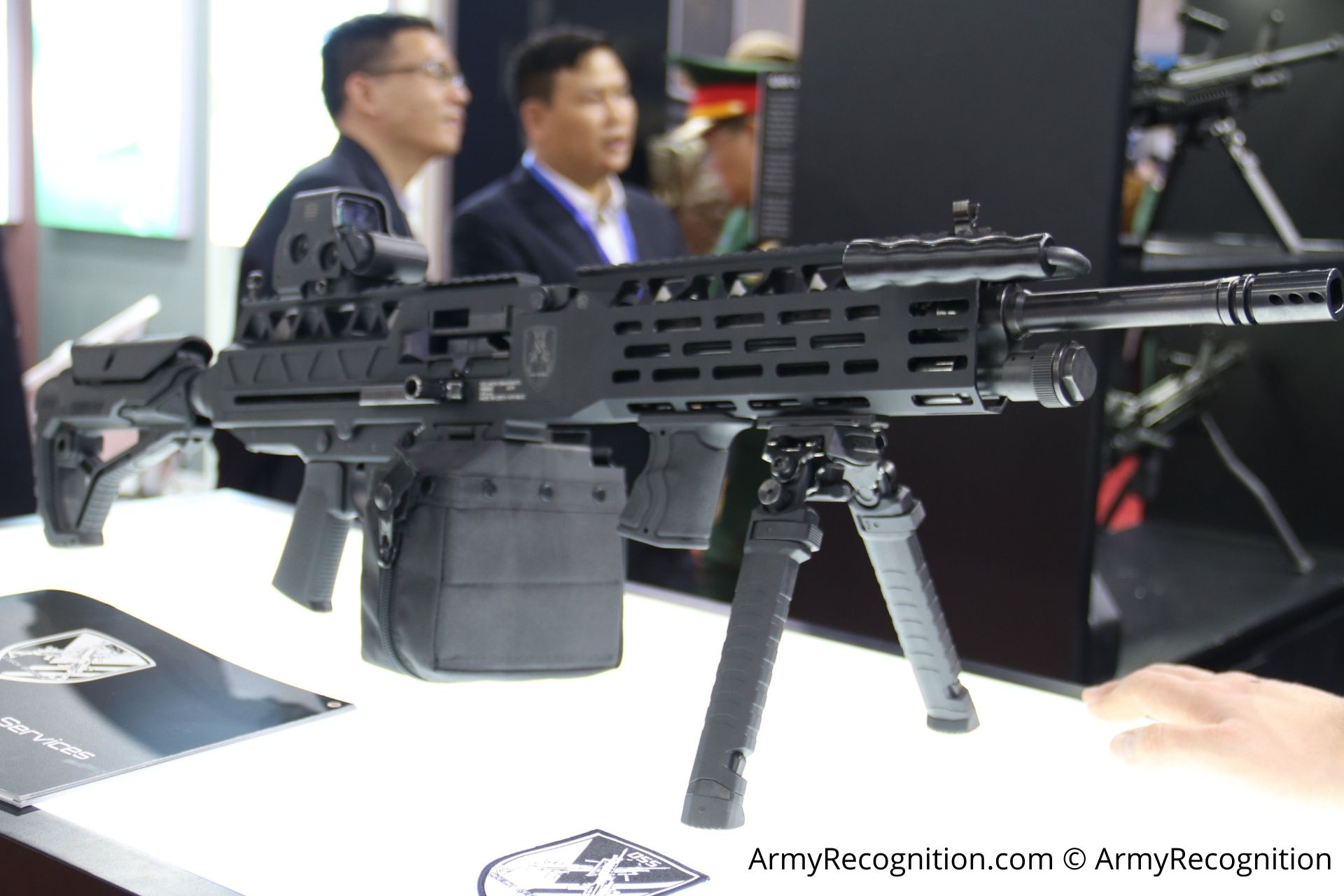
At the Vietnam Defence Expo 2024 in Hanoi, Czech company DSS unveiled its latest light machine gun model, the PZD Mk24. This weapon is characterized by a significantly reduced weight, 30% lighter compared to other 5.56 mm machine guns. It combines the essential features of a machine gun with the ergonomics and maneuverability of an assault rifle, meeting the demands of modern operators.
One of the PZD Mk24’s advantages is its minimalist ammunition feed system, which ensures the aiming point remains stable after reloading without impacting the accuracy of mounted optics (Picture source: Army Recognition)
Chambered in NATO-standard 5.56×45 mm, the PZD Mk24 weighs only 5.2 kg, making it notably lighter than the widely used FN Minimi, which weighs between 6.5 and 7 kg. The design reduces recoil while enhancing accuracy for long-range engagements. The weapon is equipped with interchangeable barrels of 14 or 16 inches and features a dual-mode trigger mechanism for both semi-automatic and fully automatic fire.
One of the PZD Mk24’s advantages is its minimalist ammunition feed system, which ensures the aiming point remains stable after reloading without impacting the accuracy of mounted optics. Its receiver, paired with a continuous Picatinny rail, is designed for optimal heat dissipation and improved stability. The PZD Mk24 has a maximum range of 1,200 meters and an effective range of 600 meters.
DSS, the company behind this design, is a relatively new player in the arms market. While it has gained recognition for producing high-quality replicas of the Belgian FN Minimi, the PZD Mk24 represents the company’s first entirely original model. Alongside previous products, such as the PZD 556 and PZD 762, this new machine gun has already been adopted by Ukrainian forces, including special forces units and marines.
The unveiling of the PZD Mk24 reflects DSS's ambitions to address the demand for lighter and more efficient weapon systems in modern combat. Through this innovation, the company aims to solidify its position in the international market and expand its presence in military arsenals worldwide. However, extensive testing remains necessary before large-scale production can begin, ensuring the weapon’s performance and reliability under operational conditions. This development highlights the increasing role of technological advancements in contemporary military equipment..
Read more: PZD Mk24 an Ultra-Light Machine Gun with Increased Efficiency at VIDEX 2024
- Details
- Written by: Halna du Fretay
- Category: 2024
- Hits: 6547
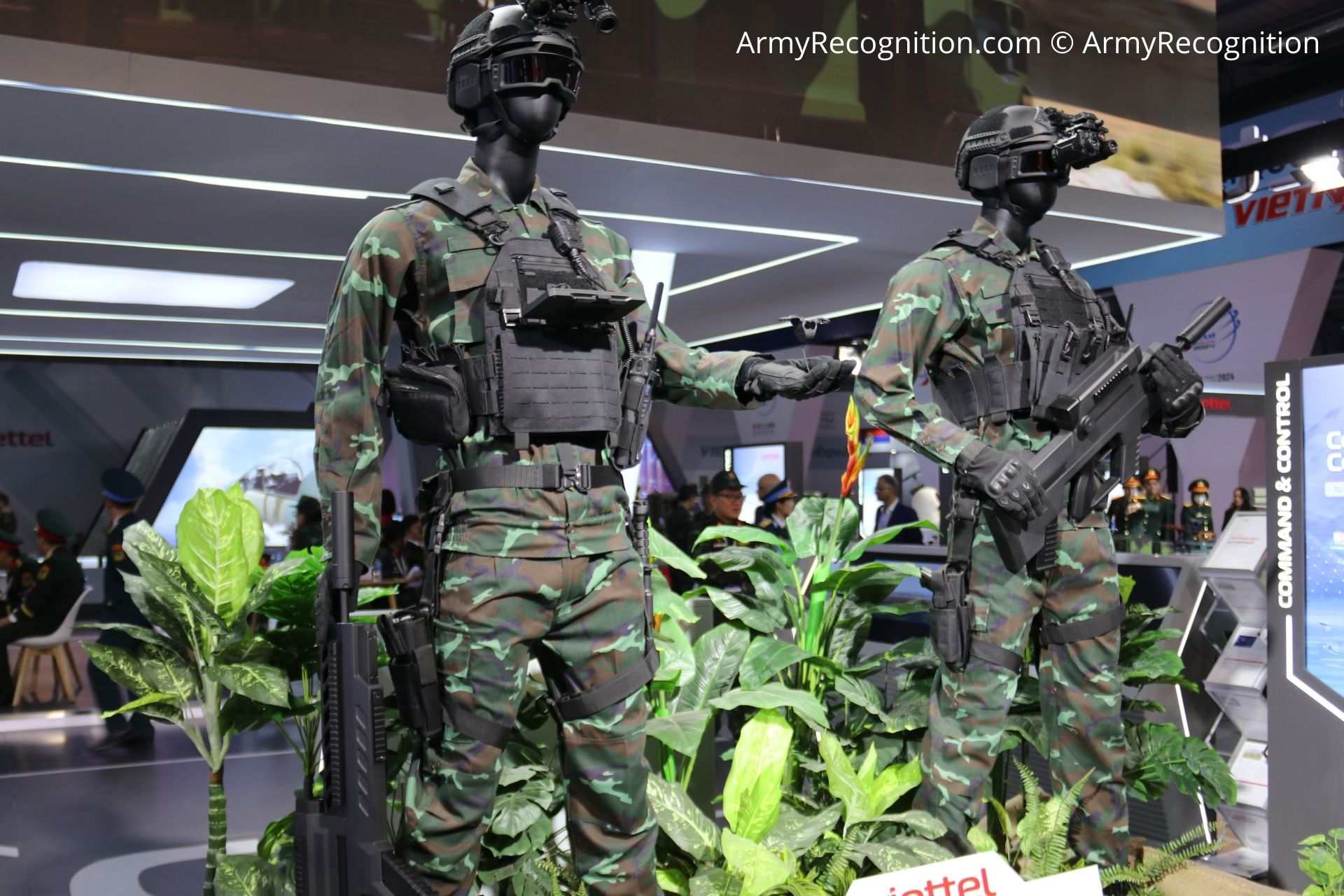
At the 2024 edition of the Vietnam Defence Expo held in Hanoi, the Viettel Military Industry and Telecommunications Group, affiliated with the Ministry of National Defense, introduced a major innovation in individual military equipment with its "future soldier" system. This concept is designed to enhance soldiers' capabilities through the integration of artificial intelligence and advanced technologies, providing unprecedented combat support features.
These systems aim not only to offer optimal protection to the user but also to include advanced tools for communication, tactical orientation, and sophisticated personal weaponry (Picture source: Army Recognition )
The "future soldier" system developed by Viettel aligns with global trends where major powers are competing to design military uniforms incorporating cutting-edge technologies. These systems aim not only to offer optimal protection to the user but also to include advanced tools for communication, tactical orientation, and sophisticated personal weaponry. Viettel's solution meets these requirements with an integrated system combining smart weapons, information processing, and exchange technologies, and network connectivity for soldiers within a digital battlefield framework.
The futuristic uniform by Viettel includes a central processing device, enhanced vision systems, information network connectivity, smart weaponry, and uniforms designed for extreme conditions. These uniforms feature interfaces linked to automated command systems and are compatible with unmanned vehicles, including aerial, ground, and maritime drones. Key capabilities include intelligent information processing, improved situational awareness, real-time coordination, and enhanced navigation and combat system management through a battlefield management system (BMS).
The system incorporates advanced technologies such as artificial intelligence for information analysis, multi-channel connectivity via UHF, VHF, satellite, and private 5G networks, and smart weapons capable of automatically identifying and targeting with precision. The uniforms themselves are bulletproof, camouflaged, resistant to radiation and extreme temperatures, and capable of regulating body heat. They also enable effective observation and reconnaissance, both day and night, even in complex environments.
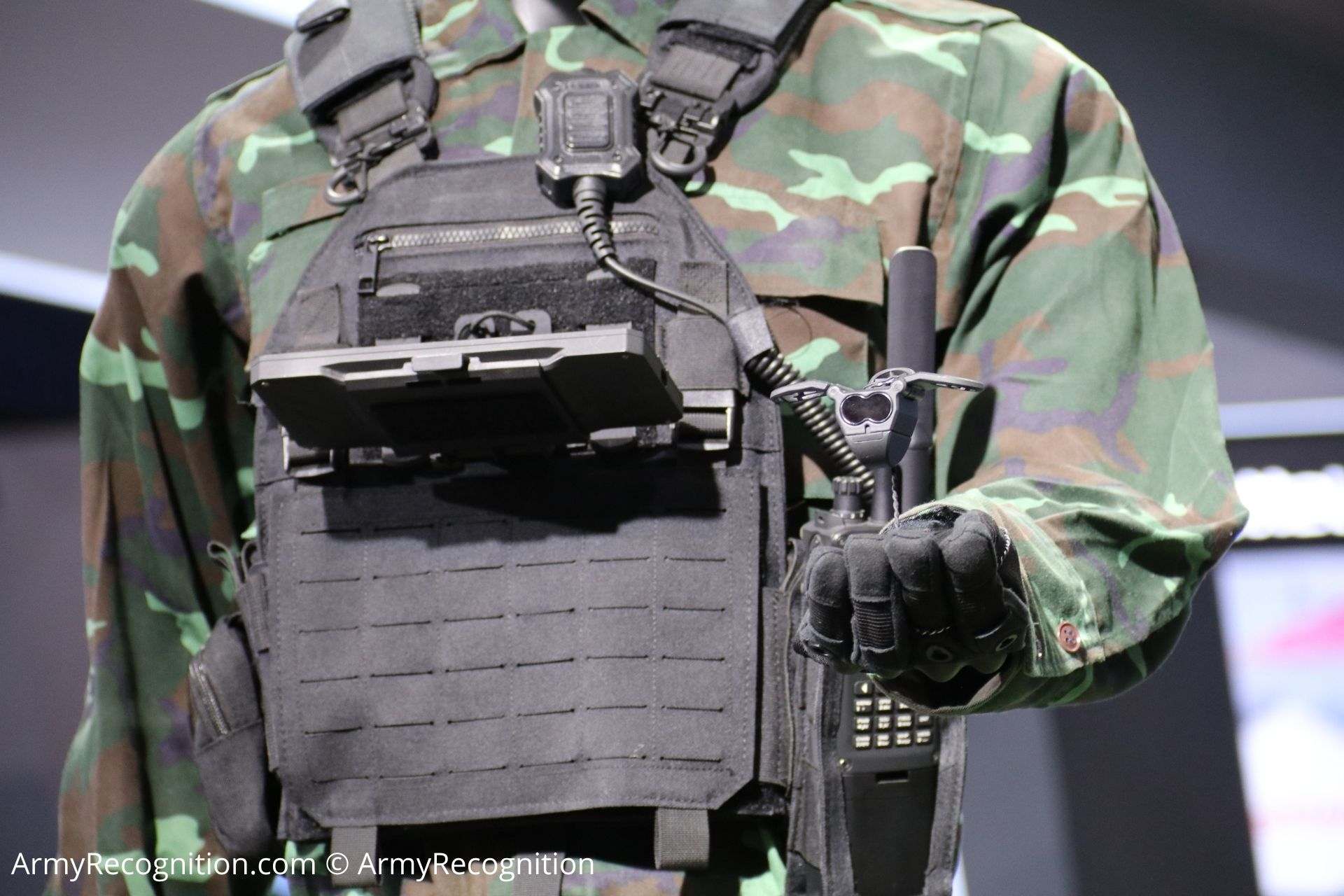
These uniforms feature interfaces linked to automated command systems and are compatible with unmanned vehicles, including aerial, ground, and maritime drones (Picture source: Army Recognition)
In addition, Viettel showcased helmet-mounted night vision devices, HNVF01 and HNVF02, developed by a young team of engineers from the Infrared Optical Engineering Department at the Institute of Technical Physics. These devices use dual-channel image fusion technology, combining low-light amplification and thermal imaging based on beam synthesis principles. This innovative approach delivers a new level of image quality in Vietnam, allowing for clear target identification, even under strong light conditions or when targets are concealed in dense vegetation. Their compact and lightweight design makes them practical tools for special missions, including reconnaissance, border surveillance, and rescue operations.
This presentation represents a significant step for Viettel, positioning the company as a key player in the development of military technologies in Vietnam. If this "future soldier" system is deployed on a large scale, it could substantially enhance the capabilities of the Vietnamese armed forces. Furthermore, the integration of state-of-the-art technologies may attract international interest, potentially leading to the adoption of such systems by other armed forces. Viettel’s expertise reflects its ambition to become a leader in military innovation while strengthening Vietnam’s national defense capabilities.
Read more: Vietnamese Company Viettel Reinvents Soldiers with Connected Uniforms and Smart Weapons
- Details
- Written by: Halna du Fretay
- Category: 2024
- Hits: 3273
Roketsan, a prominent Turkish company in rocket and missile systems, participated in the Vietnam International Defense Expo held in Hanoi from December 19 to 22, 2024. Organized by the Vietnamese Ministry of Defense, this event allowed Roketsan to strengthen its cooperation with countries in Southeast Asia, a strategically significant region where it already maintains strong ties.
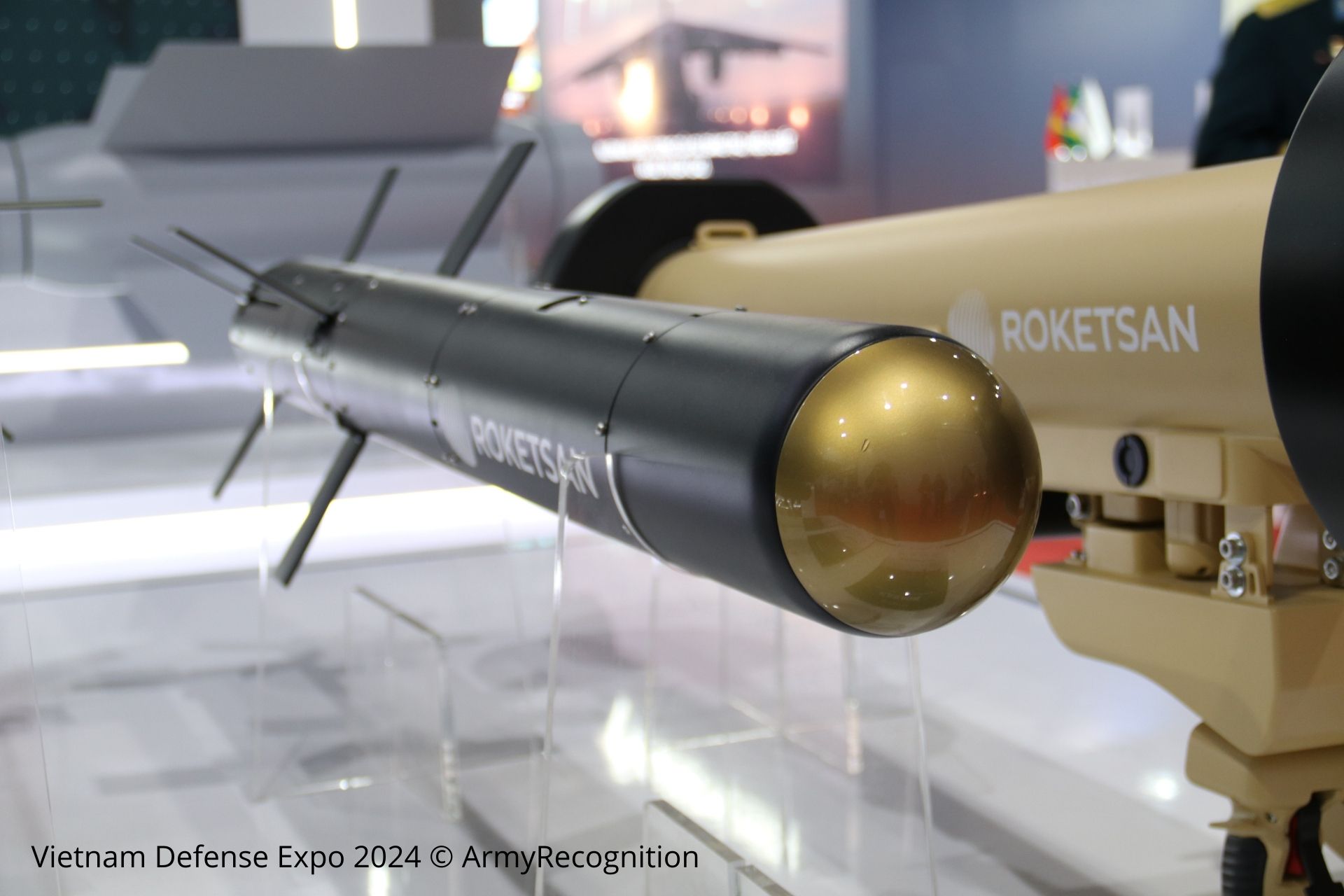
Among the systems presented, Roketsan highlighted its anti-tank solutions, including the KARAOK short-range anti-tank missile (Picture source: Armyrecognition)
The Vietnam International Defense Expo serves as a key platform for the defense industry, bringing together global stakeholders seeking to showcase advanced technologies and establish partnerships. Roketsan presented an extensive range of cutting-edge products, recognized for their proven performance in operational contexts.
According to Murat Ikinci, Roketsan’s General Director, the company views participation in international exhibitions as essential to demonstrating its capabilities and expanding its global outreach. The Vietnam International Defense Expo offered a strategic opportunity to build on existing ties in Southeast Asia and introduce innovative solutions to the region. At the event, Roketsan showcased an array of products, ranging from anti-tank systems to air defense solutions and advanced missiles. The expo also facilitated discussions aimed at increasing the company’s international visibility and exploring new avenues for exports.
Among the systems presented, Roketsan highlighted its anti-tank solutions, including the KARAOK short-range anti-tank missile, the L-UMTAS laser-guided long-range anti-tank missile, and the OMTAS medium-range anti-tank missile system. In the field of air defense, the company displayed the SUNGUR missile system, the HISAR-O (RF) medium-range air defense missile, and the SIPER system designed for long-range regional air and missile defense.
Additionally, Roketsan unveiled the CAKIR cruise missile and the precision-focused TRLG-230 and TRG-300 missiles. The company also introduced the BARBAROS coastal defense system, developed for maritime applications, further diversifying its portfolio presented at the event.
This participation underscores Roketsan’s commitment to fostering relationships with Southeast Asian nations and providing tailored solutions to meet the region's specific defense needs. The expo represented a valuable platform for establishing new partnerships and broadening the scope of Turkish defense exports, reinforcing Roketsan’s position as a key player in the international defense market.
Roketsan continues to leverage its technological expertise and international strategy to represent Turkey on the global stage. The Vietnam International Defense Expo marked an important milestone in the company’s efforts to expand its presence and become a trusted partner for defense solutions in Southeast Asia.
- Details
- Written by: Administrator
- Category: 2024
- Hits: 5766
Iran unveiled its domestically developed BM-300 surface-to-surface ballistic missile at the Defense Exhibition in Vietnam that takes place in Hanoi from 19 to 22 December 2024, underscoring the growing sophistication of its missile technology and signaling a deepening defense relationship with the host nation. This advanced weapon system, designed for high-precision strikes, highlights Iran’s commitment to bolstering its regional deterrence while exploring opportunities for military exports.
Follow Army Recognition on Google News at this link
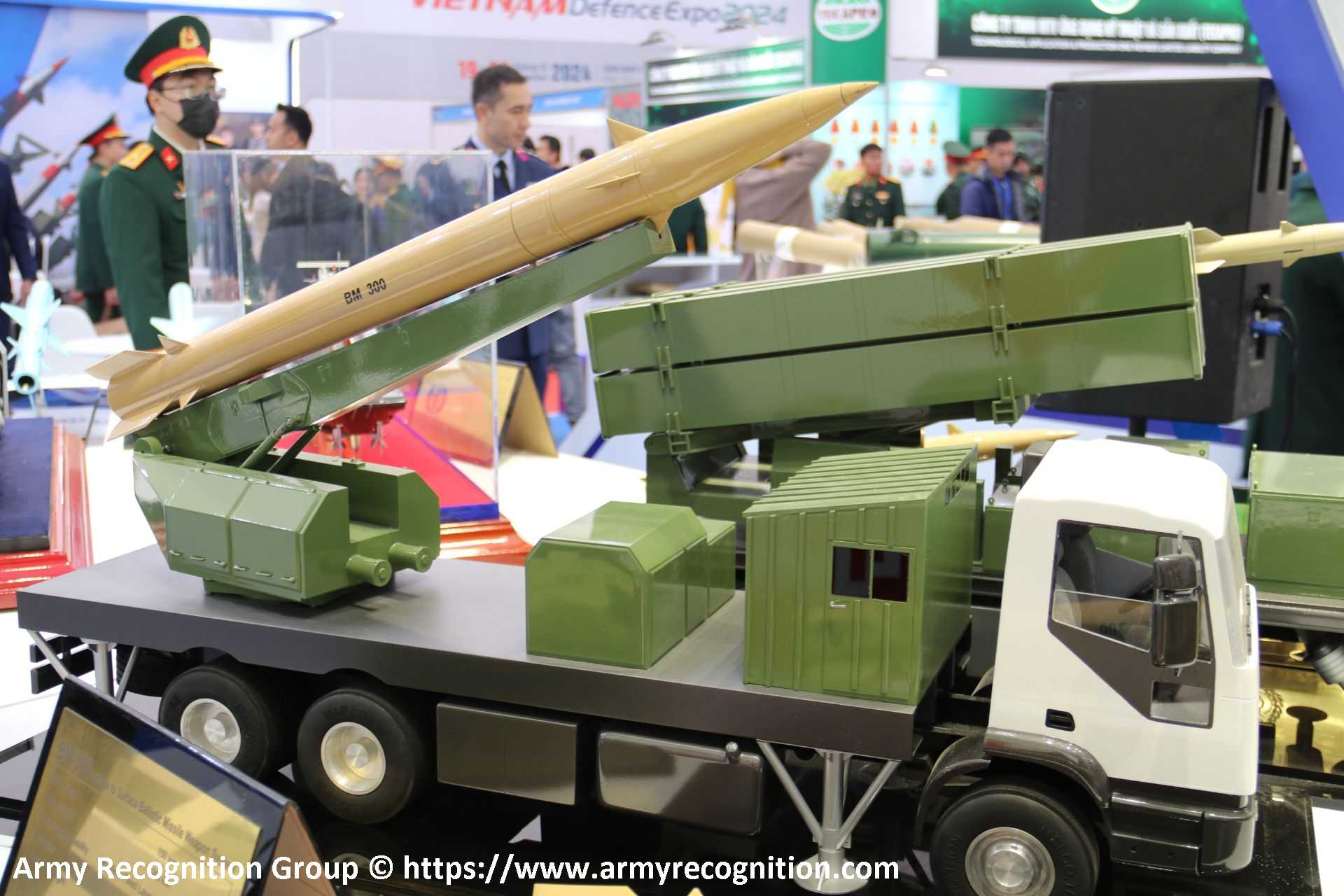
Iran showcases a scale model of the BM-300 surface-to-surface ballistic missile at the Vietnam Defense Expo, highlighting its advanced design and capabilities.(Picture source: Army Recognition Group)
The BM-300 surface-to-surface ballistic missile system is mounted on a 6x6 truck chassis, combining mobility and operational efficiency. The truck features a crew cabin at the front, with a small shelter located directly behind it, which houses all the equipment necessary for fire control operations. This compact design allows the crew to manage targeting and launching procedures from a protected environment. A launcher ramp is installed at the rear of the vehicle, designed to carry and fire a single BM-300 missile. This integrated setup enhances the system's mobility, enabling it to operate in diverse terrains and deploy rapidly for tactical missions, making it a versatile asset for modern battlefield scenarios.
The BM-300 is a single-stage, solid-propellant ballistic missile optimized for striking critical infrastructure such as command centers, missile sites, ammunition depots, military installations, and airports. With a range of 150 to 300 kilometers and a Circular Error Probable (CEP) of less than 35 meters, it offers a potent combination of range, mobility, and precision. The missile is mounted on an 8x8 mobile transporter-erector-launcher (TEL), ensuring operational flexibility and rapid deployment. Its solid-propellant motor, utilizing HTPB fuel, allows for efficient and reliable performance in diverse environments, making the BM-300 a valuable asset for both offensive and defensive operations.
Unveiling the BM-300 in Vietnam also sheds light on the evolving defense ties between Tehran and Hanoi. The defense relationship between Iran and Vietnam is rooted in their shared historical experiences of resisting foreign intervention and their mutual focus on achieving self-reliance in military capabilities. Over the years, both nations have actively sought to diversify their defense partnerships to reduce reliance on major powers and foster technological cooperation. Diplomatic exchanges and high-level visits by defense officials from both countries have paved the way for collaboration in military training, technology sharing, and the exchange of expertise. Vietnam’s hosting of this missile’s debut reinforces its willingness to engage with a non-Western defense partner, particularly one that can offer cost-effective and capable solutions.
The BM-300 is part of Iran’s broader missile development program, which has evolved significantly over the past decade. As Iran faces persistent challenges, including international sanctions, regional rivalries, and military threats, its missile program has become a cornerstone of its defense strategy. Iran has prioritized the development of a robust missile arsenal to counter threats from adversaries and assert its sovereignty. The BM-300 reflects this strategic focus, emphasizing precision and tactical utility.
Iran has produced a range of ballistic missiles over the last decade, including the Fateh-110 series, the Qiam-1, and the Khorramshahr medium-range missile. These systems have been developed to address both regional and international threats, ranging from potential conflicts with neighboring states to deterrence against global powers. The BM-300’s emphasis on accuracy and mobility highlights Iran’s ongoing efforts to create systems suited to modern combat scenarios.
On the international stage, Iran’s ballistic missile program has been a source of tension. Western nations, Israel, and certain Gulf states have expressed concerns over the potential for these weapons to destabilize the region. Additionally, Iran’s provision of missile technology to allied groups such as Hezbollah has further heightened apprehensions. Despite these pressures, Iran has continued to invest in its missile program as a symbol of its resistance to foreign interference and a means to project power regionally.
By showcasing the BM-300 in Vietnam, Iran is also positioning itself as a viable defense exporter. The exhibition offers an opportunity for Tehran to demonstrate its technical achievements and expand its presence in the global defense market. For Vietnam, the collaboration reflects its strategy of diversifying defense suppliers and modernizing its arsenal to address regional security concerns, particularly in the South China Sea. Hosting the BM-300’s debut also signals Hanoi’s interest in exploring new defense partnerships that align with its goals of cost-effective procurement and self-reliance.
The BM-300’s debut in Vietnam represents a convergence of strategic interests between the two nations. For Iran, it is a platform to highlight its resilience and innovation in defense technology despite international sanctions and isolation. For Vietnam, the exhibition serves as an avenue to deepen ties with an emerging defense partner while gaining access to advanced yet affordable military solutions.
The unveiling of the BM-300 highlights Iran’s ability to overcome international challenges and develop advanced systems tailored to its defense needs. At the same time, it underscores the growing partnership between Iran and Vietnam, rooted in shared strategic goals and a mutual commitment to strengthening their defense capabilities. As both nations navigate a complex global security landscape, this collaboration signals their determination to enhance self-reliance and explore new opportunities in the defense sector.
- Details
- Written by: Administrator
- Category: 2024
- Hits: 4073
On December 20, 2024, MBDA announced that the German Armed Forces have signed a pivotal contract with TAURUS Systems GmbH to maintain and modernize the TAURUS cruise missile system. This project, referred to as "Basic Overhaul 2," is designed to ensure the operational readiness of the weapon until at least 2045. It marks a significant step in maintaining and enhancing Germany's stand-off strike capabilities in line with evolving military needs.
Follow Army Recognition on Google News at this link
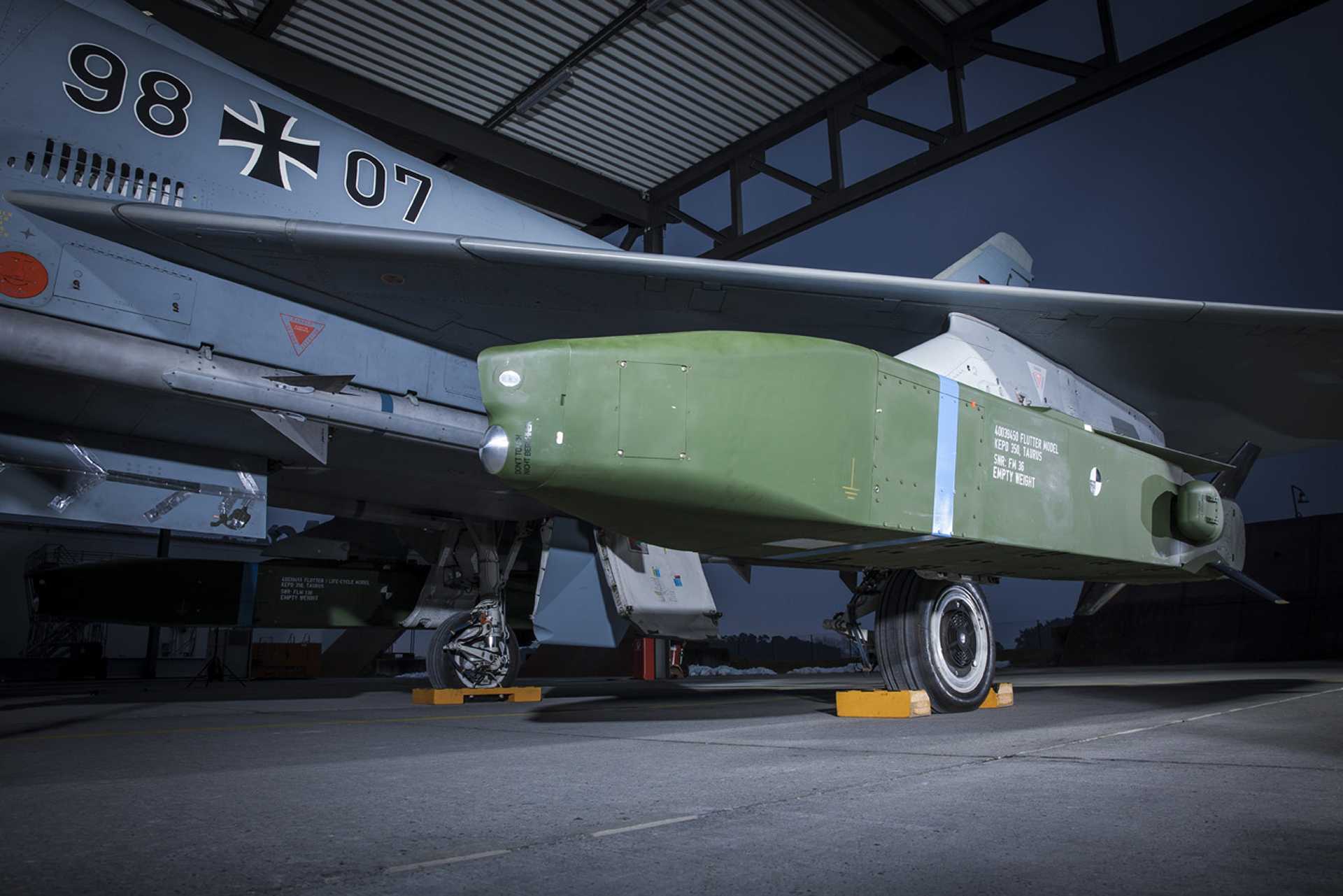
TAURUS KEPD 350 air-launched cruise missile mounted on a German Air Force Eurofighter Typhoon, showcasing its integration with modern fighter jets for long-range precision strike missions. (Picture source: MBDA)
MBDA, a multinational leader in missile systems, is a key player in this modernization effort. Formed as a joint venture by Airbus, BAE Systems, and Leonardo, MBDA specializes in developing cutting-edge missile solutions for air, land, and naval forces worldwide. With operations in several countries and an extensive portfolio of defense products, MBDA has consistently demonstrated its ability to design, produce, and maintain high-performance weapon systems. Its collaborative role within TAURUS Systems GmbH, a joint venture with SAAB, highlights MBDA’s commitment to enhancing the operational capabilities of its partner nations. The company’s expertise is a driving force behind the modernization of the TAURUS missile, ensuring its continued relevance on the modern battlefield.
The TAURUS cruise missile is an advanced stand-off weapon classified as a long-range, air-launched cruise missile. Designed for precision strikes against high-value, heavily defended, or fortified targets, it exemplifies the capabilities required for contemporary and future conflicts. The missile is equipped with a sophisticated dual-stage warhead system, comprising a pre-charge and main charge designed to penetrate hardened structures such as bunkers and reinforced command centers. Its navigation system combines GPS-aided inertial navigation, terrain reference navigation, and advanced sensors to ensure high accuracy, even in contested environments where GPS signals might be jammed.
With a range exceeding 500 kilometers, the TAURUS missile enables strike aircraft to engage targets from safe distances, far beyond the reach of most enemy air defense systems. This range, coupled with its stealthy design and low flight profile, makes the missile highly survivable against detection and interception. The TAURUS is capable of being launched from multiple platforms, most notably fighter jets like the Eurofighter Typhoon and Tornado, which are in service with the German Air Force. Its compatibility with a range of modern aircraft ensures flexibility and ease of integration into existing air combat strategies.
The modernization program will further enhance these capabilities, ensuring the missile can counter the increasingly sophisticated threats posed by emerging air defense technologies. This effort not only maintains the operational readiness of the TAURUS system but also underscores its strategic importance to Germany and NATO’s collective defense framework. By securing this capability, Germany ensures its armed forces retain the ability to project power effectively, deter adversaries, and fulfill its commitments to alliance-wide security efforts.
Through this initiative, MBDA and its partners at TAURUS Systems GmbH continue to demonstrate their leadership in the field of advanced weapon systems. With its precision, range, and survivability, the TAURUS cruise missile remains a cornerstone of Germany’s stand-off weapon capabilities, poised to meet the demands of modern and future combat scenarios.
Read more: German Armed Forces Sign Modernization Contract for TAURUS Cruise Missiles
- Focus | U.S. Intel: China Emerges as a Global Leader in Ballistic Missile Power With More Than 3,000 Missiles
- Vietnam Combines Old Soviet S-60 Guns With Modern Radar to Create New Air Defence System
- Israeli Technology at Core of Vietnam's Air Defense with SPYDER Air Defense System
- T-90SK Main Battle Tank as a Symbol of Russian-Vietnamese Cooperation in Defense