

- Details
- Written by: Halna du Fretay
- Category: 2024
- Hits: 9609










In response to the growing presence of drones on modern battlefields, the French Army unveiled the Proteus cannon in a video released on January 23, 2025. This innovative system repurposes old AA53 T2 anti-aircraft cannons into an effective tool for counter-drone operations. By integrating a SANDRA thermal camera, originally designed for the Mistral missile, and modernizing the fire control system, Proteus represents an efficient and economical solution to address emerging aerial threats.
Proteus offers a cost-effective alternative to expensive missile systems, particularly for addressing specific threats such as drone swarms or low-altitude light drones (Picture source: French MoD)
Developed in just four months by the French Army's Technical Section (STAT) and the Ministry of Defense's Artificial Intelligence Agency (AMIAD), the Proteus Standard 1 enhances short-range anti-aircraft capabilities. Equipped with a targeting system optimized by algorithms, it delivers increased accuracy against fast and agile drones. The first units are expected to be delivered to the 35th Parachute Artillery Regiment (35e RAP) in early 2025, while a prototype of Standard 2, featuring advanced artificial intelligence (AI) capable of predicting drone trajectories, is slated for mid-2025. This upgraded version is projected to improve operational efficiency by 30% compared to conventional systems.
One of Proteus' key strengths lies in its ability to repurpose existing equipment. The AA53 T2 cannons, previously considered outdated, have been adapted to meet the demands of modern conflicts. By incorporating a laser designation system and an advanced fire control system, Proteus offers a cost-effective alternative to expensive missile systems, particularly for addressing specific threats such as drone swarms or low-altitude light drones.
The Standard 1 marks a significant milestone, showcasing improved firing performance and simplified operator procedures. Meanwhile, Standard 2 introduces predictive capabilities through AI, enabling precise calculations of drone trajectories and optimized engagement angles. This approach highlights an agile and iterative development strategy, supported by close collaboration between the armed forces, technological agencies, and the French defense industry.
The 17th Artillery Group (GA) in Biscarrosse plays a pivotal role in advancing counter-drone and all-arms anti-aircraft capabilities. Through its National Evaluation and Training Center for All-Arms Anti-Aircraft Warfare (CNEF LATTA), the 17th GA is at the forefront of the Army's transformation. Its advanced facilities enable testing and refinement of innovative systems such as Proteus, while also providing training for ground forces on emerging defense technologies.
Additionally, the group has demonstrated innovation in producing low-cost drone targets, essential for troop training. By leveraging 3D printing and developing drones like the SL 450 NG, the 17th GA has addressed the growing need for realistic training targets. This focus on autonomy and responsiveness reflects the group's commitment to continuous innovation.
The Proteus project aligns with a broader strategy to modernize short-range air defense capabilities in France. Supported by the Task Force LAD, established in 2024 to accelerate technological solutions against drones, the initiative aims to develop modular and scalable systems. These systems must integrate seamlessly with existing platforms, such as the Scorpion vehicle range, while remaining adaptable to rapid technological advancements.
Proteus also holds strategic potential for export. Its cost-effective, high-performance design, tailored to modern conflicts, could appeal to foreign armed forces facing similar challenges. The integration of predictive algorithms into other systems, such as remote-controlled turrets, is also under consideration, further enhancing the interoperability and versatility of French counter-drone capabilities.
Looking ahead, the Army plans to strengthen its counter-drone capabilities by exploring new solutions, such as turrets equipped with sensors and active neutralization systems. Incorporating Proteus into a broader ecosystem, including modern tactical vehicles like the Serval, could mark a significant step in transforming France’s ground forces.
The 20mm Proteus cannon demonstrates the French Army's ability to innovate swiftly to meet the challenges of modern conflicts. By repurposing legacy equipment into advanced technological solutions, the project reflects a pragmatic and forward-thinking approach to defense.
Amid the growing proliferation of drones on operational theaters, Proteus provides an effective, economical, and adaptable response. Its rapid development, backed by close collaboration across the defense sector, offers promising prospects for enhancing national capabilities and exporting viable solutions. With Proteus, the French Army reinforces its commitment to preparing for the challenges of future battlefields.
Read more: How French Army Revamped Old Cannons into 20mm Proteus for Drone Combat

- Details
- Written by: Halna du Fretay
- Category: 2024
- Hits: 6089
On January 9, 2025, Iran's Islamic Revolutionary Guard Corps (IRGC) introduced the Rezvan unmanned loitering munition system, featuring a containerized launch mechanism. This unveiling represents a significant development in the Islamic Republic’s aerial military capabilities. Images released by the Iranian media outlet Tasnim News highlighted its use during the "Payambar-e Azam 19" military exercises held earlier this month in western Iran.
The loitering munition is launched from a cylindrical container and is equipped with a front-facing camera that transmits real-time imagery to its operator, allowing precise target selection (Picture source: Tasnim)
These exercises involved IRGC forces and showcased advanced weapon systems. The Rezvan stands out for its technical and operational features, designed to optimize its effectiveness in short-range strike missions. Categorized as a loitering munition—also known as a kamikaze drone—it combines surveillance and precision strike capabilities in a single platform.
The Rezvan has a flight endurance of 20 minutes within a 20-kilometer operational radius and is controlled remotely by an operator. It includes an optical module in the nose, featuring day vision and thermal imaging channels, enabling precise targeting. While details on additional guidance systems remain undisclosed, its potential to carry explosive fragmentation or shaped-charge warheads makes it a versatile platform for tactical operations.
The drone is launched from a cylindrical container and is equipped with a front-facing camera that transmits real-time imagery to its operator, allowing precise target selection. This feature enhances its flexibility, particularly for rapid response units operating in challenging terrains such as mountainous regions. The use of folding wings, necessary for containerized launches, simplifies deployment and reduces preparation time compared to traditional catapult systems. Additional imagery from Tasnim News highlights the control station’s antenna, mounted on a tripod to facilitate data transmission between the drone and its operator.
The Rezvan builds on a series of IRGC innovations, following systems like the Sina drone, unveiled two years ago. The Sina, a smaller loitering munition inspired by the American Switchblade 300, targets infantry units and unarmored vehicles. With a range of 5 kilometers and an endurance of 8 minutes, it can carry a payload between 300 and 1,000 grams. Its electric motor ensures low acoustic, thermal, and visual detectability, and it can be operated manually or autonomously.
Amid rising regional tensions, Iran continues to advance its military capabilities. Alongside the Rezvan’s unveiling, the country has recently conducted extensive air defense drills under the Eqtedar 1403 program, aimed at securing uranium enrichment facilities following reports of potential U.S. strikes.
Since the 1980s, Iran has developed a sophisticated drone industry, producing systems such as the Shahed 129, a medium-altitude long-endurance (MALE) surveillance and combat drone, and the Shahed 136, a loitering munition used for precision strikes. These drones have been deployed in conflicts in Syria and Yemen, demonstrating tactical effectiveness. In Ukraine, Russia has employed Iranian drones like the Shahed 136, rebranded as Geran-2, to target infrastructure, posing significant challenges to Ukrainian air defenses and underscoring the influence of Iranian drone technology on modern warfare.
The Rezvan’s technical features and operational flexibility could present challenges to adversaries, including Israeli forces, particularly in scenarios involving border skirmishes or asymmetric warfare. Its containerized launch system and portability allow rapid deployment in complex terrains, potentially complicating traditional detection and interception measures. While its 20 km range limits strategic reach, its precise targeting capabilities make it suitable for high-value targets and critical infrastructure near contested areas.
However, the Rezvan’s effectiveness would depend on factors such as deployment scale, the availability of counter-drone technologies, and the readiness of advanced air defense systems like Israel’s Iron Dome and David’s Sling, which are designed to neutralize similar threats. In recent operations, these systems have demonstrated their ability to intercept short-range projectiles and unmanned aerial systems effectively, suggesting that while the Rezvan introduces a tactical challenge, existing defenses may mitigate its impact.
The Rezvan’s unveiling highlights Iran’s continued focus on diversifying its aerial capabilities. When compared to international equivalents, such as the Russian Lancet, the Rezvan aligns with similar missions but features distinct attributes like containerized deployment and adaptability to rugged environments. These advancements, alongside systems like the Sina, reflect Iran’s strategic intent to address contemporary military challenges and assert its technological presence on the global stage.
Read more: Is New Iranian Rezvan Loitering Munition a Potential Concern for Israeli Forces?

- Details
- Written by: Halna du Fretay
- Category: 2024
- Hits: 8218
According to Islamic World News, on January 7, 2024, Iran operationalized an advanced over-the-horizon (OTH) radar system, named Nazir, in the highlands of Gilan province, located in the northwest of the country. This radar significantly enhances Iran's integrated air defense network, providing a detection range of up to 800 kilometers. The deployment is strategically positioned to monitor northern Iranian airspace while extending coverage to key regional areas, consolidating its surveillance capabilities against potential aerial threats.
Initially operationalized in 2016, Nazir was fully developed domestically and integrates advanced features such as frequency-hopping technology and high resistance to electronic warfare, enabling it to counter anti-radiation missiles effectively (Picture source: Tasnim)
The Nazir radar system is engineered to detect targets at altitudes exceeding 30 kilometers and is capable of identifying objects with low radar cross-sections, such as drones, stealth aircraft, and cruise missiles. With its extensive range, Nazir covers the airspace over Azerbaijan, large portions of Armenia, eastern Türkiye, most of Georgia, western Turkmenistan, parts of southwestern Kazakhstan, and the Caspian Sea.
Initially operationalized in 2016, Nazir was fully developed domestically and integrates advanced features such as frequency-hopping technology and high resistance to electronic warfare, enabling it to counter anti-radiation missiles effectively. It also excels in tracking stealth drones, including the RQ-4 Global Hawk, as well as reconnaissance aircraft like the U-2 and both ballistic and cruise missiles.
The radar has been installed in high-altitude and flat terrains to optimize its coverage and ensure advanced monitoring of sensitive border regions, such as Azerbaijan and eastern Türkiye. Its design emphasizes robust multi-frequency operations, making it challenging for adversaries to detect or jam. These capabilities play a critical role in providing Iran with comprehensive airspace surveillance and early warning against potential incursions.
This deployment occurs against the backdrop of heightened regional tensions. Following airstrikes on Iranian facilities in October 2024, where the Caspian Sea airspace was reportedly used with Azerbaijani cooperation, Nazir's presence in Gilan is aimed at preempting similar scenarios. The radar's coverage over Azerbaijan and the Caspian Sea ensures constant monitoring, reinforcing Iran's ability to identify and counter hostile movements.
The Nazir radar forms a cornerstone of Iran's air defense strategy, complementing its broader network of systems. It provides early warning capabilities while enhancing Iran’s capacity to address evolving aerial threats. Its integration into the national defense infrastructure underscores a strategic focus on maintaining airspace sovereignty in a region marked by complex geopolitical dynamics. This addition reflects a broader effort to modernize Iran's military capabilities and fortify its defenses against emerging challenges in a volatile environment.

- Details
- Written by: Halna du Fretay
- Category: 2024
- Hits: 5832
After a year marked by a decline in orders in 2023, France’s defense industrial and technological base (BITD) achieved significant growth in 2024, with exports reaching €18 billion. This performance underscores the strategic importance of arms exports for the French economy and national sovereignty, while also highlighting the inherent volatility of the sector.
These results were driven by key platforms, including Rafale fighter jets, with significant contracts signed with Indonesia and Serbia, as well as Black Sword Barracuda submarines, four of which were ordered by the Netherlands (Picture source: Naval Group)
In 2023, orders amounted to €8.2 billion, a modest figure compared to the €27 billion recorded in 2022. Although this decline was disappointing, the Ministry of the Armed Forces emphasized that annual fluctuations are largely influenced by the signing of major contracts. Notably, the global context remained favorable, with military expenditures reaching a record $2.443 trillion, according to data from the Stockholm International Peace Research Institute (SIPRI).
In 2024, the French defense industry rebounded strongly, with exports exceeding €18 billion. During a speech delivered at the Invalides courtyard on January 7, Minister of the Armed Forces Sébastien Lecornu described 2024 as the "second-best year in our history," surpassing the €14 billion achieved in 2016. These results were driven by key platforms, including Rafale fighter jets, with significant contracts signed with Indonesia and Serbia, as well as Black Sword Barracuda submarines, four of which were ordered by the Netherlands.
Despite these achievements, the minister emphasized the need to sustain efforts, pointing to promising prospects for 2025. Among them, he confirmed the sale of 14 Caracal helicopters to Iraq, though this figure raises questions. In September, Baghdad had announced a contract for 12 H225M Caracals, suggesting a potential additional order, though no further details have been provided.
Looking ahead, Lecornu outlined priorities that include surface ships, particularly defense and intervention frigates, submarines, radars, artillery systems, helicopters, and Rafale jets. He also highlighted the strategic importance of the next-generation SAMP/T medium-range ground-based air defense system, designed to counter increasing ballistic threats, particularly from Iran and Russia.
The minister reiterated that arms exports are critical for the BITD. Beyond supporting the trade balance and generating employment across France, they ensure national sovereignty by sustaining an industrial model developed in the 1960s.
The results achieved in 2024 reflect the resilience and adaptability of the French defense industry. However, maintaining this momentum requires continued vigilance, particularly in a global context of evolving military expenditures and strategic challenges. With major opportunities already emerging, 2025 has the potential to further consolidate France’s position as a global leader in arms exports.
Read more: Rafale Fighter Jets and Barracuda Submarines Propel French Arms Sales in 2024

- Details
- Written by: Administrator
- Category: 2024
- Hits: 6913
On January 2, 2025, the Israeli Defense Forces (IDF) revealed an extraordinary operation in Syria on September 8, 2024, through a video publication showcasing the historic mission. The operation, dubbed "Operation Many Ways," involved a daring and highly secretive assault aimed at dismantling an Iranian-funded underground missile production facility located in the Masyaf region, Syria.
Follow Army Recognition on Google News at this link
Screenshot from IDF video showing Israeli Special Forces from the Shaldag Unit infiltrating the Iranian missile development site in Syria during "Operation Many Ways. (Picture source: Israeli Defense Forces)
The video, released by the IDF (Israeli Defense Forces), provided exclusive footage and insights into the complexity and success of this high-stakes operation. The target, known as "Deep Layer," was a key site in the development and production of precision-guided munitions used by Iranian-backed forces and supplied to Hezbollah in Lebanon. The operation was conducted by an elite Israeli special forces unit, the Shaldag Unit, in coordination with the Israeli Air Force (IAF) and the Israeli Navy.
The Shaldag Unit is part of Israel’s air force and specializes in special operations, including counter-terrorism, intelligence gathering, and sabotage missions behind enemy lines. Their role in this mission was vital, as the operation required highly skilled soldiers capable of conducting high-risk covert operations. With intelligence confirming that the Syrian regime, still under Bashar al-Assad's control at the time, had allowed Iranian forces to use this facility, the IDF decided to take decisive action. The mission aimed to eliminate one of Iran’s flagship projects for arming Hezbollah and other regional adversaries.
The operation, which has now been disclosed to the public, was a joint effort by multiple Israeli military branches, including the elite Shaldag Unit of the Israeli Air Force (IAF), as well as the IAF and Israeli Navy. With intelligence confirming that the Syrian regime, still under Bashar al-Assad's control at the time, had allowed Iranian forces to use this facility, the IDF decided to take decisive action. The mission aimed to eliminate one of Iran’s flagship projects for arming Hezbollah and other regional adversaries.
The Israeli commandos, numbering approximately 120 soldiers, included a substantial contingent from the Shaldag Unit, an elite air force special operations unit, as well as members from Unit 669, an expert combat search-and-rescue force. The mission’s objective was to destroy the "Deep Layer" facility, a subterranean complex that had been a critical hub for Iran’s missile production activities in Syria.
In the evening hours of September 8, 2024, Israeli forces initiated their covert operation. The target site was located more than 200 kilometers from the Israeli border, deep within Syrian territory and around 45 kilometers from the Syrian coast. The team, comprising 100 Shaldag soldiers and 20 Unit 669 operators, embarked on the mission aboard four large transport helicopters.
The operation’s execution was as complex as it was daring. The transport helicopters, along with two additional helicopters providing close air support, made their way across the Mediterranean Sea, skirting Lebanon’s coastline before crossing into Syria. To provide maximum support, the IDF mobilized 21 fighter jets, five drones, and 14 reconnaissance aircraft. The latter, along with additional Israeli aircraft kept in reserve, provided surveillance, air cover, and immediate response capabilities in case the operation encountered unexpected resistance.
As the helicopters approached the Syrian coastline, the IDF forces maintained a low altitude flight to avoid detection by Syrian radar and anti-aircraft defenses. The 18-minute flight from the Lebanese coast to the target area was executed under complete secrecy, with additional bombing operations carried out by the IAF and the Israeli Navy to create distractions and mask the movements of the special forces.
Upon reaching the facility, the commandos swiftly infiltrated the underground complex and planted explosives to neutralize the target. The mission was executed with precision, and the explosives were detonated in a massive blast that was felt by some soldiers like a "mini-earthquake." The entire operation lasted approximately two and a half hours, and it was reported that at least 30 Syrian soldiers guarding the facility were killed during the attack.
Remarkably, the operation resulted in no casualties on the Israeli side. None of the Shaldag Special Forces or Unit 669 personnel were injured during the mission, despite the dangerous and high-risk environment they were operating in. The precision of the assault, coupled with the overwhelming air and ground support provided by the Israeli military, ensured that the special forces completed their task without facing significant resistance.
The Israeli military confirmed that, following the operation, the "Deep Layer" facility was rendered non-operational and that Iran had completely withdrawn from Syria after the collapse of Bashar al-Assad’s regime. The site, once a critical asset in Iran's efforts to supply advanced weaponry to Hezbollah, was no longer in use, marking a significant strategic victory for Israel in its ongoing efforts to counter Iranian influence in the region.
"Operation Many Ways" represents a major achievement for the Israeli military, underscoring the effectiveness of Israel's Special Forces and its ability to carry out highly sophisticated operations deep behind enemy lines. With the destruction of the "Deep Layer" missile production facility, the IDF dealt a significant blow to Iran's efforts to arm its regional proxies, particularly Hezbollah. The success of the operation also serves as a testament to the tight coordination between Israeli military units, the IAF, and the Israeli Navy, ensuring that Israel’s national security interests are safeguarded in an increasingly volatile region.
As the situation in Syria continues to evolve, the consequences of this operation reverberate across the Middle East, sending a clear message to Iran and its allies about Israel's determination and capability to act swiftly and decisively against any threats to its security.

- Details
- Written by: Halna du Fretay
- Category: 2024
- Hits: 7457
On December 23, 2024, India finalized a strategic contract with Larsen & Toubro (L&T) for the production of 100 K9 Vajra-T self-propelled howitzers. This system is an adapted version of the K9 Thunder, developed by South Korea’s Hanwha Aerospace, a recognized player in mobile artillery systems. Valued at approximately $850 million, the program marks a significant step in India’s efforts to modernize its armed forces while promoting domestic production under the “Aatmanirbhar Bharat” (self-reliant India) initiative. The K9 Vajra-T units will be manufactured at L&T’s advanced industrial facility in Hazira, Gujarat, dedicated to armored and artillery systems.
The K9 Vajra-T, a 155 mm, 52-caliber self-propelled artillery system, is designed to meet the specific needs of the Indian Army in diverse and challenging environments, including plains, deserts, and high-altitude regions.(Picture source: Indian MoD)
The defense partnership between India and South Korea highlights a successful collaboration that combines technology transfer and local production. This relationship began in 2017 with a contract between L&T and Hanwha Aerospace for the initial production of K9 Vajra-T howitzers, tailored to the requirements of the Indian Army. Of the initial 100 units, 90 were manufactured in India with a localization rate exceeding 80%, demonstrating the initiative’s focus on enhancing domestic industrial capabilities. This collaboration has now extended to a second order for 100 units, underlining the mutual trust and growing importance of bilateral defense cooperation.
The K9 Vajra-T, a 155 mm, 52-caliber self-propelled artillery system, is designed to meet the specific needs of the Indian Army in diverse and challenging environments, including plains, deserts, and high-altitude regions. Powered by an MTU engine delivering 1,000 horsepower, it can achieve a maximum speed of 67 km/h despite its 47-ton weight. The system can fire up to 48 shells, with an operational range of 30 km using standard munitions, which extends to 41.6 km with self-propelled rounds. Its robust armor ensures the safety of the five-person crew.
Production at L&T’s Hazira facility, inaugurated in 2019, reflects India’s growing capabilities in defense manufacturing. This state-of-the-art facility enables the fabrication, assembly, and testing of complex systems while leveraging a network of local suppliers and small-to-medium enterprises. Beyond the K9 Vajra-T, the facility supports key programs, including armored vehicles and naval components.
This contract aligns with India’s broader initiatives to modernize its military forces. Recently, the Ministry of Defense signed agreements with BEML Ltd. for the production of high-mobility vehicles and heavy-duty trailers, aimed at enhancing military logistics. Additionally, the Indian Navy launched Samarthak, a multipurpose vessel developed domestically, reflecting New Delhi’s focus on building world-class naval capabilities. These efforts collectively emphasize the country’s strategy to enhance strategic capabilities while bolstering its defense industry.
Globally, the K9 Vajra-T continues to gain recognition for its proven performance. Derived from the K9 Thunder, which holds 50-55% of the global self-propelled artillery market, it has been procured by nations such as Finland, Norway, Poland, Australia, Egypt, Turkey, and Romania. In Australia, Hanwha Aerospace has established local production facilities to manufacture a modified version, the AS9 Huntsman. In Romania, preparations are underway to establish similar production capabilities, further consolidating Hanwha’s position in the global artillery market.
This new contract for the K9 Vajra-T underscores India’s ability to leverage international partnerships to develop customized solutions tailored to its strategic requirements. By combining technological innovation, domestic production, and international collaboration, India positions itself as a key player in the defense sector while reinforcing its industrial resilience to meet future challenges.

- Details
- Written by: Halna du Fretay
- Category: 2024
- Hits: 5763
On December 24, 2024, the Polish Armament Agency signed a contract worth over €120 million with WB Electronics, a subsidiary of the WB Group, for the delivery of 12 Force Protection systems. This agreement aims to enhance aerial reconnaissance and operational coverage for battalions equipped with Homar-K multiple-launch rocket systems (MLRS) by integrating advanced drone and communication technologies into the Polish Armed Forces.
The contract integrates FlyEye and X-Fronter drones, FP-Spectre systems, and Topaz software to enhance threat detection and situational awareness. (Picture source: Polish MoD)
The signing ceremony took place at the Ministry of National Defense, attended by Brigadier General Artur Kuptel, Director of the Armament Agency, Piotr Wojciechowski, President of WB Group, and Paweł Bejda, Secretary of State at the Ministry of National Defense. During the event, Piotr Wojciechowski emphasized the agreement's importance, highlighting its role in improving the military's ability to counter aerial threats, including low-flying drones.
The FlyEye is a lightweight reconnaissance drone developed by WB Electronics. Designed for observation and data collection missions, it features a modular structure made from composite materials, allowing for quick assembly in under ten minutes. It is manually launched and powered by a quiet electric motor, achieving speeds between 60 and 120 km/h, with a flight endurance exceeding 2.5 hours and a maximum altitude of 3,000 meters. The FlyEye is equipped with a gyrostabilized optoelectronic head that provides real-time imaging through day and thermal cameras. Its low radar signature and discreet design make it difficult to detect, enhancing its operational survivability. It has been extensively employed by the Polish and Ukrainian armed forces for reconnaissance and artillery targeting operations.
The X-Fronter, also developed by WB Group, is a compact, modular drone designed for reconnaissance and attack missions. Weighing around 1 kilogram, it is portable in a backpack and can be deployed manually or through a launcher, enabling simultaneous deployment of multiple units. It reaches a maximum speed of 60 km/h, operates at an altitude of 300 meters, and has a flight endurance of approximately 40 minutes. Equipped with a high-sensitivity camera, the X-Fronter delivers detailed real-time surveillance and supports a variety of payloads, including explosive charges, infrared markers, and signaling devices. Its technology enables swarm operations, where multiple drones coordinate for tasks such as reconnaissance or targeted strikes.
The contract includes the integration of advanced reconnaissance systems and combat management solutions. The Force Protection systems will comprise hundreds of FlyEye and X-Fronter drones, FP-Spectre electronic reconnaissance systems, and integration with the national Topaz combat management system. These technologies aim to improve threat detection and situational awareness for protection teams. Vehicles in the Homar-K battalions, including launchers, support vehicles such as CD-10 fuel tankers, and specialized 4x4 vehicles, will also be equipped with artillery software, such as Ukart-2 calculators, and communication systems like Perad radios. A training and logistics package accompanies the contract to ensure effective implementation.
To date, Poland has received 35 Homar-K MLRS, a Polish adaptation of the South Korean K239 Chunmoo, out of a total order of 290 units. Deliveries began in 2023 and will continue through 2027, gradually replacing older Soviet-designed systems like the BM-21 Grad and RM-70, thereby enhancing the artillery’s firepower. The Force Protection systems are scheduled for delivery between 2025 and 2028, aiming to improve the responsiveness and operational efficiency of artillery units. This strategic partnership with WB Group reflects Poland's commitment to modernizing its defense capabilities and addressing emerging threats effectively.
This agreement represents a significant step in strengthening Poland's air defense capabilities. By integrating advanced drones, electronic reconnaissance systems, and innovative combat management solutions, the Polish Armed Forces will have an effective toolset to protect their units and secure operational zones.

- Details
- Written by: Halna du Fretay
- Category: 2024
- Hits: 7515
As part of its military modernization strategy, Poland is reportedly considering adding KGGB (Korean GPS-Guided Bomb) glide bombs to its arsenal, as reported by @mason_8718. Developed by South Korean company LIG Nex1, this advanced system has already been adopted by countries such as Saudi Arabia and Thailand. It is designed to convert conventional Mk.82 500-pound bombs into precision long-range munitions. If the acquisition proceeds, these bombs could enable the Polish military to conduct strategic strikes at distances ranging from 80 to 103 kilometers while allowing aircraft to remain outside the range of enemy air defenses.
These bombs are compatible with a wide array of aerial platforms, including light fighters such as the FA-50, as well as larger transport and support aircraft, making them a flexible option for various military operations (Picture source: Wikimedia Commons)
The KGGB relies on an advanced guidance kit utilizing GPS navigation, coupled with foldable wings to enhance aerodynamic efficiency and range. Modeled after systems like the JDAM-ER used by the Royal Australian Air Force, the KGGB represents a modern solution to enhance the performance of conventional munitions while maintaining cost-effectiveness. These bombs are compatible with a wide array of aerial platforms, including light fighters such as the FA-50, as well as larger transport and support aircraft, making them a flexible option for various military operations.
Should this acquisition move forward, it could complement Poland’s recent purchase of 48 FA-50 light fighter jets, also developed by Korea Aerospace Industries (KAI). These aircraft, designed for versatility and close air support missions, are well-suited for integrating KGGB glide bombs. Pairing these fighters with the South Korean glide bombs would potentially extend their engagement range and operational flexibility. This combination would also enhance Poland’s ability to conduct precision strikes while minimizing risks to its pilots against advanced surface-to-air threats.
Poland’s interest in the KGGB is also part of a broader trend of deepening defense cooperation with South Korea, a key strategic partner in recent years. This partnership has resulted in major military contracts, including the acquisition of K2 Black Panther tanks from Hyundai Rotem and K9 Thunder self-propelled howitzers from Hanwha Defense. These agreements often include technology transfer provisions, enabling Poland to locally produce and maintain these systems, thereby strengthening its domestic defense industry.
By considering the acquisition of the KGGB, Poland could not only diversify its arsenal but also bolster its strategic autonomy. The deal, expected to begin as early as the second half of 2025, might include a technology transfer component, supporting local production and the development of industrial capabilities necessary for maintaining these weapons. This approach aligns with Poland’s long-term objective of integrating South Korean defense systems into its armed forces while reducing dependency on external suppliers.
The growing defense partnership between Poland and South Korea underscores their shared commitment to developing modern, adaptable defense capabilities in response to contemporary threats. With its fleet of FA-50 fighters and the potential addition of KGGB glide bombs, Poland could position itself as a significant contributor to regional security while enhancing its ability to protect its airspace and address strategic challenges in the 21st century.
Read more: Following Acquisition of South Korean FA-50 Fighters Poland Eyes KGGB Glide Bombs

- Details
- Written by: Administrator
- Category: 2024
- Hits: 6293
On December 30, 2024, President of the United States, Joe Biden, unveiled a new $2.5 billion military aid package for Ukraine, marking a significant escalation in U.S. support for the embattled nation as it continues to face a relentless assault from Russian forces. The announcement includes two major components: a $1.25 billion drawdown package for immediate military needs and a $1.22 billion Ukraine Security Assistance Initiative (USAI) package designed to supply Ukraine with critical long-term weapons systems and capabilities.
Follow Army Recognition on Google News at this link
U.S. Army Bradley Infantry Fighting Vehicles on the way to Ukraine, strengthening its defense capabilities against Russian invasion. (Picture source: U.S. DoD)
The new military aid and assistance package is designed to bolster Ukraine’s ongoing defense efforts against Russia, providing both urgent resources for the current battlefield and key military systems that will enhance Ukraine’s operational capabilities in the months and years to come. The $1.25 billion drawdown focuses on supplying Ukraine with urgently needed U.S. military equipment, including artillery rounds, rockets, and armored vehicles. These assets are set to be delivered in the coming weeks and are expected to be critical as Ukraine prepares to face the harsh winter conditions on the front lines. This drawdown is part of the broader U.S. strategy to swiftly transfer older U.S. military equipment to Ukraine while revitalizing the U.S. defense industrial base for future deliveries of new weapons systems.
In parallel, the $1.22 billion USAI package will focus on providing air defense systems, artillery systems, and other advanced weaponry. The USAI funds will enable Ukraine to secure longer-term supply chains for critical technologies that have proven highly effective on the battlefield. The inclusion of air defense capabilities highlights the ongoing importance of defending Ukrainian airspace against Russian missile and drone attacks, which have been a key aspect of Ukraine’s defense strategy.
Since Russia’s full-scale invasion of Ukraine in February 2022, the U.S. has been a staunch ally of Ukraine, both in terms of diplomatic support and military assistance. The new funding package underscores President Biden’s commitment to standing with Ukraine as it strives for victory over Russian aggression. “The United States will continue to work relentlessly to strengthen Ukraine’s position in this war over the remainder of my time in office,” said President Biden in a statement. “This new package will provide Ukraine with both the immediate influx of capabilities it needs on the battlefield and longer-term weapons systems that will help it defend its sovereignty and secure its future.”
This latest announcement also highlights the U.S. government’s commitment to fully utilizing the funding appropriated by Congress. The drawdown funds reflect the remaining USAI ( Ukraine Security Assistance Initiative) funds from the April supplemental funding bill, with the Department of Defense rapidly implementing the delivery of much-needed U.S. military equipment.
In addition to providing Ukraine with critical battlefield assets, the U.S. administration is working to replenish its own defense stockpiles, which ongoing arms shipments to Ukraine have depleted. The U.S. Department of Defense is prioritizing the revitalization of the American defense industrial base, ensuring that future needs can be met both for domestic defense and for continued support of Ukraine. The delivery of hundreds of thousands of artillery rounds, thousands of rockets, and armored vehicles is set to reinforce Ukraine’s position as it heads into a critical period of the conflict. The U.S. Department of Defense is also focused on accelerating the manufacturing and delivery of new technologies, ensuring that both U.S. and Ukrainian forces remain equipped with cutting-edge systems.
The Biden Administration has made clear that U.S. support for Ukraine is unwavering as the country faces down Russia’s attempts to destabilize the region. With this new package, the United States continues leading the international community in providing financial and military support to Ukraine. “Since the outset of the war, it has been a top priority of mine to ensure that Ukraine receives the support it needs to prevail,” President Biden added. “This new assistance reflects our commitment to Ukraine's victory, and we will continue to surge assistance as rapidly as possible.”
As the war enters its fourth year, the U.S. remains committed to reinforcing Ukraine’s military capacity, ensuring that the nation remains resilient and capable of defending itself against the ongoing Russian offensive. The announcement comes as both sides prepare for a potentially critical period of fighting in the winter months, with Ukrainian forces expected to rely heavily on these newly allocated resources.
The situation in Ukraine remains fluid, with U.S. military and political leaders closely monitoring developments and adjusting strategies as necessary to maintain the momentum of Ukrainian resistance.
The latest package also highlights the United States' role in bolstering NATO’s strategic position in Europe. By strengthening Ukraine's military capabilities, the U.S. is not only supporting Ukraine’s sovereignty but also contributing to regional stability, preventing further Russian encroachment into Eastern Europe. NATO has consistently reaffirmed its support for Ukraine, and this new aid package ensures that the alliance will remain a key partner for Ukraine in the years ahead.
As the war continues, U.S. allies are expected to follow Washington's lead in providing military support to Ukraine, ensuring that Ukraine can continue to hold its ground against Russia and safeguard the future of its people and its democratic institutions.

- Details
- Written by: Halna du Fretay
- Category: 2024
- Hits: 9636
The S-125-VT air defense missile system, modernized by Viettel, was showcased at the Vietnam International Defense Exhibition in 2024. Based on the S-125-M1 Pechora system, this upgraded version integrates technical improvements while retaining the original missiles, offering a solution tailored to the demands of modern air defense. With an extended range of over 20 kilometers and an accuracy rate of 90% against tactical targets such as aircraft, the S-125-VT represents a significant enhancement for Vietnam's military capabilities.
Unlike the standard version, which required over 90 minutes to become operational, the S-125-VT can be deployed or withdrawn in just 20 minutes, enabling rapid response to immediate threats
(Picture source: Army Recognition)
One of the most notable features of the S-125-VT is its ability to engage two missiles simultaneously at separate targets using an upgraded guidance system. This performance is complemented by enhanced reliability, even in environments with intense electronic warfare. The UNV-VT radar, the core of the system, has been extensively modernized to ensure effective surveillance with a maximum range of 90 kilometers. It can operate effectively under advanced electronic countermeasures, ensuring target detection and tracking in challenging conditions.
In addition to the radar, an electro-optical observation unit has been integrated to enhance the system's versatility. This technology enables the detection and locking of low-flying targets, even if the radar is fully neutralized. The combination of radar and electro-optical guidance addresses the challenges posed by modern electronic suppression techniques.
The UNK-VT control vehicle plays a central role in the system by coordinating all targeting and guidance operations. With improvements in processing algorithms, it provides precise real-time data for optimal efficiency. All components of the S-125-VT are mounted on mobile transport chassis, ensuring high flexibility and significantly reduced deployment time. Unlike the standard version, which required over 90 minutes to become operational, the S-125-VT can be deployed or withdrawn in just 20 minutes, enabling rapid response to immediate threats.
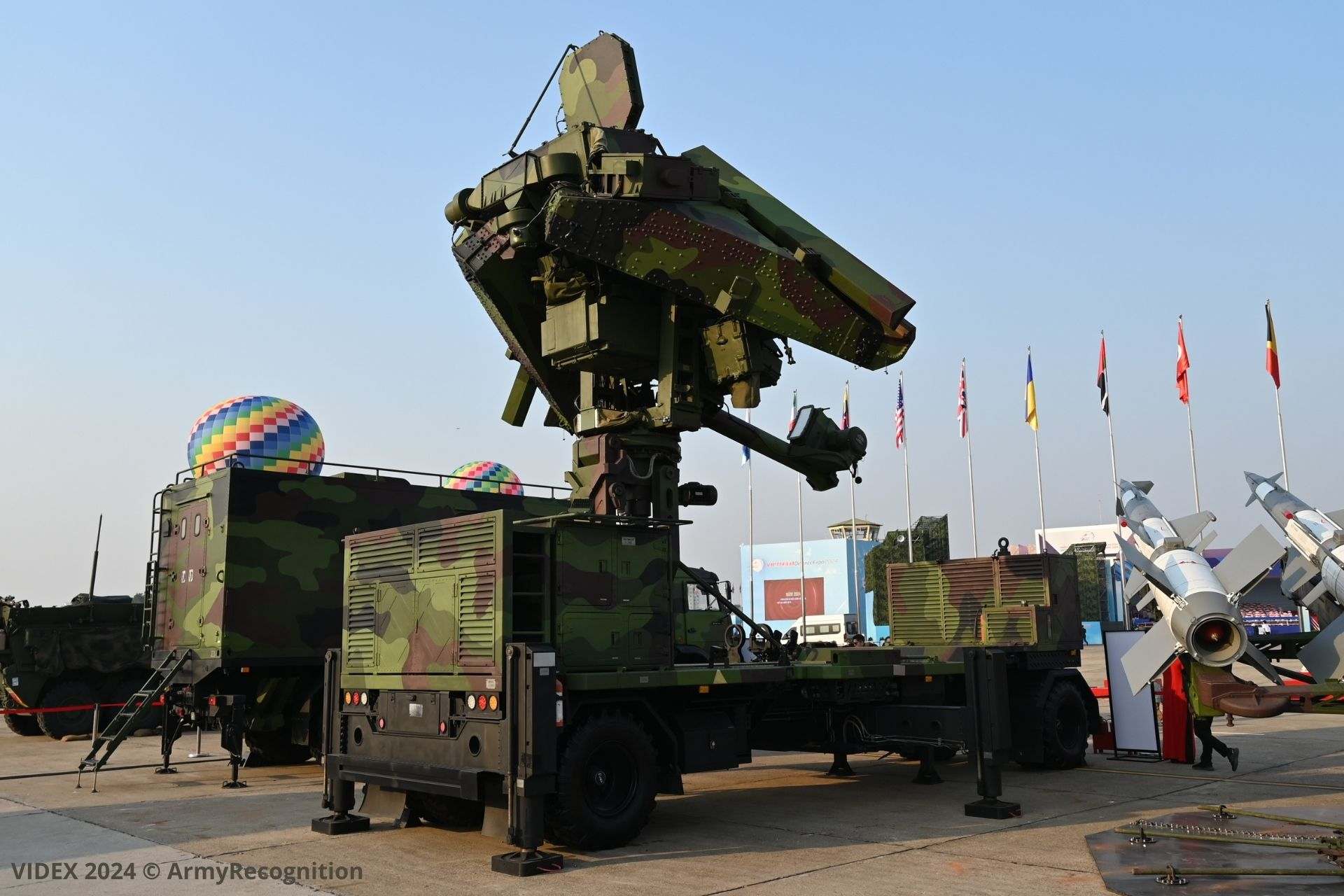
The UNV-VT radar, the core of the system, has been extensively modernized to ensure effective surveillance with a maximum range of 90 kilometers (Picture source: Army Recognition)
The system is powered by the dedicated PDU UNV-VT vehicle, equipped with two diesel generators rated at 40 kW each. This power unit provides over 24 hours of autonomous operation without refueling, with an average fuel consumption of 16 liters per hour. In addition to supplying power to the entire system, the vehicle includes climate control systems suited to local environmental conditions, ensuring the equipment functions reliably and operators remain comfortable.
The modernization also includes hydraulic mechanisms for the automated deployment and retraction of radar antennas, reducing operator workload and minimizing potential errors. The entire system is built on durable platforms suitable for rugged terrain, enhancing mobility and survivability on the battlefield.
Viettel’s modernization of the S-125-VT demonstrates its increasing expertise in defense technologies. This includes the development of advanced signal processing software, enhanced surveillance capabilities, and a system architecture designed to resist cyber threats. These advancements solidify Viettel’s position as a key player in Vietnam’s defense industry.
The S-125-VT embodies the efforts to adapt and upgrade Vietnam’s air defense systems to meet modern operational requirements. With its precision, capability to function in complex environments, and improved mobility, the system provides an effective response to contemporary threats. It represents a strategic enhancement for the Vietnam People's Army in addressing the growing challenges of aerial conflicts.

- Details
- Written by: Halna du Fretay
- Category: 2024
- Hits: 9029
On December 28, 2024, the Turkish defense group Roketsan showcased the capabilities of its ALKA Directed Energy Weapon (DEW) system during a series of tests widely shared on X. These demonstrations highlighted its versatility, including its ability to neutralize drones and improvised explosive devices (IEDs) and, unexpectedly, detonate a 10 mm explosive reactive armor (ERA) block using its laser. While not part of the system's initial objectives, this capability suggests potential strategic applications, particularly against armored vehicles.
With an effective laser range of 750 meters (2.5 kW) to 1,500 meters (5 kW), ALKA is effective against various threats, including mini-drones, loitering munitions, floating mines, and unmanned marine vehicles (Picture source: Roketsan)
Designed to counter asymmetrical threats, ALKA combines an Electromagnetic Jamming System (EJS) with a Laser Destruction System (LDS), creating a hybrid, short-range defense architecture. The system can detect, track, and neutralize up to 100 targets simultaneously using precision radar and electro-optical tracking supported by artificial intelligence. With an effective laser range of 750 meters (2.5 kW) to 1,500 meters (5 kW), it is effective against various threats, including mini-drones, loitering munitions, floating mines, and unmanned marine vehicles. Its cost per shot, significantly lower than traditional methods, positions it as a cost-efficient option for close-range defense.
Compared to competing systems, ALKA stands out for its modularity and adaptability. It can operate in mobile, portable, or stationary modes and integrate into a network for enhanced coordination across units. Its capability to neutralize drone swarms and integrate with different radars and jamming systems further enhances its effectiveness in complex scenarios.
The recent tests also reveal novel strategic uses. Detonating an ERA could disrupt tank crews by simulating an incoming attack, while also weakening the vehicle's defenses, making it more vulnerable to subsequent strikes from anti-tank missiles or kamikaze drones. However, to maximize its effectiveness against armored vehicles, improvements in range and power generation will be necessary.
ALKA represents a significant development in directed energy weapons and reflects a growing trend toward innovative, multifunctional defense systems. With its precision, operational efficiency, and ability to address asymmetrical threats, it has the potential to play a critical role in modern conflict scenarios, ensuring tactical superiority in evolving battlefield environments.

ALKA distinguishes itself from competing systems with its modular and adaptable design, capable of operating in mobile, portable, or stationary modes while integrating into networks for improved unit coordination (Picture source: Roketsan)
Read more: Roketsan's ALKA Laser Weapon System Tackles Growing Threat of Drone Swarm

- Details
- Written by: Administrator
- Category: 2024
- Hits: 6369
The Hungarian Defence Forces (HDF) have officially received the final batch of Carl Gustaf M4 anti-tank guided missiles, marking the successful conclusion of a key procurement project with Swedish defense company SAAB Bofors Dynamics. Hungarian Defence Minister Kristóf Szalay-Bobrovniczky confirmed this delivery on December 27, 2024. The Carl Gustaf M4 system will replace the Soviet-era RPG-7 anti-tank rocket-propelled grenade that has served Hungary’s military for several decades.
Follow Army Recognition on Google News at this link
Hungarian soldiers test the newly delivered SAAB Carl Gustaf M4 anti-tank missile system, which will replace the Soviet-era RPG-7 as part of Hungary's defense modernization program. (Picture source: Hungary MoD)
The acquisition of the Carl Gustaf M4 portable anti-tank missile system is part of Hungary's broader National Defense and Armed Forces Development Program. This ongoing modernization initiative aims to enhance the combat capabilities of the Hungarian military, including improving the effectiveness and versatility of its anti-tank and infantry weapons. With the last batch of HEAT 751 grenades delivered, Hungary’s military has now fully transitioned to using the modern Carl Gustaf M4 system, designed to tackle a wide range of threats from enemy armored vehicles to fortified structures.
Minister Szalay-Bobrovniczky emphasized the importance of this procurement, noting that the Carl Gustaf M4 represents a significant leap forward in Hungary’s anti-tank capabilities. "With this delivery, we are completing another successful project within the framework of our ongoing defense modernization program," he said. "The transition to Carl Gustaf M4 anti-tank missiles will ensure that the Hungarian Defence Forces are equipped with cutting-edge technology to respond effectively to modern threats."
The Carl Gustaf M4 is the latest iteration of the Swedish-designed Carl Gustaf series of recoilless rifles, which have been in use for more than 70 years. The M4 model, which entered service in 2014, is renowned for its modularity, lightweight design, and versatility. Unlike older anti-tank weapons, the Carl Gustaf M4 can fire a variety of grenade types, allowing it to be used against different types of targets.
Hungary has purchased five different types of grenades for the Carl Gustaf M4, expanding its operational flexibility. These include the High-Explosive Anti-Tank (HEAT) 751, primarily designed for use against armored vehicles, the High-Explosive Dual Purpose (HEDP) rounds, effective against both personnel and light vehicles, and the Anti-Structure Munition (ASM), aimed at destroying buildings, bunkers, and other fortifications. In addition, the system can fire Smoke and Illumination rounds, useful for battlefield obscuration and providing lighting in low-visibility conditions, as well as Multi-role ammunition, which enhances the weapon’s ability to adapt to a wide range of combat scenarios.
The Carl Gustaf M4’s ability to fire a broad spectrum of munitions means it can be employed in diverse combat situations, from anti-armor operations to urban warfare and support for infantry. This versatility is one of the reasons it is considered one of the most effective and widely used anti-tank weapons globally, with over 40 countries in its user base.
The RPG-7 has been a mainstay in the Hungarian military since the Cold War, but its limitations have become increasingly evident with the advancement of modern armored vehicles and anti-tank technology. While the RPG-7 remains a reliable weapon, the Carl Gustaf M4 offers enhanced capabilities that are vital for modern warfare. Its precision, range, and adaptability provide the Hungarian Defence Forces with a more potent tool to counter contemporary threats on the battlefield.
The successful delivery of the Carl Gustaf M4 systems also underscores the growing defense cooperation between Hungary and Sweden, with the Swedish arms manufacturer SAAB Bofors Dynamics playing a crucial role in this modernization effort. The contract is seen as an important part of Hungary’s broader strategic goals to modernize its military and strengthen its defense ties within Europe.
With the completion of this project, Hungary’s military is better prepared to face a range of potential threats, from conventional armored warfare to urban and asymmetrical combat. The Carl Gustaf M4 will not only enhance Hungary's defense posture but also contribute to NATO’s collective deterrence capabilities in the region.
The procurement of Carl Gustaf M4 systems is part of Hungary’s ongoing efforts to enhance its defense capabilities as it adapts to an evolving security environment. The country has made significant strides in modernizing its military forces, with future plans likely to include further acquisitions of advanced weaponry and systems. As global defense dynamics shift, Hungary continues to prioritize the modernization of its forces, ensuring that it remains capable of meeting the challenges of modern warfare.
As Minister Szalay-Bobrovniczky stated, "This project is another step forward in our commitment to ensuring that the Hungarian Defence Forces remain well-equipped, modern, and capable of responding effectively to any threat."
The delivery of the Carl Gustaf M4 anti-tank guided missiles represents a pivotal moment in Hungary’s defense modernization journey. With the retirement of the Soviet-era RPG-7 Rocket Propelled Grenade and the integration of the highly versatile and advanced Carl Gustaf M4 system, Hungary is poised to enhance its defense capabilities for years to come. This strategic investment ensures that the Hungarian military is better equipped to protect its sovereignty and contribute to NATO’s defense objectives, reinforcing its commitment to regional and international security.
- Breaking News: Greece to Supply Ukraine with 24 Sea Sparrow Missiles for Enhanced Air Defense Capabilities
- Breaking News: US Army THAAD Air Defense System Intercepts Houthi Ballistic Missile in First Operational Use in Israel
- Focus: US and Japan Forge Powerful Defense Alliance to Counter China’s Rising Threats
- France’s new ASN4G hypersonic missile is set to redefine nuclear deterrence by 2035