

- Details
- Written by: Jérôme Brahy
- Category: 2024
- Hits: 18312










According to Der Spiegel on June 20, 2024, German Defense Minister Boris Pistorius plans to acquire 105 new Leopard 2A8 battle tanks from the company KNDS for 2.93 billion euros, with delivery expected by 2030. This plan is outlined in a confidential document intended for the Bundestag's budget committee, which must approve such major projects and will review the tank deal before the summer recess.
Follow Army Recognition on Google News at this link
The acquisition will significantly increase the Bundeswehr's inventory, which currently includes around 310 Leopard tanks of various models, as the addition of 105 tanks will expand this inventory by approximately one-third (Picture source: Army Recognition)
The purpose of this large order is to ensure the planned German combat brigade in Lithuania has sufficient battle tanks. The documents describe the brigade as "one of the first elements of forward defense in the NATO alliance," stressing the importance of "best possible and uniform equipment." Additionally, these tanks will aid in modernizing Germany's armored troops, a priority for the Bundeswehr.
This order is possible due to a framework agreement established last year between the German army and KNDS for the delivery of 123 Leopard 2A8 tanks. Initially, 18 tanks were ordered to replace those transferred to Ukraine. At that time, the army indicated the need for additional tanks to modernize its units, estimating a requirement of at least 50 new tanks. The current plan includes 35 tanks for Lithuania by 2028, with the remaining 70 by 2030.
The acquisition will significantly increase the Bundeswehr's inventory, which currently includes around 310 Leopard tanks of various models. The addition of 105 tanks will expand this inventory by approximately one-third. The budget for operating these systems over ten years from 2030 is projected to be 750 million euros, a cost not included in the current package. The documents also highlight the risk that KNDS may face delays in delivery due to global shortages of electronic components and raw materials, classifying this risk as "medium to high."
The budget committee is expected to closely examine the financing model for this procurement. The finance ministry has indicated that the costs for these tanks will not be covered by the 100 billion euro special fund or the defense ministry's annual budgets from 2025 onwards. Instead, a commitment authorization will be issued, ensuring that the federal government will cover the costs, allowing the order to proceed.
This financing model sets a precedent for future governments. The initial costs in the upcoming years are manageable, but from 2027 onwards, the financial burden will increase significantly. The projected costs are 430 million euros in 2027, 710 million in 2028, 909 million in 2029, and 842 million in 2030. The defense department will require a substantial increase in its budget to cover these expenses, though no such increase is currently planned beyond the annual figure of approximately 50 billion euros.
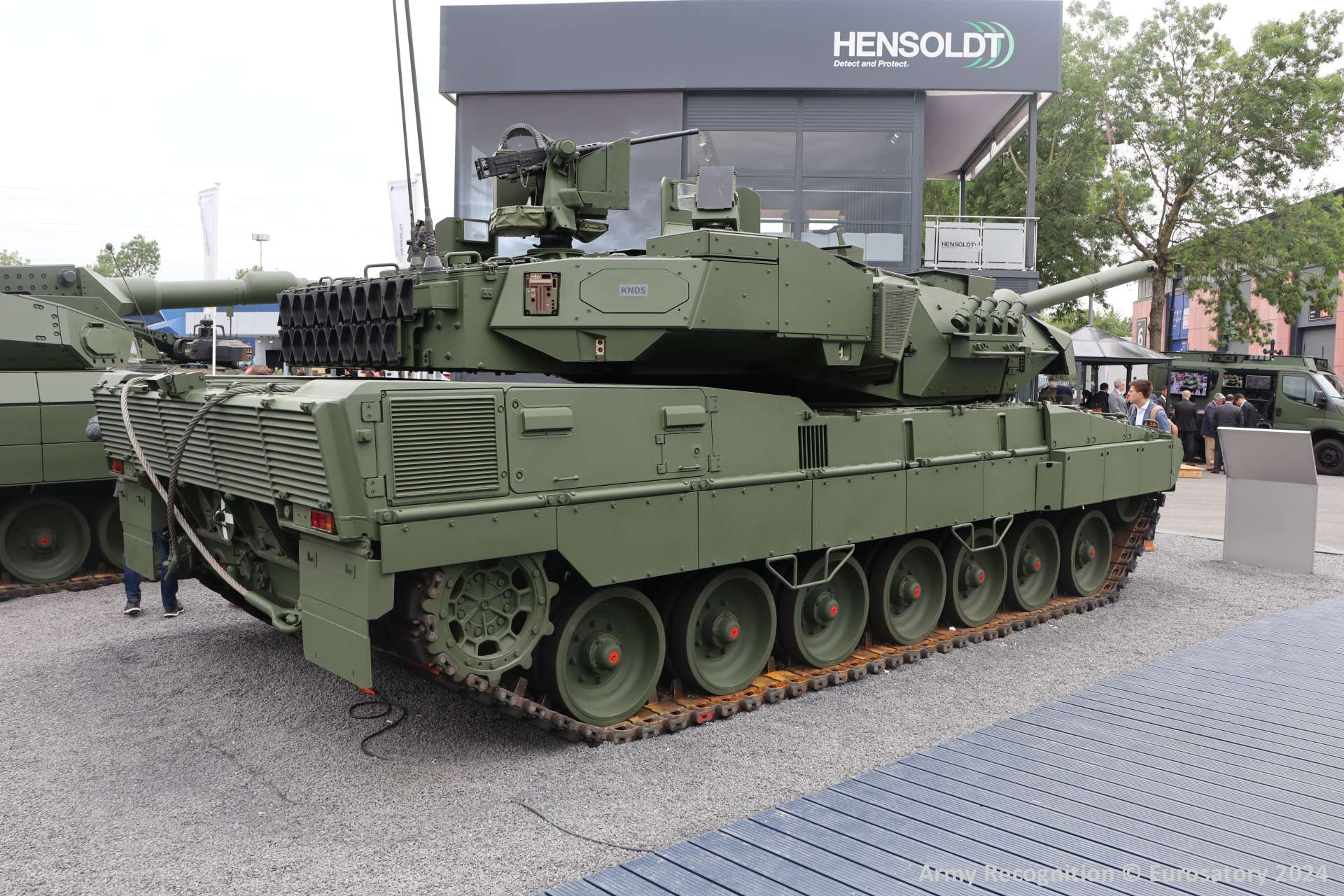
The passive armor kit and APS of the Leopard 2A8 provide protection against anti-tank guided weapons and rocket-propelled grenades, ensuring 360° coverage. (Picture source: Army Recognition)
The Leopard 2A8 Main Battle Tank (MBT) was unveiled as a prototype in May 2023 at the International Defence and Security Technologies Fair (IDET) in Brno, Czech Republic. Developed by German companies Krauss-Maffei Wegmann (KMW) and Rheinmetall, it is the latest variant in the Leopard 2 series, based on the Leopard 2A7+ with updates in armor and firepower. It includes an advanced armor protection system with multi-layered armor made of steel, tungsten, composite filler, and ceramic components. Additionally, it is equipped with the EuroTrophy Active Protection System (APS), offering 360-degree radar coverage and intercepting incoming projectiles.
The demonstrator vehicle displayed at Eurosatory 2024 features a turret with an active protection system, an improved PERI with a laser rangefinder, and a 360° local situational awareness system combined with a laser warning system. This vehicle has been used for testing various components and configurations to evaluate performance and functionality.
The primary armament of the Leopard 2A8 is an improved 120 mm/L55 A1 smoothbore gun, an enhancement over the L44 gun, allowing for higher muzzle velocities and improved accuracy, range, and penetration. It can fire various munitions, including the DM11 programmable ammunition, which can detonate at specific points in its trajectory, targeting lightly armored vehicles, infantry, and fortifications. Secondary armaments include a coaxial 7.62 mm machine gun and a multi-purpose 76 mm grenade launcher.
The design of the Leopard 2A8 includes a four-man crew of driver, gunner, loader, and commander. It has enhanced armor on the turret and hull, particularly in areas such as the turret roof and underbelly, with added mine protection. The passive armor kit and APS provide protection against anti-tank guided weapons and rocket-propelled grenades, ensuring 360° coverage.
The Leopard 2A8 is powered by a 1,500 hp engine, enabling speeds up to 65 km/h and an operational range of approximately 400 kilometers. Its torsion bar suspension system, 500 mm ground clearance, and durable tracks allow it to navigate difficult terrains, including steep gradients and water obstacles. According to KNDS, the Leopard 2A8 weighs less than 69 tons and measures 8.05 meters in length (11.17 meters with the gun), 4.00 meters in width, and 2.72 meters in height at the turret roof (3.11 meters with PERI).
The Leopard 2A8 includes advanced optics and fire control systems, such as third-generation thermal imaging for the commander and gunner, and a fire control system that enhances targeting accuracy. This system comprises a laser rangefinder and ballistic computer, allowing precise engagement of moving targets. Additionally, the tank features a crew compartment cooling unit with a capacity of up to 10 kW, an auxiliary power unit (APU) with a 20 kW output stabilized by ultracapacitors, an NBC overpressurization system, and a comprehensive fire protection system, ensuring operational functionality and crew safety. The running gear is reinforced, the cooling unit for the power pack is improved, and the ergonomics and slew-to functions are enhanced. Optional features include a remote-controlled weapon station (RCWS) and a laser warning system.
Read more: German Army to receive 105 new Leopard 2A8 tanks for combat brigade in Lithuania

- Details
- Written by: Triffaux
- Category: 2024
- Hits: 6540
BAE Systems Hägglunds has unveiled its latest development, the BvS10 BEOWULF, at EuroSatory 2024. This amphibious twin-body vehicle is designed to offer unmatched mobility and adaptability in diverse and demanding environments. As a successor to the proven BvS10 family, the BEOWULF combines well-established technology with cutting-edge innovations, making it an optimal solution for military missions, disaster relief, and other demanding operations.
Follow Army Recognition on Google News at this link
BAE Systems BvS10 BEOWULF All-Terrain Vehicle
(Picture source: Army Recognition)
Developed by BAE Systems Hägglunds in Sweden, the BvS10 BEOWULF is an advanced amphibious twin-body vehicle, renowned for its unparalleled mobility and adaptability across a wide range of environments and challenging scenarios. Originating from the combat-proven BvS10 family, the BEOWULF inherits a legacy of reliability and durability that ensures high system availability worldwide.
Equipped with a 6.7-liter Cummins inline-six engine and an Allison automatic transmission, the vehicle is designed for powerful performance with an output of 210 kW and significant torque of 970 Nm. This configuration allows the BEOWULF to reach speeds of up to 70 km/h on land and 4 km/h in water, offering a range of 400 to 1000 km depending on the configuration, making it ideal for rapid deployment military roles and extended relief operations.
One of the notable features of the BEOWULF is its exceptional mobility. Capable of climbing 45-degree slopes, crossing 2-meter gaps, and handling steep inclines and difficult terrain without preparation, its amphibious nature significantly broadens its operational field. The vehicle's flexibility is further highlighted by its payload capacity—up to 8,000 kg split between its two modules, which can be reconfigured with special cabins or cargo supplies according to mission requirements.
The BvS10 BEOWULF also focuses on crew comfort and reducing maintenance burdens, incorporating commercial automotive technologies and ergonomics into its design. The interior offers a modern design solution with a user-friendly interface, facilitated by the C-rail system that allows easy installation of interchangeable equipment. This adaptability makes the BEOWULF not only a military asset but also a vital resource for humanitarian aid and disaster relief (HADR), firefighting, and rescue missions.
As global conditions demand vehicles capable of performing in extreme and diverse situations, the BvS10 BEOWULF stands out as a symbol of innovation and operational readiness, prepared to serve and succeed where other vehicles cannot. Whether navigating rocky mountains or crossing deep waters, the BEOWULF ensures that no terrain is impassable, affirming its position as a vital asset in both military and civilian operations.
- Details
- Written by: Halna du Fretay
- Category: 2024
- Hits: 8128
The Nigerian air force announced on 18, June 2024, its intention to acquire 50 new aircraft to enhance its capabilities against armed gangs and terrorists in northwest Nigeria. This announcement was made by Marshal Hassan Bala Abubakar, Chief of Air Staff of the Nigerian Air Force, during the inauguration of new military facilities, including two aircraft hangars in Katsina state.
Follow Army Recognition on Google News at this link
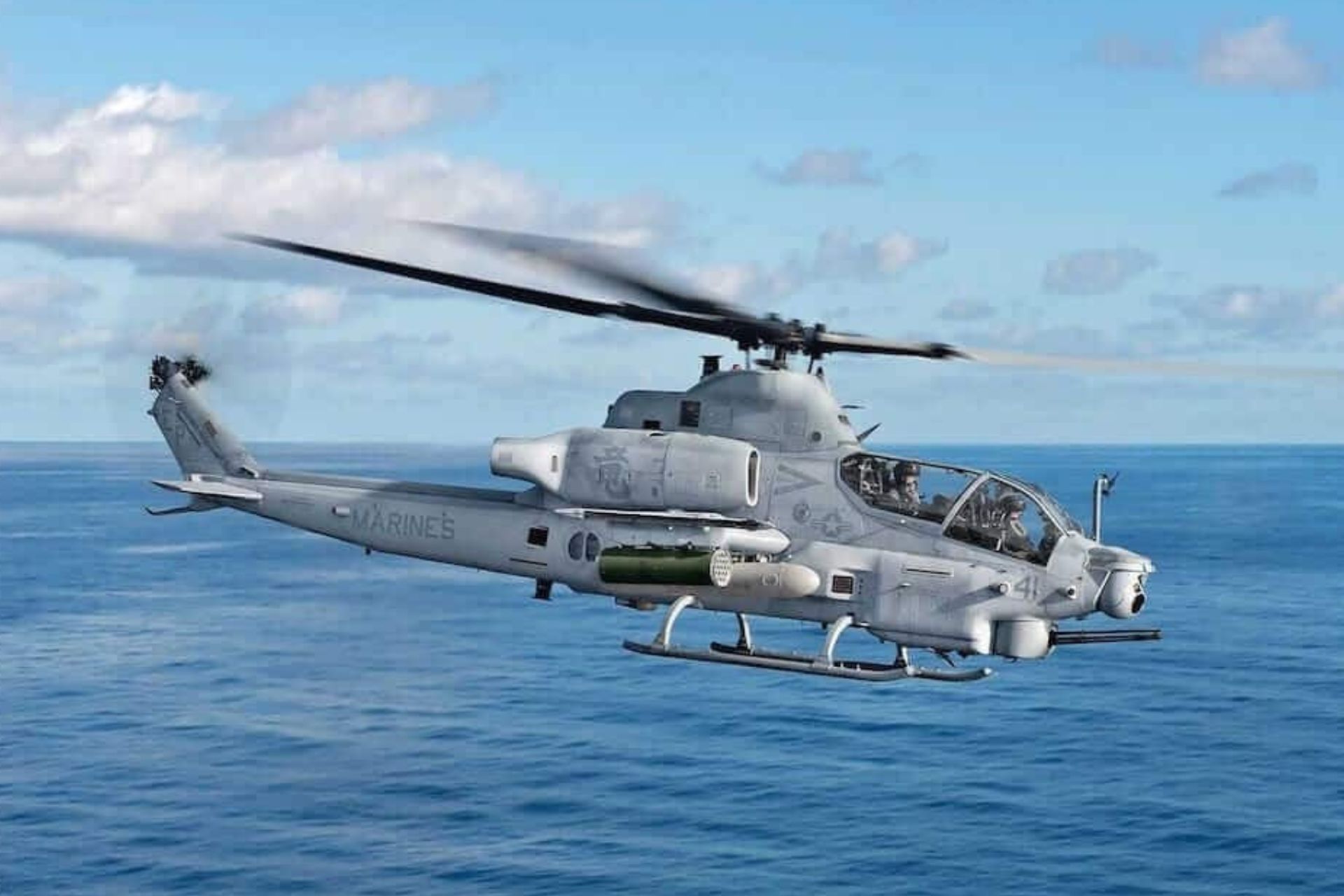
Bell AH-1Z, the next-generation attack and reconnaissance helicopter by Bell flight (Picture source: Bellflight)
Marshal Abubakar specified that the new fleet would include 12 AH-1 attack helicopters, 24 M-346 combat planes, 12 AW109 multipurpose helicopters, and two Casa 295 transport aircraft. The details regarding the cost and suppliers of these aircraft were not disclosed. The Nigerian Air Force expects to receive these new additions by next year, aiming to bolster offensives against jihadist groups and armed gangs that have posed significant threats in the northwest and central regions of the country.
The AH-1 Cobra is a single-engine attack helicopter developed by Bell Helicopter, first flown in 1965 and entering service with the U.S. Army in 1967 during the Vietnam War. Renowned for its agility and firepower, the AH-1 features a tandem-seat configuration for a pilot and gunner, equipped with a 20mm M197 Gatling gun, rockets, and TOW missiles. Several variants are still in service worldwide.
The M-346 is a jet trainer and light attack aircraft developed by Leonardo (formerly Alenia Aermacchi), first flown in 2004 and entering service in 2011. It provides advanced training for pilots transitioning to modern fighter aircraft, featuring state-of-the-art avionics and high maneuverability. Used by air forces including those of Italy and Singapore, there are over 70 M-346 aircraft in service globally.
The AW109 is a light, twin-engine, multi-purpose helicopter developed by Agusta (now Leonardo), first flown in 1971 and entering service in 1976. It is used for various roles including medical evacuation, search and rescue, and military operations. Known for its versatility and high performance, several hundred AW109 helicopters are in service worldwide.
The Casa C-295 is a twin-turboprop tactical military transport aircraft developed by Airbus Defence and Space, first flown in 1998 and entering service in 2001. Used for missions including troop transport and maritime patrol, the C-295 can carry up to 71 troops or 9 tons of cargo. Its versatility and reliability have made it popular, with over 200 aircraft in service in more than 30 countries.
However, security analyst Mike Ejiofor expressed concerns that acquiring 50 aircraft might be an overly ambitious and potentially misdirected strategy. Ejiofor suggested that resources could be better allocated towards improving training and welfare for ground troops, arguing that focusing more on land operations could yield more substantial results in combating terrorism.
Simultaneously, Kaduna state authorities announced a collaboration with the military to establish three new operational fronts within the state. Governor Uba Sani revealed plans to create forward-operating bases in southern Kaduna as well as in the Giwa and Birnin-Gwari axis, with arrangements nearing completion.
The Nigerian air force faced significant criticism in December following an airstrike in Kaduna state that resulted in over 80 civilian casualties. The airstrike, intended to target gangs, highlighted the need for improved precision in military operations. In response, General Christopher Musa, Chief of Defense Staff of the Nigerian armed forces, assured the public of the professionalism of the Nigerian military and their commitment to protecting innocent citizens. He acknowledged the incident as a mistake and emphasized ongoing efforts to address such issues.
Ejiofor further stressed the importance of enhancing the air force's intelligence-gathering capabilities. He advocated for deploying more drones to gather accurate information about the activities of armed groups, stating that intelligence-driven strikes require reliable data to guide operations effectively.
Read more: Nigerian Air Force Announces Acquisition of 50 New Aircraft to Combat Terrorism
- Details
- Written by: Vandenbosch
- Category: 2024
- Hits: 3083
At the Eurosatory exhibition, the Franco-German group KNDS showcased its latest innovations in command and control systems with the Modular Mobile Command Post (M2CP) and the Intelligent Command and Control System Software (iC2). These solutions are designed to meet the needs of modern armed forces, offering increased flexibility and protection on the battlefield.
Follow Army Recognition on Google News at this link
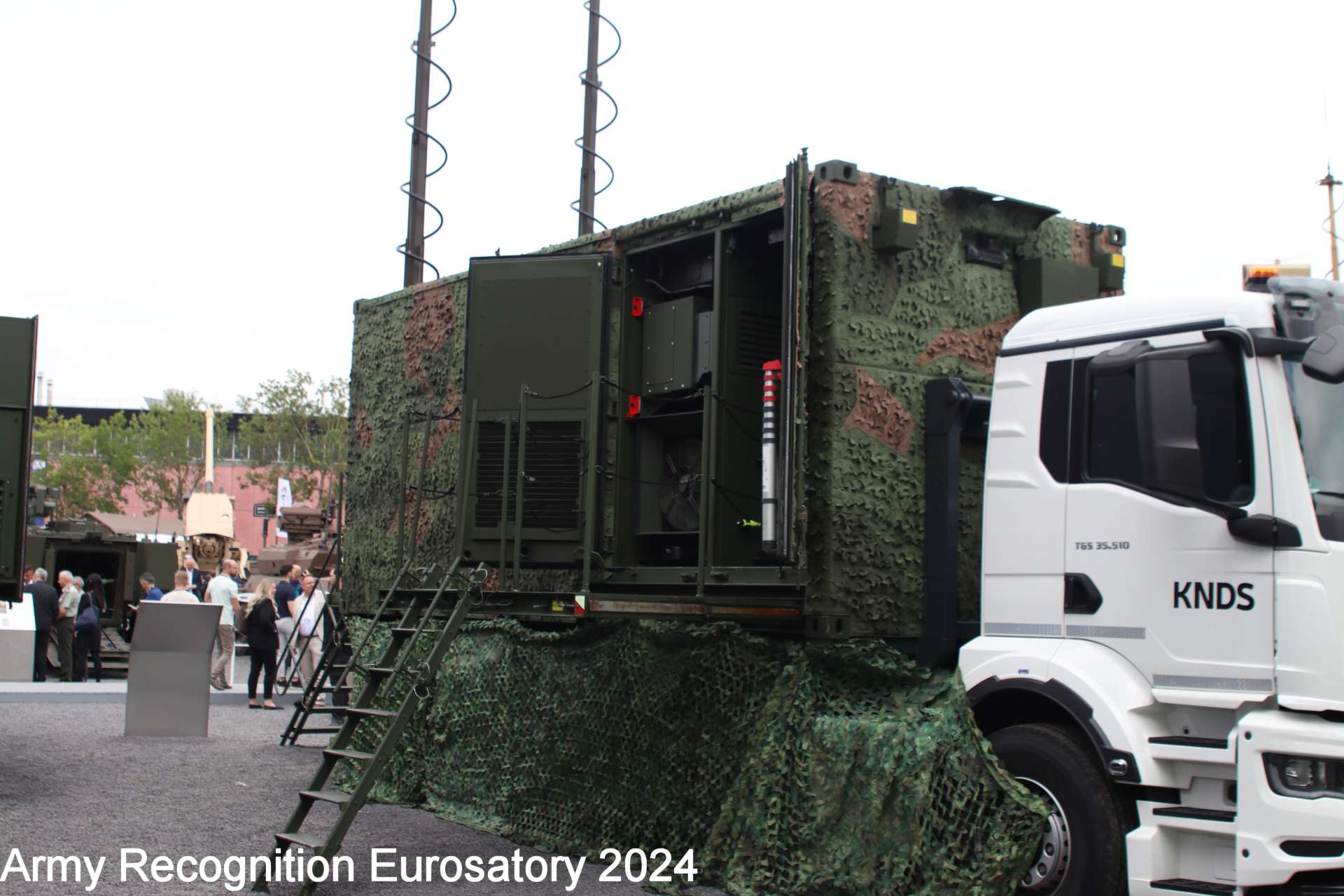
The M2CP is a highly modular mobile command and control unit. (Picture source: Army Recognition)
The M2CP is a highly modular mobile command and control unit, featuring a protected work area that can accommodate up to four workstations oriented in the direction of travel. This command post integrates a generator, air conditioning, and protective ventilation system, ensuring a secure and autonomous working environment in extreme conditions. Additionally, it is equipped with storage systems for computer equipment, radios, and containers, as well as antenna masts that can extend up to six meters, providing extensive and reliable communication capabilities.
A large extendable platform is also included to facilitate maintenance work on the generator or air conditioning system, as well as interventions in the storage area. This design aims to ensure that all support and maintenance operations can be carried out quickly and efficiently, even under deployment conditions.
The iC2, on the other hand, is a fully integrated intelligent command and control software designed for artillery units and combat troops. It enables a rapid and reliable closure of the fire chain (Sensor to Decider Loop), thus ensuring increased responsiveness and accuracy in decision-making and mission execution. This software offers a multi-workstation solution with native integration of third-party software, ensuring extensive interoperability with both NATO and non-NATO partner systems. It is ready for the acquisition and destruction of moving mobile targets, a critical strategic asset in modern theaters of operations.
The technical specifications of the M2CP are impressive: with a weight of up to 16 tons, a length of 605.8 cm, a width of 243.8 cm, and a height of 259.1 cm, this unit is designed for continuous use, whether in motion, at a halt, or on the ground. In terms of communication, it is equipped with four RF channels (VHF/UHF/GSM/LTE), a satellite channel, and an HF channel, ensuring robust and versatile connectivity. The protection level reaches 2+, with complete protection against NBC (nuclear, biological, and chemical) threats.
Container variants include smaller unprotected options (15'), and configurations for command and control, servers, and UXV controllers. Camouflage nets, including the Barracuda system, are also available to ensure the unit's discretion in the field. The interior is carefully designed to optimize the efficiency and comfort of the four crew members.
Read more: Eurosatory 2024: KNDS Unveils M2CP Modular Mobile Command Post

- Details
- Written by: Jérôme Brahy
- Category: 2024
- Hits: 11327
At the Eurosatory 2024 exhibition, KNDS showcased the Leclerc XLR, an upgraded variant of the French Leclerc main battle tank. The main changes include enhanced communication systems, upgraded protection and mobility features, improved crew safety measures, and modernized observation and targeting systems.
Follow Army Recognition on Google News at this link
In June 2023, the French Army received the first two Leclerc XLR main battle tanks, marking the beginning of a process to upgrade 200 of the 215 Leclerc tanks currently in service to the XLR standard by 2029. (Picture source: Army Recognition)
In June 2023, the French Army received the first two Leclerc XLR main battle tanks, marking the beginning of a process to upgrade 200 of the 215 Leclerc tanks currently in service to the XLR standard by 2029. This modernization effort aims to maintain the operational effectiveness of the Leclerc tank, which has been deployed in regions such as the Balkans, Lebanon, and Eastern Europe under NATO Response Force commitments.
With the XLR upgrade, communication systems have been modernized through the integration of SCORPION vetronics, including the Thales tactical radio system and SCORPION Information and Command System (SICS). This networked architecture enhances situational awareness and command/control capabilities. The tank's electronic systems are designed to allow for future upgrades, ensuring long-term connectivity with other SCORPION vehicles, such as the Griffon, Jaguar, and Serval, facilitating unified communications and battlefield management.
One of the significant changes in the Leclerc XLR is its enhanced protection. The tank now features modular armor on the turret and hull, providing improved defense against threats such as improvised explosive devices (IEDs) and rocket-propelled grenades (RPGs). Additional rear wire cage armor has been added to protect the engine compartment. The tank is equipped with an anti-RPG protection kit, the Galix close protection system, a mine and IED protection kit, counter-IED jammers (BARAGE), and comprehensive CBRN filtration and air systems.
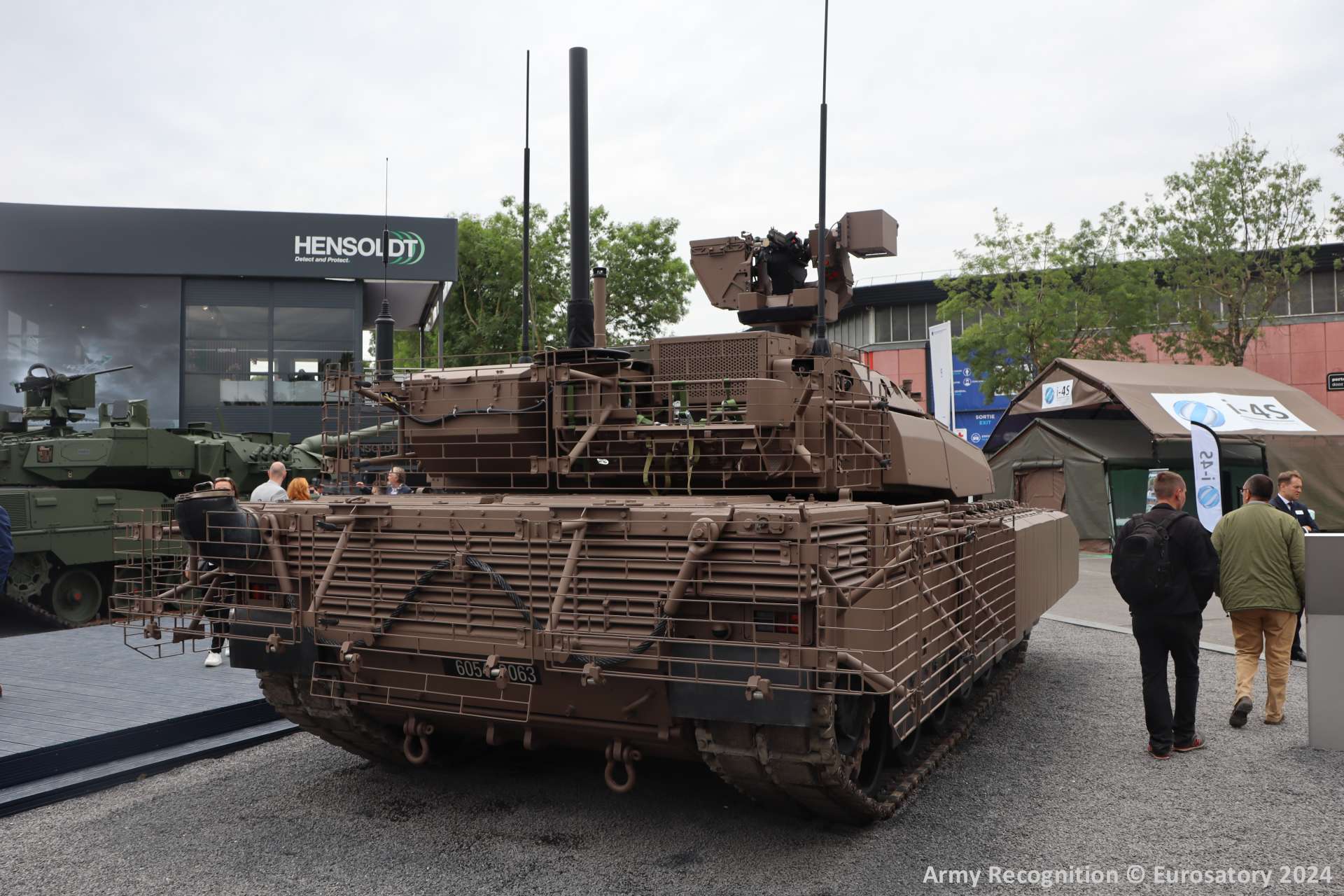
The tank now features modular armor on the turret and hull, with additional rear wire cage armor added to protect the engine compartment, providing an improved defense against threats such as improvised explosive devices (IEDs) and rocket-propelled grenades (RPGs). (Picture source: Army Recognition)
Mobility features include an off-road speed of 72 km/h, a power-to-weight ratio of 24 hp/ton, hydropneumatic suspension, and a power unit rated at 1,500 hp. The tank also incorporates an embedded inertial navigation system and GPS integration.
For crew safety, the driver shell magazine, which previously stored 18 cannon shells, has been removed to reduce the risk of ammunition detonation near the crew compartment. This modification reduces the tank's ammunition capacity to 22 rounds, which are stored in the autoloader magazine located in the turret's rear niche. The Leclerc XLR is also equipped with an automatic built-in fire extinguishing or suppression system and a fully digital shooting control system. While retaining its main 120mm smoothbore gun, the Leclerc XLR now includes a remotely operated 7.62mm machine gun on the turret, manufactured by the Belgian company FN Herstal, for improved close-in defense.
The Leclerc XLR's observation and targeting systems have been upgraded. The tank now features the latest-generation PASEO panoramic sight for the commander, providing day and night stabilized observation capabilities. The gunner’s sight has been improved with advanced optronic sensors and new electronics, enhancing target detection, identification, and engagement over long distances.
Since the initiation of the modernization program in 2015, the French Army has aimed to upgrade 200 Leclerc tanks by 2029. This ongoing process began with the delivery of the first batch of 18 operational tanks in 2023. The upgrades are intended to ensure that the Leclerc XLR remains effective in addressing current and future operational requirements until at least 2035.
Read more: France showcases Leclerc XLR main battle tank with modernized tech at Eurosatory 2024
- Details
- Written by: Halna du Fretay
- Category: 2024
- Hits: 5504
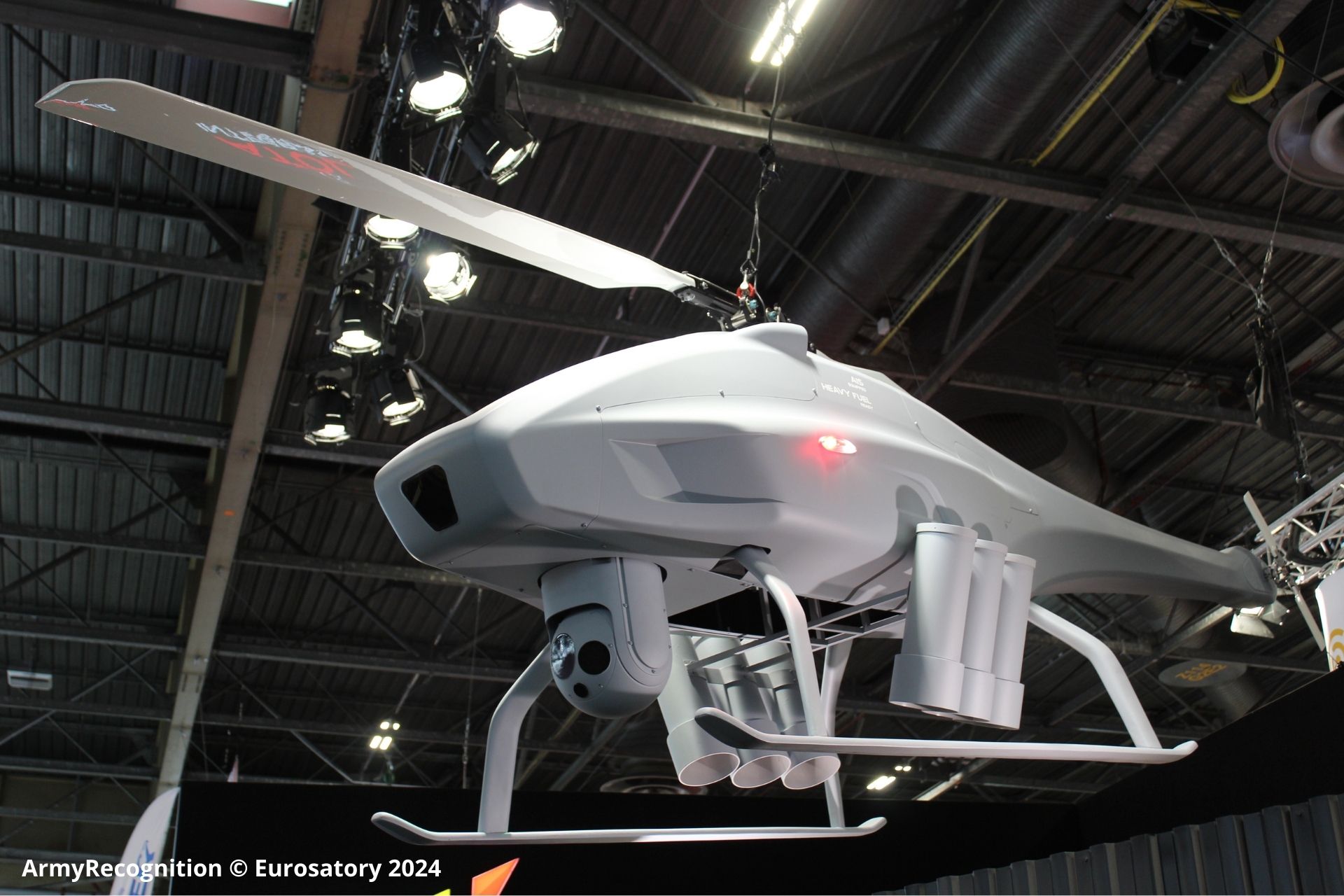
UMS SKELDAR has showcased its latest multi-purpose unmanned VTOL system, the Skeldar V-200, at Eurosatory 2024. This system is designed to meet the diverse operational needs of naval forces worldwide, offering a robust solution for a variety of missions.
Follow Army Recognition on Google News at this link
For naval surveillance, the V-200 offers class-leading endurance, maintaining an Over the Horizon (OTH) vantage point for extensive periods (Picture source: ArmyRecognition)
The Skeldar V-200 is a versatile unmanned aerial vehicle (UAV) designed to operate in challenging environments. Its ability to perform in adverse weather and harsh saltwater conditions makes it an invaluable asset for maritime and border surveillance. The system features ship-based automatic take-off and landing (ATOL), making it suitable for dynamic operations on pitching and rolling ship helidecks. The V-200 can land in winds up to twenty-five knots and in reduced visibility conditions such as nighttime, fog, and heavy rain.
This UAV is equipped with a heavy fuel engine designed to operate on kerosene-based Jet A-1, JP-5, and JP-8 fuels. The Hirth direct-injected parallel-twin two-stroke engine sets a benchmark for efficiency and dependability, providing excellent reliability and prolonging the times between overhauls (TBO). The V-200 can carry multiple payloads, supporting role changes for various mission-specific requirements. It offers options such as high-resolution Electro-Optical/Infrared (EO/IR) sensors, Synthetic Aperture Radar (SAR), Light Detection and Ranging (LiDAR), and Electronic Warfare (EW) payloads.
The Skeldar V-200 excels in border protection, providing authorities with a reliable solution for monitoring remote and difficult-to-access borders. Its six-hour flight time and numerous payload options make it ideal for coastal and overland border monitoring operations. For naval surveillance, the V-200 offers class-leading endurance, maintaining an Over the Horizon (OTH) vantage point for extensive periods. It provides the host ship crew with crucial information to stay ahead of evolving seaborne threats. Equipped with Signals Intelligence (SIGINT) gathering payloads, it can intercept signals and provide geodetic positioning information in high-risk scenarios.
In anti-submarine warfare (ASW), the V-200 supports wide-area ASW and countermine operations, making it a valuable tool for classifying, locating, and tracking submersible threats. When equipped with maritime sensors, it allows operations at a safer stand-off range, reducing risks to personnel and the host vessel.
The V-200 enhances ship detection range and surveillance capabilities in real-time. When equipped with an EO/IR and SAR sensor combination, it can track multiple targets simultaneously, improving the detectability of illegal activities such as piracy, narco-trafficking, and illegal migration.
The Skeldar V-200 is designed with system redundancy, ensuring that it remains airborne in case of emergencies. It features redundant power and fuel systems, a dual-core flight control unit (FCU), and strong datalinks. Its compact size allows for efficient transportation and storage, with modular design and easily removable access panels facilitating routine maintenance and inspections.
UMS SKELDAR emphasizes training and simulation, offering approved training programs such as their Intelligence, Surveillance, and Reconnaissance (ISR) training led by experienced professionals. The V-200 integrates with various command, control, communications, computers, intelligence, surveillance, and reconnaissance (C4ISR) systems, providing unmatched levels of aerial situational awareness and reducing response times.
Read more: UMS SKELDAR Unveils the Versatile Skeldar V-200 at Eurosatory 2024
- Details
- Written by: Vandenbosch
- Category: 2024
- Hits: 3295
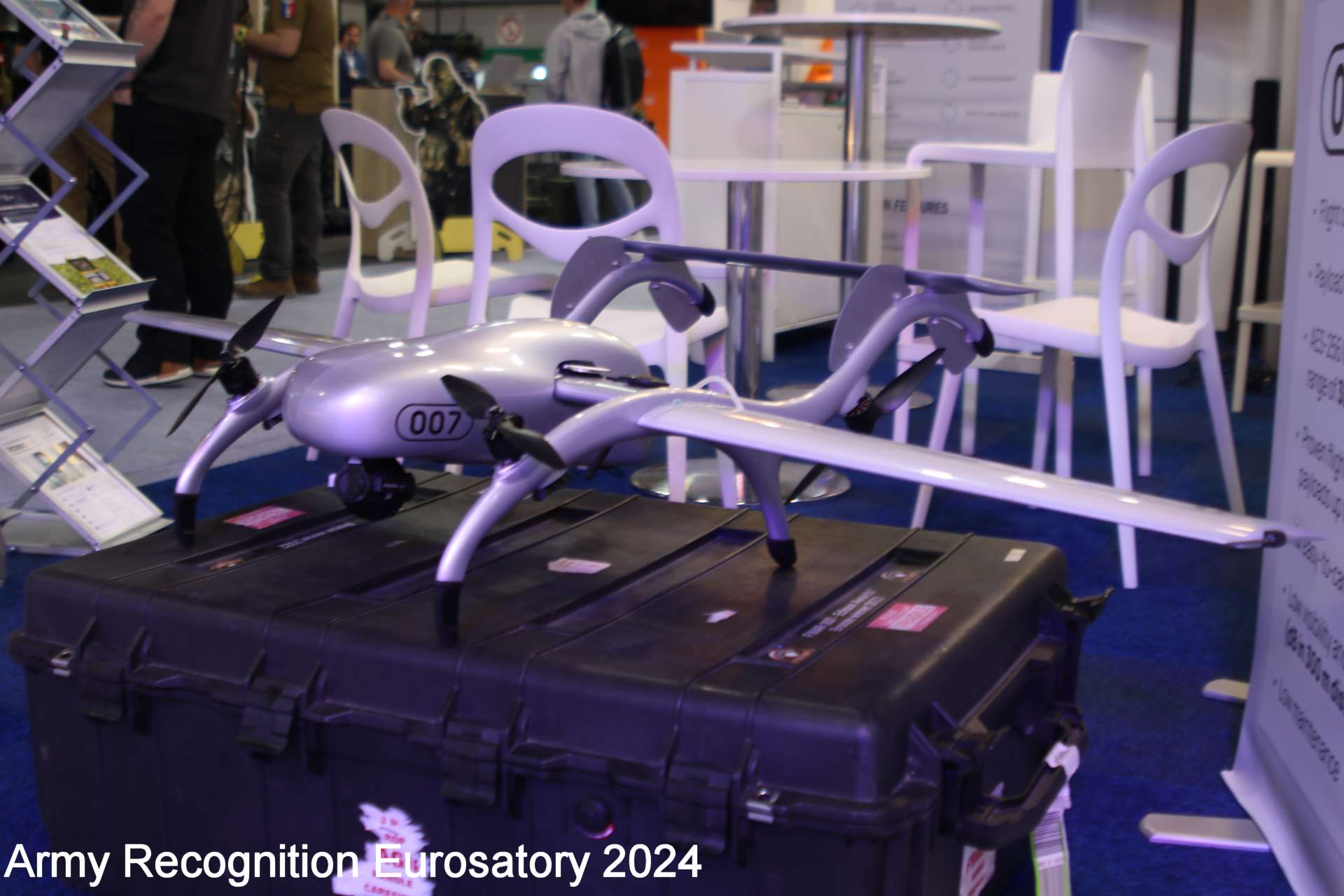
At Eurosatory, FIXAR unveiled its latest drone model, the FIXAR 007, a UAV solution designed for commercial operations. Conceived and developed in-house by FIXAR's R&D team in Europe, this drone combines solid traditions in aviation, electronics, and software engineering.
Follow Army Recognition on Google News at this link
The FIXAR 007 stands out with its VTOL (Vertical Take-Off and Landing) design. (Picture source: Army Recognition)
The FIXAR 007 stands out with its VTOL (Vertical Take-Off and Landing) design, making it ideal for multiple applications. As an all-in-one ready-to-fly solution, it features an interchangeable payload module, allowing it to be used for various tasks. Its use is maximally simplified: it only takes two minutes and nine clicks to launch a mission. Additionally, FIXAR offers a 12-month or 80-flight warranty, along with world-class technical and operational support.
The drone is equipped with a proprietary autopilot ensuring robust control and safe operation, including autonomous take-off and landing even on unstructured terrains. It is designed to withstand strong electromagnetic fields and does not require bulky devices for launch or capture. Moreover, the FIXAR 007 is approved for BVLOS (Beyond Visual Line of Sight) flights.
In terms of efficiency, the FIXAR 007 offers cost savings of up to 35% compared to other drone solutions on the market, thanks to its innovative and proven technology providing a competitive edge. It can fly for up to 60 minutes with a payload capacity of 2 kg, while offering great maneuverability and extreme resistance to severe weather conditions. Available in a range of colors, it adapts to all types of missions.
The drone comes with all necessary components, including wings, fuselage panels, stabilizer, rechargeable battery, charging unit, payload module as per customer requirements, ground control station with xGroundControl software, telemetry kit, user manual, system passport, and a robust carrying case.
FIXAR offers comprehensive training to ensure optimal use of their drones. Each package includes a two-day training covering essential information for flying the FIXAR drone, as well as the online certification required to benefit from the warranty. An extended four-day training is also available, providing a detailed introduction to the FIXAR 007 drone and its features, advanced tips on the xGroundControl software, as well as practical sessions and flight demonstrations.
The FIXAR 007 has a wingspan of 1620 mm, a flight range of up to 60 km, a maximum take-off weight of 7 kg, and a deployment time of two minutes. With four rotors and a maximum payload capacity of 2 kg, it can fly for up to 59 minutes with a communication range of 30 km. It is also capable of flying at a maximum altitude of 6000 m and withstanding extreme temperatures ranging from -30°C to +60°C.
The FIXAR 007 is equipped with advanced safety features such as electromagnetic field protection, real-time surface tracking, and automatic landing safety control. With an integrated connection system and additional module options like PPK and ADS-B receiver, this drone is ready to meet all the challenges of modern commercial missions.
The FIXAR 007 aims to position itself as a reliable, efficient, and versatile UAV solution, meeting the varied needs of commercial operations with cutting-edge technology and comprehensive support, making it a key player in the commercial drone sector.
Read more: Eurosatory 2024: FIXAR 007 An Economical Drone Solution
- Details
- Written by: Vandenbosch
- Category: 2024
- Hits: 2227
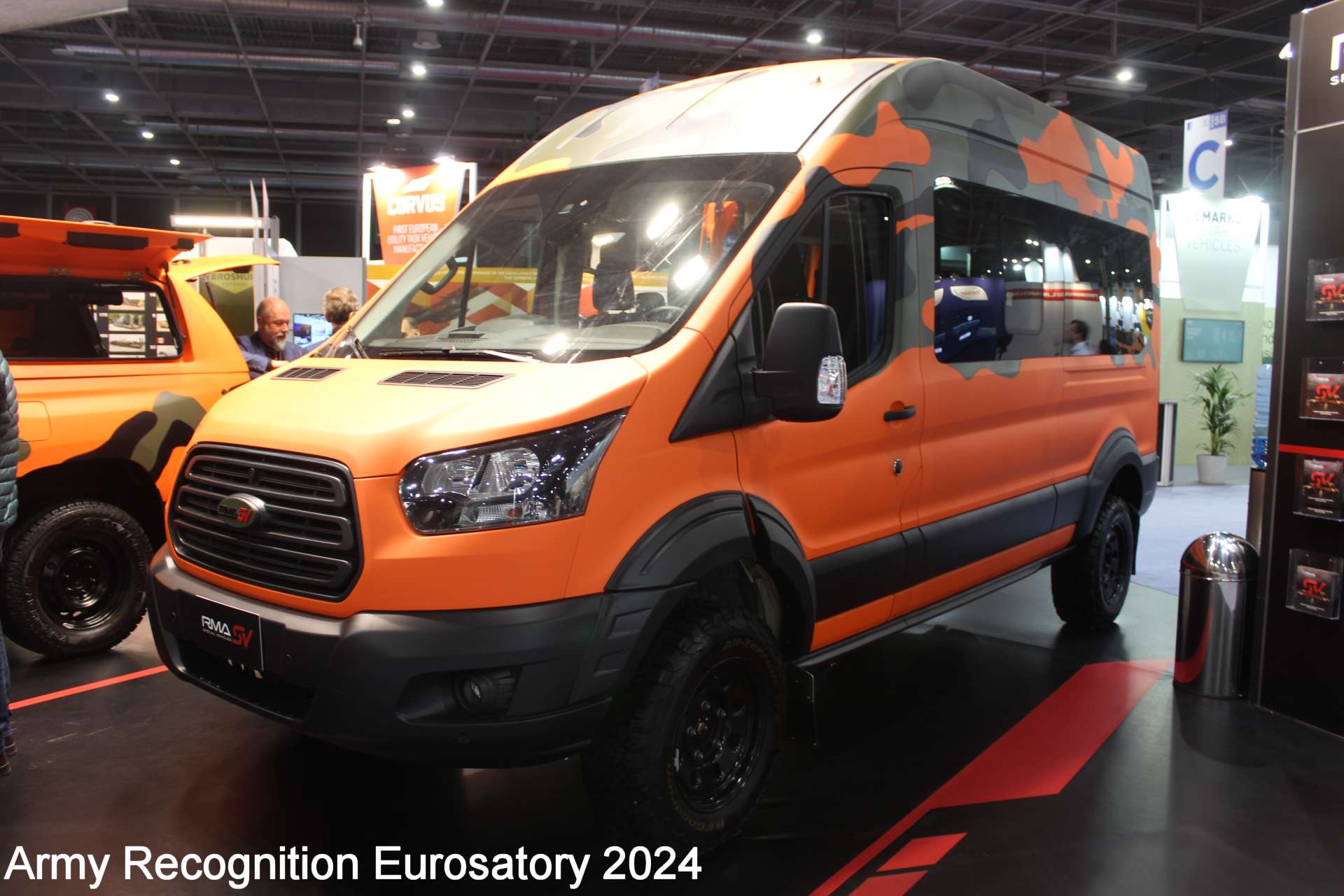
At this year's international Eurosatory exhibition, RMA unveiled its 4x4 vehicle conversion solutions, designed to meet the most demanding needs of defense and security professionals. Leveraging its expertise, RMA offers vehicles adapted to a variety of missions, from personnel transport to rescue operations in challenging terrains.
Follow Army Recognition on Google News at this link
Each vehicle is equipped with a specially designed front differential, a new 4x4 transfer case, a reinforced drive shaft, and robust lower control arms. (Picture source: Army Recognition)
RMA's 4x4 conversions are the result of advanced engineering. Each vehicle is equipped with a specially designed front differential, a new 4x4 transfer case, a reinforced drive shaft, and robust lower control arms. This configuration ensures excellent performance and increased reliability, even in the most extreme conditions.
A key element of these conversions is the twin-tube shock absorber technology with foam cells. These front and rear shock absorbers enable continuous off-road use without losing effectiveness, thus guaranteeing maximum durability. Additionally, the final gear ratio has been adjusted to offer better off-road control and provide the necessary speed range for low-speed 4x4 operations on rugged terrains.
These versatile vehicles can be configured for various applications, such as field ambulances, personnel carriers, maintenance trucks, firefighting vehicles, as well as patrol and rescue vehicles. Each conversion includes specific enhancements such as a raised chassis for better wading ability, underbody protection, and unique fender extensions.
RMA's elevated suspension system provides increased ground clearance and improves off-road capabilities, allowing vehicles to easily traverse the steepest terrains. The propulsion and rear axle systems in these conversions ensure optimal traction and maneuverability without the need for electronic locking mechanisms, ensuring smooth operation in all conditions.
Upgraded tires and wheels provide increased traction and stability, enhancing fleet performance in challenging environments. Mudguards protect vital components from debris and mud accumulation, ensuring optimal performance and reliability under all circumstances.
The vehicles are also equipped with front and underbody protections, 4x4 Hi-Lo switches, off-road suspensions, rear-mounted spare wheels, and reinforced mud flaps. Optional accessories such as bull bars, running boards, roof racks, snorkels, and rear swing arms with spare wheel supports can be added to further customize the vehicles according to specific mission needs.
If you want to learn more about RMA's various 4x4 solutions, you have one more day to visit their booth at Eurosatory 2024.
Read more: Eurosatory 2024: RMA Presents Its Advanced 4x4 Solutions
- Details
- Written by: Halna du Fretay
- Category: 2024
- Hits: 4482
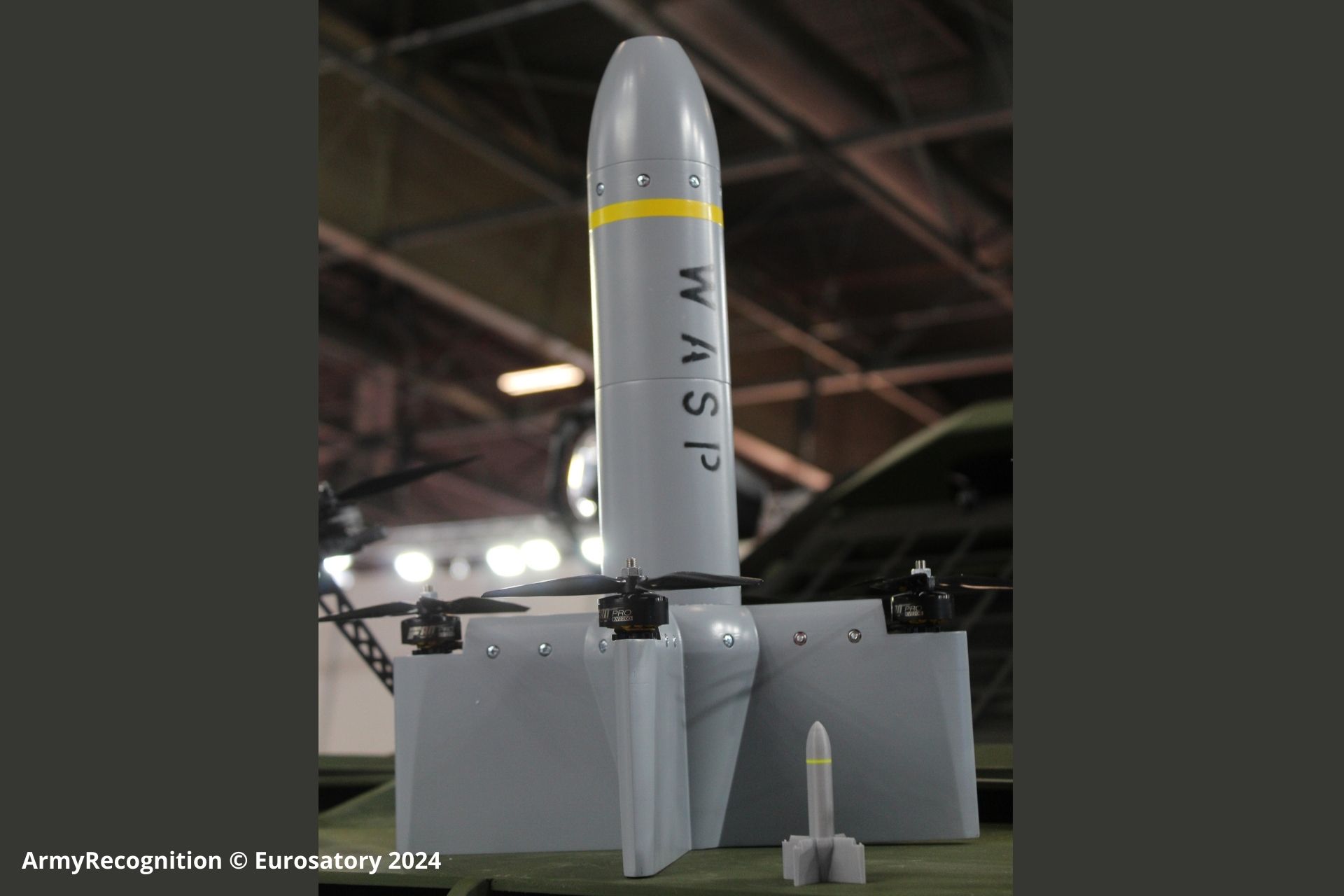
Ens Dynamics displays its latest drone defense solution, the WASP MK4, at Eurosatory 2024. This 21st-century drone interceptor is designed to address the growing threat posed by Group 1 and 2 UAVs, providing an effective and cost-efficient defense mechanism for critical infrastructure and mobile air defense applications.
Follow Army Recognition on Google News at this link
The WASP MK4 can be launched using the Ens Dynamics HIVE launcher or integrated into a customer’s platform. (Picture source: ArmyRecognition)
The WASP MK4 is an electrically propelled guided interceptor that incorporates an optical onboard endgame sensor, allowing for enhanced target detection, classification, and tracking through AI. The system is command-guided and features a lock-on after launch EO seeker, making it both user-friendly and efficient. Its simplicity and usability require minimal operator training, which, coupled with its cost-effectiveness, make it a competitive alternative to traditional missile or cannon-based solutions.
In terms of specifications, the WASP MK4 boasts an interception range of up to 5 kilometers and can achieve speeds of up to 80 meters per second. It is equipped with a proximity fused warhead or can rely on kinetic impact, depending on the mission requirements. The interceptor is lightweight, with a total weight of up to 500 grams, and operates at altitudes exceeding 11,500 feet above mean sea level.
The WASP MK4 can be launched using the Ens Dynamics HIVE launcher or integrated into a customer’s platform. Each HIVE launcher is compact, measuring 200 x 200 x 500 millimeters, and up to 64 launchers can be combined and controlled by a single operator when integrated with a radar system. This integration allows for an efficient and scalable deployment, suitable for various defense scenarios.
Ens Dynamics emphasizes the rapid production capabilities of the WASP MK4, which can be manufactured in large quantities using modern decentralized production techniques. This production method ensures that the system can be deployed quickly to meet urgent defense needs. Additionally, the WASP MK4 includes a mission abort function, providing operators with flexibility during engagements.
The WASP MK4’s design focuses on high maneuverability and intercept speed, making it suitable for point defense and mobile short-range air defense (MSHORAD) operations. Its cold launch capability from a transport canister adds to its operational versatility. The payload bay allows for optional lethality enhancer packages, further increasing the interceptor’s effectiveness.
Read more: Ens Dynamics Unveils WASP MK4 Drone Defense System at Eurosatory 2024
- Details
- Written by: Triffaux
- Category: 2024
- Hits: 6391
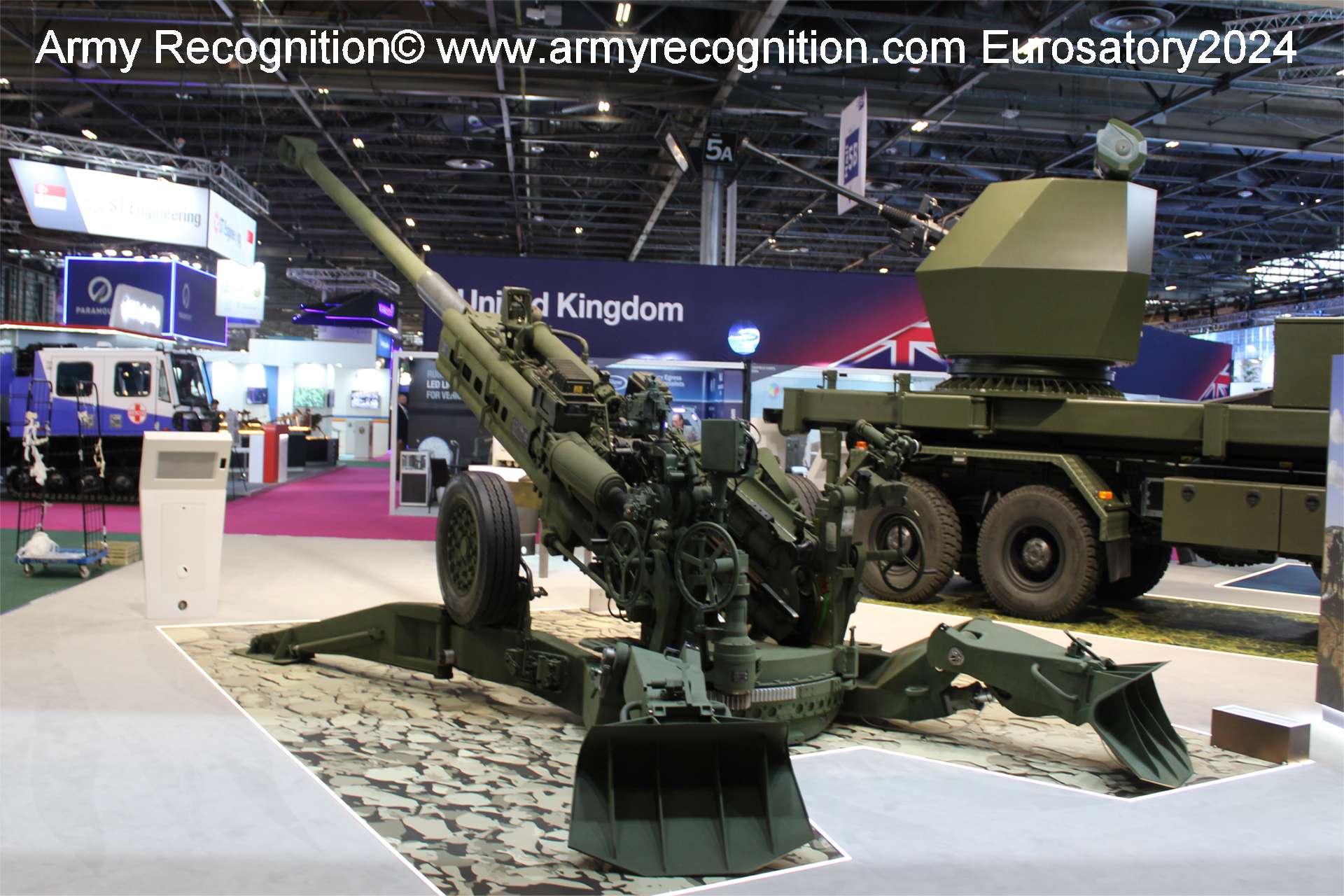
At Eurosatory 2024, BAE Systems showcased the M777 A2 Howitzer, a 155mm lightweight artillery system. This howitzer is distinguished by its strategic and tactical mobility, designed to enhance survivability through reduced thermal and radar signatures. The system is capable of rapid deployment and quick displacement, featuring an ultra-low silhouette. Weighing under 10,000 pounds, the M777 is the world’s first 155mm Howitzer of this weight class, representing a notable development in military artillery technology.
Follow Army Recognition on Google News at this link
BAE Systems M777 A2 155mm Towed Howitzer
(Picture source: Army Recognition)
Designed with advanced titanium and aluminum alloys, the M777 A2 towed howitzer is not only lightweight but also highly mobile and easily transportable by land, sea, and air. This portability ensures a minimal logistical footprint and maximum reliability, essential for operations requiring frequent movements and redeployments without the risk of encountering improvised explosive devices (IEDs) typically faced by self-propelled systems.
The operational efficiency of the M777 A2 extends to various terrains and obstacles, with the ability to strike at long distances. It is compatible with all standard types of ammunition, including advanced rounds such as BONUS and EXCALIBUR, demonstrating its versatility and adaptability in combat scenarios. The performance and reliability of the artillery system have been proven in combat, particularly during its deployment in Afghanistan since 2006, where it has fired over 360,000 rounds under challenging conditions.
Initially developed for the Marine Corps and the U.S. Army as a next-generation medium force weapon, the M777 has become a benchmark for light 155mm towed artillery systems. The system has been adopted by several international forces, including those of the United States, Canada, Australia, and India, with total orders currently exceeding 1,200 units, affirming its crucial role and trusted performance in global defense strategies.
The M777 Towed Howitzer from BAE Systems is a 39-caliber artillery piece designed to provide reliable and advanced fire support in the most hostile conditions. This artillery system, which sets standards in modern armament, is capable of reaching targets at a maximum distance of 24.7 km unassisted and over 30 km with assistance, thanks to its assisted firing system.
The firing rate of the M777 is particularly notable, with the ability to launch four shells per minute in intense mode for up to two minutes, and two shells per minute in sustained mode. This feature allows armed forces to maintain constant pressure during extended operations. In terms of maneuverability, the howitzer can be deployed in less than three minutes and removed between two and three minutes, thus facilitating rapid movements and strategic redeployments.
Regarding firing orientation, the M777 howitzer offers a maximum elevation of +1,275 mm and a depression of -43 mm, with a traverse capacity of 400 mils to the left and right on the mount, which is expandable up to 6,400 mils thanks to a quick change system. This allows great flexibility and precision in targeting.
The howitzer is also designed to use all current and developing 155mm standard munitions from the United States and NATO, including those from the Modular Artillery Charge System (MACS). This compatibility ensures that the M777 can easily integrate into different weapon systems and meet future requirements without needing major modifications.
In terms of mobility, the M777 can reach a maximum speed of 88 km/h on roads and 24 km/h off-road. It is compatible with a variety of towing vehicles, including MTVR, FMTV, 5-ton M800 and M900 trucks, as well as any 2.5-ton truck. For air transport, it is suitable for fixed-wing aircraft such as the C130, C141, C17, C5, and can be transported by air means such as the CH53E, CH47D, and MV22. Additionally, as mentioned earlier, the construction of the M777 in titanium significantly lightens the cannon, thus increasing its portability and enabling it to be air-transportable. This feature ensures great flexibility and the ability to be rapidly deployed in various operational theaters around the world.
As a reminder, following Russia's invasion of Ukraine in 2022, the United States, Australia, and Canada provided M777 howitzers to the Ukrainian army. Initially, 18 units were delivered, followed by an announcement in April 2022 of 72 additional towed artillery pieces by the United States, bringing the total to 108 by the end of May 2022 and reaching 142 by mid-October 2022. Canada also contributed, though the exact number is unspecified; four units are reported to have been delivered by Canada and six by Australia.
In 2023, the M777 assembly line has been out of service for several years. A multi-year framework order would be necessary to restart production. In January 2024, the decision to restart the assembly line was made, with the first deliveries scheduled for 2025.
- Details
- Written by: Administrator
- Category: 2024
- Hits: 2161
In an online press briefing held on June 19, 2024, Ambassador Michael Carpenter, Senior Director for Europe at the U.S. National Security Council, clarified the specifics of the U.S. security agreement with Ukraine. This agreement explicitly permits Kyiv to deploy American-supplied weapons to target Russian positions across the border, particularly in the Sumy and Kharkiv regions.
Follow Army Recognition on Google News at this link
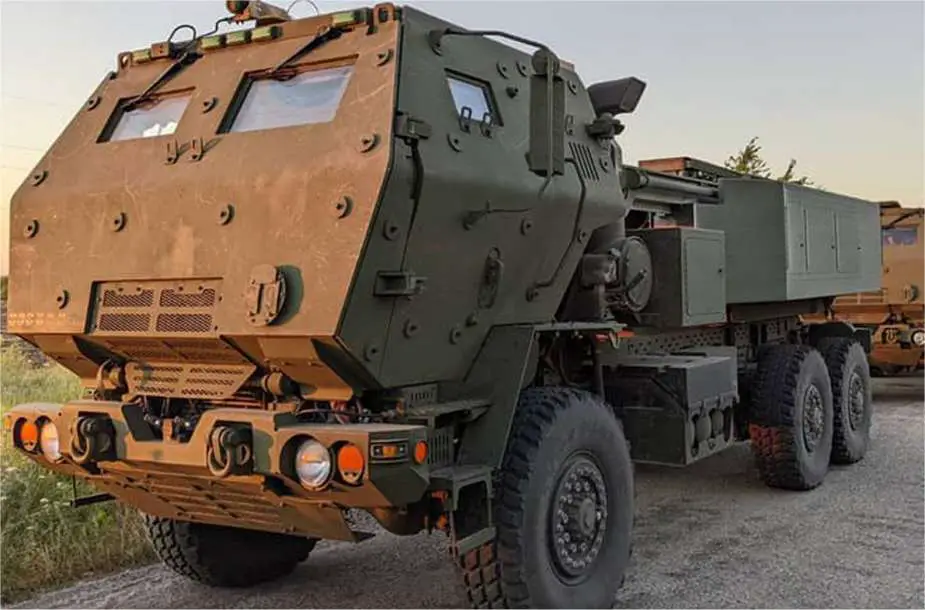
The American-made HIMARS rocket launcher systems donated by the U.S. to Ukraine are able to fire ATCMS missiles with a range of up to 300 km. (Picture source: Ukrainian army)
The confirmation follows a statement made by White House National Security Advisor Jake Sullivan during an interview with PBS (Public Broadcasting Service) the previous night. Sullivan indicated that the U.S. has given Ukraine the green light to retaliate against Russian military installations situated just across their shared border.
Ambassador Carpenter elaborated on this policy during the briefing, emphasizing its strategic rationale. "We've been pretty clear that this rule of engagement allows Ukrainians to fire back on those Russian positions just across the border in the Kharkiv region but also in the Sumy region," Carpenter stated. "This is designed to prevent Russia from having a de facto sanctuary on its side of the border from which it is attacking Ukrainian territory and Ukrainian military posts on the Ukrainian side of the border."
The policy is a significant development in the ongoing conflict, highlighting the U.S.'s support for Ukraine's defensive measures against Russian aggression. Carpenter underscored that this approach aims to curb Russian military advantages and ensure that their proximity to the border does not grant them an unchecked ability to launch attacks on Ukrainian soil.
The decision to allow Ukraine to target Russian positions near the border reflects an evolving strategy in the conflict, underscoring the U.S. commitment to supporting Ukraine's sovereignty and territorial integrity. This move is expected to have significant implications for the conflict dynamics, potentially escalating the military engagements in these border regions.
Since the Russian invasion of Ukraine in February 2022, the United States has significantly bolstered Ukraine's defensive capabilities with the provision of various long-range weapons, mainly focusing on artillery and missile systems. Among the most impactful are the HIMARS (High Mobility Artillery Rocket Systems) and M777 155mm towed howitzers.
The HIMARS rocket/missile launcher systems, a key part of the U.S. military support, are not just notable for their precision and extended range. They are a game-changer, enabling Ukrainian forces to accurately target Russian positions from substantial distances. With the ability to launch multiple rockets up to 70 kilometers (about 43 miles), these systems provide a critical advantage in conducting counteroffensive operations against Russian military assets, reassuring our audience about Ukraine's enhanced capabilities.
Additionally, the M777 howitzers have enhanced Ukraine's artillery capabilities. These advanced artillery pieces can deliver highly accurate fire on enemy positions up to 30 kilometers (about 19 miles) away. The M777 howitzers combine mobility with precision, making them crucial to Ukraine's efforts to defend its territory and push back against Russian advances.
Moreover, the United States has also delivered ATACMS (Army Tactical Missile Systems) to Ukraine. These long-range missile systems have significantly extended Ukraine's reach, with a range of up to 320 kilometers (about 200 miles). The ATACMS can strike high-value and strategically important targets deep within enemy territory, disrupting supply lines, command and control centers, and other critical infrastructure. The inclusion of ATACMS in Ukraine's arsenal provides a substantial upgrade to its long-range strike capabilities, enabling precise attacks far beyond the immediate front lines.
Overall, the delivery of these long-range weapon systems, including the HIMARS, M777 howitzers, and ATACMS, has been a cornerstone of U.S. military support to Ukraine. This assistance has significantly strengthened Ukraine's ability to conduct effective defensive and offensive operations against Russian forces, helping to alter the dynamics of the conflict in Ukraine's favor.
- Details
- Written by: Vandenbosch
- Category: 2024
- Hits: 6912
Rheinmetall has landed a monumental framework contract with the Bundeswehr to deliver 155mm artillery munitions, valued at up to €8.5 billion gross. This agreement was formalized on June 20, 2024, during a signing ceremony attended by Annette Lehnigk-Emden, President of the Federal Office of Bundeswehr Equipment, Information Technology and In-Service Support (BAAINBw), and representatives of Rheinmetall at the BAAINBw headquarters in Koblenz.
Follow Army Recognition on Google News at this link
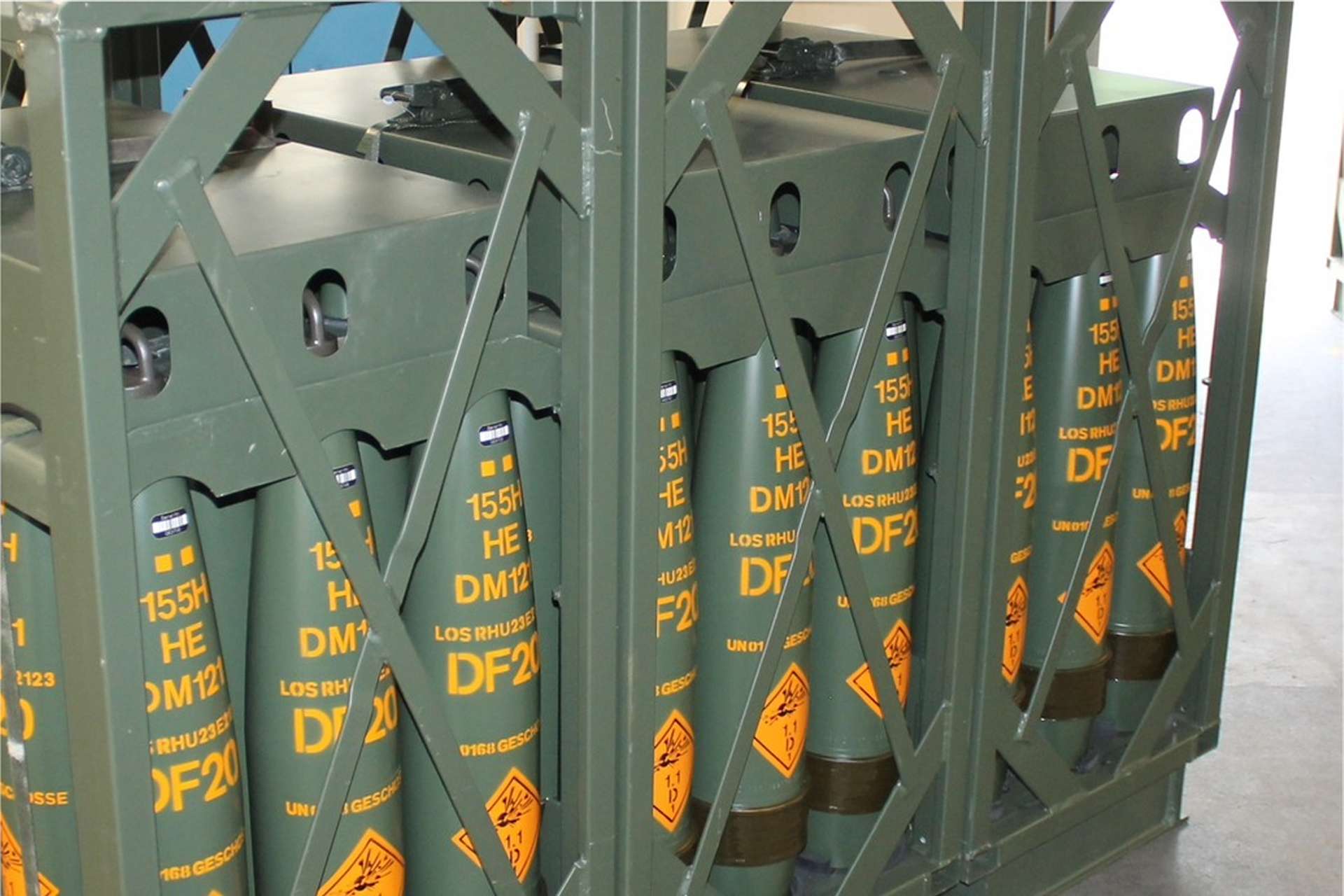
The new contract expands an existing framework agreement, primarily aiming to replenish the Bundeswehr and its allies' artillery ammunition stocks and support Ukraine in its defense efforts. (Picture source: Rheinmetall)
The new contract expands an existing framework agreement, primarily aiming to replenish the Bundeswehr and its allies' artillery ammunition stocks and support Ukraine in its defense efforts. Deliveries are expected to begin in early 2025, with the Federal Republic of Germany as the main purchaser. Part of these supplies will be provided to Ukraine, while partner nations, including the Netherlands, Estonia, and Denmark, also participate in the order.
An initial call-off from the framework contract has already been made to ensure the operational capacity of a new factory being established in Unterlüß, Lower Saxony. This first order includes various versions of 155mm caliber projectiles, valued at approximately €880 million gross, with deliveries starting in 2025. Rheinmetall anticipates increased call-offs in the coming years.
Armin Papperger, Chairman of the Executive Board of Rheinmetall AG, expressed his enthusiasm about the deal: “We are delighted about the largest order in our company’s recent history. This large-scale framework contract underscores Rheinmetall’s leading role as a munitions supplier in Germany and our position as the world’s largest manufacturer of artillery munitions. We greatly appreciate the trust expressed in this long-term order as part of the security provision for the Federal Republic of Germany and its allies.”
Papperger added, “The Federal Government is keeping its word. This framework contract will ensure the necessary capacity utilization of the new factory we are building at our Unterlüß site in Lower Saxony to supply our armed forces with munitions. The Federal Chancellor assured us of this during his visit for the groundbreaking ceremony on February 12, 2024.”
Rheinmetall’s new facility in Unterlüß will cover the entire value chain for artillery munitions production, offering a complete “full shot” package: the projectile, the fuse, the explosive charge, and the propellant charge. The site aims to achieve an annual capacity of 100,000 projectiles from its second year of production, scaling up to 200,000 per year.
Artillery plays a crucial role in modern land warfare, as evidenced by the high demand for artillery munitions in the ongoing conflict in Ukraine. Current production capacities in the Western world are not equipped to meet these extensive requirements. Consequently, Germany, like many other countries, plans to procure large quantities of munitions over an extended period.
Read more: Rheinmetall Secures Historic €8.5 Billion Contract for Artillery Munitions with Germany
- John Cockerill Defense unveils Cockerill i-X Agueris Simulators CPWS Turret & Cockerill 3105 at Eurosatory 2024
- Guardiaris unveils Revolutionary JLTV Crew Trainer & Mobile Arms Simulator at Eurosatory 2024
- Eurosatory 2024: Women engineers from Timak develop Albania's first MRAP vehicle named Shota
- French Army Presents Griffon MEPAC 120mm Self-Propelled Mortars After Receiving First Units at Eurosatory 2024