
- Details
- Written by: Jérôme Brahy
- Category: 2024
- Hits: 3986










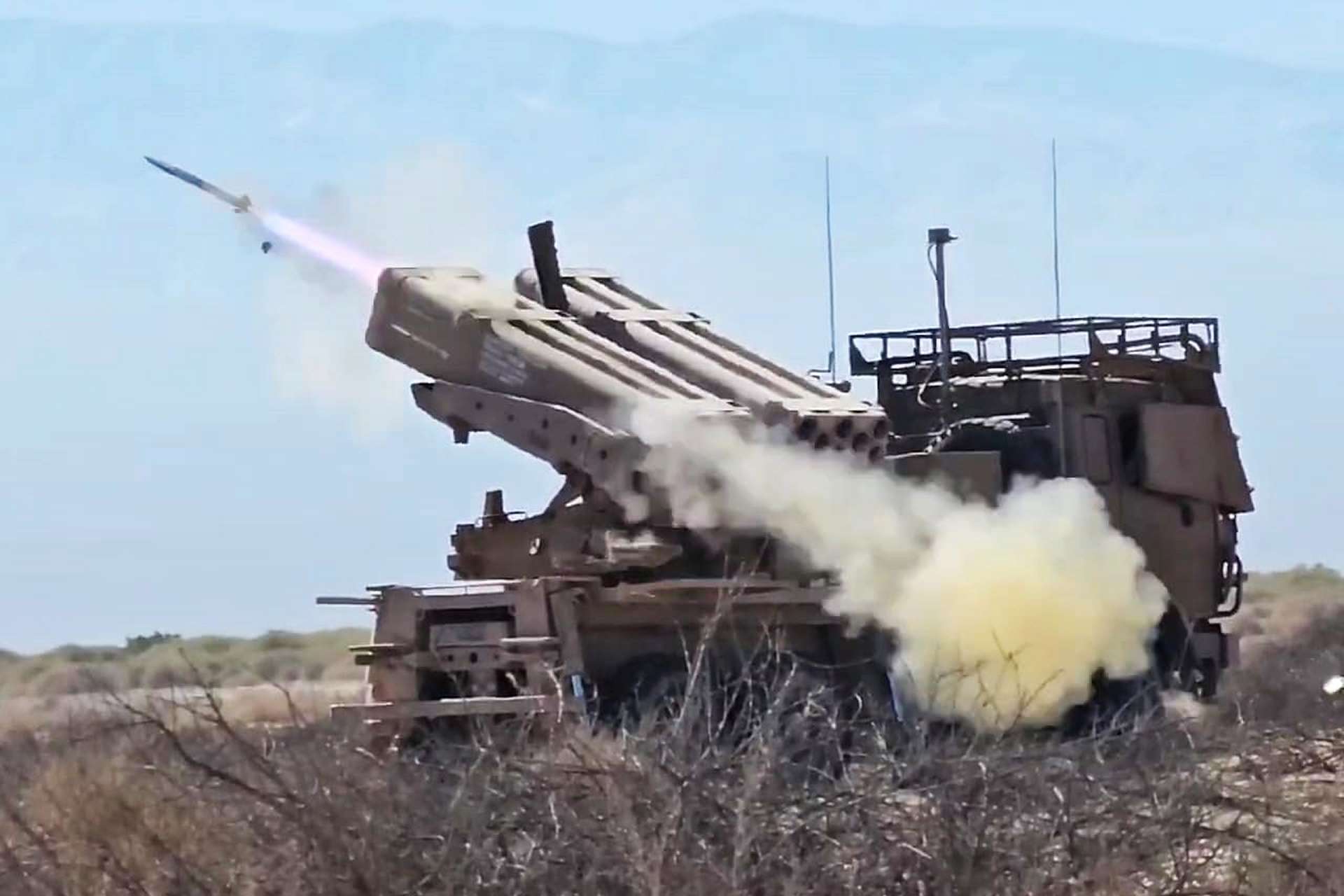
On August 7, 2024, the Chilean Army's Artillery Group No. 6 “Dolores” carried out a live ammunition drill to evaluate the tactical and technical capabilities of their units. This included assessing fire positions, shooting control, telecommunications, combat support, and observation posts. The exercise culminated with the launch of Tralcan rockets, utilizing one of their eight LAR-160 Multiple Launch Rocket Systems (MLRS).
Follow Army Recognition on Google News at this link
The Israeli LAR-160 multiple launch rocket system (MLRS) is designed to be mounted on various chassis, such as the German Mercedes truck chassis combined with FAMAE-built rockets, which are used by the Chilean military. (Picture source: Chilean MoD)
The LAR-160 MLRS, developed by Israel Military Industries (IMI) in the late 1970s, is a modular artillery system with a 160 mm caliber. Originally intended to use conventional 155 mm artillery shells, the system adopted the 160 mm caliber during development. The LAR-160 can launch rockets with ranges between 12 km and 45 km and is designed to be mounted on various chassis, such as the German Mercedes truck chassis combined with FAMAE-built rockets, which are used by the Chilean military.
Standard LAR-160 launchers hold two 13-rocket Launch Pod Containers (LPCs) for truck or trailer mounting. Medium armored vehicles, like the AMX-13 and TAM, can carry 18-rocket LPCs, while main battle tank chassis can mount up to 26 rockets. A lightweight version exists for helicopter carriage or towing by vehicles such as the HMMWV.
The system's artillery components include a platform that rotates horizontally and a frame for guide packs. This frame, driven by an electro-hydraulic mechanism, allows vertical rotation from 0° to +45° and horizontal rotation by ±85°. The launchers, with fiberglass tube guides, use factory-sealed reactive projectiles that can be stored for up to 15 years. After launch, these packages are replaced by new ones using a crane.
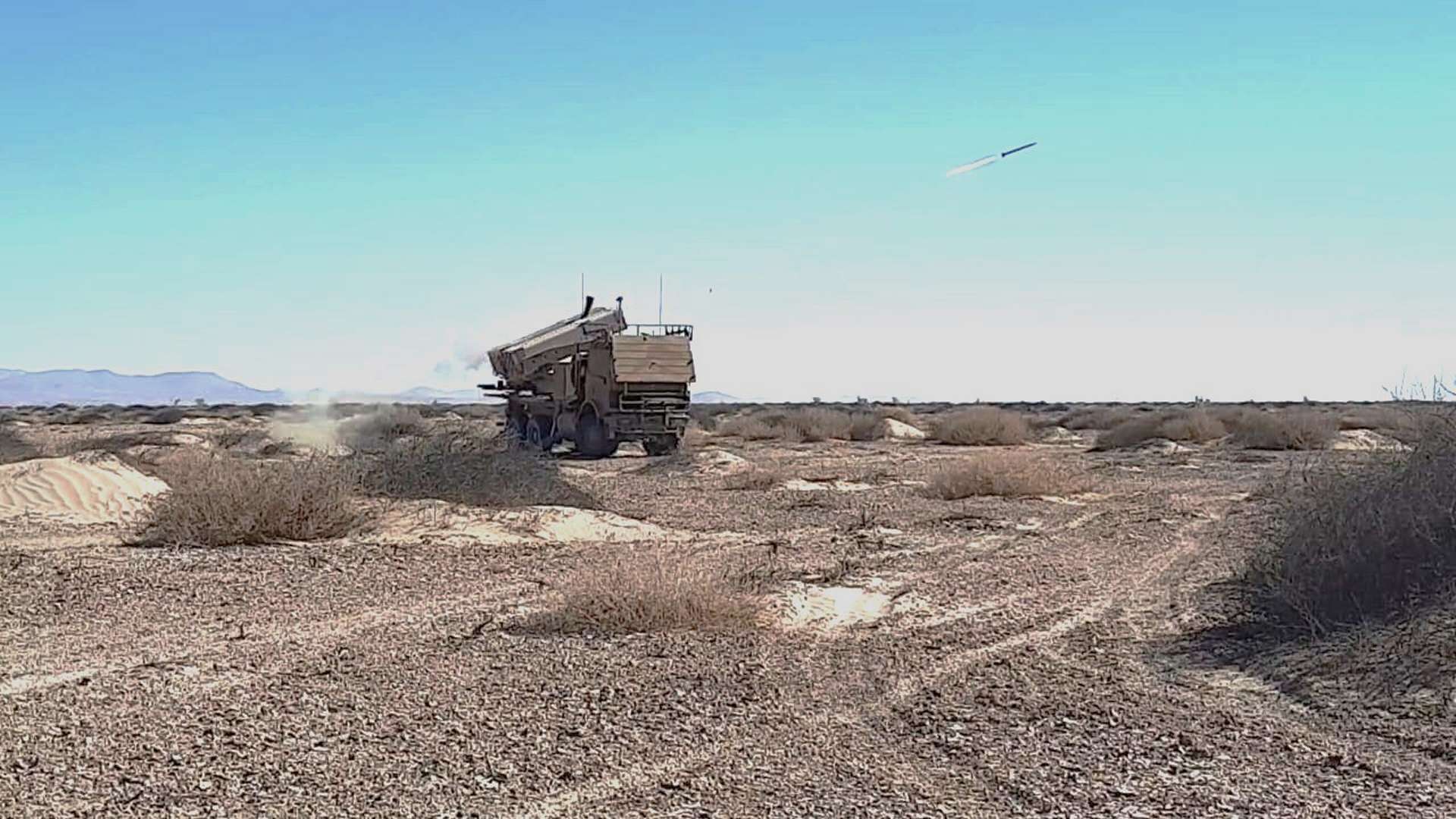
After launch, the two 13-rocket Launch Pod Containers (LPCs) are replaced by new ones using a crane. (Picture source: Chilean MoD)
The LAR-160 rockets, including the Mk-1, Mk-2, and Mk-4, have ranges up to 45 km. These rockets are stabilized in flight by four-blade stabilizers and come with fragmentation and cluster warheads. The cluster warheads contain 104 U.S.-made M77 submunitions designed to engage personnel, military equipment, and light armored vehicles. Each submunition has an effective radius of 3-4 meters and can penetrate up to 40 mm of armor.
The system also features the FERA fire control system, similar to those used in LARS-1 and LARS-2 systems. FERA improves firing accuracy by using radar to track rocket trajectories and adjust sighting devices based on real-time data, accounting for errors in target coordinates and firing positions. This system is estimated to improve firing efficiency by about 60%.
The LAR-160 has been deployed internationally and modified over time. Venezuela received 20 systems mounted on AMX-13 chassis, while the Israeli army uses versions on the American M-548 tracked transporter. Argentina's TAMSE developed the TAM VCLC variant, integrating the LAR-160 on the TAM tank chassis.
Modernization efforts have introduced the GRADLAR variant, capable of launching Grad missiles, and the NAVLAR version for naval use. Advances in warhead technology, such as cluster warheads for anti-tank mines and trajectory correction systems (TCS), have enhanced its range and accuracy.
Read more: Chilean Army conducts key artillery exercise with Israeli LAR-160 MLRS

- Details
- Written by: Halna du Fretay
- Category: 2024
- Hits: 14877
The U.S. Army is exploring new anti-drone capabilities, including using armed robot dogs to protect friendly forces from aerial threats. A robot dog equipped with a rifle turret is among the latest innovations being examined for this purpose. Observations from conflicts in Ukraine and ongoing crises in the Middle East have intensified the drive to acquire new anti-drone capabilities across the U.S. military. The arming of robot dogs is also of growing interest within the U.S. military and globally.
Follow Army Recognition on Google News at this link
At Fort Drum, New York, during Operation Hard Kill, the Vision 60 quadrupedal unmanned ground vehicle (Q-UGV) from Ghost Robotics, equipped with an AR-15/M16-type rifle, showcased its anti-drone capabilities (Picture source: US DoD)
A Vision 60 quadrupedal unmanned ground vehicle (Q-UGV) from Ghost Robotics, armed with an AR-15/M16-type rifle, is one of the anti-drone capabilities demonstrated at Fort Drum, New York, as part of Operation Hard Kill. This event, led by the Army's 10th Mountain Division and the Development Command-Armaments Center (DEVCOM-AC), began last month and concludes this week. Operation Hard Kill is a "live fire exercise" aimed at establishing Fort Drum as a premier counter-UAS (counter-uncrewed aerial systems) training center through the demonstrated capabilities of both lethal and non-lethal systems, as described by the Army earlier this year.
The AR-15/M16 is a family of military rifles originally developed by Armalite and later adopted by the U.S. military. The M16 entered service in the early 1960s and has been widely used by military forces globally. Known for its lightweight design, modularity, and precision, the rifle uses 5.56×45mm NATO ammunition and can be configured for semi-automatic or fully automatic fire. Over the years, various models and improvements have made the M16 a versatile weapon suitable for a range of combat situations.
The Vision 60 Q-UGV participating in Operation Hard Kill features an anti-drone configuration with a small turret mounted at the front, on which the AR-15-type rifle is fixed. The rifle is equipped with a relatively large electro-optical targeting system, labeled "Lone Wolf," featuring a large objective lens indicative of infrared/thermal vision capabilities, useful for spotting aerial targets.
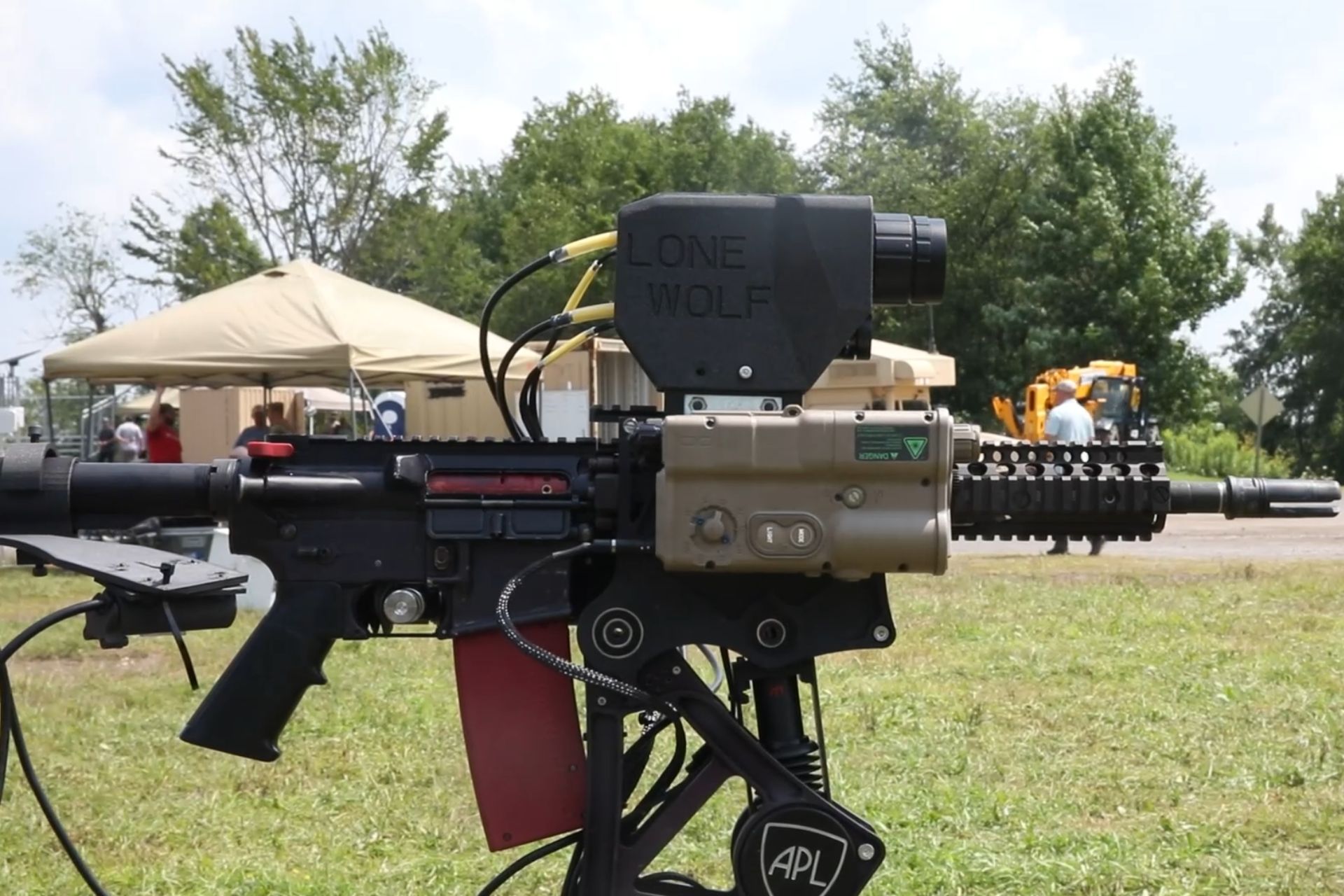
The rifle is equipped with a relatively large electro-optical targeting system, labeled "Lone Wolf," featuring a large objective lens indicative of infrared/thermal vision capabilities, useful for spotting aerial targets (Picture source: US DoD)
A laser aiming device is also attached to the side. A GoPro-like video camera appears mounted on a mast at the rear of the Q-UGV. A video released by the Army shows individuals using tablet-like devices to remotely control the robot dog's rifle. Whether the system includes offboard sensor cueing is unknown, but some level of automated targeting would be highly preferable in the anti-drone role.
The SMASH series of computerized gun sights from Israel's Smart Shooter is an example of small arms optics offering target recognition and assisted aiming, usable in a remotely-operated configuration. SMASH variants are already in limited use by several branches of the U.S. military, and their use appears set to expand.
The turret assembly also bears the logo of Johns Hopkins University's Applied Physics Laboratory (APL), known for supporting U.S. military advanced research and development, including rapid prototyping. The War Zone has contacted APL for more information about this anti-drone robot dog.
The C-UAS-configured Vision 60 aligns with efforts by the U.S. Army and Marine Corps to extend anti-drone capabilities to the lowest levels of their force structures. In an anti-drone role, a robot dog could leverage its ability to access spaces humans cannot, providing better vantage points or expanded fields of fire to protect against aerial threats. This would allow friendly forces to engage hostile drones while remaining under cover.
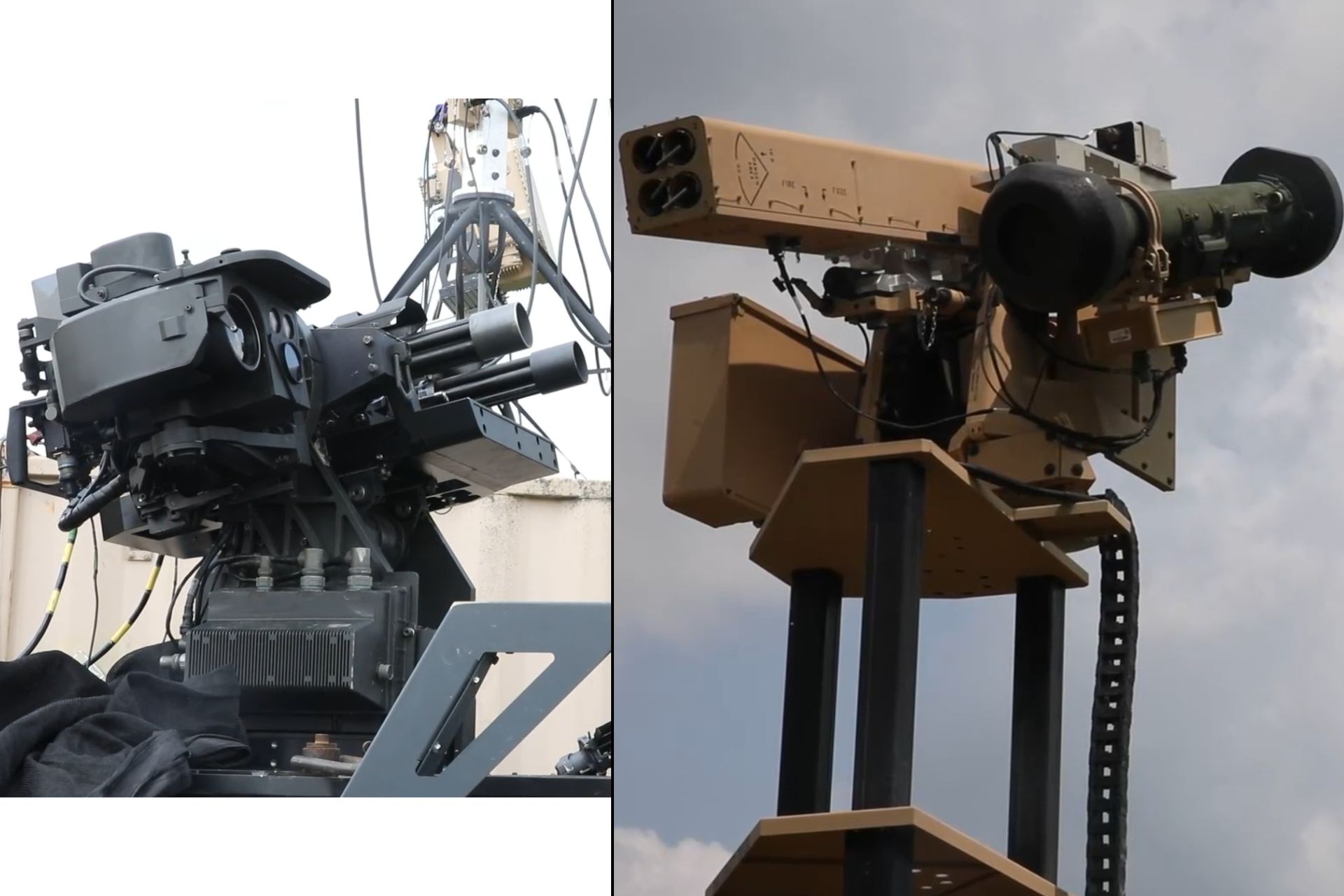
Operation Hard Kill at Fort Drum showcased anti-drone capabilities like the Containerized Weapon System with laser-guided rockets and Javelin missiles, and Rheinmetall's Mission Master UGV with 7.62mm Miniguns, reflecting a trend toward counter-drone UGVs with advanced sensors. (Picture source: US DoD)
An armed robot dog with an infantry-type rifle is not a complete solution to the threats posed by uncrewed aerial systems. The Army and Marines, along with other U.S. military branches, envision a future with broader, layered anti-drone defenses.
Images and videos released from Operation Hard Kill show other anti-drone capabilities, including the Containerized Weapon System (CWS), which can be configured for anti-drone use with laser-guided 70mm rockets, Javelin anti-tank missiles, and other weapons for ground threats. A version of Rheinmetall's Mission Master unmanned ground vehicle, armed with a turret-mounted pair of 7.62mm Miniguns, also demonstrated at Fort Drum, reflects a trend in developing counter-drone UGVs equipped with small radar arrays and other sensors.
Rifle-armed robot dogs could also be used against other targets besides drones. Marine Forces Special Operations Command (MARSOC) is evaluating Vision 60s armed with rifles, and conventional Marine units are testing other robot dog types equipped with anti-armor rocket launchers. Several types of unarmed robot dogs are already in limited service within the U.S. military for various roles, including perimeter patrols around friendly bases. Armed robot dogs seem increasingly on the horizon for U.S. forces, potentially aiding in hunting hostile drones.
Read more: US Military Deploys Armed Robot Dogs in Anti-Drone Training
- Details
- Written by: Jérôme Brahy
- Category: 2024
- Hits: 4714
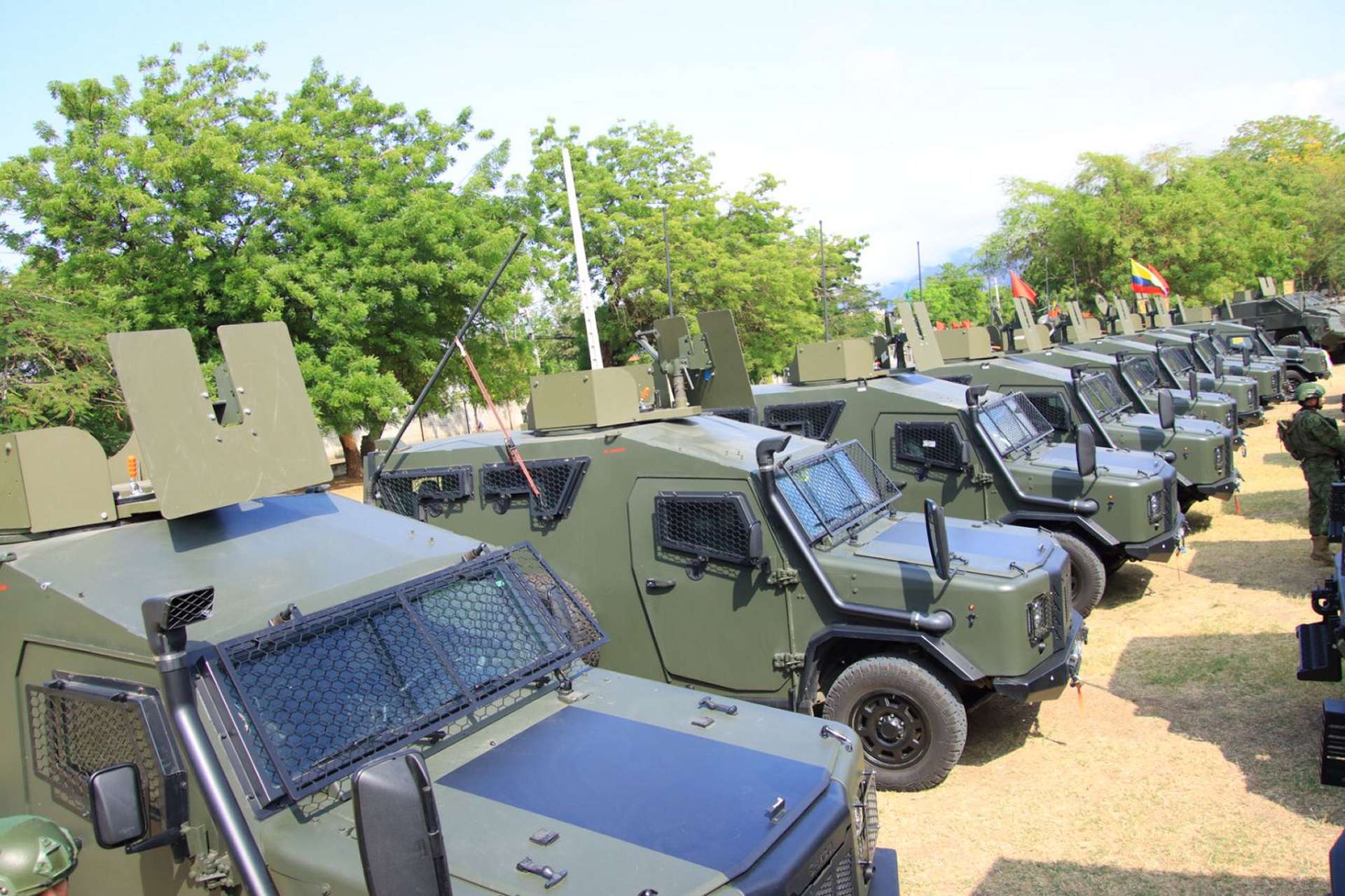
On August 7, 2024, in Portoviejo, at the 3rd Manabí Mechanized Cavalry Brigade base, the Ecuadorian Army received 45 David 4x4 and six Mbombe 6 6x6 armored vehicles. These vehicles, provided by the President of Ecuador, Daniel Noboa Azín, are intended for use in urban areas, conflict zones, target acquisition, reconnaissance, and personnel transport, enhancing the operational readiness and capacity of the Ecuadorian Army.
Follow Army Recognition on Google News at this link
The Ecuadorian Army received a total of 51 new armored vehicles, including 45 David 4x4 and six Mbombe 6 6x6 armored vehicles. (Picture source: Ecuadorian MoD)
Produced by MDT Armor Corporation, an American subsidiary of the Israeli company Shladot LTD, the David is a light 4x4 armored vehicle that has seen a decade of use in combat conditions. Built using components from either Toyota or Land Rover, it offers a maximum gross vehicle weight (GVW) of up to 4.5 tons, with up to STANAG II protection. It has been employed extensively by the Israel Defense Forces (IDF) in various combat scenarios, encountering threats ranging from rocks and stones to assault weapons and improvised devices.
The David is built on the Toyota Hilux platform, providing adaptability and versatility. It can be configured with either right-hand drive (RHD) or left-hand drive (LHD) options and is available with 3, 4, or 5 doors for crew access. Its maximum GVW is 4,200 kg, making it suitable for various mission profiles. The vehicle is powered by a 148 HP engine with 408 Nm of torque and offers both automatic and manual transmission options. The David can accommodate up to 8 crew members, with dimensions including an overall length of 5.05 meters, width of 1.99 meters, height of 2.23 meters, wheelbase of 3.09 meters, ground clearance of 279 mm, and approach/departure angles of 35°/30°. Air conditioning is available for both the front and rear compartments, ensuring crew comfort.
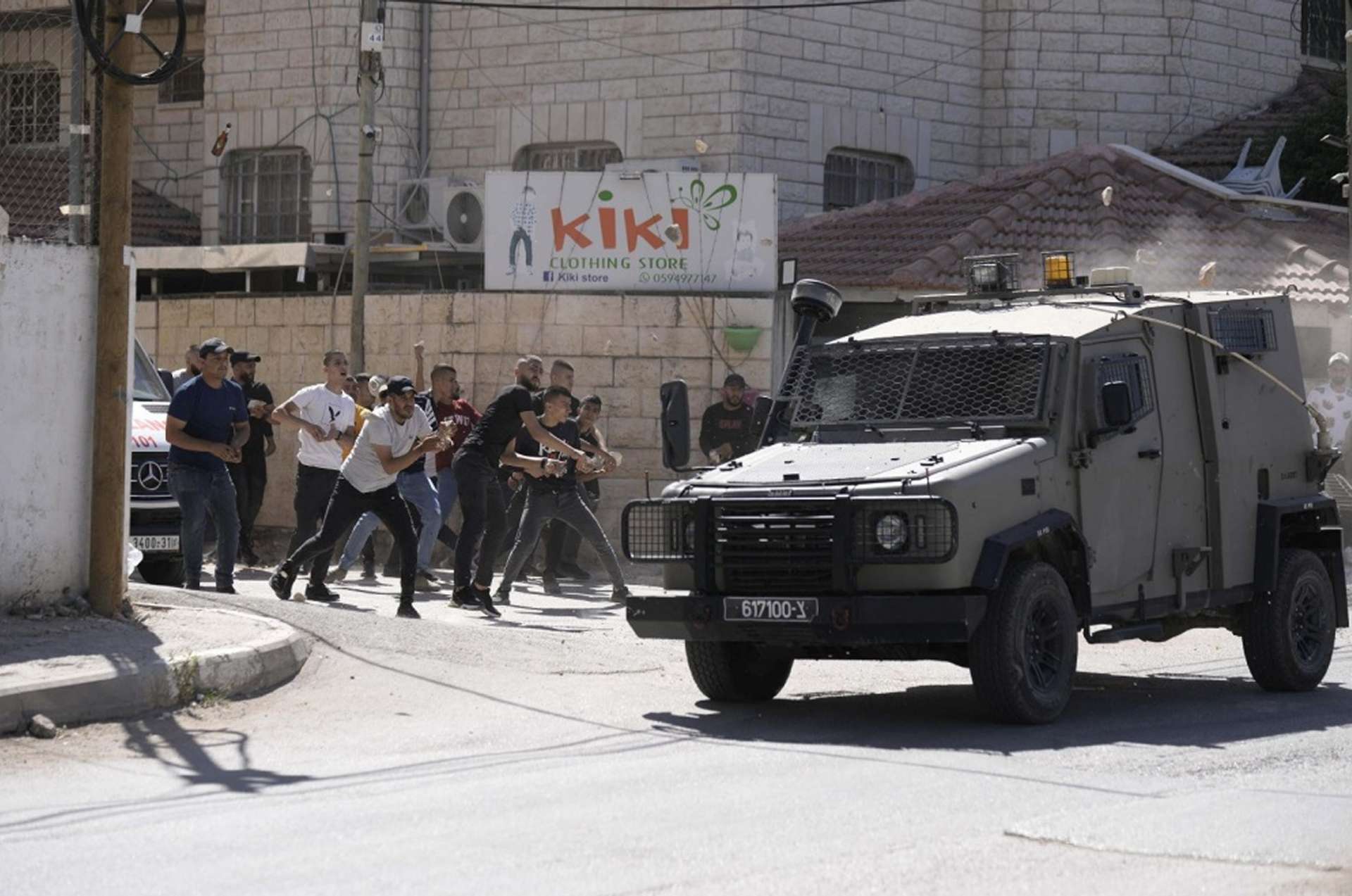
The David has been employed extensively by the Israel Defense Forces (IDF) for a decade, encountering threats ranging from rocks and stones to assault weapons and improvised devices. (Picture source: MDT Armor)
Earlier this year, on May 10, 2024, the 3rd Manabí Mechanized Cavalry Brigade of the Ecuadorian Army received its first Mbombe 6 6x6 armored vehicles, manufactured by the South African company Paramount Group. The Ecuadorian Army purchased these 6x6 armored vehicles for military operations aimed at combating terrorist groups such as the FARC and drug trafficking organizations operating along the northern border. The first batch of Mbombe 6 armored vehicles was received by the Ecuadorian Army as part of a larger acquisition by the Latin American National Defense Forces and the Southern African Development Community (SADC), announced last year by Paramount at the Defence and Security Equipment International (DSEI) event in London. Although the Latin American client was not initially disclosed, it became evident that Ecuador is likely the recipient of these 20 military vehicles.
The decision to adopt Paramount's Mbombe 6 was influenced by its protection capabilities against prevalent threats such as improvised explosive devices (IEDs), antipersonnel mines, and unexploded ordnance. These threats are significant along the Ecuadorian northern border and pose risks to personnel across various operational environments, including border, rural, and urban settings. The Mbombe 6 complies with the STANAG 4569 standard, providing class 3 protection, including resilience against 7.62×51 caliber armor-piercing rounds. Its mine-resistant design, featuring a V-shaped hull capable of withstanding detonations up to 10 kg in TNT equivalent, further enhances its suitability for the specified operational context. Notably, several countries, including Ukraine and Kazakhstan, have chosen the Mbombe 6 armored vehicles due to their effectiveness. Moreover, these nations are anticipated to locally produce the 6x6 vehicle under license, indicating a recognition of its capabilities and potential for adaptation to diverse operational requirements.
Designed to fulfill multiple military roles such as medical evacuation, personnel transport, infantry fire support, and engaging enemy armored vehicles, the Mbombe 6 is a 6x6 armored fighting vehicle powered by a turbo diesel engine generating 336 kW (450 HP) and 1,627 Nm of torque. This allows for a top speed of approximately 100 km/h and a range of about 700 kilometers on a single tank. The vehicle has a payload capacity of up to 2,300 kg, which can include various weapon systems. It can accommodate up to 11 personnel, including the driver, commander, and nine dismounts, making it suitable for troop transport and direct engagement roles.
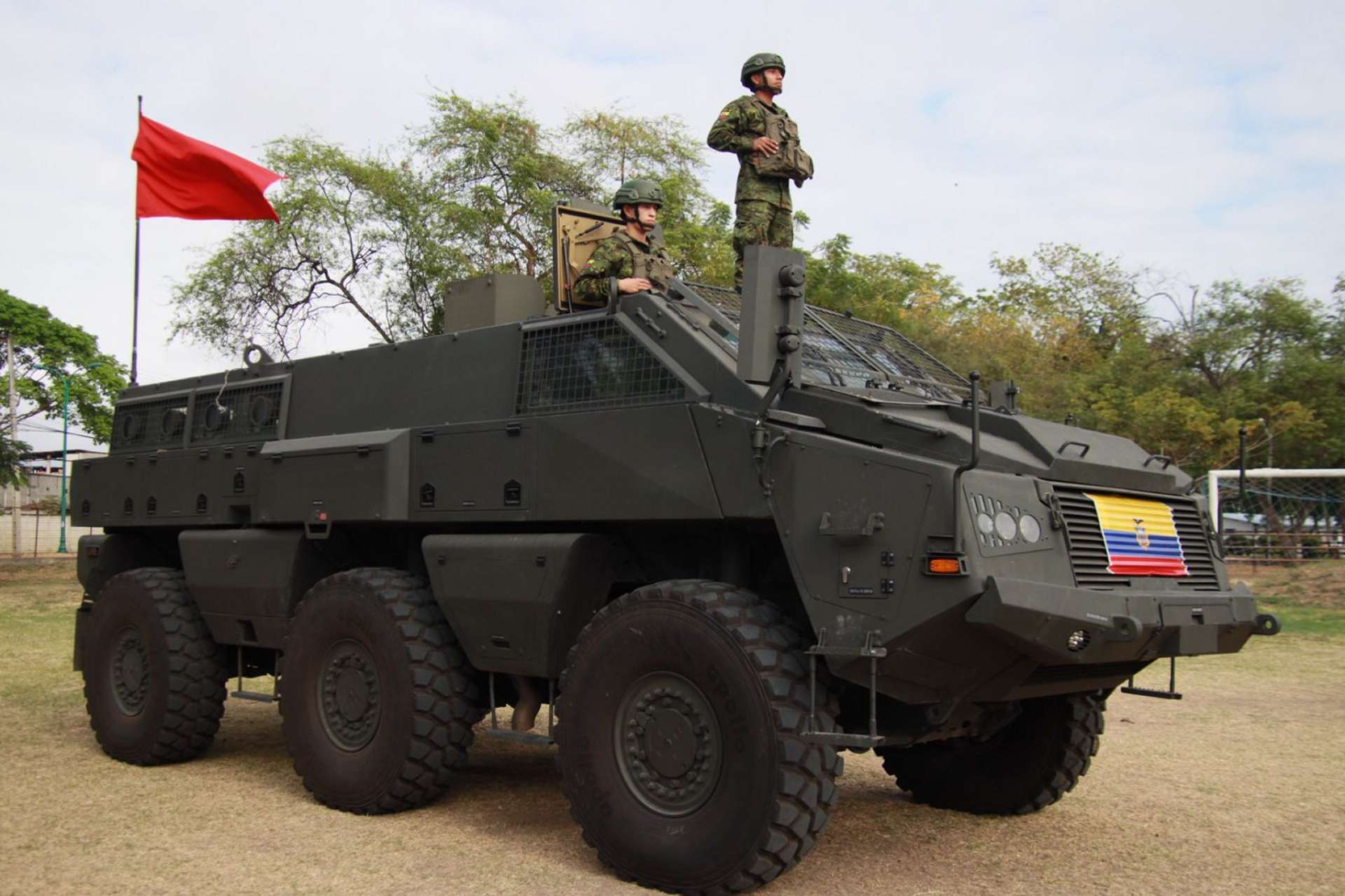
The decision to adopt Paramount's Mbombe 6 was influenced by its protection capabilities against prevalent threats such as improvised explosive devices (IEDs), antipersonnel mines, and unexploded ordnance. (Picture source: Ecuadorian MoD)
Read more: Ecuadorian Army receives 51 new David 4x4 and Mbombe 6 6x6 armored vehicles
- Details
- Written by: Administrator
- Category: 2024
- Hits: 5502
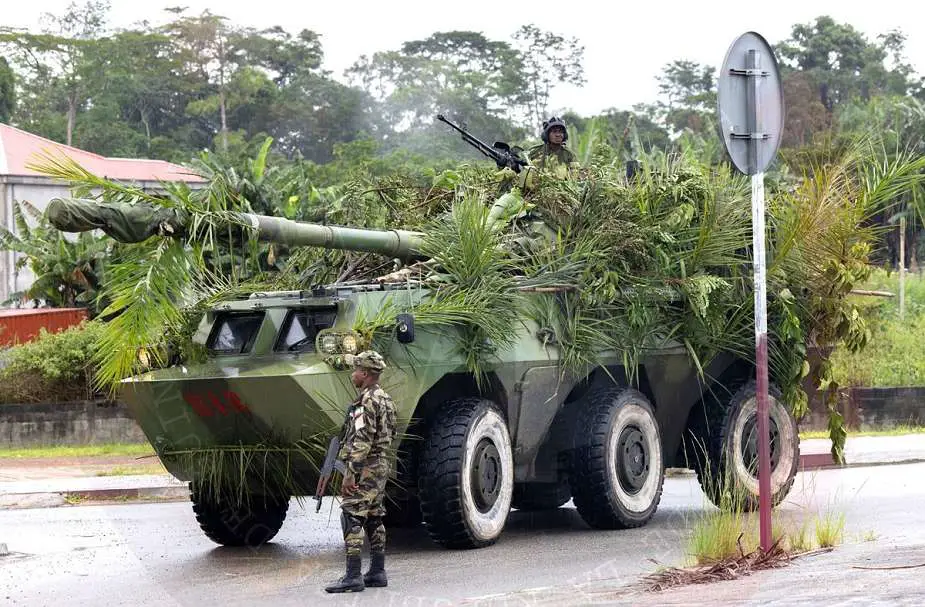
According to recent pictures posted on the X social network, the armed forces of Equatorial Guinea are now equipped with Chinese-made WMA301 Wheeled 6x6 Armored Assault Guns. According to the SIPRI (Stockholm International Peace Research Institute ) arms trade database, the Chinese delivered in 2018, 26 WZ-551 in APC (Armored Personnel Carrier) vehicles to Equatorial Guinea, but there is no official information about the delivery of WMA301 105mm assault gun which is based on the wheeled chassis of the WZ-551.
Follow Army Recognition on Google News at this link
Chinese-made WMA301 105mm fire support 66x armored vehicle of the Equatorial Guinean during military exercise. (Picture source X Account Hammer of War)
Equatorial Guinea's recent acquisitions include two Harbin Z-9WE armed helicopterS equipped with advanced electro-optical systems and weapon pylons capable of carrying guns, rockets, and anti-tank missiles , hint at the potential impact of these collaborations on Equatorial Guinea's military capabilities, raising significant concerns about the potential threat to the country's future military strength.
Equatorial Guinea's recent military purchases from China, including Red Arrow-8 anti-tank missiles, a landing ship, SM-4 self-propelled mortars, and WZ-551 armored personnel carriers, represent a significant upgrade in the country's military capabilities. This transformation, from Soviet-era equipmentto advanced Chinese hardware, is indeed impressive.
Furthermore, there are ongoing discussions and strategic interests concerning the establishment of a Chinese naval base in Bata, Equatorial Guinea. This base, if established, would not only provide China with a strategic foothold in the Atlantic Ocean, complementing its existing military presence in Djibouti, but also significantly influence Equatorial Guinea's strategic interests and regional dynamics. The Port of Bata, with its modern facilities and strategic location, is considered a suitable site for such a base.
China's involvement in Equatorial Guinea extends beyond military cooperation to significant infrastructure investments, including the construction and development of the Port of Bata and other critical projects. These investments have cemented China as a crucial partner for the Country's development.
The growing defense relationship between Equatorial Guinea and China is not just about military cooperation. It's a comprehensive partnership that spans both military and economic dimensions. This partnership is aimed at enhancing Equatorial Guinea's military capabilities while advancing China's strategic interests in the region. It's a relationship that goes beyond just defense, reflecting the depth and breadth of China's involvement in Equatorial Guinea.
The WMA301 Assault Gun is a Chinese-made wheeled armored vehicle designed primarily for export, featuring a powerful 105mm rifled gun mounted on the chassis of the Type 92 (WZ551) 6x6 armored personnel carrier. This combination offers a balance between firepower, mobility, and armor protection, making it suitable for a variety of combat scenarios, including infantry support, reconnaissance, and light tank roles. The 105mm gun can fire multiple types of ammunition, such as high-explosive anti-tank (HEAT) and armor-piercing fin-stabilized discarding sabot (APFSDS) rounds, allowing it to engage a wide range of targets, from armored vehicles to fortified positions.
In addition to its primary armament, the WMA301 is equipped with advanced fire control systems, including a laser rangefinder and a ballistic computer, enhancing its accuracy and effectiveness in combat. The vehicle's wheeled design, based on the versatile Type 92 chassis, offers superior speed and maneuverability compared to tracked vehicles, making it ideal for rapid response and operations in diverse terrains. The success of the WMA301 in the export market reflects its adaptability and the growing demand for versatile, mobile fire support vehicles in global military markets.
China's defense industry has substantially expanded across the African continent through strategic arms sales, military cooperation, and infrastructure development. Chinese military equipment, including armored vehicles, helicopters, and anti-tank missiles, has been supplied to several African nations, enhancing their military capabilities.
- Details
- Written by: Vandenbosch
- Category: 2024
- Hits: 4426
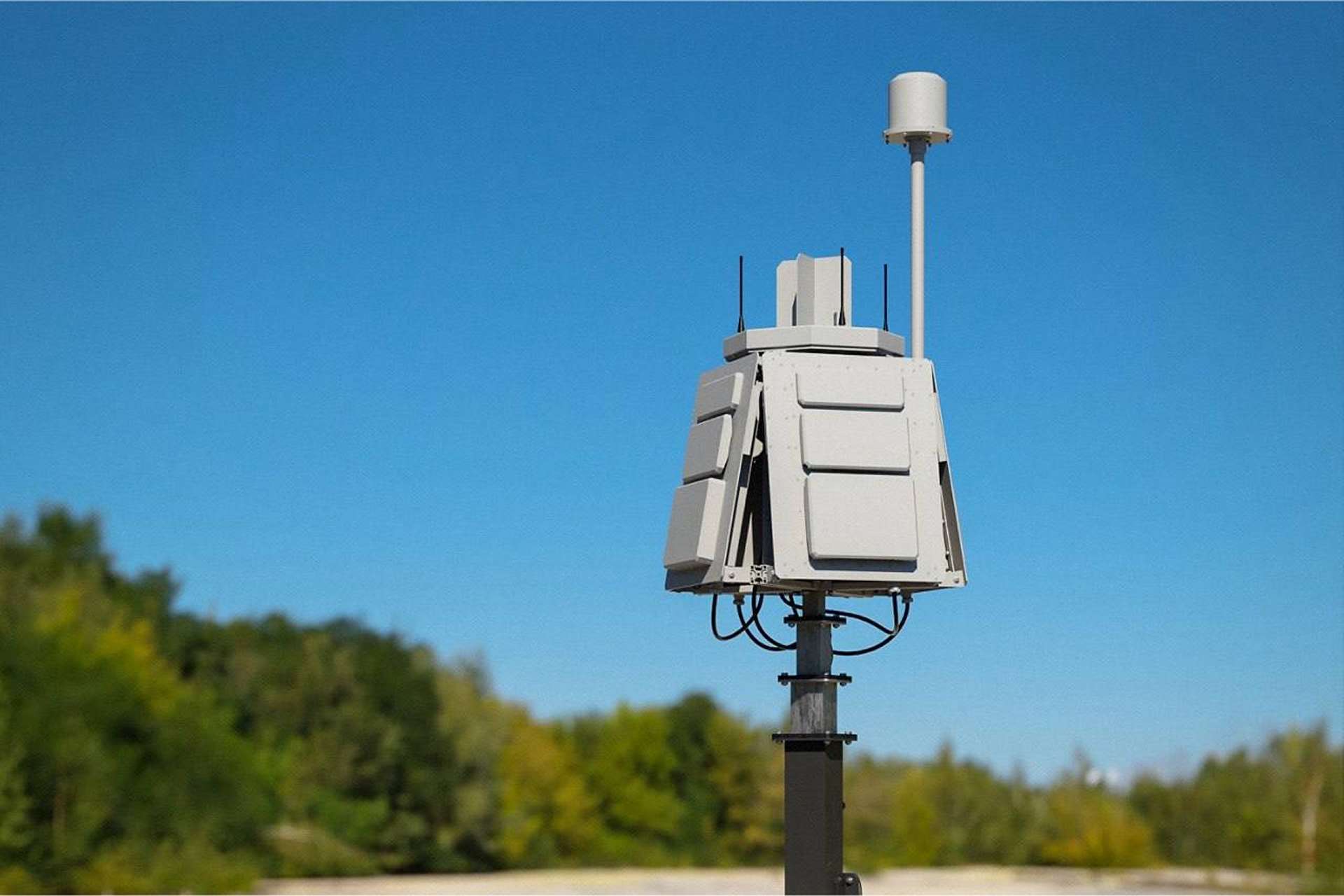
Rostec's Ruselectronics holding company has introduced the latest in anti-drone technology, the SERP-VS6D automated electronic countermeasure system. This innovative system combines advanced electronic warfare capabilities with a high-precision detector capable of identifying FPV drones and more. During rigorous testing, the SERP-VS6D demonstrated significant effectiveness against individual UAVs and group attacks.
Follow Army Recognition on Google News at this link
The SERP-VS6D automated electronic countermeasure system. (Picture source: Rostec)
The SERP-VS6D, designed by the Vector Research Institute under Ruselectronics, operates across the widest range of frequencies among the SERP line of systems. It utilizes six distinct communication channels to effectively neutralize drones. The system's high-precision detector, coupled with instantaneous digital signal processing algorithms, ensures accurate detection and identification of UAVs in protected zones, significantly reducing missed targets and false alarms.
The system continuously monitors the communication and control channels of drones in a 360° horizontal plane. Upon detection, it can automatically or manually activate to suppress radio signals from targets up to 5 km away. The suppression function engages across all available frequency ranges only when necessary, in compliance with the State Commission on Radio Frequencies' regulations against constant jammer use.
The SERP series is already used by various Russian enterprises, including those in the military-industrial complex. These systems can be deployed on both stationary and mobile platforms, with the capability to integrate multiple units for comprehensive protection over extensive areas. The equipment is compact and portable, capable of being operational in less than 30 minutes, and can also be mounted on wheeled vehicles, including armored ones, for increased mobility and protection.
Rostec recently showcased the SERP-VS6D at the International World Defense Show 2024 in Riyadh, Saudi Arabia. This demonstration attracted the attention of foreign clients seeking effective and reliable solutions to counter emerging drone threats. The system was also highlighted at the exhibition by Rosoboronexport, the state intermediary agency for Russia's exports and imports of defense-related and dual-use products, technologies, and services.
According to Sergey Skorykh, General Director of the Vector Research Institute, "Our specialists are striving to quickly find and implement optimal solutions. The proven effectiveness of the SERP-VS6D in real conditions is proof of this." The system has already been successfully used in facilities within the Russian energy and military-industrial complexes.
The development of these technologies comes amidst the rapid evolution of UAVs and the growing need to protect critical infrastructure from drone attacks. The SERP-VS6D's ability to operate in passive mode, detecting drone control signals without emitting active signals, makes it invisible to other radio devices and enhances its operational efficiency.
In conclusion, Rostec's SERP-VS6D represents a significant advancement in electronic countermeasure systems against drones, offering robust and flexible protection against a variety of modern UAV threats.
Read more: Rostec Unveils Advanced Anti-Drone System with Precision Detection
- Details
- Written by: Jérôme Brahy
- Category: 2024
- Hits: 2498
On August 7, 2024, Galvion, a provider of integrated power and data management solutions, received significant orders from the United States Marine Corps (USMC) for its Nerv Centr power and data products. These orders include 5,000 SoloPack II lithium-ion rechargeable batteries and a $1.5 million order for additional ancillary cables to support the USMC’s in-service Portable Power Scavenger Systems (P2S2).
Follow Army Recognition on Google News at this link
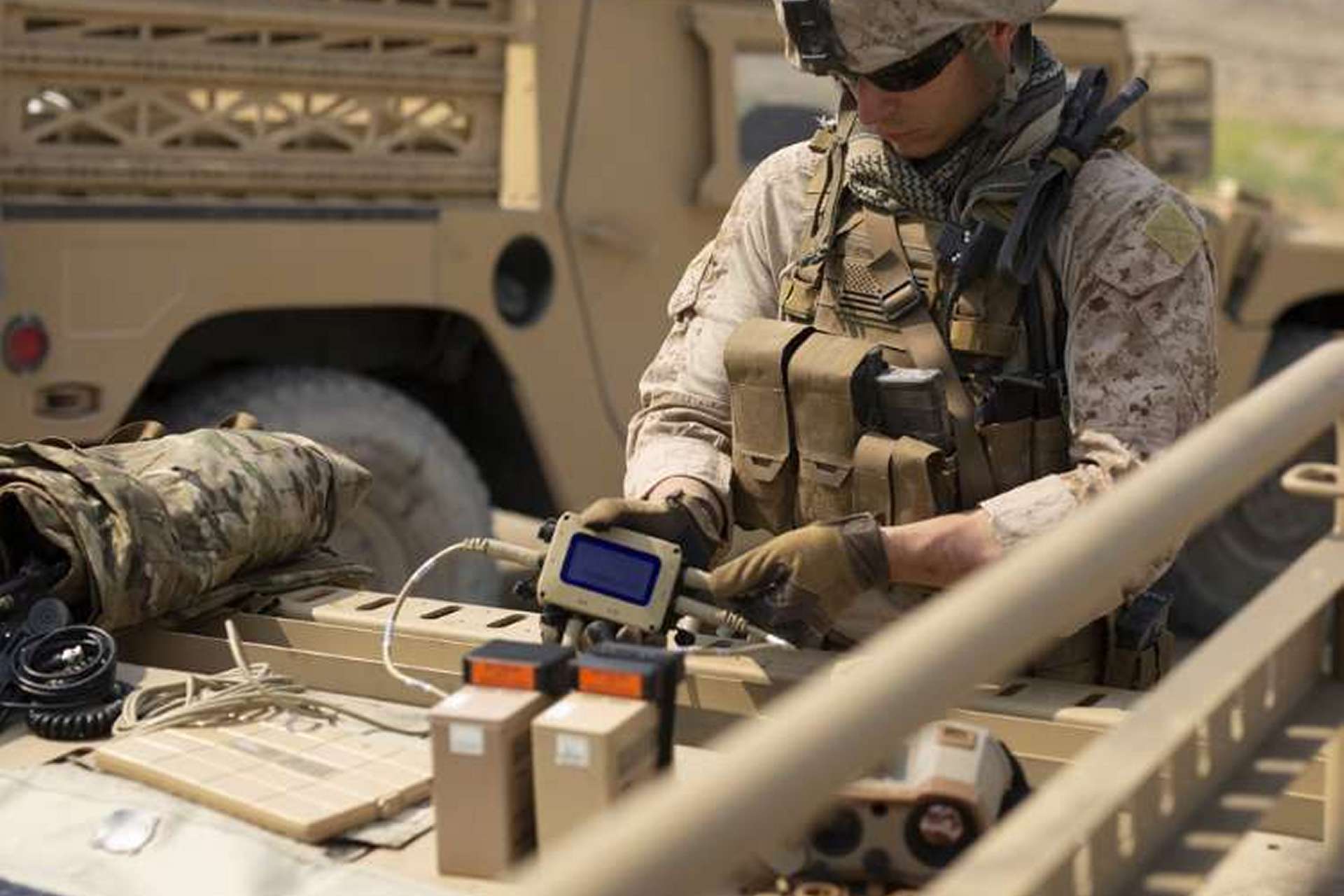
The USMC’s P2S2 kits, which include Galvion’s SPM and a variety of cables, connectors, and accessories, enable the scavenging, distribution, and management of power from multiple sources such as solar, AC, DC, military batteries, NATO plugs, and vehicle cigarette lighter/alternator attachments. (Picture source: Galvion)
The SoloPack II batteries are intended to support the USMC’s fire support and coordination systems, which use portable handheld devices for employing supporting arms in conjunction with maneuver elements. The original 98Wh SoloPack batteries, included in kits since 2018, have been upgraded. The new SoloPack II offers 140Wh of power, providing 40% more power storage capacity while maintaining the same compact form factor. It is designed to fit into a rifle magazine pouch and weighs 750 grams, making it small, lightweight, and energy-dense.
This next-generation battery includes several features such as high power density suitable for typical 24-hour missions, a flexible lead connection for easy orientation, bottom contact charging for faster and more convenient charging, and a push-button state-of-charge display. The SoloPack II is equipped with a next-generation Nett Warrior connector that allows for faster charging and additional current flow. It can be recharged while in flight and is certified safe to fly. The battery meets or exceeds UN 38.3 certification for lithium-ion batteries, IEC 62133-2 safety standards, and MIL-STD 810H environmental test methods for military equipment.
In December 2022, Galvion announced an $11 million order to supply customized Squad Power Manager (SPM) kits to each Marine Expeditionary Force (MEF) within the Marine Corps, including Reserve Forces. The USMC’s P2S2 kits, which include Galvion’s SPM and a variety of cables, connectors, and accessories, enable the scavenging, distribution, and management of power from multiple sources such as solar, AC, DC, military batteries, NATO plugs, and vehicle cigarette lighter/alternator attachments. The SPM kit can convert power from partially discharged batteries, vehicles, and standard electrical outlets into a usable format for powering devices and recharging batteries. The recent order for additional ancillary cables will enhance the functionality of the USMC’s in-service P2S2 kits.
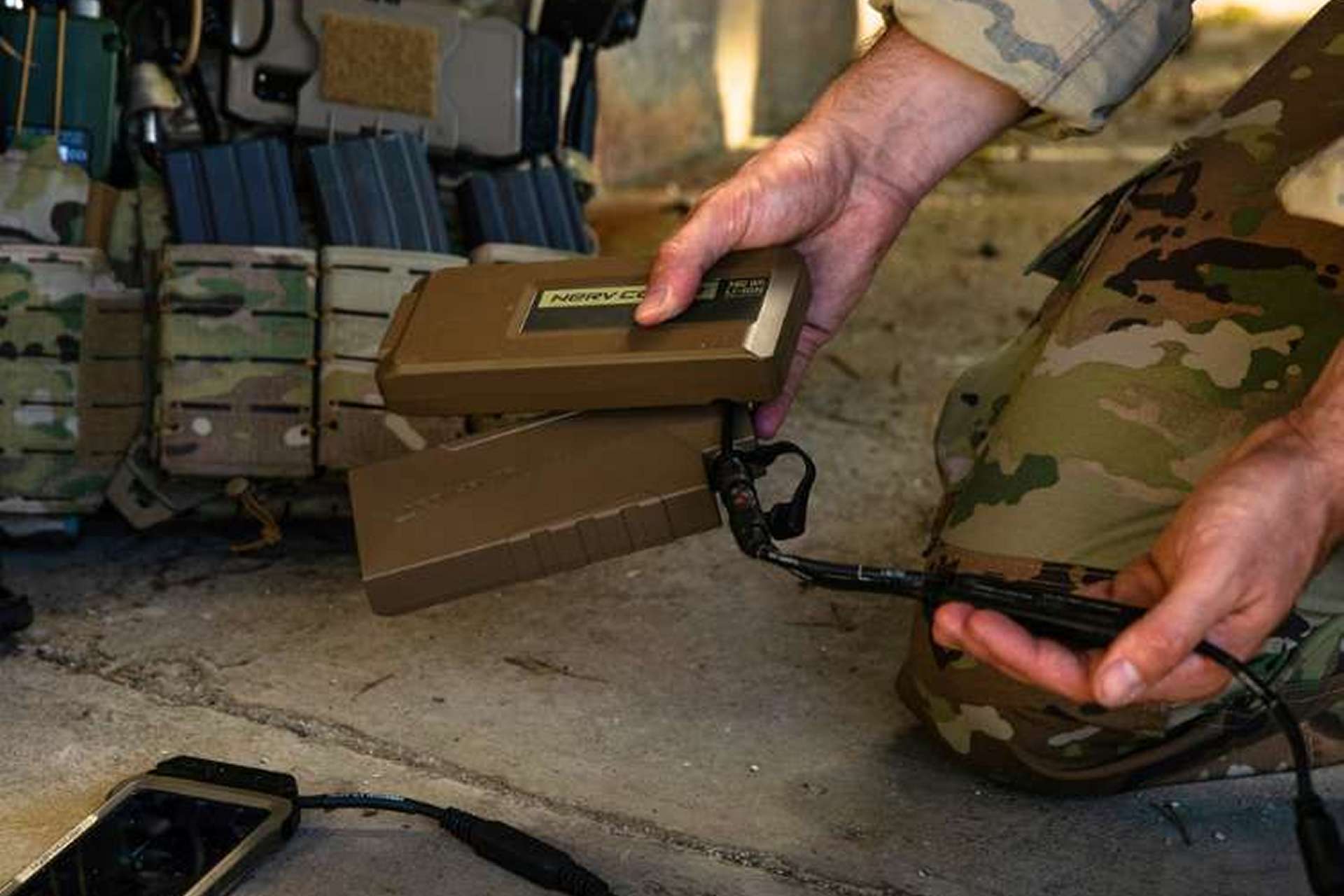
The SoloPack II batteries are intended to support the USMC’s fire support and coordination systems, which use portable handheld devices for employing supporting arms in conjunction with maneuver elements. (Picture source: Galvion)
Todd Stirtzinger, CEO at Galvion, stated that the power supply and management solutions provided by Galvion contribute to a reduction in physical and logistical burdens by sustaining power for longer periods with less weight. He also noted that these new orders are an extension and enhancement of capabilities that Galvion has already supplied to the Marines, reflecting the company's commitment to meeting the evolving needs of its customers. Stirtzinger highlighted that repeat orders from global partners indicate the company's effective response to customer needs, with the latest round of orders from the USMC being a significant development for the entire Galvion team.
The SoloPack II battery, designed and manufactured in the United States, supports various applications, including soldier systems, portable field equipment, advanced sensors and optics, precision navigation equipment, and health monitoring and medical equipment. The battery's technical specifications include a nominal voltage of 15V, a nominal capacity of 9.8Ah, and the ability to operate in extreme temperatures. It is waterproof up to 1 meter for 30 minutes and has a cycle life of over 1,000 cycles. With these features, the SoloPack II is set to enhance the operational capabilities of the USMC and support their critical missions effectively.
Read more: US Marine Corps orders 5,000 SoloPack II batteries and $1.5M in cables from Galvion
- Details
- Written by: Halna du Fretay
- Category: 2024
- Hits: 5765
Northrop Grumman has announced the development of a new Cannon-Based Air Defense (CBAD) system, designed to address the growing threat of large-scale aerial raids involving cruise missiles and unmanned aerial systems (UAS). The company recently detailed the capabilities of CBAD in a post on X, highlighting its innovative approach to modern air defense. Follow Army Recognition on Google News at this link
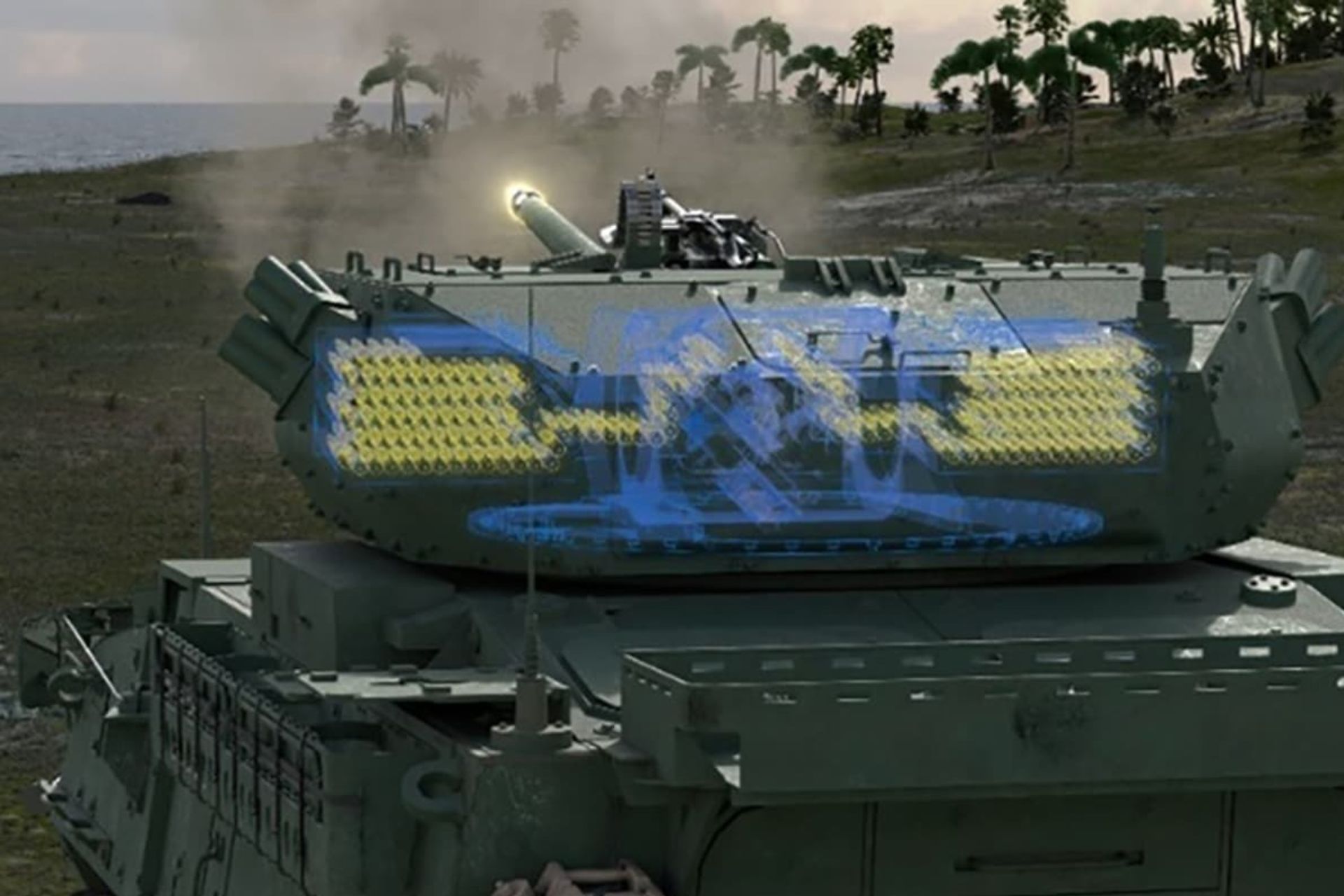
The CBAD system integrates sensors, battle management command and control, and effectors, leveraging battle-proven cannons and a suite of advanced ammunition. (Picture source: Northrop Grumman)
According to Northrop Grumman, the CBAD uses Bushmaster Chain Guns equipped with advanced ammunition to affordably counter the increasing threat of massive aerial raids. These threats are becoming more significant as adversaries enhance the quantity, variety, and capability of their aerial weapons.
Future conflicts are expected to involve larger raid sizes targeting previously secure bases and critical infrastructure. The CBAD system offers a scalable, cost-effective, and resilient terminal defense against these mass air threats.
The CBAD system integrates sensors, battle management command and control, and effectors, leveraging battle-proven cannons and a suite of advanced ammunition. This comprehensive approach aims to defend against subsonic cruise missiles and UAS from the beginning to the end of conflicts.
Traditional long-range interceptor missiles have become less cost-effective as adversaries deploy low-cost, expendable technologies in large quantities. In contrast, CBAD provides an affordable, layered terminal defense with a scalable manufacturing base and simplified logistics.
Northrop Grumman emphasized the strategic advantages of CBAD, stating that the advanced weapons system would help combatants succeed in current and future engagements through intelligent weapons designed to deliver favorable outcomes.
By leveraging battle-proven cannon technology with innovative advanced ammunition, CBAD offers a mobile and efficient air defense solution, protecting valuable assets, bases, and infrastructure. It represents the most efficient response to low-cost, high-volume attacks, ensuring robust defense capabilities in an evolving threat landscape.
With its focus on affordability, mobility, and effectiveness, the CBAD system represents a significant advancement in air defense technology. As Northrop Grumman continues to develop and refine this system, it aims to provide military forces with a reliable and resilient defense mechanism capable of countering diverse and numerous aerial threats.
Read more: Northrop Grumman's CBAD to Counter Cruise Missiles and UAS Threats

- Details
- Written by: Vandenbosch
- Category: 2024
- Hits: 6760
Kalashnikov Concern has delivered an advanced batch of 2023 model AK-12 assault rifles to its customers ahead of schedule. The company has already completed 65% of its 2024 state defense order for these rifles, as announced by the Russian company on August 6, 2024.
Follow Army Recognition on Google News at this link
The AK-12 is a contemporary assault rifle developed by the Russian manufacturer Kalashnikov. (Picture source: Kalashnikov)
Kalashnikov's weapons production division continuously improves its technological processes to ensure the high quality of its products. In the first half of this year, the production of military products increased by 50% compared to the previous year.
"Fulfilling the state defense order is our top priority," stated Alan Lushnikov, President of Kalashnikov Concern. "Despite operational modifications based on combat experience with the AK-12 in the SVO zone, our specialists not only maintain the production speed but also exceed the schedule for the state defense order."
The AK-12 is a contemporary assault rifle developed by the Russian manufacturer Kalashnikov. While it originates from Russia, it is also used in several other countries, including Armenia, Belarus, Qatar, Kazakhstan, Ukraine, and Syria. Initially designed by Vladimir Zlobin and finalized by Sergey Urzhumtse, the AK-12 began serial production in 2014 and began being used from 2018 onwards.
This assault rifle is chambered for various munitions, including the 5.45 × 39 mm M74 for the AK-12 model, the 7.62 × 39 mm M43 for the AK-15, and the 5.56 × 45 mm NATO for the AK-19. Weighing 2.9 kg unloaded and 3.2 kg loaded, the AK-12 measures 945 mm in length with a barrel length of 415 mm.
The AK-12 features a conventional architecture and can operate in automatic, two-round burst, or single-shot mode. Its maximum range reaches 2,500 meters, while its effective range is 800 meters. It has a firing rate of 700 rounds per minute in automatic mode and 1,000 rounds per minute in three-round bursts. The initial velocity of the projectiles ranges between 900 and 915 meters per second.
The AK-12 can be equipped with various magazines, ranging from 30 to 60 rounds, with the option to use a 95-round drum magazine or 30 and 45-round magazines taken from the AK-74 and RPKS-74, respectively. The rifle is fitted with a mechanical sight but can also accommodate optical sights for increased precision.
This weapon has been used in contemporary conflicts, notably the Russo-Ukrainian War, and represents a significant evolution of the Kalashnikov series in terms of reliability, precision, and versatility on the battlefield.
Read more: Kalashnikov and Russia Deliver New Shipment of 2023 Model AK-12 Assault Rifles

- Details
- Written by: Administrator
- Category: 2024
- Hits: 13876
The Iranian defense forces are ready to deploy their latest generation of air defense systems, including the 9-Dey, a new type of surface-to-air missile that uses the same 6x6 chassis as the Iranian-made Sevom Khordad road-mobile long-range high-altitude defense missile system. This system is fitted with a new missile launcher equipped with two blocks of four containerized missiles ready to fire. The future deployment of the 9-Dey comes amid rising tensions between Iran and Israel.
Follow Army Recognition on Google News at this link
The 9-Dey is an advanced Iranian surface-to-air missile system designed to intercept and destroy a variety of aerial threats, including fighter jets, drones, and cruise missiles, with a firing from 5 to 30 km and altitude up to 20 km. (Picture source: Iranian ISW website)
The Iranian defense forces continue to enhance its air defense capabilities with the introduction of the new 9-Dey surface-to-air missile system. This short-range air defense system is designed to counter low-flying threats such as cruise missiles, drones,fighter jets , helicopters and munitions dropped from enemy aircraft, making it a crucial addition to Iran's military arsenal.
Unveiled on May 21, 2021, the 9-Dey system represents a significant milestone for the Islamic Revolution Guard Corps (IRGC), which produced the system as part of Iran's broader initiative to modernize its military forces. The unveiling underscored Iran's commitment to advancing its indigenous military capabilities.
The 9-Dey system's combat capabilities were first demonstrated in an exercise dubbed "Defenders of the Sky of Velayat 2023," which took place from November 5 to November 7, 2023. During this exercise, the system successfully intercepted and destroyed several assigned targets, showcasing its effectiveness and precision in engaging modern aerial threats.
Technically, the 9-Dey is a short-range air defense missile system optimized for engaging low-flying targets. It has an effective range of 5 to 30 kilometers and a flight ceiling of 20 kilometers, allowing it to engage a wide range of threats from varying distances and altitudes. Its radar systems are reportedly capable of detecting and engaging multiple aerial threats simultaneously, providing robust early warning and interception capabilities. The system's integration with existing defense systems, such as the Khordad-15, enables a layered defense strategy that enhances the overall resilience and effectiveness of Iran's air defense network. This air defense system is based on the same 6x6 military truck chassis as the Sevom Khordad, an Iranian road-mobile long-range high-altitude defense missile system.
The 9-Dey system differs notably from the Sevom Khordad in its missile launcher configuration. While the Sevom Khordad features a bank of three missiles ready to fire, the 9-Dey employs a unique design consisting of two blocks, each equipped with four containerized missiles. This results in a total of eight missiles ready for deployment, providing enhanced firepower and capacity for sustained operations. Additionally, the 9-Dey system integrates an S-band detection radar mounted at the front of the missile weapon station, improving its target acquisition and engagement capabilities. This configuration enhances the system’s ability to respond rapidly and effectively to various aerial threats.
A key feature of the 9-Dey mobile air defense system is its use of the same radar technology as the Sevom Khordad, mounted at the front of the vehicle. The Sevom Khordad air defense system, a critical component of Iran's integrated air defense network, features a sophisticated S-band phased array radar mounted at the front of the vehicle. This radar is specifically designed for target detection and tracking, providing critical data for missile guidance against various aerial threats, including aircraft, drones, and missiles.
Operating within the 2 to 4 GHz frequency range, the S-band radar offers a detection range of up to 150 kilometers (approximately 93 miles) and is capable of simultaneously tracking multiple targets. This capability is crucial for the system's effectiveness in engaging targets at medium to long ranges and high altitudes. The radar's phased array technology allows for electronic beam steering, enhancing its speed and accuracy in target acquisition and its ability to resist electronic jamming and countermeasures.
The 9-Dey system differs notably from the Sevom Khordad in its missile launcher configuration. While the Sevom Khordad features a bank of three missiles ready to fire, the 9-Dey employs a unique design consisting of two blocks, each equipped with four containerized missiles. This results in a total of eight missiles ready for deployment, providing enhanced firepower and capacity for sustained operations. Additionally, the 9-Dey system integrates an S-band detection radar mounted at the front of the missile weapon station, improving its target acquisition and engagement capabilities. This configuration enhances the system’s ability to respond rapidly and effectively to various aerial threats.
The 9-Dey system shares its 6x6 chassis with the Iranian-made Sevom Khordad road-mobile, long-range, high-altitude defense missile system. This chassis is a locally produced copy of the MZKT-6922, originally manufactured by MZKT and used for the Russian Buk-M2E missile system. By adopting this chassis, Iran emphasizes modularity and mobility, allowing for rapid deployment and operation across diverse terrains.
Iran's version of the 9-Dey system significantly differs from the Belarusian MZKT-6922 model. The Iranian truck is shorter, with the engine mounted at the front rather than the rear, as seen in the Belarusian design. This configuration allows for side access to electronic systems, with different door numbers and shapes compared to the Belarusian counterpart. Additionally, the Iranian model features increased height and two hydraulic jacks between the truck's axles to enhance stability during firing, suggesting improved off-road capability.
The system's mobility is further enhanced by the decision to mount the radar and launchers on a single, mobile platform. This allows the 9-Dey to be rapidly repositioned as needed, making it an ideal solution for defending critical infrastructure and responding to emergent threats. The chassis's design provides the necessary robustness and agility to traverse challenging terrains, ensuring the 9-Dey can operate effectively in a wide range of environments.
- Details
- Written by: Administrator
- Category: 2024
- Hits: 6694
Iranian officials have requested advanced air defense missile systems from Russia as the nation prepares for potential conflict with Israel. This request, reported by "The New York Times" on August 5, 2024, is part of Iran's strategic efforts to bolster its defense capabilities in response to escalating regional tensions.
Follow Army Recognition on Google News at this link
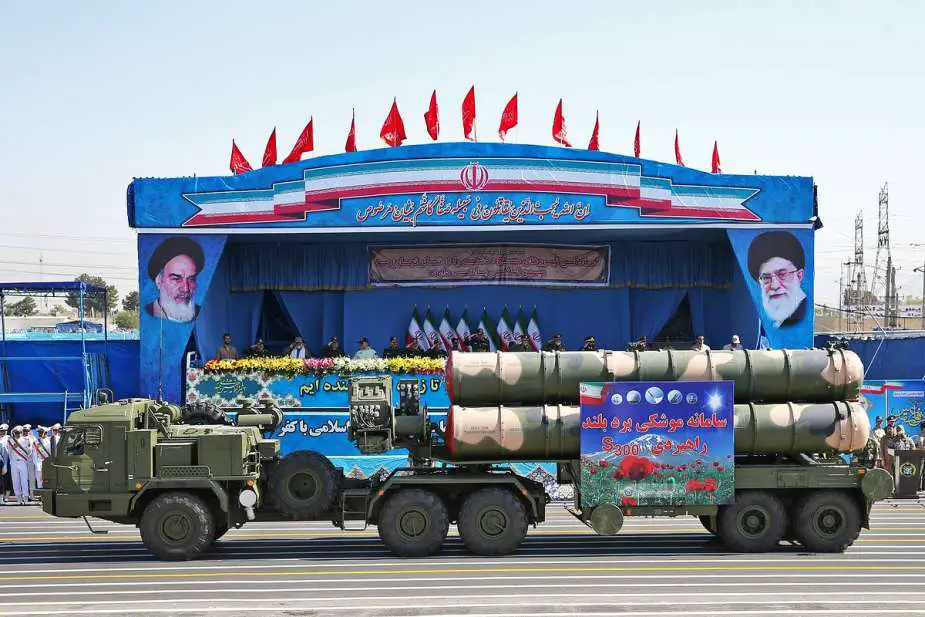
Russian-supplied air defense systems S-300 were displayed at a military parade in Tehran in September 2016. (Picture source: TASS)
The visit of the former Russian Defense Minister Sergei Shoigu to Tehran on August 5,2024, underscores the strengthening ties between the two nations, a relationship that has grown considerably since the onset of the war in Ukraine in 2022. Iran has been a key ally for Russia, providing military drones and formalizing agreements to expand military and intelligence cooperation. This strategic partnership has been crucial for both countries as they navigate a complex geopolitical landscape.
Iranian media reported that Iran has requested advanced air defense systems from Russia, signaling a significant shift in its military strategy. Two Iranian officials, including a member of the Revolutionary Guards Corps, confirmed to "The New York Times" that Iran has made this request and that Russia has already begun delivering advanced radars and air-defense equipment. These developments are part of Iran's broader strategy to enhance its defenses against potential Israeli military actions.
Ismail Haniyeh, the top political leader of Hamas, was killed in a predawn airstrike on Wednesday, July 31, 2024, in the Iranian capital, Tehran. This shocking assassination has been attributed to Israel by both Iran and Hamas, marking a potentially explosive development in the already tense Middle East.
The situation has further intensified following a recent air strike on August 6, 2024, targeting Israeli military installations in the northern region. Unidentified drones caused significant damage to infrastructure and resulted in three casualties among Israeli soldiers. The attack has prompted Israeli defense forces to suspect potential Iranian involvement, given the timing and nature of the strike, which coincides with Iran's military preparations.
The Israeli government has condemned the air strike as an act of aggression. Prime Minister Benjamin Netanyahu stated, "This unprovoked attack on our soldiers is a grave violation of international law. We will hold those responsible accountable and take decisive action to protect our nation." In response, Israel has heightened its military readiness and is actively investigating the source of the attack.
The air strike and Iran's military buildup have significant political implications, further straining the already fragile relations in the Middle East. The incident has heightened tensions between Israel and Lebanon, with the Lebanese government expressing concern over potential spillover effects from the conflict.
As tensions continue to mount in the Middle East, the situation remains fluid, with potential for further developments in the coming days. The strengthening alliance between Iran and Russia, coupled with the recent air strike against Israel, highlights the complex geopolitical dynamics at play.
Iran's existing arsenal already includes various sophisticated Russian air defense systems. The Iranian military currently possesses around 42 long-range air defense missile systems including 10 Russian S-200 Angara (RS-SA-5 Gammon), 32 S-300PMU2 (RS-SA-20 Gargoyle), and the domestically produced Bavar-373. These systems have been integral to Iran's defense strategy, and the recent request for more advanced equipment underscores Tehran's focus on bolstering its air defense capabilities amid growing tensions with Israel.
Russia's involvement in supporting Iran's military ambitions has drawn criticism from Western nations, who view it as a destabilizing factor in an already volatile region. Moscow, however, maintains that its actions are in line with international law and aimed at ensuring regional stability.
- Details
- Written by: Administrator
- Category: 2024
- Hits: 4330
The NATO Support and Procurement Agency (NSPA) announced on August 6, 2024, a new contract for the procurement of additional Patriot Guidance Enhanced Missiles (GEM-T) to replenish Germany's inventory. This strategic initiative comes amid heightened security concerns in Europe, reflecting the ongoing support and solidarity among NATO allies. Denmark, the Netherlands, and Norway have pledged their financial support to this procurement, underlining their strong commitment to Ukraine and European defense.
Follow Army Recognition on Google News at this link
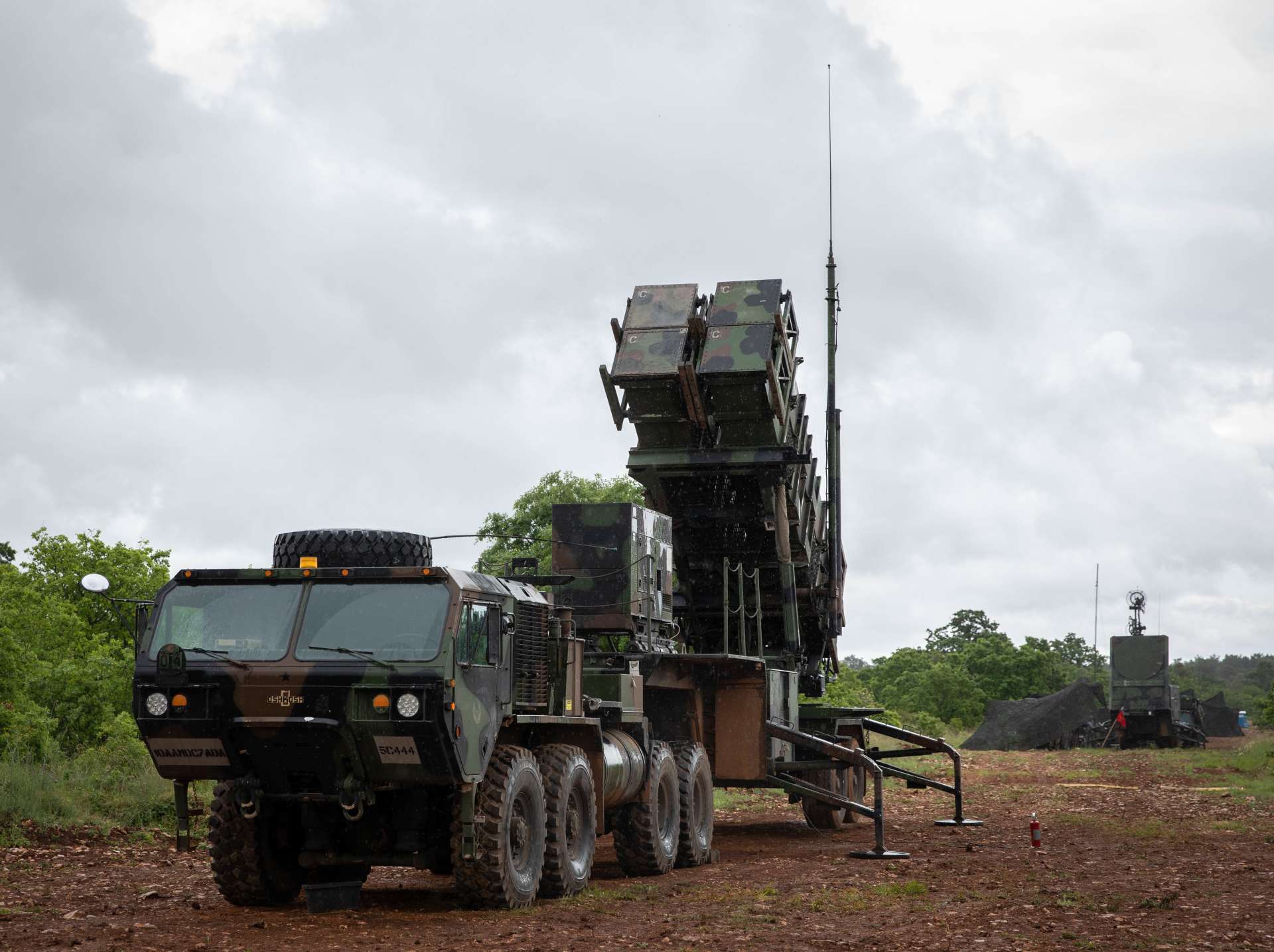
5th Battalion, 7th Air Defense Artillery’s U.S. Army Launcher unit of Patriot Missile Systems in Croatia. (Picture source: U.S. DoD)
The procurement of additional Patriot GEM-T missiles is part of a broader effort to ensure that NATO allies remain equipped with state-of-the-art defense systems. In January 2024, the NSPA announced a multi-year, multinational framework contract aimed at supporting a coalition of nations. This coalition, comprising Germany, the Netherlands, Romania, and Spain, will see a combined procurement of up to 1,000 Patriot missiles.
The replenishment of Germany's missile inventory with advanced GEM-T interceptors is expected to enhance the country's defensive posture significantly. It also reinforces the collective security framework of NATO, demonstrating the alliance's readiness to counter emerging threats.
This framework contract underscores the importance of collaborative defense efforts and resource sharing among NATO members. It is designed to enhance the interoperability of air defense systems across participating nations, ensuring a coordinated and unified response to any potential threats.
Denmark, the Netherlands, and Norway's financial participation in the procurement of GEM-T missiles sends a clear message of support for Ukraine. As the country continues to face security challenges, this gesture of solidarity reflects the unwavering commitment of NATO allies to Ukraine's sovereignty and territorial integrity.
The Patriot air defense missile system is the cornerstone of air defense for 19 countries worldwide. Its continued evolution and adaptation to modern threats underscore its strategic importance in global defense architectures. The system's proven effectiveness against complex and advanced threats has made it an indispensable asset for NATO and its allies.
The Patriot Guidance Enhanced Missile-Tactical (GEM-T) is an advanced version of the Patriot missile system specifically designed to provide superior defense against a wide range of aerial threats. The GEM-T upgrades the previous PAC-2 configuration, offering enhanced capabilities for intercepting tactical ballistic missiles, cruise missiles, enemy drones, and aircraft. One of the key improvements in the GEM-T is its ability to engage targets at a greater range and higher altitude. With an extended operational range of up to 160 kilometers and the capability to intercept threats at altitudes of up to 24 kilometers, the GEM-T significantly enhances the defensive reach and flexibility of the Patriot system. This makes it an ideal choice for addressing modern and complex threats that require rapid and precise responses.
Compared to its predecessor, the GEM-T features advanced guidance technology and improved propulsion systems, enabling it to more accurately track and engage high-speed targets. The missile is equipped with a blast-fragmentation warhead designed to effectively neutralize a wide array of threats by maximizing the impact radius upon detonation. The GEM-T's enhanced seeker technology allows it to discriminate better and track multiple targets simultaneously, even in environments with significant electronic interference or clutter. These improvements ensure that the GEM-T can provide comprehensive air defense coverage, making it a vital component in modern integrated air and missile defense strategies for nations relying on the Patriot system to protect against evolving aerial threats.
The NSPA's announcement of the Patriot missile contract reflects a strategic focus on enhancing defense capabilities and fostering unity among NATO allies. As the alliance continues to adapt to new security challenges, the importance of such collaborative efforts in ensuring regional and global stability cannot be overstated.
Kazakh Defense Ministry Plans Major Weaponry Upgrades Including Drones and Armored Vehicles for 2024
- Details
- Written by: Halna du Fretay
- Category: 2024
- Hits: 10076
The Defense Department of Kazakhstan has released a report detailing significant updates to the country's military capabilities for the first half of this year. The report highlights Kazakhstan's extensive plans to modernize its weaponry, with various suppliers, from Chinese quadcopters to European heavy transport aircraft. Follow Army Recognition on Google News at this link
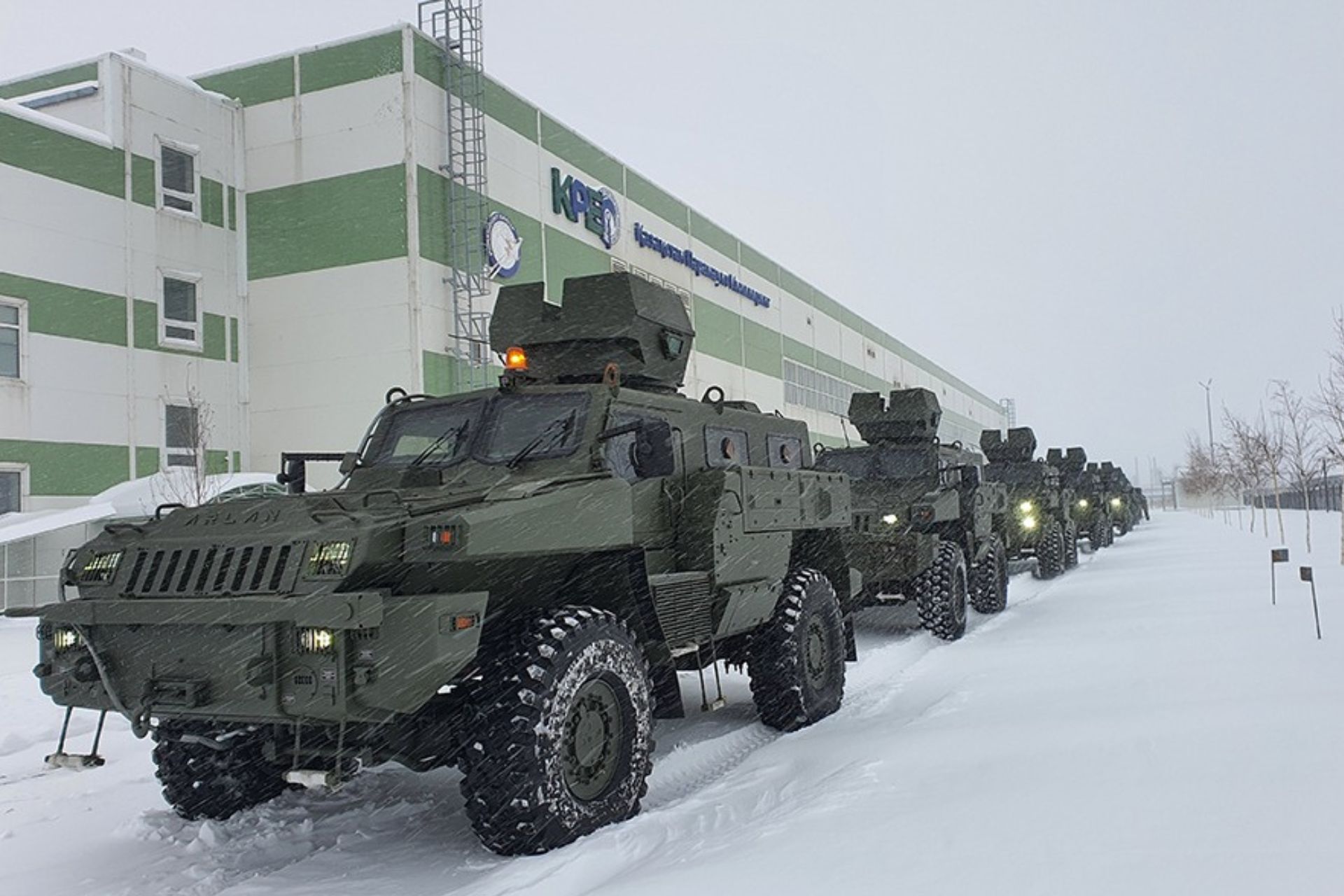
Kazakhstan Paramount Engineering has for over the past four years delivered several batches of the Arlan APC to the Armed Forces of Kazakhstan, where they have since been in operation. (Picture source: Paramount Engineering)
In 2024, Kazakhstan is set to receive wheeled armored vehicles, including the Arlan, produced by Kazakhstan Paramount Engineering, and the COBRA II from Turkish Otocar. By the end of the year, the Defense Department plans to acquire complex tactical unmanned systems (SUNQAR) and mini unmanned systems (EVOMax). Experts suggest that the decision to invest in drones was influenced by their widespread use in the Russian-Ukrainian conflict, demonstrating the effectiveness of quadcopters as weapons.
The Defense Ministry emphasized that the Kazakh armed forces continue to rearm with modern equipment, including domestically produced models. This year, more than fifty units of equipment have been overhauled, and five hundred new fighter jets and high-precision anti-aircraft missile systems are being procured for the Air Defense Forces. The preferred choice for new aircraft is the Russian Su-30SM, despite earlier considerations to purchase French Rafale fighters. The decision was influenced by the high cost of the Rafale, making the Su-30SM a more viable option. The Su-30SM is a multi-role fighter, although the Defense Ministry has been discreet about the purchase of these planes, likely due to geopolitical sensitivities.
Furthermore, Kazakhstan is conducting experimental military operations with the ANKA heavy-class unmanned aerial vehicle system. The Turkish UAV, which entered service in four countries in 2023, will begin production in Kazakhstan this year.
The European Union is expected to deliver the first A400M heavy-lift military transport aircraft to Kazakhstan, along with an anti-diversion boat for the Navy. The Defense Department has also launched repair shops for armored and automotive equipment, troop air defense, anti-tank systems, artillery, and small arms, with over 1,500 units of military equipment repaired so far.
In the annual Global Firepower-2024 ranking, Kazakhstan was placed 58th out of 145 countries, recognizing its armed forces as the strongest in Central Asia.
- Belgian Defense Innovates with Development of Miniature Drones
- British Army achieves first firing-on-the-move test with Ajax infantry fighting vehicle
- Diehl Defence delivers first IRIS-T SLM air defense system to German Army
- Israeli Army Launches Major Tender for 20,000 Locally Made M4 Assault Rifles