
- Details
- Written by: Triffaux
- Category: 2024
- Hits: 6139




Breaking news






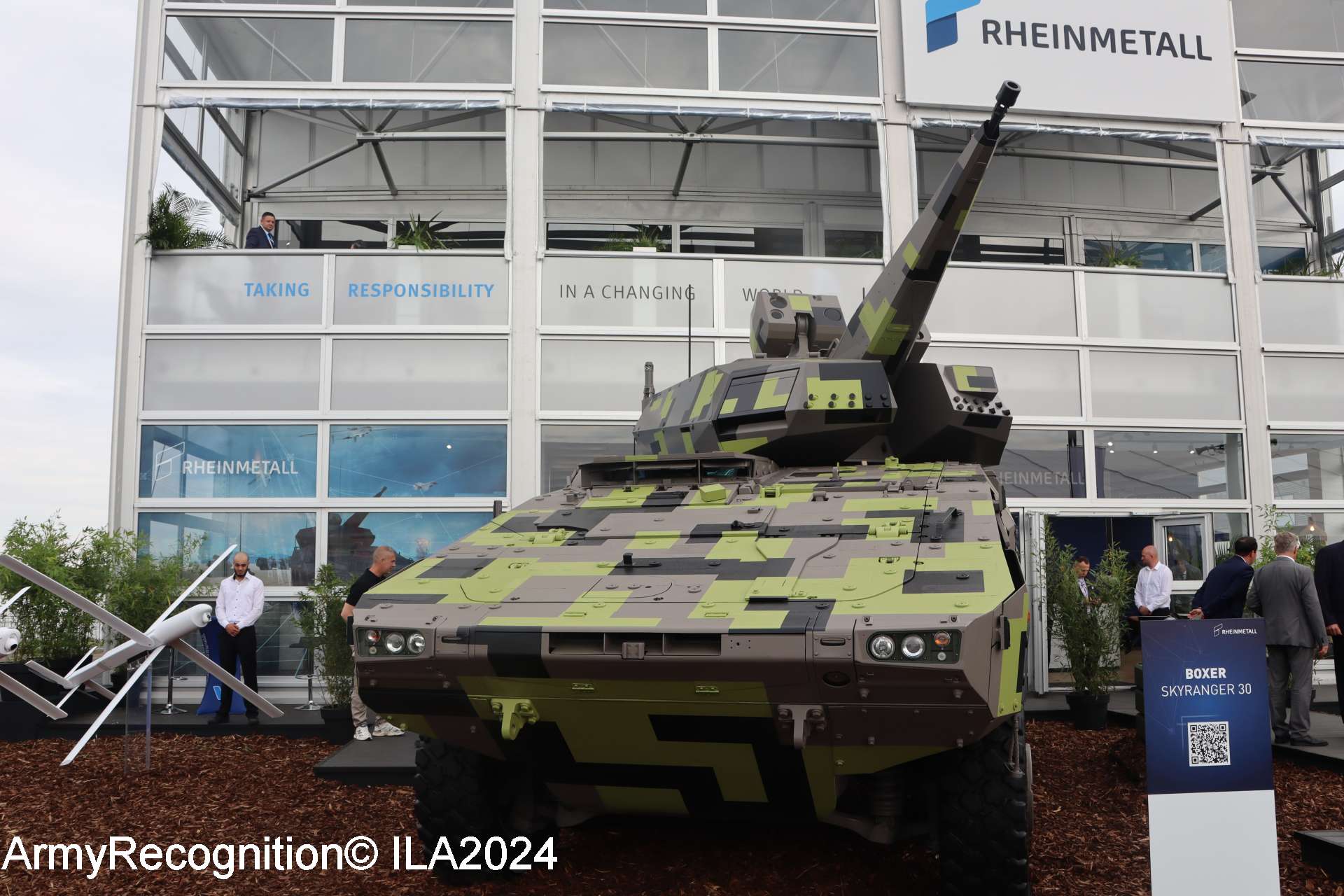
Rheinmetall is currently showcasing its Skyranger 30 mobile air defense system at the International Aerospace Exhibition (ILA) 2024, held from June 5th to 9th, 2024 in Berlin. Mounted on the robust Boxer 8x8 armored vehicle platform, this system addresses the growing demand for ground-based air defense in Europe, a need intensified by the ongoing conflict in Ukraine. The editorial team from Army Recognition, present to cover the event, had the opportunity to explore the exceptional capabilities of the Skyranger 30.
Follow Army Recognition on Google News at this link
Rheinmetall Skyranger 30 Mobile Air Defense System (Picture source: Army Recognition)
At the exhibition, the Skyranger 30, mounted on the durable Boxer 8x8 vehicle platform, was a focal point, where Rheinmetall demonstrated the turret's capabilities. The system incorporates a powerful 30mm x 173 KCE turret cannon with ground-to-air missiles, making it a formidable tool against both traditional and emerging aerial threats.
In February 2024, the German government placed a significant order with the Düsseldorf-based technology group for the delivery of these systems starting at the end of 2024. The Austrian government followed suit, opting for the Skyranger 30 on a different platform, the 6x6 GDELS Pandur EVO.
Rheinmetall’s air defense solution is part of a broader strategy as it has been commissioned along with industrial partners to develop the short and very short-range defense system (NNbS) for the Bundeswehr. The Skyranger 30 will be an essential component of the NNbS, contributing to Germany's leadership role in the European Sky Shield Initiative aimed at strengthening ground-based air defense within NATO.
The Skyranger 30 is not just a cannon; it's a hybrid air defense system capable of launching Stinger missiles in Germany and is equipped with sensors that enable it to target and effectively neutralize threats. Its ammunition includes speed-controlled airburst rounds, particularly effective against drones.
The acquisition of the Skyranger 30 by several NATO and EU members underscores the growing emphasis on mobile and flexible air defense systems capable of adapting to the complexities of modern warfare. This move is expected to significantly enhance the air defense posture of the involved nations, securing their skies against current and future threats.
Read more: Rheinmetall Presents Skyranger 30 mobile air defense system at ILA 2024
- Details
- Written by: Halna du Fretay
- Category: 2024
- Hits: 4146
Breaking news
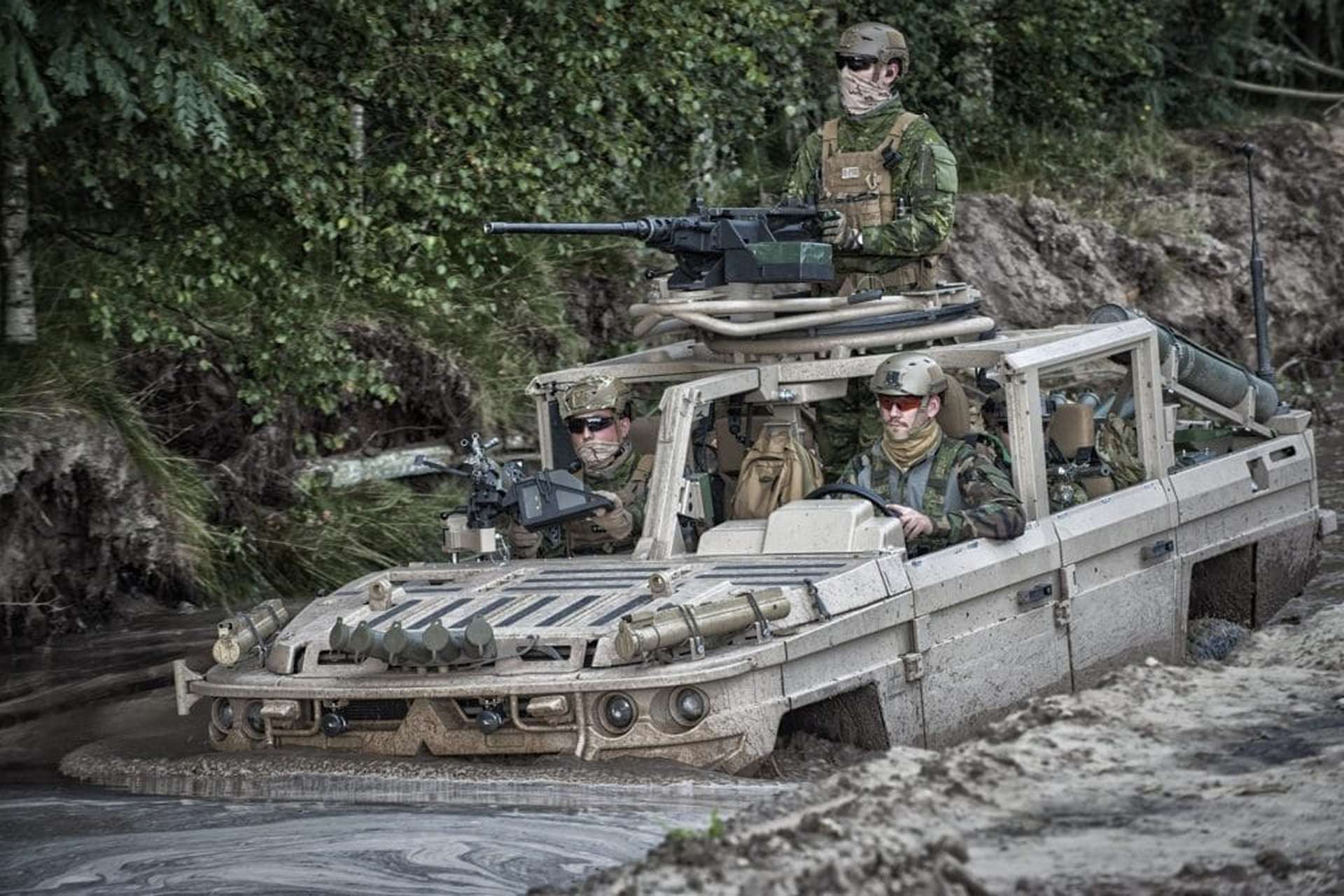
S2M-equipment, a notable player in the defense sector, will introduce its latest innovation, the GRF tactical vehicle, at the Eurosatory 2024 trade show. This vehicle is specifically designed to meet the unique requirements of special forces and specialized units. The GRF stands out for its air transportability, versatility, and exceptional maneuverability, essential characteristics for the demanding missions it is intended for in field operations.
Follow Army Recognition on Google News at this link
S2M-equipment has announced plans to conduct dynamic testing of the GRF in France this autumn (Picture source: S2M-equipment)
The GRF features an extremely small turning radius, enhancing its ability to operate in confined spaces, a crucial feature for tactical missions. Additionally, it boasts a significantly high payload capacity, enabling it to transport necessary equipment and supplies for extended missions. The vehicle's adaptability is further emphasized by its extensive catalog of options and accessories, allowing customization to meet the specific operational needs of various military units.
S2M-equipment has announced plans to conduct dynamic testing of the GRF in France this autumn. These tests will be open to the French armed forces and the media, providing an opportunity to demonstrate the vehicle's capabilities in real scenarios. In the future, the company plans to expand the GRF range to include tactical heavy goods vehicles and quads, with the GRF participating in the SOFINS 2025 event.
Eurosatory 2024, the essential trade show for defense and security, will take place from June 17 to 24 at the Paris Nord Villepinte Exhibition Centre. This 28th edition will gather professionals from around the world, from government decision-makers to defense equipment manufacturers and innovative startups in military technology. Eurosatory is recognized as a major platform where the latest technological innovations that will shape the future of defense and security are unveiled.
The trade show offers a unique opportunity for participants to forge strategic partnerships, witness dynamic demonstrations, and attend enriching conferences led by industry experts. With exhibitions covering a wide range of areas from armored vehicles to advanced communication systems, Eurosatory 2024 promises to be a crucial meeting point for key players looking to address the security challenges of the modern world.
Read more: Eurosatory 2024: S2M-equipment to Unveil New Tactical Vehicle GRF

- Details
- Written by: Halna du Fretay
- Category: 2024
- Hits: 3719
Breaking news
The 28th edition of EUROSATORY, a leading global event for defense and security professionals, will take place from June 17 to 24, 2024, at the Paris Nord Villepinte Exhibition Centre. This year, the event will bring together more than 60 French and international start-ups in the Eurosatory LAB located in hall 5A, where they will unveil their latest innovations in the defense and security sectors.
Follow Army Recognition on Google News at this link
During the 2024 event, participating start-ups will cover a wide range of technologies, including new materials, 3D printing, inexhaustible energy sources, genomics, and advancements in artificial intelligence, big data, cloud computing, the Internet of Things, and blockchain (Picture source: Eurosatory)
The Eurosatory LAB acts as a dynamic innovation ecosystem where start-ups have the opportunity to interact with industry experts, investors, and decision-makers. This platform is designed as a springboard for disruptive innovations aimed at making a significant impact in the fields of military defense and civil security. By facilitating interactions between emerging companies and established industry players, Eurosatory LAB fosters new synergies and paves the way for breakthroughs in the security and defense landscape.
During the 2024 event, participating start-ups will cover a wide range of technologies, including new materials, 3D printing, inexhaustible energy sources, genomics, and advancements in artificial intelligence, big data, cloud computing, the Internet of Things, and blockchain. Artificial intelligence is particularly emphasized this year with several companies presenting solutions aimed at enhancing software and equipment for security applications and threat detection, including CBRNe (Chemical, Biological, Radiological, Nuclear, and explosive) risks.
Additionally, logistics will play a crucial role at the event, focusing on innovations related to maintenance, asset and personnel location tracking, spare part management, and manufacturing standards compliance. Artificial intelligence is increasingly integrated into manufacturing processes and data management.
Moreover, the Eurosatory LAB offerings are complemented by about 20 start-ups participating in the GICAT pavilion as part of GENERATE, the GICAT innovation accelerator program. This year’s edition of Eurosatory promises to be a hub of productivity and innovation, providing a unique platform for start-ups to showcase their solutions to an international audience and explore potential collaborations.
On this occasion, we will introduce our new application, MEGA (Military Equipment Guide App), a mobile app designed to identify land military equipment using advanced artificial intelligence (AI). Leveraging sophisticated image recognition capabilities, this app can accurately analyze and identify various types of land forces' military equipment. Further information is already available on the website https://militaryequipmentguide.com , and the app is already accessible on the App Store and Google Play.
Read more: Eurosatory 2024 to Feature Over 60 Start-ups in Defense and Security

- Details
- Written by: Halna du Fretay
- Category: 2024
- Hits: 4447
Breaking news
On June 3, 2024, the U.S. Air Force and the Defense Innovation Unit (DIU) announced a collaborative initiative with four defense companies to develop a modular unmanned aerial vehicle (UAV), named the Enterprise Test Vehicle (ETV). This project aims to explore commercial and dual-use technology solutions that demonstrate modularity for subsystem upgrade testing. This initiative marks a strategic shift towards incorporating non-traditional aerospace entities to enhance test capabilities in an affordable and effective manner.
Follow Army Recognition on Google News at this link
ETV Design rendering from IS4S (Picture source: Integrated Solutions for Systems)
The selected companies, Anduril Industries, Integrated Solutions for Systems, Inc., Leidos Dynetics, and Zone 5 Technologies, were chosen from a competitive field of over 100 applicants. These companies are tasked with developing prototypes that will demonstrate their ability to support various military technologies, including sensors for airborne operations. The project will also investigate the use of commercially available components to address supply chain issues and reduce costs.
Andrew Hunter, Assistant Secretary of the Air Force for Acquisition, Technology, and Logistics, highlighted the project's potential to leverage industry innovations to develop test capabilities that can be rapidly and economically produced. The ETV project is designed as a foundation for large-scale production, with initial flight demonstrations planned within seven months from the award dates. Following these demonstrations, one or more prototypes may be selected for further development towards a production variant.
The ETV will employ an open systems architecture, allowing for future design improvements and rapid subsystem integration. This modular approach enables the UAV to support a minimum range of 500 nautical miles and a speed of 100 knots, with capabilities to deliver kinetic payloads. The flexibility in launch methods, including deployment from cargo aircraft, is also a key feature of the ETV.
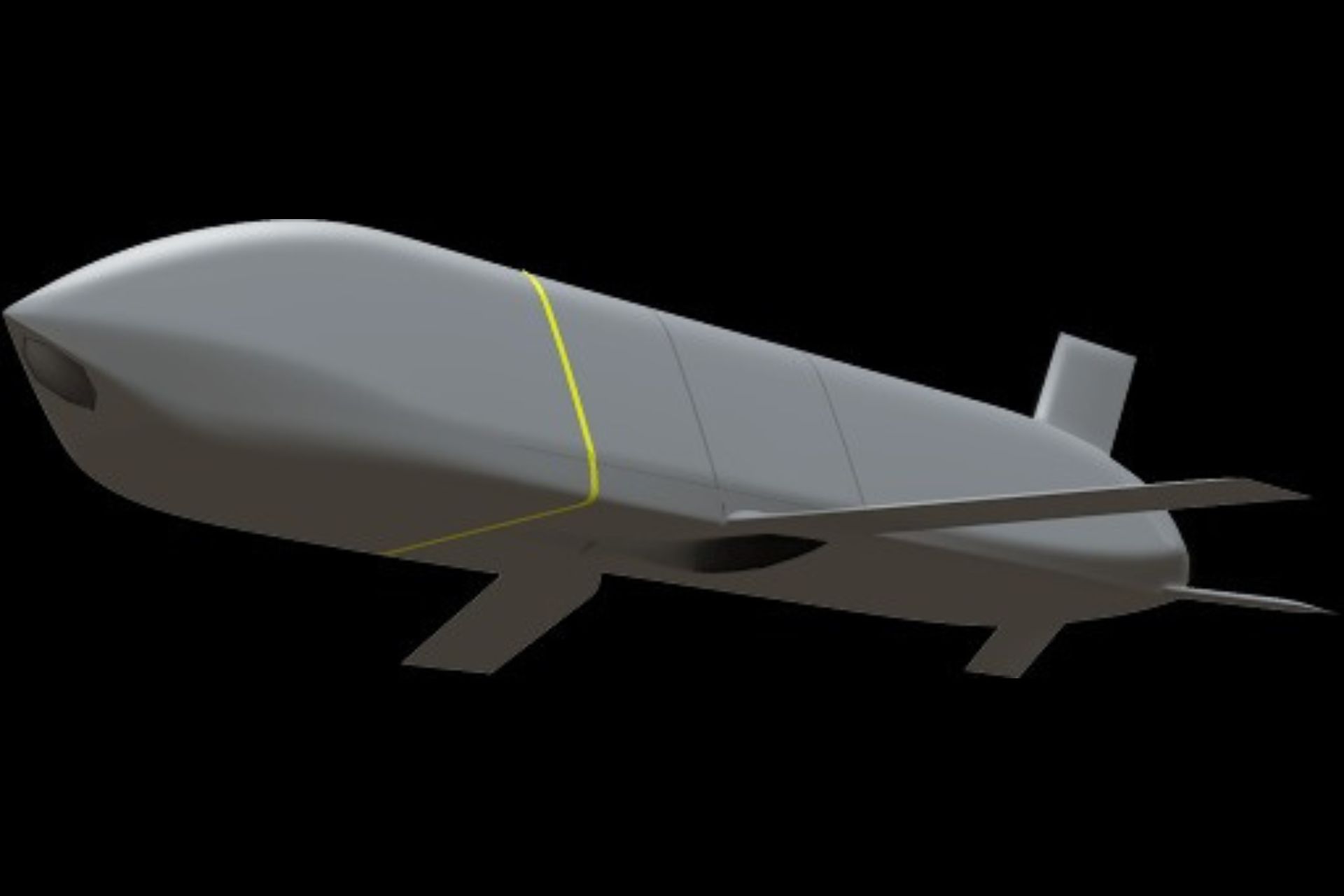
Design renderings of the ETV prototype optimized for high-rate production from Zone 5 Technologies (Picture source: Zone 5 Technologies)
Cassie Johnson, the ETV Program Manager at the Armament Directorate, stated that it is crucial to broaden the scope to include more non-traditional aerospace companies to meet the project’s cost, schedule, and production goals. Doug Beck, Director of the Defense Innovation Unit, added that this partnership is aimed at fostering innovation at a pace and scale necessary to meet strategic needs, focusing on developing autonomous systems that are simple, affordable, and scalable.
The ETV project also involves various government collaborators and evaluators such as the Air Force Research Laboratory (AFRL), Special Operations Command (SOCOM), Naval Air Systems Command (NAVAIR), and U.S. Indo-Pacific Command (USINDOPACOM). This comprehensive approach ensures that the developed technologies align well with the operational needs and strategic objectives of the U.S. military.
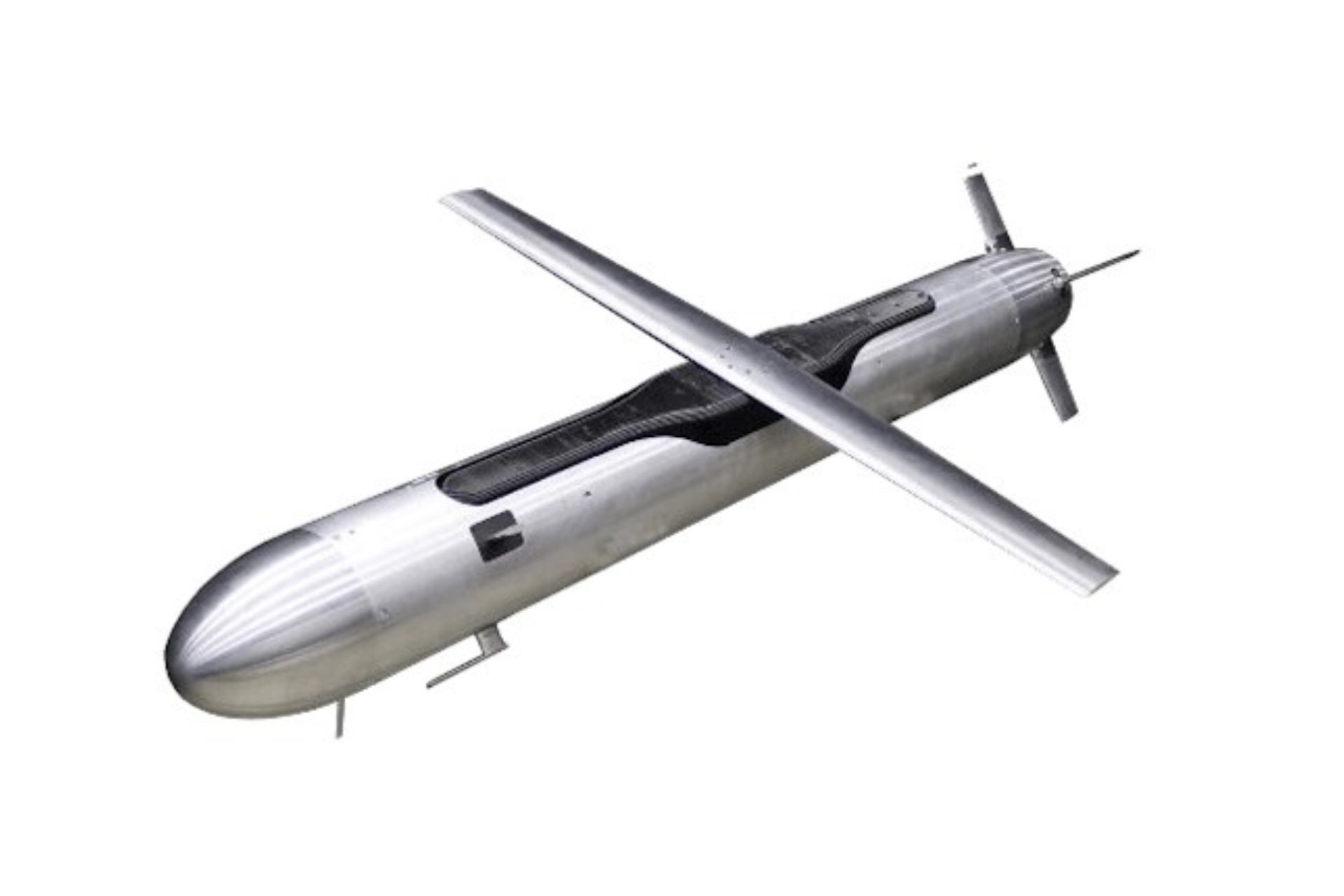
Prototype vehicle design from Leidos Dynetics(Picture source: Leidos Dynetics)
Read more: US Military Partners with Four Companies for Modular Drone Development
- Details
- Written by: Triffaux
- Category: 2024
- Hits: 3574
Breaking news
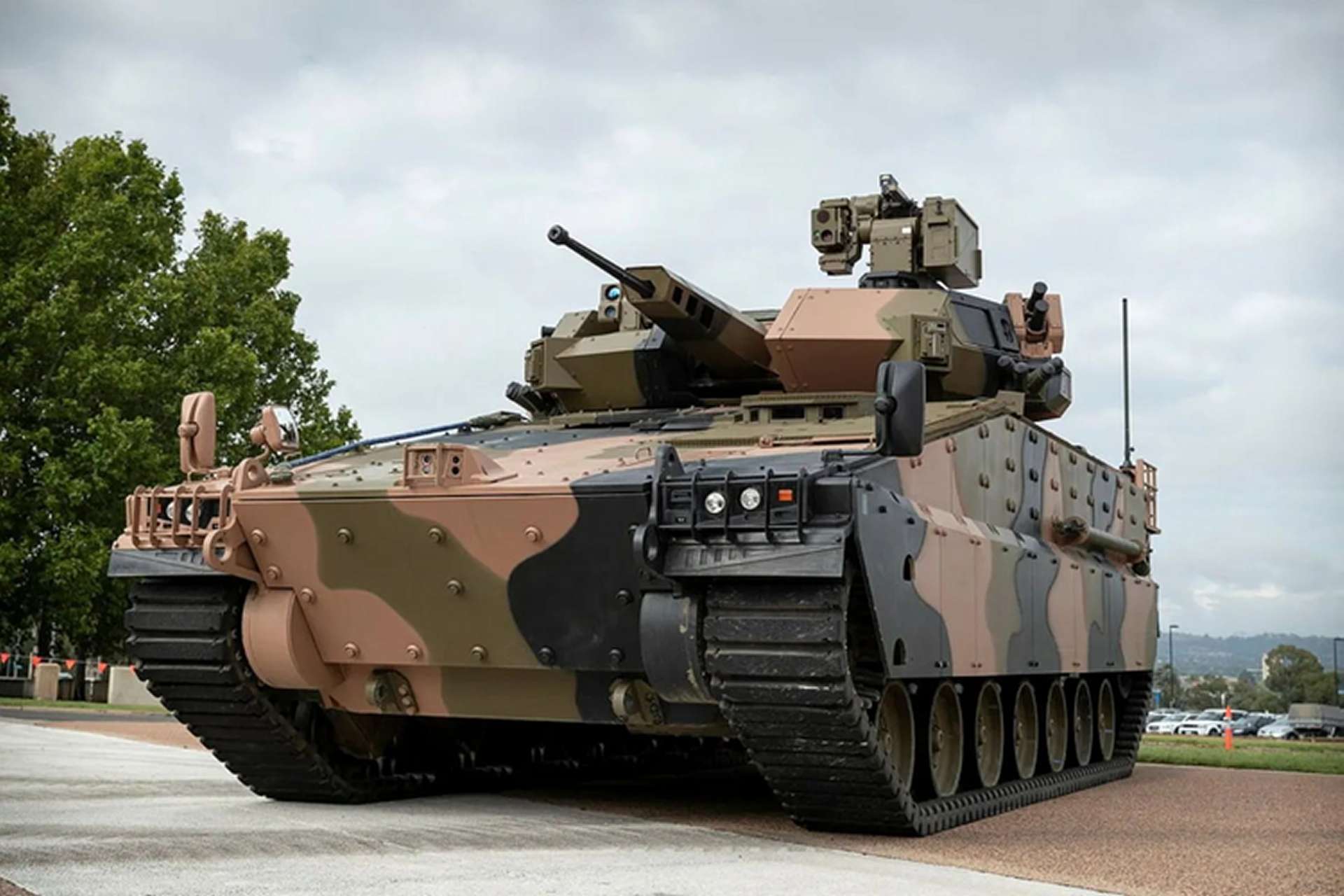
On June 4, 2024, Northrop Grumman Corporation announced a partnership with Hanwha Defense Australia to enhance the capabilities of the Australian Army by integrating advanced Mk44 Stretch Bushmaster Chain Guns (Mk44S) into the Hanwha Redback Infantry Fighting Vehicles (IFVs). This partnership is part of the LAND 400 Phase 3 program and includes the production of 129 Mk44S chain guns, with initial deliveries scheduled for 2026.
Follow Army Recognition on Google News at this link
Hanwha Redback Infantry Fighting Vehicle fitted with Mk44 Stretch Bushmaster Chain Guns (Picture source: Northrop Grumman)
Under the strategic LAND 400 Phase 3 program, the agreement includes the production of 129 Mk44S chain guns, with the first deliveries expected in 2026. This initiative will extend the Bushmaster legacy in Australia, where these chain guns are already deployed on various land, air, and sea-based combat platforms.
The Mk44S chain gun is known for its interoperability with Northrop Grumman's advanced ammunition suite, initially developed for the U.S. Army. This suite includes programmable airburst munitions among other types, such as armor-piercing and proximity-fuzed ammunition. These advancements enable Australian crew members to effectively counter a wide range of ground and aerial threats by selecting the most effective ammunition in real-time.
The Mk44S chain gun utilizes ammunition from various providers, including advanced munitions such as proximity-fuzed rounds. Each cannon is equipped with a fuse setter for programmable rounds, including programmable air burst munition and proximity-fuzed rounds. It can also be rapidly upgraded to the 40mm Supershot by replacing three parts, enhancing lethality without the need to modify the turret or cannon. The Redback is also armed with a 7.62mm co-axially mounted machine gun, and the Electro-Optic System’s remote weapon station can be fitted with a range of weapons including a 7.62mm machine gun, a .50 caliber machine, and an automatic grenade launcher.
Jennifer Zonneveld, Director of Bushmaster Chain Guns at Northrop Grumman, highlighted the global reliability of these automatic cannons due to their "performance and reliability." She added, "In partnership with the Hanwha-led Team Redback, Northrop Grumman is committed to providing the Australian Army with the most advanced medium caliber capability in the world, ensuring the system's relevance for the foreseeable future."
Northrop Grumman, a global leader in aerospace and defense technology, continues to push the boundaries of innovation, providing solutions that equip customers with essential capabilities for security and exploration across the globe. Currently, over 20,000 Bushmaster Chain Guns are in service with 65 allied nations worldwide, demonstrating their global acceptance and reliability.
- Details
- Written by: Halna du Fretay
- Category: 2024
- Hits: 4074
Breaking news
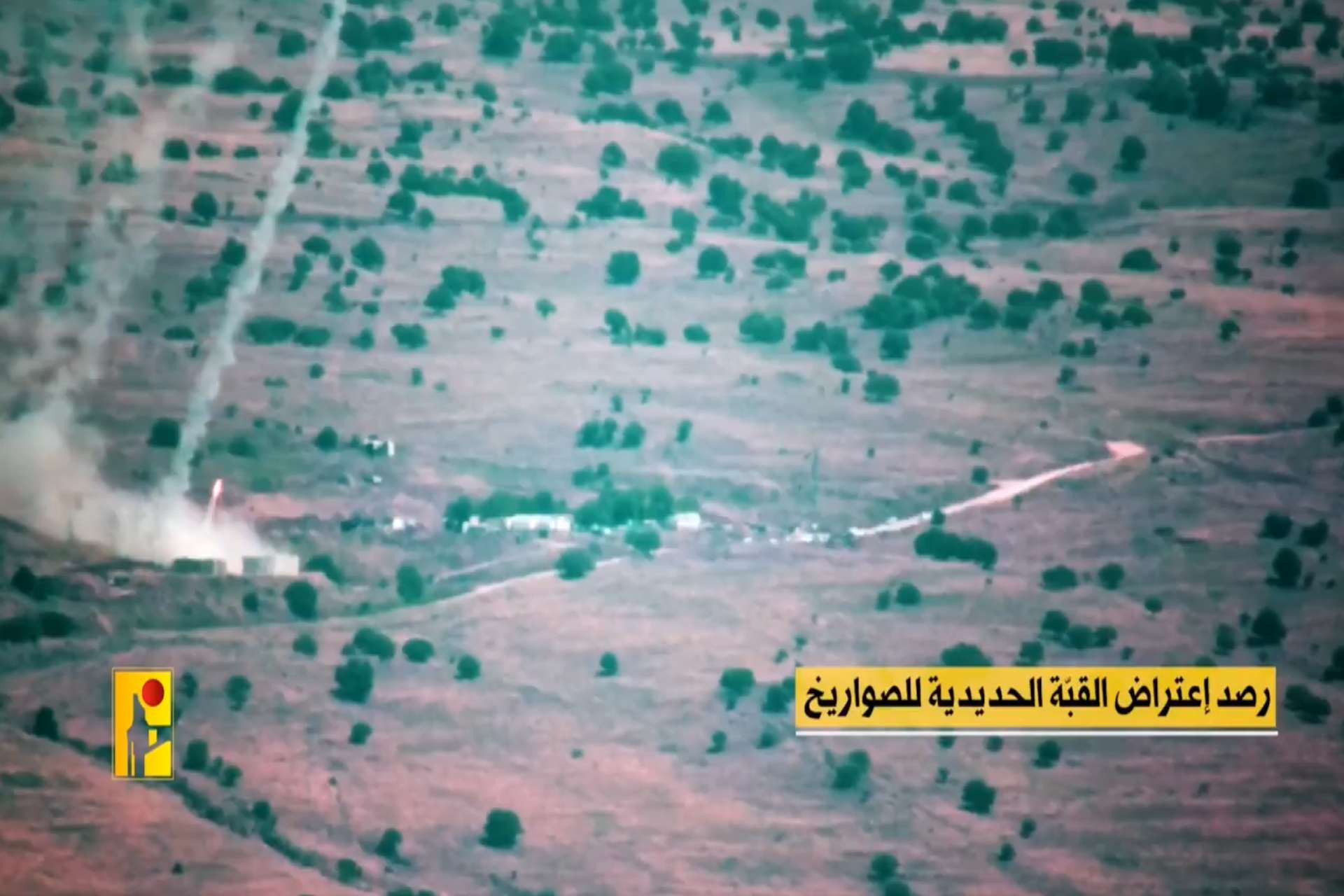
The Lebanese armed group Hezbollah recently released a video that seems to show a drone-guided artillery strike on an Israeli Iron Dome air defense battery, as reported by the NationalNews. Although it is unclear whether the target was damaged or destroyed, the footage shows artillery shells exploding near the site, followed by a cloud of dusty smoke.
Follow Army Recognition on Google News at this link
Hezbollah first launched Katyusha rockets to activate the Iron Dome system, then deployed a drone to destroy it (Picture source: Hezbollah Video)
This attack marks an advancement in the group's tactics in the conflict that has been ongoing for eight months with Israel, moving away from its expected war strategy against Israel, which involved saturating enemy territory with up to 100,000 mostly unguided and inaccurate rockets. Destroying a costly Iron Dome battery would represent a significant goal for the group, opening new avenues of attack into northern Israel and demonstrating the vulnerability of Israel's highly touted air defenses.
The use of drones to guide artillery fire has become a standard in modern military tactics, first used by American forces during the Gulf War in 1991. More recently, this tactic has been adopted by Ukrainian and Russian forces, with devastating effects on both sides. In its conflict with Israel, Hezbollah has adopted a range of new approaches, including attempts to destroy Israeli observation balloons, such as the $230 million Sky Dew blimp, which was destroyed on May 15, reducing Israel's reconnaissance capabilities. On May 16, Hezbollah also used drones to launch rockets, targeting an Israeli base in Metula and wounding soldiers.
Israel, on the other hand, also uses drones, such as the $5 million Hermes 900, for reconnaissance and strike operations in Lebanon. It also carries out airstrikes from manned aircraft and conducts daily artillery strikes into Lebanon. Hezbollah has shot down several Israeli drones using portable surface-to-air missiles.
The Iron Dome system is an advanced air defense designed to intercept and destroy short-range rockets and shells launched from 4 to 70 kilometers away. Developed by Rafael Advanced Defense Systems and Israel Aerospace Industries, the system comprises three main elements: a detection and tracking radar made by ELTA, a control and command center, and Tamir interceptor missile launchers. Each Iron Dome battery costs about $50 million, with additional costs for each interceptor missile estimated between $40,000 and $100,000. Despite its high cost, the system is extremely effective, with a reported success rate that exceeds 90%, allowing it to protect populations and strategic infrastructure from projectile attacks.
In an interview with Israel's Radio North, Israeli Brigadier General Zvika Haimovich described the current conflict with Hezbollah as a "drone war". According to him, although drones are not the main element used by Hezbollah, the group nonetheless has significant capability to deploy them, thus exposing a weakness on the Israeli side. He highlighted a major concern regarding the potential use of a swarm of "dozens or hundreds of drones". This tactic could be comparable to Iran's April 14 attack, which involved low-flying drones, as well as cruise and ballistic missiles, in an attempt to overwhelm Israel's air defenses.
Read more: Hezbollah Targets Israeli Iron Dome Batteries in Drone-Guided Attacks
- Details
- Written by: Vandenbosch
- Category: 2024
- Hits: 4066
Breaking news
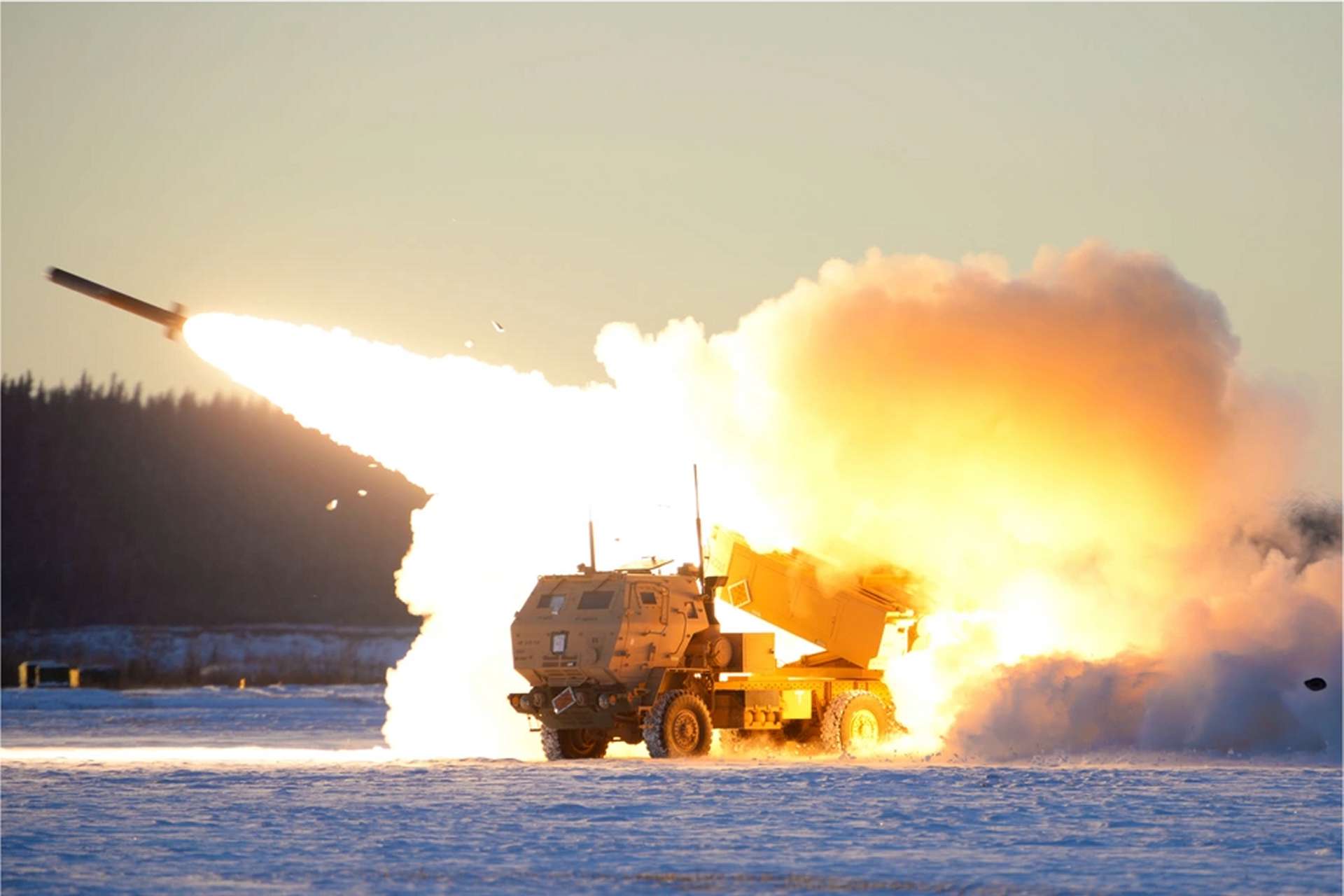
On June 3, 2024, the U.S. Army awarded Lockheed Martin a substantial $1.93 billion modification to an existing contract for the production of High Mobility Artillery Rocket Systems (HIMARS). This modification will support the enhancement and expansion of the Army's artillery capabilities. The HIMARS system is a mobile and versatile artillery system capable of launching a variety of rockets and missiles, playing a crucial role in the ongoing conflict in Ukraine.
Follow Army Recognition on Google News at this link
US Army awarded Lockheed Martin a $1.93 billion modification to an existing contract for the production of HIMARS. (Picture source: US DoD)
The HIMARS system is a key component of the Army's precision strike capabilities, offering rapid deployment and high mobility for launching various types of rockets and missiles. The contract will see work locations and funding details determined with each order, and the project is expected to be completed by May 31, 2028. The contracting activity is managed by the Army Contracting Command, Redstone Arsenal, Alabama.
This new contract is in addition to a previous $861 million contract awarded to Lockheed Martin in May 2024, aimed at increasing the inventory of HIMARS launchers and related equipment. The HIMARS system has been crucial for both U.S. military operations and international support, including significant deployments to Ukraine since the onset of the conflict with Russia in 2022.
The HIMARS (High Mobility Artillery Rocket System) is a mobile artillery system designed by the United States, capable of launching either six MLRS series rockets or one ATACMS tactical missile. Used by countries such as the United States, Australia, Canada, Estonia, Finland, Jordan, Latvia, Lithuania, Poland, Romania, Singapore, Ukraine, and the United Arab Emirates, the HIMARS offers great versatility on the battlefield. It is equipped with an NBC (nuclear, biological, and chemical) protection system, a heater, and a white searchlight for night operations.
The vehicle, weighing 10,886 kg, is protected against small arms fire and shell splinters. It is operated by a crew of three and can reach a maximum speed of 85 km/h on the road. In terms of firing range, it can reach 45 km with an ER-MLRS rocket, 70 km with the new extended-range guided rocket GMLRS, and up to 300 km with a tactical missile ATACMS. The HIMARS measures 5.046 meters in length, 2.16 meters in width, and 2.251 meters in height, making it a compact and highly mobile system on the field.
The production and delivery of the HIMARS system are part of a broader effort by the U.S. Army to enhance its artillery capabilities and ensure readiness for a range of military engagements. This system is recognized for its combat-proven reliability and precision, providing the United States and its allies with unmatched mobile firepower.
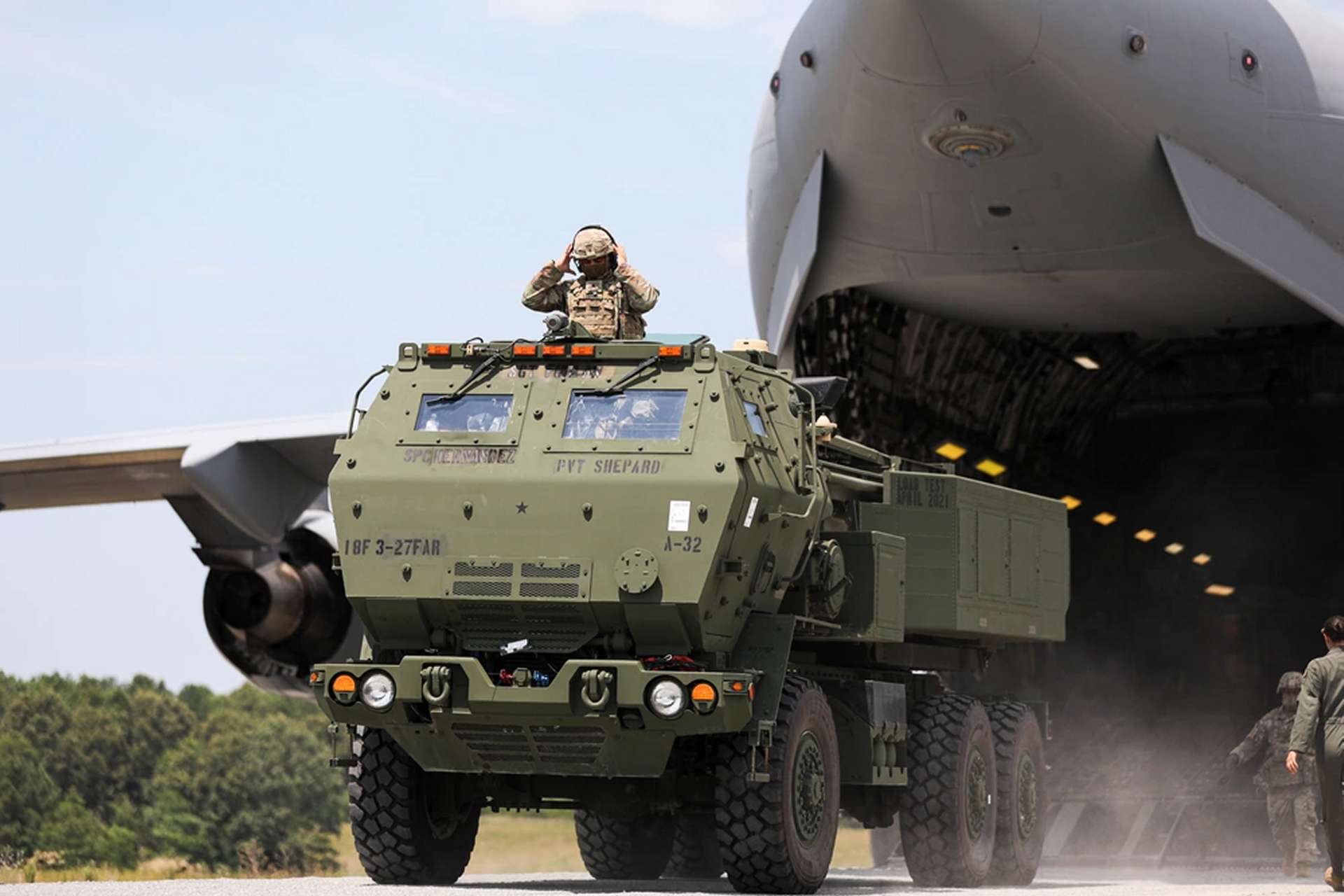
The HIMARS is a mobile artillery system designed by the United States, capable of launching either six MLRS series rockets or one ATACMS tactical missile.( Picture Source: US DoD)
Read more: Lockheed Martin Secures $1.93 Billion Contract with US for HIMARS
- Details
- Written by: Vandenbosch
- Category: 2024
- Hits: 3998
Breaking news
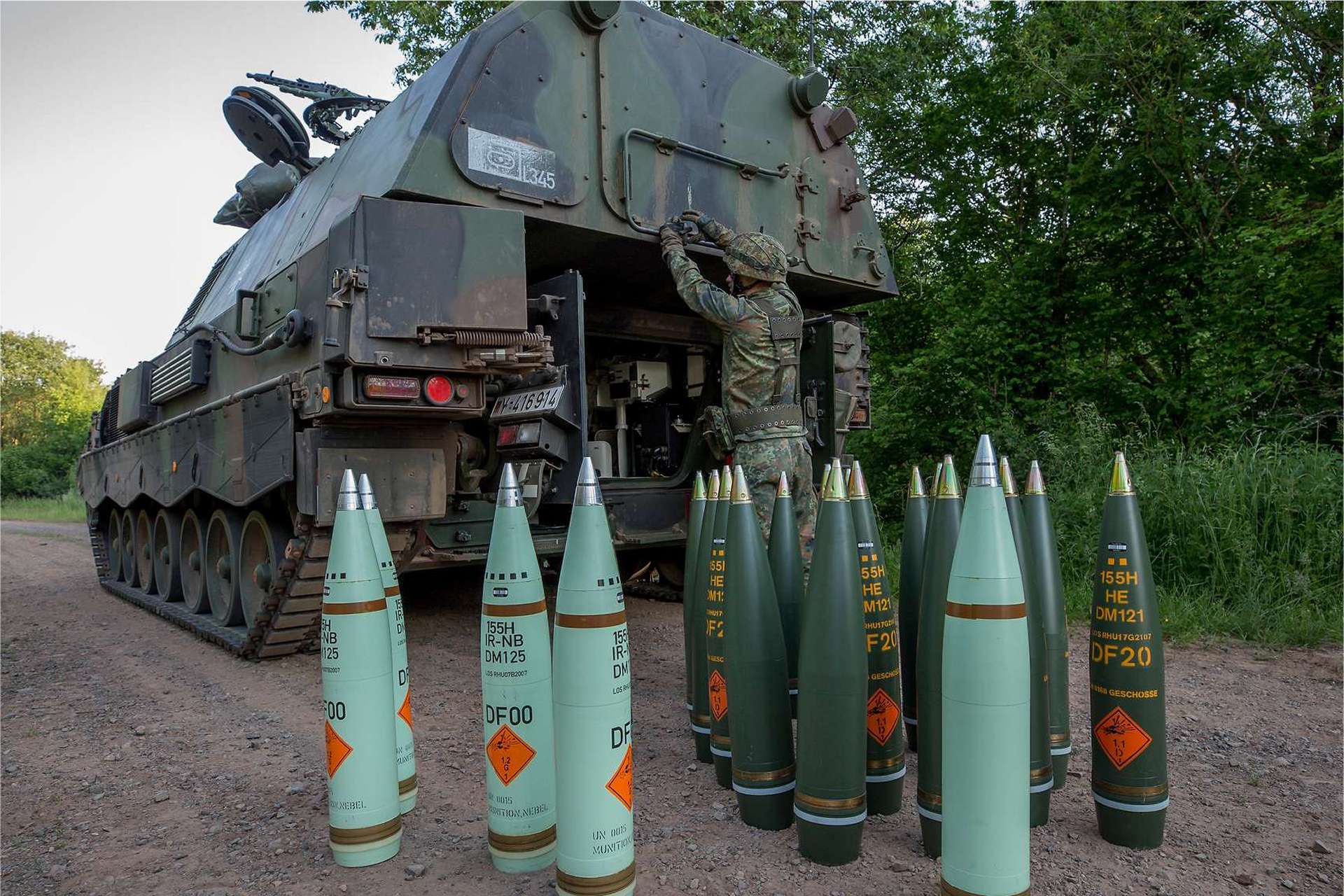
The German army plans to increase its order of artillery shells from arms manufacturer Rheinmetall, according to a letter from the Ministry of Defense addressed to the parliamentary budget committee, dated June 4, 2024. This increase would be 200,000 155 mm artillery shells.
Follow Army Recognition on Google News at this link
Germany increases its order of artillery shells from Rheinmetall by 200,000 units. (Picture source: German MoD)
The letter specifies the intention to purchase an additional 200,000 155 mm artillery shells, valued at approximately 880 million euros (960 million dollars). This is in addition to an already agreed-upon deal of 1.2 billion euros for several hundred thousand shells, rockets, and charges as part of an existing framework agreement with Rheinmetall.
This increased order aims to replenish the German army's depots as Germany continues to supply Ukraine in its conflict against the Russian army, which began its invasion in 2022. The ongoing war has led Western governments to strengthen their military capabilities and replenish their arsenals after providing significant support to Kyiv.
Rheinmetall, whose market value has more than quadrupled since the conflict in Ukraine began, is experiencing a substantial increase in orders. By placing this order, the German Ministry of Defense also aims to facilitate the creation of a new production line in Unterluess, a town in central Germany.
As one of the world's leading producers of artillery shells and tanks, Rheinmetall has ramped up its production after Russia's invasion of Ukraine, responding to a critical ammunition shortage that has put European manufacturers under significant strain.
The 155 mm artillery shells have played a crucial role since the beginning of the conflict in Ukraine due to their strategic and tactical importance.
In this conflict, artillery plays a predominant role, accounting for about 80% of the losses on both sides. Ukrainian and Russian forces rely heavily on artillery to inflict casualties and destroy enemy positions. Therefore, the number of available shells can determine the outcome of engagements.
The ability to produce and supply these shells is a major challenge. Ukraine uses between 4,000 and 7,000 shells per day, while Russia fires about 20,000 per day. This intensity of use creates a high demand for 155 mm shells, making production and replenishment capacity critical to maintaining the war effort.
Western countries, particularly the United States and EU members, have increased their production and deliveries of 155 mm shells to support Ukraine. This support is essential to fill shortages and enable Ukraine to continue defending itself against Russian forces.
The 155 mm shells are vital for Ukraine due to their crucial role in artillery, the need for constant replenishment due to the intensity of the fighting, and the international support that helps sustain Ukraine's war effort.
The race for 155 mm artillery shells does not seem to be slowing down; on the contrary, manufacturers of such shells likely have prosperous days ahead, as evidenced by this latest order from the German army.
Read more: Germany increases its order for artillery munitions from Rheinmetall by 200 000 units

- Details
- Written by: Administrator
- Category: 2024
- Hits: 7234
Breaking news
Early this morning, the United States successfully launched an unarmed Minuteman III intercontinental ballistic missile (ICBM) from Vandenberg Space Force Base in California. The launch, conducted at 12:56 a.m. Pacific Time, was a coordinated effort by Air Force Global Strike Command Airmen and Space Force Guardians.
Follow Army Recognition on Google News at this link
A joint team of U.S. Air Force Global Strike Command Airmen supported by Space Force Guardians launched an unarmed Minuteman III intercontinental ballistic missile equipped with one re-entry vehicle on June 4, 2024, at 12:56 a.m. (Picture source: U.S. DoD)
This routine test is part of ongoing efforts to ensure the reliability and effectiveness of the U.S. nuclear deterrent. The Minuteman III ICBM, equipped with one re-entry vehicle, flew to a designated target in the Pacific Ocean, demonstrating the missile's capabilities. Officials stressed that this test, the latest in a series of over 300 similar launches, was scheduled well in advance and is not connected to any current global events.
"The successful launch today reaffirms our ability to maintain a credible nuclear deterrent," said Col. Kris Barcomb, Space Launch Delta 30 vice commander. "Routine testing ensures that our systems remain safe, secure, and effective in deterring threats."
The Minuteman III, a critical component of the U.S. strategic arsenal since the 1960s, plays a vital role in national defense. It is part of the nuclear triad, which includes submarine-launched ballistic missiles and strategic bombers, ensuring a flexible and robust response capability.
The Minuteman III is an intercontinental ballistic missile (ICBM) that has been a key component of the United States' strategic arsenal since it entered service in 1970. Its primary combat role is to serve as a strategic nuclear deterrent, ensuring that the U.S. has the capability to respond with overwhelming force to any nuclear attack. This deterrent effect is crucial for maintaining global stability and preventing nuclear conflict. Additionally, the Minuteman III is designed to provide a credible second-strike capability, meaning it can launch a retaliatory nuclear strike even after a devastating first strike by an adversary. This ensures that the U.S. retains the ability to inflict significant damage in the event of an attack, thereby deterring potential aggressors.
The Minuteman III also has potential applications in the realm of prompt global strike, where it could be adapted for conventional roles to deliver precision strikes anywhere in the world within a short time frame. This versatility underscores its strategic importance beyond its nuclear deterrence role.
Key features of the Minuteman III include its three-stage solid-fuel rocket motor system, which provides rapid launch capability and an operational range of approximately 13,000 kilometers (8,100 miles). Its advanced guidance systems allow for high accuracy, ensuring that it can effectively reach its targets. The missile was originally equipped with Multiple Independently Targetable Reentry Vehicles (MIRVs), allowing it to carry up to three nuclear warheads, each capable of hitting different targets. However, modern arms reduction treaties have reduced this capacity.
The Minuteman III has undergone several upgrades over the years, particularly to its guidance and control systems, to maintain its effectiveness and reliability as a strategic deterrent. As of recent reports, the U.S. maintains a fleet of approximately 400 Minuteman III missiles, all based in underground silos across several states, ensuring a robust and ready deterrent force.
This latest test underscores the ongoing commitment of the United States to maintaining a powerful and reliable nuclear deterrent, providing assurance to allies and a clear message to potential adversaries about the nation's readiness and resolve.
Read more: US Successfully Tests Unarmed Minuteman III ICBM InterContinental Ballistic Missile
- Details
- Written by: Vandenbosch
- Category: 2024
- Hits: 6357
Breaking news
On June 3, 2024, the Russian Ministry of Defense released a video showcasing the brand-new ТОS-3 Dragon Thermobaric Rocket Launcher. The first photos and videos of this new flamethrower system appeared online.
Follow Army Recognition on Google News at this link
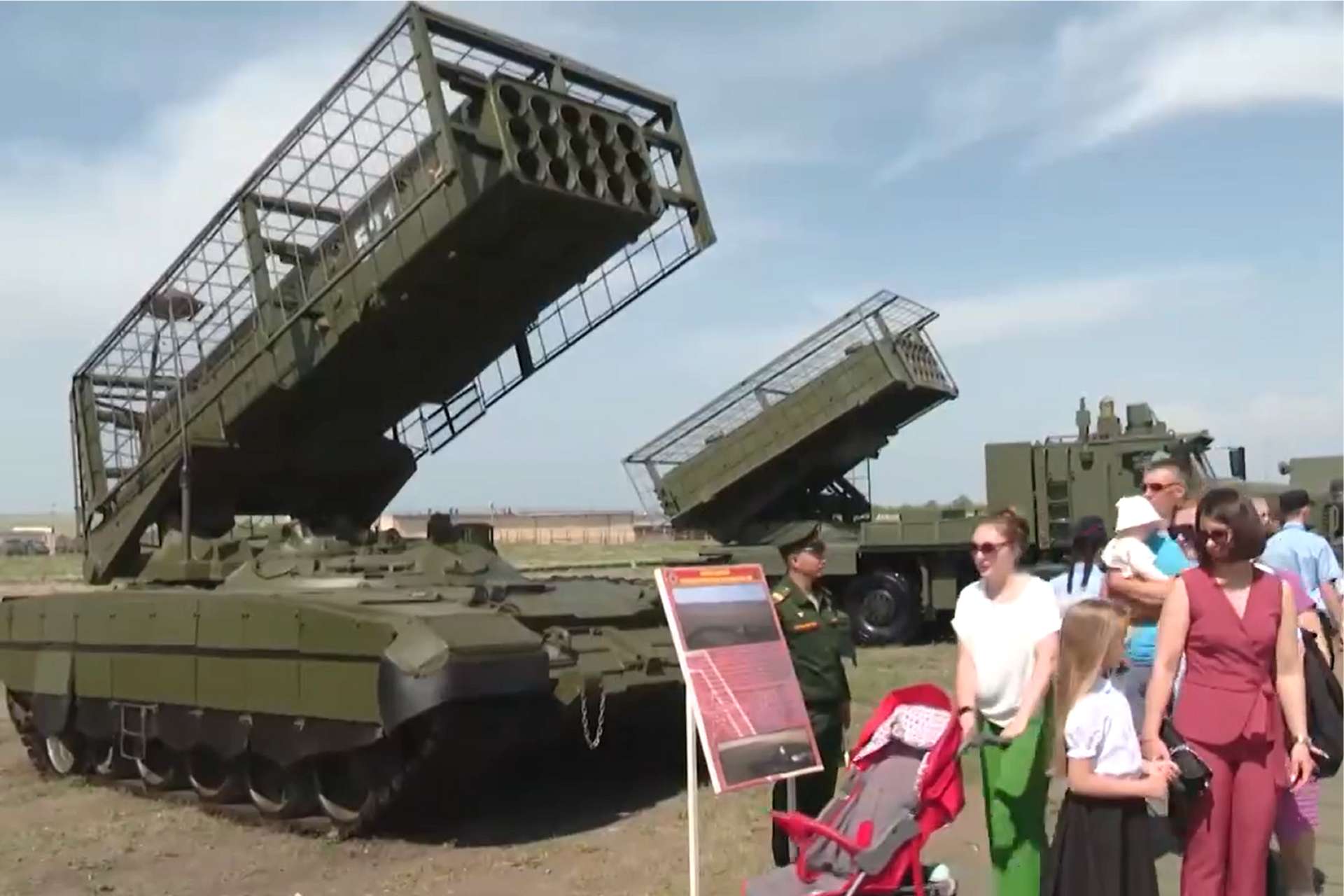
The ТОS-3 Dragon is a Russian Thermobaric Rocket Launcher. (Picture source: Russian MoD)
After the wheeled ТОS-2 flamethrower system, the Russian military decided to return to a tracked chassis, likely based on the T-90. A set of standard 220 mm launch tubes for Russian heavy flamethrower systems is installed on it. A downward trend in the number of launch tubes is observed. The ТОS-1 "Buratino" had 30, the most widespread ТОS-1A "Solntsepyok" had 24, ТОS-2 had 18, and ТОS-3 had only 15. This set is protected by an anti-drone cage.
The designers of the ТОS-3 have not solved the problem of balancing the launch tubes, so in its design (as in the ТОS-1/1A), additional supports or "crutches" are used to support the set in combat position. Thus, like its predecessors, the transition of the ТОS-3 from marching to combat position cannot be done without the crew leaving the vehicle.
The ТОS-3 will use ammunition from the ТОS-2 with a likely similar range, up to 15 km. The very idea of increasing the firing range for a typical assault weapon raises questions. Initially, the ТОS-1 was created as a means of direct fire at a distance of 2-3 km. This is precisely the essence of flamethrower weapons: direct support for assaults on fortified points. Increasing the firing range inevitably leads to increased dispersion of unguided projectiles, which, combined with the reduction in the number of launch tubes, significantly decreases the effectiveness of the fire. Essentially, the ТОS shifts from an instrument of "surgical" precision to a weapon of random terror.
Another point noted is that during the first deployment of the "Buratino" in Afghanistan, it was concluded that an additional weapon for the self-defense of ТОS was necessary. The ТОS-1M project provided for the installation of a 30 mm automatic cannon. However, a simplified version, the ТОS-1A, without additional armament, went into production.
This new system can also be compared to an earlier version that was mounted on a truck; the two Russian equipment pieces seem to share their launchers, but the comparison stops there. The chassis did not convince, and the Russians reverted to a tracked chassis.
A thermobaric rocket launcher is a weapon that uses special munitions to produce an intense high-temperature explosion by using the surrounding air's oxygen to create a destructive shock wave. The oxygen is completely burned, causing a devastating explosion by incinerating the surrounding air.
However, while speculation is rife at the moment, no official information has been released by the Russian Ministry of Defense. Worse still, no technical information has reached us, and we do not know the real capabilities of this new equipment.
Read more: Russia Unveils New ТОS-3 Dragon Thermobaric Rocket Launcher
- Details
- Written by: Vandenbosch
- Category: 2024
- Hits: 6006
Breaking news
FN Herstal announced on June 4, 2024, the incorporation of new features into its FN Evolys ultralight machine gun, following extensive feedback from potential customers. This update comes at a very interesting time, as a few days ago we learned that France and Belgium would be interested in a group purchase of the FN Evolys.
Follow Army Recognition on Google News at this link
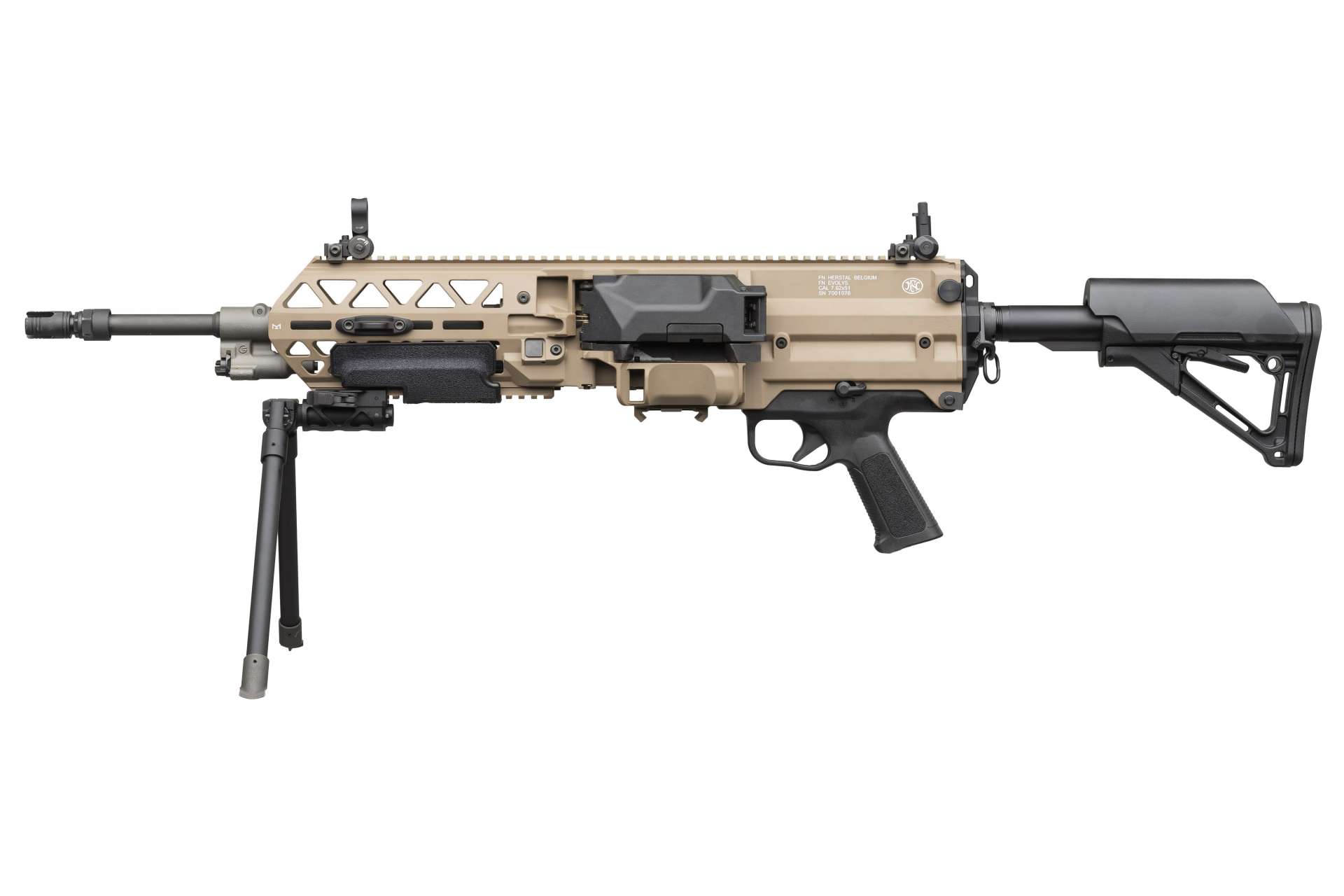
The FN Evolys is a light machine gun manufactured by FN Herstal, a Belgian company renowned in the field of firearms. (Picture source: FN Herstal)
This new addition to FN Herstal’s renowned lineup of machine guns builds on the company’s legacy of producing high-quality firearms, such as the FN M2HB-QCB, FN MAG, and FN MINIMI series, which have been standards for NATO and allied armed forces for decades.
Based on user feedback, FN Herstal introduced two significant modifications. The FN Evolys is now equipped with an M4-type buttstock with adjustable length (6 positions) and interchangeable cheek rest (2 heights), enhancing ergonomics familiar to many users. Additionally, the optional bipod has been upgraded with stronger aluminum legs and a reinforced attachment interface, providing a more stable and robust support. These enhancements reflect FN Herstal’s commitment to integrating user feedback into their product designs, ensuring their firearms meet the practical needs of military personnel.
The FN Evolys is a light machine gun manufactured by FN Herstal, a Belgian company renowned in the field of firearms. Produced since 2021, this weapon is designed to offer significant firepower while remaining easy to handle, making it particularly suitable for mobile infantry units and special forces.
Weighing approximately 5.5 kg for the 5.56 mm caliber model and about 6.2 kg for the 7.62 mm model, the FN Evolys combines lightness and robustness. The length of the weapon varies depending on the caliber and barrel configuration, with a maximum extension of 950 mm for the 5.56 mm model and 1,025 mm for the 7.62 mm model. When the stock is retracted, these lengths are reduced to 850 mm and 925 mm, respectively. The barrels measure 355 mm for the 5.56 mm caliber and 406 mm for the 7.62 mm caliber, and the width of the weapon is slightly greater for the 7.62 mm caliber (135 mm) compared to the 5.56 mm caliber (133 mm).
The FN Evolys uses a gas-operated mechanism with a short-stroke piston and operates in an open bolt mode. It offers a cyclic rate of fire of 750 rounds per minute, capable of hitting targets at a maximum distance of 800 meters for the 5.56 mm caliber and 1000 meters for the 7.62 mm caliber. For ammunition feeding, it uses 100 or 200-round belts for the 5.56 mm model and a 50-round belt for the 7.62 mm model.
The FN Evolys stands out for its lightweight and ergonomic design, combined with robust firepower and long-range capability, meeting the needs of modern armed forces for a versatile and effective light machine gun. FN Herstal will showcase the enhanced FN Evolys at Eurosatory 2024 in Paris from June 17 to 21. Attendees can see the new features firsthand at booth F95, hall 6, within the Belgian pavilion.
Recently, rumors about a large order for the FN Evolys from both France and Belgium have emerged, as reported by Army Recognition on May 31, 2024. The improvements made to the FN Evolys might be aimed at meeting the potential requirements of these two countries, which seem interested in this ultralight machine gun. The situation remains to be closely monitored.
Read more: FN Herstal Unveils Upgraded FN Evolys Machine Gun Amid France and Belgium Contract Talks
- Details
- Written by: Vandenbosch
- Category: 2024
- Hits: 14830
Breaking news
In response to recent criticisms from the Ukrainian military regarding the performance of US-supplied M1A1 Abrams tanks, a retired American general has firmly refuted these complaints, while acknowledging the maintenance demands of these Main Battle Tanks (MBTs). We discussed these criticisms on May 31, 2024, on Army Recognition.
Follow Army Recognition on Google News at this link
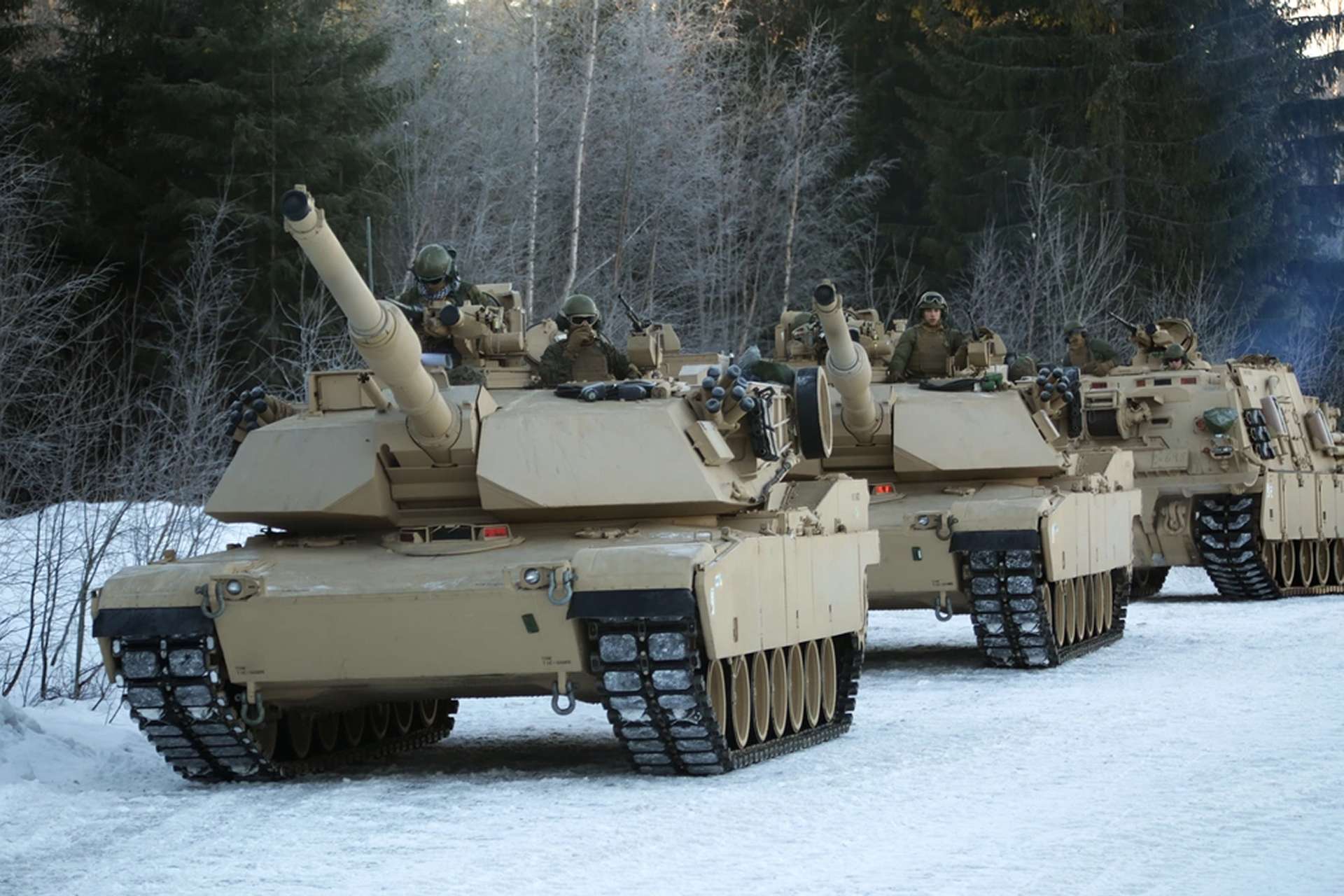
A retired US general has firmly refuted the complaints about the M1A1 Abrams. ( Picture Source: US DoD)
The controversy arose when Ukrainian tank crews voiced concerns about the effectiveness of the Abrams tanks in their conflict, citing issues such as armor inadequacy and engine malfunctions. Ukrainian officials claimed that these tanks were not suited to the terrain and conditions they faced, with crew members specifically highlighting problems with armor, engine reliability, and electronic vulnerabilities due to condensation caused by rain or fog. They also reported instances where targets remained intact despite multiple shots, raising doubts about the tanks' combat effectiveness. Additionally, the Abrams tank is a top priority for Russian forces aiming to destroy US equipment, further exposing the crew.
However, retired Lieutenant General Mark Hertling strongly refuted these claims in an interview with CNN. When asked about the supposed underperformance of the Abrams tanks and their suitability for Ukrainian terrain, Hertling bluntly responded, "I would say in one word 'BS.'" Having served for three decades in Europe, Hertling emphasized that the Abrams tanks were designed for NATO environments and dismissed the reported issues as exaggerated or unfounded. He argued that the complaints about condensation, armor, and obstacle clearance were "nonsense," attributing any perceived shortcomings to crew errors in selecting and maintaining the appropriate weapon systems.
Hertling suggested that the grievances from the Ukrainian crews stemmed from typical frustrations associated with mechanical breakdowns, and he noted that despite knowing the maintenance demands of the US-made tanks, Ukraine continued to request them for military support.
The deployment of Abrams tanks, specifically the M1A1 models, aimed to bolster Kyiv’s defenses against Russian forces. Despite hopes for a strategic advantage, the tanks have faced challenges on the battlefield, particularly from Russian drones. Reports indicate that at least five Abrams tanks have been destroyed by Russian attacks, leading to doubts about their effectiveness.
Recent images show Abrams tanks in Ukraine equipped with anti-drone armor screens, known as "cope cages." However, the effectiveness of these modifications in the ongoing conflict remains uncertain. In response to these combat experiences, the US military is accelerating efforts to integrate these lessons into the development of the next-generation Abrams tank.
At the Western military equipment exhibition in Moscow, the Russians displayed a damaged M1A1 Abrams tank from the Avdiivka region, highlighting its vulnerabilities. Brigadier General Geoffrey Norman, director of the Next-Generation Combat Vehicle Cross-Functional Team, acknowledged the Abrams' limitations against modern threats such as anti-tank-guided missiles and drones. He emphasized the tank's strengths in offensive maneuvers but cautioned against stationary positions that render them more vulnerable.
To address these challenges, U.S. Army leaders have adopted a multifaceted strategy, including reevaluating formation options to better distribute capabilities and protect soldiers. In September 2023, following observations from the conflict in Ukraine, the Army announced a shift in its tank modernization efforts. Instead of the planned moderate upgrade (Abrams System Enhancement Package version 4 or SEPv4), the US Army opted for a more ambitious upgrade, the M1E3 Abrams, which will be designated the M1A3 upon deployment.
The U.S. Army aims for a lighter tank with enhanced survivability and a reduced logistical footprint. While details on the M1A3 are still being refined, General Dynamics Land Systems (GDLS) will be the prime contractor for this next-generation MBT.

The M1A1 Abrams is a US Main Battle Tank. ( Picture Source: US DoD)
Read more: US General Rejects Ukrainian Complaints about M1A1 Abrams Tank