
- Details
- Written by: Vandenbosch
- Category: 2024
- Hits: 5011










The MSPO (Międzynarodowy Salon Przemysłu Obronnego) 2024, held in Poland, is one of the most important defense exhibitions in Europe, attracting military representatives, defense industry professionals, and decision-makers from around the world each year. It was within this prestigious setting that the upgraded version of the Leopard 2A4, named Panther Upgrade, was unveiled.
Follow Army Recognition on Google News at this link
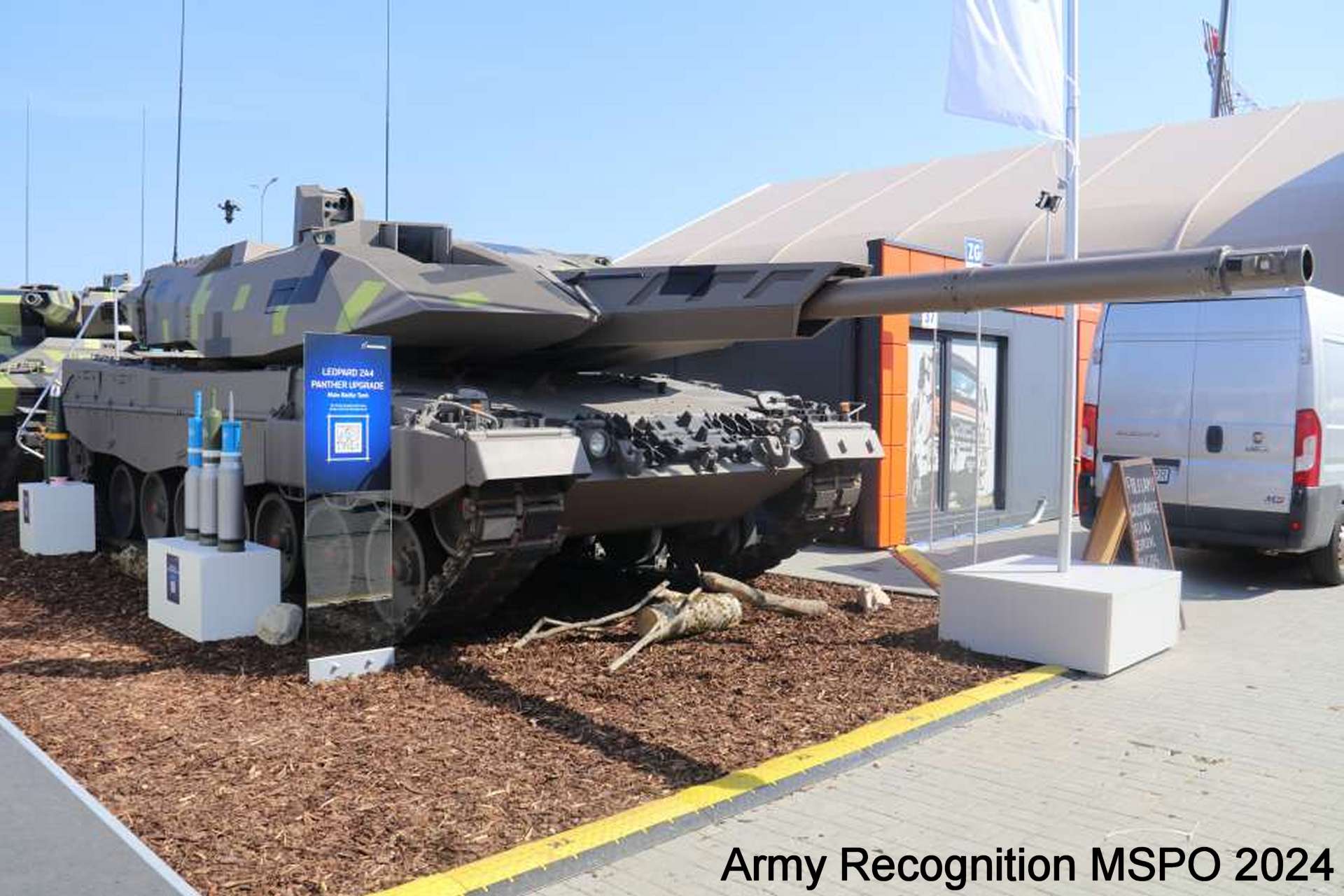
The Panther Upgrade features a 130 mm gun, which is part of Rheinmetall's Future Gun System (FGS). (Picture source: Army Recognition)
MSPO is an international defense industry trade fair, organized annually since 1993 in Kielce, Poland. This event has become a crucial venue for showcasing the latest innovations in military technology, defense equipment, and solutions for armed forces. MSPO 2024, taking place from September 3 to 6, brings together more than 600 exhibitors from nearly 30 countries and attracts an international audience, including official delegations, government representatives, as well as defense experts and analysts.
The presentation of new technologies such as the Leopard 2A4 Panther Upgrade at MSPO underscores the growing importance of this exhibition as a platform for launching cutting-edge military solutions. The trade fair has become a barometer of current and future trends in the defense sector, highlighting technological developments that are shaping modern armed forces.
Developed by Rheinmetall, the Panther Upgrade version of the Leopard 2A4 is a new hybrid model that combines the robust platform of the Leopard 2A4 with advanced technologies from the KF51 Panther tank, including its turret equipped with a 130 mm gun. This fusion aims to enhance the capabilities of existing Leopard 2 fleets while offering a competitive alternative to other recent tank models.
The Panther Upgrade features a 130 mm gun, which is part of Rheinmetall's Future Gun System (FGS). This gun outperforms the standard NATO 120 mm guns, offering a longer effective range, which can reach over 4 kilometers. The FGS is equipped with an autoloader capable of firing about 11.25 rounds per minute, with conveyor-based magazines that can hold ten rounds each. In tests, this autoloader demonstrated impressive capability, firing three rounds in just 16 seconds.
The Panther Upgrade can fire a variety of munitions, including Kinetic Energy (KE) rounds, programmable explosive rounds for targeting infantry and light vehicles, as well as training projectiles. This diversity in ammunition allows the tank to effectively engage a wide range of threats on the battlefield, whether they are armored vehicles, fortifications, or enemy troops.
In addition to its main armament, the Panther Upgrade is equipped with a 12.7 mm coaxial machine gun, designed for use against infantry and light targets. This machine gun, mounted coaxially with the main gun, allows the crew to quickly switch between weapons, thus increasing the tank's combat flexibility.
The tank also supports Remote Controlled Weapon Stations (RCWS), such as Rheinmetall's Natter system, armed with a 7.62 mm machine gun. These systems add an additional layer of close-range defense, particularly against aerial threats like drones. The Natter RCWS can be oriented from -15° to +85°, offering great flexibility in targeting angles, including against aerial targets, thereby enhancing the Panther Upgrade's survivability on the battlefield.
The presentation of the Leopard 2A4 Panther Upgrade at MSPO 2024 has significant strategic implications for European armed forces and beyond. Firstly, it illustrates the intention to modernize existing tank fleets rather than completely replacing them. By integrating advanced technologies into proven platforms like the Leopard 2A4, armies can maintain technological superiority without the exorbitant costs associated with developing new tanks.
Furthermore, the Panther Upgrade could influence future tank acquisitions by European armies, particularly those that already operate Leopard 2s. With its enhanced capabilities, this tank could become a preferred option for forces seeking to modernize their ground combat capabilities while maintaining logistical and operational continuity.
- Details
- Written by: V.Saint
- Category: 2024
- Hits: 3069
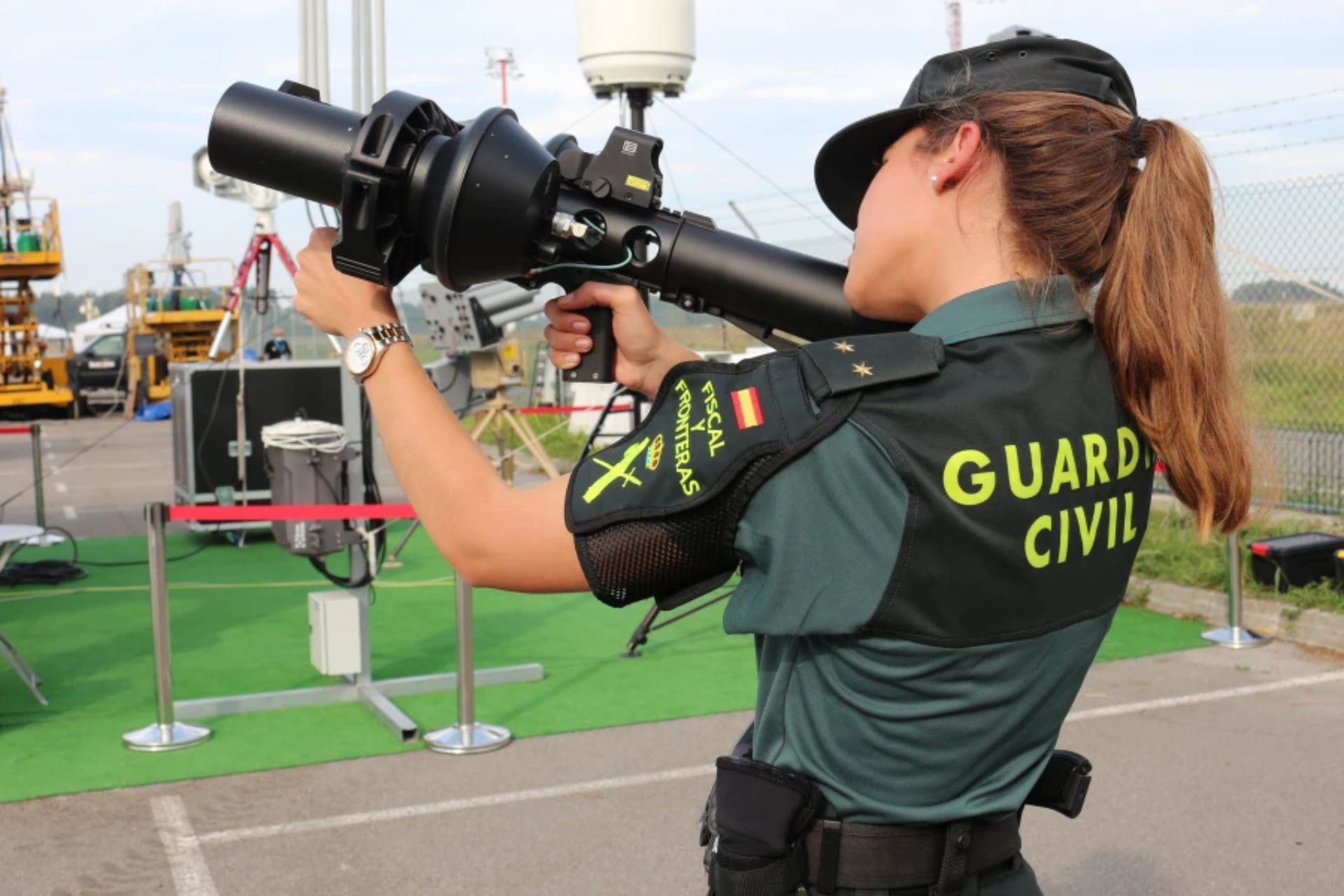
The Civil Guard will equip its agents operating abroad with new portable anti-drone systems to address the threat posed by unmanned aerial systems. A tender is already underway for the purchase of a minimum of 10 drone-jamming devices. Regarding the specifications, the anti-drone system will weigh less than 20 kilograms and will be capable of operating across various frequency bands (GNSS -GPS L2-L5 and L1-, Wifi -2.4 GHz, 5.2 GHz, and 5.8 GHz-, 900 MHz, and 400 MHz).
Follow Army Recognition on Google News at this link
C-UAS rifle in service in Spanish Guardia civil (Picture source: Guardia Civil )
Each system must be housed in a compact case for transport, with pre-installation inside to add two additional jamming modules. Each unit will include directional antennas capable of covering 90-degree sectors and a deployable telescopic mast for antenna deployment. The 400 MHz module will have a single omnidirectional antenna with 360-degree coverage. The equipment’s autonomy in continuous operation at maximum power will exceed 30 minutes, with an effective range of at least one kilometer.
The tender, which is already in the evaluation phase, is managed by the Army, specifically the Army Logistics Support Command (MALE), the body normally responsible for purchasing specific equipment for Civil Guards in international operations. The delivery of the new equipment is scheduled for the end of 2024, according to the execution timeline of the tender, which Infodefensa.com has accessed. In recent years, the Armed Institute has acquired anti-drone systems from companies SDLE and Etrair, primarily for use with Pegaso equipment.
Guardia civil has agents deployed in several countries. In Lebanon, a dozen agents are part of the Spanish contingent of the UNIFIL United Nations mission, operating from the Miguel de Cervantes base in the eastern sector. Today, this mission has been renewed for another year by the Security Council. The United Nations Security Council unanimously adopted Resolution 2749 (2024) today, extending the mission’s mandate until August 31, 2025.
While daily exchanges of fire have devastating effects on civilians on both sides of the Blue Line, the Security Council urged all relevant actors to implement immediate measures towards de-escalation. It also demanded that the parties recommit to fully implementing all provisions of Resolution 1701, the ceasefire resolution adopted in 2006, and reiterated its strong support for full respect of the Blue Line and the total cessation of hostilities. It is this mission that motivates the Civil Guard’s tender, as Lebanon is a theater of the use of often homemade drones for bombing and surveillance purposes.
The Armed Institute also has personnel in Mauritania as part of deployments of ships, planes, and helicopters to combat irregular immigration or in Colombia within the Spanish mission of UN observers tasked with verifying peace agreements with the FARC. Guardia civil has also been involved in scenarios such as Iraq in recent years, as part of training missions for local security forces.
Read more: Spanish Guardia Civil equip its agents on missions abroad with new C-UAV systems.
- Details
- Written by: Jérôme Brahy
- Category: 2024
- Hits: 5280
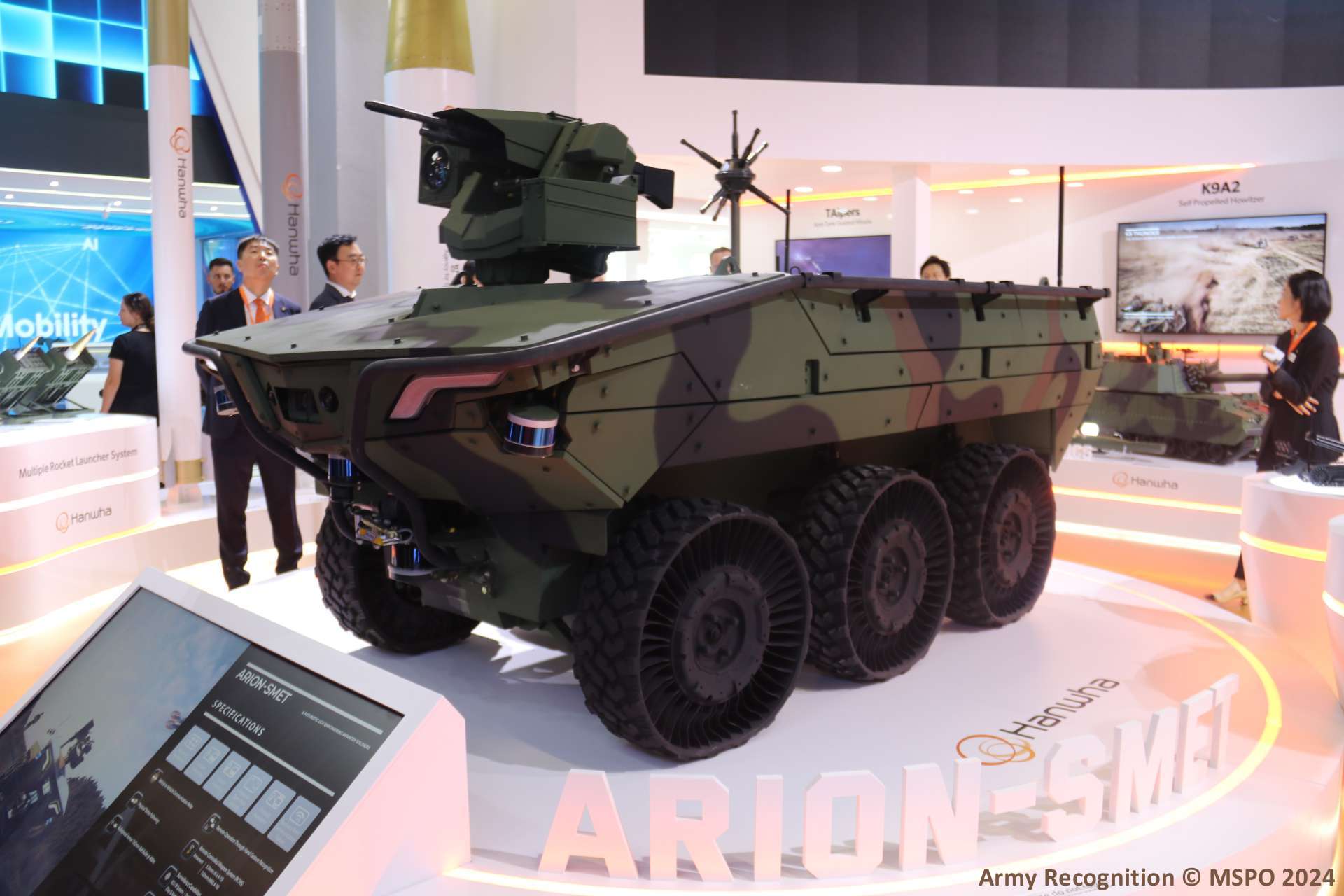
At the 32nd International Defence Industry Exhibition (MSPO 2024), held in Poland from September 3 to 6, 2024, the South Korean company Hanwha presented its Arion-SMET 6x6 unmanned ground vehicle (UGV). This exhibition follows a significant milestone for the vehicle, which recently completed a Foreign Comparative Test (FCT) conducted by the US Marine Corps and the US Army.
Follow Army Recognition on Google News at this link
The Arion-SMET can be equipped with a Remote-Controlled Weapon System (RCWS) that can automatically track and target threats, featuring a 5.56 mm machine gun extendable to a 7.62 mm version. (Picture source: Army Recognition)
This Foreign Comparative Test (FCT) marked the first time a South Korean UGV has been selected for evaluation under the US Department of Defense’s FCT program, a program designed to assess and verify technologies developed by defense contractors from allied nations. The FCT took place from December 14 to 22, 2023, at the Marine Corps Training Area Bellows in Oahu, Hawaii. Representatives from the III Marine Expeditionary Force and the Army Combat Capabilities Development Command (DEVCOM), Ground Vehicle Systems Center (GVSC), participated in the evaluation.
The test included several scenarios designed to measure the Arion-SMET’s performance across various terrains, such as packed sand, soft sand, sand clay, and uneven roads. The evaluation focused on assessing the UGV's capabilities in heavy equipment transport, remote-controlled driving, waypoint navigation, exploratory maneuvering, soldier following, and physical tether following. A group of Marines underwent three days of user training sessions before the testing to familiarize themselves with operating the 2-ton electric vehicle in these challenging environments.
Hanwha Defense stated that completing this field test could position the Arion-SMET as a potential candidate in the global UGV market. Dr. Youngwoo Seo, Executive Vice President of Hanwha Aerospace’s Land Systems Business Group, highlighted the significance of the vehicle’s participation in the US FCT program, suggesting that it demonstrates the UGV's market potential in both the United States and internationally.
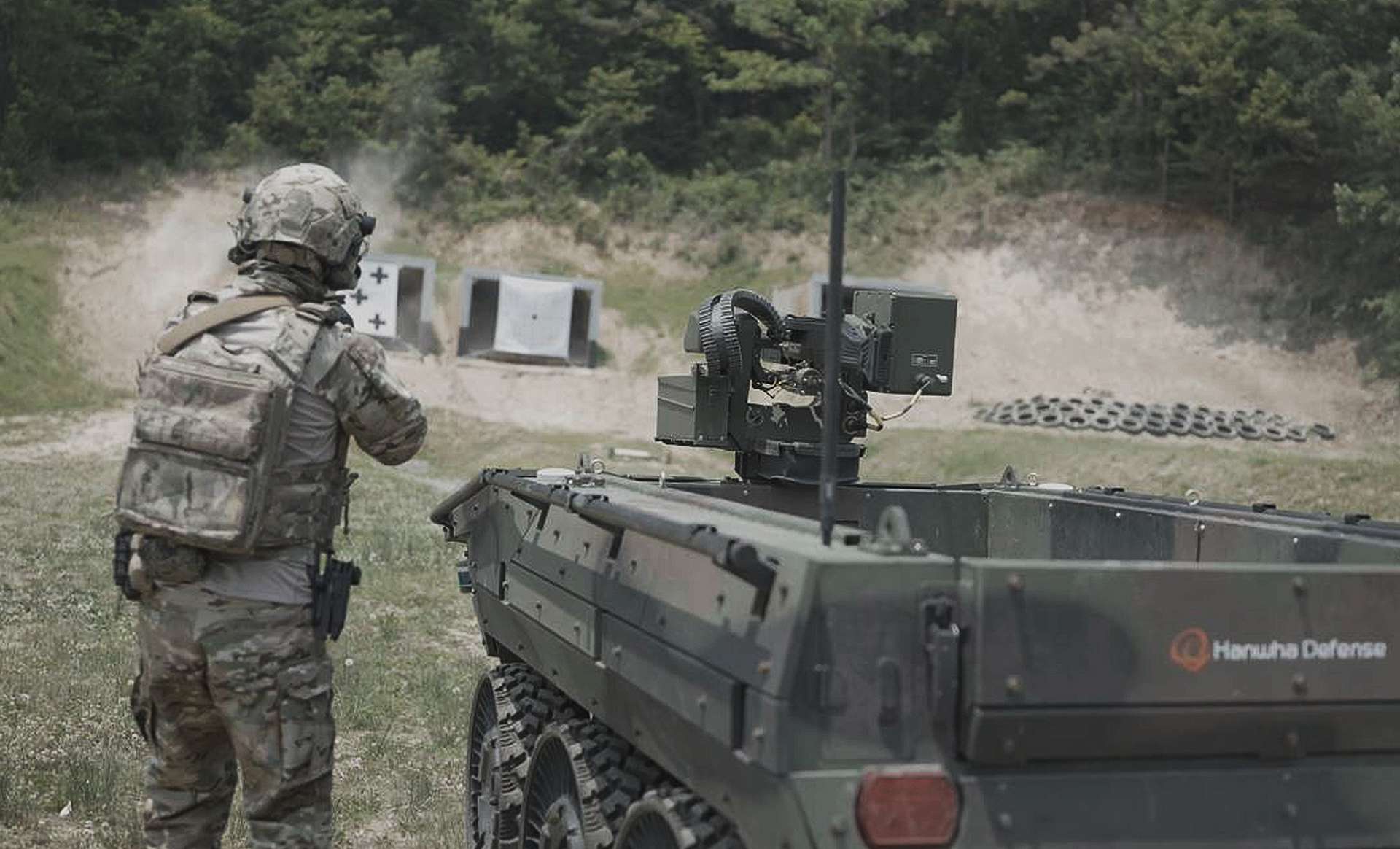
The American Foreign Comparative Test (FCT) of December 2023 marked the first time a South Korean UGV has been selected for evaluation under the US Department of Defense’s FCT program, a program designed to assess and verify technologies developed by defense contractors from allied nations. (Picture source: Hanwha Aerospace)
The Arion-SMET, which stands for Autonomous and Robotic Systems for Intelligence Off-road Navigation – Small Multi-purpose Equipment Transport, is a 6x6 fully electric unmanned vehicle designed to support a variety of military operations. It was developed to handle tasks such as munitions transport, medical evacuation, reconnaissance, and support in close combat situations. The vehicle has a maximum payload capacity of 550 kilograms, can cover distances of up to 100 kilometers on a single charge, and achieves top speeds of 43 kilometers per hour on paved roads and 22 kilometers per hour on unpaved roads. It can be equipped with a Remote-Controlled Weapon System (RCWS) that can automatically track and target threats, featuring a 5.56 mm machine gun extendable to a 7.62 mm version.
The Arion-SMET is designed for autonomous off-road navigation and can follow or lead soldiers and vehicles using a tethering device. It is capable of autonomously returning to its base if communication is lost, and its software allows it to participate in Manned-Unmanned Teaming (MUM-T) operations, integrating with human and robotic assets in tactical scenarios. The vehicle is also equipped with a Deep Neural Network (DNN)-based RCWS, which can detect enemy soldiers, locate gunfire sources, and engage targets.
In the United States, Hanwha Defense USA (HDUSA), a subsidiary of Hanwha Aerospace, has announced plans to participate in the upcoming second increment of the US Army's Small Multipurpose Equipment Transport (S-MET) program. John Kelly, President and CEO of HDUSA, indicated the company's intention to work with US prime contractors and suppliers to compete for this program, which involves procuring unmanned ground vehicles.
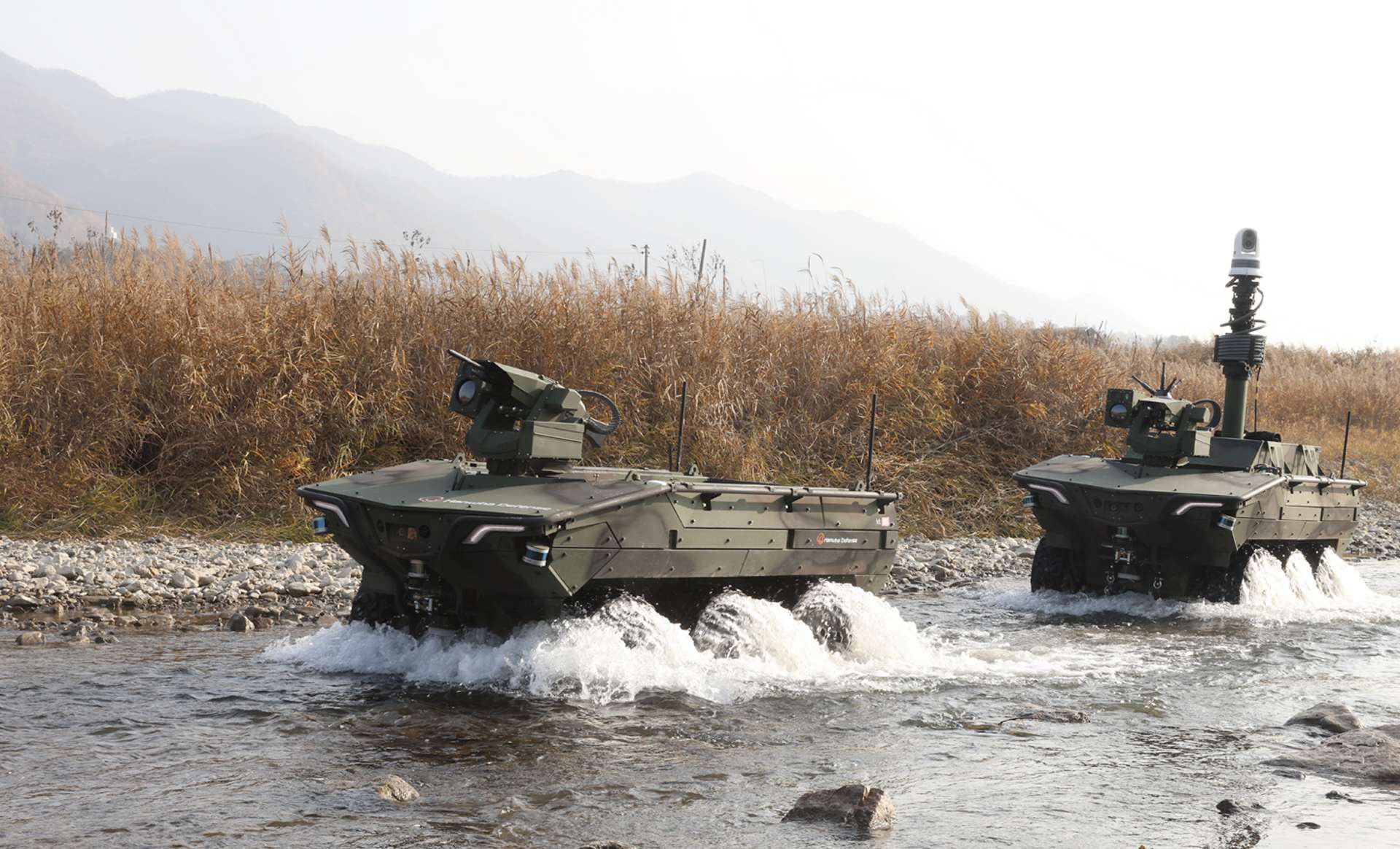
The Arion-SMET is capable of autonomously returning to its base if communication is lost, and its software enables it to participate in Manned-Unmanned Teaming (MUM-T) operations. (Picture source: Hanwha Aerospace)

- Details
- Written by: Halna du Fretay
- Category: 2024
- Hits: 3196
ROSOBORONEXPORT JSC, a subsidiary of the Rostec State Corporation, is actively participating in the first Egypt International Airshow, taking place from September 3 to 5, 2024, at El Alamein International Airport. The event highlights military-technical cooperation between Russia and Egypt, as well as relationships with other countries in Africa and the Middle East, which currently account for more than 50% of the company’s order portfolio.
Follow Army Recognition on Google News at this link
Egypt currently operates 46 of these helicopters, equipped with Russian ATGMs, which are used for various missions, including counterterrorism operations in the Sinai Peninsula (Picture source: Egyptian MoD)
Alongside ROSOBORONEXPORT, other Rostec subsidiaries, such as the National Aviation Service Company, United Aircraft Corporation, and United Engine Corporation, are also showcasing their products at this unique exhibition, emphasizing the excellence of Russian aerospace and defense industries.
At this event, ROSOBORONEXPORT is presenting a range of advanced military equipment. In the outdoor exhibition area, visitors can explore the Ka-52 reconnaissance and attack helicopter, equipped with the versatile guided missile Item 305E. This helicopter, recognized as one of the best in its global market segment, forms the backbone of the Russian Air Force’s combat groups and has proven its effectiveness in real combat operations. Egypt currently operates 46 of these helicopters, equipped with Russian ATGMs, which are used for various missions, including counterterrorism operations in the Sinai Peninsula.
In addition to the Ka-52, ROSOBORONEXPORT is showcasing the Kh-69, a new stealth multifunctional cruise missile with precision guidance, proposed as a key weapon for the fifth-generation Sukhoi Su-57E fighter jet, which is also on display at the airshow.
The exhibition also highlights unmanned systems, including the Orlan-10E and Orlan-30 drones, widely used for aerial reconnaissance and target designation. A drone countermeasure system, the RB-504P-E, as well as an airspace control system, are also being exhibited.
In the field of air defense, ROSOBORONEXPORT is demonstrating its capabilities in building a layered defense system, designed to protect military, civilian, and industrial infrastructures against various aerial threats, including drones. Air defense systems such as the SAM Viking, Tor-M2E, and the MANPADS Verba are on display, along with the Pantsir-S1M self-propelled anti-aircraft missile and gun system, known for its ability to defend against a wide range of aerial threats.
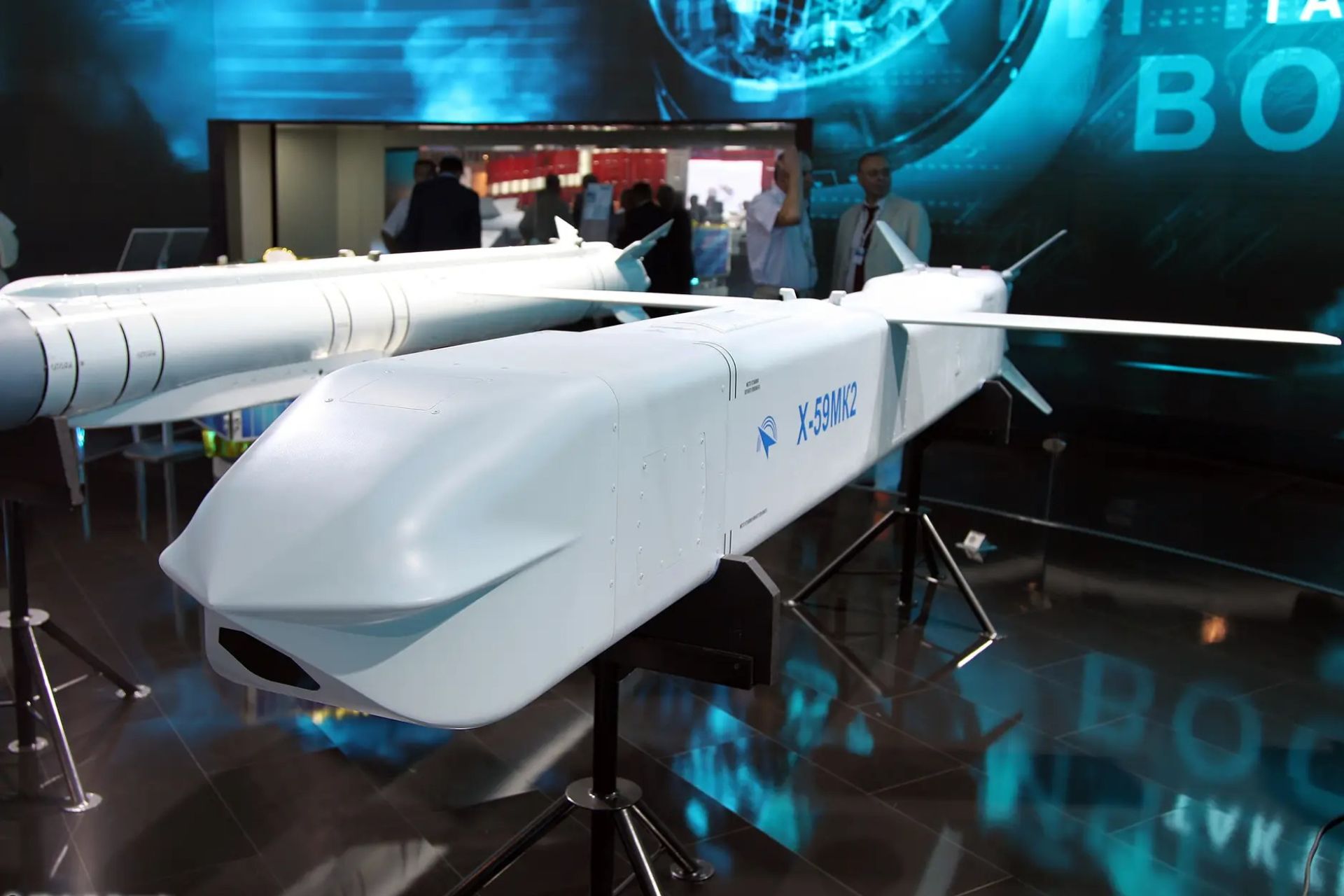
ROSOBORONEXPORT is showcasing the Kh-69, a new stealth multifunctional cruise missile with precision guidance (Picture source:Vitaly Kuzmin)
Additionally, ROSOBORONEXPORT is unveiling the latest short-range interceptor missile TKB-1055, specifically designed to neutralize small drones.
As part of the airshow's business program, ROSOBORONEXPORT has scheduled meetings and negotiations with military and political officials from various countries in the Middle East, Asia, and Africa. These discussions aim to address current and future issues of military-technical cooperation, including the development of industrial partnerships, thereby strengthening Russia's position on the international defense stage.
The relationship between Egypt and Russia is characterized by historical and strategic cooperation that dates back several decades. After a period of cooling during the 1970s and 1980s, the ties between the two countries significantly strengthened in the early 21st century. Today, Russia is one of Egypt's main military partners, supplying a wide range of military equipment. In 2015, Egypt signed a major contract for the purchase of MiG-29M/M2 fighter jets, which began to be delivered in 2017.
These fighter jets, designed for various combat missions, have significantly enhanced Egypt's air defense capabilities. Additionally, Russia has supplied Egypt with sophisticated air defense systems, such as the S-300VM systems, which bolster the country’s ability to defend its airspace against external threats. This continued supply of military equipment underscores the importance of military cooperation between Egypt and Russia.
Beyond military relations, the two nations also collaborate in areas such as energy, with nuclear power plant projects, and trade, with increased bilateral exchanges. This relationship is marked by a convergence of interests in counterterrorism efforts, regional stability, and a shared desire to diversify their international alliances, allowing Egypt to strengthen its strategic independence while providing Russia with a crucial foothold in North Africa and the Middle East.
- Details
- Written by: Vandenbosch
- Category: 2024
- Hits: 3978
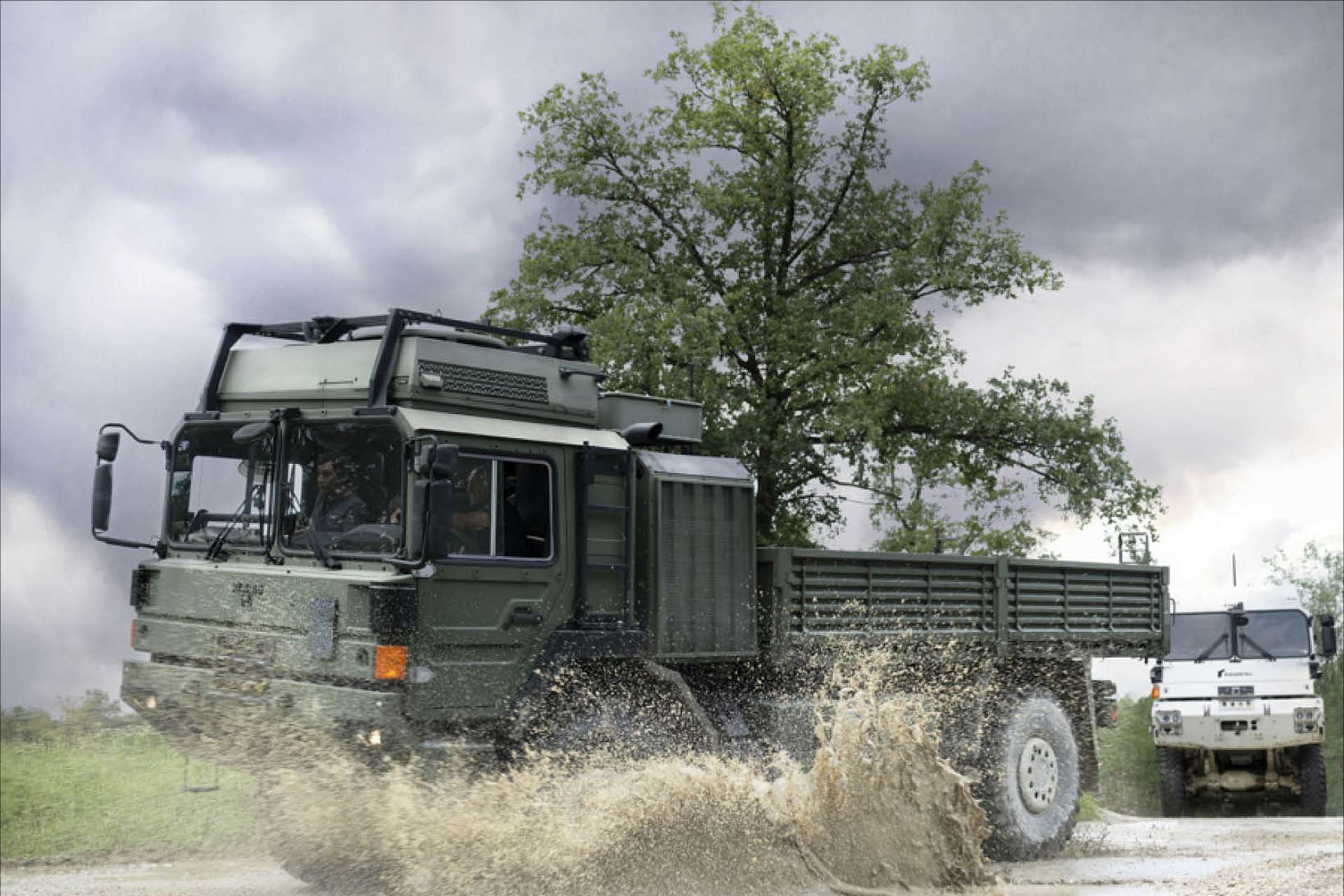
Rheinmetall has demonstrated its expertise in artificial intelligence by achieving major success in the Interoperable Robotic Convoy (InterRoC) project. The company's team, composed of members from the Research & Technology division of Rheinmetall Landsysteme GmbH and Rheinmetall Canada Inc., secured first place in the "Automated Convoy" category at the European Land Robot Trial 2024 (ELROB). Their success was made possible by the combination of the HX truck and the PATH autonomy kit.
Follow Army Recognition on Google News at this link
The combination of the HX truck and the PATH autonomy kit. (Picture source: Rheinmetall)
The PATH autonomy kit, also known as the "PATH A-Kit," is an AI-supported navigation system that can be integrated into nearly any vehicle. This system has been successfully tested on various platforms, including the Mission Master robotic vehicle family. It was notably used during the 2023 Estonia Unmanned Ground Systems Autonomy Trials. At ELROB 2024, the PATH A-Kit autonomously managed two HX logistics vehicles in a convoy scenario, both of which were also equipped with drive-by-wire systems.
ELROB is an international competition in the fields of robotics, sensor technology, and autonomy, held every two years. Participants, including universities as well as civilian and military manufacturers, compete to demonstrate the capabilities of modern robots. The 12th edition of the event took place from June 24 to 28, 2024, at the German Armed Forces Technical Center for Land-Based Vehicle Systems, Engineering, and General Equipment (WTD 41) in Trier, with 19 teams participating. Rheinmetall subsidiaries competed in both a tactical leader-follower scenario and a real-life scenario.
The tasks for 2024 were significantly more challenging than those of the previous competition. The autonomous vehicles and the convoy commander had to navigate dynamic obstacles, alternative routes, and various electromagnetic interferences. Despite these challenges, the system excelled, completing all tasks.
The HX vehicles faced eleven different obstacles on a 6 km circuit, including narrow paths, transitions between on-road and off-road driving, navigating through dense forests, communication interference, reversing, and obstacle avoidance. "The course was very demanding, but our performance demonstrates that the Rheinmetall PATH-A kit is ready for real-world use cases," said Paul Rocco, Managing Director of Rheinmetall Provectus, a company acquired by Rheinmetall Canada in 2019.
In a surprise move, the organizers introduced an additional vehicle into the convoy, requiring the following truck to slow down and navigate around it. The convoy was also split, necessitating remote control of the trailing truck on a parallel path and reconfiguration of the convoy with the remote-controlled truck as the new leader. "The ELROB 2024 scenario was much more challenging than the 2022 edition," noted Sebastian Elze, project manager in Rheinmetall Landsysteme's Research & Technology division.
Despite these obstacles, the team completed most of the route in convoy mode without GPS, thanks to the system's ability to operate in GPS-deprived environments. "This is the first time we've demonstrated this specific capability, which represents a significant upgrade for the PATH A kit," said Luc Brunet, Director of Robotics and Autonomous Systems at Rheinmetall Provectus. The system transitioned smoothly between GPS-enabled and GPS-free modes without any loss of functionality.
In addition to the evaluated scenarios, autonomous driving demonstrations were conducted for visitors, including military generals, officials from the German Federal Ministry of Defence, the Federal Office of Bundeswehr Information Technology and In-Service Support (BAAINBw), and WTD41. The vehicles on display and available for demonstration drives generated significant interest among the visitors.
The InterRoC project, launched four years ago, aims to develop customer requirements for future autonomous logistics vehicles. It continues to evolve under the direction of BAAINBw, with military HX2 trucks equipped with autonomy kits and drive-by-wire systems, operating on a leader-follower principle. For this year's competition, the PATH autonomy kit developed by Rheinmetall Canada was installed, allowing Rheinmetall to offer a fully integrated solution.
Read more: Rheinmetall Develops AI-powered HX Transport Truck And Wins ELROB 2024 Competition

- Details
- Written by: Halna du Fretay
- Category: 2024
- Hits: 2014
Northrop Grumman Corporation is undertaking a redesign of the Intercontinental Ballistic Missile (ICBM) target vehicle for the Missile Defense Agency (MDA). This effort involves replacing the target’s original Trident C4 first-stage solid rocket motor with a Peacekeeper SR119 motor to extend the vehicle’s range, lift capability, and payload capacity, which are essential for simulating long-range ballistic missile threats during missile defense testing.
Follow Army Recognition on Google News at this link
The ICBM target vehicle, which recently passed its critical design review, is scheduled for its first flight in late 2025 (Picture source: Northrop Grumman)
The redesign, driven by a combination of new and proven technologies, includes minimal modifications to the retired SR119 motor, enabling it to serve as the first stage in the updated target vehicle. The motor's ability to meet mission performance requirements was validated through a successful static fire test conducted in 2022. Additionally, Northrop Grumman, in collaboration with the MDA and the US Air Force Rocket Systems Launch Program, conducted initial integration pathfinding operations in June 2024. These tests confirmed the motor’s suitability for this new application, marking a crucial step in the vehicle’s development.
A notable innovation in this project is Northrop Grumman’s use of virtual and augmented reality technologies to animate and fully validate the integration and stacking operations of the redesigned target vehicle. This approach, applied for the first time in the company’s target programs, allows for thorough testing of new procedures in a low-risk environment. The virtual simulation of pathfinding operations further mitigates risks, enhances end-to-end test capabilities, and optimizes processes to deliver this critical capability with agility.
The ICBM target vehicle, which recently passed its critical design review, is scheduled for its first flight in late 2025. The vehicle will be equipped with advanced front-end components to simulate sophisticated long-range ballistic missile threats. These simulations are vital for testing the effectiveness of the United States' missile defense systems, including the Ground-based Midcourse Defense System and the Aegis Ballistic Missile Defense System.
Northrop Grumman’s director of targets, Robin Heard, emphasized the importance of balancing affordability with innovation. The company’s approach combines high-performing, government-owned surplus motors with sophisticated front-end technologies to create effective solutions that meet customer needs. Over the past 13 years, Northrop Grumman, as the prime contractor for ICBM target vehicles and intermediate-range ballistic missiles, has delivered 25 such vehicles and supported 10 successful launches since 2011.
The redesigned ICBM target vehicle program is Northrop Grumman’s first to leverage virtual and augmented reality to fully animate the vehicle’s factory integration and field operations, known as "pathfinding." This process provides a lower-risk environment to thoroughly vet new integration, stacking, and testing operations on inert hardware. The virtual simulation of the vehicle's pathfinding operations further reduces risks, enhances the end-to-end testing capability, and optimizes processes to deliver critical capability with agility.
Northrop Grumman is a leading provider of threat-representative target vehicles used in the testing and validation of the nation’s missile defense systems. With an advanced portfolio of avionics components and adaptable kits, the company repurposes retired motors to quickly configure adversary threats specified by customers, thereby reducing costs.
Read more: Northrop Grumman Enhances ICBM Target Vehicle for Extended Range and Capability
- Details
- Written by: V.Saint
- Category: 2024
- Hits: 5104
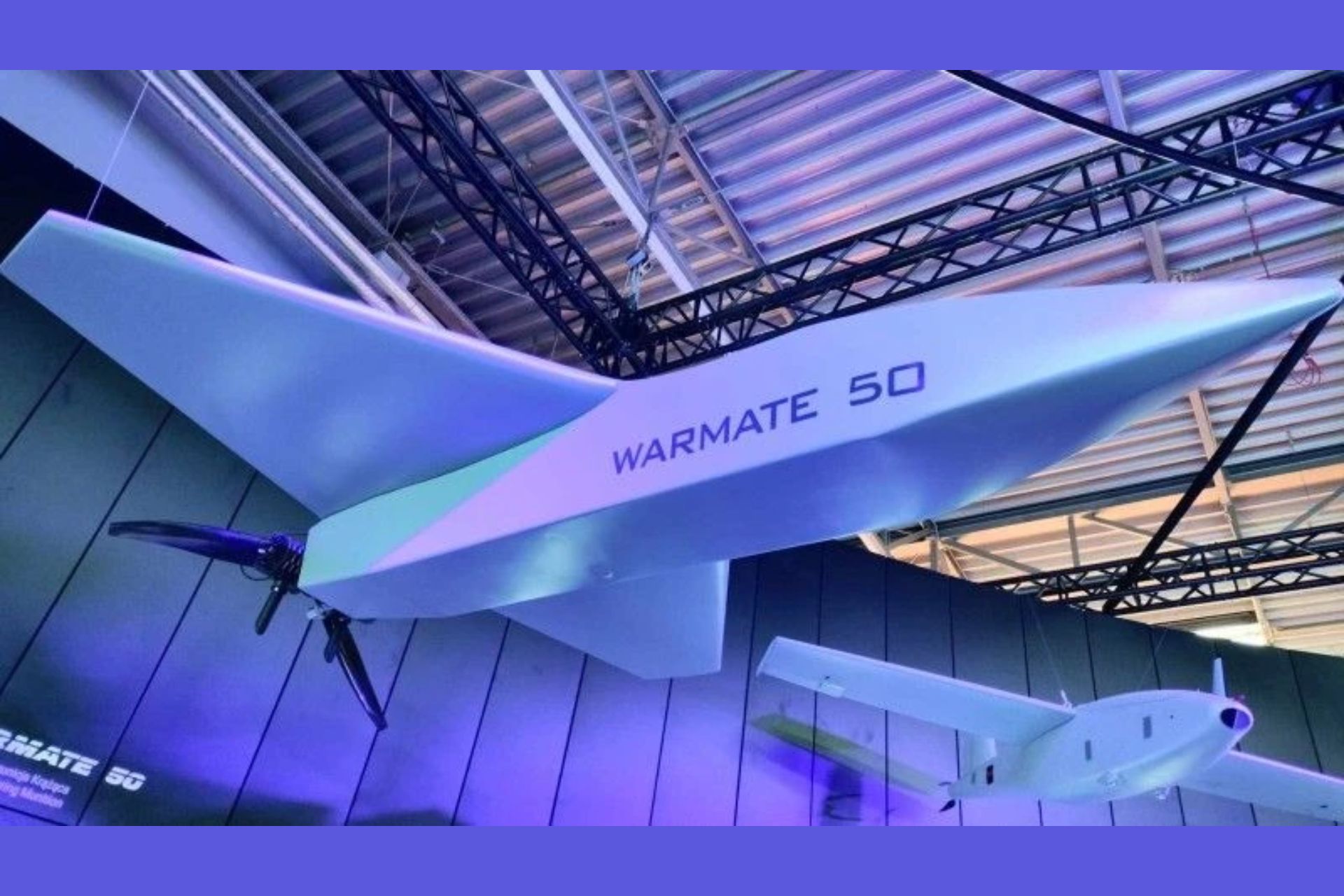
During the 2024 International Defence Industry Exhibition (MSPO), held in Kielce, WB GROUP presented a new concept of the Warmate 50 attack drone. The Polish unmanned aerial vehicle stands out due to its size.
Follow Army Recognition on Google News at this link
WARMate 50 displayed at WB group booth in MSPO 2024 (Picture source: WB group)
As its name suggests, the Warmate 50 is equipped with a 50-kilogram warhead. This represents a significant upgrade compared to the previous versions of the Warmate drones, which had a smaller payload but also greater flexibility. Unlike its predecessors, the Warmate 50 cannot be swapped out. This approach aims to maximize combat effectiveness at the expense of observational functionality. Therefore, it is an unmanned aircraft designed exclusively for strike missions. The new model will be powered by a combustion engine, allowing it to reach targets located hundreds of kilometers away.
The Warmate 50 is an evolution of the previous version, the Warmate 20, which has already gained popularity on the international stage. Russian media commented on the WARMATE 20 concept, noting that Poland was trying to compete with the Russian Lancet. According to them, Poland is attempting to create "an analogue of something that has no analogue."
The Warmate 2.0 is an attack drone developed by the Polish company WB Group, designed for reconnaissance missions, precision strikes, and tactical support for ground forces. This drone falls into the category of loitering munitions, often referred to as "kamikaze drones," as they can strike targets with an explosive payload before self-destructing.
With an operational range that can reach several dozen kilometers, the Warmate 2.0 offers significant battlefield coverage. Its flight autonomy is generally around 60 minutes, although this can vary depending on the mission and payload. This drone is designed to be fast and maneuverable, with a maximum speed of about 150 km/h, allowing it to reach targets accurately while avoiding enemy defense systems.
The Warmate 50 is an example of solutions that are increasingly dominating the modern battlefield. With its powerful warhead and long range, the drone can significantly enhance the operational capabilities of the Polish Armed Forces, particularly in the context of precision strikes against strategic targets. Its main characteristic is the increase in range from 150 to 1000 kilometers, thus offering great autonomy in terms of flight plan.
Read more: MSPO 2024: WB GROUP presents a drone designed to strike Moscow
- Details
- Written by: Jérôme Brahy
- Category: 2024
- Hits: 3065
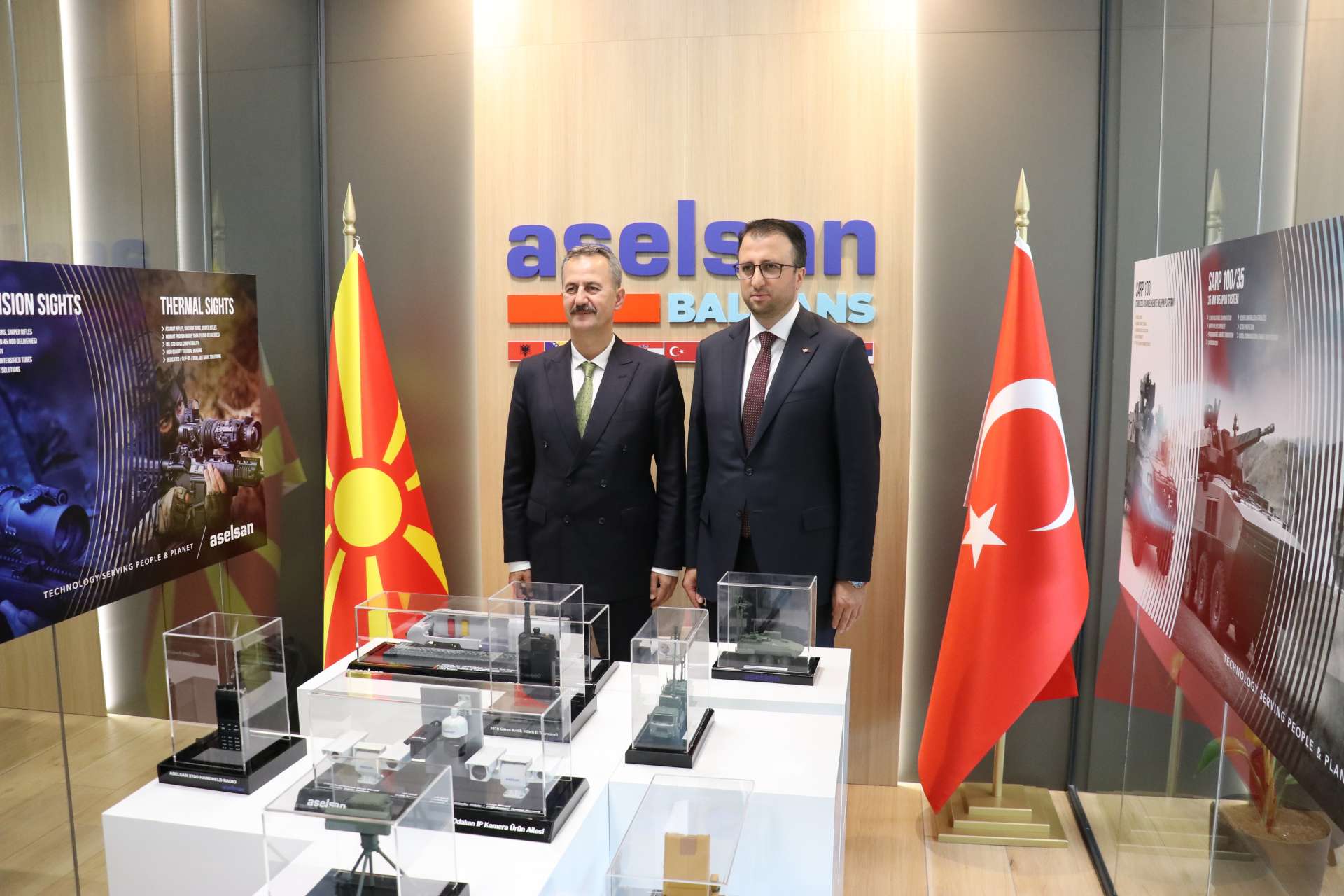
On September 2, 2024, the Turkish company ASELSAN opened a new regional office in Skopje, the capital city of North Macedonia, as part of its strategy to expand its global operations. The new office aims to enhance ASELSAN’s engagement with partners in the Balkans, further extending its presence in a region where it has been active since 2014. The opening ceremony, held on September 2, 2024, was attended by key figures, including Prof. Dr. Haluk Görgün, Secretary of Defence Industries for Türkiye, and Ahmet Akyol, CEO and President of ASELSAN.
Follow Army Recognition on Google News at this link
The office will focus on marketing, business development, customer satisfaction, and post-sales support for countries that use ASELSAN's products and systems. (Picture source: ASELSAN)
The establishment of a regional office in Skopje reflects ASELSAN’s goal of improving access to both Western and Eastern European markets. Skopje's strategic location is expected to facilitate the company's reach across the Balkan region and foster additional collaboration with regional partners. The office will focus on marketing, business development, customer satisfaction, and post-sales support for countries that use ASELSAN's products and systems. With sales already made to nearly all Balkan countries, ASELSAN intends to expand its user base and strengthen relationships with customers through its range of military and civilian solutions.
The new office is anticipated to play a significant role in both the military and civilian sectors, particularly in areas such as highway toll collection systems and smart transportation systems. ASELSAN's leadership views this expansion into the Balkans as consistent with the company’s broader objectives of increasing its global presence and strengthening cooperation with local partners. The new office in Skopje is seen as a strategic hub for ASELSAN's operations in the Balkans, aimed at enhancing collaboration with regional countries and local entities.
The Secretary of Defence Industries, Prof. Dr. Haluk Görgün, also highlighted the strategic importance of the new office, aligning it with Türkiye’s vision for a more independent defense industry. The opening of this office in North Macedonia is considered an extension of Türkiye's commitment to developing its global engineering capabilities and deepening strategic partnerships. It is expected to further strengthen the relationship between Türkiye and North Macedonia and facilitate technological, knowledge, and cultural exchanges that could benefit both countries. The new office is also expected to contribute to future developments in the defense industry, fostering technological, knowledge-based, and friendly relations between the two nations.
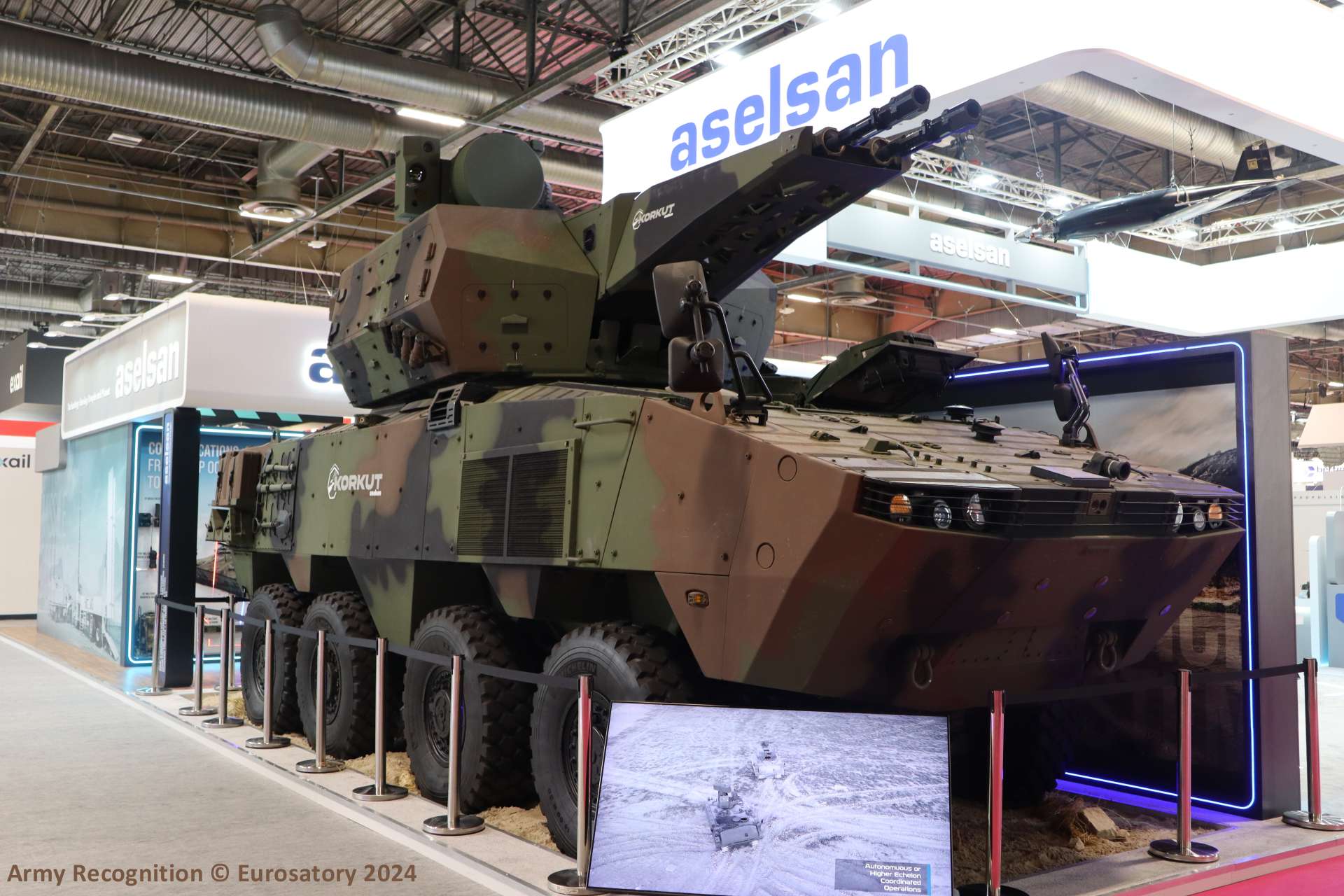
The company’s diverse portfolio includes communication systems, radar and electronic warfare systems, electro-optic systems, and weapon systems such as the Korkut air defense system. (Picture source: Army Recognition)
ASELSAN (Askeri Elektronik Sanayi) was founded in 1975 in Ankara, Turkey, by the Turkish Armed Forces Foundation (TAFF) to reduce the country's reliance on foreign defense suppliers. The company initially focused on military communication systems but expanded in the 1980s and 1990s to cover a broad range of defense electronics, including radar systems, electronic warfare, and command-and-control systems. ASELSAN has developed into a significant player in Türkiye’s defense sector, meeting military needs and contributing to national security.
As Türkiye’s leading defense company, ASELSAN has gained recognition over nearly five decades of experience and a growing international footprint. It ranks as the 42nd largest defense company globally in terms of defense turnover, according to Defense News. Employing over 11,000 people, ASELSAN provides a wide range of products, services, and system solutions for both military and industrial customers. The company operates in areas such as radar, electronic warfare systems, microelectronics, electro-optics, information and communication technology, and defense system technologies. Additionally, ASELSAN is active in civilian industries, offering solutions in transportation, security, energy, automation, and healthcare.
In recent decades, ASELSAN has significantly expanded its international presence, exporting its products and services to over 70 countries across Europe, the Middle East, Asia, and Africa. The company has formed strategic partnerships and joint ventures with various international firms to enhance its technological capabilities and expand its market reach. Notable collaborations include projects with Malaysia, Kazakhstan, and Ukraine, where ASELSAN provides advanced communication systems, electro-optics, and radar technologies. ASELSAN also participates in NATO projects, reflecting its involvement in international defense cooperation.
The company’s diverse portfolio includes communication systems, radar and electronic warfare systems, electro-optic systems, and weapon systems. Among its products are the "Volkan-M" fire control system, designed to modernize tanks such as the M60T Sabra and Leopard 2, and the "Hisar" family of air defense systems, developed for low and medium-altitude defense. Additionally, ASELSAN has created the "Koral" mobile electronic warfare system, capable of detecting, intercepting, and jamming enemy radar signals. These examples demonstrate ASELSAN’s capabilities in providing a wide range of technological solutions in both military and civilian sectors.
Read more: Turkish company ASELSAN opens new Skopje Office to deepen Balkan partnerships

- Details
- Written by: Vandenbosch
- Category: 2024
- Hits: 2008
On Monday, September 2, 2024, Dutch Prime Minister Dick Schoof announced a new aid package for Ukraine, valued at over €200 million, during his visit to the city of Zaporizhzhia. This announcement underscores the Netherlands' unwavering commitment to supporting Ukraine amid its ongoing conflict with Russia.
Follow Army Recognition on Google News at this link
The Dutch Prime Minister Dick Schoof and the Ukrainian President Volodymyr Zelenskyy. (Picture source: X account of the Dutch Prime Minister)
In a statement shared on the social media platform X, Schoof highlighted the comprehensive nature of this aid package, designed to address both the immediate and long-term needs of Ukraine. "We must do everything possible to help Ukraine persevere, both on the front lines and in daily life. This is why the Netherlands is providing a significant new support package worth over €200 million," Schoof wrote.
This aid package is primarily focused on the protection and repair of Ukraine's energy infrastructure, a critical area given the ongoing threats posed by the conflict. Additionally, the package includes substantial funding aimed at strengthening humanitarian assistance, reflecting the Netherlands' recognition of the widespread impact of the war on the Ukrainian population.
Prime Minister Schoof's visit to Zaporizhzhia marked his first trip to Ukraine in this role, and he expressed deep admiration for the resilience of the Ukrainian people. "It's incredible to see how Ukrainians are carrying on with their lives and keeping their country going, in a city just a few dozen kilometers from the front," he observed.
His itinerary included a visit to an underground school in Zaporizhzhia, where he attended an assembly marking the start of the school year. Schoof highlighted the extraordinary challenges faced by educators and students who continue their education despite the constant threat of bombs and drones. "It is hard to imagine how the children and teachers cope with the constant threat of bombs and drones," he noted.
In the afternoon, Schoof also met with a group of Ukrainian veterans, discussing their experiences on the front lines and the crucial importance of mental health support for those who have served in the war. These interactions reinforced his conviction that ongoing support for Ukraine is essential.
"Ukraine can count on the Netherlands' continued support and engagement," Schoof reiterated, affirming that the Netherlands stands with Ukraine in its fight for freedom and security. He also stressed that ending Russia's aggression against Ukraine is in the security interests of both the Netherlands and Europe as a whole.
Reflecting on the broader implications of his visit, Schoof concluded, "My first visit to Ukraine as Prime Minister of the Netherlands has confirmed my conviction that we must continue to support Ukraine."
The Netherlands plays a crucial role in aiding Ukraine and is one of the most active countries in this area. This new aid package once again proves their unwavering commitment to Ukraine in the context of the conflict with Russia. Although this aid does not directly involve military material, maintaining infrastructure is a critical element of the conflict, with infrastructure often targeted by both sides.

- Details
- Written by: V.Saint
- Category: 2024
- Hits: 3325
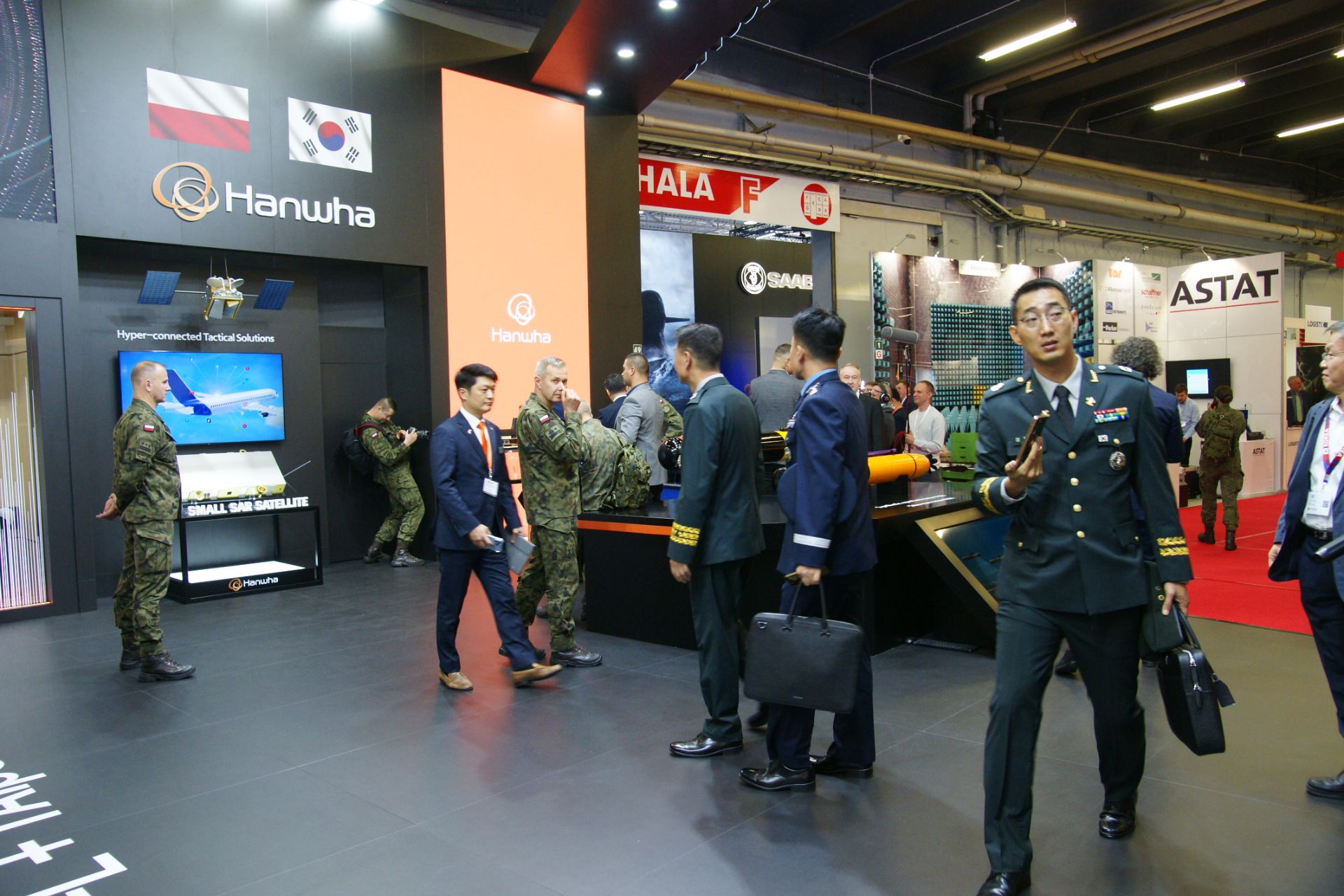
The 32nd International Defence Industry Exhibition (MSPO) has kicked off at Targi Kielce, transforming the venue into a global epicenter of defense and security innovation. Running from September 3 to 6, 2024, this year's MSPO is a record-breaking event, featuring 769 companies from 34 countries, showcasing the latest advancements in military technology and defense systems.
Follow Army Recognition on Google News at this link
VIsual of MSPO 2023 (Picture source: MSPO staff )
A Global Exhibition with a Polish Heart
Occupying nearly 35,000 square meters, the MSPO 2024 is a testament to the growing significance of Poland in the global defense industry. While Polish companies have a prominent presence, with over 400 firms exhibiting, the event also boasts strong representations from the United States, the United Kingdom, Australia, Canada, Germany, Türkiye, and notably, South Korea. The Korean delegation has established a dedicated pavilion, underscoring the deepening defense cooperation between Poland and South Korea.
Ukraine, this year's special guest, presents its latest defense technologies, reflecting the ongoing conflict in the region and the importance of international support. This inclusion highlights the solidarity and strategic partnerships that are crucial in today's global defense landscape.
Showcasing Cutting-Edge Military Technology
MSPO 2024 places a significant emphasis on showcasing cutting-edge military equipment. Among the highlights are the K2 tank from Hyundai Rotem, the 3D Long-Range Radar WARTA developed by Poland's PIT RADWAR, and the highly mobile MSR "KUSZA" anti-aircraft system, which made its debut at last year's event. Additionally, visitors can explore the Piorun missile system, a noted export success from MESKO, and other advanced systems.
Smaller, yet equally vital, equipment is also on display. The Gentex NGFW pilot helmet, now adopted by the US Navy, avionics systems for UAVs from Aerobits, and the latest Rock 3.0 bulletproof vest are just a few examples of the innovative solutions presented. The event also features the premiere of the integrated Sunway Vision glasses system, paired with a combat helmet, showcasing the latest advancements from Sunway Network.
VIsual of MSPO 2023 (Picture source: MSPO staff )
High-Profile Attendance and Strategic Discussions
The importance of MSPO 2024 is underscored by the participation of high-ranking officials from Poland and around the world. Polish President Andrzej Duda, Speaker of the Sejm Szymon Hołownia, and Deputy Prime Minister and Minister of National Defence Władysław Kosiniak-Kamysz are among the notable attendees. Additionally, international delegations from 45 countries, including NATO representatives and defense ministers from Ukraine, South Korea, Moldova, and the United Kingdom, are present, highlighting the event's global significance.
This year's MSPO also marks the 25th anniversary of Poland's membership in NATO. The Armed Forces Exhibition, themed "Poland; 25 years in NATO, safe and secure for 25 years," offers a retrospective on Poland's progress within the alliance, featuring a variety of military exhibits, including a mission town, patrol boat, and snowmobile.
A Platform for Knowledge and Collaboration
Beyond the exhibition floor, MSPO 2024 serves as a vital platform for knowledge exchange and collaboration. The event hosts numerous seminars and conferences, including the National Scientific Conference focusing on the cooperation between defense and civilian enterprises. This discussion, particularly relevant in light of the ongoing conflict in Eastern Europe, explores the synergies between Poland's defense sector and civilian research and development units.
Another significant seminar discusses the prospects of cooperation with the US military in Poland, organized by the Ministry of Development and Technology. This session is particularly timely given the increasing presence of American forces in the region, offering insights into practical aspects of collaboration.
MSPO Open Day: A Treat for Military Enthusiasts
As the MSPO 2024 draws to a close, the event opens its doors to the public on September 7 for the MSPO Open Day. Military enthusiasts and the general public are invited to explore the latest in Polish military technology, with 41 combat units on display, including Rosomak Wheeled Armoured Personnel Carriers and Leopard tanks.
The Open Day also features additional attractions, such as educational trails, parade drill shows, and performances by military bands, making it a family-friendly event that brings the public closer to the nation's defense capabilities.
MSPO 2024 not only solidifies Poland's role as a key player in the global defense industry but also provides a unique opportunity for international collaboration, knowledge sharing, and public engagement. As the event continues to grow, it remains a crucial platform for showcasing the future of military technology and strategic partnerships.
Read more: MSPO 2024: A Showcase of Best Military Innovation and Strategic Partnerships in Poland
- Details
- Written by: Administrator
- Category: 2024
- Hits: 7698
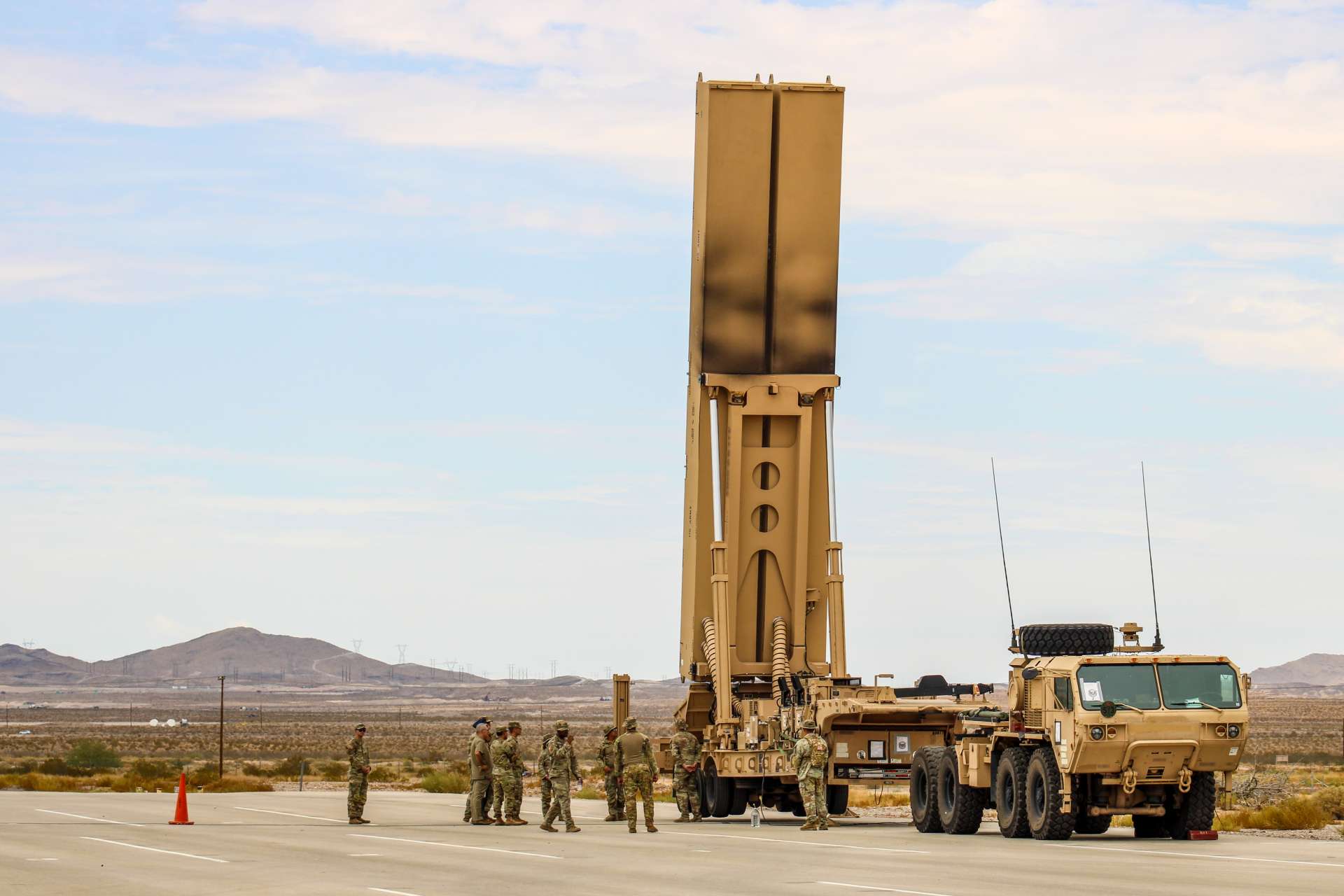
In August 2024, the U.S. Army's 5th Battalion, 3rd Field Artillery, Long Range Fires Battalion, 1st Multi-Domain Task Force made a significant breakthrough by demonstrating the combat capabilities of the Long Range Hypersonic Weapon Transporter Erector Launchers during the Bamboo Eagle 24-3 exercise at Nellis Air Force Base, Nevada. This exercise marked the first time the "Dark Eagle" Transporter Erector Launcher was deployed in a combat scenario, showcasing the Army's advanced technological capabilities.
Follow Army Recognition on Google News at this link
U.S. Army Soldiers from Bravo Battery, 5th Battalion, 3rd Field Artillery, 1st Multi-Domain Task Force, showcase the capabilities of a Long Range Hypersonic Weapon Transporter Erector Launcher during the Bamboo Eagle 24-3 exercise at Nellis Air Force Base, Nevada, on August 2, 2024. (Picture source: U.S. DoD)
The LRHW (Long Range Hypersonic Weapon) system represents a major advancement in military technology, particularly in its ability to deliver hypersonic missiles. These missiles can travel at speeds exceeding approximately 6,115 km/h (3,800 miles per hour), allowing them to reach the upper layers of Earth's atmosphere. Once there, they can remain beyond the reach of most conventional air and missile defense systems. This capability is crucial because it enables the missiles to approach their targets undetected and strike with such speed that it leaves the adversary with virtually no time to react, rendering defenses largely ineffective.
The LRHW is an advanced land-based missile system integrating several key components to deliver hypersonic missiles with unprecedented speed and precision. The heart of the system is the Transporter Erector Launcher (TEL), which is mounted on a heavy-duty, modified M870A4 semi-trailer. This truck-based launcher is specially designed to carry and deploy two hypersonic missiles simultaneously.
The M870A4 semi-trailer used in the Long Range Hypersonic Weapon (LRHW) system is typically towed by a military heavy-duty truck, such as the M983A4 Heavy Expanded Mobility Tactical Truck (HEMTT). The M983A4 is a variant of the HEMTT series, designed specifically for towing semi-trailers like the M870A4, which are used for transporting and launching large and heavy equipment, including the LRHW's hypersonic missiles.
The TEL (Transporter Erector Launcher) is highly mobile, allowing the LRHW system to rapidly deploy across various terrains and operational theaters, enhancing its flexibility and survivability in combat situations. The system's mobility is a crucial aspect of its strategic value, enabling it to be positioned in different locations to maximize its effectiveness and avoid detection or counterattacks.
In addition to the TEL, the LRHW system includes a Battery Operations Center (BOC), which oversees the command and control functions necessary for the operation of the missile launchers. The BOC coordinates the deployment and firing of the missiles, ensuring that they can be launched quickly and accurately. The entire system is supported by various ground equipment and support vehicles that provide the necessary logistical and operational support to maintain readiness and efficiency in the field.
The U.S. Army's journey towards fielding a long-range hypersonic weapon has been a comprehensive and meticulous process. Beginning in 2019, U.S. Soldiers played an integral role in the prototyping and development phases, providing essential feedback and insights that shaped the system's evolution. After receiving the initial hardware in March 2021, the unit underwent extensive training, culminating in the fielding process completed by the end of fiscal year 2023. This process ensured that soldiers were fully prepared to operate the system, develop doctrine, and refine tactics.
The LRHW system is also notable for its impressive range, which extends beyond 2,775 km (approximately 1,725 miles ). This allows it to strike deep into enemy territory, making it a formidable asset in strategic military operations. The deployment of this system during the Bamboo Eagle 24-3 exercise was not the first time the U.S. Army had tested its strategic mobility. In February 2023, the 5th Battalion, 3rd Field Artillery Regiment executed a record-breaking overland movement, transporting the system more than 3,000 miles (approximately 4,828 kilometers) from Joint Base Lewis-McChord, Washington, to Cape Canaveral, Florida. This demonstrated the Army's ability to rapidly deploy the hypersonic weapon system across long distances, which is crucial for responding to global threats.
Hypersonic missiles, like those used in the LRHW system, provide significant combat capabilities by offering strategic advantages that conventional weapons cannot match. Their speed, maneuverability, and ability to evade traditional defense systems make them ideal for striking high-value or time-sensitive targets. In combat, hypersonic missiles can effectively penetrate enemy defenses, destroy key infrastructure, and neutralize threats with unmatched precision and speed, thereby significantly enhancing the effectiveness of military operations.
Overall, the successful demonstration of the LRHW system not only highlights the U.S. Army's advanced capabilities but also underscores the strategic importance of hypersonic technology in modern warfare. As the Army continues to develop and deploy these systems, it will maintain a critical edge in multi-domain operations, capable of responding swiftly and decisively to emerging threats around the world.
- Details
- Written by: Halna du Fretay
- Category: 2024
- Hits: 7790
Safran has finalized the acquisition of Preligens, a French company specializing in artificial intelligence (AI) for defense applications. This acquisition, valued at 220 million euros, positions Safran to further enhance its capabilities in AI, particularly in areas such as military surveillance, space communication, and civil aeronautics. The deal, announced on September 2, 2024, follows months of negotiations and reflects Safran's commitment to expanding its technological portfolio through strategic acquisitions.
Follow Army Recognition on Google News at this link
While Preligens has primarily focused on military applications, the company is expected to diversify under Safran’s ownership, developing AI solutions for Industry 4.0 applications. (Picture source: Preligens)
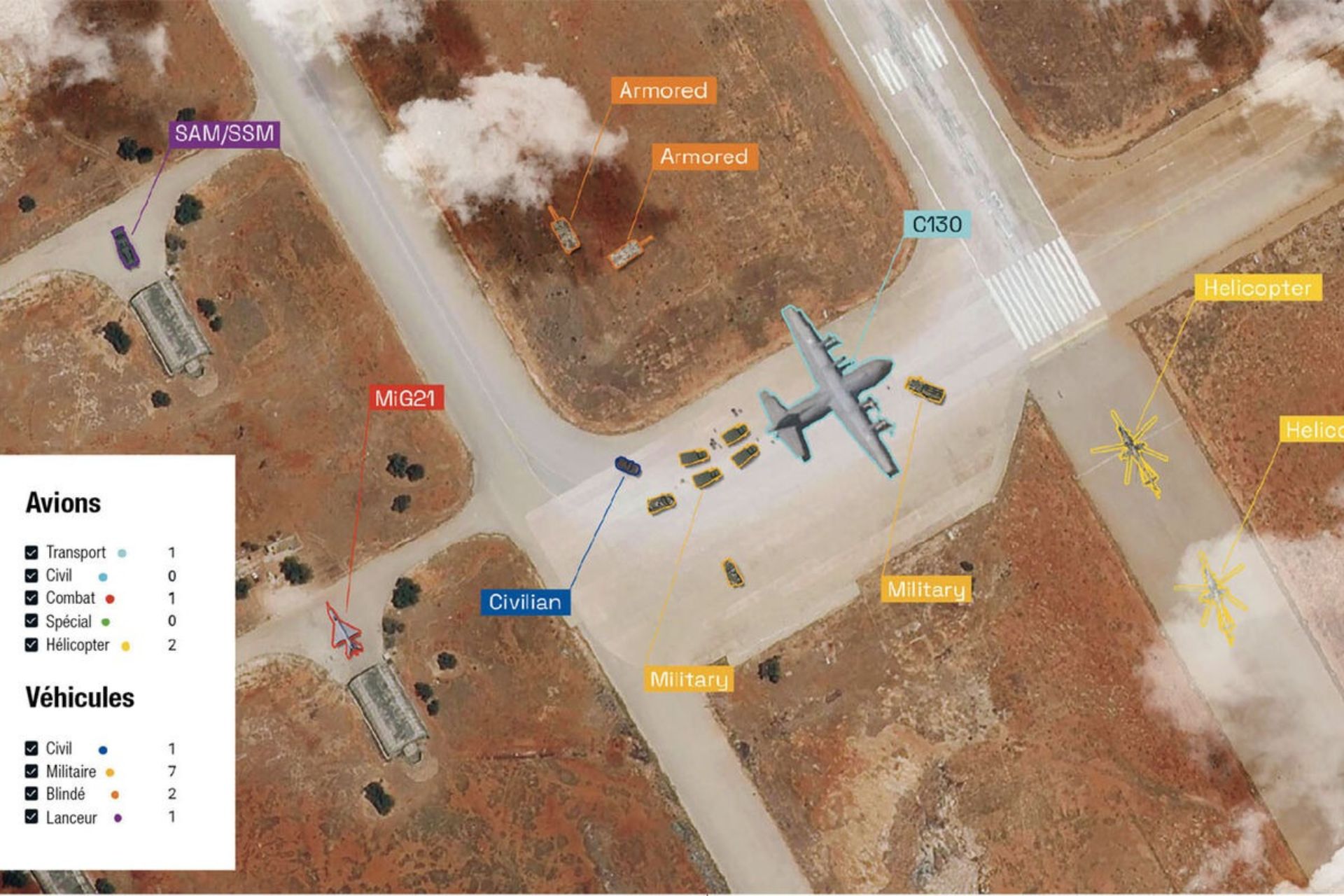
Founded in 2016, Preligens quickly gained attention from the French military, specifically the Directorate of Military Intelligence (DRM), for its advanced AI algorithms capable of automatically detecting military equipment and identifying unusual movements on sites of interest using satellite imagery. Supported by the Definvest fund—established by the French Ministry of the Armed Forces in partnership with Bpifrance—Preligens secured a framework contract from the Directorate General of Armaments (DGA) valued at up to 240 million euros under the TORNADE program. This program was aimed at providing AI-driven optical and radar processing for the benefit of the DRM, the Special Operations Command (COS), and the Cyber Defense Command (COMCYBER).
Despite its early successes, Preligens faced challenges earlier this year when key contracts related to radar and optical imagery were not renewed by the Ministry of the Armed Forces, impacting nearly half of the company’s revenue. In response, Preligens sought a buyer to ensure its continued growth and development. After an initial interest from Thales, which later withdrew, Safran entered exclusive negotiations in June 2024 to acquire 100% of Preligens’ capital. This acquisition was finalized over the summer, culminating in the announcement made this September.
With the acquisition now complete, Preligens will be rebranded as Safran.AI, reflecting its integration into Safran’s Electronics & Defense division. This move underscores Safran’s strategy to bolster its expertise in AI, leveraging Preligens’ advanced solutions to accelerate the development of AI technologies across its products and services. The acquisition also aligns with Safran’s broader goal of enhancing its international presence, particularly in the U.S. market, where AI applications in defense are rapidly expanding.
While Preligens has primarily focused on military applications, the company is expected to diversify under Safran’s ownership, developing AI solutions for Industry 4.0 applications. According to Safran, automated image analysis powered by AI could assist inspectors in identifying anomalies in critical components using digital imaging, thereby enhancing quality control processes in various industries.
Jean-Yves Courtois, CEO of Preligens, expressed optimism about the acquisition, stating that joining Safran marks a new phase in the company’s development. He highlighted the synergies between the two companies, which are expected to drive the development of new AI product lines and accelerate international expansion. This, Courtois noted, is positive news for both the company’s operations and its employees.
Safran’s acquisition of Preligens is part of a broader trend in the defense industry, where major players are increasingly investing in AI to enhance their technological edge. As Safran.AI, the former Preligens is set to become a core component of Safran’s efforts to integrate AI across its defense, space, and civil aeronautics divisions. The strategic acquisition underscores the growing importance of AI in processing large volumes of data quickly and accurately, a capability that is becoming essential in modern defense operations.
With the completion of this acquisition, Safran is well-positioned to advance its AI capabilities, providing the French defense industry with cutting-edge technologies that meet the demands of modern warfare. The integration of Preligens into Safran’s broader operations is expected to yield significant advancements in AI, reinforcing Safran’s position as a leading player in the global defense industry.
Read more: Safran Completes Acquisition of AI Specialist Preligens
- Ukraine Approves Modernized Khorunzhy Armored Vehicle for Military Deployment Against Russia
- Lithuania Receives MP7 A2 Submachine Guns from German Company Heckler & Koch
- US-made Typhon Missile Launcher System Could Place China Coast Within Philippine Reach
- Exclusive: Algeria conducts successful trials of Chinese VT-4 Main Battle Tank