

- Details
- Written by: Halna du Fretay
- Category: 2024
- Hits: 5414










According to information from the Israeli media AllIsraelNews, Israel is considering deploying its new automated SIGMA howitzer in its conflict with Hezbollah. With the military capabilities of the Hamas terrorist organization in Gaza significantly reduced since the Israeli Defense Forces (IDF) began their ground campaign last October, Israel's focus is increasingly shifting to the northern threat, where Hezbollah, backed by Iran, poses a growing security risk.
Follow Army Recognition on Google News at this link
The SIGMA is expected to play a key role in future IDF operations, with mass production scheduled for 2025 (Picture source: Elbit System)
The Israeli defense company Elbit Systems is in the final stages of developing the SIGMA, the world's most advanced fully automated howitzer. This cutting-edge system, designed to replace the Israeli army's older artillery units, could soon be deployed against Hezbollah forces in Lebanon. Developed over five years, the howitzer can fire eight shells per minute, double the rate of current artillery systems.
In May 2019, the Israeli government announced a $125 million contract as part of a 12-year, $280 million program to replace the M109 tracked howitzers in service with the Israeli armed forces. The defense website Janes published an image in July 2021 showing the SIGMA 155, a new wheeled self-propelled howitzer designed by Elbit Systems, which could replace the M109 in Israeli service.
Like many armies worldwide, Israel seeks to replace tracked howitzers with wheeled models, which are lighter and can be deployed more quickly by rapid response units using military transport aircraft. In addition to increased mobility, this solution simplifies logistics.
The SIGMA 155 will be based on the LVSR 10x10 military truck, manufactured by the American company Oshkosh Defense. This truck, with five axles and ten-wheel drive, can be configured according to mission requirements. The cockpit, mounted at the front of the vehicle, appears armored to protect the crew from small arms fire and artillery shell fragments.
The turret mounted at the rear of the chassis will be remotely controlled and equipped with a 155mm/52 caliber barrel, featuring a fully automated loading system. The crew cabin can accommodate two to three operators who can conduct all firing operations from inside. When in firing position, hydraulically operated spades are deployed on each side of the chassis to stabilize the vehicle, and are retracted after firing operations, allowing the vehicle to leave the position.
Major Nati, from the IDF Artillery Corps, expressed satisfaction with the test results of the SIGMA, highlighting the exceptional precision of the howitzer and its potential to revolutionize the IDF's artillery capabilities. He also emphasized that no other fully automated howitzer compares to it globally.
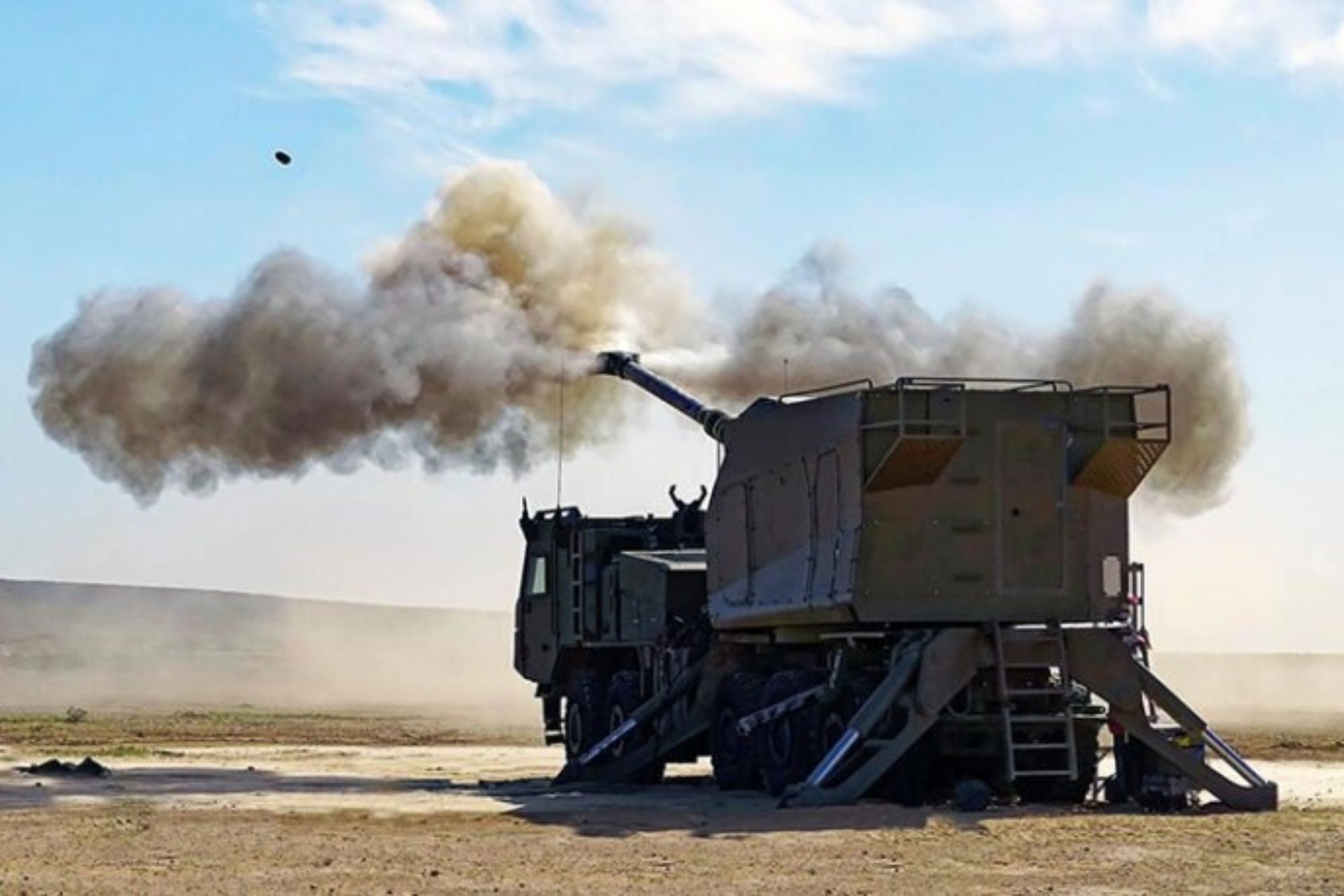
Equipped with AI-integrated technology, the SIGMA was tested in extreme conditions, including a 10,000-kilometer trial in the Nevada desert (Picture source: Elbit System)
Over the weekend, the threat from Hezbollah against northern Israel intensified, with the launch of around 50 rockets on Israeli territory. IDF Chief of Staff Lt.-Gen. Herzi Halevi, who recently visited Israel's northern border on the Golan Heights, warned Hezbollah that the Israeli army is preparing for potential offensive operations in Lebanon. Halevi specified that the IDF Northern Command is working to neutralize some of Hezbollah's capabilities before they can be used against Israel.
The SIGMA is expected to play a key role in future IDF operations, with mass production scheduled for 2025. In addition to significantly improving firing capabilities, Elbit's automated howitzer will also reduce manpower requirements. Where the older M109 requires a crew of eight soldiers, the SIGMA will need only three operators: a mission commander, a gunner, and a driver.
Equipped with AI-integrated technology, the SIGMA was tested in extreme conditions, including a 10,000-kilometer trial in the Nevada desert. This system allows it to fire a shell within 60 seconds, with impressive accuracy, deviating by only 0.7%.
Roni Flex, chief engineer at Elbit, recalled the initial challenges faced during the development of the SIGMA's specialized barrels, explaining that it initially took two and a half months to produce the first barrel, whereas now it takes only ten days. The IDF plans to use the SIGMA for the next 50 years, though the older artillery units will remain available for reserve troops.
Despite its small size, Israel has established itself as a major player in the development of cutting-edge military equipment, strengthened by its significant military experience. In July, Elbit Systems had already unveiled a futuristic artillery piece called Roem, described as "the first cannon in the world capable of automatic firing."
- Details
- Written by: V.Saint
- Category: 2024
- Hits: 2256
In the context of escalating tensions in Eastern Europe, the Republic of Belarus has announced a significant bolstering of its forces along its border with Ukraine. According to Alexander Volfovitch, Secretary of State of the Security Council of Belarus, this measure is a response to fears of a military provocation orchestrated by Kyiv. These concerns are heightened for the Belarusians by the presence of 14,000 Ukrainian soldiers at the border and also by the interception of about ten Ukrainian drones on September 5.
Follow Army Recognition on Google News at this link
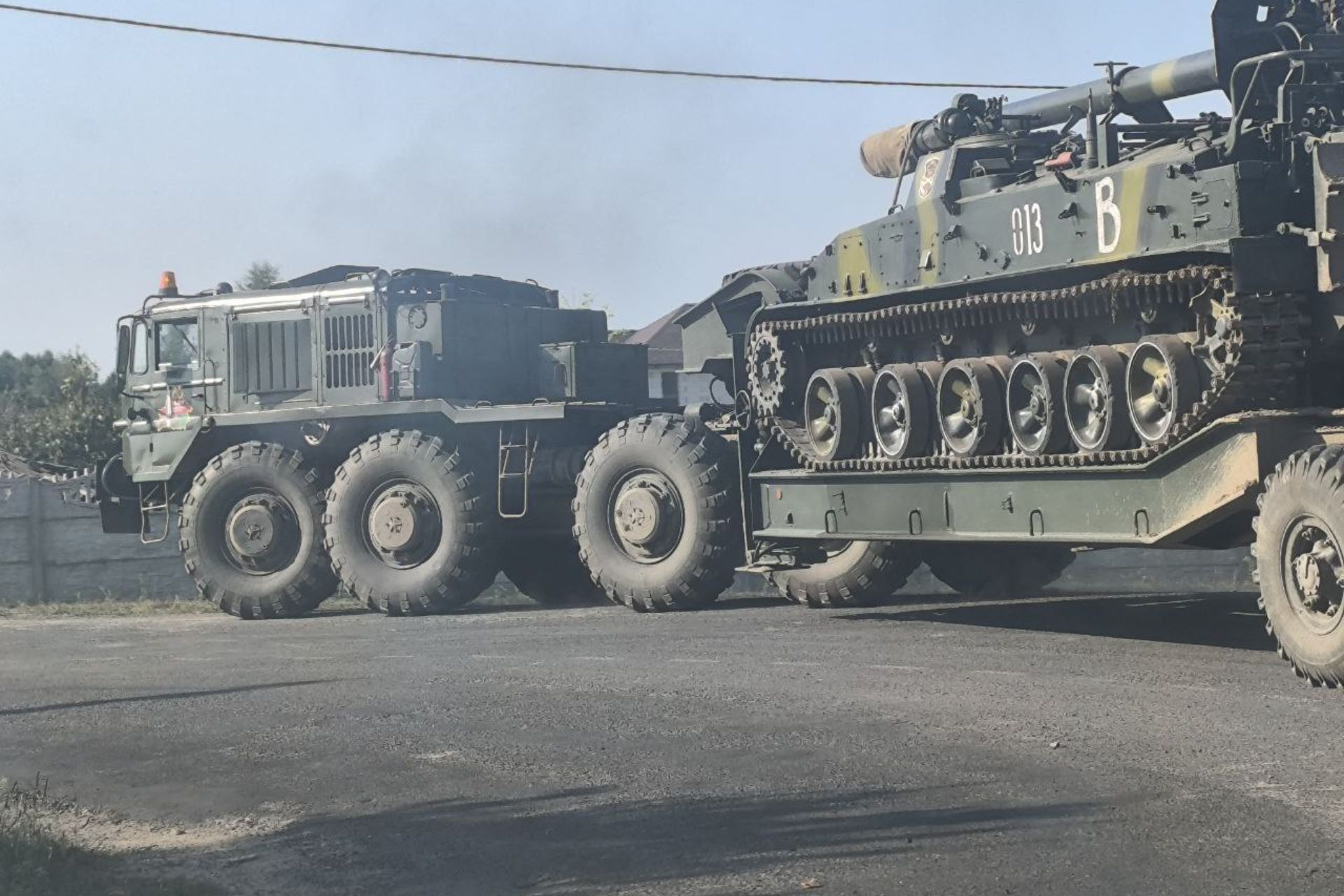
The 2S5 Giatsint-S 152 mm self-propelled gun of the Armed Forces of Belarus, marked with the letter B, on a trailer moving to the border with Ukraine. Picture taken near Gomel. (Picture source: Belarussian observers)
Belarusian authorities assert that the military has been mobilized to prevent any surprise attack against the country. Belarusian intelligence reports that Ukraine has positioned a contingent of more than 14,000 soldiers near the border, a presence that has been in place for two years. This area has undergone intensive fortification, including the mining of roads and the construction of robust defensive lines. In contrast, the Belarusian force in the regions of Mozyr and Gomel is reported to be less than 4,000 strong. However, troop reinforcements indicate a ramping up of military presence in the area. The hypothesis of an offensive operation is supported by the systematic appearance of markings for identification on Soviet vehicles used not only by the Belarusians but also by the Russians and Ukrainians. The letter "B" is now visible in all photos of vehicles in transit in the area, fueling Ukrainian concerns of an imminent attack.
In response to these developments, the Belarusian government has initiated the construction of new defensive lines. These structures are designed to repel potential offensives and are reinforced with heavy equipment. Concurrently, Minsk has increased its arsenal of anti-drone weapons, a reaction to the increased use of these devices by Ukraine in recent operations on Belarusian territory.
On the other hand, Kyiv dismisses allegations of preparing an offensive against Belarus, arguing instead that Minsk might be gearing up for an attack. Ukrainian intelligence has not confirmed the presence of a troop group capable of breaching the Ukrainian military defenses at the border. Additionally, on the Ukrainian side, there are numerous fortifications and positioning of anti-tank weapons, mines, and Czech hedgehogs—anti-tank obstacles intended to halt an advance of armored vehicles.
This escalation occurs in a climate already filled with uncertainties and mistrust between the two nations. Security experts believe that these troop movements could signify a prolonged period of tension in the region, with an increased risk of military incidents. Moreover, they highlight the complexity of the situation, where the defensive actions of one state can be perceived as offensive preparations by another, thus contributing to a difficult-to-dismantle spiral of militarization. The future of a flare-up on the northern border of Ukraine remains highly uncertain.
Read more: Tensions rising in East: Belarus reinforce borders with new fresh units
- Details
- Written by: Halna du Fretay
- Category: 2024
- Hits: 2739
Northrop Grumman Corporation’s AN/ALQ-257 Viper Integrated Electronic Warfare System (IVEWS) has reached a key milestone by completing tests at the U.S. Air Force's Joint Preflight Integration of Munitions and Electronic Sensors (J-PRIMES) facility. This marks significant progress in the development of advanced electronic warfare capabilities for F-16 fighter jets.
Follow Army Recognition on Google News at this link
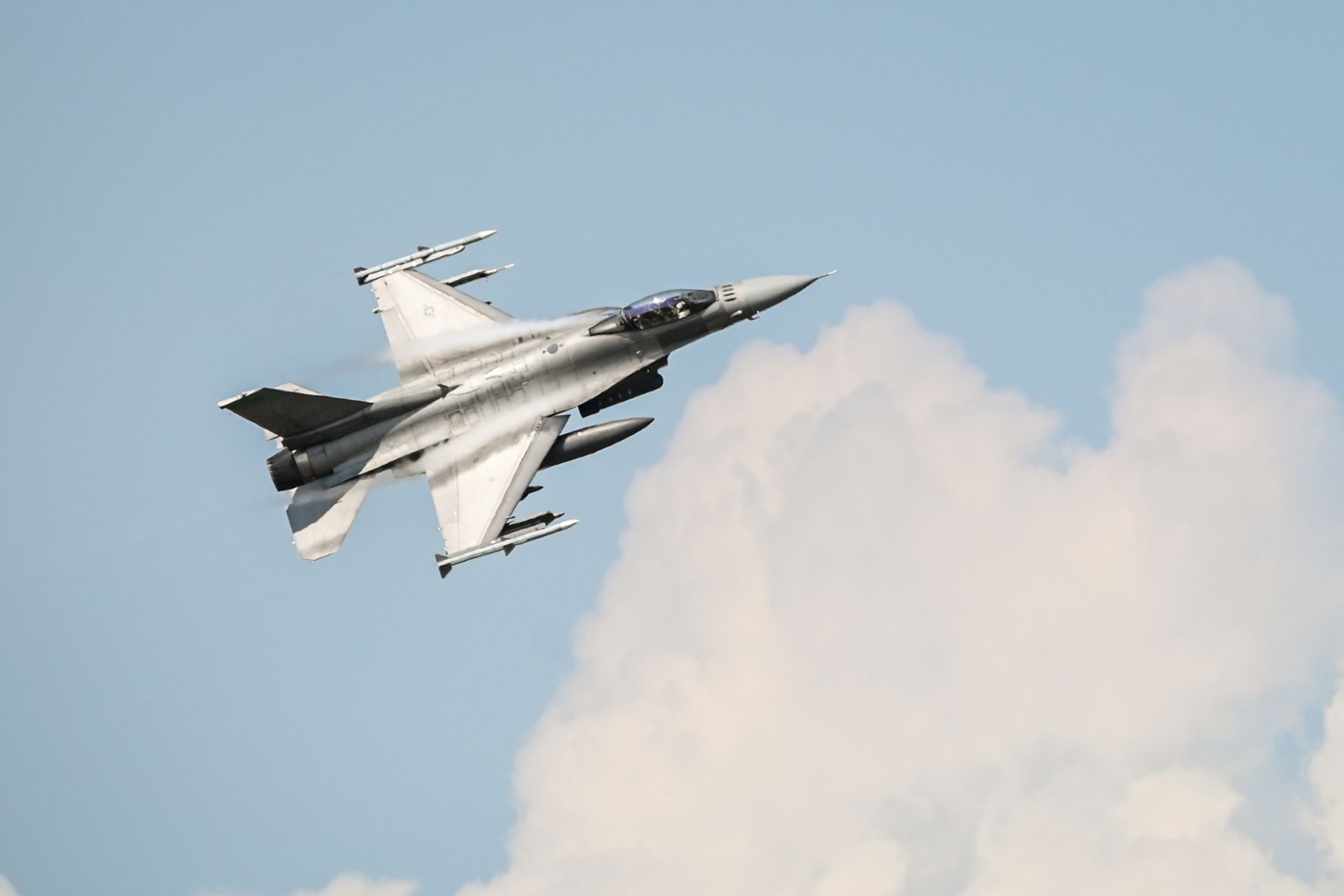
The AN/ALQ-257 IVEWS uses an ultra-wideband architecture designed to detect, identify, and counter a wide range of advanced radio frequency threats, including those based on millimeter-wave systems(Picture source: US DoD)
The rigorous tests, conducted in J-PRIMES’ anechoic chamber, subjected IVEWS to precise simulations of complex radio frequency spectrum threats. The system successfully demonstrated its ability to detect, identify, and counter these threats while maintaining compatibility with other systems onboard the F-16s. The successful completion of this test phase now paves the way for IVEWS flight testing on F-16 aircraft, accelerating its integration into operational environments.
The F-16 Fighting Falcon, originally developed by General Dynamics (now Lockheed Martin), entered production in 1976 and was introduced into the U.S. Air Force in 1978. Since its creation, more than 4,600 F-16s have been produced, making it one of the most widely used multirole fighter aircraft in the world. It has been acquired by over 25 countries, with a significant number still in service, including around 1,000 in the U.S. Air Force. The F-16 is renowned for its versatility in air-to-air combat, air-to-ground strikes, and electronic warfare, and remains a major asset in modern air forces worldwide.
Powered by a single engine, the F-16 features advanced avionics, a frameless canopy for improved visibility, and fly-by-wire controls. It can reach speeds of over Mach 2 (approximately 2,400 km/h) and has a combat range of 547 kilometers. Equipped with various armaments, including guided missiles, bombs, and a 20mm M61 Vulcan cannon, the F-16 offers significant capabilities in both air superiority and ground attack roles, making it a flexible and durable platform for modern military operations.
According to Colonel Michael Rigoni, Director of F-16 International Electronic Warfare Systems for the U.S. Air Force, this step concludes three years of system-level testing, involving multiple Integration Demonstration and Applications Lab (IDAL) events, flight demonstrations during exercises such as NORTHERN LIGHTNING 2021, and closed-loop testing. The successful evaluation of IVEWS represents a key advancement for U.S. and international F-16 fleets.
The AN/ALQ-257 IVEWS uses an ultra-wideband architecture designed to detect, identify, and counter a wide range of advanced radio frequency threats, including those based on millimeter-wave systems. This system enhances the survivability of F-16s, particularly in congested and contested environments, where electronic warfare capabilities are critical to mission success.
James Conroy, Vice President of Navigation, Targeting, and Survivability at Northrop Grumman, highlighted the importance of this achievement, stating that the completion of J-PRIMES testing demonstrates the maturity of IVEWS and its readiness for further development. The system’s architecture is based on modular and open design principles, ensuring compatibility with other advanced systems, such as Active Electronically Scanned Array (AESA) radars.
Selected in 2019 as part of the U.S. Air Force's electronic warfare program for the F-16, the AN/ALQ-257 IVEWS is now moving closer to full operational deployment, following its upcoming flight tests. Designed to provide extensive frequency and spatial coverage, this system represents a crucial advancement in the defense sector, enhancing the survivability and operational readiness of F-16s in modern combat scenarios.
With Northrop Grumman’s ongoing commitment to aerospace and defense technologies, IVEWS is expected to become a key component of the U.S. Air Force fleet and those of allied nations, delivering critical capabilities for years to come.
- Details
- Written by: Halna du Fretay
- Category: 2024
- Hits: 3273
BAE Systems has expanded its portfolio in the field of cyber and electromagnetic activities (CEMA) with the acquisition of Kirintec, a UK company specializing in innovative solutions for countering Improvised Explosive Devices (IED), countering Uncrewed Air Systems (UAS), and electronic warfare technologies. This acquisition represents a strategic move for BAE Systems, aimed at enhancing its capabilities in electronic warfare and force protection, in response to growing demand from its military clients.
Follow Army Recognition on Google News at this link
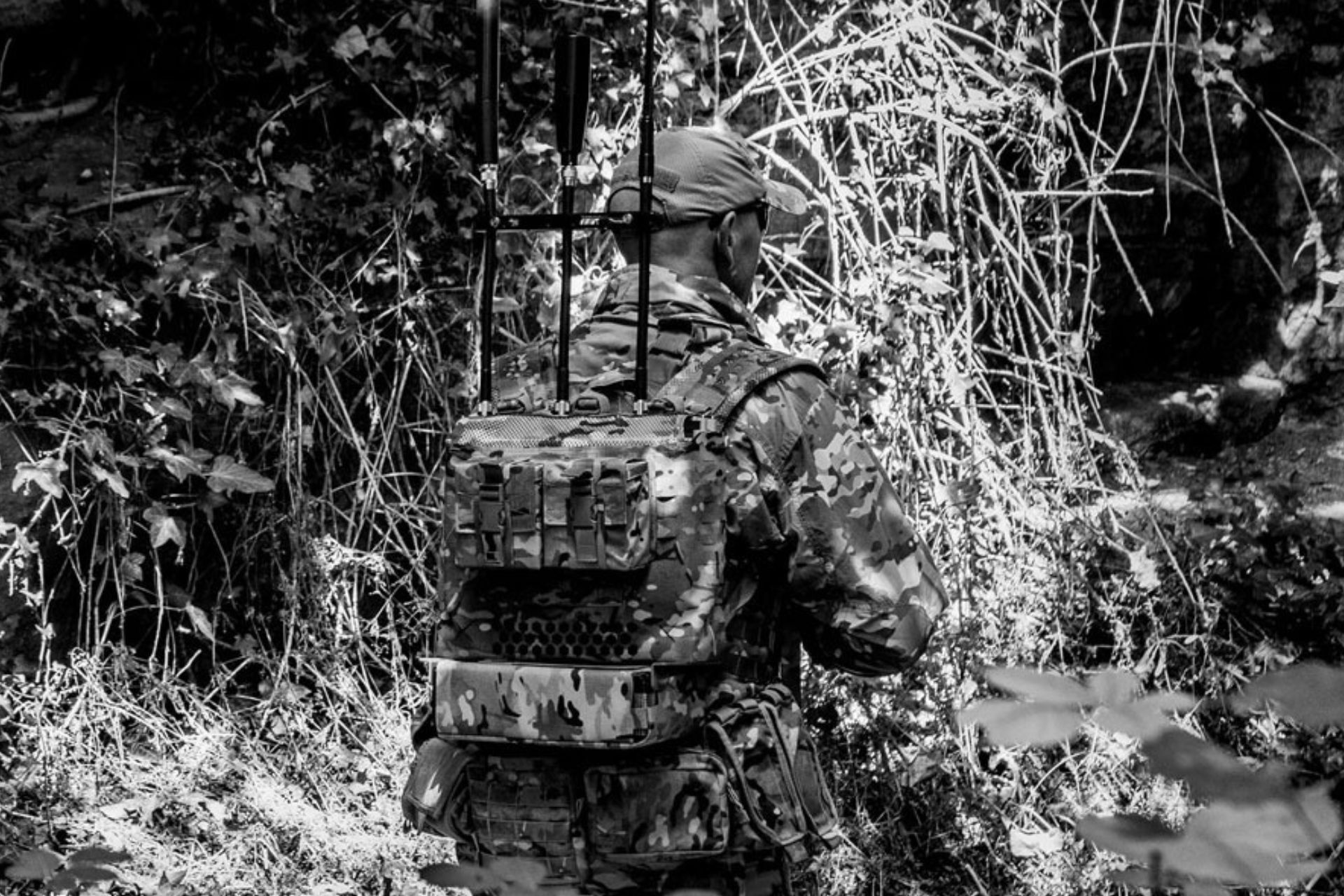
Kirintec’s field-proven technology plays a key role in protecting military platforms and personnel from cyber and electromagnetic threats (Picture source: Kirintec)
Kirintec’s field-proven technology plays a key role in protecting military platforms and personnel from cyber and electromagnetic threats. Designed with open architecture, Kirintec's products can operate seamlessly across various military domains and platforms, making them particularly useful in multi-domain operations that require the integration of diverse technologies.
The acquisition is expected to help BAE Systems meet the increasing demand for advanced CEMA solutions. Kirintec will be integrated into BAE Systems’ Digital Intelligence division, providing new products that will expand the company’s offerings in electronic warfare and force protection. By combining Kirintec’s expertise with BAE Systems’ existing capabilities, this synergy is set to strengthen electromagnetic spectrum dominance during military operations.
Andrea Thompson, Managing Director of BAE Systems’ Digital Intelligence division, emphasized the significance of the acquisition, highlighting the changing nature of warfare. Thompson noted that adversaries are increasingly using cyber and electronic warfare technologies offensively and defensively, which makes Kirintec a valuable addition to BAE Systems’ portfolio. The combined capabilities of both companies will support military forces in conducting operations with reduced risks to personnel and equipment.
Nick Watts, CEO of Kirintec, also commented on the acquisition, stating that expanding CEMA capabilities is critical given the increasingly digital nature of modern conflicts. By joining BAE Systems, Kirintec aims to leverage its expertise in CEMA while benefiting from BAE Systems’ established reputation in multi-domain solutions, enabling the company to better meet growing customer demand.
This acquisition is part of BAE Systems’ broader strategy to develop breakthrough technologies and pursue targeted acquisitions that complement its existing portfolio. Kirintec’s approximately 50 employees will continue their operations at their site in Herefordshire, while benefiting from BAE Systems’ support to increase investment in product development. With this additional backing, Kirintec’s innovative solutions will be made available to a wider range of customers, both in the UK and among allied nations.
Read more: BAE Systems Acquires Kirintec to Strengthen Its Cyber and Electronic Warfare Capabilities

- Details
- Written by: Triffaux
- Category: 2024
- Hits: 5103
On July 11, 2024, during the NATO Summit, the British Prime Minister announced a significant commitment of over $1.22 billion by the International Fund for Ukraine (IFU), including a major contract of $367 million for 152mm artillery shells suited for Ukraine’s Soviet-era cannons. This contract exemplifies the IFU’s mission to provide swift and tailored support to meet Ukrainian military needs.
Follow Army Recognition on Google News at this link
Soviet-era 152 mm Artillery Shells (Picture source: US DoD)
The artillery ammunition contract is set to deliver 120,000 newly-manufactured shells over the next 18 months, enhancing European industrial capacity and ensuring reliable supply chains to continuously provide Ukraine with essential ammunition.
Launched in 2022 by the United Kingdom and Denmark, the International Fund for Ukraine has become a key player in coordinating international aid for Ukraine. This fund aims to pool resources from participating countries to more effectively purchase equipment and arms needed to address Ukraine's urgent needs amid the Russian invasion.
Managed by the UK’s Defence Equipment & Support (DE&S) Rapid Procurement team, the contract ensures the delivery of thousands of shells by the end of the year, significantly enhancing Ukrainian reserves during this critical time.
The dynamics of the IFU extend beyond the UK and Denmark, with notable contributions from countries like Lithuania, the Netherlands, Norway, as well as new participants such as Australia, Iceland, New Zealand, and Sweden. These nations have recently increased their support, particularly through the acquisition of drones and air defense capabilities to help protect the Ukrainian population and key infrastructure. To date, these nine countries have collectively contributed over 1 billion euros to the IFU. Norway alone has contributed a total of 1.8 billion Norwegian kroner (approximately $168 million) to the IFU since 2022.
In June 2024, the first delivery of ammunition was made to Ukraine as part of a Czech-led initiative to purchase 800,000 shells for Ukraine.
UK Defence Secretary John Healey, in discussions with his Ukrainian counterpart Rustem Umerov, reiterated the UK’s commitment to accelerating military aid. “British military equipment continues to prove invaluable to Ukraine’s war effort, and the ongoing successes on the battlefield highlight the crucial importance of continued support,” he stated.
The IFU's support extends beyond munitions and weapons. It has also facilitated the delivery of advanced technologies such as reconnaissance drones, maritime drones, and demining systems, in addition to combat vehicle spares and air defense systems. These efforts are crucial for supporting Ukraine in degrading enemy forces and preventing significant breakthroughs on the battlefield.
The recent increase in funding and resources allocated to the IFU underscores the strategic importance and effectiveness of this collective support mechanism, highlighting the unity and resilience of allied nations in their support for Ukraine.
Read more: Ukraine to Receive Thousands of 152 mm Artillery Shells from International Fund
- Details
- Written by: Triffaux
- Category: 2024
- Hits: 7006
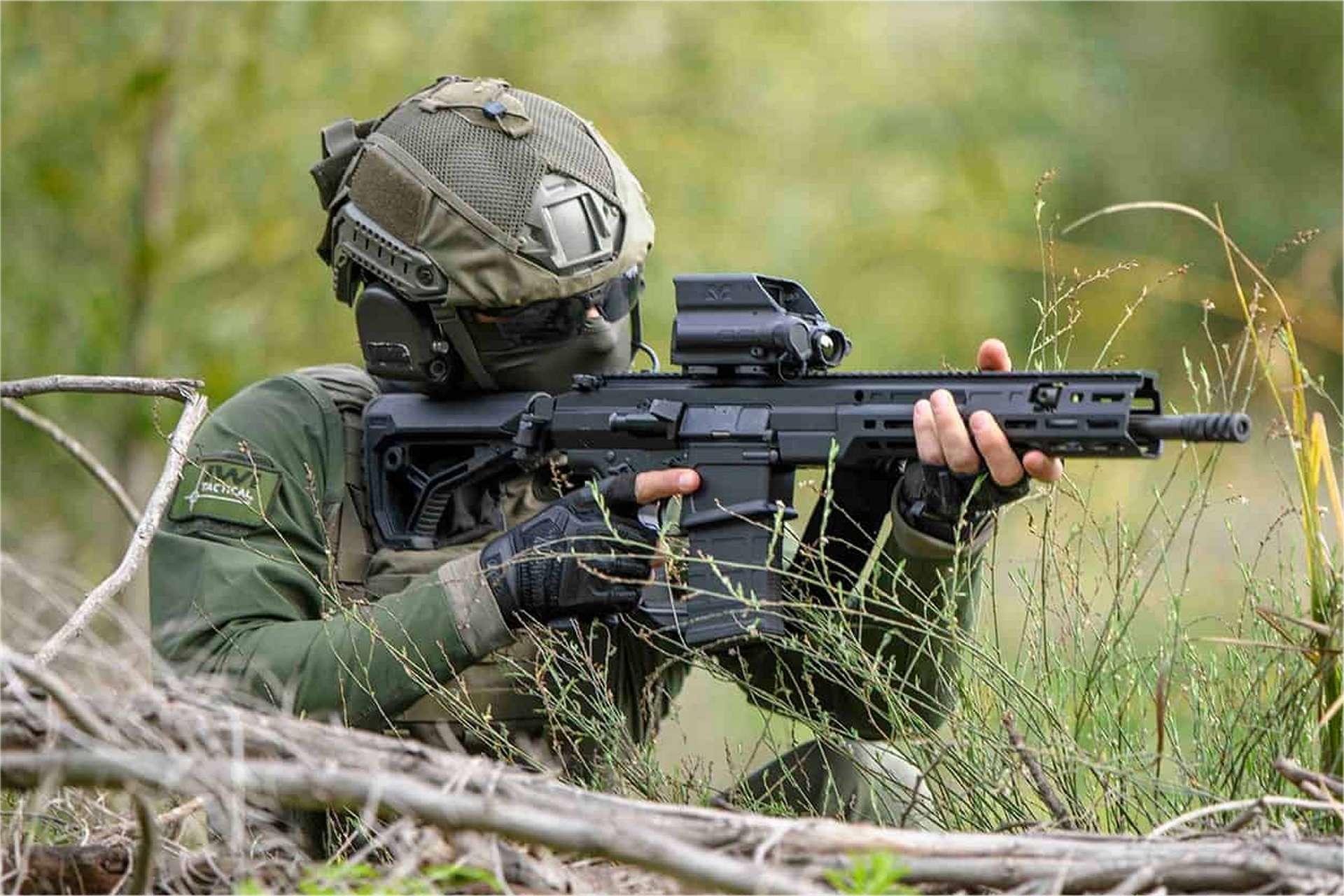
On September 9, 2024, the Argentine Ministry of Defense, under the leadership of Luis Petri, sent a delegation to Israel to explore the possibility of acquiring ARAD 7 assault rifles from Israel Weapon Industries (IWI). These rifles are intended to replace the aging FAL rifles currently in service with the Argentine Armed Forces. The delegation, composed of officers from the Navy and Air Force, embarked on a nine-day mission starting on August 30 to assess the performance of the ARAD rifles and explore local production options in Argentina under license.
Follow Army Recognition on Google News at this link
Israel Weapon Industries ARAD 7 Assault Rifle (Picture source: Israel Weapon Industries)
According to internal sources, the potential agreement with Israel for local manufacturing of ARAD rifles will depend on the volume of arms Argentina intends to purchase. This agreement may include technology transfer, benefiting Argentina’s military industry. However, current budget constraints may limit the full replacement of FAL rifles in the short term. The Argentine military is evaluating two main versions of the ARAD rifle: the ARAD 5, designed based on the AR-15 platform and capable of firing 5.56x45mm or .300 BLK rounds, and the ARAD 7, which uses 7.62mm ammunition and is designed for more precise, semi-automatic operations.
It is worth noting that Peru is already a regional user of the ARAD 7, having incorporated the rifle into its arsenal through a local production agreement with FAME S.A.C. During Peru’s Independence Day parade in July, more than 10,000 units were showcased, reflecting the modernization of Peru’s infantry.
In Argentina, the ARAD 7 is one of several options being considered as part of a larger project to modernize military equipment. Several international companies are in talks with Fabricaciones Militares to propose local co-manufacturing solutions aimed at renewing the Argentine Armed Forces’ arsenal.
The FAL rifle (Fusil Automatique Léger), manufactured by Fabrique Nationale Herstal in Belgium, has long been the weapon of choice for the Argentine Armed Forces. Introduced in the 1950s, the FAL is a semi-automatic and automatic assault rifle chambered in 7.62x51 mm NATO, renowned globally for its robustness and reliability. However, despite its proven qualities, the FAL is beginning to show signs of obsolescence in the face of modern military requirements. Its older design and relatively heavy weight make it less suitable for contemporary warfare, where agility, modularity, and the ability to integrate with new technologies are critical. The replacement of the FAL with more modern rifles like the ARAD 7, which are lighter and more versatile, aligns with Argentina’s efforts to modernize its military equipment.
ARAD 5
The IWI ARAD assault rifle (ARAD 5) is designed for infantry, special forces, and law enforcement units. Based on the M4 platform, it is particularly suited for various combat scenarios due to its ability to change calibers from 5.56x45mm to .300 Blackout. The rifle features an integrated Picatinny rail on the upper receiver, allowing the attachment of optics and other accessories, along with M-LOK rails positioned at 3, 6, and 9 o'clock along the handguard. The modular design allows the user to easily dismantle and replace the barrel. The rifle is fully ambidextrous, with controls on both sides. It operates with a short-stroke gas piston system, and the two-position gas regulator ensures constant operation in all environmental conditions.
Among its features, the ARAD is equipped with a telescopic polymer stock, an ergonomic grip, and attachment points for slings. Designed to minimize maintenance, its parts are corrosion-resistant, and its hammer-forged, chrome-lined free-floating barrel enhances accuracy and durability. The ARAD can use steel, aluminum, or polymer magazines that meet NATO/MIL-STD standards.
In terms of specifications, the rifle is chambered in 5.56x45mm or .300 Blackout, with a 292mm (11.5-inch) barrel. The total length of the weapon varies between 720mm (with the stock retracted) and 800mm (with the stock extended), and it weighs approximately 2.85 kg without a magazine. The rate of fire is between 700 and 1,100 rounds per minute.
ARAD 7
The ARAD-7 assault rifle from Israel Weapon Industries (IWI) is a multi-caliber weapon designed for infantry, law enforcement, and special forces units. It complies with strict NATO standards for small arms, including environmental standards, ensuring its ruggedness and reliability in various combat environments. Using a semi-automatic short-stroke gas piston system, the ARAD-7 offers high accuracy thanks to its cold-hammer-forged chrome-lined barrel and precise manufacturing tolerances, allowing operators to engage targets effectively at distances between 300 and 1,000 meters.
The rifle is equipped with an extended Picatinny rail integrated into the upper receiver, enabling the attachment of optics and other accessories. This rail ensures that zero is maintained even when night devices are added. Additionally, 360-degree M-LOK rails are positioned around the handguard for customization. The ARAD-7 also features a telescopic folding stock, providing excellent ergonomics and adjustability according to the operator's needs. The rifle is fully ambidextrous, and its modular design allows for easy disassembly and barrel changes. A three-position gas regulator ensures optimal performance in all environmental conditions.
In terms of specifications, the ARAD-7 is available with 368mm or 406mm barrels. It uses 7.62x51mm ammunition, with a 1:12-inch rifling twist (four right-hand grooves). Weighing between 4.15 and 4.55 kg without a magazine, the rifle is designed for minimal maintenance, with the major components (such as the barrel and frame) having a service life of at least 20,000 rounds. The ARAD-7 is also equipped with Picatinny and M-LOK rails positioned around the handguard for attaching additional accessories.
- Details
- Written by: Halna du Fretay
- Category: 2024
- Hits: 10479
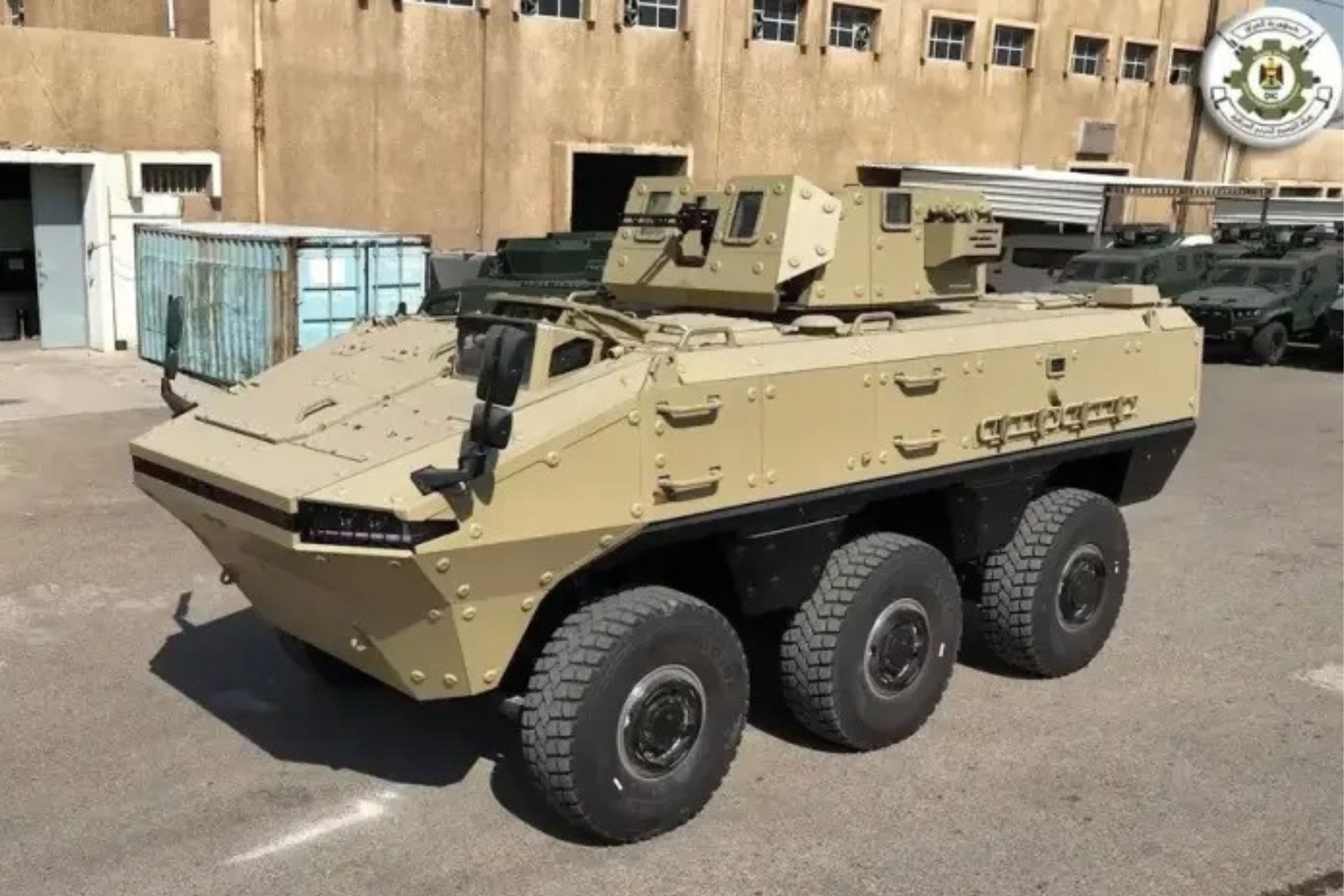
Iraq has recently showcased its localized version of the VN22 6x6 armored vehicle, marking a significant development in its defense industry. This model, initially revealed by the Chinese company Norinco in 2021, is designed as a modular armored vehicle capable of fulfilling various combat missions. The Iraqi VN22, however, has been adapted to meet the specific requirements of the country's armed forces.
Follow Army Recognition on Google News at this link
The original VN22, when equipped with a remote-controlled combat station featuring a 30 mm cannon, has a combat weight of 25 tons and can transport eight soldiers (Picture source: Iraq DIC)
These new images follow a video released by the Iraqi Defence Industries Commission (DIC) on April 1, 2024, in which Iraq announced the local production of this version of the VN22, a 6x6 Armored Personnel Carrier (APC). This strategic initiative is part of a broader plan to strengthen Iraq’s defense capabilities and establish a cutting-edge defense industrial base. The primary goal of this effort is to meet the comprehensive needs of Iraq's military and security forces, covering a wide range of weaponry, equipment, and ammunition.
The original VN22, when equipped with a remote-controlled combat station featuring a 30 mm cannon, has a combat weight of 25 tons and can transport eight soldiers. The vehicle is designed to withstand 14.5 mm caliber rounds and is equipped with mine protection.
The Iraqi version of the VN22, however, differs notably in terms of armament. It is fitted with a manned combat station armed with a Norinco-manufactured CS LM5 three-barrel 12.7 mm machine gun. This weapon is capable of firing between 1,000 and 2,000 rounds per minute, depending on the selected firing mode. Additionally, the weapon is produced under license in Iraq, emphasizing the local aspect of this production.
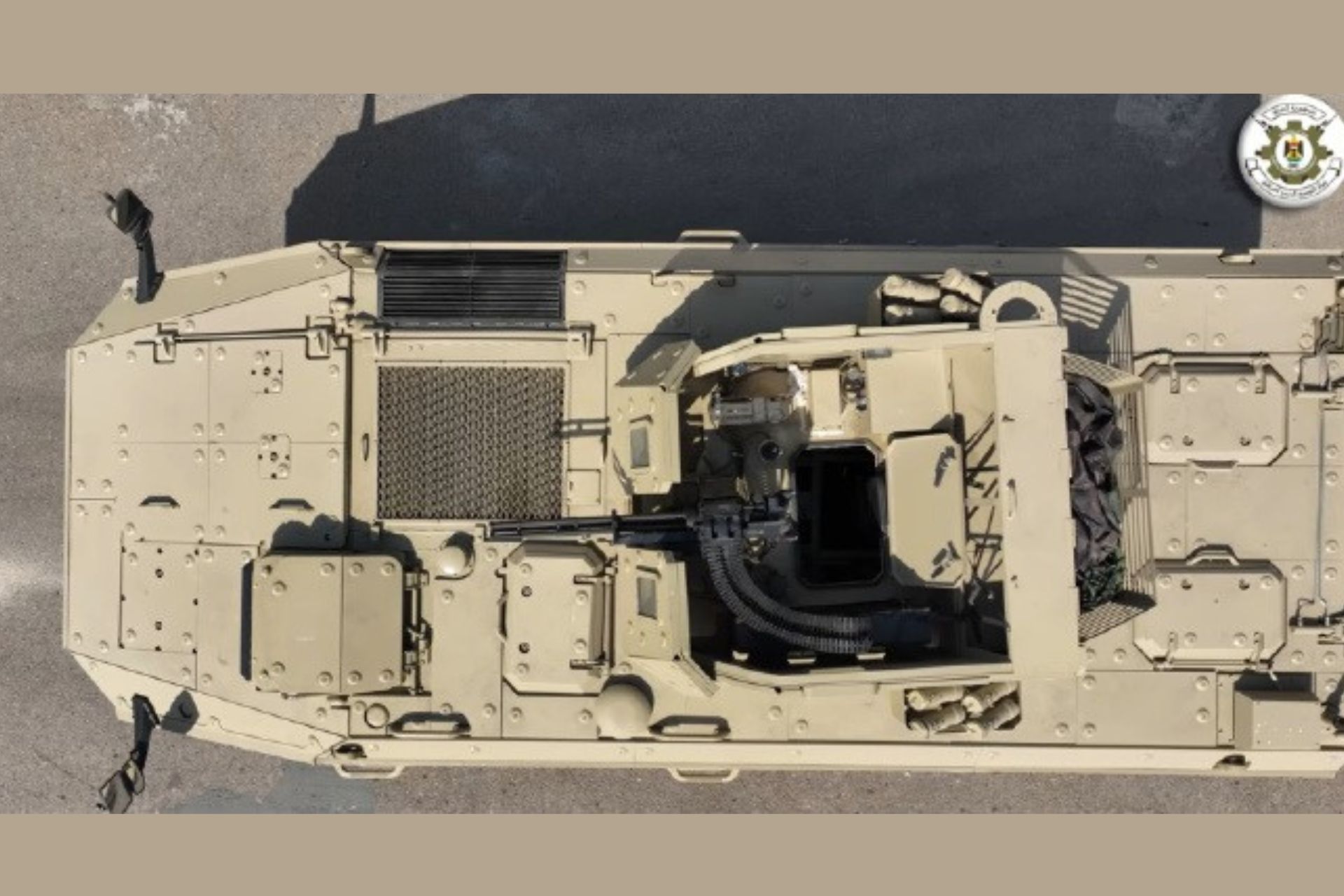
Beyond its primary armament, the vehicle is equipped with ten smoke grenade launchers and an active protection system, the GL6, comparable to Israel's Iron Fist system, providing additional defense against external threats (Picture source: Iraq DIC)
Beyond its primary armament, the vehicle is equipped with ten smoke grenade launchers and an active protection system, the GL6, comparable to Israel's Iron Fist system, providing additional defense against external threats. The VN22 chassis is divided into three main sections: the front houses the driver and engine, the middle section is reserved for the commander and the combat station operator, and the rear section accommodates up to eight motorized infantry soldiers.
The local production of the VN22 is part of the growing cooperation between Iraq and China, which extends beyond the military domain. This relationship has deepened in recent years, particularly in areas such as economic cooperation, infrastructure development, and energy. Since 2019, Chinese companies have actively participated in Iraq’s reconstruction, especially in sectors like oil, agriculture, and housing, with the planned construction of eight million residences across nearly all of Iraq's provinces.
Energy cooperation is a cornerstone of the strategic partnership between China and Iraq. Since the launch of the Belt and Road Initiative (BRI) in 2013, Iraq has become a key partner for China in energy-related matters. In 2022, China imported a substantial amount of crude oil from Iraq, marking an increase in Iraqi oil exports to China, underlining the strategic importance of their bilateral relations.
While China has expanded its presence in global defense industries, particularly in Africa, the VN22 in Iraq represents a new stage in its influence in the Middle East. China's increasing military cooperation is also evidenced by arms sales, the establishment of maintenance centers, and investments in training infrastructure. In Iraq, the local production of the VN22 symbolizes the growing integration of Chinese equipment into the country's armed forces, signaling a shift in defense relations between the two nations.
Read more: Iraq Unveils New Images of Its Locally Produced VN22 Armored Vehicle
- Details
- Written by: Jérôme Brahy
- Category: 2024
- Hits: 8973
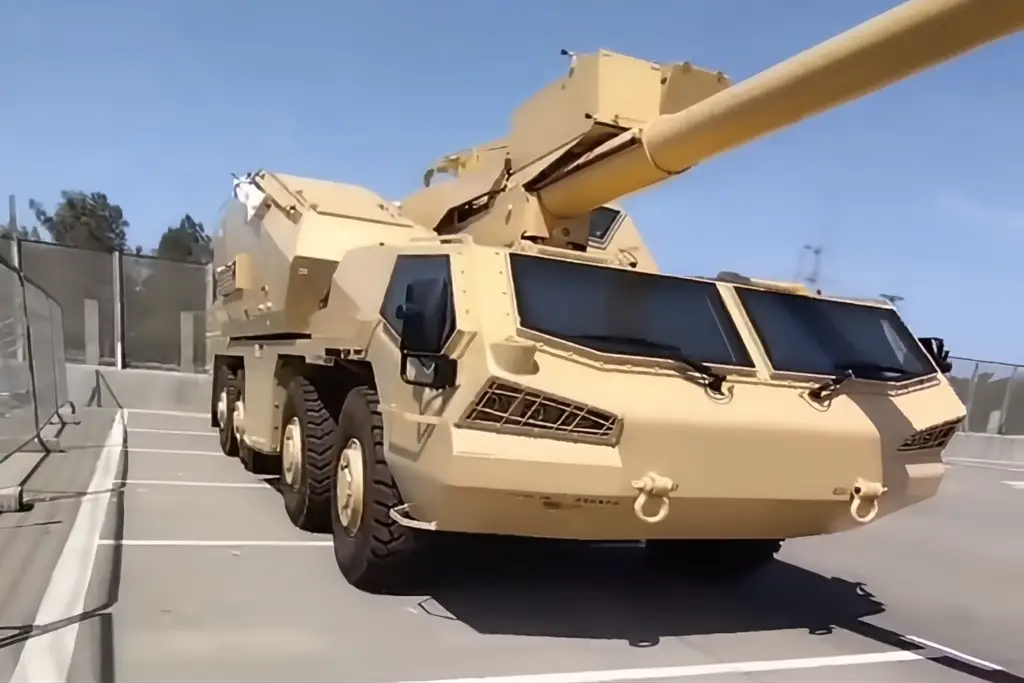
On September 7, 2024, Turan reported that Azerbaijan received its first DITA 155mm self-propelled howitzer from the Czech company Excalibur Army, marking the beginning of a planned delivery of over 70 units as indicated by AZE.media on May 6, 2024. As clarified by Praise The Steph on September 9, 2024, this unit will be on display at the Azerbaijan ADEX International Defence Exhibition, scheduled for September 24-26, 2024.
Follow Army Recognition on Google News at this link
Earlier reports indicated that the Czech company Excalibur Army would provide over 70 units of the DITA 155mm self-propelled howitzer to Azerbaijan. (Picture source: Twitter/Turan)
This delivery was later indirectly confirmed by Slovak parliamentarian Juraj Krupa, a member of the Slovak National Council, who mentioned that state companies are currently prioritizing the production of barrels for Azerbaijan over supplying components for the Zuzana self-propelled howitzers intended for Ukraine.
The addition of these self-propelled howitzers comes as the Azerbaijani armed forces continue to enhance their artillery capabilities. As of 2023, the Azerbaijani Army's artillery inventory includes 1,251 units. Among these, there are 153 self-propelled howitzers: 68 units of the 122mm 2S1 Gvozdika, 14 units of the 152mm 2S3 Akatsiya, 18 units of the 2S19 Msta-S, 36 units of the Dana-M1M, five units of the 155mm ATMOS 2000, and 12 units of the 203mm 2S7 Pion. The army also possesses 551 towed howitzers, consisting of 423 units of the 122mm D-30, 36 units of the 130mm M-46, and 92 units of the 152mm caliber, including 49 units of the 2A36 Giatsint-B and 43 units of the D-20. Additionally, there are 17 units of the 120mm 2S31 Vena gun/mortar.
The Azerbaijani inventory further includes 282 Multiple Launch Rocket Systems (MLRS): 71 units of the 107mm T-107, 130 units in the 122mm category, including 78 BM-21 Grad, 16 IMI Lynx, 18 RM-70 Vampir, and 18 T-122, along with 10 units of the 128mm RAK12. There are also 17 units of the 220mm TOS-1A and 36 units in the 300mm category, comprising 30 units of the 9A52 Smerch, six units of the Polonez, and 18 units of the 302mm T-300 Kasirga. The mortar inventory totals 248 units, including 230 units of the 120mm type, such as five Cardom, 27 M-1938 (PM-38), and 198 units of the 2S12, in addition to 18 self-propelled 120mm Sand Cat with Spear systems.
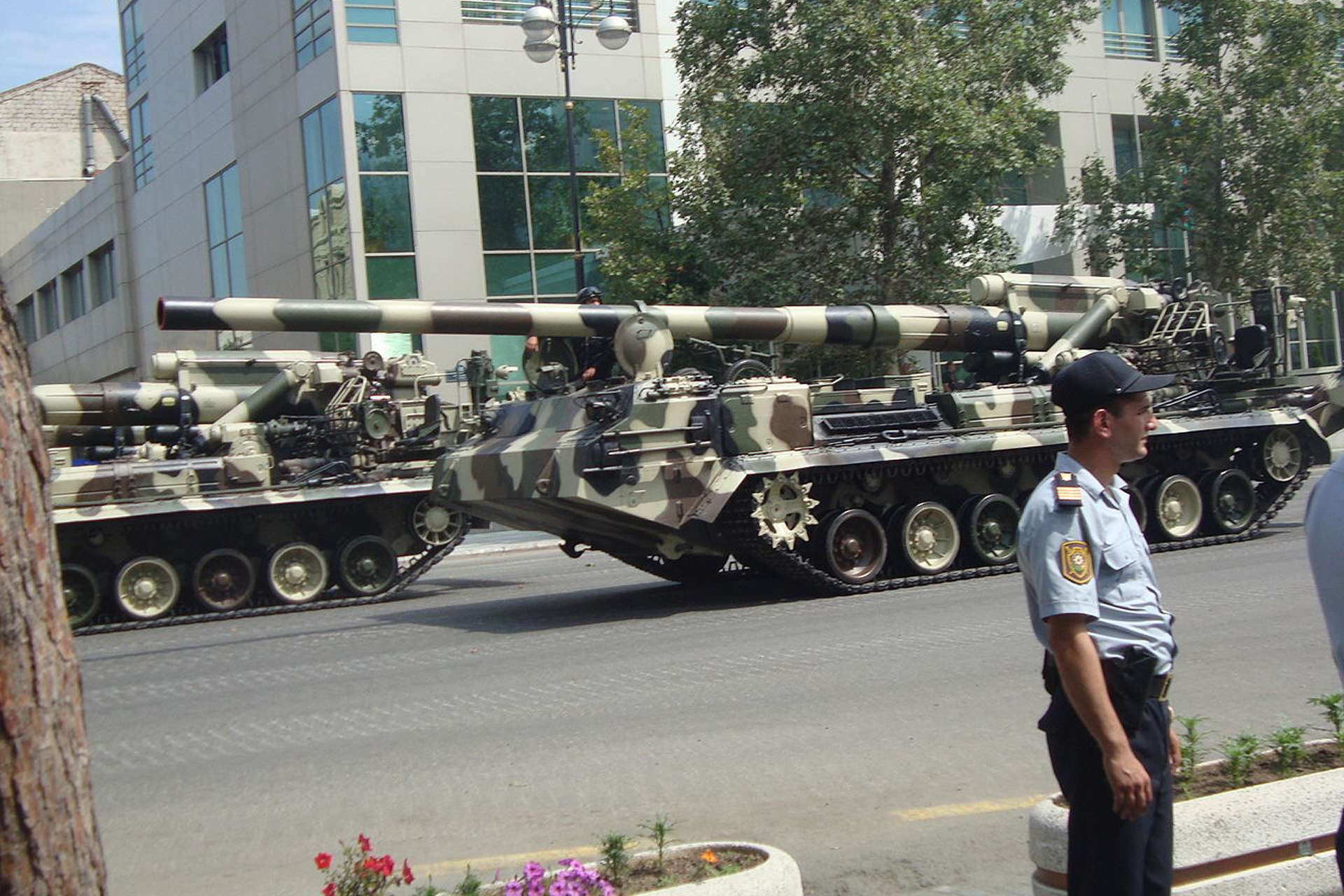
As of 2023, the Azerbaijani Army's artillery inventory includes 1,251 units, including 12 2S7 Pion 203mm self-propelled howitzers. (Picture source: Wikimedia)
This current inventory represents a substantial increase from the previous year. In 2022, Azerbaijan's armed forces had 630 artillery pieces, including 102 self-propelled artillery units. These included 46 units of the 122mm 2S1 Gvozdika, six units of the 152mm 2S3 Akatsiya, 18 units of the 2S19 Msta-S, 15 units of the Dana-M1M, five units of the 155mm ATMOS 2000, and 12 units of the 203mm 2S7 Pion. The army also maintained 233 towed artillery pieces, comprising 129 units of the 122mm D-30, 36 units of the 130mm M-46, and 68 units in the 152mm category, with 44 units of the 2A36 Giatsint-B and 24 units of the D-20.
Furthermore, in 2022, the inventory included 36 gun/mortars of the 120mm category, consisting of 18 units of the 2S9 Nona-S and 18 units of the 2S31 Vena. The multiple rocket launcher inventory numbered 147 units, including several units of the 107mm T-107, more than 60 units in the 122mm category, with 43 BM-21 Grad, over nine IMI Lynx, and more than eight RM-70 Vampir. Additionally, there were 12 units of the 128mm RAK12, 18 units of the 220mm TOS-1A, and 36 units in the 300mm category, including 30 units of the 9A52 Smerch, over six units of the Polonez, and 21 units of the 302mm T-300 Kasirga. The mortar inventory in 2022 included 112 units of the 120mm type, with five Cardom, 107 M-1938 (PM-38), and a self-propelled 120mm Sand Cat with Spear.
Looking ahead, Azerbaijan plans to significantly increase its defense budget, aiming to reach approximately $4 billion by 2028. The country is focusing on modernizing its military capabilities, reducing reliance on imports, and enhancing domestic production. This modernization effort includes acquiring new defense systems, such as missile defense systems and light attack aircraft, and upgrading existing hardware through partnerships with countries like Turkey. Azerbaijan's strategy is aimed at maintaining a military advantage amid unresolved disputes with Armenia, particularly concerning the Nagorno-Karabakh region and border demarcations.
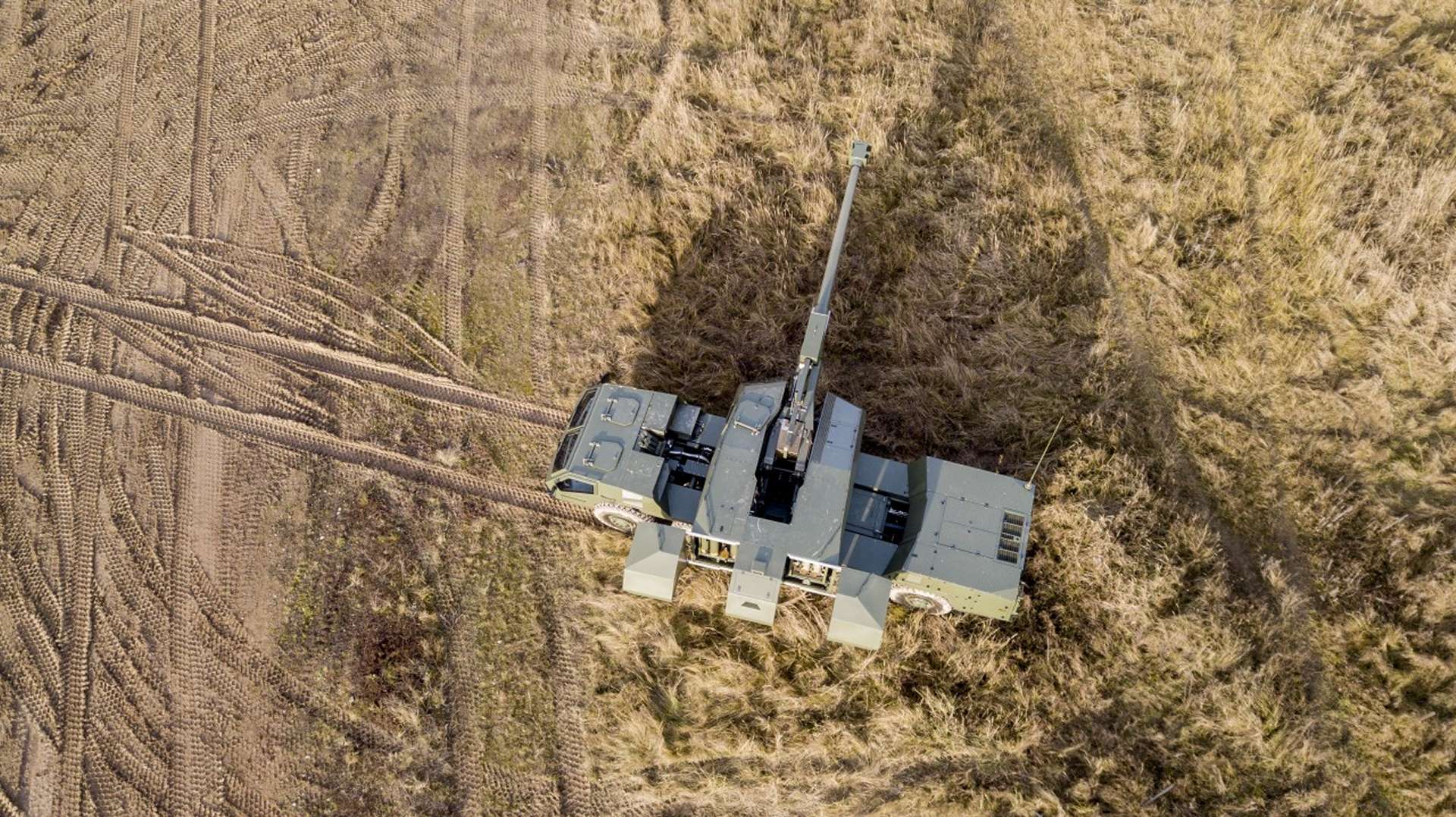
The DITA 155mm self-propelled howitzer, developed by Excalibur Army, is a modern artillery system that features a fully automated superstructure and operates with a minimal crew of two (a driver and a commander) due to its advanced automation systems. (Picture source: Excalibur Army)
On the other hand, Armenia has also increased its defense spending, allocating $1.4 billion for 2024. This marks a substantial rise compared to previous years, although it still remains lower than Azerbaijan’s projected defense budget. Armenia’s focus is primarily on territorial defense, acquiring modern weapons systems from countries like India and France to strengthen its military capacity. Armenian Prime Minister Nikol Pashinyan has expressed concerns over what he perceives as Azerbaijan’s preparation for more extensive military operations, citing recent incidents along the border and Azerbaijan's rejection of peace proposals related to border delimitation.
The DITA 155mm self-propelled howitzer, developed by Excalibur Army, is a modern artillery system emphasizing automation and mobility. It features a fully automated superstructure and operates with a minimal crew of two (a driver and a commander) due to its advanced automation systems. The howitzer is equipped with a NATO-standard 155mm L45 gun, capable of a maximum range of 39 kilometers when using high-explosive base bleed (HE BB) shells. It has a firing rate of up to six rounds per minute and a sustained rate of five rounds per minute, designed to deliver effective fire support in various operational contexts.
A notable feature of the DITA howitzer is its ability to perform Multiple Round Simultaneous Impact (MRSI), where multiple shells can be fired to land on the target simultaneously. This capability is enabled by precise control over the firing sequence and trajectory, contributing to its operational efficiency. The onboard control system (OCS) of the DITA integrates several subsystems, including diagnostics, navigation, automatic gun guiding, and ammunition management, which facilitate rapid deployment and mission execution across different battlefield conditions.
Based on the Czechoslovak DANA 8x8 self-propelled howitzer, the DITA is powered by a Tatra T3C-928-90 engine with a maximum output of 300 kW, allowing it to reach speeds of up to 90 km/h on roads with a cruising range of 600 kilometers. The vehicle is capable of navigating challenging terrains, including gradients of 30 degrees, side slopes of 15 degrees, and vertical obstacles up to 470mm.
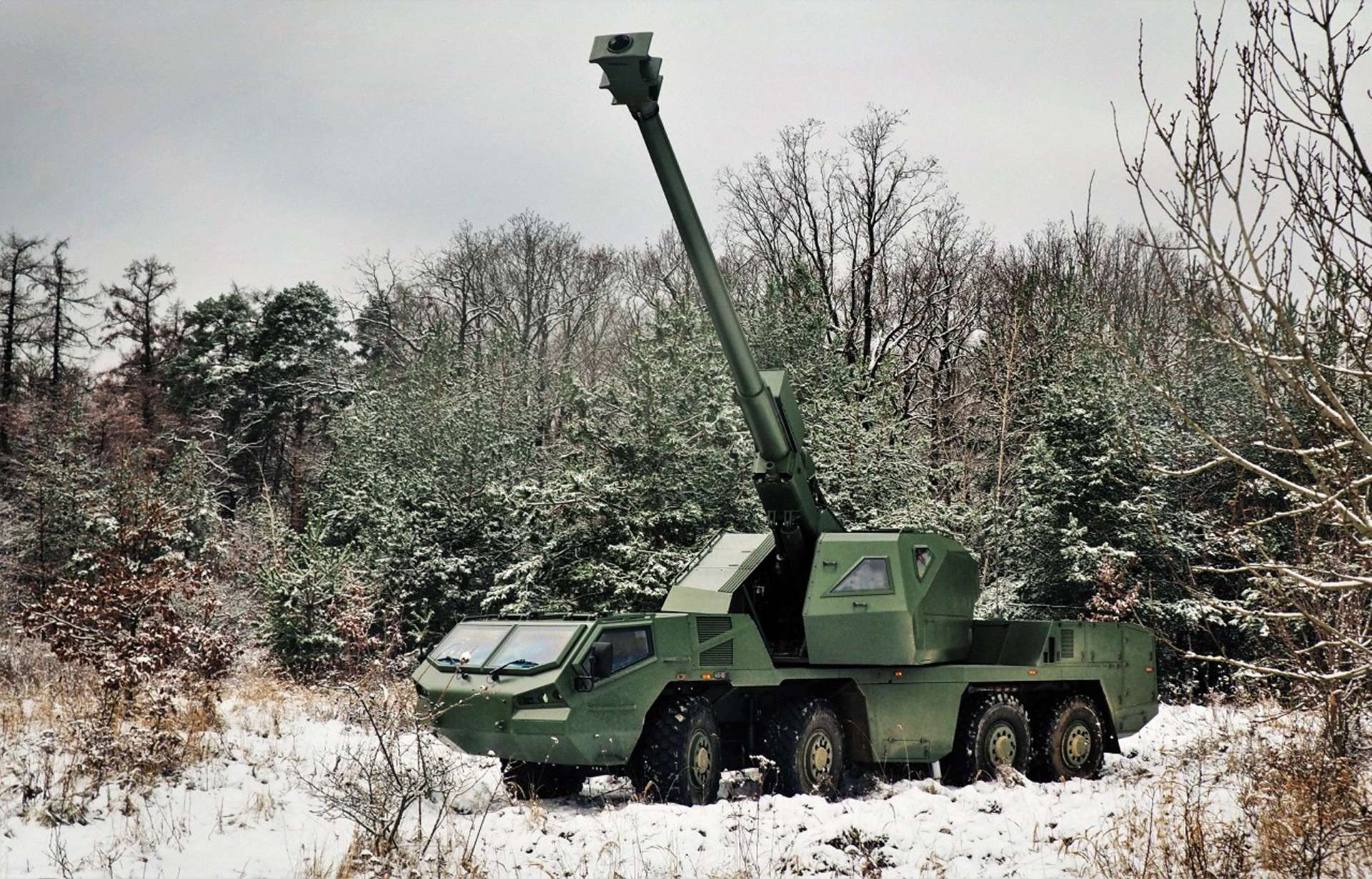
The DITA is armed with a NATO-standard 155mm L45 gun, capable of a maximum range of 39 kilometers when using high-explosive base bleed (HE BB) shells. (Picture source: Excalibur Army)

- Details
- Written by: Administrator
- Category: 2024
- Hits: 14462
Poland has taken decisive action to strengthen its artillery capabilities by replacing its aging Soviet-made BM-21 Grad rocket launchers with advanced systems from the United States and South Korea. The Polish Army is set to receive 500 American HIMARS (High Mobility Artillery Rocket Systems) from the U.S. and 288 Homar-K systems, a South Korean Chunmoo rocket launcher mounted on the locally produced Jelcz 8x8 trucks.
Follow Army Recognition on Google News at this link
Polish Army HIMARS M142 rocket launcher displayed at MSPO 2024, defense industry exhibition in Kielce, Poland. (Picture source: Army Recognition)
The M142 HIMARS (High Mobility Artillery Rocket System) is a versatile, highly mobile artillery system developed by Lockheed Martin, mounted on a 5-ton FMTV (Family of Medium Tactical Vehicles) truck. The system is equipped with a launcher that can carry either six GMLRS (Guided Multiple Launch Rocket System) rockets or one ATACMS (Army Tactical Missile System) missile. The GMLRS rockets have a range of up to 70-80 kilometers and are known for their precision-guided capabilities, while the ATACMS missile extends the range significantly, allowing strikes on targets up to 300 kilometers away.
This mobility and flexibility make HIMARS a highly effective tool in modern warfare, capable of "shoot and scoot" tactics—firing and quickly relocating to avoid counterattacks. The system's ability to deliver both short- and long-range firepower ensures it can strike enemy positions, infrastructure, and assets with great accuracy, minimizing collateral damage.
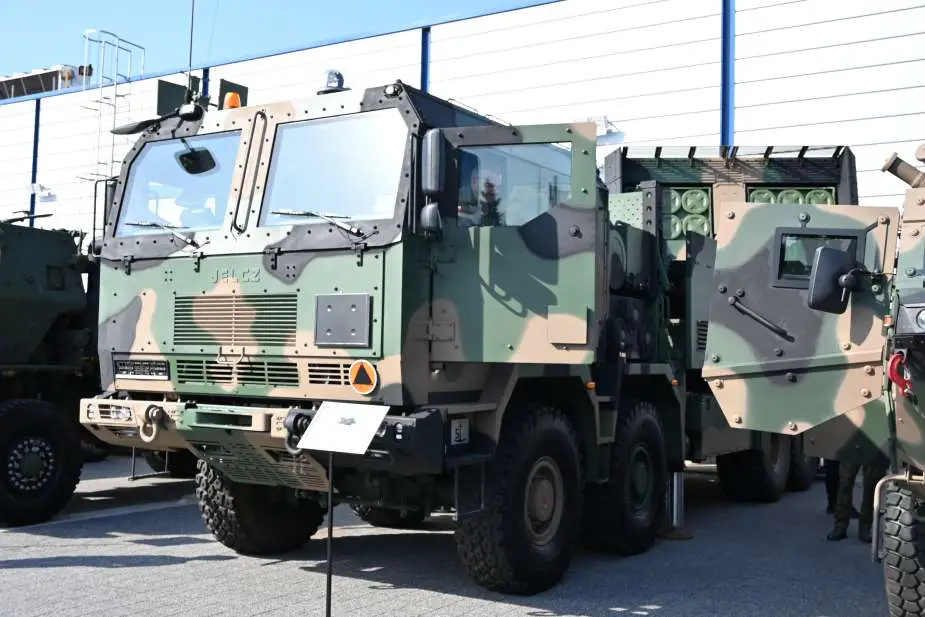
Polish Army Homar-K multi-caliber rocket launcher presented for the first time at MSPO 2024, a defense industry exhibition in Kielce, Poland. (Picture source Army Recognition Group)
The Homar-K is Poland's customized version of the K239 Chunmoo Multiple Launch Rocket System (MLRS), developed by South Korea's Hanwha Defense and mounted on the Polish Jelcz 8x8 truck. As part of Poland’s modernization efforts, the Homar-K is designed to replace older Soviet-era systems like the BM-21 Grad, offering significantly enhanced firepower, mobility, and precision.
The launcher can be configured with two containers, each holding six guided 239mm rockets, allowing the system to launch up to 12 rockets in one salvo, with a range of 80 kilometers. Additionally, the Homar-K can be configured to carry two long-range tactical ballistic missiles, capable of striking targets at distances of over 290 kilometers. The Homar-K's versatility in handling rockets and missiles makes it highly adaptable for various operational needs.
Mounted on the Jelcz 8x8 truck, the Homar-K benefits from excellent off-road mobility. This design allows for rapid deployment and relocation, enabling “shoot and scoot” tactics to avoid counter-fire. The system is equipped with a modern fire control system for precise targeting and can be integrated with NATO command-and-control networks for seamless joint operations. The high mobility of this advanced MLRS instills confidence in Poland’s ability to respond quickly to threats, ensuring enhanced deterrence and operational effectiveness.
This move is part of Poland’s broader effort to enhance its national defense amid rising regional tensions. The Soviet-designed BM-21, while once effective, has become obsolete in modern warfare. The new HIMARS and Homar-K systems provide Poland with far greater range, precision, and versatility.
The HIMARS rocket launcher system, widely recognized for its battlefield success, will allow Poland to strike targets with pinpoint accuracy at extended ranges. This precision ensures that Poland's military can hit targets accurately, increasing the nation's security. Meanwhile, the Homar-K, based on the South Korean K239 Chunmoo platform, combines advanced rocket artillery technology with the reliable Jelcz truck, ensuring high mobility and adaptability to different terrains.
Polish defense officials have emphasized that the acquisition of these state-of-the-art systems will significantly improve the nation's deterrence capabilities and ensure that Poland remains at the forefront of NATO’s defense initiatives in Eastern Europe. By retiring the BM-21s and introducing the HIMARS and Homar-K, Poland is modernizing its arsenal and ensuring that its military is better prepared for the challenges of 21st-century warfare.
- Details
- Written by: Administrator
- Category: 2024
- Hits: 4306
According to "The Times", a British national newspaper, Russia has received a shipment of more than 200 ballistic missiles from Iran, a move that could have significant implications for the ongoing conflict in Ukraine. The report, published on September 6, 2024, suggests that the shipment includes Fath-300 missiles. However, military experts have clarified that there is no known Fath-300 missile, and the delivery likely involves the Fath-360 model. These ballistic missiles arrived via a Russian ship at an undisclosed port in the Caspian Sea, as revealed by a Ukrainian military source to "The Times".
Follow Army Recognition on Google News at this link
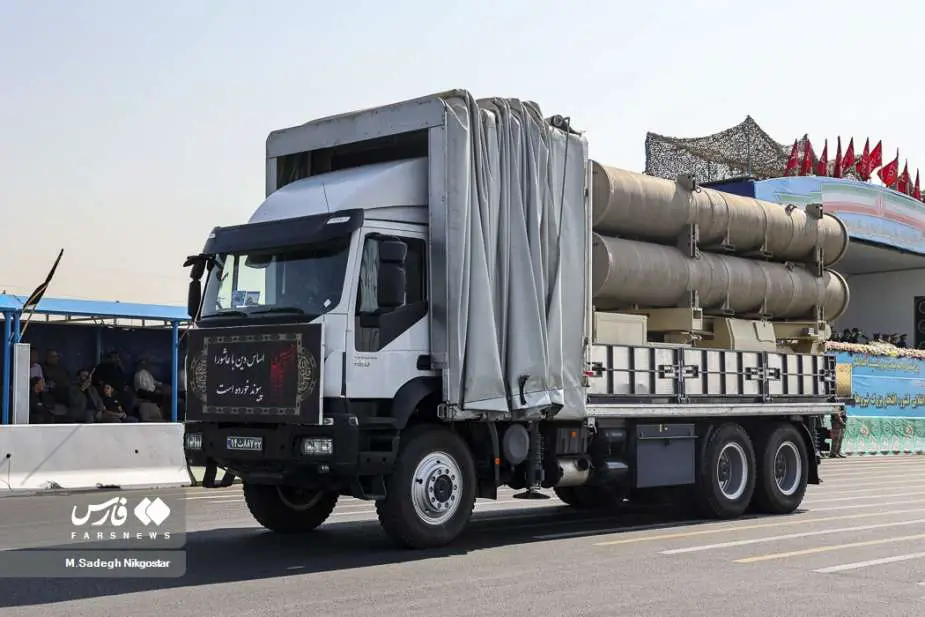
Fath 360 missiles mounted on a 6x6 truck displayed during a military parade in Tehran, Iran. (Picture source: Wikimedia)
This revelation highlights the deepening military cooperation between Iran and Russia, particularly regarding arms supplies. Since the start of the war in February 2022, Iran has provided Russia with significant military hardware, including drones and missiles, raising concerns about Tehran's role in the conflict. Notably, Iranian-made Shahed-136 drones, often referred to as "kamikaze drones," have been widely used by Russian forces to strike Ukrainian targets. These drones have been effective in their ability to evade detection, contributing to sustained air campaigns on Ukrainian cities and critical infrastructure.
While previous reports have primarily focused on the use of drones, this shipment of ballistic missiles marks a significant escalation in the arms trade between the two nations. The Fath-360 is an Iranian short-range ballistic missile (SRBM) known for its precision and mobility. With a range of approximately 120 to 300 kilometers, it is designed to carry out tactical strikes against various targets, including military installations and infrastructure. The missile is equipped with a solid-fuel engine, which allows for rapid deployment and quick launch times, making it a highly effective weapon on the battlefield.
The Fath-360 also boasts a relatively small and maneuverable design, making it more difficult for air defense systems to intercept. Its guidance system enables accurate strikes, adding to its tactical value for Russia in the ongoing conflict, where it can be used to target Ukrainian positions or strategic assets with greater precision than older missile systems.
The arrival of these missiles signals an increased reliance by Russia on foreign military assistance, especially as its war efforts have encountered stiff resistance from Ukrainian forces. It also underscores the broader geopolitical implications of Iran's involvement, despite Tehran's repeated denials of direct participation in the conflict. Western nations, particularly those in Europe and the United States, may view this missile shipment as further evidence of Iran's role in supporting the Russian invasion of Ukraine, potentially leading to increased diplomatic or economic sanctions against both countries.
As the conflict continues to evolve, the strategic use of Iranian ballistic missiles could shift the balance on the battlefield. Russia might deploy them against key Ukrainian military assets, aiming to weaken Ukrainian defenses and disrupt supply chains. This development also increases pressure on Ukraine to enhance its air defense capabilities to counter the growing threat of missile attacks.
In response to this new escalation, Western nations are likely to amplify their military support for Ukraine, possibly supplying advanced anti-missile systems to defend against these threats. Additionally, further shipments from Iran to Russia cannot be ruled out, given the ongoing partnership between the two countries, which has intensified throughout the war.
The transfer of Fath 360 ballistic missiles to Russia by Iran marks a pivotal moment in the conflict, as it signals a new phase of missile warfare that could have far-reaching consequences for Ukraine and its allies. The international community will be watching closely as these developments unfold, with the potential for further military, economic, and diplomatic actions to address the growing involvement of external actors in the Russian-Ukrainian war.
Read more: Russia Receives Over 200 Fath 360 Ballistic Missiles from Iran

- Details
- Written by: Administrator
- Category: 2024
- Hits: 5444
At the 24th Ukraine Defense Contact Group (UDCG) meeting, held at Ramstein Air Base on September 6, 2024, and chaired by U.S. Secretary of Defense Lloyd J. Austin III, Canada significantly expanded its military support for Ukraine. Canadian Minister of National Defence, Bill Blair, made several key announcements, underlining Canada’s ongoing commitment to aiding Ukraine in its defense against Russian aggression. Blair confirmed that Canada will donate decommissioned military equipment, including the chassis of 29 M113 armored personnel carriers and 64 Coyote light armored vehicles (LAVs).
Follow Army Recognition on Google News at this link
A Canadian soldier on a Coyote Armored Vehicle during Exercise MAPLE RESOLVE. (Picture source: Canada MoD)
M113 and Coyote armored vehicles, previously part of the Canadian Armed Forces (CAF) inventory, have been retired from service and will be provided to Ukraine to be repurposed for operational use or as a source of spare parts for the Ukrainian military.
The Coyote is a light armored vehicle (LAV) used by the Canadian Army, primarily designed for reconnaissance and surveillance missions. It is based on the LAV-25 platform and serves a different purpose than traditional infantry fighting vehicles (IFVs), focusing on intelligence gathering rather than direct combat. The Coyote is equipped with advanced sensors, including radar and long-range cameras, making it effective for battlefield observation and long-range patrols. Its design allows for high-speed maneuverability, enabling it to cover large areas quickly while providing critical intelligence to commanders in the field.
In terms of armament, the Coyote is outfitted with a 25mm M242 Bushmaster chain gun, which is effective against light armored targets and infantry. It also features two 7.62mm C6 machine guns, offering additional firepower. While its primary role is reconnaissance, these weapons provide the Coyote with a level of defensive capability, ensuring it can engage enemy forces if necessary. Though no longer a frontline vehicle in the Canadian Armed Forces, it remains a valuable asset for support and intelligence-gathering missions.
Further bolstering its support for Ukraine, Blair also announced a significant development in pilot training for Ukrainian forces. The Canadian government is taking over leadership of the fighter-lead-in-training (FLIT) component under the UDCG Air Force Capability Coalition (AFCC). Backed by a $389 million investment over the next five years, this initiative will focus on advanced pilot training for Ukrainian personnel, including the operation of F-16 fighter jets. Ukrainian pilots have already arrived in Canada to begin the training program, which is seen as a critical step in building Ukraine’s air defense capabilities.
Canada will also supply critical equipment and infrastructure support to Ukrainian air bases and fleets as part of the training program. This marks a significant Canadian contribution to the AFCC, which aims to enhance Ukraine’s ability to defend its airspace against continued Russian aerial assaults.
In addition to training and armored vehicle support, Minister Blair announced the donation of 80,840 additional CRV-7 rocket motors and 1,300 warheads to Ukraine. This follows an earlier delivery of 2,160 rocket motors. The CRV-7s, once used by Canada’s CF-18 fighter jets, are set to be shipped to Poland and will soon reach Ukraine’s frontlines. These rocket motors provide enhanced firepower to Ukrainian forces in their ongoing efforts to repel Russian advances.
The military aid package also includes the donation of surplus small arms from the CAF’s inventory. Canada will provide Ukraine with 970 surplus C6 machine guns and 10,500 surplus 9mm pistols. These weapons are intended to enhance the Ukrainian Armed Forces’ ground capabilities, offering crucial support in the face of Russia’s ongoing invasion.
Blair emphasized that these donations represent Canada’s continued resolve to support Ukraine for as long as necessary. The announcements come as Ukraine faces intensified military operations, and the additional resources provided by Canada are expected to significantly bolster Ukraine’s defense capabilities.
As the UDCG (Ukraine Defense Contact Group) continues to coordinate international military aid, Canada’s contributions stand out as both a symbol of solidarity and a tangible boost to Ukraine’s ongoing war effort. The commitment of advanced training, air defense support, and vital equipment underscores Canada’s crucial role in the coalition supporting Ukraine’s sovereignty and security.
Read more: Canada Increases Military Aid to Ukraine with M113 and Coyote armored combat vehicles
- Details
- Written by: Administrator
- Category: 2024
- Hits: 5532
At the edition 2024 of MSPO, a defense industry exhibition in Poland, the Polish Army unveiled its new wheeled reconnaissance armored vehicle, the LOTR, marking a significant step in modernizing Poland’s military forces. This vehicle is part of a larger effort to replace the aging BRDM-2 armored reconnaissance vehicles with more advanced platforms under the Kleszcz (Tick) program.
Follow Army Recognition on Google News at this link
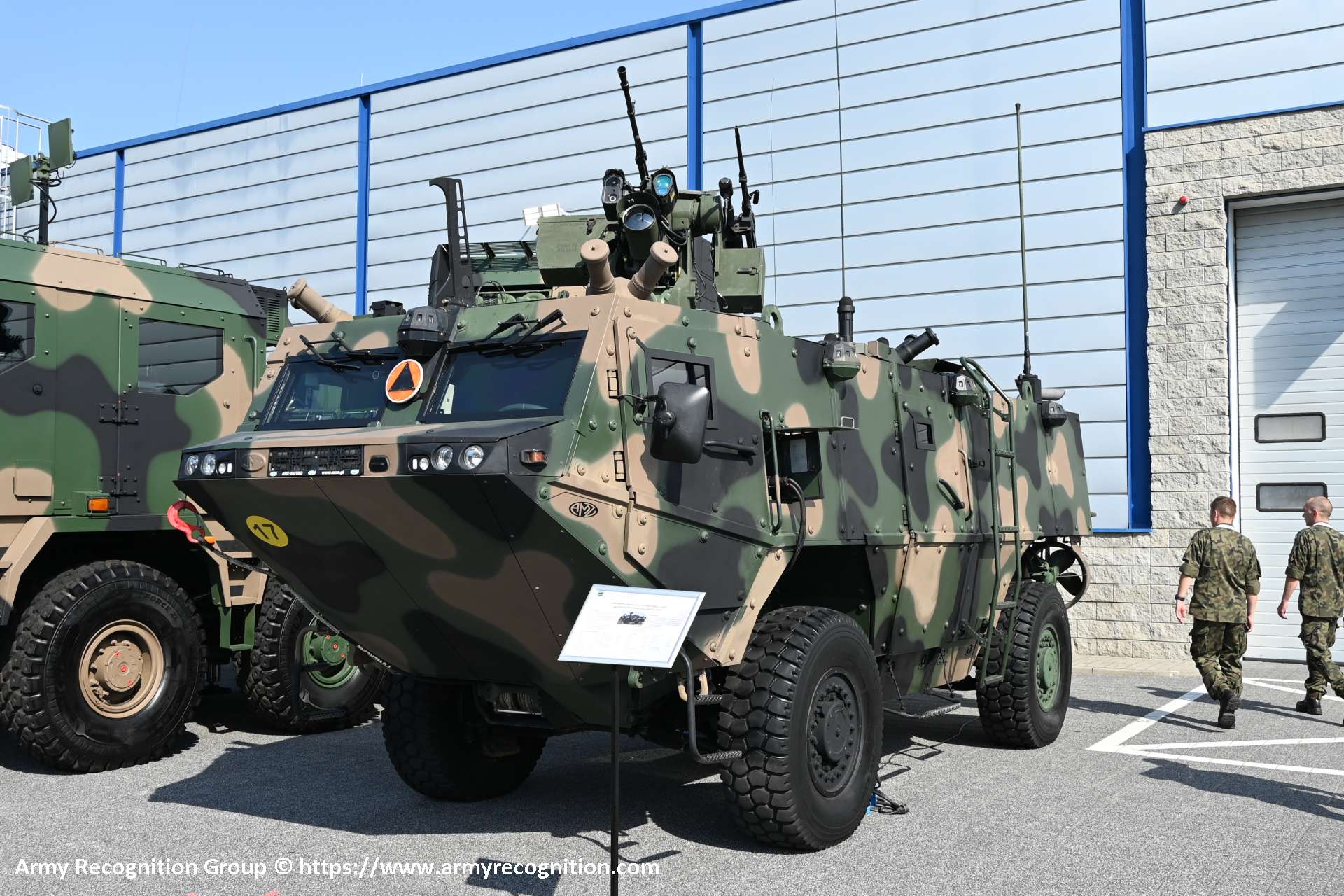
New LOTR 4x4 reconnaissance vehicle for the Polish army displayed for the first time at MSPO 2024, defense exhibition in Kielce, Poland. (Picture source: Army Recognition Group)
On August 14, 2024, the Polish Armaments Agency (AA), acting on behalf of the State Treasury, announced a contract with AMZ Kutno for the production of 28 LOTR 4x4 light armored reconnaissance vehicles. This agreement, valued at PLN 800 million (USD 206 million), includes a logistics and training package, with deliveries expected between 2026 and 2028. The deal is part of a broader framework agreement signed in February 2024 that includes procuring 286 LOTR vehicles through 2035.
The LOTR is an amphibious, two-axle, off-road vehicle that handles challenging terrain and water obstacles. It features an all-wheel-drive system with a 4x4 configuration, offering excellent mobility in difficult environments. The vehicle can transport five reconnaissance soldiers and their equipment, making it ideal for patrol reconnaissance missions, providing on-board weapon fire support, and combating low-flying air targets.
Key technical specifications of the LOTR include a weight of 15,500 kg, a length of 7.62 m, a height of 3.13 m, and a width of 2.55 m. The vehicle’s wheelbase measures 3.45 m. It is powered by a 240 kW engine, capable of reaching a top speed of 90 km/h on paved roads and 40 km/h off-road. The vehicle has a maximum range of 600 km on paved roads and 300 km off-road.
The LOTR boasts impressive maneuverability, with an approach angle of up to 40° and a departure angle of up to 84°. It can tackle a maximum lateral tilt of 17° and a wading depth of 1.5 m, making it suitable for diverse terrains. The vehicle is armed with a 12.7 mm wkm NSWT machine gun and a 7.62 mm km UKM-2000 machine gun, providing substantial firepower for reconnaissance and defensive operations.
With its advanced design and capabilities, the LOTR is expected to significantly enhance the Polish Army’s reconnaissance abilities, offering improved mobility, protection, and firepower for its units. The vehicle’s introduction is a critical element in Poland’s broader defense strategy, supporting the modernization and expansion of its armed forces in the years to come.
Read more: Polish Army Unveils New Light Reconnaissance Armored Vehicle LOTR at MSPO 2024
- Breaking News: Russia Delivers New Batch of T-90M Proryv Tanks to Russian Army for Deployment in Ukraine
- Spain Confirms Delivery of Additional HAWK Missile Defense System to Ukraine Amid Escalating Conflict
- US Announces New Military Aid for Ukraine Including M113 APCs - Bradley IFVs and MRAP Combat Vehicles
- Germany Clarifies its Delivery Schedule for 12 New PzH 2000 Howitzers to Ukraine