
- Details
- Written by: Vandenbosch
- Category: 2024
- Hits: 5505










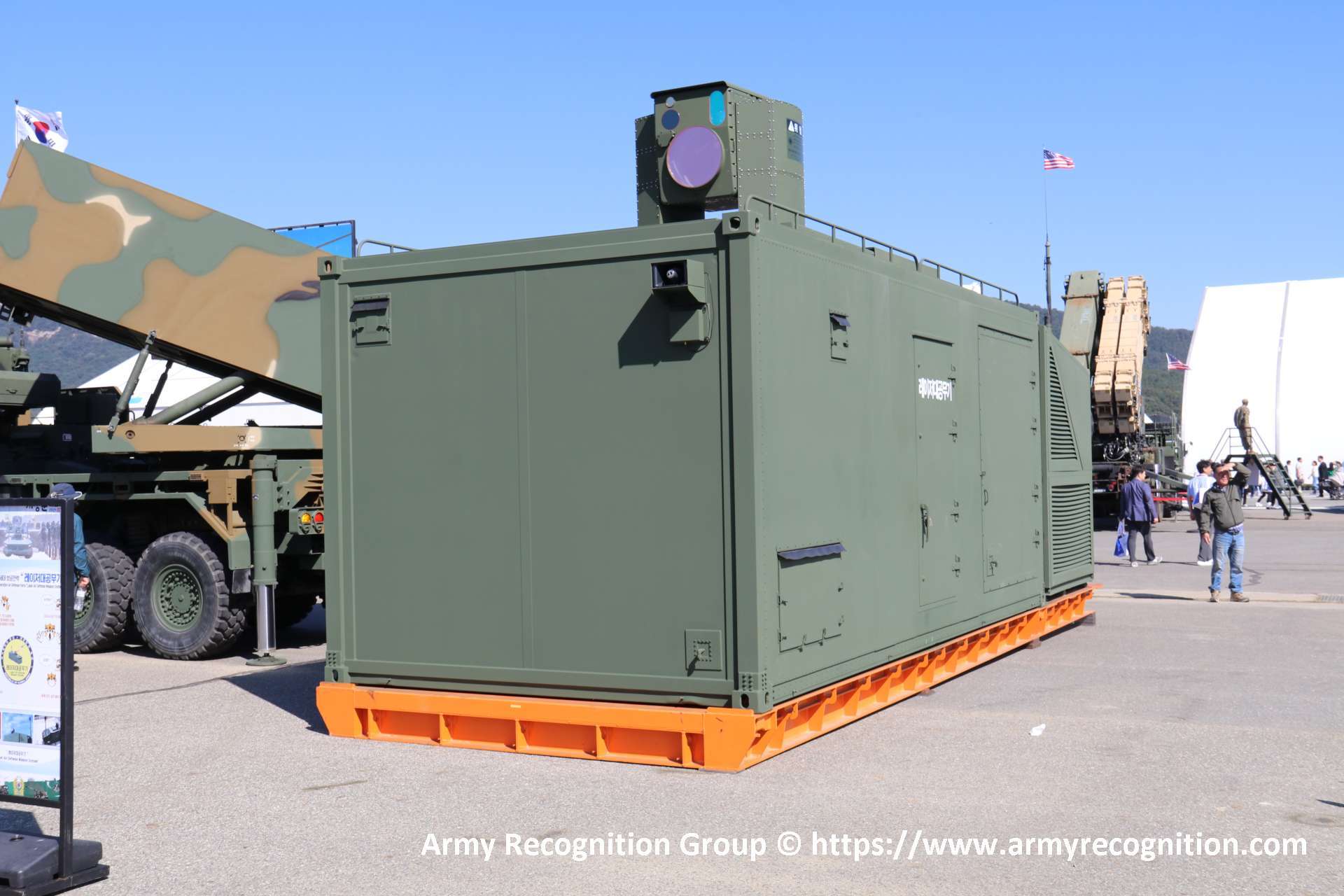
At the KADEX 2024 exhibition in South Korea, the presentation of the Block-I laser system marks a turning point in anti-drone defense capabilities. This system, developed by South Korea's Defense Acquisition Program Administration (DAPA), was designed to neutralize small drones and multicopters at short range using high-precision laser technology. The Block-I stands out due to its low operational cost, with each shot estimated to cost only $1.50.
Follow Army Recognition on Google News at this link
The presentation of the Block-I laser system at KADEX2024. (Picture source: Army Recognition)
The system measures 9 meters long, 3 meters wide, and 3 meters high, and consists of a structure resembling a shipping container with a laser mounted on top, along with a tracking or radar device positioned on the side. This invisible and silent technology represents a major advancement in the field of energy weapons, requiring neither separate ammunition nor reloading, only continuous electrical power.
Developed over five years with an investment of more than $63 million, the Block-I successfully passed live-fire tests in April 2023, achieving a 100% success rate in destroying its targets. Its effectiveness lies in its ability to quickly shoot down drones, a growing threat in many recent conflicts, particularly in Ukraine and the Middle East. These drones, sometimes purchased online at low prices, have proven their capacity to cause significant damage to expensive military equipment such as tanks, making the development of economical and efficient defense systems essential.
The Block-I fits this logic by offering a low-cost solution against cheap drones, compared to current defense systems that rely on missiles or other technologies, each costing tens of thousands of dollars per strike. In a context where the increasing use of drones is shifting the economic balance between offense and defense, this system could transform how militaries respond to these threats.
South Korea has now become the first country to publicly admit it will deploy a mass-produced laser system, a milestone in anti-drone defense. Over time, DAPA plans to develop a Block-II system with improved range and power, capable of targeting larger threats such as aircraft and ballistic missiles, promising to become a key component of future air defense systems.
This development is part of a global trend where several nations are investing in directed-energy weapons. Countries like the United Kingdom and the United States have also developed prototypes of laser systems, but none have yet announced large-scale production or deployment. For example, the British Dragonfire system, recently presented, aims to defend against missiles and aircraft at a cost of around $13 per shot, though no service entry date has been confirmed.
The Block-I, however, is ready to enter production and be deployed, positioning South Korea as a pioneer in this technological domain. Its ability to provide low-cost air defense could not only protect its infrastructure and equipment but also become an attractive export for countries facing similar threats.
- Details
- Written by: Triffaux
- Category: 2024
- Hits: 5418
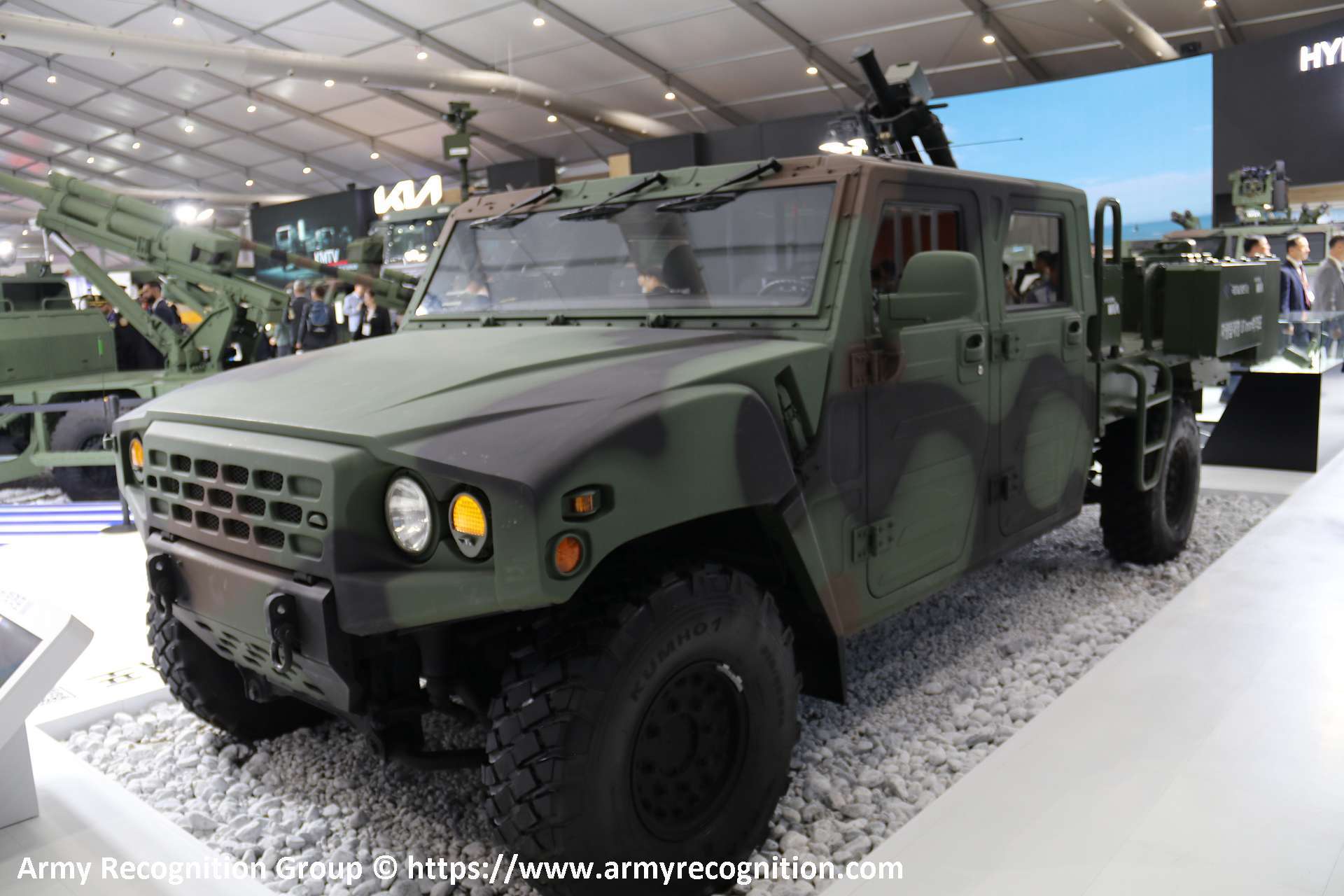
At the KADEX 2024 exhibition, currently taking place in South Korea from October 3 to 7, the KLTV 4×4 light armored vehicle long chassis version with an 81mm self-propelled automatic laying mortar, developed by Kia, is being highlighted as one of the major innovations in the field of light artillery systems. Designed to provide increased mobility and rapid, efficient firing capabilities, this mortar system perfectly meets the needs of modern ground forces seeking flexibility and responsiveness. Its air transportability represents a strategic advantage for airborne troops, allowing for quick deployment across various operational theaters. Additionally, it is particularly well-suited for special forces, offering a mobile and efficient artillery support solution in challenging environments.
Follow Army Recognition on Google News at this link
KIA 81mm Mortar System Mounted on KLTV 4×4 Light Tactical Vehicle (Picture source: Army Recognition)
Hyundai WIA and Kia have partnered to develop this innovative mobile mortar system, mounted on the KLTV 4x4 light armored vehicle. This vehicle, designed to be both resilient and maneuverable, is capable of carrying two different types of 81mm mortars, each offering advanced features to adapt to a variety of operational missions in the field.
The first system, a vehicle-mounted 81mm mortar, can fire up to 30 rounds per minute for a duration of 15 minutes. This system offers a maximum firing range of 6,325 meters and a minimum range of 75 meters, providing great flexibility in terms of engagement distance. One of the key features of this system is its automatic gun laying capability, which can be achieved in just 10 seconds, enabling a rapid response on the battlefield. Additionally, both the vehicle and the mortar system are fully air-transportable, making them ideal for operations requiring rapid deployments in hard-to-reach areas.
The second available mortar is the KMS114, another 81mm mortar that shares the same firing rate, maximum, and minimum range specifications, with a maximum rate of 30 rounds per minute. This mortar, weighing 34 kg, is also mounted on the 4x4 KLTV vehicle, allowing for automatic gun laying in 10 seconds and offering the same air transport compatibility.
This tactical vehicle, in addition to accommodating these two mortar systems, is distinguished by its ability to maneuver across difficult terrain. It is equipped with an Inertial Navigation System (INS), which allows the vehicle to accurately position itself during operations. Stability during firing is enhanced by the use of a hydro-pneumatic buffer system, which reduces recoil and ensures high precision in engagements.
In terms of overall performance, the KLTV stands out with a top speed of 130 kilometers per hour and a range of 560 kilometers, enabling military forces to cover large distances quickly while maintaining operational effectiveness. Powered by a 225-horsepower engine, the vehicle can carry a total weight of seven tons, including the crew, ammunition, and the mortar system. This vehicle is designed to accommodate a reduced crew of three members: a commander, a gunner, and a loader/driver, ensuring smooth and efficient operation.
The sophisticated armament control system includes a controller, a power supply system, and a firing data display, providing operators with a comprehensive interface to optimize firing operations. Additionally, a shell detection sensor improves the safety and efficiency of loading by automatically detecting rounds as they are introduced into the system.
The entire system reflects Hyundai WIA's focus on operational flexibility and the integration of advanced technologies. When necessary, operators can manually switch between different cannon operating modes, ensuring increased versatility in situations where automation may be compromised.
In conclusion, the 81mm mobile mortar mounted on the Kia 4x4 KLTV vehicle, showcased at KADEX 2024, represents a major advancement in mobile artillery. With its ability to operate with a reduced crew, its air transport compatibility, and its precision in engagements, this system is poised to become a strategic asset for modern armed forces requiring flexible and mobile firepower.
- Details
- Written by: Jérôme Brahy
- Category: 2024
- Hits: 7726
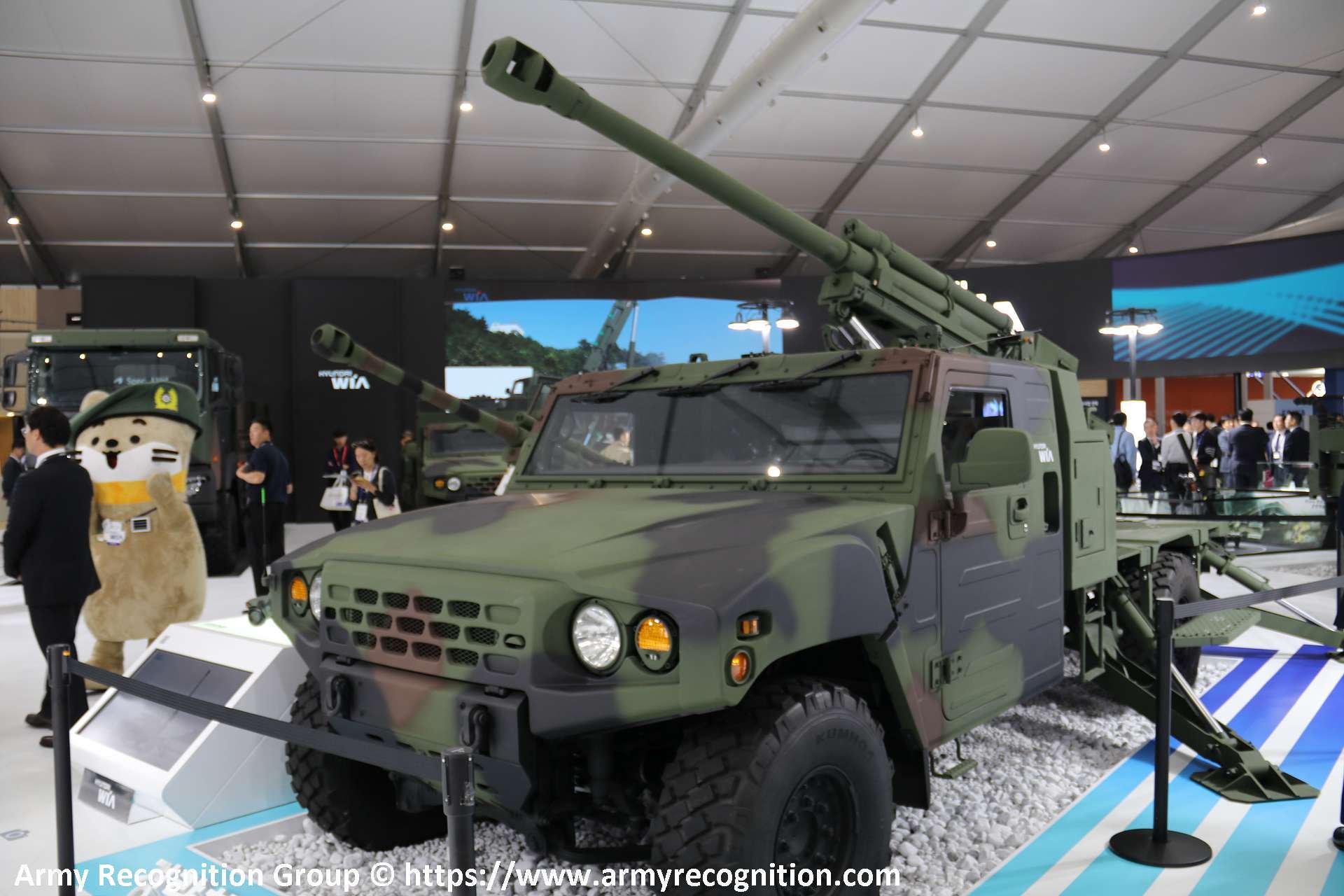
At the South Korean KADEX 2024 exhibition, Hyundai WIA presented a mobile 105mm light self-propelled howitzer, designed to be mounted on the Korea Light Tactical Vehicle (KLTV). This system is intended to provide fire support for light infantry brigades or airborne operations. It is optimized for rapid mission execution, utilizing shooting data links and alignment automation to enhance operational efficiency.
Follow Army Recognition on Google News at this link
Based on the Korea Light Tactical Vehicle (KLTV), the Artillery Vehicle is armed with the KH178 105mm gun, which has a 37-caliber barrel and uses a recoil mechanism with a hydraulic-pneumatic shock absorber. (Picture source: Army Recognition)
This self-propelled howitzer system is capable of relocating after firing, employing the "shoot and scoot" tactic, and can be transported by air using helicopters. It is designed to minimize personnel requirements, with four crew members for battery command and four for artillery operations.
The system consists of three key vehicles: the Fire Command Vehicle, the Artillery Vehicle, and the Ammunition Vehicle. These vehicles work in coordination to provide the necessary support and firepower for the system’s operations.
The Fire Command Vehicle, based on the Korea Light Tactical Vehicle (K152), is responsible for mission assignment, calculation of firing specifications, and issuing firing orders. It operates with a crew of four: a leader, a fire controller, a radio operator, and a driver. Onboard systems include the Battery Tactical Command System (BTCS), the Battalion Command and Control System (TMMR), and other communication tools. This vehicle has seating for eight and is powered by a 225-horsepower engine with an automatic transmission, capable of a 400-kilometer range.
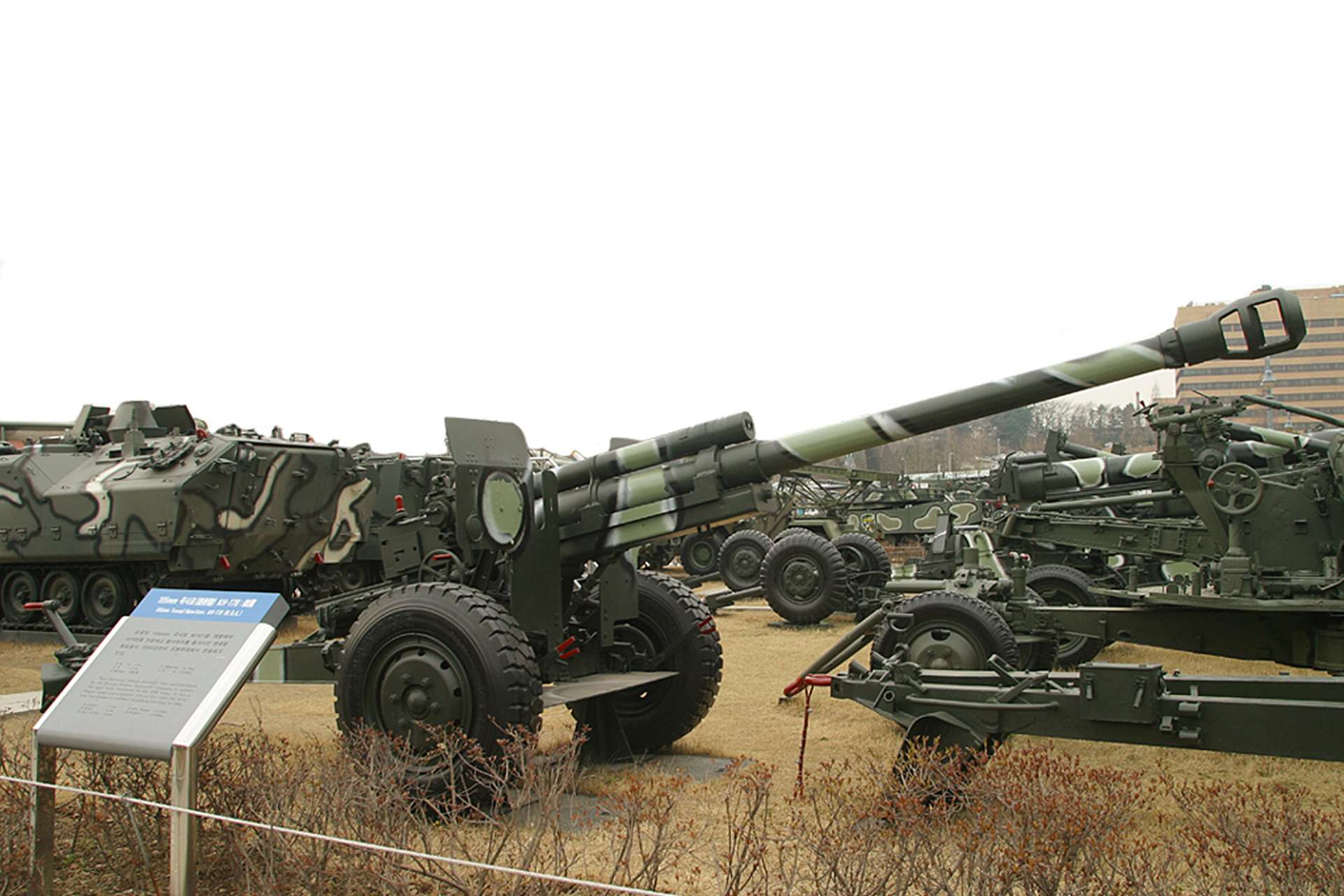
Introduced in 1983, the KH178 is a South Korean 105mm towed howitzer designed for long-range fire support with a maximum range of 18 kilometers. (Picture source: Wikimedia)
The Artillery Vehicle, weighing 7 tons, is crewed by a gun section leader and a gunner. It is armed with the KH178 105mm gun, which has a 37-caliber barrel and uses a recoil mechanism with a hydraulic-pneumatic shock absorber. The vehicle is equipped with onboard BTCS and TMMR systems, as well as GPS and INS for automatic fire control. The artillery system is capable of remote operation, with the vehicle stabilized for launching. The gun can elevate between -5 and 65 degrees and traverse 270 degrees, with a firing rate of up to 10 rounds per minute. The vehicle can achieve a maximum range of 14.7 kilometers with standard ammunition and 18 kilometers with rocket-assisted projectiles (RAP).
The Ammunition Vehicle, also based on the Korea Light Tactical Vehicle, has a crew of two, responsible for loading and carrying 105mm ammunition. This vehicle supports the artillery vehicle during operations, ensuring continuous firing capability. It shares the same mobility features as the artillery vehicle.
Together, these vehicles form the complete system for the 105mm light self-propelled howitzer, designed to support light and airborne units by providing firepower with minimal personnel and enhanced mobility.
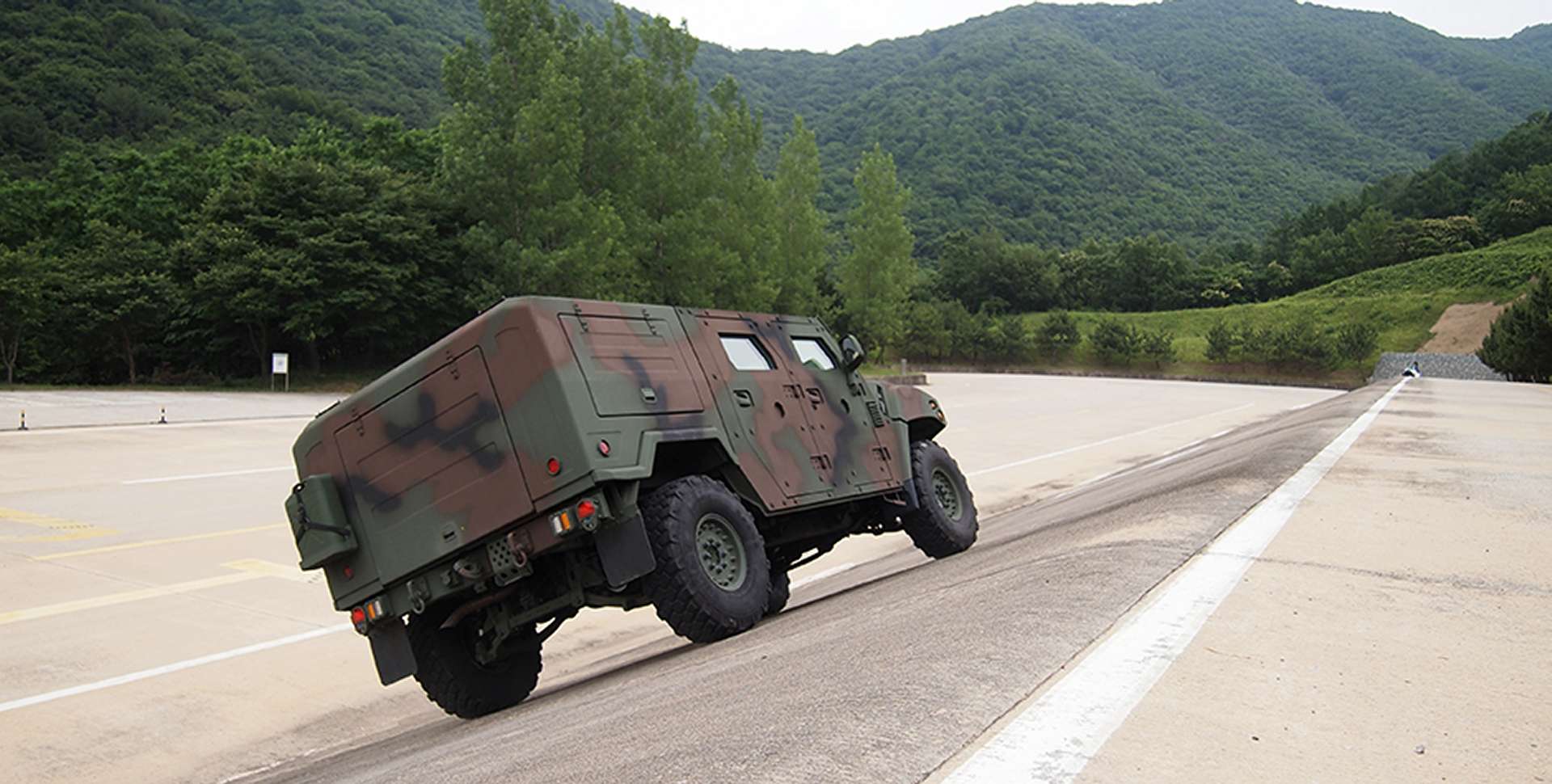
The KLTV is equipped with ceramic and polymer matrix composite armor, providing protection against small arms fire, and can be upgraded to meet STANAG 4569 Level 3 protection standards. (Picture source: Kia Motors)

- Details
- Written by: Halna du Fretay
- Category: 2024
- Hits: 10471
At the KADEX 2024 exhibition in South Korea, Hanwha Aerospace introduces the K9A3, an advanced, unmanned version of the renowned K9 Thunder 155mm self-propelled howitzer. Developed to meet the requirements of Manned-Unmanned Teaming (MUM-T) missions, the K9A3 represents a significant step forward in the evolution of modern artillery systems. It incorporates various enhancements, including a 155mm barrel with a 58-caliber length, allowing it to achieve a firing range exceeding 80 km, a notable improvement over previous models. The K9A3 is developed under the Ultra Long Range Cannon System Extended Range Program and is comparable to the American M1299 Iron Thunder.
Follow Army Recognition on Google News at this link
The K9A3 is engineered for autonomous driving and automated positioning, allowing for efficient management of mobility and operations (Picture source: Army Recognition)
Additionally, the K9A3 is viewed as more of a strategic platform compared to the original K9. It is expected to significantly enhance long-range strike capabilities for field armies. The K9A3 is fully automated and optimized for various types of specialized artillery munitions and shell charges, featuring a long barrel designed for modern battlefield requirements.
One of the key features of this version is its ability to be driven and operated remotely. The K9A3 is engineered for autonomous driving and automated positioning, allowing for efficient management of mobility and operations. It can be controlled from a remote vehicle capable of managing up to three howitzers simultaneously, optimizing artillery support while minimizing the exposure of troops to battlefield hazards. This capability to limit human risks while maximizing firepower makes the K9A3 well-suited for network-centric warfare, where personnel protection is crucial.
The unmanned capabilities of the K9A3 also help reduce the operational crew size, thereby increasing troop survivability. By integrating artificial intelligence-based advancements, the system is designed to enhance the efficiency and precision of artillery operations in complex environments.
The K9A3 is part of the ongoing evolution of the K9 platform, which is already in service in several countries, including South Korea, Poland, Norway, Estonia, Finland, Egypt, India, Turkey, and Australia. It should also be noted that the K9 has been incorporated into artillery acquisition programs in Romania and the United Kingdom. With the K9A2 program currently in its final stages, the development of the K9A3 is expected to gain momentum.
Countries like Poland, India, and Egypt are particularly well-suited to adopt the K9A3, given their needs for long-range artillery systems and their established relationships with the K9 platform.
The K9A3 represents a major development in self-propelled artillery and reflects Hanwha Aerospace's commitment to maintaining its position in the sector. Its export potential is considerable, as evidenced by the significant international sales of previous versions. The ongoing development of this platform, combined with its enhanced technical features, positions it as a key player in the global artillery systems market.
- Details
- Written by: Vandenbosch
- Category: 2024
- Hits: 45312
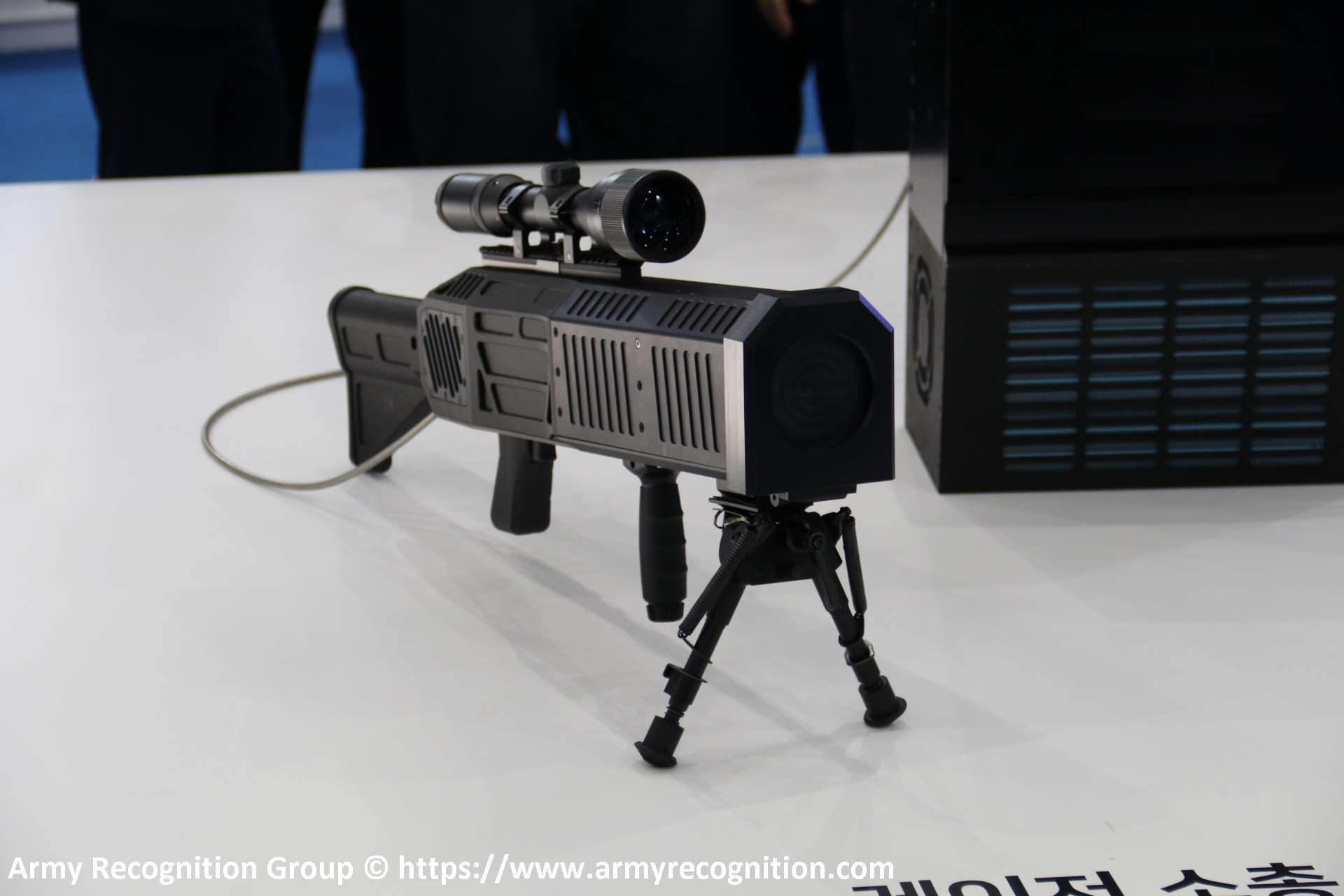
During the KADEX 2024 exhibition, LIG Nex1 presented an innovative piece of equipment designed for modern soldiers: the laser rifle. This rifle, both compact and lightweight, stands out for its advanced technical features aimed at enhancing stealth and efficiency in military operations.
Follow Army Recognition on Google News at this link
LIG Nex1 presented the laser rifle at KADEX2024. (Picture source: Army Recognition)
KADEX 2024 is an international defense exhibition held in South Korea, bringing together major players from the global arms and security industry. This event offers specialized companies like LIG Nex1 the opportunity to showcase technological innovations in defense, such as combat systems, surveillance solutions, and cutting-edge weapons. KADEX also provides a platform for establishing strategic partnerships between governments and industries while allowing visitors to discover the latest advancements in military and security technologies.
Designed to be easily operated by individual soldiers, LIG Nex1's laser rifle is equipped with advanced technologies, such as non-line-of-sight (NLOS) laser generation. This capability allows the rifle to strike targets that are not directly visible, providing a tactical advantage on the battlefield, particularly in complex environments where visibility is limited.
Among its key features, stealth is essential. The rifle emits an extremely low noise, allowing soldiers to remain discreet during operations. Additionally, a low-noise cooling system keeps the weapon at an optimal temperature, preventing overheating during prolonged use.
Thanks to its high-power laser technology (kilowatt-level), this rifle combines lightness and power, offering soldiers increased efficiency without compromising maneuverability. Its discretion and effectiveness make it an essential tool for operations requiring precision and stealth.
Founded in 1976, LIG Nex1 is a South Korean company specializing in the development and manufacturing of advanced weapons systems. It offers a wide range of defense products, from precision-guided munitions to electronic warfare systems, drones, and tactical communication systems. Based in Yongin, South Korea, LIG Nex1 is a major supplier to the South Korean armed forces and also exports its technologies worldwide.
LIG Nex1 is a key player in the defense sector, focusing on technologies to meet the current and future needs of the armed forces. Its innovations, like the laser rifle, demonstrate its commitment to providing solutions adapted to the demands of modern battlefields. With strategic partnerships and an international presence, the company continues to play a crucial role in the evolution of military technologies.
Read more: South Korean Manufacturer LIG Nex1 Unveils its Laser Rifle at KADEX 2024
- Details
- Written by: Jérôme Brahy
- Category: 2024
- Hits: 8369
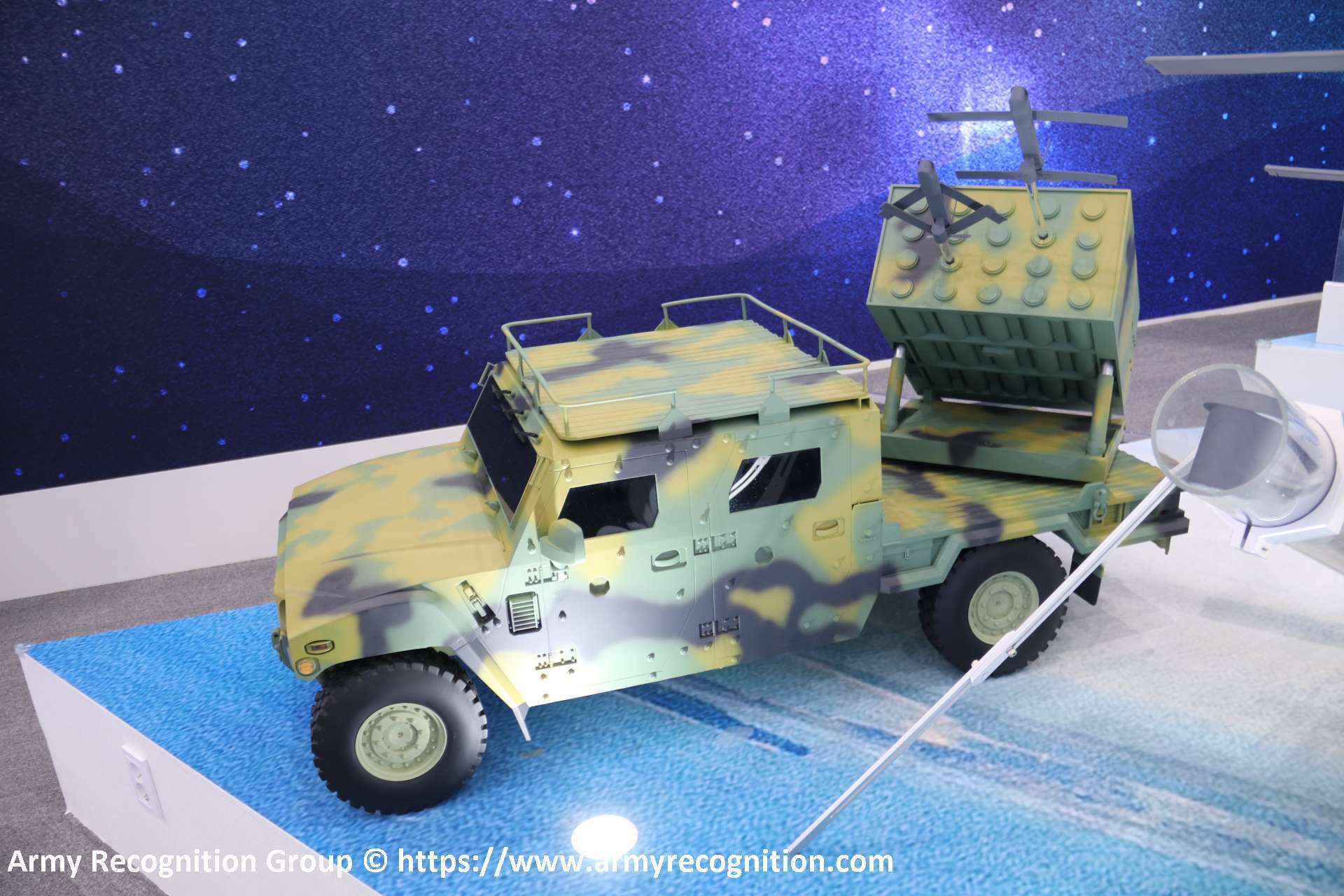
At the Korea Army International Defense Exhibition (KADEX) 2024, South Korean companies Korea Aerospace Industries (KAI) and Kia Motors presented a new drone carrier vehicle that combines the Kia K151 Raycolt with KAI's Compact & Multi-Mission Modular UAV (CMMAV). Reflecting a global trend, this collaboration aims to develop a vehicle designed to enhance the capabilities of unmanned aerial systems for a range of military applications.
Follow Army Recognition on Google News at this link
This new drone carrier vehicle combines the Kia K151 Raycolt with KAI's Compact & Multi-Mission Modular UAV (CMMAV) and has the capability to launch up to 20 drones. (Picture source: Army Recognition)
Korea Aerospace Industries (KAI)’s CMMAV is a modular unmanned aerial vehicle (UAV) intended for multiple missions. The system is characterized by its modularity, allowing for quick payload changes based on mission requirements. Its versatility enables it to carry out intelligence, surveillance, reconnaissance (ISR), communications relay, and strike missions. The CMMAV is designed to be launched from canisters, making it suitable for deployment by ground, naval, and air forces. It incorporates swarm technology to allow for coordinated drone operations in different environments.
The CMMAV features a tube-based launch system, precision flight controls, and an integrated Command, Control, Communications, Computers, and Intelligence (C4S) fire control system. These capabilities are designed to meet the demands of various operational scenarios. Although performance metrics such as altitude, speed, and endurance have not been detailed, the CMMAV's multi-modular payload capacity is expected to support a range of military functions.
Kia’s K151 Raycolt, introduced to replace older vehicles such as the KM420 and KM450, serves as the platform for the new drone carrier vehicle. First displayed in 2015 and entering production in 2016, the Raycolt has been used by the Republic of Korea Army in peacekeeping operations and has been exported to countries such as Poland and the Philippines.
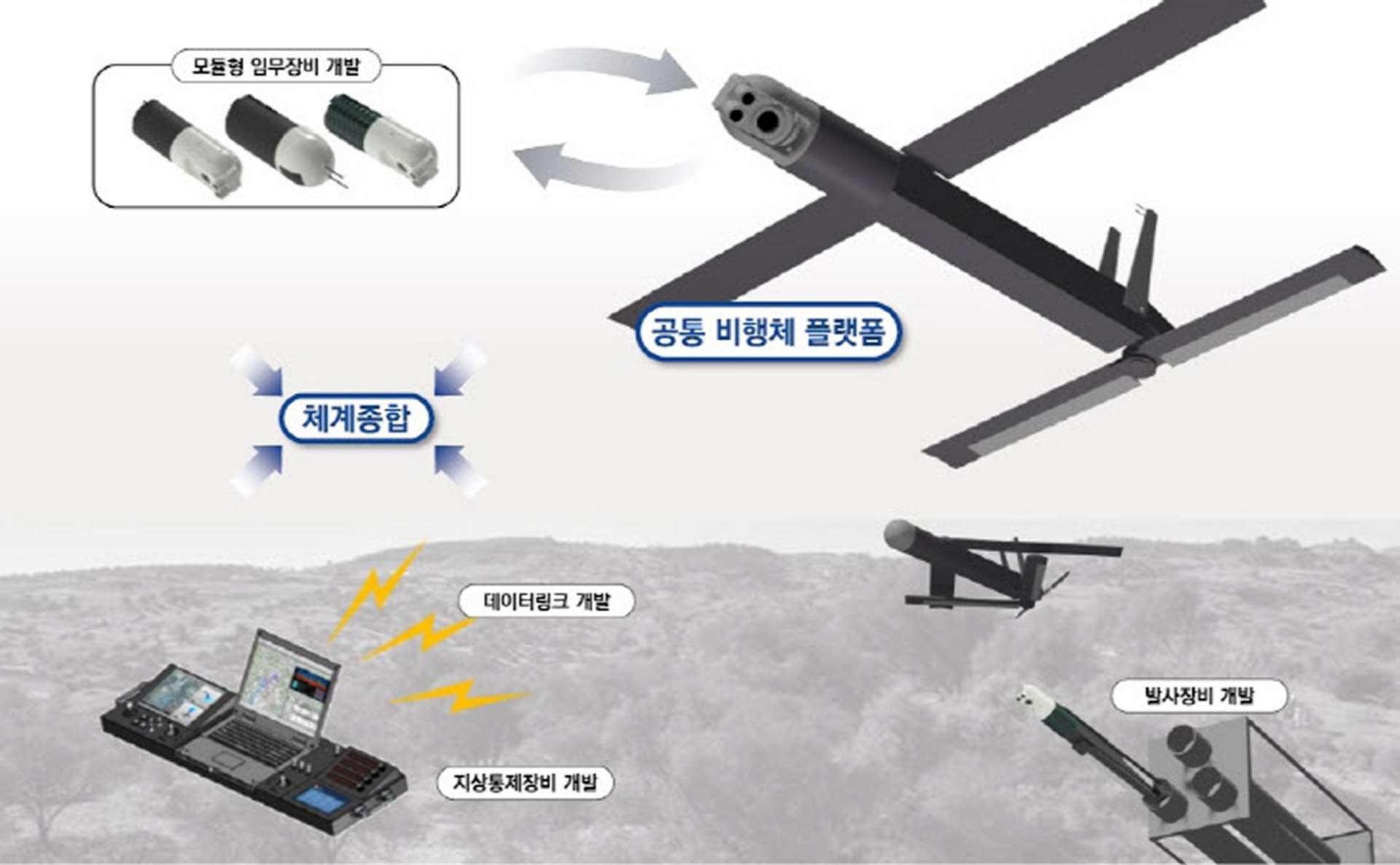
The Compact & Multi-Mission Modular UAV (CMMAV) is a system that allows for quick payload changes based on mission requirements, making it suitable for intelligence, surveillance, reconnaissance (ISR), communications relay, and strike missions. (Picture source: KAI)
The K151 Raycolt is available in multiple configurations, including the K151 weapon carrier and the K152 armored personnel carrier, which can transport up to seven soldiers. Other variants include the K153 armored reconnaissance vehicle and the K154 artillery observation vehicle. Long-wheelbase versions, such as the KLTV240 shelter cargo truck and the KLTV243 general-purpose cargo truck, provide further versatility. The vehicle’s adaptability includes different armor and weapon systems depending on mission requirements.
The K151 Raycolt weighs between 5,700 and 7,000 kg, depending on the variant, and is powered by a 3.0L Hyundai S2 V6 diesel engine that produces 225 hp. The vehicle’s length ranges from 4,900 mm to 6,050 mm, with a ground clearance of up to 420 mm. It can reach a top speed of 130 km/h and has an operational range between 560 and 640 km. It is equipped with ceramic and polymer matrix composite armor, providing protection against small arms fire, and can be upgraded to meet STANAG 4569 Level 3 protection standards. The vehicle can be armed with various weapon systems, including machine guns, grenade launchers, and anti-tank missiles.
This development is comparable to a similar project reportedly underway in Russia, where a Multiple Launch Drone System (MLDS) based on the 6x6 Kamaz 5350 Patrol armored vehicle is being developed. This system is designed to launch Lancet kamikaze drones, also known as Izdelie-53, via 16 transport-launch containers. The MLDS allows for the launch of up to 64 Lancet drones in rapid succession, using a tube-based method instead of the current catapult launch system.
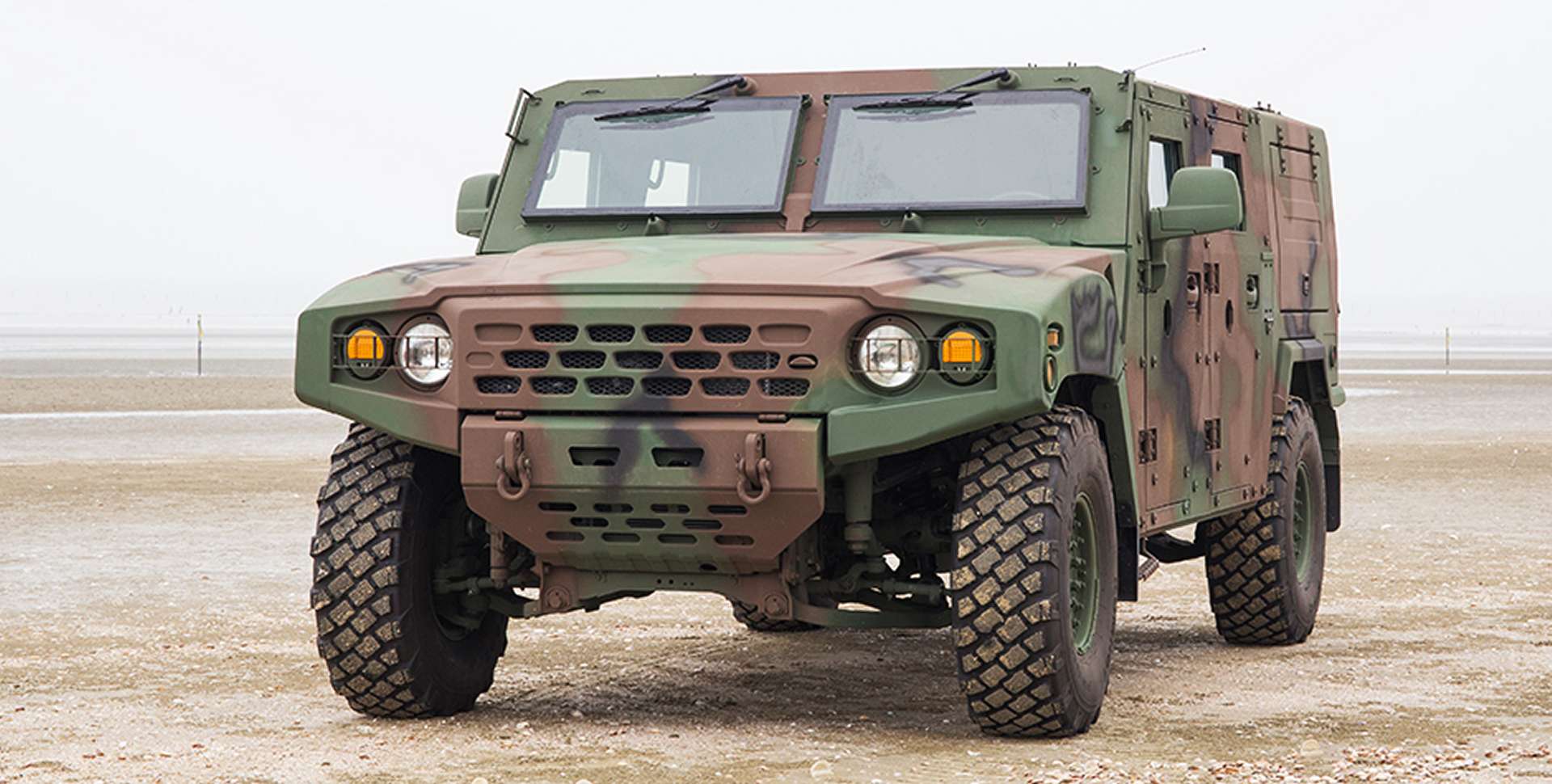
First displayed in 2015 and entering production in 2016, Kia’s K151 Raycolt, introduced to replace older vehicles such as the KM420 and KM450, serves as the platform for the new drone carrier vehicle. (Picture source: Kia Motors)
The MLDS prototype includes dual UAV operator control stations and utilizes swarm technology for its drones. The Lancet drones are equipped to share intelligence, autonomously identify targets, and conduct coordinated attacks. The Kamaz 5350 platform provides mobility for the system, while the Lancet drones, developed by Zala Aero, are capable of speeds up to 300 km/h and have a range of 40 km. These drones are designed to carry various types of warheads, such as high-explosive or thermobaric, and can engage targets, including intercepting enemy UAVs mid-flight.
Similar to Russia's efforts, the partnership between GM Defense and Mistral Inc. to integrate UVision's Hero-120 loitering munitions into the Infantry Squad Vehicle (ISV) could provide additional capabilities for U.S. military forces. Equipped with four launch tubes for the Hero-120, this modification combines the vehicle's mobility with a drone system that serves multiple purposes, including reconnaissance and electronic warfare, but can also function as a loitering munition. Selected by the United States Army in 2020, the ISV can carry nine infantrymen, and this new variant offers increased flexibility in both mounted and dismounted operations by incorporating a precision strike capability.
- Details
- Written by: Triffaux
- Category: 2024
- Hits: 2845
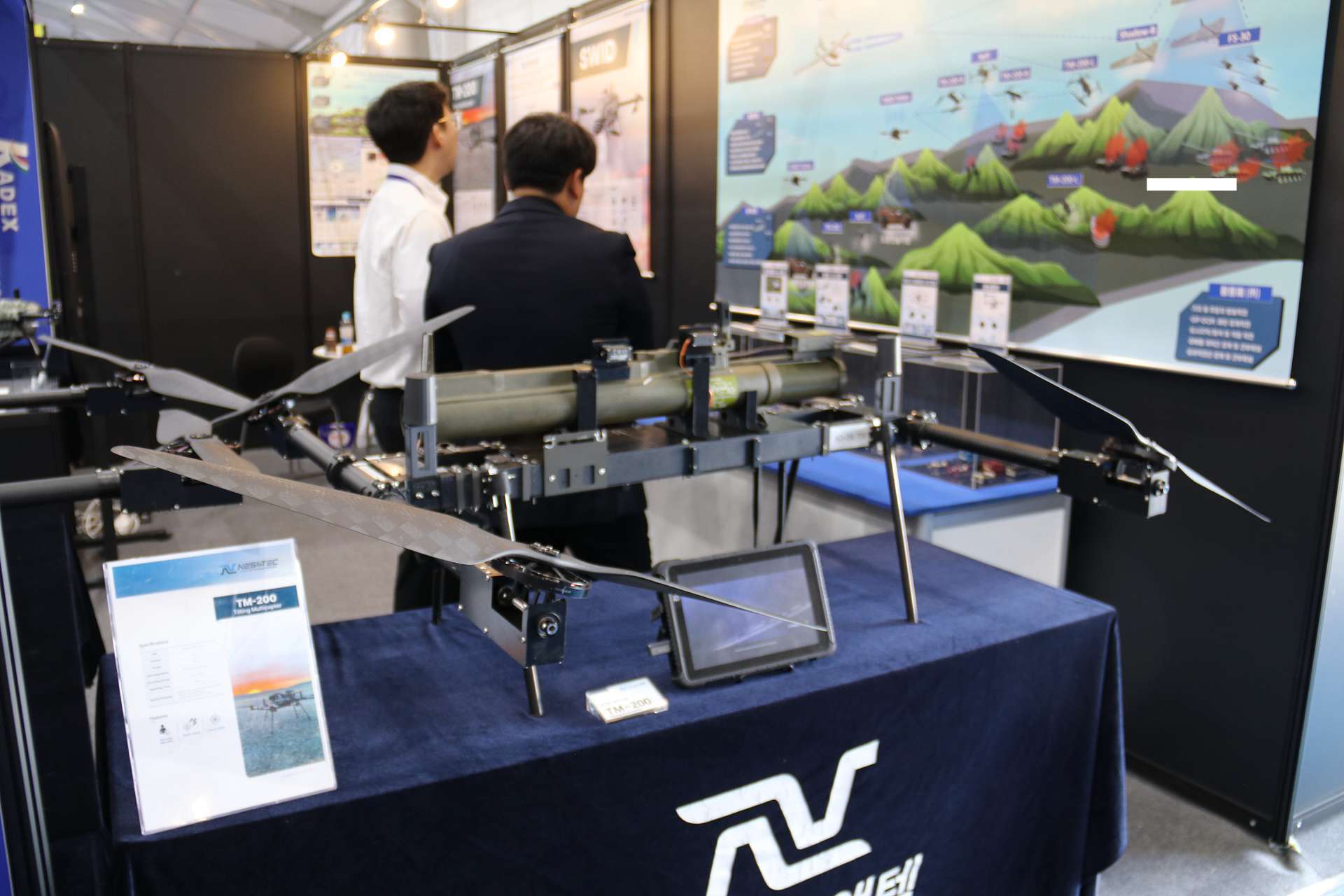
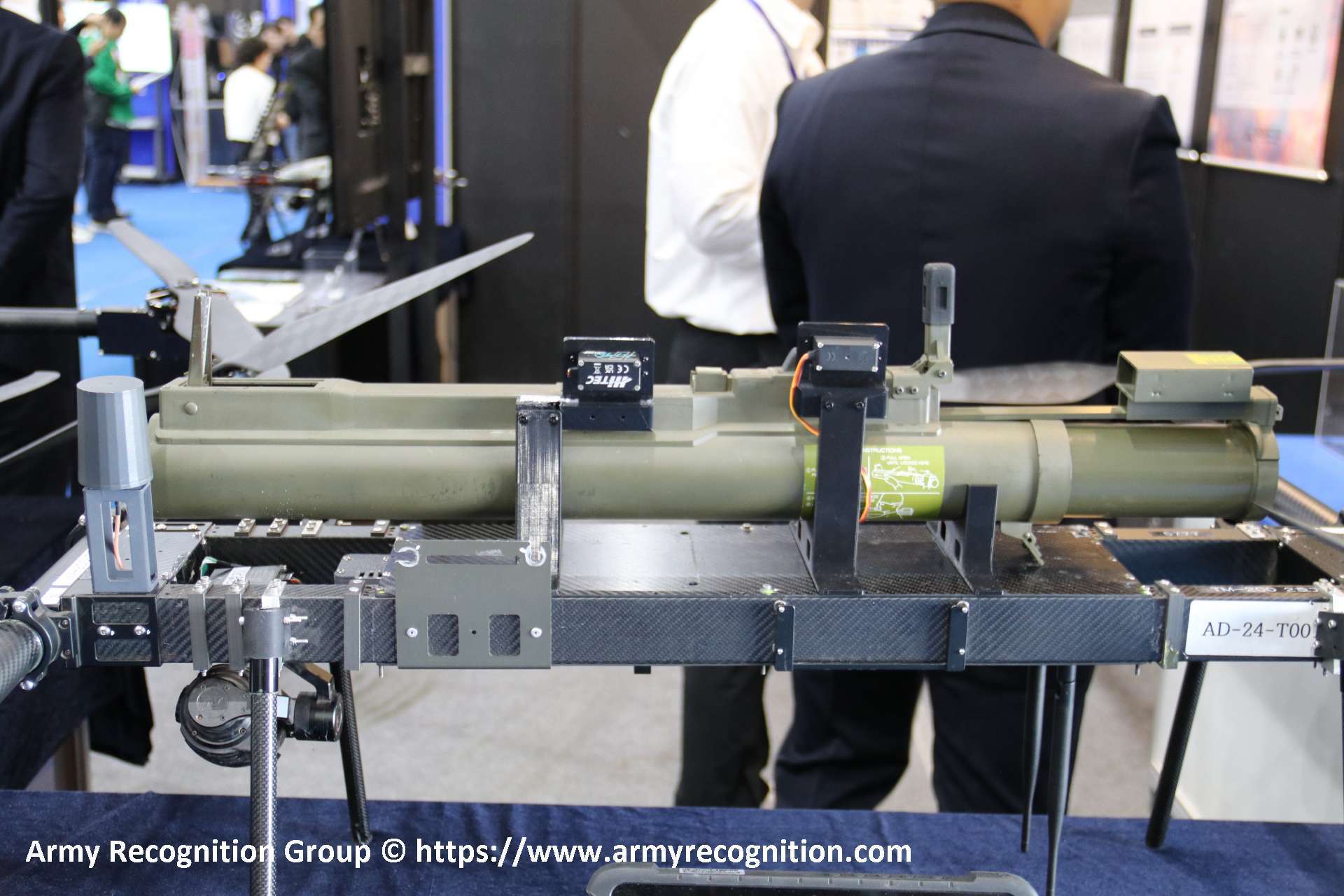
The Korea Army International Defense Exhibition, Kadex 2024, taking place from October 2 to 6, 2024, in South Korea, was marked by the presentation of the TM-200, an innovative multicopter developed by the South Korean company NES&TEC. This next-generation drone, designed for military and tactical missions, drew attention from participants due to its advanced technical features and operational potential in complex environments.
Follow Army Recognition on Google News at this link
NES&TEC TM-200 Tilting Multicopter Drone (Picture source: Army Recognition)
The TM-200 is a tilting multicopter, with compact dimensions (1420 mm in diameter and 500 mm in height), making it easily transportable while maintaining a payload capacity of 6 kg. With a total weight of 14 kg, it stands out for its relative lightness, while offering a cruising speed of 40 km/h in automatic mode. Thanks to its flight autonomy of up to 60 minutes and an operational range between 5 and 10 km, this drone is particularly suited for extended missions and deep reconnaissance operations.
One of the key features of the TM-200 is its ability to perform precise strikes thanks to its attitude control system, which allows for highly accurate targeting. Additionally, the drone is equipped with an integrated encryption module, ensuring confidentiality and secure communications throughout its missions.
The TM-200 is specifically designed for targeted attack missions and surgical strikes, particularly in tactically sensitive environments. With its capability to be operated by a single individual, this drone is easy to deploy, making it a valuable asset for military forces seeking to enhance their field responsiveness.
At Kadex 2024, the TM-200 demonstrated its capabilities as a modern and efficient solution for missions requiring precision and reliability. Its presentation garnered significant interest among international military delegations present at the event, positioning NES&TEC as a key player in the development of versatile tactical drones.
NES&TEC TM-200 Tilting Multicopter Drone (Picture source: Army Recognition)
- Details
- Written by: Halna du Fretay
- Category: 2024
- Hits: 2658
NovaKos, a company specializing in AI-integrated surveillance systems, is participating in KADEX 2024, South Korea's largest land defense exhibition. Held from October 2 to 6 at Gyeryongdae, the headquarters of the Army, Navy, and Air Force, the event aims to showcase South Korea's defense capabilities on the global stage. During this exhibition, NovaKos presents several innovative products, including its "AI Mobile Integrated Guard System" (AMIGS).
Follow Army Recognition on Google News at this link
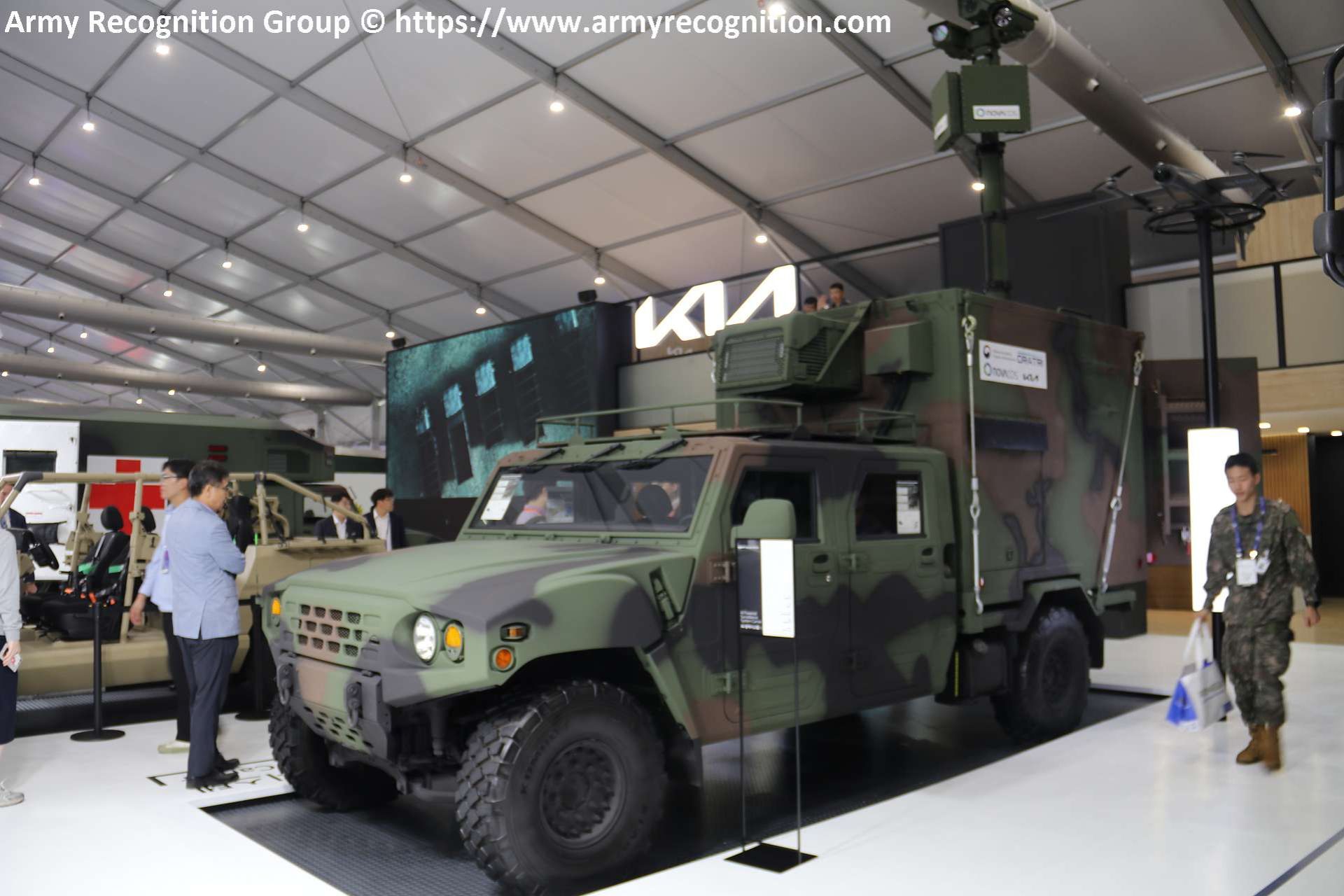
These vehicles can also be remotely controlled if necessary, enhancing the efficiency of surveillance operations (Picture source: Army Recognition)
AMIGS is designed to provide advanced surveillance in various military environments and is distinguished by its integration of multiple detection technologies. In addition to AMIGS, NovaKos is also showcasing a "Radar and AI-Based Surveillance System" for fixed installations, as well as radars used in remote-controlled weapon systems (RCWS), demonstrating its broad range of security solutions.
AMIGS delivers real-time information on targets detected and tracked by both radar and surveillance cameras. These data, enhanced by AI analysis, are displayed on a geographic information system (GIS) screen and two dedicated video monitors. The surveillance vehicles equipped with AMIGS can be controlled simultaneously from command vehicles or control rooms, offering maximum operational flexibility.
These vehicles can also be remotely controlled if necessary, enhancing the efficiency of surveillance operations. Unlike fixed systems, AMIGS, as a mobile surveillance system, can be rapidly and flexibly deployed in both wartime and peacetime, integrating with mobile combat units to carry out field missions.
The system features a dual-band AESA radar (X and S bands), capable of detecting and tracking over 500 targets simultaneously within a 20 km radius and a 180-degree frontal field of view. AMIGS overcomes the limitations of traditional camera-only systems by using three types of surveillance cameras: electro-optical (EO), mid-wave infrared (MWIR), and short-wave infrared (SWIR). The system remains fully operational even in adverse weather conditions, such as rain or fog, due to this combination of technologies. Additionally, AMIGS integrates a drone system for reconnaissance in areas not covered by ground sensors, making it a comprehensive mobile surveillance solution.
In parallel, NovaKos is also presenting its Radar and AI-Based Surveillance System, a fixed system already deployed in some coastal areas and guard posts (GOP) of the South Korean military. This system is also being adopted to protect strategic infrastructure, combining radars and cameras to ensure continuous surveillance. It uses an AI edge computing controller and an integrated platform to monitor and manage operations. If necessary, this system can incorporate existing surveillance equipment, ensuring maximum flexibility and adaptability.
NovaKos CEO Jo Sung-yun emphasized the importance of these technological advances, stating, "We strive to integrate various surveillance equipment into an AI-based platform to improve operational efficiency while significantly reducing operator fatigue. This also reduces the personnel required, making it an ideal system for armed forces facing recruitment challenges due to declining birth rates."
This innovative approach by NovaKos, along with the growing impact of small and medium-sized enterprises specializing in specific technological areas, contributes to the continuous growth of South Korea's defense sector (K-Defense). Through bold innovations, South Korea is strengthening its position as a leader in the global defense market, adapting to an increasingly complex and demanding strategic environment.

- Details
- Written by: Vandenbosch
- Category: 2024
- Hits: 5695
At the KADEX 2024 exhibition, Korean Air presented its autonomous drone system, the KUS-LW (Korean Air UAV System - Loyal Wingman). Designed to accompany manned aircraft in combat missions, this stealthy and versatile drone represents a significant advancement in autonomous aerial defense systems. The KUS-LW is positioned as a "loyal wingman," meaning it flies in formation with combat aircraft to assist them during critical operations.
Follow Army Recognition on Google News at this link
The KUS-LW (Korean Air UAV System - Loyal Wingman) at KADEX 2024. (Picture source: Army Recognition)
The development of the KUS-LW is part of South Korea's broader efforts to modernize its armed forces and strengthen its technological capabilities in the defense sector. Korean Air, known for its expertise in commercial aviation, has intensified its defense efforts in recent years, aiming to enter the rapidly growing market for autonomous military drones. The development of the KUS-LW began in response to the growing demand from armed forces for systems capable of supporting manned aircraft while minimizing risks for pilots.
This project has benefited from strategic partnerships between Korean Air and South Korean defense agencies, notably the Agency for Defense Development (ADD). The goal was to design a drone that would not only meet the current needs of the South Korean military but could also compete in the international market for autonomous combat drones.
The KUS-LW stands out for its ability to execute several types of missions, including ISR (Intelligence, Surveillance, Reconnaissance), strikes, escort missions, as well as electronic warfare (EW) operations. Its versatile role makes it an essential asset in modern combat, where responsiveness and flexibility are paramount. Another crucial feature of the KUS-LW is its high level of autonomy, allowing it to operate without direct human intervention for extended periods.
The KUS-LW’s ability to fly in formation with manned aircraft is one of its major strengths. This smooth integration between drones and piloted aircraft enables more precise tactical coordination during aerial operations. This system not only increases the effectiveness of air forces but also reduces risks for pilots by allowing drones to participate in the most dangerous missions.
The KUS-LW has impressive dimensions, with a length of 10.4 meters and a width of 9.4 meters. It is powered by a turbofan engine, giving it adequate speed and endurance for various missions, although precise figures regarding maximum speed, cruising speed, range, and endurance have not yet been officially disclosed during its presentation.
The KUS-LW represents a technological breakthrough for Korean Air and a valuable addition to air fleets looking for ways to enhance their capabilities while limiting risks for pilots. Thanks to its high level of autonomy, its multi-role capabilities, and its ability to operate in tandem with manned aircraft, it marks an advancement in the field of autonomous combat drones. The global defense market should closely follow the future developments of this drone, which could well become a key element of tomorrow’s air forces.
Read more: South Korea Continues to Innovate with its KUS-LW Unmanned Aerial Vehicle

- Details
- Written by: Halna du Fretay
- Category: 2024
- Hits: 4468
On October 1, 2024, Lithuanian Minister of National Defense, Laurynas Kasčiūnas, reaffirmed in an interview with the television channel LRT the government's intention to order Leopard 2 main battle tanks by the end of the year. This statement marks a crucial step in a project that has been ongoing since the beginning of the year, initiated under the leadership of Arvydas Anušauskas, the previous Minister of Defense. Anušauskas had previously announced the formation of a Lithuanian tank battalion designed to be fully interoperable with German forces. During initial discussions, it was determined that the Leopard 2 A8 was the most efficient and suitable tank to meet the requirements of the Lithuanian Army.
Follow Army Recognition on Google News at this link
By 2030, at least 94 Leopard 2 A8 tanks are expected to be stationed in Lithuania, forming a significant defense capability in coordination with Lithuanian and German forces (Picture source: ArmyRecognition)
The Leopard 2A8 is the latest evolution in the Leopard 2 family of main battle tanks, developed by German companies KMW and Rheinmetall. This modern tank is equipped with a 120 mm/L55 smoothbore gun, capable of firing a variety of munitions, including the programmable DM11 for precise strikes. The Leopard 2A8 also features an advanced protection system, integrating next-generation multi-layered armor and the Israeli Trophy Active Protection System (APS), providing an effective defense against anti-tank missiles and rockets. The tank boasts impressive mobility thanks to its 1,600-horsepower engine, allowing it to reach speeds of up to 70 km/h and overcome various obstacles, with an operational range of 450 kilometers.
In terms of crew protection and safety, the Leopard 2A8 is equipped with reinforced armor, particularly around the turret and hull, to enhance its resistance to mines and other modern threats. Its advanced fire control system allows for exceptional precision, even while on the move, and its optical systems, such as third-generation thermal imaging, ensure increased visibility in adverse conditions. Additionally, this tank is equipped with an NBC protection system against nuclear, biological, and chemical threats, ensuring the survival of the crew in hostile environments.
Lithuania aims to build a powerful land division capable of addressing the region's growing security needs. In July, Kasčiūnas spoke about strengthening the heavy combat capabilities of the Lithuanian army, mentioning the possible acquisition of a tracked infantry fighting vehicle in addition to the Leopard 2. However, he also noted that the number of combat vehicles to be ordered would depend directly on available financial resources, indicating that the extent of the project would be contingent on the budget.
The Leopard 2 A8, the latest version of the renowned German battle tank, was first presented to the public during the Eurosatory 2024 exhibition. Minister Kasčiūnas confirmed that the platform selected for equipping Lithuanian forces would undoubtedly be the Leopard.
At the same time, Lithuania seeks to enhance its military arsenal with the acquisition of other vehicles and systems, including Boxer armored personnel carriers (known as Vilkas in Lithuania) and air defense systems. However, the current priority remains the establishment of this tank battalion, in close cooperation with Germany.
Negotiations on the contract for these tanks are progressing rapidly. Kasčiūnas indicated that the Lithuanian National Defense Council would meet by the end of October to finalize decisions related to this acquisition project. The minister also hinted that negotiations with the KNDS consortium, responsible for producing the Leopard, were already well advanced. If the Council gives the green light, the contract could be signed as early as November 2024.
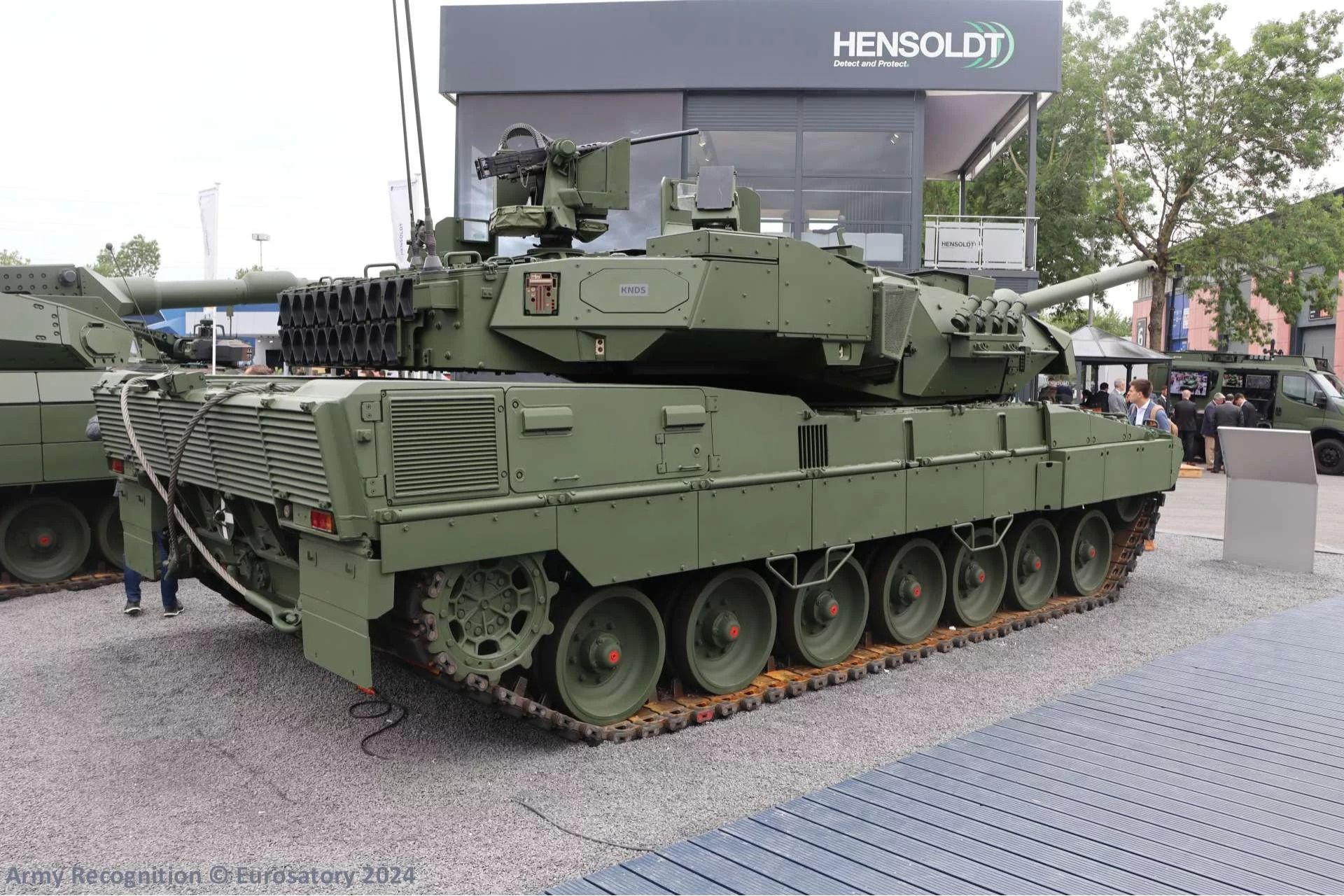
Protection features of the Leopard 2A8 include multi-layered armor combining steel, tungsten, composite filler, and ceramic components, along with the EuroTrophy Active Protection System (APS) for 360-degree coverage against projectiles. (Picture source: Army Recognition)
Cooperation with Germany involves two major aspects. Firstly, the Lithuanian tank battalion will be structured similarly to that of the German army, with 44 tanks divided into three companies. With a small reserve added, Lithuania's order would amount to around 50 tanks, a number previously discussed during preliminary talks. Secondly, Lithuania will acquire the same modernized version of the Leopard 2 A8, identical to the one that will equip the German tank battalion.
On the German side, the tank battalion of the combat forces brigade, which is expected to reach full operational capacity by 2027, will also be equipped with Leopard 2 A8 tanks, with deliveries starting in 2025. This battalion will be outfitted with 44 Leopard 2 A8 tanks, ensuring a formidable strike force.
Thus, by 2030, at least 94 Leopard 2 A8 tanks are expected to be stationed in Lithuania, forming a significant defense capability in coordination with Lithuanian and German forces. This strategic deployment is particularly critical in a sensitive area: the Suwalki Corridor, a narrow strip of land linking the Baltic states to the rest of Europe and separating Belarus from the Russian enclave of Kaliningrad. This region represents a crucial point in NATO's defense against potential threats from Russia.
By strengthening its military capabilities with state-of-the-art equipment such as the Leopard 2 A8, Lithuania aims to increase its defense autonomy while reinforcing its integration into NATO's military framework. This project reflects the country's commitment to adapting to new security realities and being ready to respond effectively to any potential escalation of regional tensions.
- Details
- Written by: Halna du Fretay
- Category: 2024
- Hits: 4415
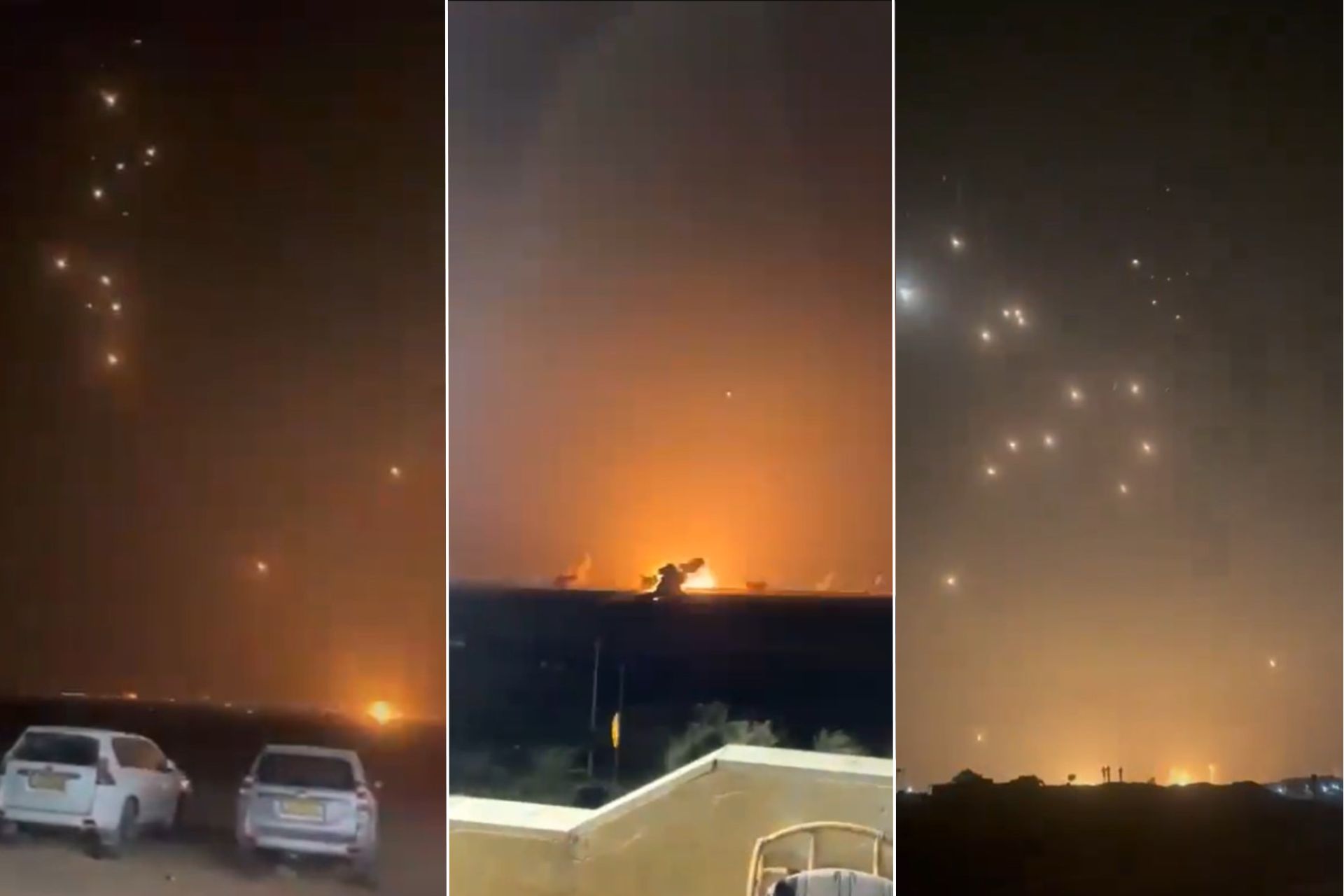
On October 1, 2024, Israel was the target of a massive attack by Iran, which launched nearly 200 ballistic missiles in retaliation for the elimination of senior leaders from Hamas, Hezbollah, and the Iranian Revolutionary Guard. This assault, considered one of the largest ballistic missile strikes against a nation-state, tested Israel's air defense system. Despite intercepting many missiles, videos circulating on social media show some reaching the ground, raising questions about the effectiveness and limitations of Israel's air defense capabilities.
Follow Army Recognition on Google News at this link
Various screenshots from videos showing the multiple strikes carried out by Iran on Israel (Picture source: X Channel @ELINTNews)
Functioning of Israel's Air Defense System
Israel's air defense is a multilayered system that intercepts various aerial threats at different altitudes and ranges. This system primarily consists of three elements:
Iron Dome: Deployed since 2011, this system is designed to intercept short-range rockets and artillery shells (ranging between 4 and 70 kilometers). The Iron Dome uses radar to identify threats and assess if they are likely to hit populated areas. If a threat is confirmed, a Tamir interceptor is launched to neutralize it. The cost per interception is estimated between $40,000 and $50,000.
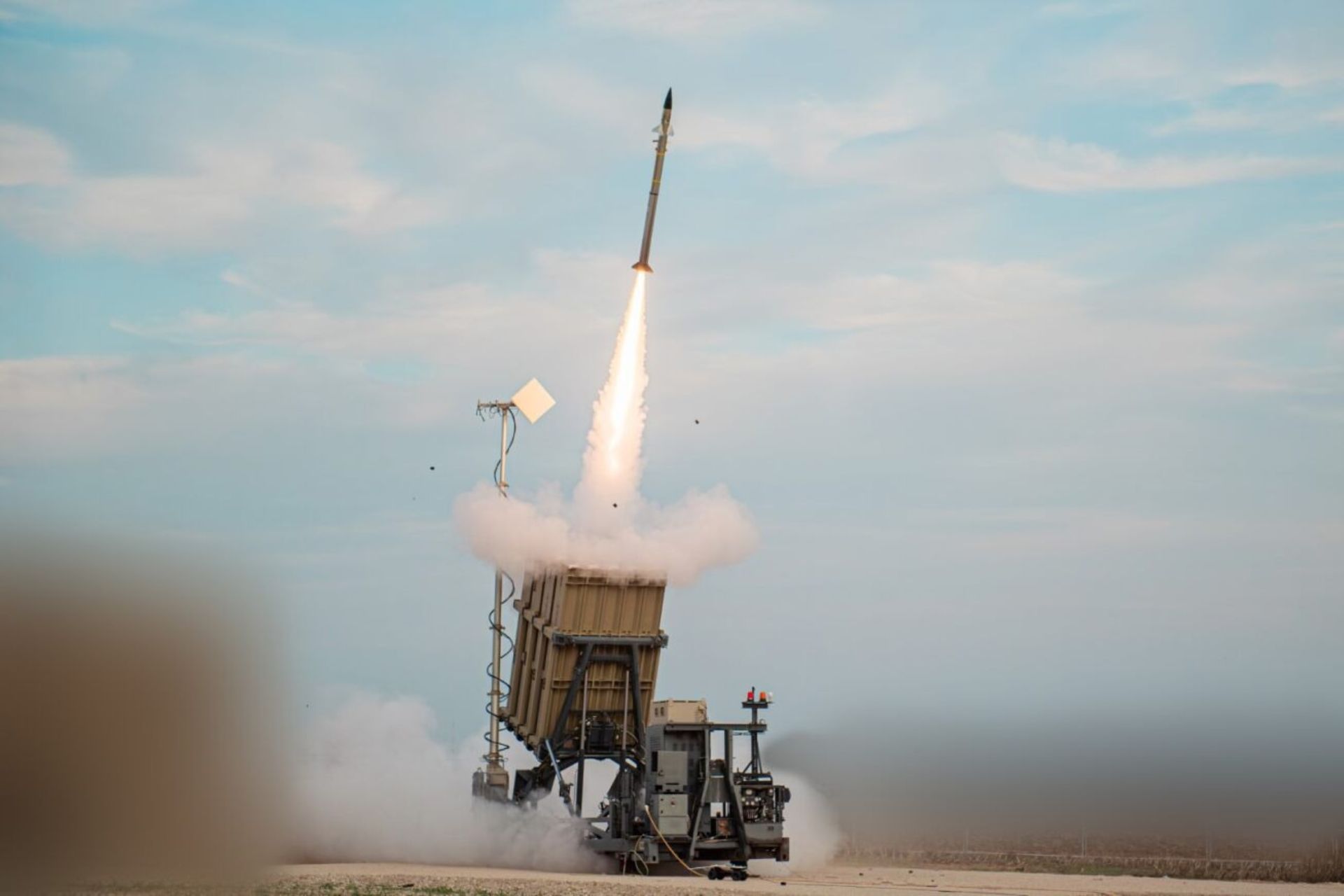
IRON DOME, the most deployed air defense system, has intercepted 5000+ rockets with an over 90% success rate since 2011. (Picture source: Rafael)
David’s Sling: This more advanced system covers medium to long ranges, intercepting short-range ballistic missiles and large-caliber rockets. Its Stunner interceptor can neutralize targets up to 300 kilometers away. Unlike the Iron Dome, the Stunner does not carry an explosive warhead but destroys its target through direct impact, increasing interception accuracy. However, the cost per interception is significantly higher, around $1 million per missile.
Arrow 2 and Arrow 3: These systems are designed to intercept medium- to long-range ballistic missiles, including those reaching the exo-atmosphere. Arrow 3, in particular, can intercept missiles outside the Earth's atmosphere, neutralizing potential threats equipped with weapons of mass destruction. The cost of intercepting a missile with the Arrow 2 or Arrow 3 can reach up to $3.5 million per missile.
Each layer of the system is designed to address specific types of threats, providing in-depth defense. Sophisticated radars and command and control centers coordinate efforts to ensure maximum coverage.
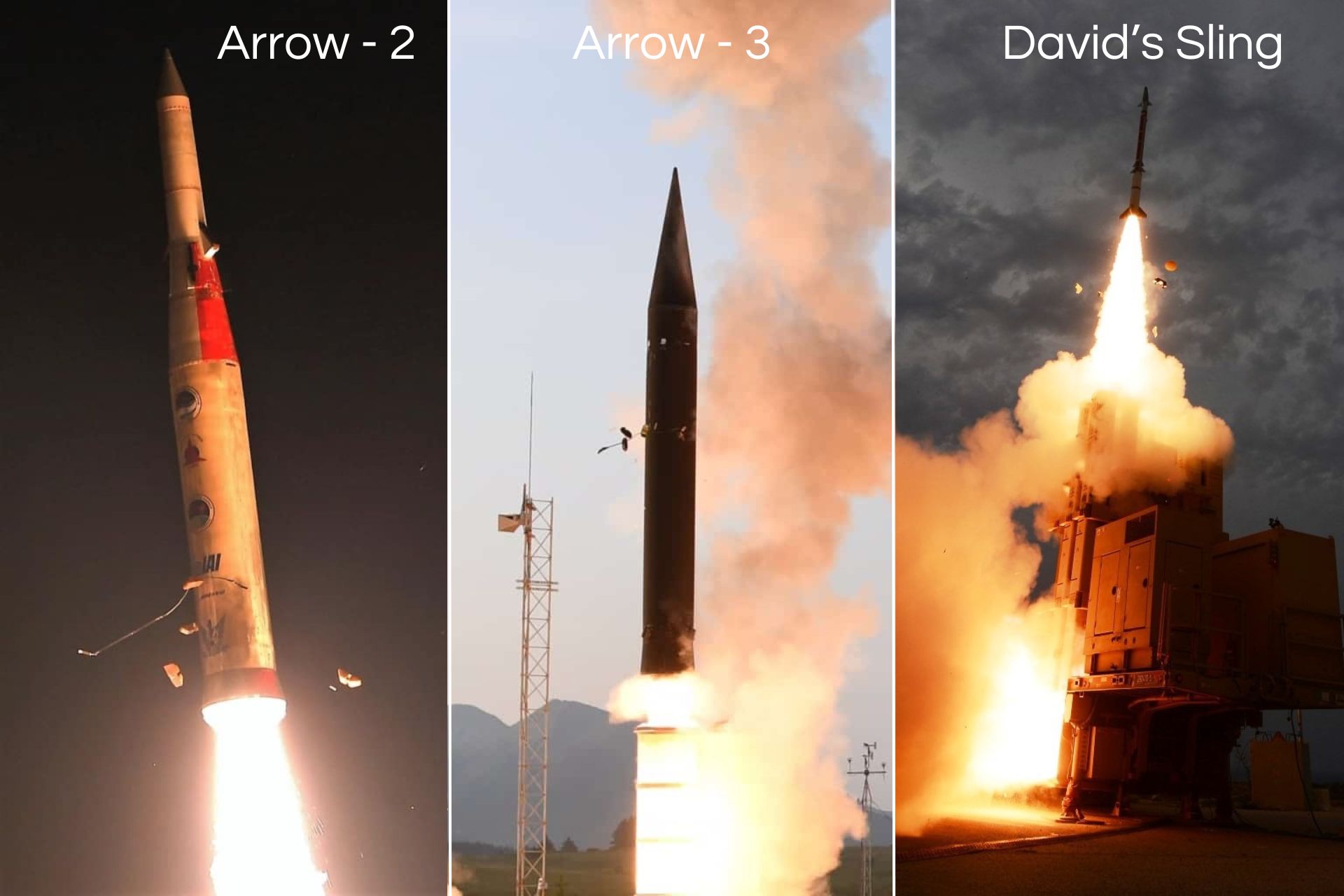
David's Sling, developed by Israel in 2006 and operational since 2017, forms the middle layer of defense against cruise and lower-tier ballistic missiles, while the Arrow-3 interceptor, deployed the same year, protects against long-range ballistic missile threats (Picture source: MDA/IDF)
Analysis of Effectiveness during the Iranian Attack
During the attack on October 1, Israel successfully intercepted a significant portion of the Iranian missiles using its multilayered defense system. However, videos circulating show missiles hitting the ground, raising several questions:
System Saturation: Iran launched nearly 200 missiles in a single wave over a few hours, potentially attempting to overwhelm Israel's defenses. Even with an advanced system, there is a limit to how many threats can be addressed simultaneously.
Evolving Threats: Iran may have used hypersonic Fattah missiles, capable of maneuvering and traveling at speeds up to Mach 13-15, which present a significant challenge for current interception systems. These missiles are designed to be difficult to detect and intercept. While Arrow 3 is intended to counter such threats, hypersonic technology complicates early detection and interception efforts.
Engagement Strategy: Israel’s defense systems prioritize threats based on their trajectory. If a missile is predicted to land in an unpopulated area, it may be left unintercepted to preserve costly interceptors for more critical threats. Operators may choose not to intercept certain missiles to conserve resources, especially if they do not directly threaten lives or critical infrastructure. However, reports of missiles hitting a military base in Nevatim may suggest otherwise.
Video of the missile impacts in Israel pic.twitter.com/OZPLMe5zEn
— ELINT News (@ELINTNews) October 1, 2024
Cost and Logistics: Intercepting each missile carries a significant financial cost. In the context of a massive attack, decision-makers must balance the use of available resources with the need to protect the most sensitive areas. The presence of Iranian missiles that reached Israeli soil does not necessarily indicate a failure of the defense system. It may reflect the physical limitations of the system, which can only handle a certain number of missiles at a time due to reaction times and available interceptors.
The Iranian attack on October 1, 2024, highlighted the challenges faced by Israel’s air defense system. While largely effective in intercepting the majority of the missiles, the system is not foolproof. The saturation effect from a large number of missiles, the introduction of new adversary technologies, and logistical and financial constraints are all factors that can allow certain threats to pass through the defense network.
This situation underscores the importance for Israel to continue investing in research and development to improve its defense capabilities while adapting its strategies to evolving threats. Ongoing cooperation with international partners, such as the United States, also remains crucial to maintaining a technological and operational advantage, as well as participating in joint defense efforts during such events.
Read more: Israel Under Iranian Fire: How Air Defense Withstood Wave of Ballistic Missiles
- Details
- Written by: Triffaux
- Category: 2024
- Hits: 4951
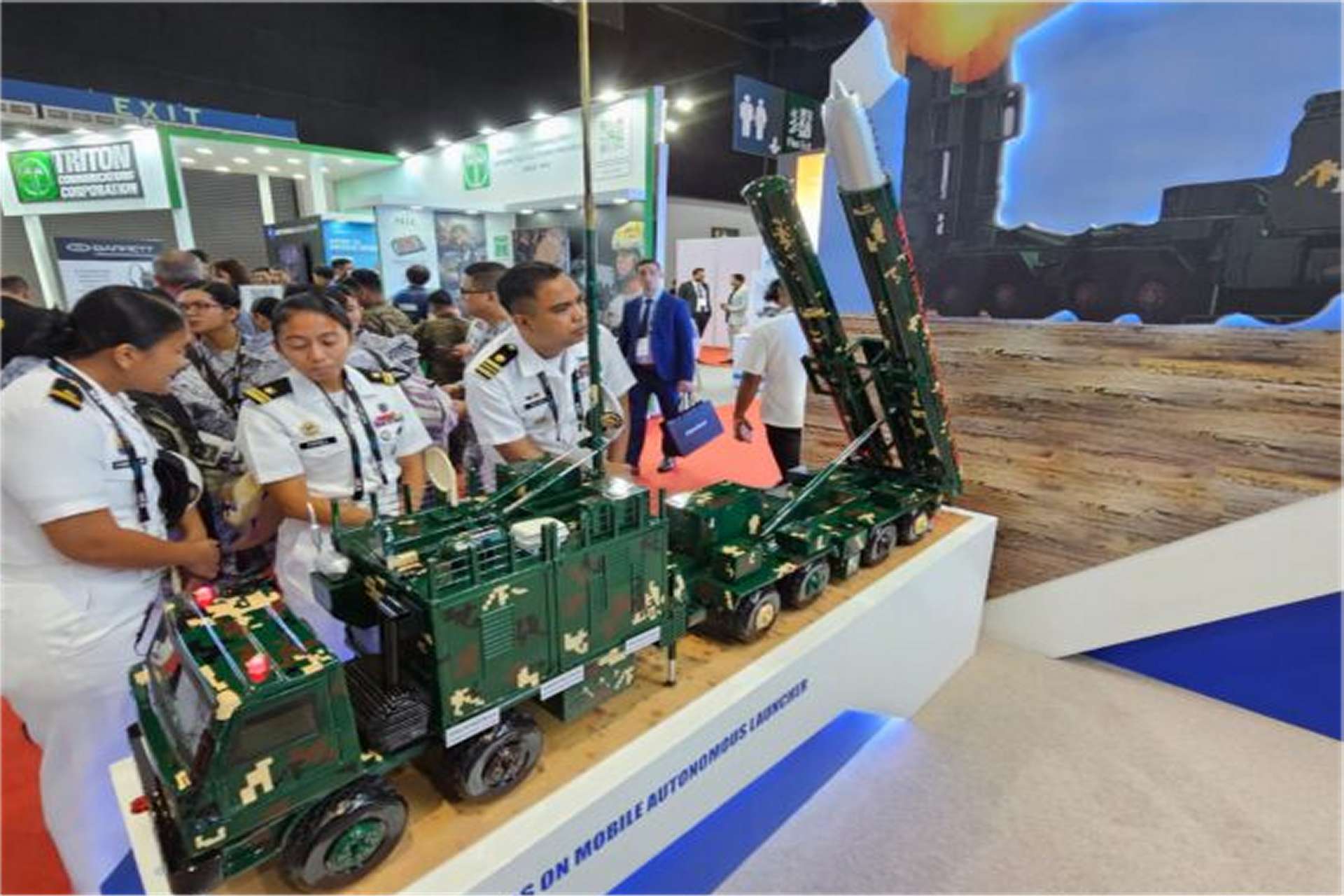
On September 25, 2024, BrahMos Aerospace unveiled for the first time at the ADAS event a model of the mobile BrahMos launcher that will be operated by the Armed Forces of the Philippines (AFP). This model, which displays missiles mounted on a Czechoslovakian Tatra 6x6 vehicle, highlighted the twin-missile launcher specifically chosen by the Philippines. This configuration contrasts with the three-missile launchers used by the Indian Armed Forces. The displayed model also featured jungle camouflage, adopted by the AFP for its tropical operations.
BrahMos Supersonic Missile and its Twin-Missile Launcher (Picture source: Philippines MoD)
According to the Twitter account Noise Alerts, the first batch of BrahMos supersonic missiles was delivered to the Philippines on April 19, 2024. Transported by an Indian Air Force IL-76TD aircraft, these missiles were delivered to the Philippine Marine Corps in Manila, accompanied by ground launch systems. This delivery, part of a $375 million agreement signed in 2022, marks the first time India has exported the BrahMos missile system. The Philippine Marine Corps confirmed that each BrahMos missile battery would consist of only two missile launchers.
The BrahMos cruise missile, named after the Brahmaputra River in India and the Moscow River in Russia, is the result of a joint development between India and Russia. Based on the Russian SS-N-26 (3M55 Oniks/Yakhont/Bastion) missile, this supersonic missile is designed to engage land and sea targets with remarkable precision. BrahMos Aerospace, the company responsible for its development, was established in 1998 as a joint venture between India's Defence Research and Development Organisation (DRDO) and Russia's NPO Mashinostroyeniya.
The BrahMos missiles will be operated by the Coastal Defense Regiment of the Philippine Marines. A BrahMos Aerospace representative stated to AMR that all deliveries are expected to be completed by next year. He also highlighted that India is considering replacing the imported Tatra vehicles with Indian-origin models for future deliveries. The BrahMos missile is equipped with a conventional warhead weighing between 200 and 300 kg, capable of delivering impact energy nine times greater than that of subsonic cruise missiles.
The BrahMos missiles can be fitted with either a high-explosive semi-armor-piercing warhead or a submunition payload weighing between 200 and 300 kg. They can be launched from vertical or ramp launch systems, or in the case of the submarine version, from submerged vessels. In 2013, the missile was successfully tested from a submerged barge, demonstrating its capability to be deployed on missile-armed submarines.
The Philippines announced the agreement with BrahMos Aerospace in January 2022 for the acquisition of three missile batteries. This contract, valued at $375 million, also includes operator and maintenance training as well as an Integrated Logistics Support (ILS) package. The requirement for this advanced weapon system was formally conceptualized in 2017 and approved by the Office of the Philippine President for inclusion in the Horizon 2 Priority Projects in 2020.
In India, BrahMos Aerospace was also selected to supply next-generation long-range mobile coastal maritime batteries to the Indian Navy under an agreement signed in March 2023, valued at $200 million.
The BrahMos missile, also designated as PJ-10, is a joint military project between India and Russia, combining the expertise of DRDO and NPO Mashinostroyeniya. In service since 2001, it can be launched from various platforms, including submarines, ships, fighter jets, and land-based mobile launchers. It can reach supersonic speeds between Mach 2 and Mach 3.
Since India's induction into the Missile Technology Control Regime (MTCR) in 2016, versions of the BrahMos missile have achieved increased ranges of up to 900 km, compared to 290 km for the export version. With its stealth capabilities, advanced guidance system, and fire-and-forget mode, the BrahMos represents a major asset in modern arsenals.
This phase of BrahMos deliveries to the Philippines not only strengthens military cooperation between India and Southeast Asian countries but also boosts the Philippines' coastal defense capabilities in the face of growing regional threats.
- What Missiles Were Used in Iran's Strike on Israel?
- US Army Accelerates Deployment of Next Generation Squad Weapons for Pacific Units and Special Forces
- Franco-German KNDS launches Ukrainian subsidiary to support Leopard tank repairs and 155mm artillery production
- US Army Orders Retired M60 Machine Guns: Mystery Surrounds Recipient