
- Details
- Written by: Jérôme Brahy
- Category: 2024
- Hits: 5176










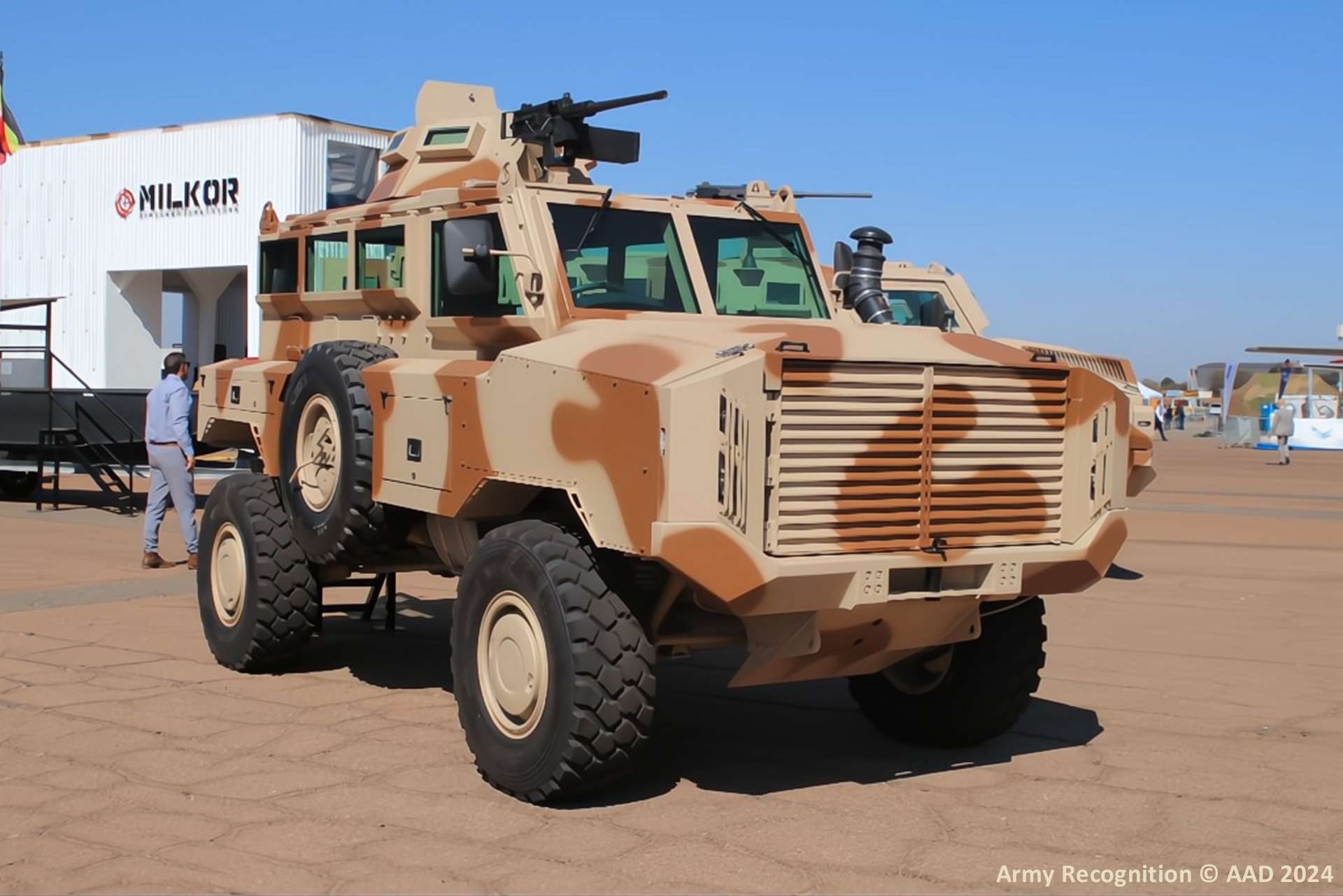
At the Africa Aerospace and Defence (AAD) 2024 exhibition, the South African company Twiga Services and Logistics introduced its new Nkwe 4x4 Mine-Resistant Ambush Protected (MRAP) vehicle at AAD 2024. The Nkwe, meaning "Leopard" in Setswana, was displayed alongside Twiga’s larger Nyati Armored Personnel Carrier (APC). Developed between 2022 and 2024, the Nkwe was qualified in 2024 and is designed for various military and peacekeeping operations.
Follow Army Recognition on Google News at this link
Powered by a Mercedes-Benz 4.8L four-cylinder turbocharged diesel engine, producing 218 hp and 810 Nm of torque, the Nkwe reaches a maximum speed of 100 km/h. (Picture source: Army Recognition)
The Nkwe provides NATO STANAG Level 2 ballistic protection for personnel, offering resistance against 7.62×39 mm armor-piercing rounds. The vehicle also offers Level 1 protection for the engine bay, shielding it from grenade blasts and anti-personnel mines. Additionally, it has Level 3a mine protection, able to withstand an 8 kg blast under any wheel or the center of the hull. These protection levels allow the Nkwe to operate in diverse roles such as motorized infantry, counter-insurgency, special forces, and urban operations.
The vehicle is powered by a Mercedes-Benz 4.8L four-cylinder turbocharged diesel engine, producing 218 hp at 2,200 rpm as well as 810 Nm of torque between 1,200 and 1,600 rpm, which is managed through an eight-speed manual-automatic transmission. This system enables the Nkwe to reach a maximum speed of 100 km/h. The suspension system is designed for off-road conditions, and the vehicle is equipped with tubeless radial tires with Run Flat Inserts (RFI), a Central Tyre Inflation System (CTIS), and Anti-lock Braking System (ABS), ensuring the vehicle remains operational in various terrains. The vehicle’s gross vehicle mass (GVM) is 9,500 kilograms, and it is equipped with a 200-liter diesel fuel tank.
The Nkwe is available in several configurations, including Armored Personnel Carrier (APC), Weapons Platform (WP), and Battlefield Ambulance. It has seating for ten people, including the driver and commander, with eight additional occupants. The vehicle can be configured with either left-hand or right-hand drive and features an air-conditioning system providing 17,000 BTUs of cooling. It is also equipped with ten gun ports and can be fitted with manual or remote weapon stations, allowing it to fulfill various operational roles.
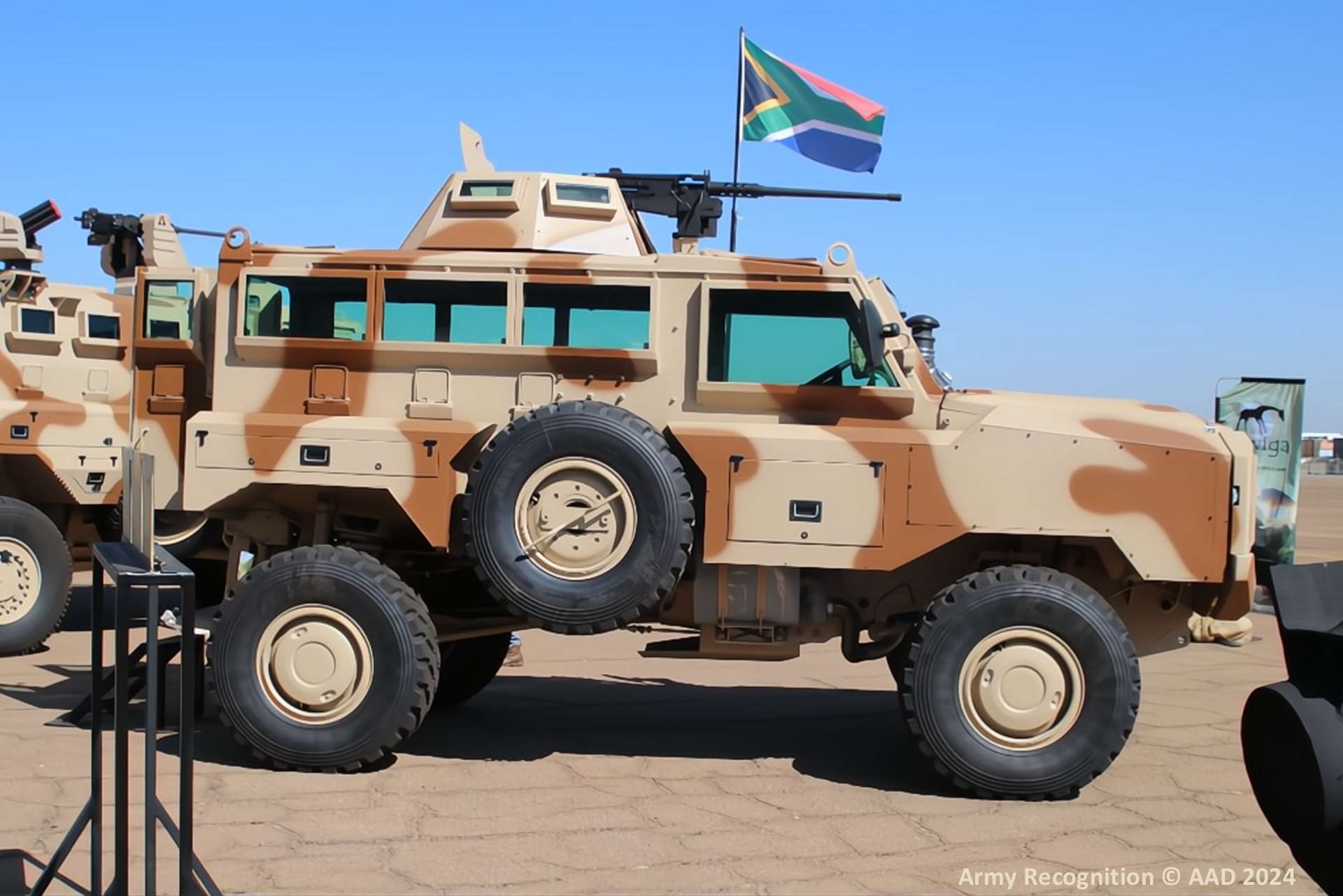
The Nkwe comes equipped with ten gun ports and can be fitted with manual or remote weapon stations, allowing it to fulfill various operational roles. (Picture source: Army Recognition)
Twiga's CEO, Damian de Lange, stated that the Nkwe is designed to enable easy technology transfer for local manufacturing. Additionally, the vehicle introduces a new driveline upgrade for Twiga’s older armored vehicles, such as the Mamba and Nyoka. The new driveline components, which have been qualified for use in these vehicles, provide increased performance while allowing existing vehicle hulls to be reused. This upgrade is expected to extend the operational life of these platforms for the next two decades.
The Nkwe’s introduction is part of Twiga’s broader approach, which includes maintenance and support programs, ensuring clients have access to the necessary resources for vehicle repair and modernization. By offering technology transfer options, Twiga aims to help clients build local manufacturing capabilities, ensuring long-term operational viability for the Nkwe and other armored vehicles in their fleets.
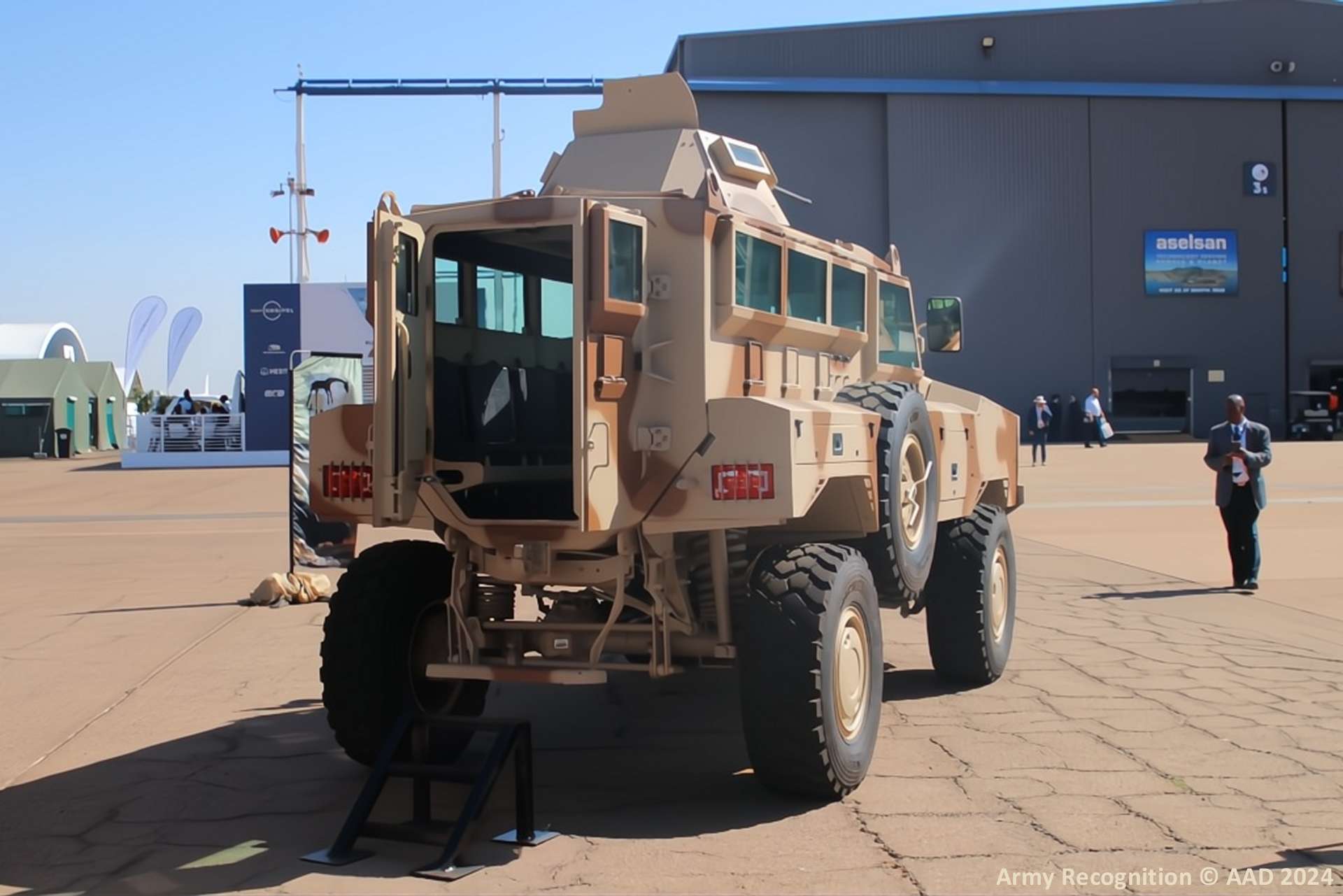
The Nkwe 4x4 introduces a new driveline upgrade for Twiga’s older armored vehicles, such as the Mamba and Nyoka, which provide increased performance while allowing existing vehicle hulls to be reused. (Picture source: Army Recognition)

- Details
- Written by: Vandenbosch
- Category: 2024
- Hits: 5795
On September 25, 2024, Turkey’s first unmanned combat aircraft, the Bayraktar Kizilelma, reached a significant milestone with the successful first flight of its third production prototype. This flight marks a crucial step in Turkey’s combat drone development program.
The Bayraktar Kizilelma Unmanned Combat Aircraft. (Picture source: Baykar)
The prototype, identified by its tail number TC-ÖZB3, successfully took off from the AKINCI Flight Training and Test Center in Çorlu, Tekirdağ. Before this inaugural flight, the aircraft underwent a series of rigorous ground tests, including engine run-up, automatic taxi, and lift-off tests. These tests were essential to preparing the prototype for its first flight.
The success of this flight was overseen by Selçuk Bayraktar, President and Chief Technology Officer of Baykar, who confirmed that this short test flight marked the beginning of a long testing process. He expressed optimism about the future of the Bayraktar Kizilelma, emphasizing that the ongoing tests would further enhance the aircraft's capabilities for the benefit of the nation.
The production prototype of the Bayraktar Kizilelma incorporates several improvements over previous models. Structural upgrades and innovations in avionics architecture have been made, and the aircraft is now equipped with an afterburner engine, allowing it to approach the speed of sound. With improved aerodynamics, the aircraft offers enhanced performance at high speeds and in complex maneuvers. Additionally, the AESA (Active Electronically Scanned Array) radar ensures high situational awareness, enabling the aircraft to carry out advanced combat missions.
The Kizilelma project is progressing at an accelerated pace. Launched in 2021 with 100% equity from Baykar, the project saw its first prototype roll off the production line in November 2022, followed by its first flight one month later. This rapid development underscores Baykar’s commitment to innovation in unmanned combat systems.
One of the most remarkable features of the Bayraktar Kizilelma is its ability to take off and land on short-runway vessels, such as Turkey’s TCG Anadolu. This capability provides a major strategic advantage, particularly in overseas missions and the defense of Turkey’s maritime interests, often referred to as the "Blue Homeland."
The successful first flight of the Bayraktar Kizilelma’s production prototype marks a new chapter in Turkey’s aerospace ambitions and paves the way for further advances in unmanned combat aviation.
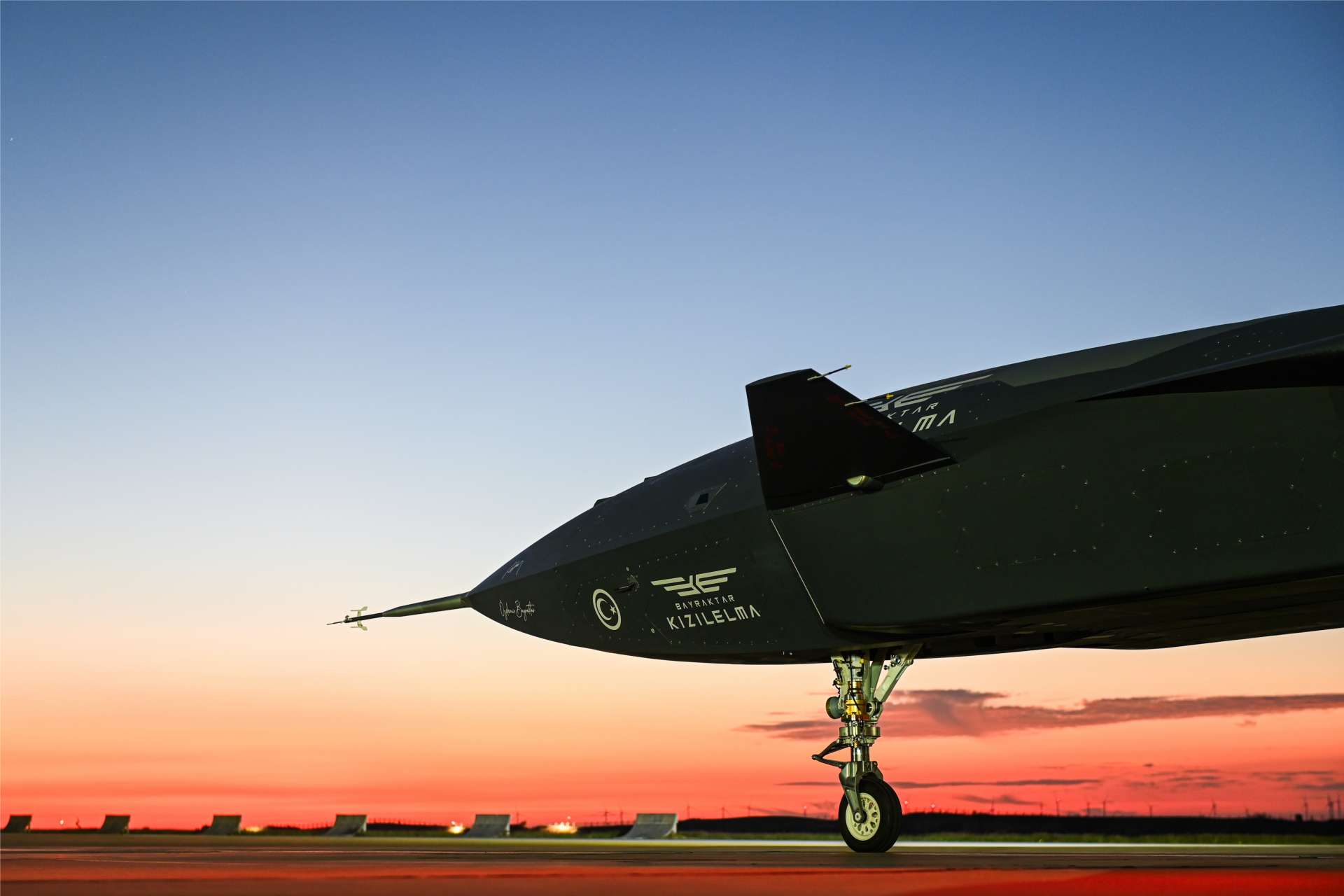
The production prototype of the Bayraktar KIZILELMA incorporates several improvements over previous models. (Picture source: Baykar)
Read more: Production Prototype of Turkish Bayraktar Kizilelma Drone Completes its First Flight

- Details
- Written by: Jérôme Brahy
- Category: 2024
- Hits: 7556
At the Teknofest 2024 exhibition in Türkiye, held between October 2 and October 6, the Turkish company Aselsan introduced the ZMA-X Combat Unmanned Ground Vehicle (UGV), which is based on the modernized ACV-15, also known as the ZMA-15 Infantry Fighting Vehicle (IFV). This vehicle is the third heavy-class UGV developed by the Turkish defense industry, alongside FNSS' Shadow Rider and Otokar's Alpar.
Follow Army Recognition on Google News at this link
Based on the ZMA-15, the ZMA-X is equipped with Aselsan's Nefer 25 mm unmanned turret system, additional armor plates, and LIDAR systems. (Picture source: TRHaber Savunma and Anadolu Agency)
As reported by TurDef on October 2, 2024, the ZMA-X is equipped with Aselsan's Nefer unmanned turret system, featuring a 25 mm chain gun. The remotely controlled turret allows the ACV-15 to be converted into an unmanned platform. Additional armor plates, similar to those on the modernized ACV-15, have been added to improve the vehicle’s protection. The vehicle is also fitted with LIDAR systems, which likely enhance situational awareness, similar to short-range sensors used in FNSS' Shadow Rider UGV conversion kit for the M113 Armored Fighting Vehicle (AFV).
Several countries have developed unmanned variants of the M113 to enhance battlefield capabilities. The U.S. has tested remotely operated M113s for mine-clearing and fire support under its Robotic Combat Vehicle program in 2024. Australia also tested automated M113s earlier in 2024, focusing on remote-controlled logistics. Israel has deployed unmanned M113 "Zelda" models, equipped with machine guns and capable of carrying 4 tons of payload in urban combat, notably in Gaza. These developments highlight international efforts to modify the M113 for autonomous operations.
The Nefer turret, also known as SARP 100/25, is an unmanned turret designed by Aselsan for tactical vehicles, including 6x6 and 8x8 platforms. It can support both NATO and Russian-origin weapon systems, with the aim of improving situational awareness while reducing personnel exposure to risks. Key features include automatic target tracking, ballistic calculations, and the ability to engage stationary and moving targets while the vehicle is on the move.
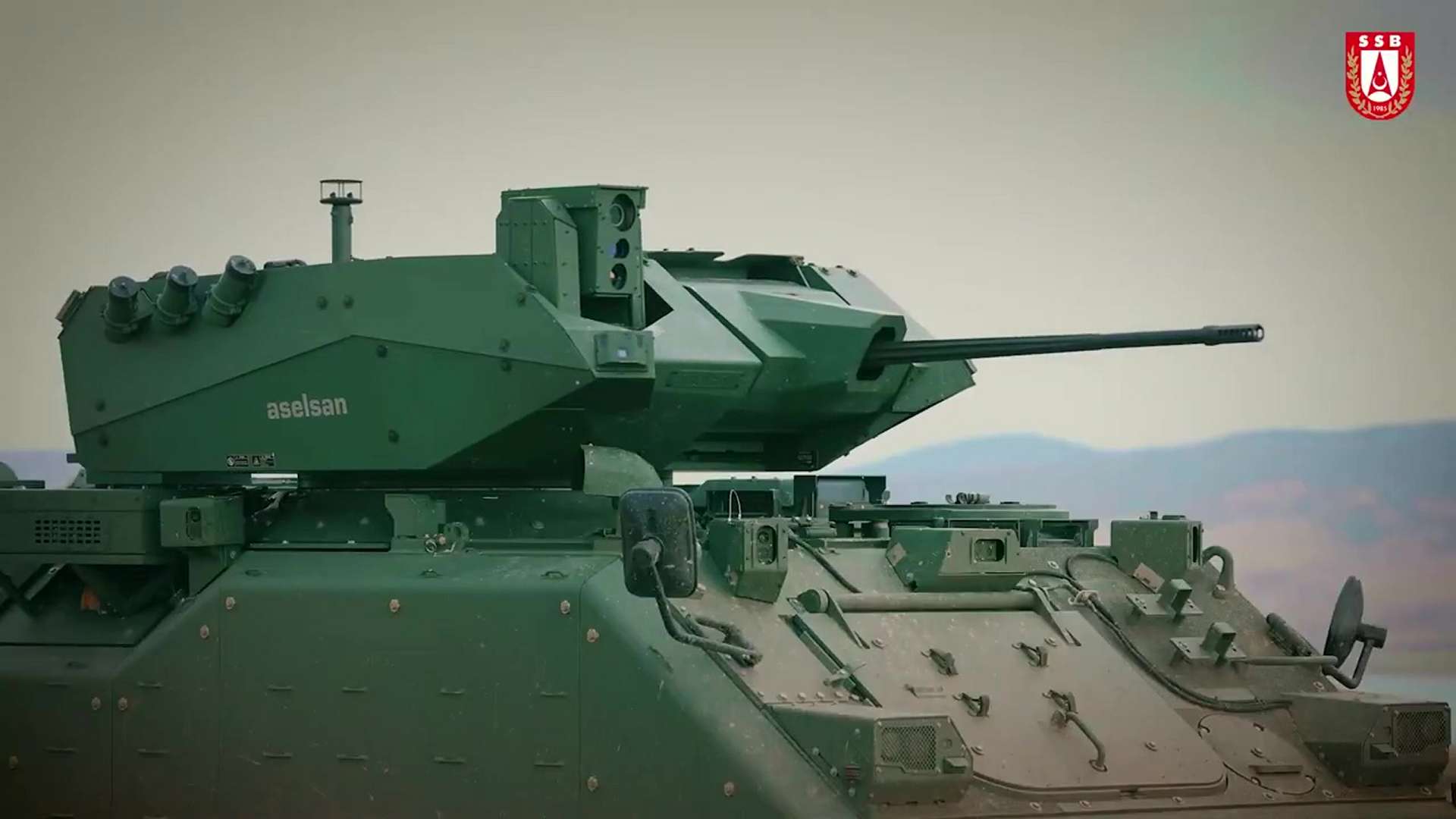
The Nefer turret can support a range of primary and co-axial weapons, including the 30 mm MK44, 30 mm 2A42, 25 mm M242, 25 mm KBA, and 25 mm M811 automatic cannons. Co-axial weapons options include the 12.7 mm M2 and NSV machine guns, and the 7.62 mm FN MAG58/M240 and PKT machine guns. (Picture source: Defence Industry Agency of Türkiye)
The turret is equipped with day and night imaging systems and a gyro-stabilized platform to ensure accuracy. Other features include a laser rangefinder, a fire control system, a round counter, and a last-ammunition warning. Ammunition can be reloaded while protected under armor.
The Nefer turret can support a range of primary and co-axial weapons, including the 30 mm MK44, 30 mm 2A42, 25 mm M242, 25 mm KBA, and 25 mm M811 automatic cannons. Co-axial weapons options include the 12.7 mm M2 and NSV machine guns, and the 7.62 mm FN MAG58/M240 and PKT machine guns. The turret has an elevation range from -10° to +60° and offers 360° azimuth rotation via a slip ring mechanism. It meets military standards for electromagnetic interference (MIL-STD-461E) and environmental conditions (MIL-STD-810F).
Its armor provides protection compliant with STANAG 4569 Level II against small arms fire and shell splinters. The turret weighs less than 1,700 kilograms with a 25 mm cannon, armor, and ammunition. The low profile height of under 70 centimeters allows integration on a variety of vehicles. The ammunition stowage supports up to 200 rounds for 30 mm cannons, 240 rounds for 25 mm cannons, 100 rounds for 12.7 mm machine guns, and 500 rounds for 7.62 mm machine guns.
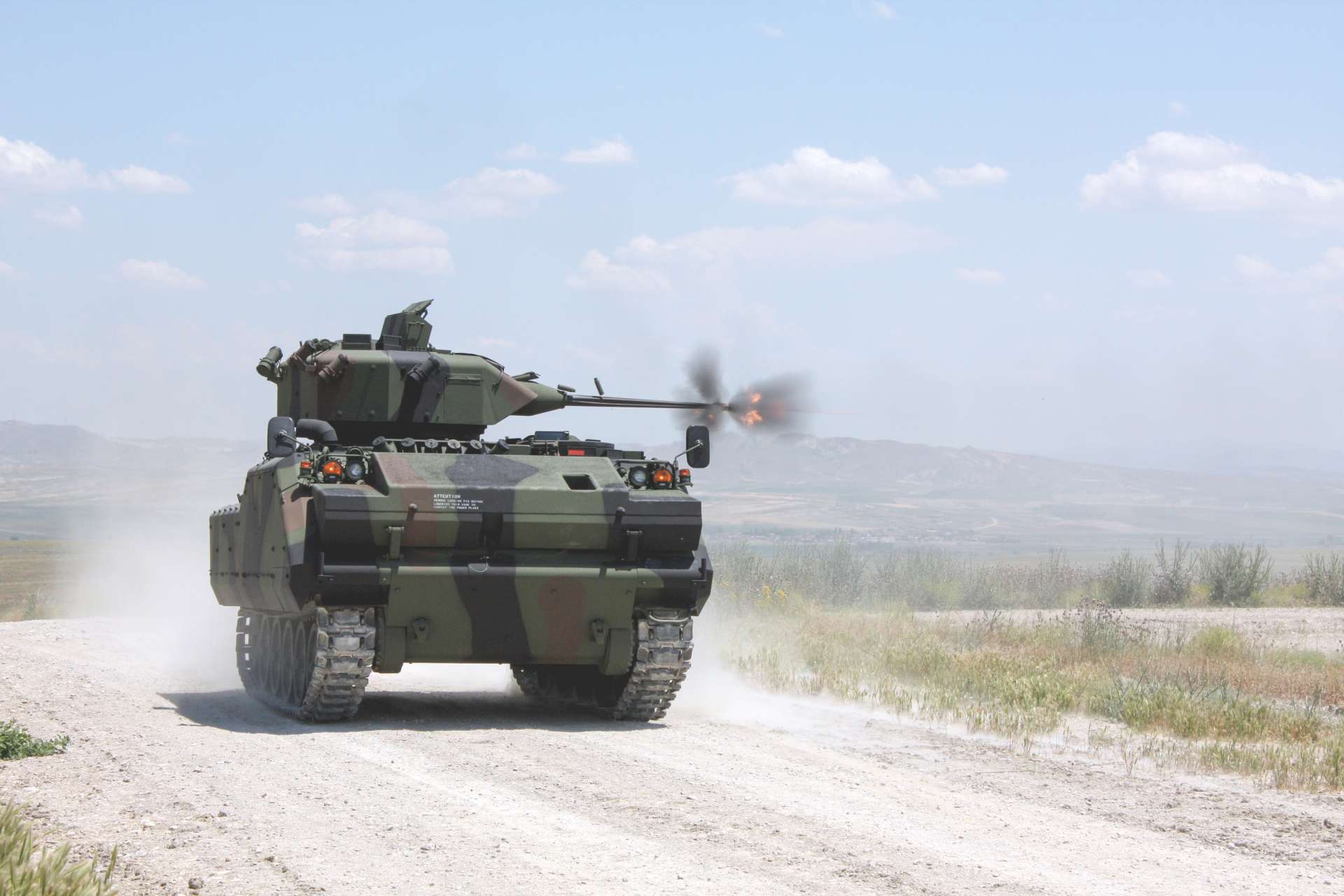
The modernized ACV-15, also known as the ZMA-15 Infantry Fighting Vehicle (IFV), is armed with a one-person turret carrying a 25 mm cannon and a 7.62 mm coaxial machine gun, and it can be used for both combat and troop transport. (Picture source: FNSS)
The ACV-15, which serves as the platform for the ZMA-X UGV, was developed by FNSS and has been in service since 1992. This tracked armored vehicle is used as an infantry fighting vehicle and armored personnel carrier. It is amphibious and based on the American Advanced Infantry Fighting Vehicle (AIFV), a variant of the M113A1. The vehicle is armed with a one-person turret carrying a 25 mm cannon and a 7.62 mm coaxial machine gun, and it can be used for both combat and troop transport.
The development of the ACV-15 was initiated by Türkiye's Land Forces Command to meet its operational requirements. Türkiye currently operates 2,249 units, the United Arab Emirates has 136, and Malaysia has ordered 267 in various configurations. The vehicle has been deployed in conflicts in Syria, Libya, Somalia, and in operations against the Kurdistan Workers' Party (PKK).
The ACV-15 is powered by a Detroit Diesel 6V-53T engine producing 300 horsepower, which allows the vehicle to reach a maximum speed of 65 km/h and provides a range of 490 km. Its torsion bar suspension and road wheels enable off-road performance. The vehicle is fully amphibious, relying on track propulsion to cross water obstacles. Standard features include night vision, nuclear, biological, chemical (NBC) protection, and smoke grenade launchers.
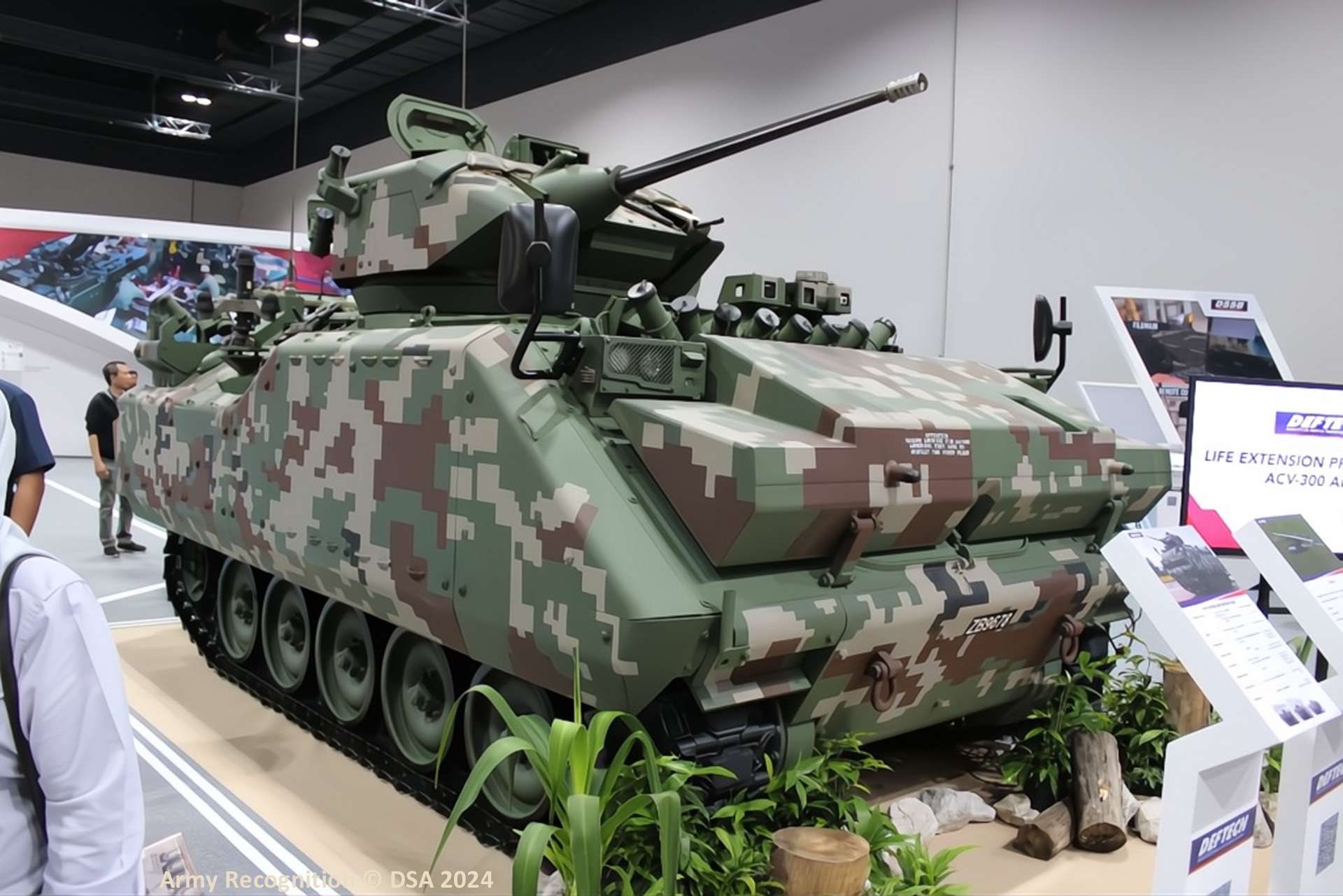
In Malaysia, the ACV-15 is referred to as the ACV-300 Adnan, named after Lieutenant Adnan bin Saidi, a World War II hero. This variant is equipped with a 25 mm FNSS Sharpshooter Turret, GPS navigation, laser warning devices, and night vision systems. (Picture source: Army Recognition)
In Malaysia, the ACV-15 is referred to as the ACV-300 Adnan, named after Lieutenant Adnan bin Saidi, a World War II hero. This variant is equipped with a 25 mm FNSS Sharpshooter Turret, GPS navigation, laser warning devices, and night vision systems. It was used by Malaysian forces during the 2013 Lahad Datu standoff with Sulu militants.
Several variants of the ACV-15 exist, including logistics support vehicles, mortar carriers, and command vehicles. The heavier ACV-19 variant, also known as the Akıncı ZMA, has an additional road wheel and weighs 18,000 kg, allowing it to carry more personnel and equipment. The ACV-19 can be fitted with a 25 mm Saber turret and anti-tank guided missiles.
The ACV-15 remains in use by several countries, including Türkiye, Malaysia, the UAE, the Philippines, Jordan, and Syria. In some cases, the vehicle has been involved in notable operations. For example, in Idlib, an ACV-15 was reportedly involved in the downing of a Syrian Mi-17 helicopter in cooperation with artillery. In Syria, a captured unit of the vehicle was later recovered by the Syrian Arab Army, showing the vehicle's presence in ongoing conflicts.
Read more: Aselsan’s new ZMA-X UGV enters battlefield with 25 mm chain gun and LIDAR systems
- Details
- Written by: Vandenbosch
- Category: 2024
- Hits: 3786
According to Infodefensa, the Spanish Army has awarded a contract to Rheinmetall Expal Munitions to supply 81mm Eimos mortar systems mounted on vehicles, valued at €134 million (including taxes) over the next four years.
Follow Army Recognition on Google News at this link
The Eimos is a mortar system, developed by Rheinmetall Expal. (Picture source: Rheinmetall)
Although the contract does not specify the exact number of units to be acquired, it is expected that more than 80 systems could be delivered. As confirmed by Infodefensa.com, the contract includes not only the purchase of the mortar systems but also the Urovesa Vamtac vehicles and the integration of these systems onto these platforms.
The Army’s Logistics Support Command (MALE) managed the contract through a negotiated procedure without public notice, which allows for the direct selection of a company without publishing tender documents. The Army justified this approach by stating that "the contract can only be executed by a specific economic operator due to the lack of competition for technical reasons."
The contract formalization is expected in the second half of October, with mounted mortar deliveries extending until December 2027, in line with the project timeline.
The vehicle-mounted mortar system is one of the flagship projects of the Ministry of Defense's new investment cycle. This announcement was made by the Secretary of State for Defense, Amparo Valcarce, during the third edition of Feindef in May 2023.
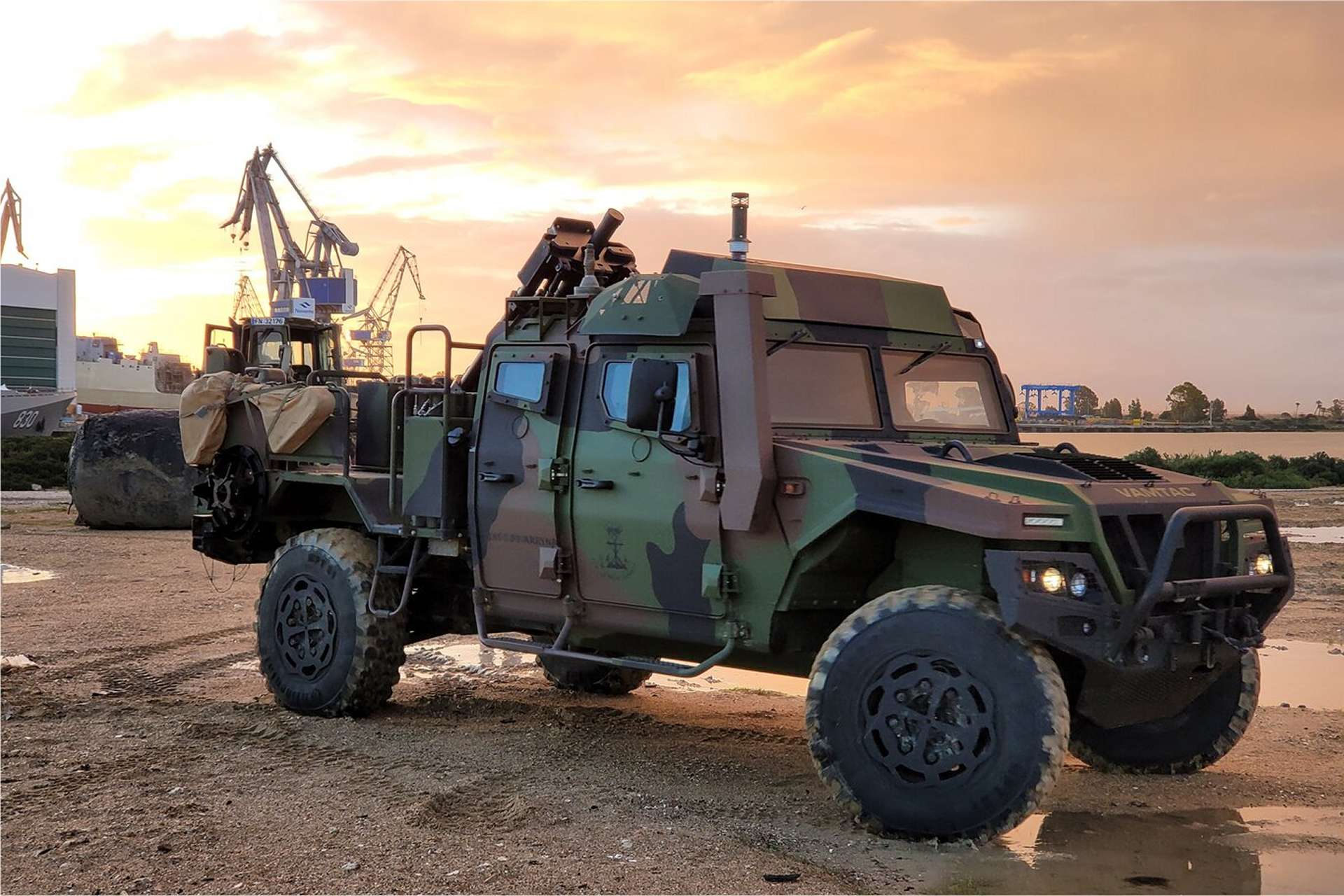
The Eimos system, also known as Dual Eimos, is a solution developed by Rheinmetall Expal as part of an R&D program of the Ministry of Defense, in response to the requirements of the Marine Infantry and the Spanish Army. The system features automatic fire control and 360° aiming without requiring repositioning or reorientation of the vehicle, and without deploying additional components, enabling a highly effective "shoot and scoot" capability—a tactical method where artillery fires and relocates quickly.
The Vamtac ST5, which hosts the Dual Eimos system, is capable of crossing deep waters up to 1.5 meters without prior preparation. The vehicle is also equipped with a stress absorption system to enhance performance. The mortar system includes a new-generation Inertial Navigation Unit (INU), providing increased precision in aiming. It also integrates Talos, the Army's command and control system for artillery.
The Eimos system is part of the equipment that the Spanish Army aims to integrate under the Fuerza 35 project, which seeks to modernize the capabilities of cavalry units in the coming years. The Spanish Navy's Marine Infantry has already been operating the Rheinmetall Expal Eimos system for two years, while the Spanish Army received its first units in late 2023, as reported by Infodefensa.com. These systems are already in service with the Paratrooper Brigade.
Read more: Spanish Army Acquires Eimos Mortars from Rheinmetall Expal
- Details
- Written by: Jérôme Brahy
- Category: 2024
- Hits: 6503
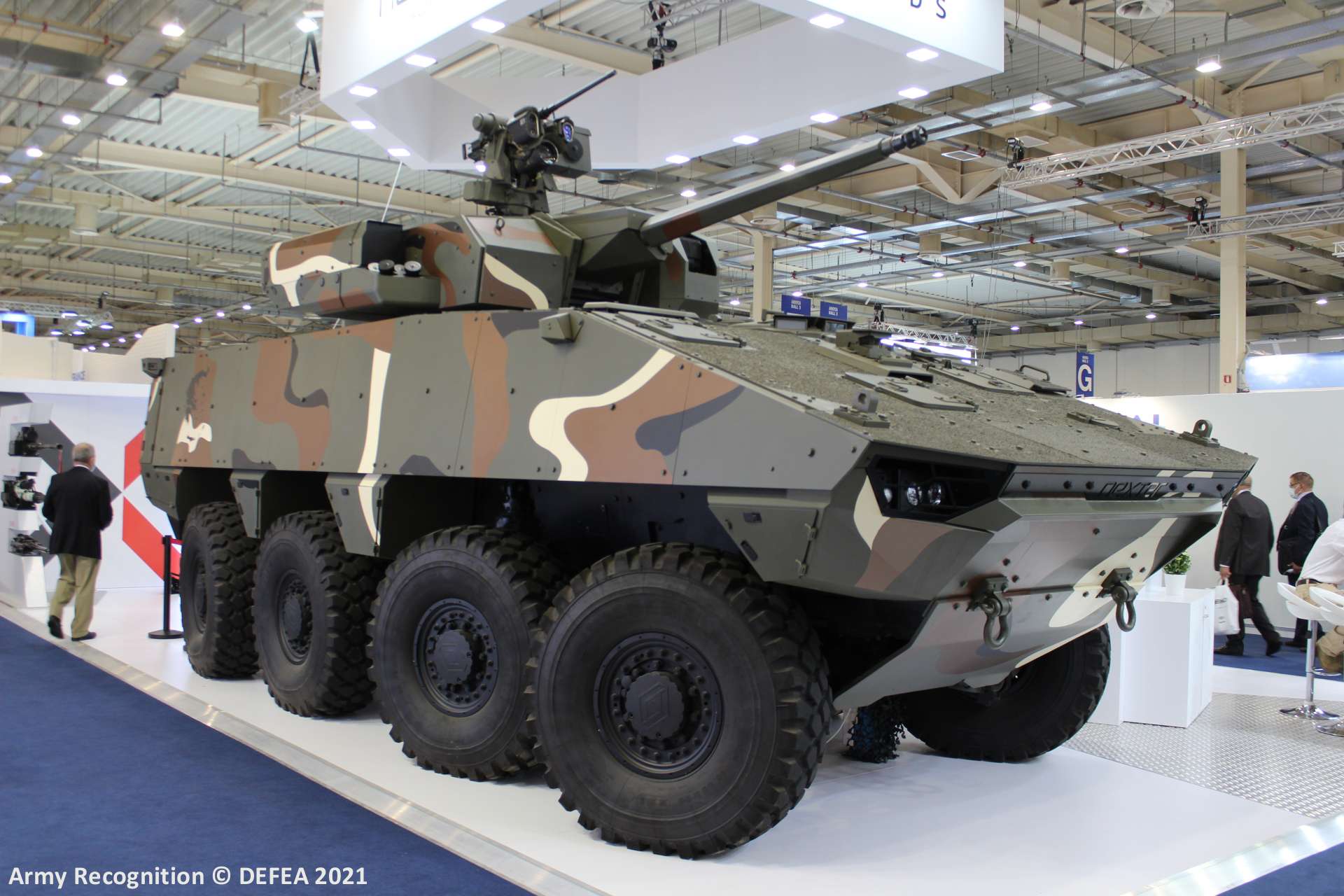
On October 1, 2024, the Greek Ministry of National Defense announced that representatives from KNDS France, formerly Nexter Systems, presented armored combat vehicle (ACV) options to the Hellenic Army General Staff (GES) on September 25, 2024. The presentation included discussions on both new and used vehicles, with particular attention to the Philoctetes model, also known as the VBCI II.
Follow Army Recognition on Google News at this link
KNDS France showcased the VBCI Philoctetes at the Hellenic DEFEA 2021 exhibition, and in April 2022, it signed a cooperation agreement with Hellenic Defense Systems (EAS) to facilitate Greek production and maintenance if selected. (Picture source: Army Recognition)
Although the Ministry did not specify which models were discussed, KNDS France has been promoting the Philoctetes to the Greek Army for some time. Reports from Defence Review.gr suggest that the company reiterated its March 2024 proposal for the delivery of 200 VBCI-2 units, equipped with the T40 turret featuring a 40mm CTA cannon and Akeron MP anti-tank missiles.
The proposal also includes 50 VBCI-2 vehicles in support configurations such as medical, artillery observation, and command roles, along with 120 second-hand VBCIs from the French Army for rapid deployment. The offer involves the participation of Greek industry in production and maintenance, with 200 new vehicles, 50 specialized support variants, and 120 second-hand units being considered.
French VBCIs were evaluated during the Olympic Cooperation 23 exercise in November 2023, where they operated with the Hellenic Army’s Leopard 2 HEL tanks. Their performance, particularly in terms of maneuverability and terrain handling, was noted.
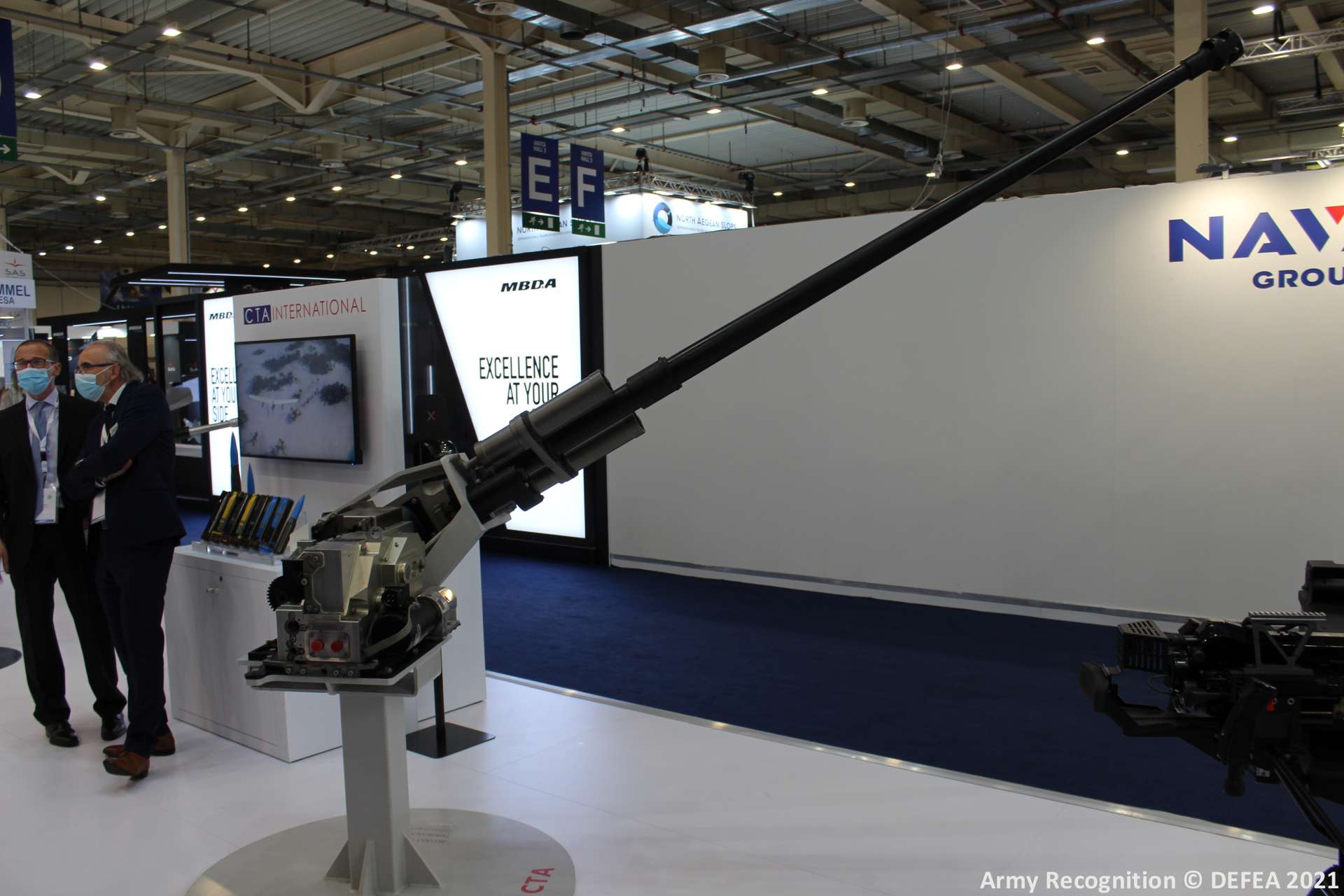
With a rate of fire of up to 200 rounds per minute and a 60-round handling system, the 40CTA's 40 mm cased telescoped cannon possesses a maximum effective range of 2,500 m. (Picture source: Army Recognition)
The Philoctetes represents an upgraded version of the VBCI currently used by the French Army, which has acquired 630 units, including 510 infantry fighting vehicles and 120 command variants. The VBCI-VCI version carries a crew of two and nine soldiers, armed with a 25mm cannon and 7.62mm machine gun. The VBCI-VPC command version has a two-person crew, accommodates seven soldiers, and is equipped with a 12.7mm machine gun.
KNDS France showcased the VBCI Philoctetes at the Hellenic DEFEA 2021 exhibition, and in April 2022, it signed a cooperation agreement with Hellenic Defense Systems (EAS) to facilitate Greek production and maintenance if selected. The agreement allows for Greek involvement in subsystem manufacturing, final assembly, and long-term support, in collaboration with the Saracakis company.
In April 2023, the Philoctetes was demonstrated to the Hellenic Army at the Canjuers camp in France, where the delegation observed live fire demonstrations and terrain handling capabilities. French soldiers who have used the VBCI in operations provided additional feedback, offering insights into its performance in various environments.
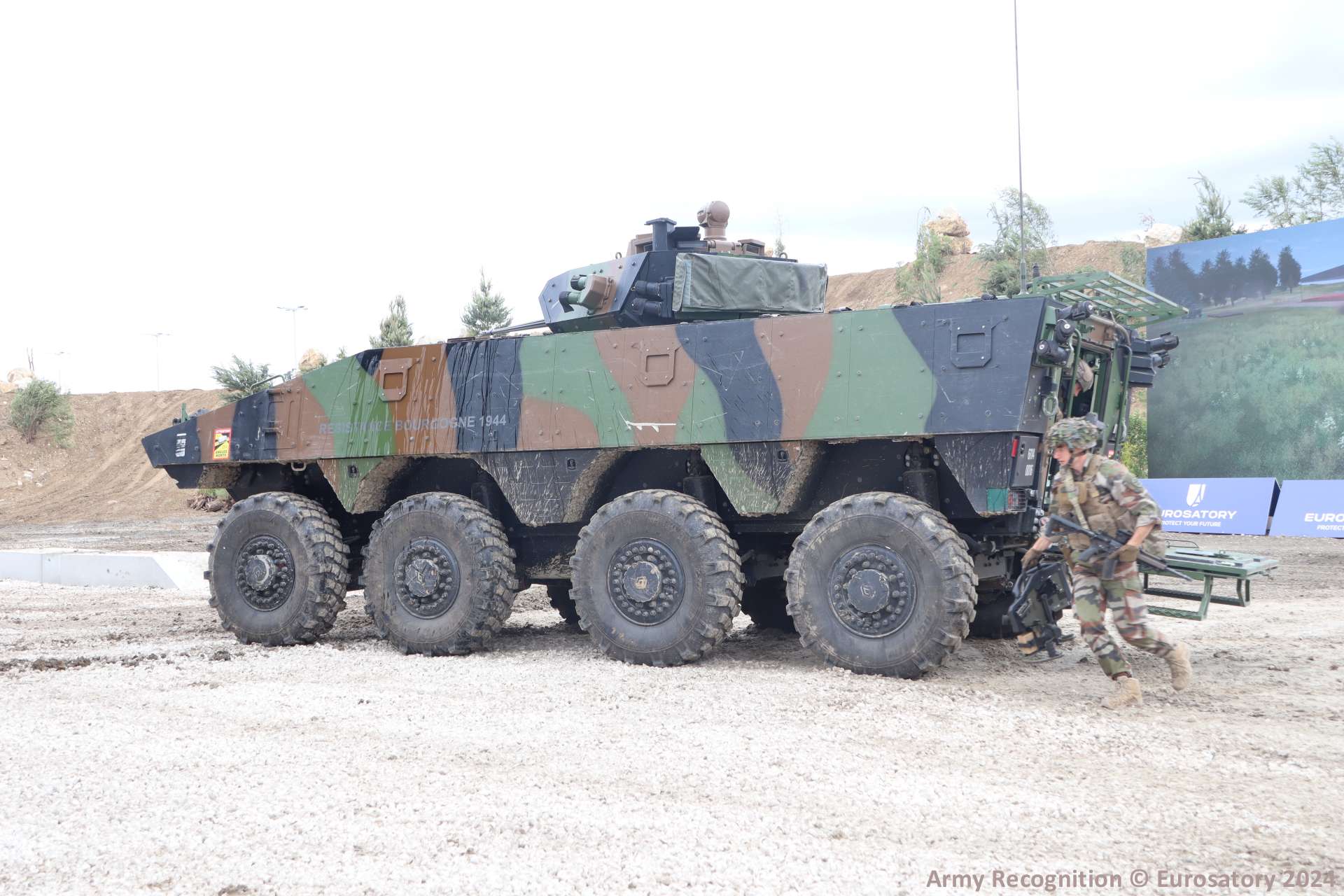
The Philoctetes represents an upgraded version of the VBCI 8x8 IFV currently used by the French Army, which has acquired 630 units, including 510 infantry fighting vehicles and 120 command variants. (Picture source: Army Recognition)
The Philoctetes proposed for Greece features a CTA 40mm cannon, two Akeron-MP anti-tank missile launchers, advanced sighting systems, and a fire control system. The infantry compartment is designed to optimize internal space and armor protection. The vehicle is currently under review by the GES as part of the Hellenic Army’s ACV program.
The VBCI Philoctetes, also referred to as the VBCI-2 or VBCI MkII, is based on the VBCI platform and incorporates adjustments made from prior operational experience. It maintains modularity, supporting a range of configurations, including armaments between 25mm and 105mm turrets. This flexibility allows it to perform different roles, including as an infantry fighting vehicle, armored personnel carrier, or self-propelled mortar carrier.
The vehicle’s modular armor and light alloy hull provide protection that meets STANAG 4569 standards. It has a payload capacity of 13 tons and a combat weight of 31 tons. Powered by a 600-horsepower engine, it is designed for operations in various terrains and can be airlifted for rapid deployment.
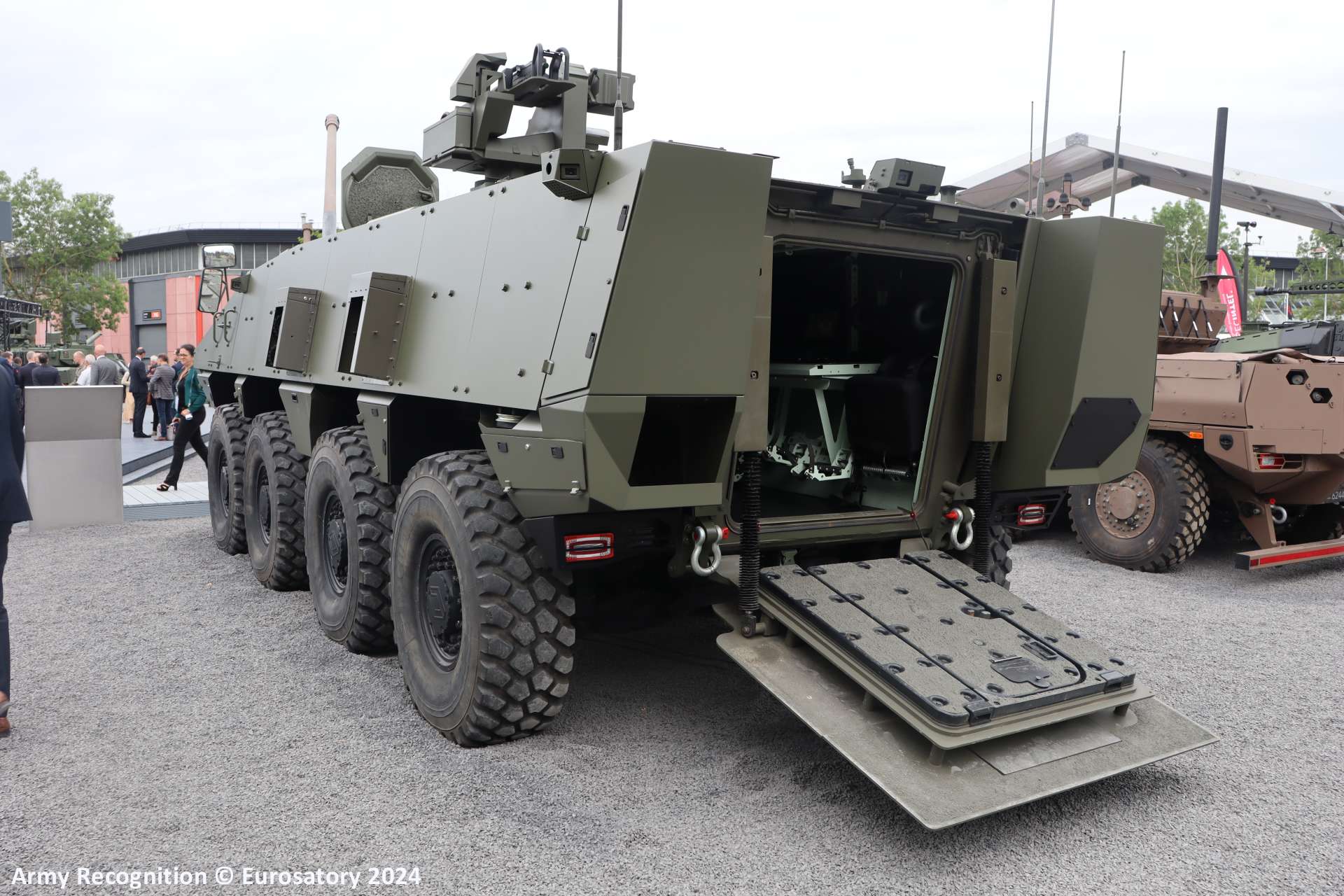
Carrying up to 11 individuals, the VBCI-2 could perform different roles, including as an infantry fighting vehicle, armored personnel carrier, or self-propelled mortar carrier. (Picture source: Army Recognition)
The VBCI MkII’s electronic systems are compatible with C4I systems for battlefield management. The driver benefits from a 180-degree day/night vision system, and the commander has access to a 360-degree view, enhancing operational awareness.
The 40mm CTA turret, developed by CTA International, is compatible with a range of military vehicles and uses cased telescoped ammunition for reduced size and increased reliability. It offers a high elevation angle, which supports operations in both urban and open environments. With a rate of fire of up to 200 rounds per minute and a 60-round handling system, it can also integrate additional weapon systems such as anti-tank missile pods and remote-controlled weapon stations.
Furthermore, this turret provides protection that meets STANAG Level 2 standards, with optional upgrades to Level 5. It has a full 360-degree traverse and can engage targets at distances exceeding six kilometers, offering versatility for various combat operations.
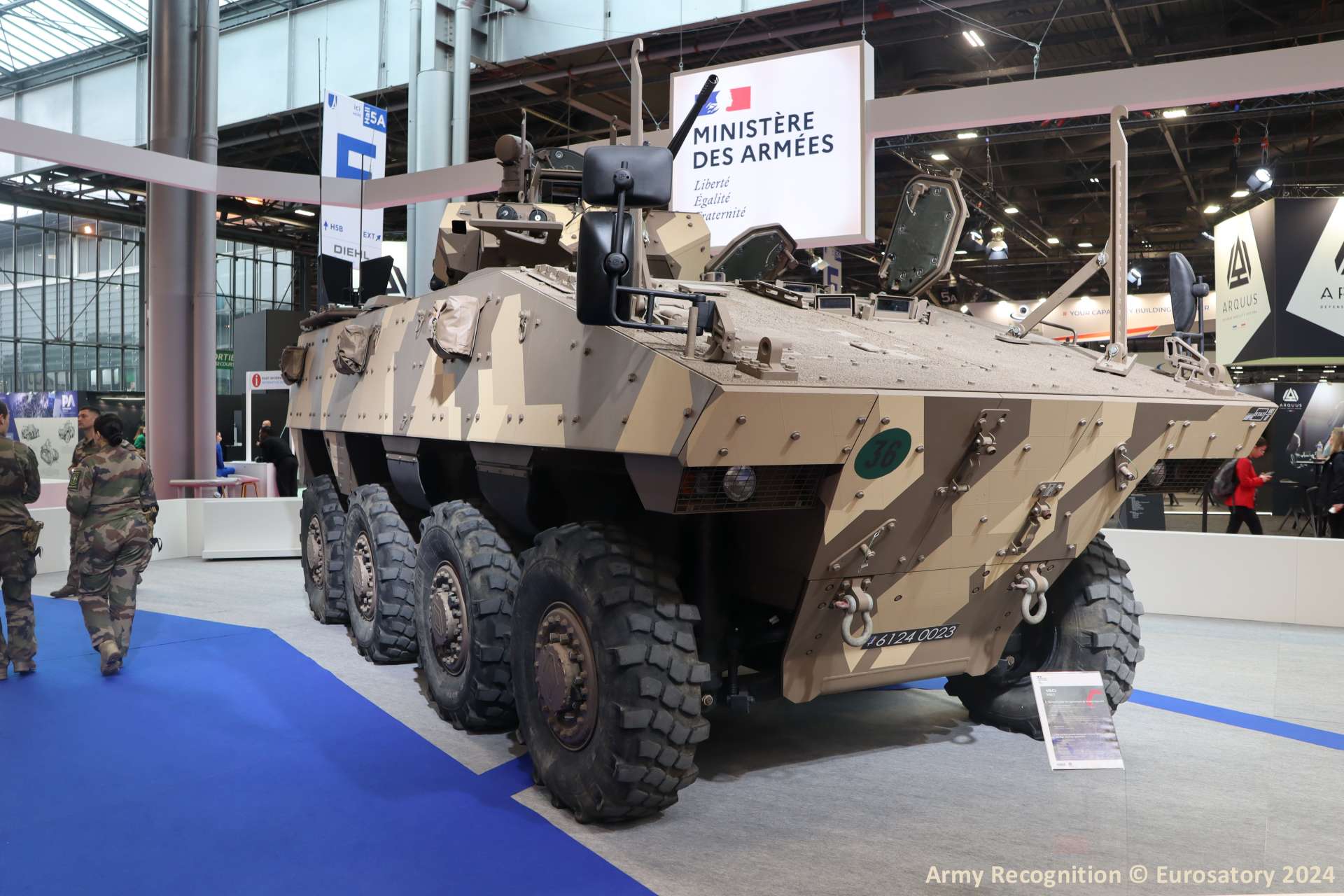
The VBCI, developed by GIAT Industries and Renault Trucks Defense, entered service with the French Army in 2008 to replace the AMX-10P, introduced in 1973. (Picture source: Army Recognition)
Read more: Greek Army evaluates French proposal for 370 VBCI Philoctetes infantry fighting vehicles
- Details
- Written by: Halna du Fretay
- Category: 2024
- Hits: 6195
On October 2, 2024, a series of reports and videos began circulating on social media, particularly on Telegram and X, claiming that Iranian missiles had successfully targeted and destroyed Israeli airbases, including entire squadrons of Lockheed Martin F-35I Adir fighters. These claims, mostly propagated by Iranian state media, quickly gained traction among pro-Iranian supporters. The claims followed Iran’s largest missile attack on Israel to date, with more than 180 missiles launched. The strikes, involving Fattah-1 and Kheybarshekan missiles, were said to be larger and more complex than those carried out in April.
Follow Army Recognition on Google News at this link
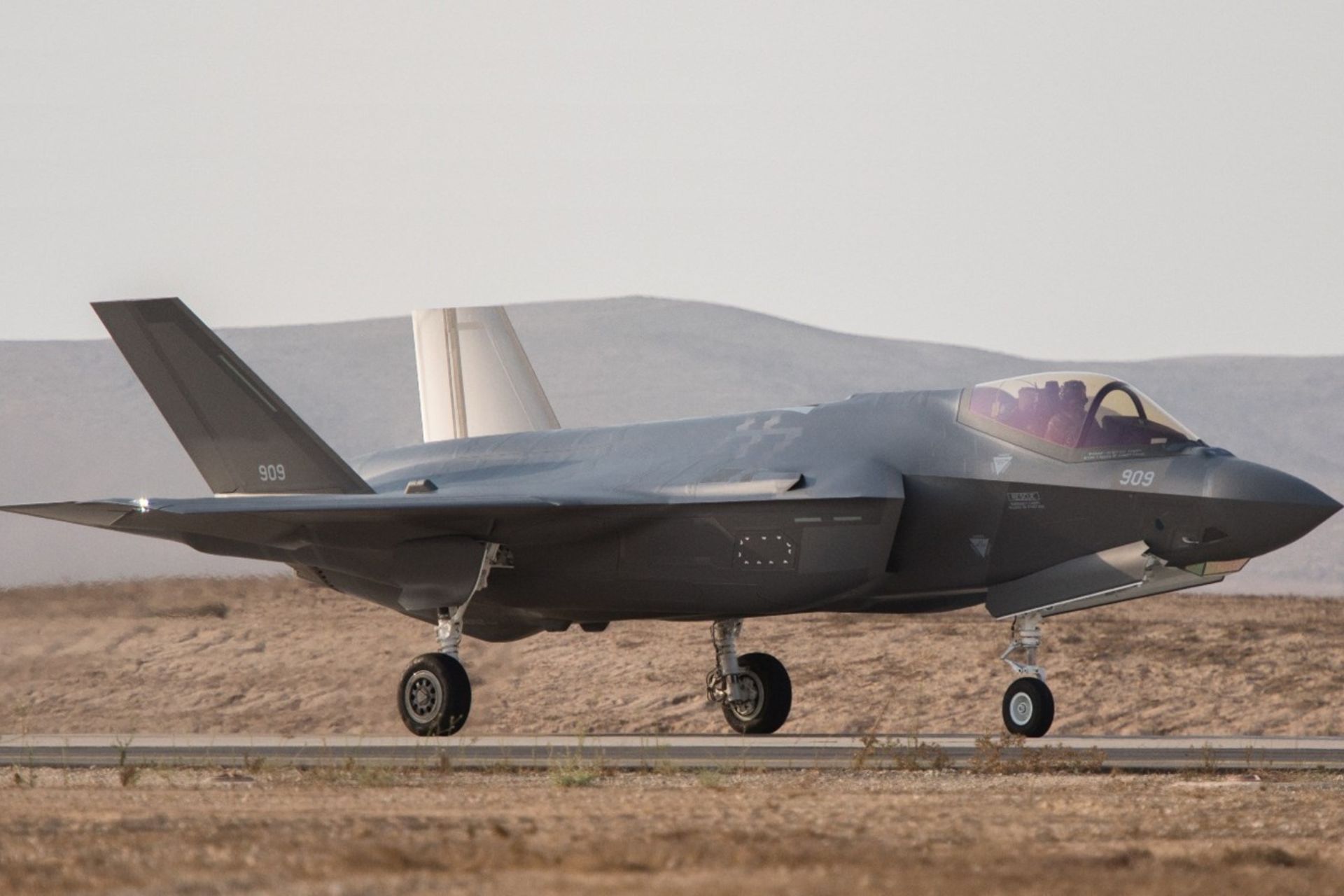
The F-35I is a customized version of the F-35A, featuring Israeli-made modifications to its avionics, electronic warfare systems, and weapons. (Picture source: Israeli Air Forces)
Israel was the first country to select the F-35 through the U.S. government's Foreign Military Sales (FMS) program after signing a Letter of Agreement in October 2010. The Israeli Air Force (IAF) named the F-35 "Adir," meaning "The Mighty One" in Hebrew. On June 22, 2016, the IAF received its first F-35 Adir. The Israeli F-35 fleet was declared operational in December 2017, marking the end of an intensive integration and training effort at Nevatim Airbase, Israel.
Israel’s procurement of the Lockheed Martin F-35I "Adir" began with a formal agreement in 2010, making it the first country to acquire this aircraft via the U.S. Foreign Military Sales (FMS) program. The first batch of nine F-35Is became operational with the IAF in December 2017. By November 2022, Israel had 36 F-35Is in service, including a unique testbed version for integrating Israeli-made systems. These aircraft, based at Nevatim Airbase, are part of three operational squadrons.
The F-35I is a customized version of the F-35A, featuring Israeli-made modifications to its avionics, electronic warfare systems, and weapons. The stealth capabilities, advanced sensor systems, and versatility of the F-35I provide Israel with significant advantages in situational awareness, precision targeting, and combat effectiveness. In May 2018, Israel became the first country to use the F-35 in combat, demonstrating its operational capabilities.
Despite these speculations, Israeli authorities quickly claimed that most of the missiles had been intercepted and destroyed, minimizing damage and avoiding any casualties in Israel. Iranian propagandists, however, insisted that significant damage was inflicted, particularly at Nevatim Airbase, home to two F-35I squadrons, claiming it had been completely destroyed. Videos showing missiles targeting Tel Aviv and footage purportedly showing damage to F-35s in Gaza further fueled the controversy.
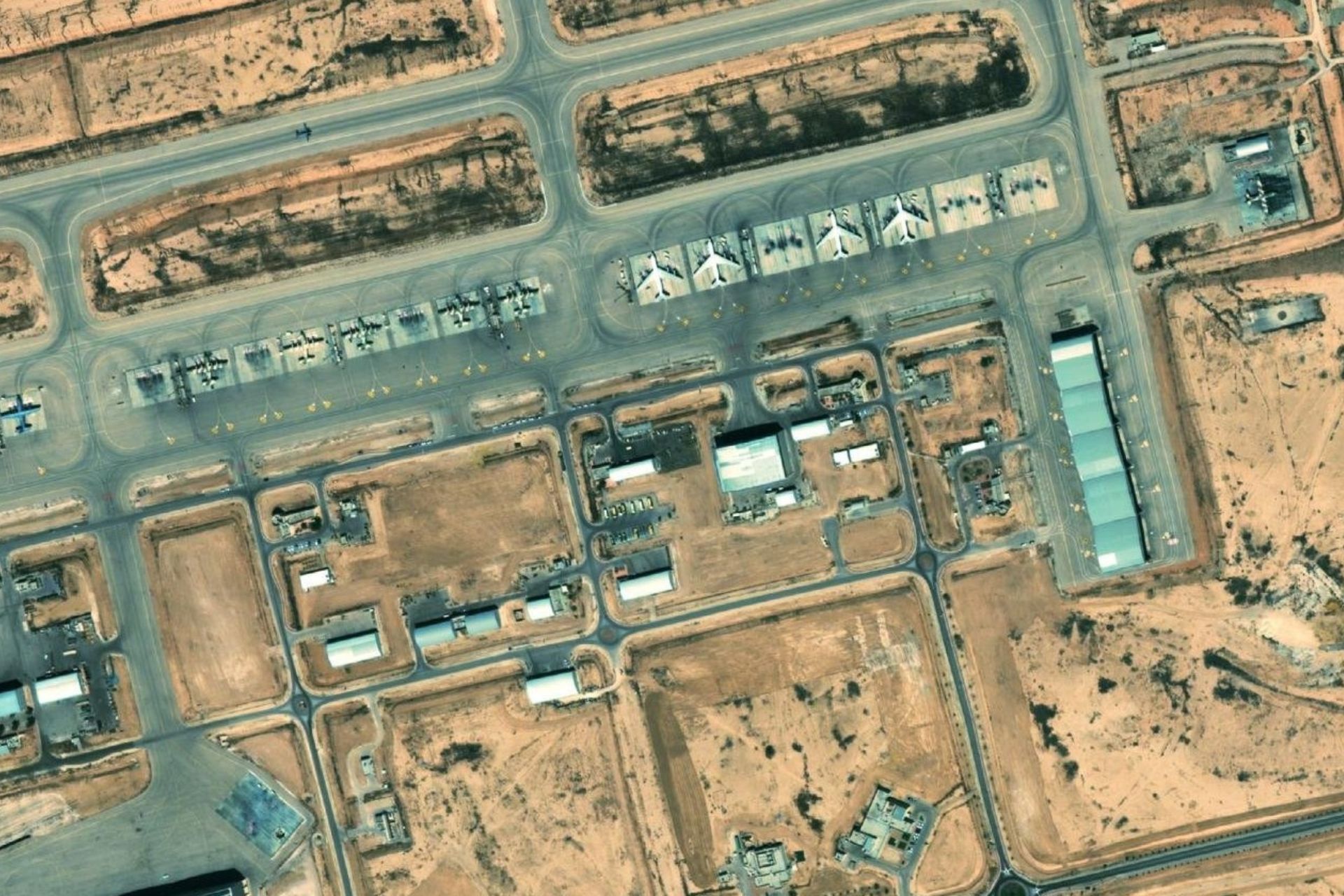
Satellite image of Nevatim Air Base before the Iranian strikes on September 19, 2024. (Picture source: Esry)
The Israeli military acknowledged that some of its airbases were hit during Iran’s massive ballistic missile attack but clarified that the strikes did not impair the operational capacity of the IAF. Missiles caused minor damage to offices and maintenance areas at the bases, but critical infrastructure and aircraft remained unaffected. The attack involved about 200 ballistic missiles, but most were intercepted by Israeli and U.S. defense systems, limiting the damage.
Several experts pointed out that these claims lack verifiable evidence. According to Dr. Kurt Braddock, assistant professor of public communication at American University, while it is possible that some missiles struck Israeli airbases, the claim that dozens of F-35s were destroyed appears to be fabricated. Braddock also referenced reports of a protest by Palestinian activists at a factory producing F-35 components, though this seemed to have little impact on production.
Despite doubts, disinformation continued to spread on social media. Exaggerated claims of Iranian success were widely shared, lending further credibility to the initial reports. This resulted in a mix of misinformation and disinformation. According to Braddock, misinformation occurs when individuals share images or videos believing them to be true without critically evaluating the content. In contrast, disinformation involves a deliberate effort to spread false information for strategic purposes.
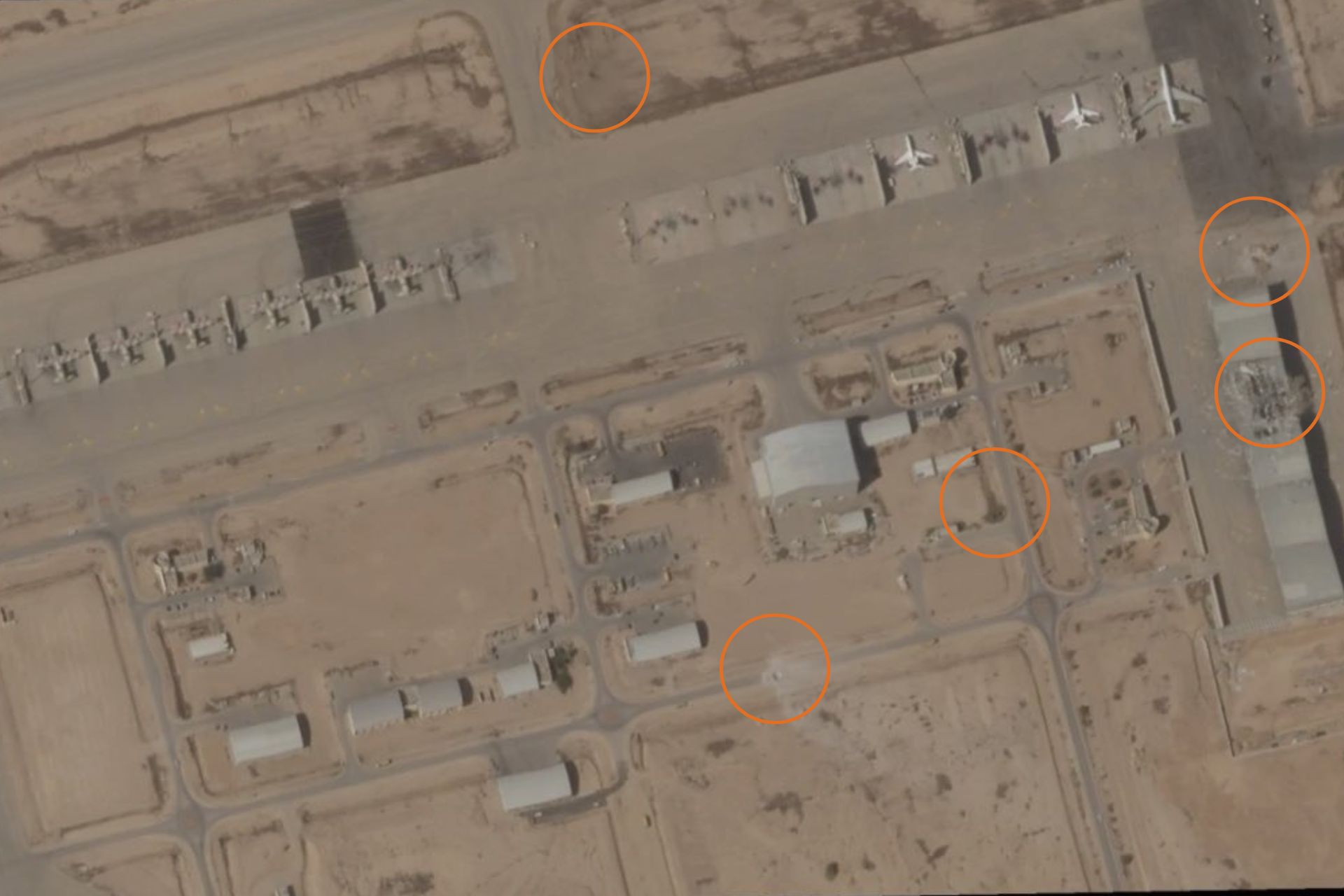
Satellite image of Nevatim Air Base after the Iranian attacks with the various visible impacts, October 3, 2024 (Picture source: X Channel @ClashReport)
In this case, it is likely that Iranian state media and its operatives engaged in a coordinated campaign to present a fictional narrative, using false or exaggerated claims to reinforce the perceived success of the missile strikes. Dr. Matthew Schmidt, associate professor at the University of New Haven, emphasized that these campaigns aim not necessarily to convince the public of outright lies but to create confusion by flooding the media with contradictory information. This tactic aims to overwhelm individuals with data, making it harder to discern truth from falsehood.
Even if Israeli authorities were to counter these claims by providing evidence of minimal damage, such as photos of largely intact airbases, there is a risk that this too would be dismissed as misinformation. In this way, Tehran could gain a short-term advantage by casting doubt on Israel's defensive capabilities and downplaying the ineffectiveness of its missile attack.
In reality, reports indicate that while not all Iranian missiles were intercepted, those that reached their targets caused minimal damage, with no casualties in Israel. This outcome is likely embarrassing for Iran, whose missile attack failed to achieve the level of destruction it may have intended. However, by spreading exaggerated claims about the effectiveness of the attack, Iranian propagandists seek to shift the narrative in their favor, creating the perception that the strikes were far more successful than they actually were.
Read more: Iranian Media Alleges Destruction of Israeli F-35 Fighters in Missile Strike
- Details
- Written by: Administrator
- Category: 2024
- Hits: 5206
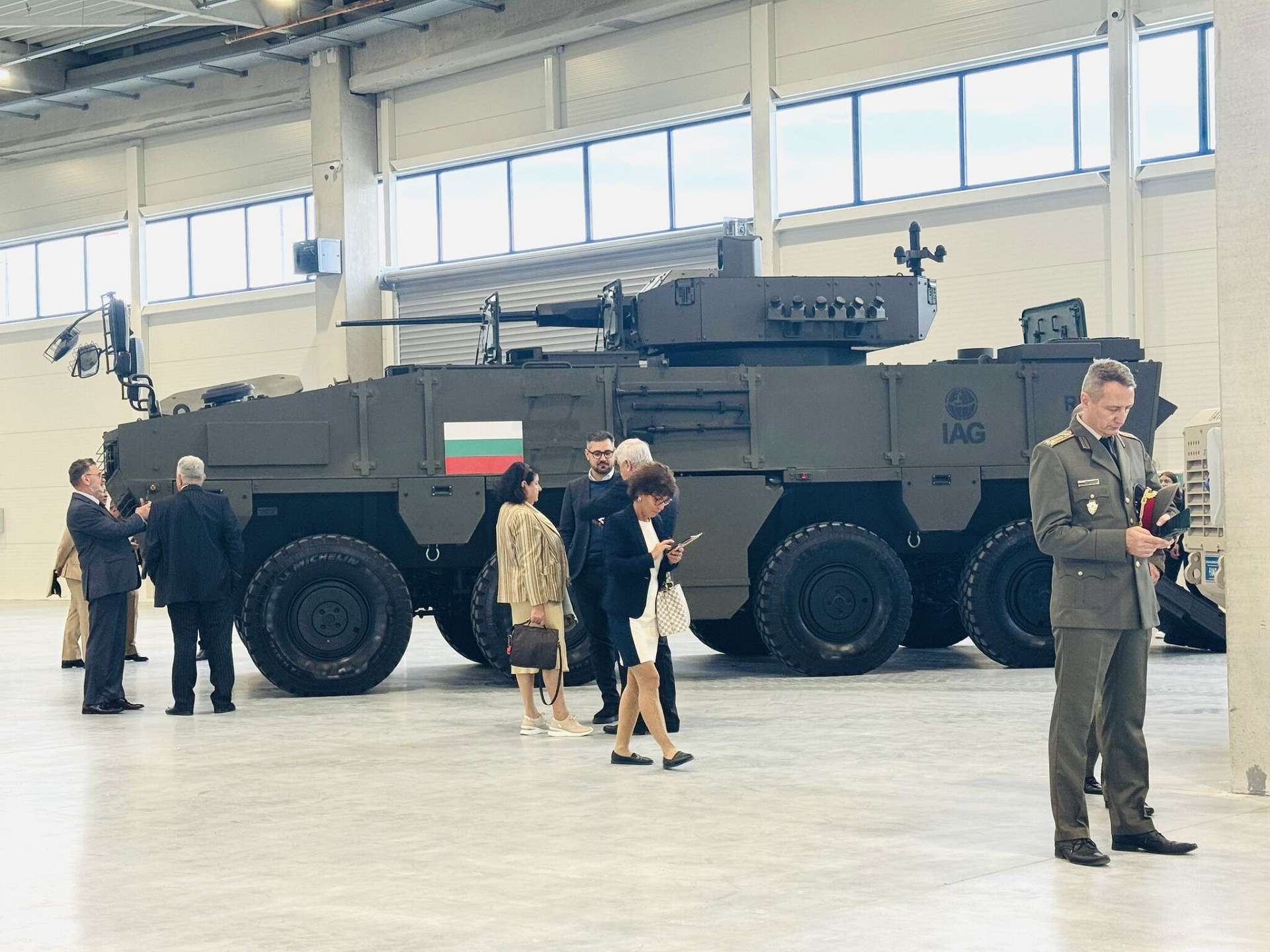
International Armored Group (IAG), a global leader in the design, engineering, and manufacturing of armored vehicles, has officially announced the opening of its newest state-of-the-art facility in Bulgaria. This strategic expansion marks a significant milestone in the company's continued growth and commitment to delivering cutting-edge armored solutions to customers across Europe and beyond.
Follow Army Recognition on Google News at this link
With the opening of the new facility in Bulgaria, IAG will be able to produce state-of-the-art armored vehicles for the European military vehicles market. (Picture source: IAG)
Founded in 1996, International Armored Group (IAG) is a leading manufacturer of armored vehicles. Its products include armored SUVs, military trucks, cash-in-transit vehicles, and armored ambulances. Known for its engineering excellence and commitment to safety, IAG's vehicles are in service with militaries, government agencies, and private security firms worldwide.
With facilities in the United States, Canada, the UAE, Turkey, South Africa, and now Bulgaria, IAG continues to push the boundaries of what is possible in armored vehicle technology, delivering innovative solutions that protect lives in some of the world’s most dangerous environments.
The new Bulgarian facility, equipped with the latest technologies and advanced production capabilities, will bolster IAG’s ability to meet the increasing demand for high-quality, reliable armored vehicles in the region. The plant will focus on producing various armored vehicles, including armored personnel carriers, tactical vehicles, and specialized vehicles for military, law enforcement, and civilian use.
This move reflects IAG’s strategic vision of expanding its footprint in Europe, providing timely and efficient delivery of advanced armored vehicles tailored to the needs of European clients. Bulgaria, located at the crossroads of Europe and Asia, offers a prime location for distribution to key markets in both continents, enabling IAG to strengthen its global supply chain and production efficiency.
IAG’s new facility is designed to focus on innovation and advanced manufacturing techniques. It will feature state-of-the-art equipment, including high-precision CNC machines, laser-cutting technology, and robotic welding systems. The plant will also incorporate sustainable practices to reduce environmental impact, including energy-efficient machinery and waste-reduction processes.
With the rise in global security challenges, demand for armored vehicles has surged across various sectors, including the military, government, law enforcement, and private enterprises. IAG's expansion into Bulgaria will allow the company to more effectively respond to its clients' evolving needs, offering customized solutions with shorter delivery times and enhanced service capabilities.
The facility will also play a key role in developing next-generation armored vehicles, integrating the latest materials and technologies to improve vehicle performance, durability, and occupant protection. This includes advancements in lightweight armor materials, enhanced ballistic protection, and systems designed to counter emerging threats such as improvised explosive devices (IEDs) and drone attacks.
As part of IAG's broader strategy to remain at the forefront of the armored vehicle industry, the opening of the Bulgarian facility represents a forward-looking step towards ensuring the company’s leadership in the global market. IAG has a longstanding reputation for producing high-quality armored vehicles trusted by clients in over 100 countries worldwide.
The new facility in Bulgaria is expected to increase IAG’s overall production capacity while allowing the company to continue its focus on quality and innovation. By expanding its manufacturing operations in Europe, IAG will be better positioned to serve clients with precision and reliability, strengthening its competitive edge in an increasingly complex global landscape.
- Details
- Written by: Jérôme Brahy
- Category: 2024
- Hits: 4062
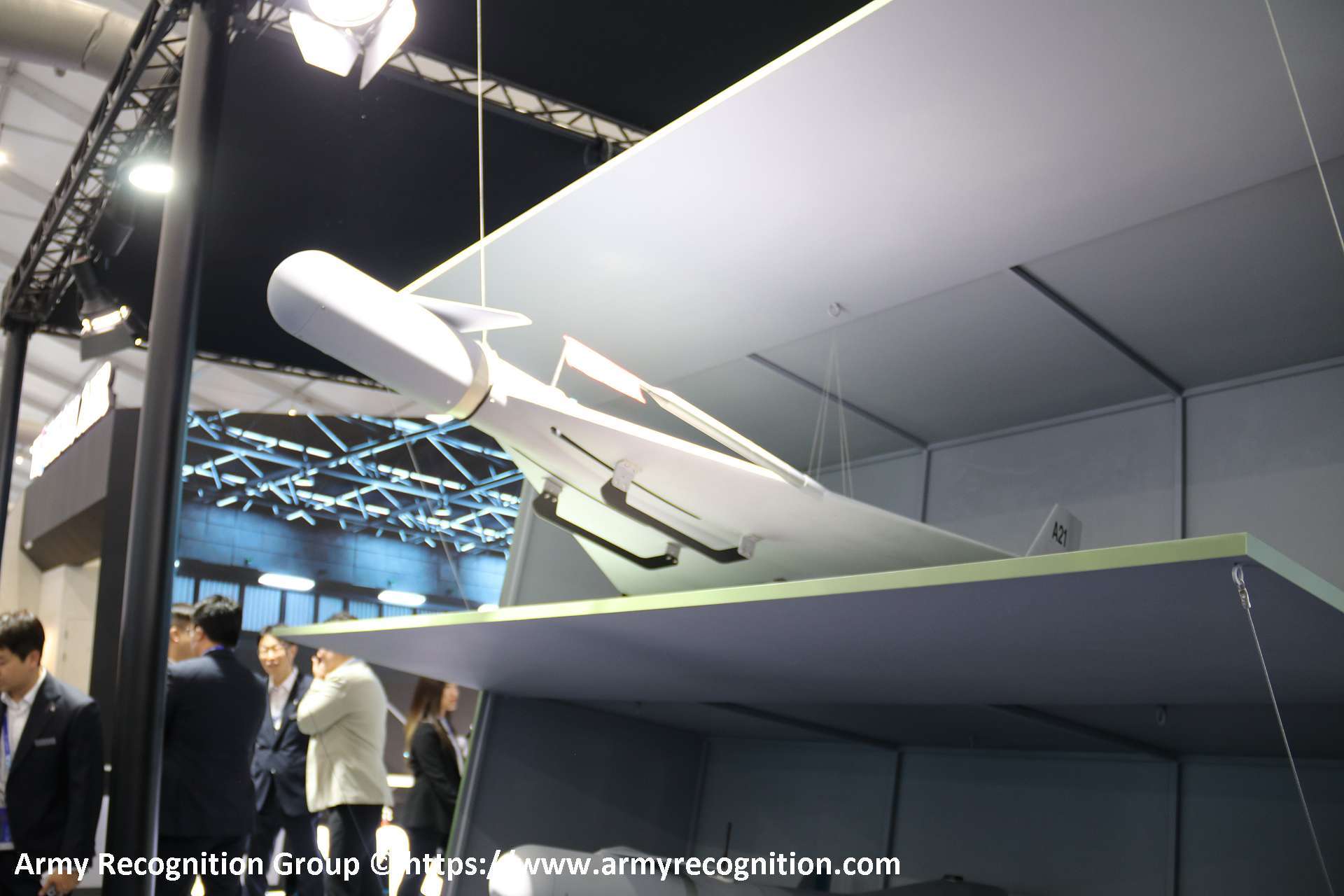
At the KADEX 2024 exhibition, Korean Air introduced the KUS-LM, an unmanned aerial vehicle (UAV) classified as a loitering munition. This system is capable of launching multiple rockets and can operate without the need for traditional runways. It is also fully autonomous, with an option for operators to manually control the system using Man-in-the-Loop (MITL) functionality.
Follow Army Recognition on Google News at this link
The KUS-LM features a length of 1.5 meters and a width of 1.2 meters. It is powered by a two-cylinder engine and can reach a maximum speed of 1,500 kilometers per hour. (Picture source: Army Recognition)
The KUS-LM features a length of 1.5 meters and a width of 1.2 meters. It is powered by a two-cylinder engine and can reach a maximum speed of 1,500 kilometers per hour. However, some technical details, such as the payload weight, operational range, and altitude, remain unspecified.
The development of the KUS-LM aligns with ongoing advancements in loitering munitions, which are designed to stay airborne over a target area before launching an attack. Its combination of autonomous capabilities and multiple rocket launchers highlights its potential role in various operational environments.
Read more: Korean Air launches KUS-LM loitering munition for runway-free operations
- Details
- Written by: Vandenbosch
- Category: 2024
- Hits: 5964
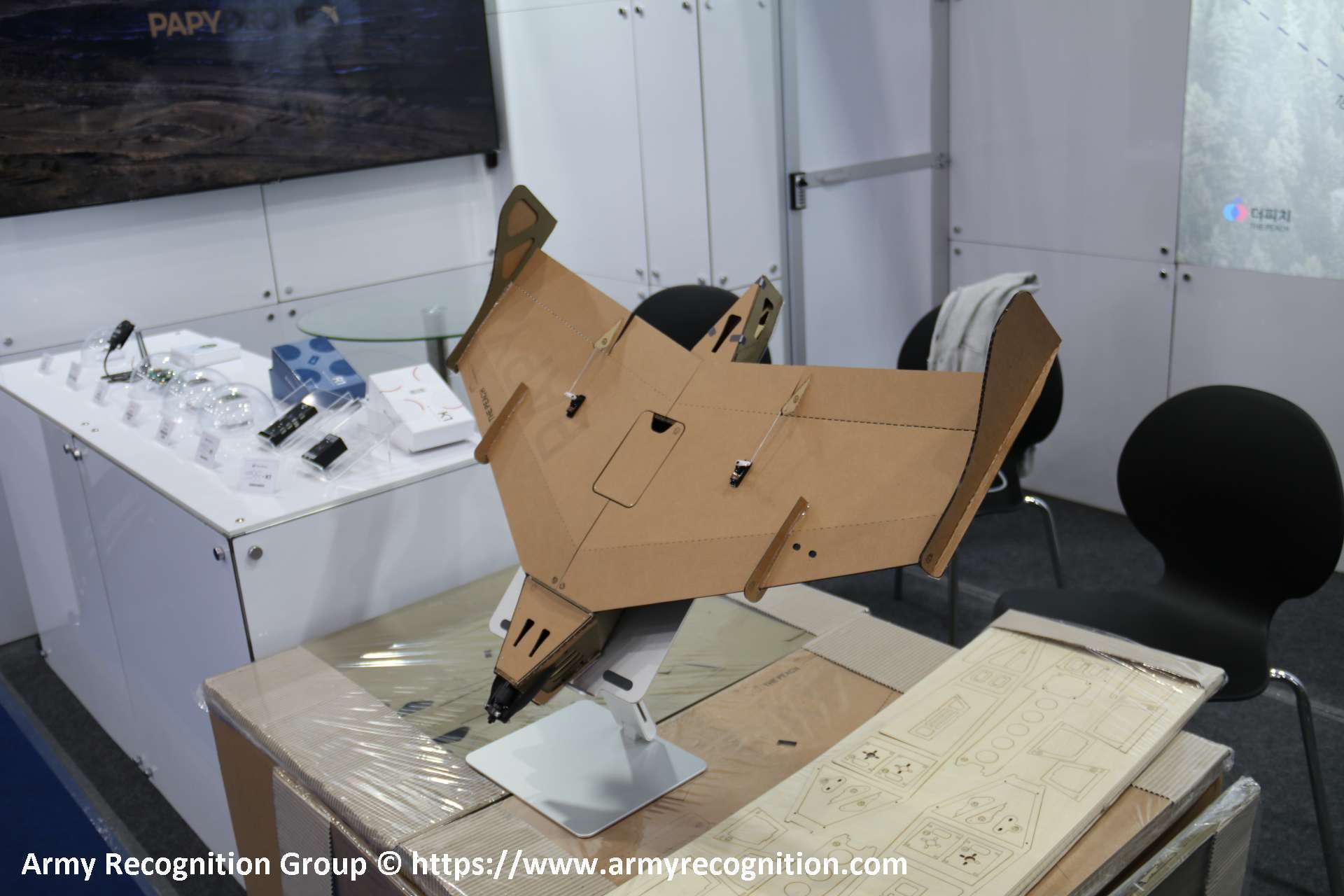
The PapyDrone-800 reconnaissance drone was unveiled at the KADEX 2024 exhibition in South Korea, marking a presentation in the field of low-cost military aeronautics. Made from cardboard materials, this lightweight, fixed-wing drone was designed to provide high-efficiency surveillance capabilities while minimizing production and deployment costs.
Follow Army Recognition on Google News at this link
The PapyDrone-800 at KADEX2024. (Picture source: Army Recognition)
The PapyDrone-800 stands out for its compact dimensions and reduced weight. With a wingspan of 800 mm and a maximum takeoff weight of 1 kg, it is optimized for rapid deployment in the field. Its manual launch allows for deployment without heavy infrastructure, offering valuable flexibility in today's combat environments. This drone can fly at a maximum speed of 100 km/h with an operational range of 20 minutes, which is sufficient for short-range reconnaissance missions.
In addition to its low cost, the PapyDrone-800 is equipped with a reconnaissance camera that provides real-time images. This makes it a viable replacement for more complex and expensive drone systems for certain specific missions. The system offers live video transmission and real-time targeting, enhancing the operational efficiency of military units.
Another key feature is its integrated avionics system, which includes a KCNA/P authentication security module to ensure the integrity of flight and mission data. Its lightweight control system manages flight trajectories, navigation, and sensor data processing, simplifying mission management. A dedicated app also allows for quick connection and the simultaneous management of five drones, optimizing operational coordination.
The PapyDrone-800 also features a waterproof coating compliant with the IPX3 standard, ensuring its use even in harsh weather conditions. Moreover, it can be customized based on specific mission needs, including an internally developed autopilot module capable of encrypting flight logs and mission data.
This cardboard drone positions itself as an economical solution designed to offer reconnaissance capabilities to units operating in demanding conditions while limiting the cost and complexity of current systems. The PapyDrone-800 represents a new approach to military surveillance, combining simplicity, low cost, and efficiency — qualities particularly valued in modern conflicts where agility and responsiveness are essential.
The KADEX 2024 exhibition, also known as the Korea Army International Defense Industry Exhibition, is taking place from October 2 to October 6, 2024. This major event is held in Gyeryongdae, Chungcheongnam-do province, South Korea, which is home to the headquarters of the South Korean armed forces. KADEX is a key platform for South Korea’s defense industry, bringing together military delegations and defense companies from around the world to showcase the latest technological innovations in fields such as aviation, mobility, firepower, and advanced defense technologies, including artificial intelligence and drones.
Read more: PapyDrone-800 Cardboard Drone Attracts Armed Forces with its Low Cost at KADEX 2024
- Details
- Written by: Triffaux
- Category: 2024
- Hits: 2305
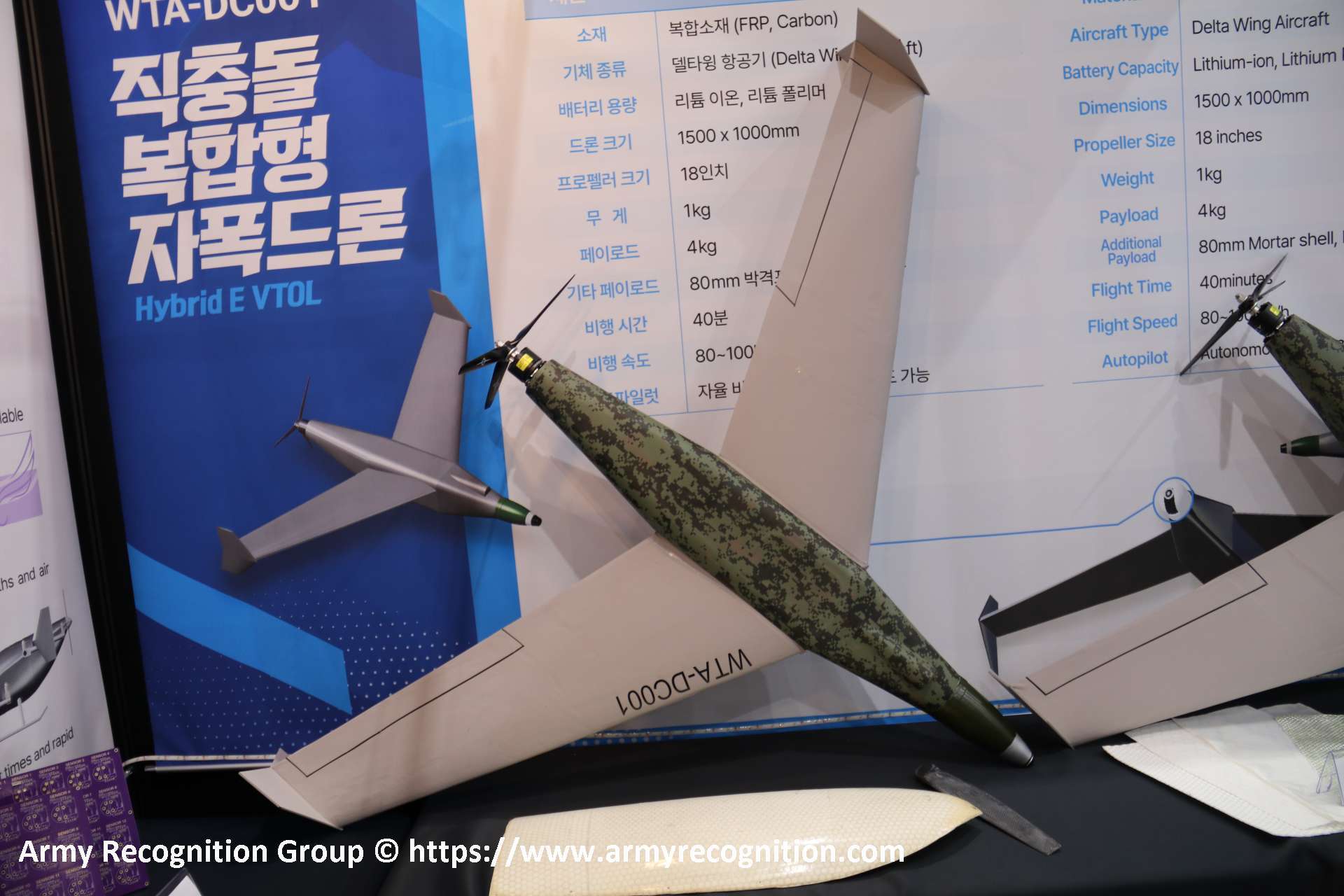
At KADEX 2024, held in South Korea from October 2 to 5, the WTA-DC001 hybrid suicide drone has taken center stage, showcasing its advanced design and operational capabilities. This drone represents an important step in autonomous warfare technology, designed for both offensive and reconnaissance missions with precision and efficiency.
Follow Army Recognition on Google News at this link
WTA-DC001 Hybrid Drone (Picture source: Army Recognition)
Crafted from high-quality composite materials, including Fiber-Reinforced Plastic (FRP) and carbon, the WTA-DC001 boasts a robust yet lightweight structure. Its delta-wing configuration enhances aerodynamic performance, allowing for more efficient flight and precise targeting. The drone’s compact size, measuring 1500 by 1000 mm, and a weight of only 1 kilogram, ensure its agility in complex operational environments.
The WTA-DC001 is capable of carrying a payload of up to 4 kilograms, which can include an 80mm mortar shell for combat missions or a reconnaissance camera for surveillance operations. This flexibility allows the drone to serve dual purposes, making it a valuable asset in both direct engagement and intelligence-gathering missions.
Powered by either a lithium-ion or lithium-polymer battery, the drone can sustain flight for up to 40 minutes, reaching speeds between 80 and 100 km/h. Its ability to operate autonomously or in semi-autonomous modes, thanks to its integrated autopilot system, offers users enhanced control and adaptability depending on mission requirements. This autonomous capability minimizes human intervention and reduces the risk of operator error during critical missions.
Another key feature of the WTA-DC001 is its compatibility with infrared (IR) and electro-optical (EO) cameras, optimizing it for long-range reconnaissance and target detection. This enhances its situational awareness, making it highly effective in modern combat scenarios where information dominance is crucial.
Presented at KADEX 2024, the WTA-DC001 exemplifies the evolving role of unmanned systems in military operations. Its ability to combine offensive striking power with advanced reconnaissance capabilities positions it as a game-changer in drone warfare. As South Korea hosts this international defense exhibition, the spotlight on autonomous systems like the WTA-DC001 highlights the growing importance of technological innovation in securing strategic advantages on the battlefield.
The introduction of the WTA-DC001 at KADEX 2024 signals a broader trend in the defense industry: the increasing reliance on autonomous and semi-autonomous systems to perform complex tasks that traditionally required human intervention. This shift promises to reshape the future of warfare, with drones like the WTA-DC001 leading the charge in next-generation military capabilities.
Read more: Rise of Hybrid Drones: WTA-DC001 Designed for Offensive and Reconnaissance Operations
- Details
- Written by: Halna du Fretay
- Category: 2024
- Hits: 7600
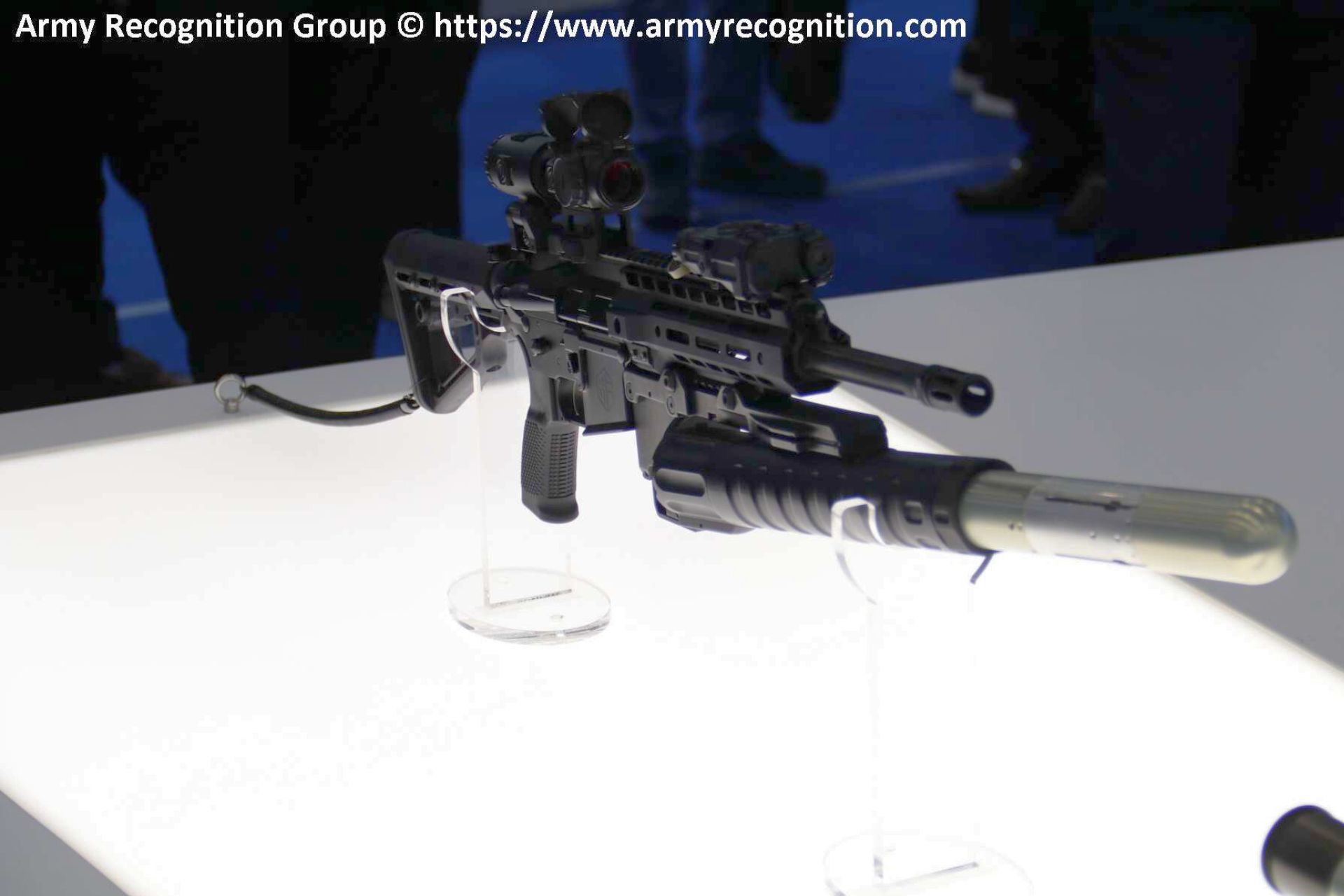
At the KADEX 2024 event, LIG Nex1 presents its 40mm mini-missile. This missile is designed to reduce costs by using warheads originally developed for 40mm grenades while minimizing design risks. The 40mm missile is compatible with standard under-barrel grenade launchers, allowing easy integration with existing military equipment. Due to its adaptable design, it can be fired from under-barrel launchers or launched from a light tube with minimal recoil, providing flexibility for infantry units without requiring additional specialized launch equipment.
Follow Army Recognition on Google News at this link
Due to its compact size and light weight, this missile is also suited for potential drone (UAV) applications, which could expand its use on the battlefield (Picture source: Army Recognition)
The missile is currently being developed with an uncooled infrared seeker operating in the 8-12 µm range. A version equipped with a semi-active laser (SAL) seeker is also in development upon client request. Weighing about 2 kg, the missile has a maximum range of 2 km. Its anti-armor warhead can neutralize lightly armored vehicles, while fragmentation warheads can target enemy positions such as machine gun or anti-tank missile nests.
Due to its compact size and light weight, this missile is also suited for potential drone (UAV) applications, which could expand its use on the battlefield. This flexibility allows LIG Nex1 to develop missile systems that meet the evolving needs of modern armed forces, incorporating AI and UAV platforms for more autonomous and precise operations.
The 40mm missile, first unveiled at IDEX 2019, weighs approximately 2 kg, has a range of 2 km, and utilizes infrared guidance. Initially presented as a development at the request of the South Korean military, it was later clarified that it was not intended to replace the K11 system. This missile, designed for the M320 launcher, was developed by LIG Nex1 in response to a specific request from the Saudi military, who had been using expensive missile systems to address minor threats such as motorcycles. LIG Nex1 offered a more cost-effective solution, priced at around 40 million won per unit, with the goal of reducing this cost to 20 million won through mass production.
The Saudi forces expressed interest in a semi-active radar-guided option, and the technology has been compressed to fit the 40mm grenade size. While still more expensive compared to unguided systems like the K11, priced at about 16 million won, the 40mm missile offers a more cost-effective solution for light targets.
A comparison can be made between this South Korean mini-missile and Raytheon’s Pike munition, designed to provide increased precision and extended range for infantry forces. Both systems share similar characteristics in terms of caliber and range (around 2 km) and utilize advanced guidance systems. However, the LIG Nex1 missile features uncooled infrared guidance and offers a semi-active laser (SAL) option, making it versatile for both day and night missions.
While the Pike is specifically designed for infantry use with under-barrel grenade launchers, the South Korean missile is envisioned for multiple applications, including potential integration with UAVs, giving it broader operational flexibility.
- Details
- Written by: Triffaux
- Category: 2024
- Hits: 4969
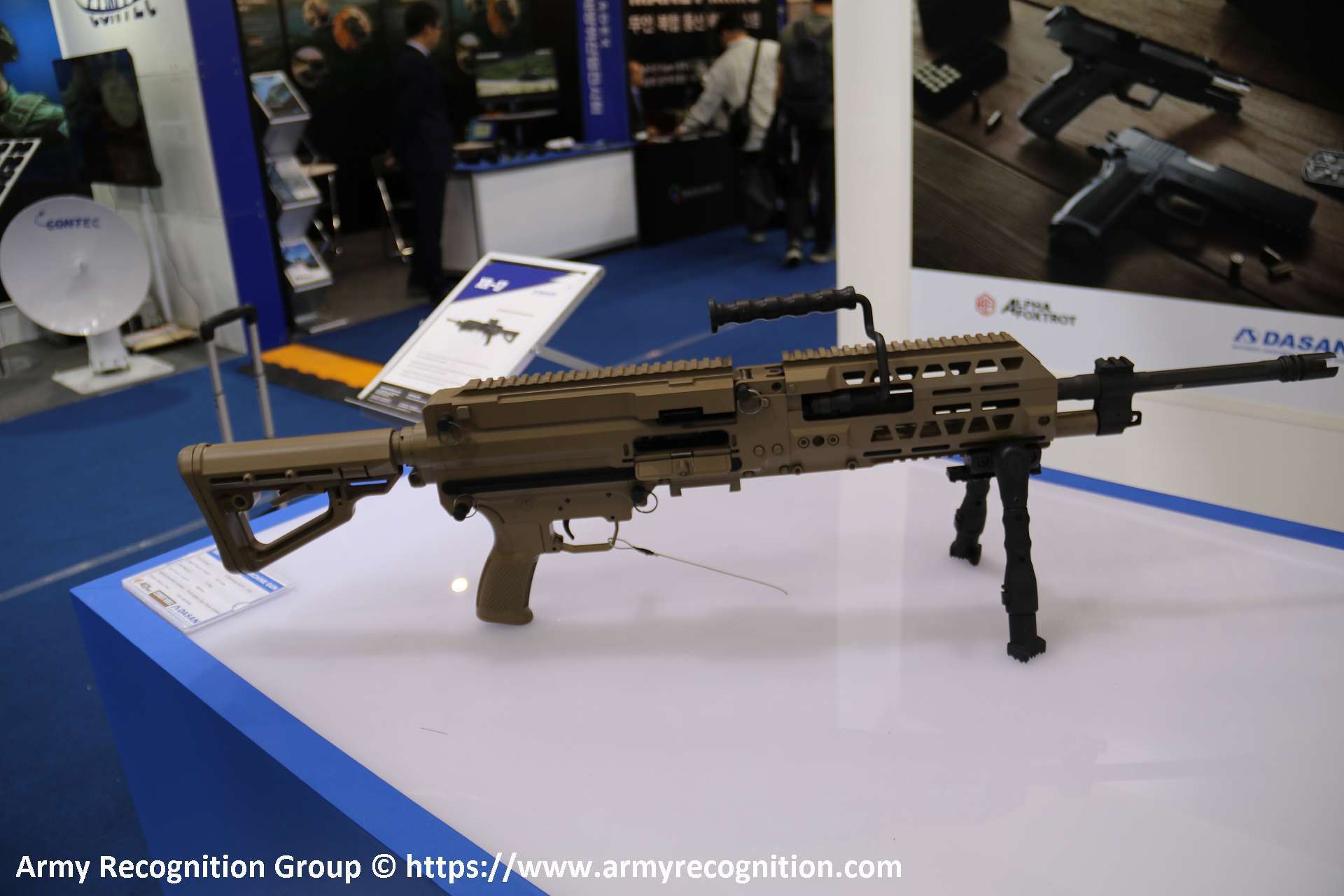
The South Korean company Dasan Machineries Co., Ltd. unveiled its latest model of light machine gun, the XR-17, at the KADEX 2024 exhibition currently taking place in South Korea from October 2 to 5, 2024.
Follow Army Recognition on Google News at this link
Dasan Machineries XR-17 Light Machine Gun (Picture source: Army Recognition)
The XR-17, chambered in 5.56x45mm, stands out due to its improved rate of fire and reduced weight, under 6 kg, providing enhanced reliability and optimized maneuverability. Designed for armed forces seeking a balance between lightness and performance, the XR-17 is intended to facilitate operations in combat situations.
One of its main features is the handguard, which is perforated with multiple holes, along with an upper Picatinny rail that allows for quick barrel cooling and the addition of various accessories. Additionally, the XR-17 includes an ambidextrous charging handle, an ambidextrous selector, and an adjustable stock plate with six positions, making it particularly adaptable to the needs of operators in the field.
With this new machine gun, Dasan Machineries aims to meet the growing demands of modern armed forces regarding mobility, versatility, and performance. KADEX 2024 presents an opportunity for the company to showcase its latest innovations in a sector where competition is fierce, and every technical detail can make a difference in the international arms market.
Currently, the XR-17 is under evaluation for integration into the armed forces, particularly those of the Republic of Korea, where Dasan Machineries has recently been selected to supply weapons to special units.
Although there is no specific information on its current use, the XR-17 is considered a competitor to other models such as the K15 from S&T Motiv, which is used by special forces.
Moreover, this model has generated international interest, with potential markets in countries like Bangladesh, further reinforcing South Korea's reputation as a leading arms supplier in the global market.
The XR-17 is thus expected to become a key tool for tactical operations, and its presentation at KADEX could mark a turning point for its proliferation on a global scale.
Read more: Dasan Machineries to Equip South Korean Special Forces with New XR-17 Light Machine Gun
- Block-I Laser System: South Korean Technological Breakthrough to Counter Low-Cost Drones at KADEX 2024
- South Korean Company Kia Develops 81mm Automatic Laying Mortar System Mounted on KLTV 4×4 for Rapid Reaction Forces
- Hyundai WIA's 105mm howitzer system offers up to 10 rounds per minute for airborne operations at KADEX 2024
- Hanwha Aerospace Presents K9A3, an Autonomous Version of K9 Thunder for Strategic Long-Range Strikes at KADEX 2024