
- Details
- Written by: Administrator
- Category: 2024
- Hits: 5895










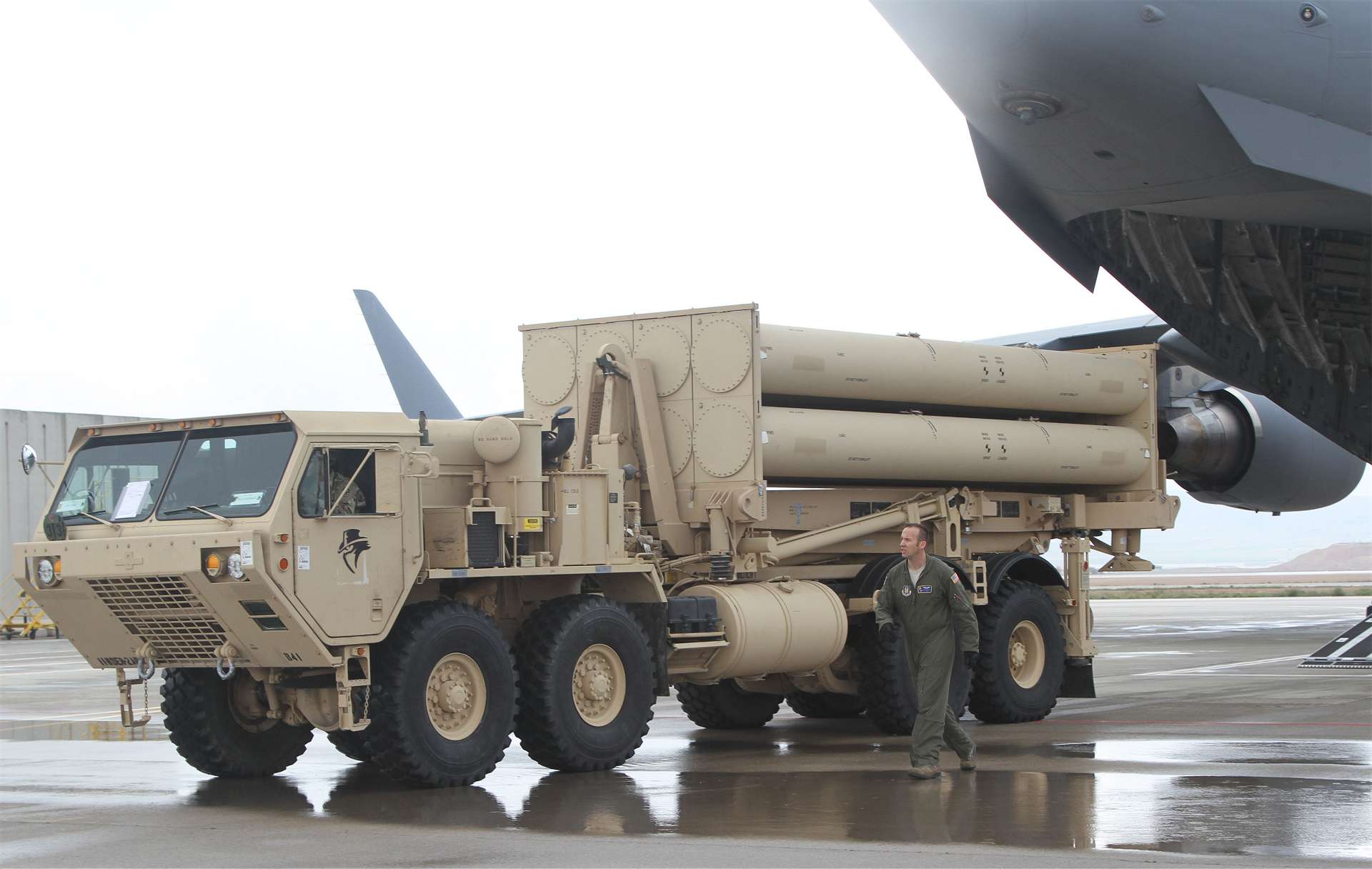
On Sunday, October 13, 2024, Pentagon spokesman Maj. Gen. Pat Ryder announced that Defense Secretary Lloyd Austin had authorized the deployment of a Terminal High Altitude Area Defense (THAAD) battery to Israel at the direction of President Joe Biden. This move comes in response to recent escalations, including Iran's ballistic missile attacks on Israel in April and October of this year. Ryder emphasized that the deployment would strengthen Israel’s air defense capabilities amid heightened regional tensions.
Follow Army Recognition on Google News at this link
A U.S. Air Force Airman unloads an American THAAD air defense missile system from a C-17 Globemaster III at Nevatim Air Base, Israel, on March 1, 2019. (Picture source: U.S. DoD)
This is not the United States' first deployment of THAAD in the region. President Biden directed a similar deployment last year, following the October 7, 2023, Hamas attack on Israel, to protect American troops and interests. The U.S. also deployed a THAAD battery to Israel in 2019 as part of a joint training and integrated air defense exercise. The new deployment adds to Israel’s already robust air defense systems, which include the Iron Dome, David’s Sling, and Arrow 3 systems, designed to intercept threats ranging from short-range rockets to long-range missiles.
THAAD, or Terminal High Altitude Area Defense, is designed to intercept short- and medium-range ballistic missiles in their terminal phase—right before impact—providing a crucial layer of defense against missile threats. THAAD’s key strength lies in its ability to intercept threats at both high altitudes and long ranges, making it particularly effective against ballistic missiles. The system can engage targets at ranges of up to 200 kilometers and at altitudes exceeding 150 kilometers, far beyond the reach of most missile defense systems, allowing it to neutralize warheads before they reenter the atmosphere.
Iran possesses one of the largest and most diverse missile arsenals in the Middle East, comprising a wide range of short-, medium-, and long-range ballistic missiles. The country has developed several missile systems, such as the Shahab, Ghadr, and Sejjil series, capable of striking targets throughout the region, including Israel and U.S. military bases. Some of Iran’s missiles, like the Shahab-3, have a range of over 1,000 kilometers, while more advanced systems like the Sejjil-2 have ranges that extend beyond 2,000 kilometers, potentially reaching parts of Europe. These missiles can carry conventional or, in a worst-case scenario, nuclear warheads, though Iran insists its missile program is defensive.
In addition to ballistic missiles, Iran has also developed cruise missiles, which are more difficult to detect and intercept due to their low-altitude flight paths. Iran’s missile capabilities, combined with its ability to produce and modify these systems domestically, pose a significant strategic threat in the region, especially to adversaries like Israel and the United States. These missiles have been central to Iran’s military strategy, allowing it to project power and retaliate against potential threats without relying solely on conventional forces.
Against Iran’s ballistic missile arsenal, which includes a variety of long-range and medium-range systems, THAAD offers a significant defensive advantage. Its ability to intercept missiles at such high altitudes ensures that the debris or any remaining missile fragments fall harmlessly outside of populated areas. Paired with Israel’s existing air defense systems, THAAD adds another crucial layer of protection to Israel’s multi-tiered defense strategy.
- Details
- Written by: Administrator
- Category: 2024
- Hits: 19757
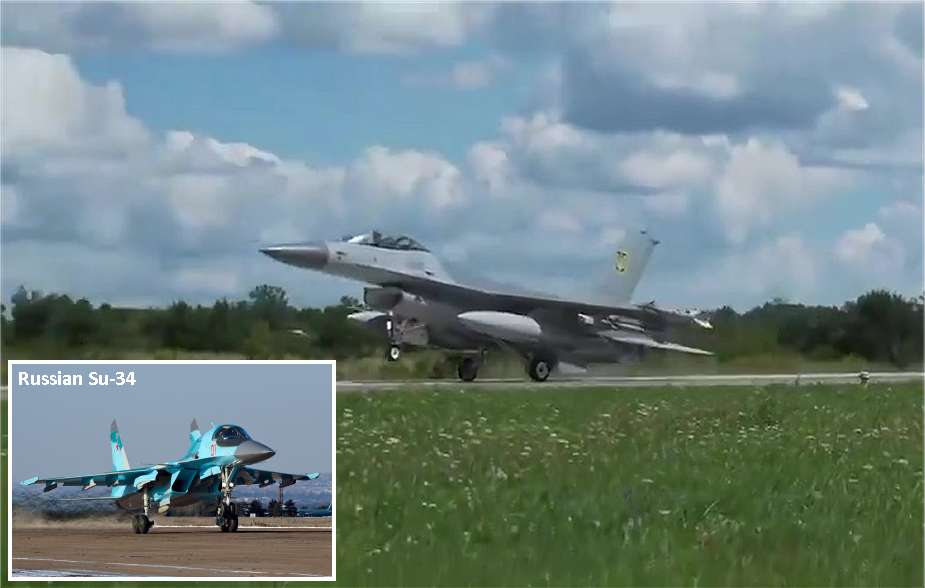
According to several reports published on social networks on October 13, 2024, an F-16 fighter jet operated by the Ukrainian Air Force shot down a Russian Su-34 fighter-bomber. This victory, Ukraine's first in air-to-air combat using the F-16, was achieved with the advanced AIM-9X Sidewinder missile, known for its infrared homing and high maneuverability. The AIM-9X, widely regarded for its lethality, gives the F-16 a significant edge in dogfights, able to engage enemy aircraft at high angles and within close-range combat scenarios.
Follow Army Recognition on Google News at this link
Historic Moment: Ukrainian F-16 Claims First Air-to-Air Victory by Downing Russian Su-34 Fighter-Bomber
The F-16 Fighting Falcon is renowned for its versatile air-to-air combat capabilities, combining advanced avionics, radar systems, and an array of precision-guided missiles. One of its standout features is the AN/APG-66(V2) radar, which allows it to track multiple targets simultaneously while providing enhanced detection range and precision. The F-16 can carry a range of air-to-air missiles, including the AIM-120 AMRAAM for beyond-visual-range engagements and the AIM-9X Sidewinder for close-range dogfighting. Thanks to its off-boresight capability, the AIM-9X's ability to lock onto targets from extreme angles makes it particularly lethal in close-quarters combat. This mix of radar-guided and infrared-guided weapons enables the F-16 to dominate in both long-range and short-range engagements.
Compared to other contemporary fighter aircraft, such as Russia’s Su-35 and MiG-31, the F-16 has certain advantages regarding agility and electronic warfare capabilities. While the Su-35 boasts superior long-range radar and missile systems, the F-16 compensates with its superior maneuverability and integrated electronic warfare systems like the Pylon Integrated Dispensing System (PIDS), which deploys countermeasures to evade radar-guided threats. This agility, coupled with advanced helmet-mounted cueing systems that allow pilots to engage targets by simply looking at them, gives the F-16 a distinct advantage in close combat.
Moreover, the F-16’s multirole capabilities make it adaptable for a range of missions beyond air-to-air combat, including ground-attack roles. In air-to-air confrontations, however, its ability to engage multiple targets at various ranges and its integrated defensive measures provides a balanced approach to modern aerial warfare. While Russian aircraft like the Su-35 may have superior radar range, the F-16’s electronic warfare and countermeasures systems, combined with its superior dogfighting agility and modern missile systems like the AIM-9X, allow it to compete effectively against modern Russian fighters in both defensive and offensive air operations.
The AIM-9X Sidewinder missile is a state-of-the-art air-to-air weapon that has revolutionized modern dogfighting. Its infrared (heat-seeking) guidance system allows it to detect and lock onto the heat signature of an enemy aircraft, typically from the engines, making it highly effective against fast-moving targets. What sets the AIM-9X apart from previous iterations is its "high off-boresight" capability. This means that the pilot doesn’t need to be directly facing the enemy to fire; the missile can target and hit aircraft even at extreme angles relative to the jet's flight path.
This off-boresight capability is paired with a helmet-mounted sight (HMS) system, enabling the pilot to simply look at a target to guide the missile. This feature drastically reduces the reaction time needed in close air engagements, a critical advantage when pilots maneuver at high speeds and in high-threat environments. Moreover, the AIM-9X is known for its agility and ability to perform sharp turns, allowing it to stay locked onto highly agile enemy fighters.
In addition to the AIM-9X, the F-16 itself offers a combination of speed, radar systems, and maneuverability that make it a formidable platform for air-to-air combat. Equipped with beyond-visual-range missiles (such as the AIM-120 AMRAAM) alongside the AIM-9X, the F-16 can engage enemies both at close range and from distances where visual contact is not required.
This first victory in air-to-air combat for Ukraine marks a significant milestone in the conflict, demonstrating the growing capability of the Ukrainian Air Force thanks to NATO's continued support in terms of advanced weaponry and pilot training. The F-16, paired with the AIM-9X, offers a significant edge in aerial warfare against Russian aircraft like the Su-34, which are typically less maneuverable in close engagements.
- Details
- Written by: Administrator
- Category: 2024
- Hits: 5284
On October 11, 2024, the U.S. State Department approved a potential $1.2 billion Foreign Military Sale (FMS) to the United Arab Emirates (UAE) for advanced Guided Multiple Launch Rocket Systems (GMLRS) and Army Tactical Missile Systems (ATACMS), along with related precision-guided munitions and logistical support. This significant development highlights the deepening defense relationship between the two countries and reflects the United States' continued support for its strategic partners in the Middle East.
Follow Army Recognition on Google News at this link
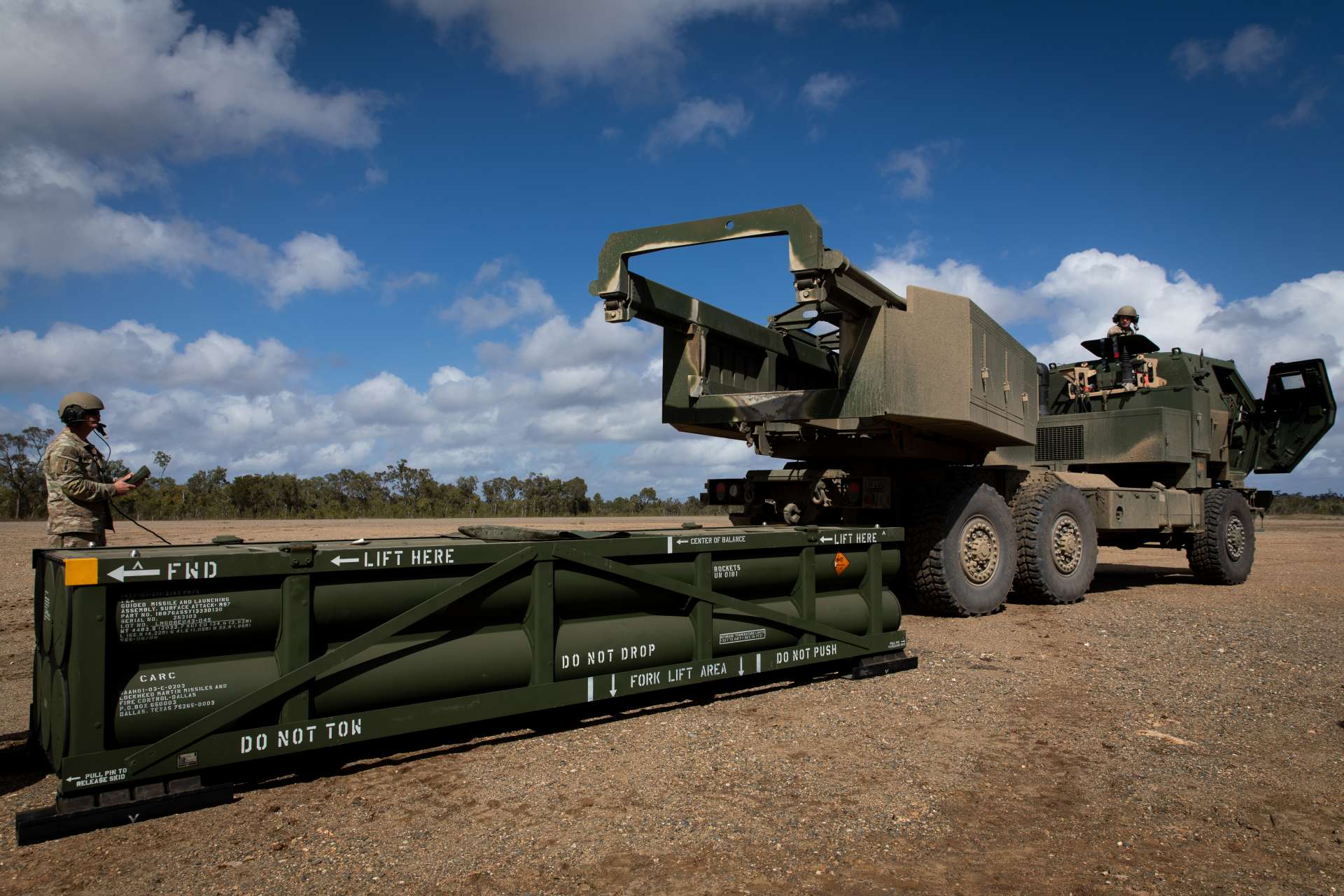
U.S. Army Sgt. Ian Ketterling, gunner for Alpha Battery, 1st Battalion, 3rd Field Artillery Regiment, 17th Field Artillery Brigade, prepares the crane for loading the Army Tactical Missile System (ATACMS) on to the High Mobility Artillery Rocket System (HIMARS). (Picture source: U.S. DoD)
The Defense Security Cooperation Agency (DSCA) formally notified Congress of the proposed sale, which is a required step in the FMS process, allowing lawmakers to review and potentially block the deal. The UAE has requested the purchase of 259 GMLRS M31A1 Unitary Pods, totaling 1,554 missiles, and 203 ATACMS M57 Unitary Missiles. These systems significantly upgrade the UAE's long-range firepower and precision strike capabilities.
The GMLRS is a surface-to-surface artillery rocket system designed to target enemy forces and equipment precisely. Each pod contains six rockets, making it highly effective in delivering concentrated fire on targets with minimal collateral damage. The system is known for its precision, allowing for accurate strikes on stationary and moving targets, making it an indispensable tool for modern battlefield operations.
The ATACMS is a long-range tactical missile capable of striking targets 300 kilometers away. Designed for deep strikes behind enemy lines, it can destroy high-value targets such as command centers, airfields, and logistical hubs. With its ability to deliver a powerful, high-explosive warhead over extended distances, ATACMS provides a significant advantage in disrupting enemy operations and infrastructure during combat.
The UAE can deploy these munitions using the M142 High Mobility Artillery Rocket System (HIMARS). The M142 HIMARS is a lighter, more mobile version of the M270, mounted on a truck chassis, and capable of carrying a single pod that can house either six GMLRS rockets or one ATACMS missile.
In addition to the munitions, the sale includes a variety of support services. These range from operational publications and technical documentation to training and training equipment for UAE personnel. The deal also covers software development and U.S. Government and contractor support for engineering, technical, and logistical assistance, ensuring that the UAE will be fully equipped to integrate and maintain these systems within its defense infrastructure.
This proposed sale aligns with U.S. efforts to promote stability and security in the Middle East. The UAE has long been a key U.S. partner in the region, and this deal represents a continuation of that strong defense relationship. With these systems, the UAE will be better positioned to defend against regional threats, including both state and non-state actors.
While Congress has the right to review the sale, it is expected to proceed without significant opposition, as the UAE has consistently been a reliable and trusted partner of the United States. Once finalized, the sale will mark a major milestone in the UAE’s efforts to modernize its military capabilities, reinforcing its ability to project power and safeguard its territorial integrity.
In conclusion, the approval of this arms sale represents a critical step in the ongoing cooperation between the United States and the UAE, further strengthening their strategic partnership. It also reaffirms the U.S. commitment to ensuring that its allies in the Middle East have the capabilities necessary to manage evolving security challenges.
Read more: US Approves $1.2 Billion Sale of GMLRS Rockets and ATACMS Missiles to UAE
- Details
- Written by: Administrator
- Category: 2024
- Hits: 4774
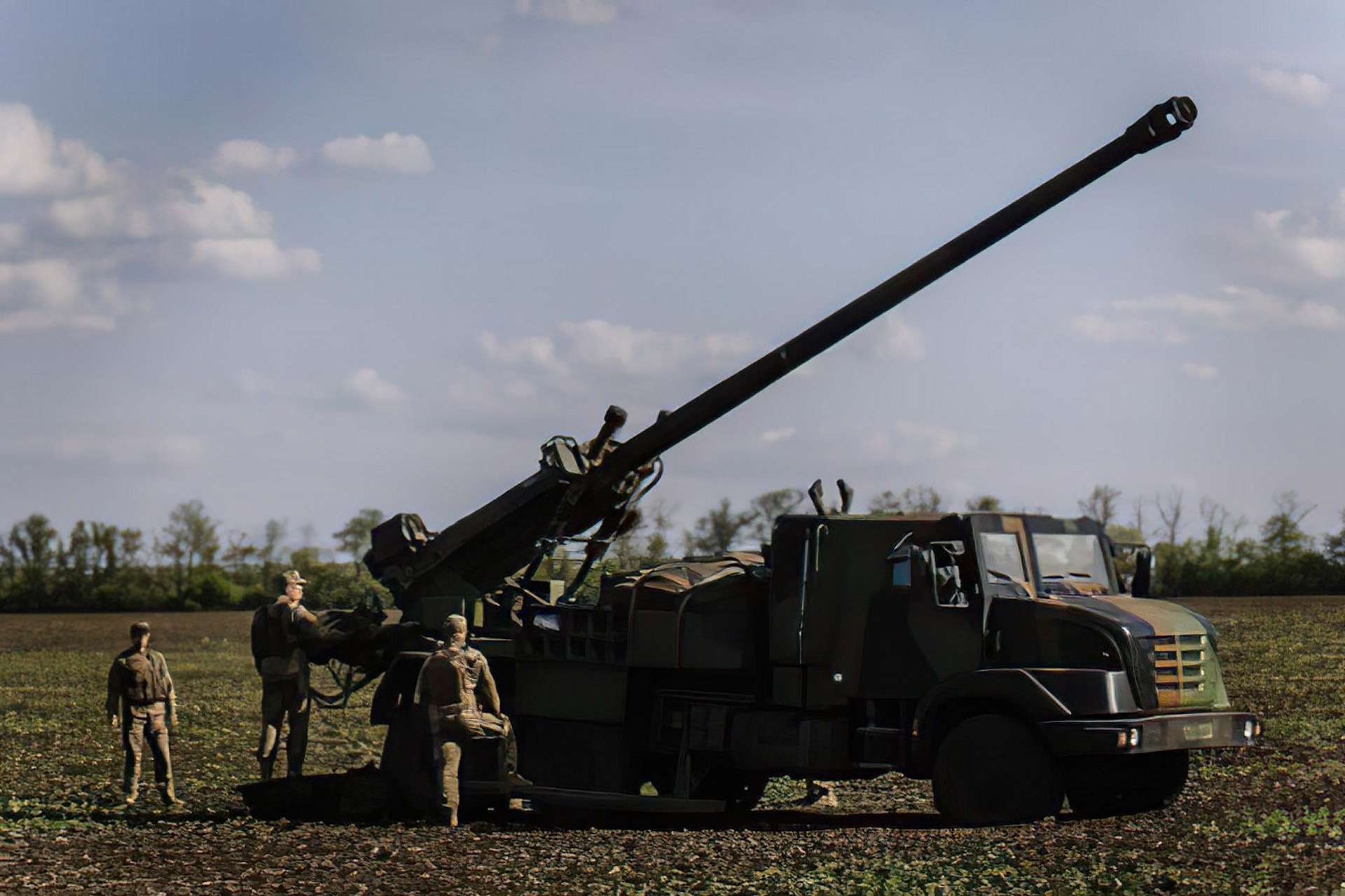
On October 7, 2024, the French newspaper "Le Point" released a video report revealing that Ukraine has received 67 CAESAR 155mm wheeled self-propelled howitzers from France. These deliveries are part of a broader support effort by NATO countries to provide Ukraine with advanced military equipment to help counter Russian forces. According to the report, five of these howitzers have been destroyed, while two others have been damaged during the ongoing conflict.
Follow Army Recognition on Google News at this link
A French CAESAR 155mm wheeled self-propelled howitzer in service with the Ukrainian army. (Picture source: Facebook Valerii Zaluzhnyi)
The CAESAR 155mm wheeled self-propelled howitzer has quickly become one of Ukraine's most popular and effective weapons. Its success is largely due to its mobility, precision, and adaptability to different terrains, which make it well-suited to the dynamic and challenging conditions of the battlefield. The CAESAR is mounted on a wheeled truck chassis, allowing it to relocate swiftly after firing. This mobility makes it difficult for Russian forces to target the artillery in retaliatory strikes, allowing Ukrainian forces to employ "shoot-and-scoot" tactics that enhance their survivability and effectiveness.
In addition to its mobility, the CAESAR offers remarkable precision and range. Its 155mm cannon can strike targets up to 40 kilometers away with advanced fire control systems, enabling Ukrainian artillery to hit Russian positions from a considerable distance. This capability has proven essential in hitting key enemy infrastructure, command posts, and supply routes. Furthermore, its wheeled design allows the CAESAR to navigate Ukraine’s varied terrain with ease, making it operationally flexible in both open fields and urban areas.
The CAESAR is also known for its high rate of fire, capable of launching six rounds per minute, giving it substantial firepower during engagements. One of its standout features is its ability to quickly deploy and relocate. It can be ready to fire within 60 seconds of arriving at a position and can move out just as swiftly after completing a fire mission. This rapid deployment and mobility make it difficult for enemy forces to track and target, enhancing its survivability on the battlefield.
These capabilities—long-range, rapid rate of fire, and quick relocation—make the CAESAR a highly effective and versatile artillery system well-suited for the fast-paced and high-intensity nature of the conflict in Ukraine.
Furthermore, the CAESAR's relative affordability compared to other self-propelled artillery systems, such as tracked howitzers, instills confidence in Ukraine's cost-effective defense strategy. It provides significant firepower without the higher costs associated with other advanced weapons systems, making it a prudent choice for maintaining Ukraine’s artillery strength under financial constraints.
Despite the reported losses—five howitzers destroyed and two damaged—the CAESAR continues to play a critical role in Ukraine’s defensive strategy. Ukrainian forces have successfully used these systems in several key battles, where their mobility and precision have been decisive. While some units have sustained damage due to the intensity of the conflict, ongoing repair and maintenance efforts have kept most of the fleet operational.
France’s provision of these howitzers underscores its strong commitment to supporting Ukraine in its defense against Russian aggression. Alongside other NATO countries, France has been a key partner in providing military aid to Kyiv. As the war continues, Ukraine will likely request additional deliveries of CAESAR systems and other advanced weaponry to maintain its battlefield edge.
The CAESAR howitzer’s success in the conflict has reinforced its reputation as a crucial tool in Ukraine’s artillery strategy. Although losses are inevitable in war, the continued deployment of this system has given Ukraine an important advantage, allowing it to maintain resilience in the face of a protracted and grueling conflict with Russia.
- Details
- Written by: Administrator
- Category: 2024
- Hits: 6246
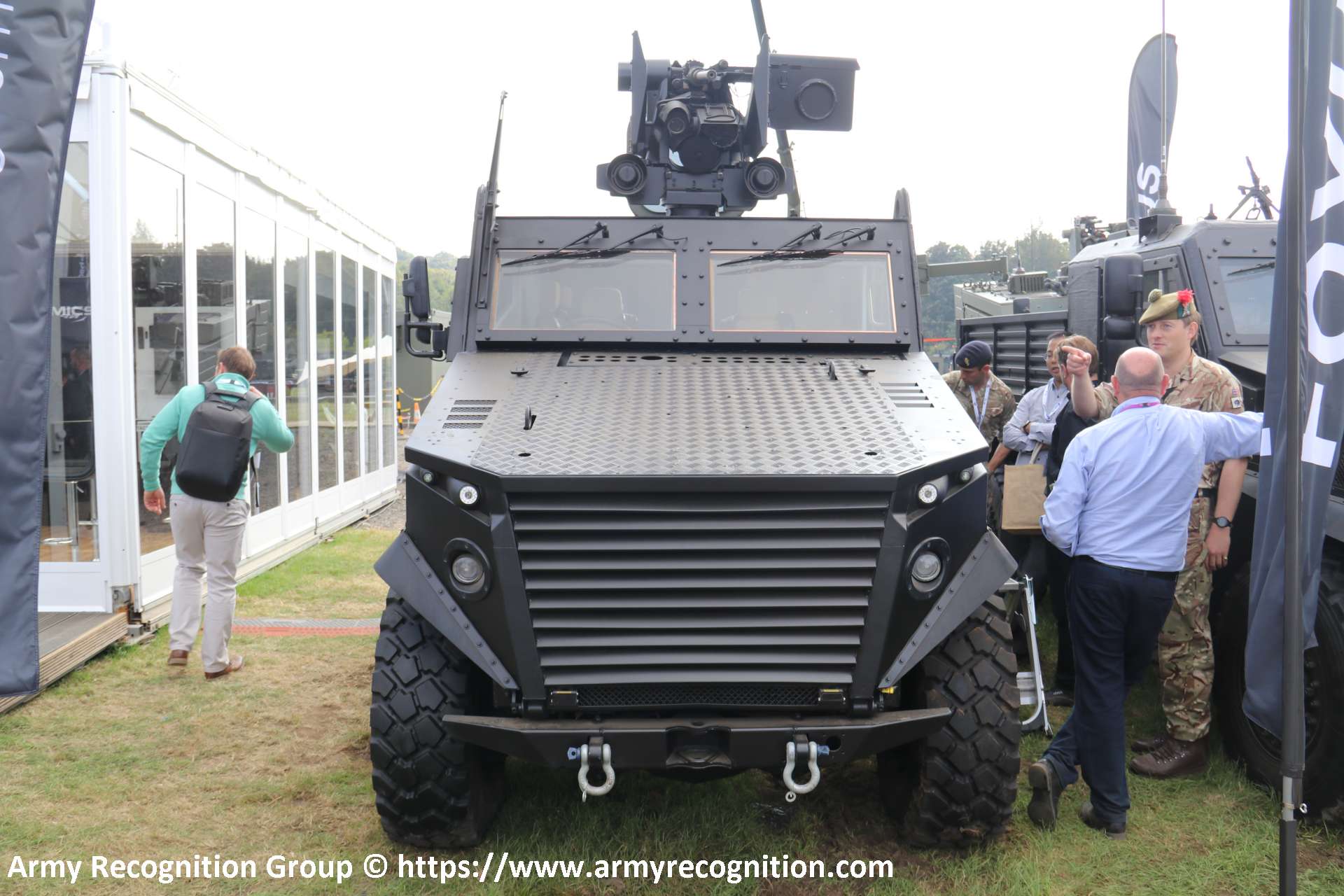
During the Defense Vehicle Dynamics (DVD) exhibition held in Millbrook in September this year, United Kingdom, General Dynamics UK made headlines with the launch of a new variant of its Foxhound Light Protected Patrol Vehicle (LPPV), the Foxhound General Multi-Role Vehicle (GMRV). With its cutting-edge design and modular adaptability, the GMRV promises unparalleled versatility to the battlefield and beyond.
Follow Army Recognition on Google News at this link
General Dynamics UK launches its new Foxhound GMRV during the DVD defense exhibition in Millbrook, UK. (Picture source: Army Recognition Group)
The Foxhound GMRV is designed to perform in the most challenging environments, demonstrating a combination of protection, mobility, and flexibility. Its modular design offers a significant advantage, allowing the vehicle to adapt to various mission requirements. The platform can be configured for multiple roles with a newly designed mission module, giving it unmatched operational efficiency.
The GMRV variant incorporates a highly protected crew compartment with advanced self-defense weaponry that can be operated directly from within, ensuring optimal crew safety. Furthermore, the vehicle’s structure has been engineered to accommodate a NATO-standard pallet at the rear, offering limitless possibilities for integrating complex mission systems. These could include Short-Range Air Defence Systems (SHORAD) and other mission-critical technologies, expanding its role beyond a traditional patrol vehicle.
By enhancing both protection and firepower while retaining the core capabilities of the original Foxhound, the GMRV is set to be a game-changer for military operations. General Dynamics UK aims to leverage this new variant for both the British Army and international allies, focusing on exportability to partners worldwide. The vehicle is designed, developed, and manufactured entirely in the United Kingdom, ensuring quality control and aligning with the nation's defense industrial strategy.
The original Foxhound LPPV has long been celebrated for its protection and mobility in high-risk environments. This new GMRV variant continues that legacy but with significant improvements in operational flexibility and modular integration. The ability to seamlessly switch between roles—from patrol to air defense—without needing a completely different vehicle underlines its value on the modern battlefield.
As military forces worldwide face increasingly complex operational landscapes, the Foxhound GMRV is poised to offer a solution that can evolve alongside these changing demands. With its development and production firmly rooted in the UK, the vehicle also serves as a testament to its defense capabilities and commitment to innovation.
General Dynamics UK’s introduction of the Foxhound General Multi-Role Vehicle at the DVD exhibition marks a significant step forward in the evolution of light protected patrol vehicles. With its modular adaptability, enhanced protection, and potential for advanced system integration, the GMRV is set to play a pivotal role in the future of military operations for the British Army and beyond. This launch strengthens the Foxhound platform and opens new possibilities for collaboration and export with global defense partners, further cementing the UK’s position in the defense technology sector.
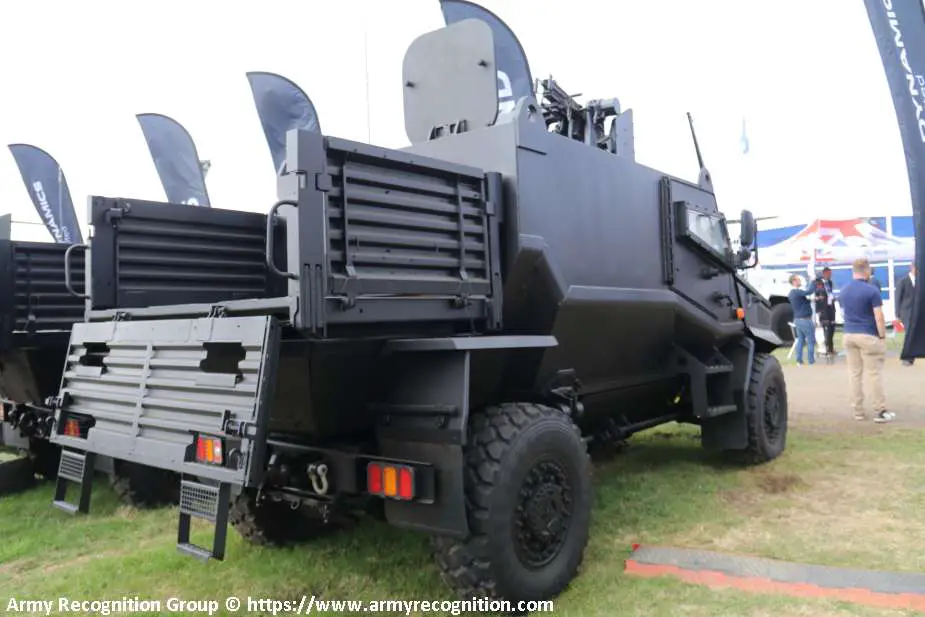
The rear of the Foxhound General Multi-Role Vehicle (GMRV) is designed with the volume to fit a NATO pallet and offers endless possibilities for integrating complex mission systems such as Short-Range Air Defence Systems. (Picture source Army Recognition Group)
Read more: General Dynamics UK Launches New Foxhound GMRV General Multi-Role Vehicle
- Details
- Written by: Triffaux
- Category: 2024
- Hits: 5449
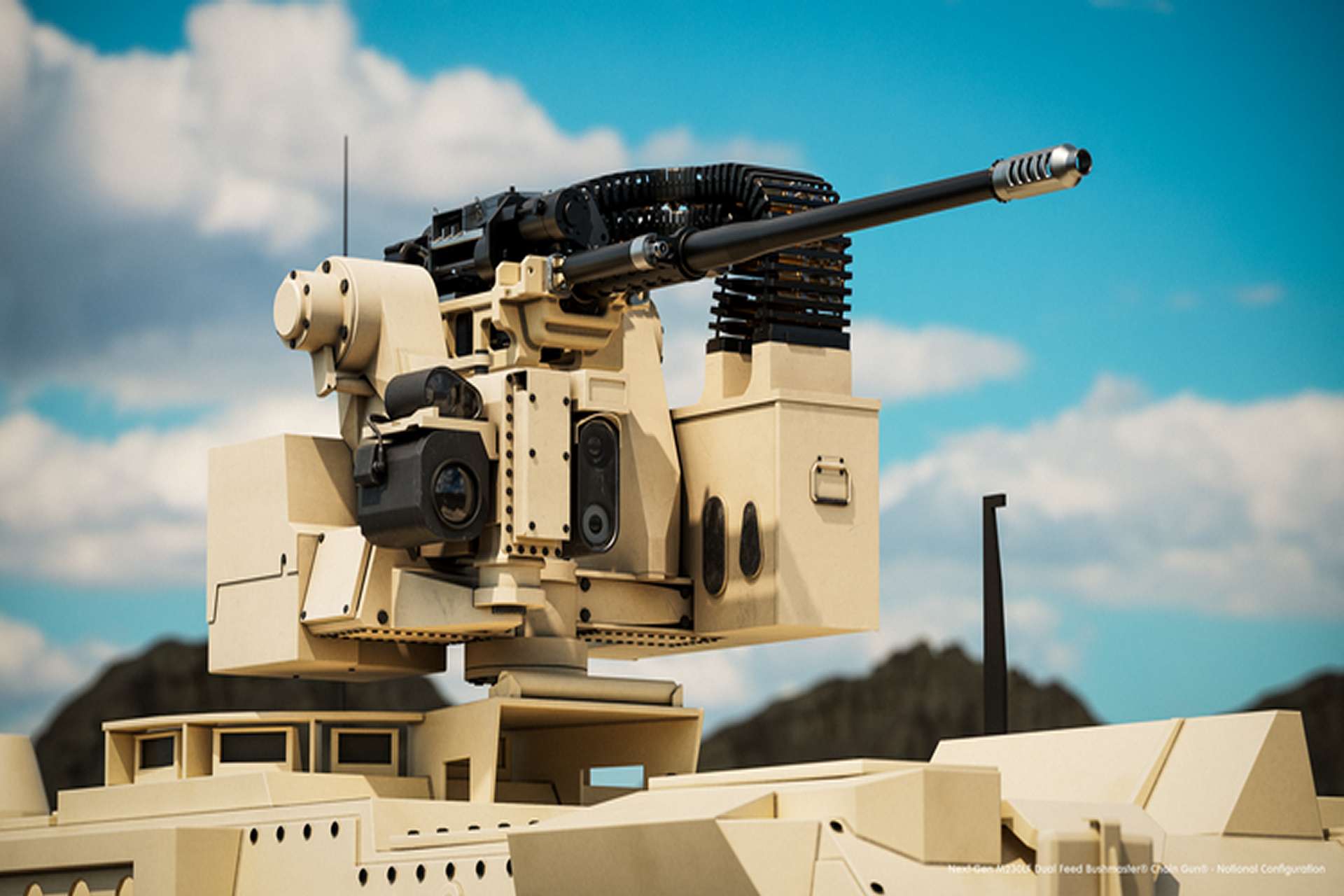
On October 9, 2024, Northrop Grumman Corporation, a major manufacturer of medium-caliber cannons, unveiled its M230 Link Fed (M230LF) Dual Feed Bushmaster Chain Gun. This new 30x113 mm caliber cannon addresses modern ground combat and uncrewed aerial system (C-UAS) defense needs with a pioneering dual-feed mechanism, allowing operators to switch between two ammunition types instantly based on the target. This feature eliminates the need for mixed ammunition belts in a single feed, enhancing engagement precision and efficiency.
Follow Army Recognition on Google News at this link
Northrop Grumman 30x113 mm M230LF Dual-Feed Bushmaster Chain Gun (Picture source: Northrop Grumman)
The M230LF's dual-feed technology enables operators to easily switch between two recommended munitions: XM1211 proximity-fuzed rounds, optimized for neutralizing uncrewed aerial threats, and XM1198 high-explosive, dual-purpose rounds for anti-armor capabilities. This system simplifies logistics, improves ammunition management, and enables forces to respond to various threats in real-time. Currently at Technology Readiness Level 6 (TRL 6), the M230LF is set to begin live-fire demonstrations in early 2025, marking a significant step in operational readiness.
The M230LF Dual Feed Bushmaster offers unprecedented tactical flexibility for armed forces with its instant ammunition-switching capability, removing the need for mixed ammunition belts. This innovation allows operators to respond quickly to various threats, including uncrewed drones and armored ground targets, with the most suitable ammunition for each target. Furthermore, its lightweight design and 60% part commonality with previous M230LF versions facilitate maintenance and reduce logistical costs, enhancing operational availability and field efficiency.
Designed with a weight similar to the single-feed M230LF model, the new dual-feed cannon integrates 60% common parts with existing models. This continuity simplifies maintenance, enabling a seamless transition for current M230LF users and minimizing maintenance costs. Northrop Grumman will continue to produce the single-feed M230LF to cater to customers preferring that option.
The M230LF Dual Feed Bushmaster has garnered significant international interest, especially among European allies, despite the lack of a formal requirement from the U.S. Armed Forces. The M230LF Dual Feed Bushmaster has sparked considerable interest, particularly among European allies such as Germany, the United Kingdom, and several NATO-aligned Eastern European nations. This demand reflects Europe’s increasing need for versatile weapons systems capable of countering both airborne and armored threats in complex operational environments. With heightened emphasis on counter-uncrewed aerial systems (C-UAS) and anti-armor capabilities, the dual-feed flexibility of the M230LF allows operators to rapidly switch between XM1211 proximity-fuzed rounds for aerial defense and XM1198 high-explosive rounds for ground targets, enhancing mission adaptability and response speed.
Dual-feed chain gun technology like that of Northrop Grumman’s M230LF is unique but not entirely without precedent, as some advanced armored forces around the world employ similar dual-feed systems for versatile ammunition use. For instance, certain European and NATO member countries have incorporated dual-feed mechanisms in armored vehicles, notably in autocannons like the Rheinmetall Mk 30-2/ABM used on the German Puma IFV, which allows quick switching between armor-piercing and high-explosive rounds. Such capabilities are particularly sought after in systems designed to counter varied threats, ranging from drones to heavily armored targets, emphasizing adaptability in modern combat scenarios.
- Details
- Written by: Halna du Fretay
- Category: 2024
- Hits: 4528
The Philippines' recent decision to retain the U.S.-developed Typhon missile system following joint military exercises marks a strategic shift in Manila’s defense stance. This choice reflects the Philippines' intention to enhance its defensive capabilities in light of China’s growing assertiveness in the South China Sea. The presence of the Typhon, officially known as the Mid-Range Capability (MRC) system, on Philippine soil has sparked diplomatic tensions, with Beijing expressing strong opposition, viewing this deployment as a potential change in the regional power balance.
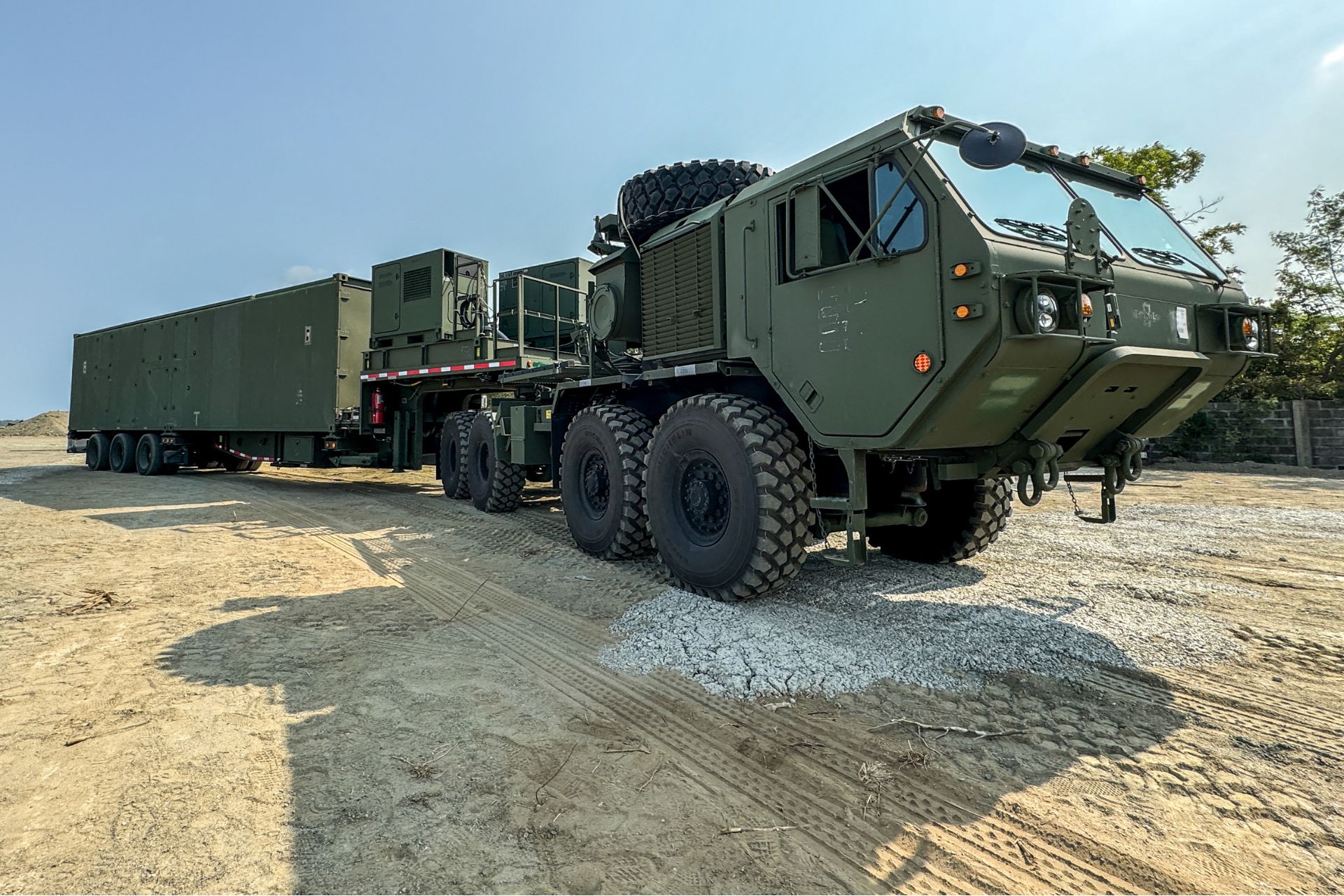
Initially deployed during the Salaknib exercises, the Typhon missile system was expected to return to the U.S., but Philippine and U.S. forces decided to retain it, with further deployment still under consideration (Picture source: US DoD)
The MRC missile system’s introduction represents a major strategic advancement for the U.S. Army’s capabilities in the Indo-Pacific. Initially developed as the Strategic Mid-Range Fires System (SMRF) and later renamed as the Mid-Range Capabilities (MRC) System, or Typhon, this system is part of the U.S. Army's Long-Range Precision Fires (LRPF) modernization initiative. It utilizes the Raytheon-manufactured Standard Missile-6 (SM-6) and Tomahawk missiles, modified for ground launch by Army units.
The MRC weapon system is designed to strike targets at ranges beyond the Precision Strike Missile (PrSM) but below the developing Long-Range Hypersonic Weapon (LRHW) system. The PrSM has a maximum range of about 300 miles (480 kilometers), allowing precise targeting of enemy positions. Meanwhile, the MRC, or Typhon, significantly extends this range to approximately 1,725 miles (2,775 kilometers), providing robust reach for both strategic and tactical scenarios. The LRHW, still under development, aims to expand strike capabilities with similar range potential while focusing on speed and precision.
Equipped with Raytheon's SM-6 missiles, the MRC system is versatile for both offensive and defensive missions and adapted for ground launch by Army units, enhancing its flexibility across varied military settings. It also includes Raytheon's Tomahawk cruise missiles, known for their long-range precision strike capabilities.
Initially deployed in the Philippines during the Salaknib military exercises, the Typhon system was expected to be returned to the U.S. afterward. However, the Philippine and U.S. armies opted to keep the system in place, with future deployment options still under review. Capable of launching both the SM-6 and the Tomahawk, the Typhon provides an extended range of up to 2,500 kilometers, covering areas like the South China Sea and strategic regions such as the Taiwan Strait. This extensive range bolsters the Philippines' defensive capabilities as it confronts an increasingly complex security environment.
For Manila, the Typhon system fills a critical gap in external defense. Previously, the country’s military capabilities lacked the range necessary to counter foreign vessel incursions within its exclusive economic zone. Analysts believe the Typhon’s deployment signals a strengthening of U.S.-Philippine military cooperation, aligning with broader U.S. goals to counter Chinese influence in the Indo-Pacific. According to Vina Nadjibulla from Canada’s Asia-Pacific Foundation, this defense partnership acts as a deterrent to Chinese actions in contested areas, providing a strategic advantage for both Manila and Washington to prevent potential military escalation.
Beijing has responded to the Philippines’ decision by denouncing the Typhon’s presence as part of an intensifying arms race. The Chinese government has ramped up diplomatic criticism and military demonstrations, including a recent test of the DF-41 intercontinental ballistic missile, reflecting its concern over what it perceives as an increased U.S. influence in the region. Filipino defense analysts have noted that this is the first deployment of such a U.S. system in Asia, setting a precedent for future defense arrangements between the Philippines and the U.S. Aaron Jed Rabena, a military analyst, suggests that the retention of the Typhon could lead the Philippines to make additional military acquisitions, reshaping its role within Southeast Asian security dynamics.
This evolving landscape has implications for upcoming U.S.-Philippine military exercises, including the Kamandag drills planned for October, where the Typhon’s operational readiness will again be tested. These exercises allow both militaries to assess the Typhon’s role in multidomain scenarios, improving interoperability and strategic coordination. According to Joshua Espeña from the International Development and Security Cooperation, the Typhon’s maritime threat capabilities align with Philippine defense priorities, particularly in response to increased Chinese military activity in Philippine waters.
The presence of the Typhon missile system underscores a convergence of interests between the U.S. and the Philippines in the South China Sea. However, this shift could challenge regional stability. Analysts caution that further Typhon deployments or tests in sensitive areas such as the Taiwan Strait could provoke additional Chinese responses, intensifying military posturing in the region. This decision has also drawn the attention of ASEAN members, some of whom may discreetly express concerns over the risks of an intensifying arms race.
Read more: Typhon MRC in Philippines as a Strategic Asset for Deterrence in South China Sea
- Details
- Written by: Halna du Fretay
- Category: 2024
- Hits: 5098
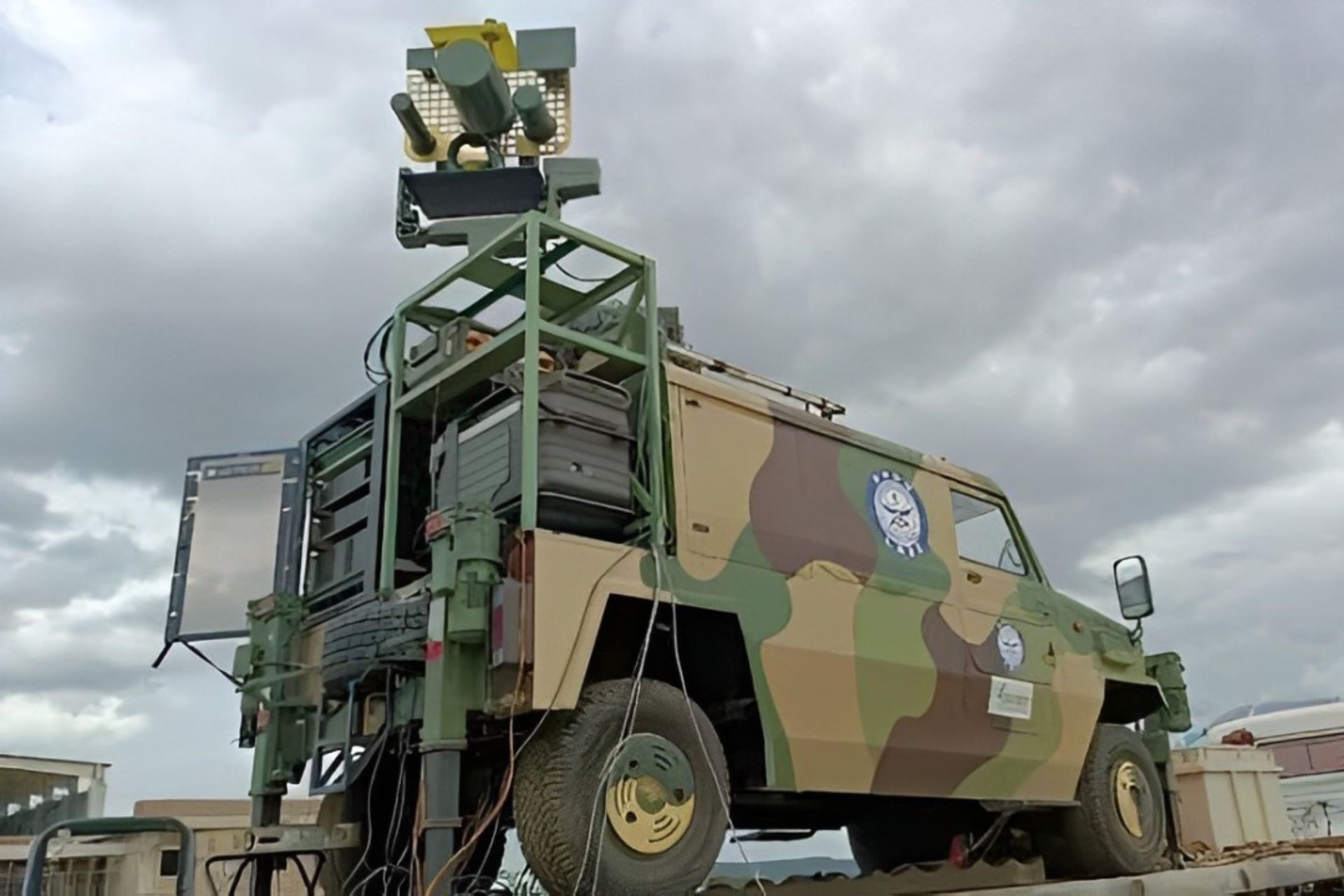
Amid the rapid rise in drone use on modern battlefields, the Indian Army is taking decisive steps to bolster its anti-drone capabilities. Recently, it issued a Request for Information (RFI) to acquire high-power microwave (HPM) systems, an advanced technology designed to neutralize small drones increasingly deployed by military powers such as Turkey, China, the United Kingdom, and Russia.
Integrating HPM technology aligns with a broader strategy to equip Indian Armored Fighting Vehicles (AFVs) with advanced anti-drone capabilities (Picture source: BEL)
This initiative by the Indian Army aims to address a critical need: the ability to detect, track, and neutralize small aerial threats using systems with a precise range of nearly five kilometers. Unlike traditional projectile-based methods, HPM systems use electromagnetic waves to directly disrupt the electronic systems of drones. This targeted frequency approach complicates adversary countermeasures, diminishing the effectiveness of the anti-jamming or electronic protection devices often used by enemy drones.
Integrating HPM technology aligns with a broader strategy to equip Indian Armored Fighting Vehicles (AFVs) with advanced anti-drone capabilities. Traditional weapons, such as 12.7mm machine guns, though effective against larger aerial targets, fall short against smaller, more agile drones that are harder to intercept. HPM systems bridge this gap by offering a non-kinetic solution that can incapacitate drones without physical destruction, paving the way for faster and more efficient responses to multiple threats during combat scenarios.
The adoption of this technology also represents a strategic advancement in interoperability across the branches of the Indian Armed Forces. Concurrently, the Army is exploring new platforms like the Common Air Defence Tracked System (CADET), which would incorporate these anti-drone technologies into a unified architecture. This platform aims to enhance collective defense capabilities while improving responsiveness to aerial threats, whether concentrated or dispersed over wide areas.
In line with the Ministry of Defence’s Aatmanirbharta initiative, which promotes technological self-reliance, India mandates that 50% of the components for these new systems be locally produced. This measure, beyond supporting the national economy, aims to secure India’s defense capabilities against the fluctuations of foreign dependency, a particularly critical consideration amid persistent drone threats from neighboring countries like Pakistan and China.
Recent international conflicts, notably in Ukraine and the Middle East, have underscored the strategic importance of drones in modern military operations. Countries worldwide are now investing heavily in anti-drone systems to address the rapid evolution of this threat. By proactively advancing these technologies, the Indian Army not only aims to enhance the protection of its troops and equipment but also to secure a strategic advantage in future conflicts, where drones, both large and small, are expected to play a central role.
By investing in defense technologies like HPM systems, India sends a clear message: it is equipping itself with the necessary tools to uphold its territorial integrity and protect its sovereignty against contemporary security challenges, especially with regard to its neighbor, China.

- Details
- Written by: Administrator
- Category: 2024
- Hits: 11981
Breaking news
The French Army Directorate General of Armaments (DGA) delivered two newly renovated Leclerc XLR tanks to the French Army. These were the 14th and 15th Leclerc XLR tanks to undergo significant upgrades as part of a broader modernization effort. The tanks were delivered on September 24 and 25 to two key military sites: the Provence Training Center in Canjuers, in the PACA region, and the 12th Cuirassiers Regiment in Olivet, in the Centre-Val de Loire region.
Follow Army Recognition on Google News at this link
The new French Army Leclerc XLR Main Battle Tank was displayed in June 2024 at the Eurosatory Defense Exhibition in Paris, France. (Picture source: Army Recognition Group)
Since the start of 2024, 15 Leclerc XLR tanks have been handed over to the French Army, with plans to deliver six more by the end of the year. This renovation initiative is part of a long-term effort to enhance the combat readiness of France's armored forces. The renovated tanks are equipped with technology to integrate them into the Scorpion combat system. This integration allows the tanks to share real-time tactical data with other vehicles in the Scorpion program, such as the Griffon, Jaguar, and Serval. These modernized Leclerc tanks have already received upgrades that strengthen their defenses against improvised explosive devices (IEDs) and rockets. Additionally, their combat effectiveness has been improved with new fire control systems. Further enhancements are planned, including the installation of remotely operated weapon stations by late 2025 and advanced targeting sights by 2028.
This modernization is part of a broader plan outlined in the 2024-2030 Military Planning Law (LPM). France intends to renovate 160 Leclerc tanks by 2030, with an additional 40 tanks scheduled for upgrades by 2035. Nexter Systems, the French defense contractor, has been tasked with upgrading the first 100 tanks, ensuring that the Leclerc remains a central part of the French Army’s armored forces until the arrival of the next-generation Main Ground Combat System (MGCS).
The Leclerc tank, first deployed in 1993, is a third-generation, 60-ton battle vehicle. Manufactured by Nexter until 2008, the Leclerc is operated by a three-person crew, including a commander, gunner, and driver. Armed with a 120mm cannon, the tank can fire at both stationary and moving targets at distances up to 4,000 meters, even while in motion. The Leclerc has seen action in various combat theaters, and Nexter continues to maintain the tanks’ operational readiness within the French Army’s training programs.
This renovation program ensures that the Leclerc, a key asset in France's armored capabilities, remains effective and combat-ready well into the future, as new technologies and combat systems are developed and integrated.
The Leclerc XLR introduces several significant upgrades compared to the current version of the French Army's Leclerc tank, making it better suited for modern combat. One of the key enhancements is its integration into the Scorpion combat system. This advanced system allows the tank to share real-time tactical information with other vehicles on the battlefield, such as the Griffon, Jaguar, and Serval, enabling greater coordination and situational awareness during joint operations.
In terms of protection, the Leclerc XLR has been equipped with improved armor to defend against threats like improvised explosive devices (IEDs) and rocket-propelled grenades (RPGs), both of which are prevalent in contemporary combat zones. This upgrade enhances the survivability of the tank and its crew.
Another important addition is the remote-controlled weapon station, which will be installed by 2025. This feature allows the crew to operate the tank's weapons from within the safety of the armored vehicle, providing increased flexibility and protection, especially in close-quarters combat situations such as urban environments.
The fire control system has also been upgraded, improving the tank’s main 120mm gun accuracy. The new system enhances the tank's ability to engage both stationary and moving targets over long distances, significantly increasing its effectiveness on the battlefield. In addition, by 2028, the Leclerc XLR will be equipped with advanced targeting sights, improving the tank’s ability to detect and engage enemies in various combat conditions, including night operations or environments with limited visibility.
Finally, the Leclerc XLR will be fitted with a digital battlefield management system, providing real-time data on the tank’s position, ammunition, and fuel levels. This system allows for more efficient communication with command units and other vehicles, facilitating quicker decision-making and more streamlined operations on the battlefield. These combined features make the Leclerc XLR a much more capable and adaptable vehicle than its predecessor, prepared for the challenges of modern warfare.
- Details
- Written by: Triffaux
- Category: 2024
- Hits: 7027
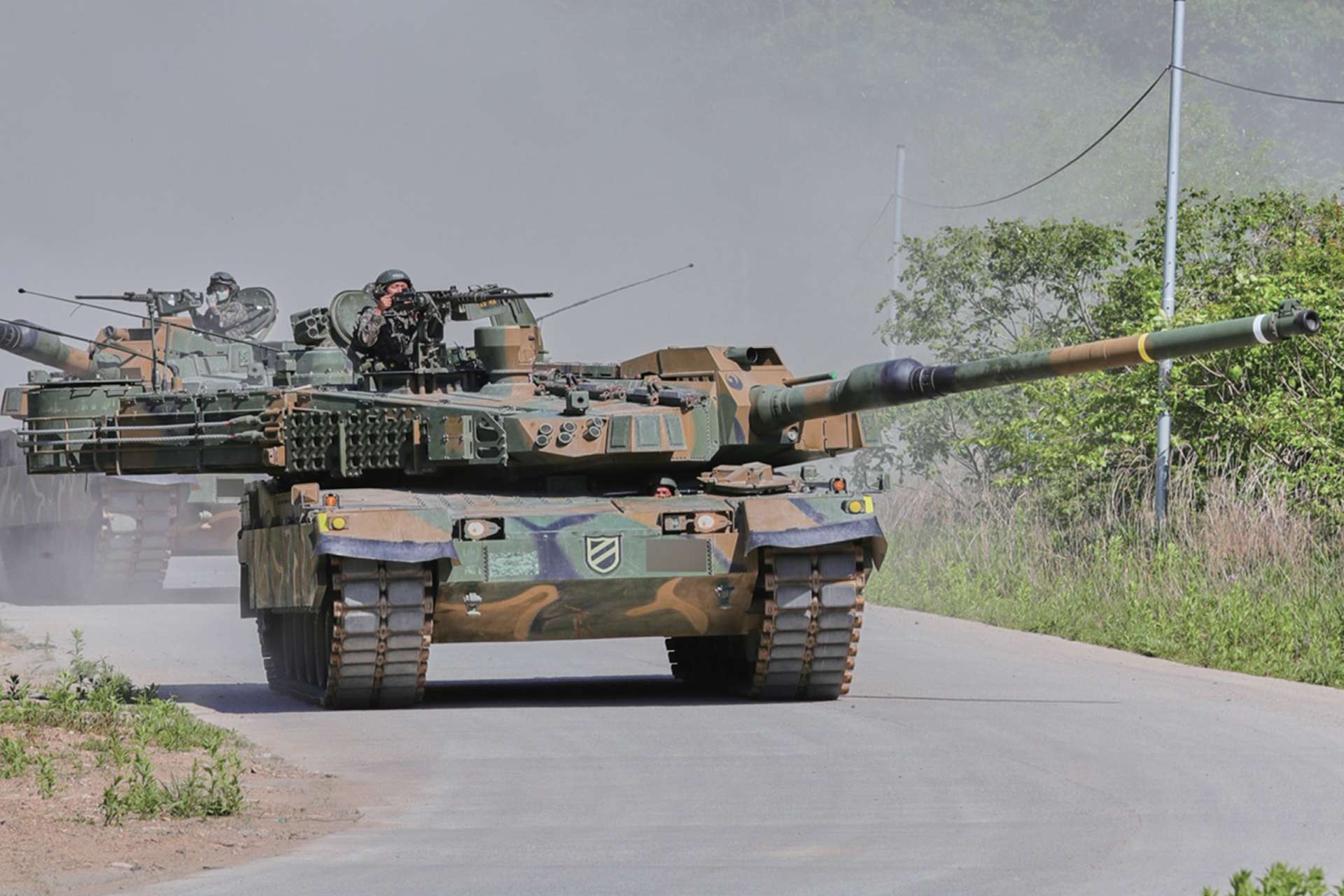
On October 9, 2024, the Twitter account @KDefenseInsight shared a video showing the unloading of K2GF main battle tanks, captured by South Korean broadcaster MBC. In 2024, Hyundai Rotem planned to deliver a total of 56 K2GF tanks to the South Korean army, divided across three final deliveries of nine, six, and seven units each, according to the announced schedule.
Follow Army Recognition on Google News at this link
Hyundai Rotem K2GF Black Panther Main Battle Tank (Picture source: South Korea MoD)
As part of this military modernization program, the South Korean army plans to bolster its ground capabilities by incorporating a total of 260 K2 tanks into its armored forces. To date, more than 200 K2 units are already in service, and ongoing deliveries, including optimized versions like the K2GF, will continue through 2025 to meet the planned target. This massive deployment aligns with a strategy to equip the army with next-generation tanks capable of handling the challenges of the country’s complex and rugged terrain, thereby enhancing the mobility and responsiveness of ground forces against potential threats.
The K2GF is an advanced version of the K2 Black Panther tank, designed to deliver optimized performance in mountainous and rugged environments characteristic of South Korea's geography. Among its notable technical features, the K2GF is equipped with a 1,500-horsepower MTU-883 Ka-500 diesel engine paired with an automatic transmission, enabling it to reach a maximum speed of 70 km/h on roads and ensuring remarkable agility on challenging terrain. This powerful propulsion system is complemented by a controlled hydropneumatic suspension system (In-arm Suspension Unit), allowing the tank to adjust its ground clearance and adopt different positions to optimize stability and adaptability in mountainous terrain.
In terms of armament, the K2GF is fitted with a 120 mm smoothbore gun with an autoloader, capable of firing armor-piercing and explosive rounds with an effective range of over 2 km. The fire control system includes an advanced infrared sensor and a laser rangefinder, allowing for high-precision targeting even in low-visibility conditions. To protect the crew, the K2GF integrates high-strength composite armor modules, along with an active protection system (APS) designed to intercept enemy threats such as anti-tank missiles. Additionally, it features an advanced fire control system and a battlefield management system, allowing for better real-time coordination with other deployed units, thus enhancing its effectiveness in modern military operations.
The K2 Black Panther is attracting growing interest in Europe and is already being deployed in Poland, where Hyundai Rotem has become a strategic defense partner. In August 2022, Poland signed a contract for the delivery of 180 K2 tanks, of which 46 have already been delivered this year, with ongoing discussions for an additional 180 units. This partnership aligns with Poland's commitment to strengthening its capabilities in response to regional challenges. Furthermore, Romania is also considering acquiring this tank as part of its military modernization program, while Armenia has recently shown interest in the K2 in response to regional security tensions. Competing with the German Leopard 2A8, the K2 offers a notable cost advantage, estimated at around $20 million compared to approximately $45 million for the Leopard 2A8, according to available assessments. The K2’s adaptability to various strategic environments and its competitive pricing enhance its appeal to countries like Poland, Romania, and potentially Armenia, underscoring the K2's expanding presence in the European modern tank market.
According to data from The Military Balance, South Korea currently fields approximately 2,115 main battle tanks (MBTs), combining ultra-modern models with others that are more outdated. Among the units in service, there are 1,000 K1 and K1E1 tanks, as well as 450 upgraded K1A1 and K1A2 tanks, developed in the 1990s to meet the South Korean Army's defense needs. The fleet also includes around 225 K2 Black Panther tanks, recently designed and equipped with cutting-edge technology, specifically adapted to the country's geographical conditions. Conversely, about 400 M48A5 Patton tanks, dating back to the 1950s and 1960s, are still part of the fleet despite their increasing obsolescence. Finally, 40 Russian-origin T-80U tanks round out this diverse armored force, underscoring the importance of ongoing modernization to address current threats.

- Details
- Written by: Tkuhn
- Category: 2024
- Hits: 7994
According to information published by CNA on October 9, 2024, the Republic of China Armed Forces will start upgrading to the new T112 combat rifles beginning next year, with plans to acquire 86,114 units. The new T112 rifle boasts significant improvements over the current T91 rifle, including a higher shooting accuracy, better ergonomics, and increased durability.
Follow Army Recognition on Google News at this link
The Armaments Bureau unveiled the new T112 rifle at last year's Taipei Aerospace & Defense Technology Exhibition. (Picture source: Taiwanese Presidency)
The T112 rifle significantly improves shooting accuracy, with a dispersion area at 100 meters of 9.8 cm, compared to the T91's 14 cm. This precision upgrade is described as improving accuracy "from the size of a hand to the size of a palm." The rifle retains the same 5.56 mm caliber as the T91, making it compatible with existing ammunition supplies.
The T112's ambidextrous design, including dual-sided charging handles, enhances operational flexibility, especially in close-quarter battle (CQB) scenarios. The rifle has undergone ergonomic enhancements, such as a redesigned trigger with a near-90-degree angle to improve shooting control, a modified grip angle, and the addition of a deflector behind the ejection port to direct spent cartridges away from the shooter.
The T112 also uses a more durable composite magazine instead of the aluminum version found in previous models, which reduces the risk of deformation during impact and ensures smoother loading.
Several improvements make the T112 more suitable for diverse combat situations. The rifle features an aluminum alloy handguard with tactical rails, allowing soldiers to attach various accessories such as optics and grips. Its polygonal thickened barrel extends the effective range from 400 to 600 meters, while barrel life is increased from 6,000 to 10,000 rounds.
The rifle's firing modes include semi-automatic, two-round burst, and fully automatic. The change from the three-round burst of the T91 to a two-round burst in the T112 reflects U.S. military findings that the third shot often lacked accuracy, resulting in unnecessary ammunition expenditure. This adjustment aims to balance rapid-fire efficiency and stability.
The T112 rifle supports different sling configurations, utilizing a Quick Detach (QD) system for quick-release options, allowing two-point or single-point attachments. The colors and patterns can be customized to blend with different combat environments, enhancing concealment.
The Ministry of National Defense (MND) plans to deliver the rifles to the Army, Military Police, and other units from 2025 to 2029, along with optical sights and red dot sights based on unit requirements.
Read more: T112 Rifle to Replace T91 for Taiwan Armed Forces What You Need to Know
- Details
- Written by: Halna du Fretay
- Category: 2024
- Hits: 4639
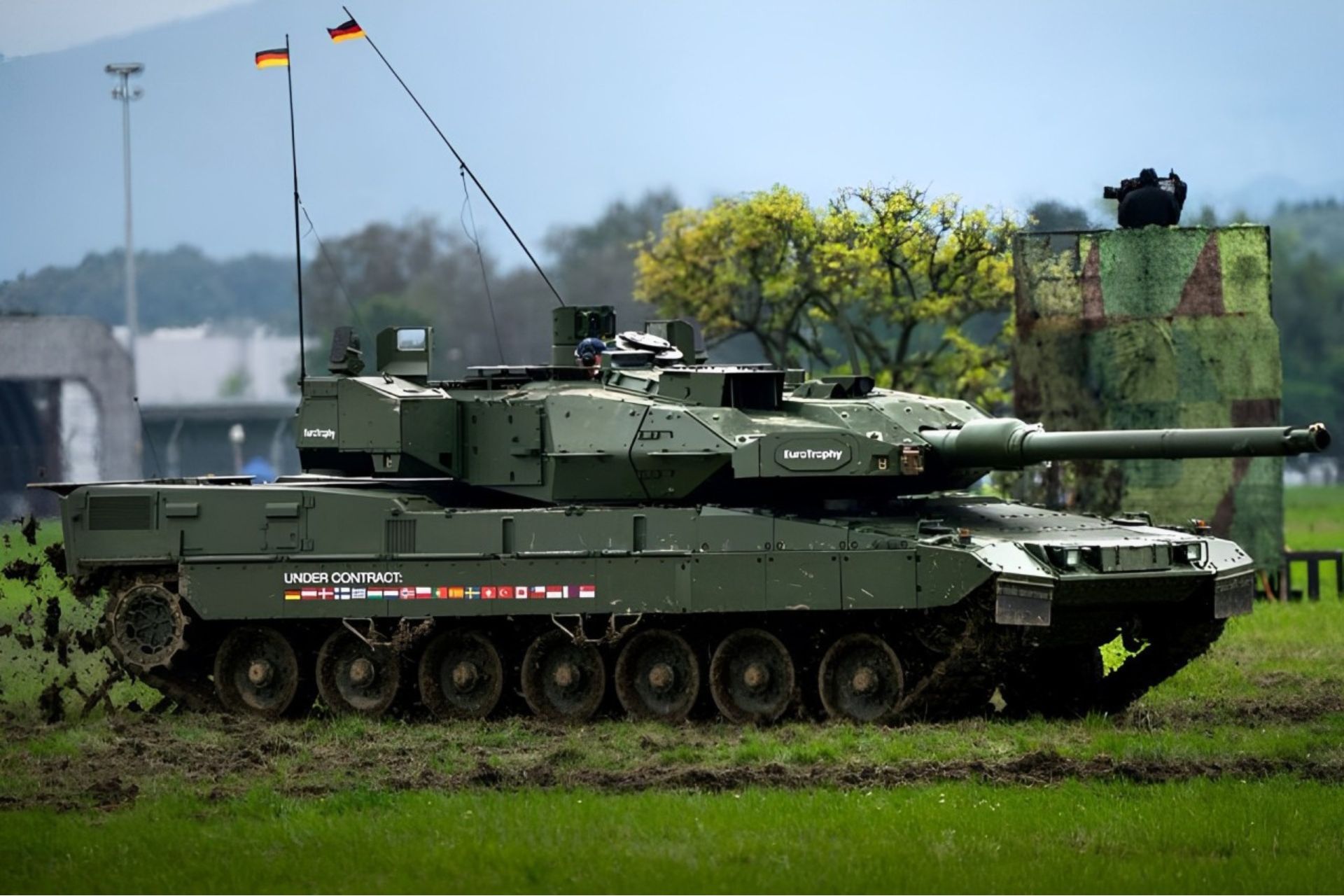
EuroTrophy GmbH, a European defense company and a joint venture between Rafael, KNDS Deutschland, and General Dynamics European Land Systems, has introduced an advanced version of its Trophy Active Protection System (APS). This updated system is designed for main battle tanks as well as medium and heavy armored vehicles, responding to modern threats faced by armed forces in various operational theaters.
Leopard 2A7 with Trophy APS demonstrated during the NATO Days in September 2023 (Picture source: EuroTrophy)
The Trophy APS, operational since 2011 and already adopted by NATO, offers advanced protection against contemporary anti-armor threats, including anti-tank missiles, HEAT rounds, and drones. Easily adaptable to a wide range of armored vehicles, Trophy provides 360-degree protection and operates effectively across different terrains, from forests to deserts and urban zones. With integrated hostile fire detection (HFD), the system ensures comprehensive coverage in azimuth and elevation, including top-attack defenses, delivering proven combat efficiency with over two million operational hours and a high interception success rate.
According to EuroTrophy GmbH's Managing Director Dan Kalfus, this new capability, added through a software upgrade, equips the system to counter guided anti-tank missiles (ATGMs), rocket-propelled grenades (RPGs), and UAV threats. “This capability is based on lessons from current military conflicts in Europe and the Middle East, where armored personnel carriers and main battle tanks have been vulnerable to first-person-view (FPV) drone attacks and similar threats,” explained Kalfus, highlighting the relevance of these enhancements in light of recent experiences in Ukraine.
The system’s upgrade, which does not require hardware modifications, relies solely on software adjustments and utilizes the existing suite of sensors and effectors. This approach retains the system’s weight and size, allowing current users of Trophy APS to enhance their fleets' protection capabilities without altering equipment specifications. "The update is available for current Trophy users," noted Kalfus, adding that it is also intended for potential new customers, particularly in Europe, where several countries are presently modernizing their land forces.
Kalfus stated that the upgraded system has already demonstrated its effectiveness in live-fire scenarios. EuroTrophy made the decision to introduce this upgrade to the market only after thoroughly validating its maturity and reliability. With this proven effectiveness, EuroTrophy is positioned as a key partner for nations seeking to enhance the defense of their armored vehicles against an expanding range of threats.
The Trophy APS is already integrated into several main battle tanks in use by land forces worldwide, including the Abrams, Leopard, and Challenger tanks. The system is also adaptable for other vehicles favored by European forces, such as the K2 Black Panther. In addition to main battle tanks, the system can be installed on infantry fighting vehicles and other military platforms, offering flexible integration across a wide array of military vehicles.
Read more: EuroTrophy Unveils Enhanced Trophy APS for Evolving UAS and Top-Attack Threats
- New Strategic Defense Agreement Signed Between France and Vietnam
- Germany Confirms Delivery of IRIS-T SLM & IRIS-T SLS Air Defense Missile Systems to Ukraine
- Galvion secures US DoD orders for MAX-8 charging station and Squad Power Manager
- Russian Company KamAZ Opens Production Plant in Senegal for Trucks and MRAPs