
- Details
- Written by: Halna du Fretay
- Category: 2024
- Hits: 6311










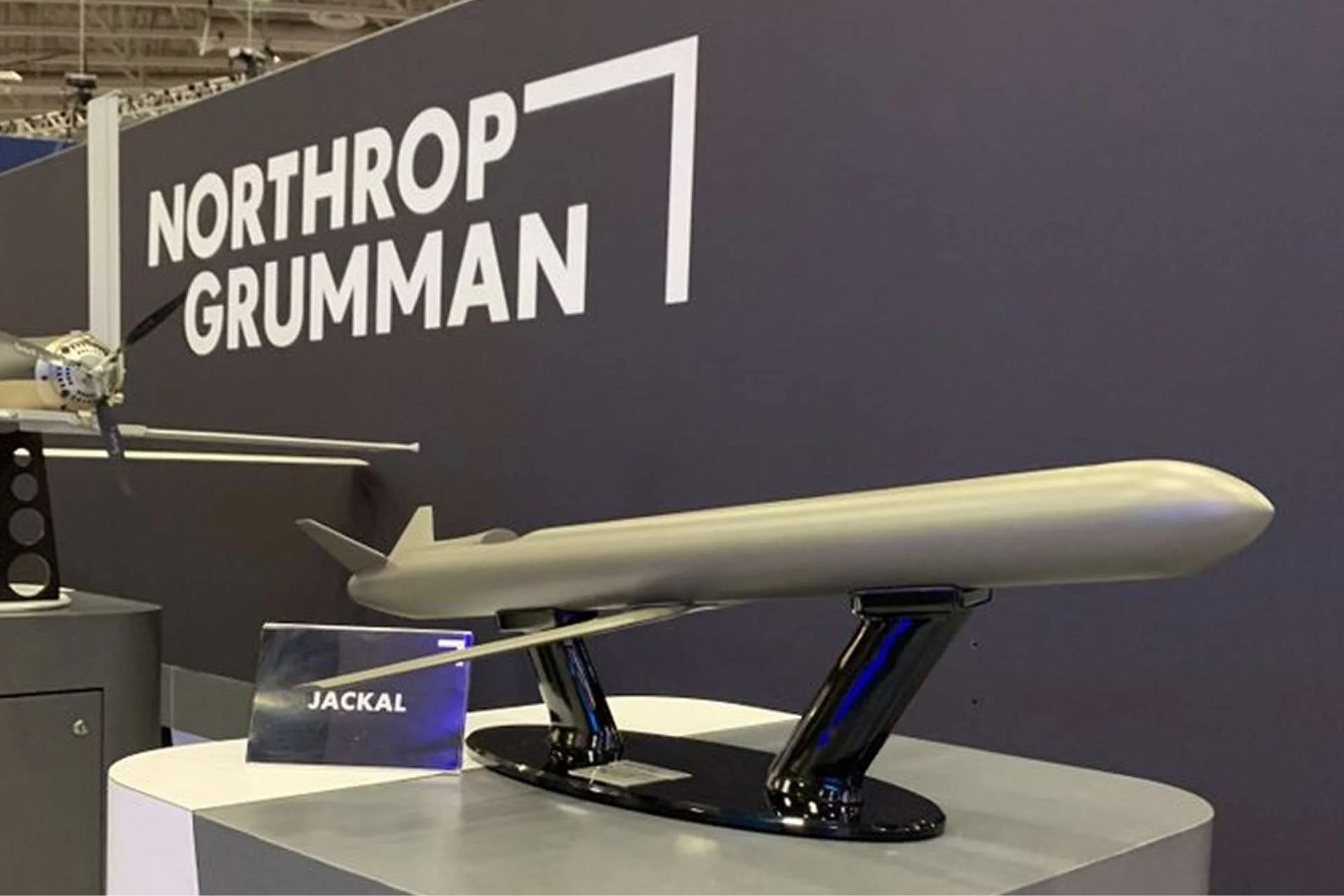
Northrop Grumman, a key defense player, has recently released new details and a video of its Jackal, a turbojet-powered precision missile designed to provide advanced strike capabilities. Jackal stands out with its modular configuration, allowing it to integrate lethal and non-lethal payloads suitable for complex military operations.
Powered by a turbojet engine, the Jackal offers a range of 100 kilometers, around 15 minutes of loitering capability, and a payload capacity of 4.5 kilograms (Picture source: Northrop Grumman)
Initially introduced at the Special Operations Forces Industry Conference (SOFIC) in Tampa, Florida, in May 2022, the Jackal reaches speeds exceeding 600 km/h, has a range of 100 kilometers, and a loiter time of 15 minutes. Its open architecture design supports flexible integration of varied payloads, including electronic warfare (EW) systems, intelligence, surveillance, and reconnaissance (ISR) equipment, with a maximum payload capacity of 4.5 kg. Powered by a turbojet using JP-10 fuel, it can reach speeds above 644 km/h and is deployable from air, ground, and maritime platforms.
Developed in collaboration with AeroVironment, Jackal benefits from the technological groundwork of the Switchblade series, a well-regarded family of loitering munitions. While the Switchblade 300 is primarily for short-range precision strikes and the Switchblade 600 for anti-armor missions, the Jackal fills an intermediate role, combining speed, endurance, and payload capacity to meet the demands of dynamic combat environments. Its extended endurance also enables effective ISR missions, gathering critical intelligence before striking in contested areas.
This precision-strike missile integrates advanced avionics and mission control systems and is built for navigation in GPS-denied environments, ensuring operational reliability even when conventional navigation systems are disrupted. With its high-speed turbojet, the Jackal reaches targets quickly, offering a rapid response to emerging threats, an essential feature for maintaining a tactical edge in evolving combat scenarios.
Thanks to its modular design, Jackal delivers diverse effects, both lethal and non-lethal. Besides traditional military payloads, it can carry ISR suites, EW systems, and advanced warheads, enhancing its resilience and adaptability to threats. It autonomously follows preset waypoints and can be re-tasked mid-flight based on tactical objectives. Upon target acquisition, it rapidly accelerates for interception, establishing new standards in tactical dominance with its range, accuracy, and unmatched speed.
Since its initial presentation, Jackal has drawn increasing military interest. In November 2022, the system completed a series of successful test flights, with additional demonstrations scheduled for 2024 to further refine its capabilities and align with potential U.S. military requirements. The growing role of loitering munitions in current conflicts, especially in Ukraine, has highlighted the effectiveness of precision-strike systems. While Switchblade munitions have demonstrated value in battle, Russian forces have also deployed various loitering munitions, including some Iranian-made systems. Meanwhile, Taiwan's Hsiang kamikaze drones, mass-produced for radar destruction, further underscore the global rise of these systems.
In an ever-evolving warfare landscape, Jackal offers a cost-effective, versatile solution for modern armed forces, capable of precision strikes and strategic surveillance. The launch of Jackal reflects Northrop Grumman’s commitment to providing advanced systems that meet military needs in a world where flexibility and rapid tactical response are essential.
Read more: Northrop Grumman Unveils New Jackal Precision Loitering Munition for Modern Conflicts
- Details
- Written by: Vandenbosch
- Category: 2024
- Hits: 3212
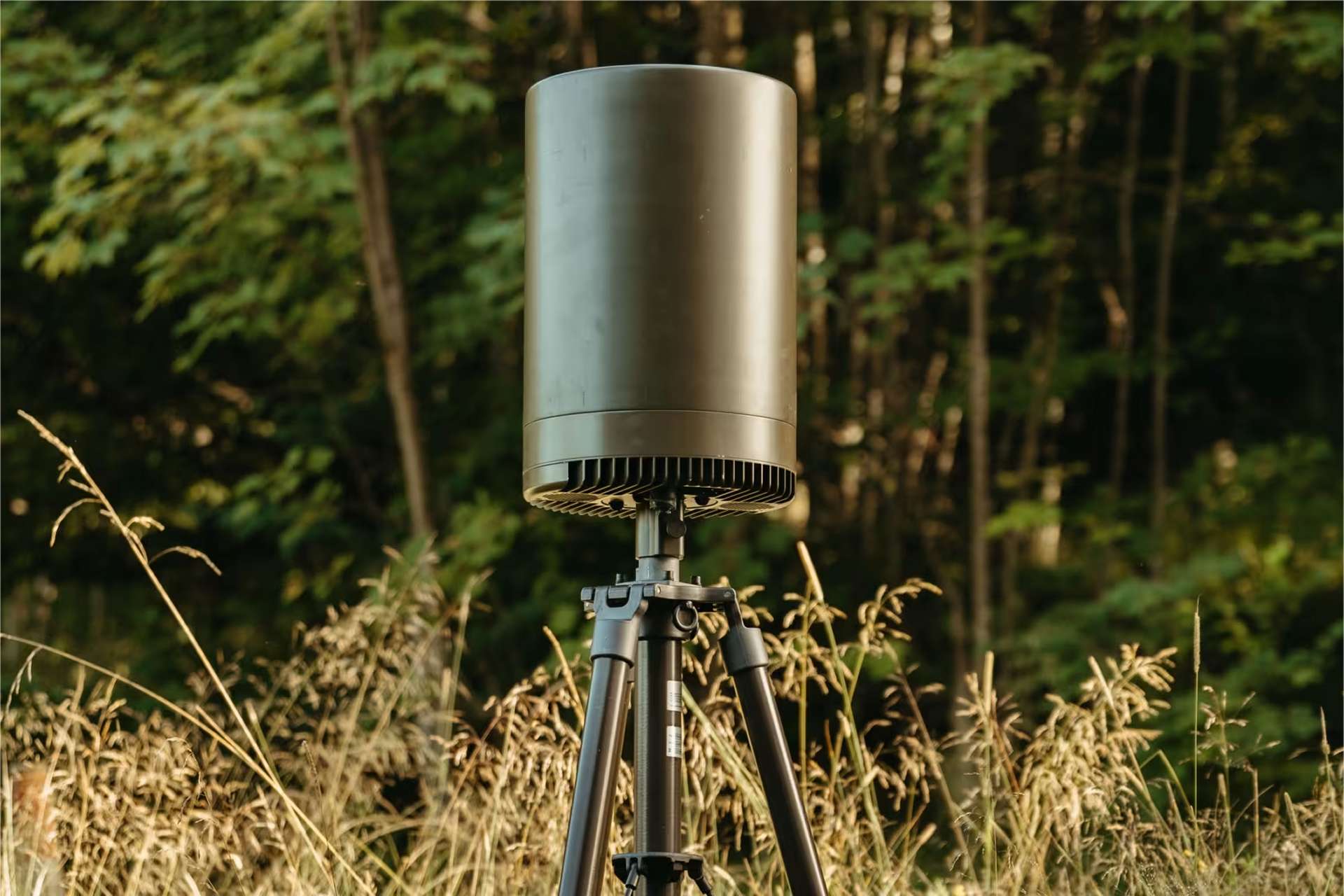
At an event in Nuremberg, Germany, Saab introduced the Sirius Compact L20C, a new advancement in its Sirius Compact line of tactical Electronic Warfare (EW) sensors, as announced by the company on October 15, 2024. This innovative sensor, classified as a Communications-Electronic Support Measures (C-ESM) solution, is designed to enhance tactical reconnaissance capabilities by detecting, classifying, and tracking communication signals. It targets a wide range of sources, from enemy troop radios to signals emitted by unmanned aerial systems, underscoring Saab’s commitment to providing modern, NATO-compatible solutions in electromagnetic intelligence.
The Sirius Compact L20C is a new EW sensor. (Picture source: Saab)
Saab unveiled the Sirius Compact L20C as a new EW sensor engineered to strengthen tactical reconnaissance capabilities. Classified as a C-ESM sensor, it detects, classifies, and tracks various signals, including those from enemy radios and drones.
The design of the Sirius Compact L20C prioritizes versatility, with a compact structure that allows for rapid deployment across diverse operational environments. Lightweight and extremely mobile, the L20C can be carried by a soldier, mounted on agile light vehicles, or installed on masts without the need for specialized tools. This flexibility, combined with its compatibility with NATO standards, ensures the sensor’s adaptability across a variety of tactical contexts. Additionally, the sensor can be operated remotely, simplifying its use while minimizing detection, which is essential for maintaining operational discretion.
At the core of the L20C’s capabilities is advanced signal processing, enabling precise detection and high-accuracy localization of electromagnetic signals, creating what Saab calls the “Recognized Electromagnetic Picture” (REP). This situational awareness feature allows forces to monitor the electromagnetic environment accurately, providing critical intelligence on enemy activities. Saab’s Software-Defined Defense approach further enhances the L20C’s design, integrating standardized data interfaces that enable seamless integration with existing Command and Control (C2) systems.
According to Carl-Johan Bergholm, head of Saab's Surveillance division, the Sirius Compact L20C represents an important milestone in the Sirius Compact series. “Our new Sirius Compact sensor, the L20C, is a milestone within the Sirius Compact family. Our customers will benefit from the L20C to stay ahead of threats through its ability to track enemy communication signals. Combined with the Sirius Compact L20R, it provides users with essential information that delivers situational awareness of crucial relevance on today’s battlefield.”
By combining the L20C with the Sirius Compact L20R model, Saab enhances users’ ability to maintain a comprehensive view of the electromagnetic environment, supporting critical decision-making and contributing to a strategic advantage on the modern battlefield.

- Details
- Written by: Administrator
- Category: 2024
- Hits: 6150
On October 15, 2024, During an exclusive video interview at the AUSA 2024 defense exhibition, AM General confirmed that its HUMVEE 2-CT Hawkeye 105mm Mobile Howitzer has been combat-proven by the Ukrainian army. This marks a significant milestone, as the mobile artillery system has been tested under real combat conditions, demonstrating its effectiveness and reliability in active conflict zones.
Follow Army Recognition on Google News at this link
American Company AM General displays its HUMVEE 2-CT Hawkeye 105mm Mobile Howitzer during the AUSA 2024, defense exhibition in Washington D.C., United States. (Picture source: Army Recognition Group)
On September 13, 2024, the first visual evidence of the 2-CT Hawkeye being tested by the Ukrainian military surfaced. A photo published by the TyskNIP community on Telegram showed the mobile howitzer in action. While the exact date and location of the image were not specified, the authors suggested that it was likely taken in the spring.
The HUMVEE 2-CT Hawkeye was displayed at AM General's booth at AUSA 2024, held in Washington D.C., United States. Developed in collaboration with Mandus Group, the system features patented Soft Recoil Technology, enabling it to quickly engage targets with indirect and direct fire. Its design allows for rapid mobility, enabling the vehicle to reposition swiftly to avoid counterfire, leveraging the agility of the HUMVEE platform.
The system utilizes the M1152A1 model of the HUMVEE, a variant specifically designed as a cargo/troop carrier with enhanced payload capacity. This robust model is well-suited to accommodate the 105mm mobile howitzer system, handling the artillery's added weight while maintaining the HUMVEE's agility and speed. AM General's 105mm Howitzer mounted on the HUMVEE 2-CT™ (2-door cargo truck) is recognized as the lightest, most maneuverable self-propelled howitzer in the world. It comprises two trucks, eliminating the need for trailers, which enhances its mobility.
The 2-CT™ Hawkeye system incorporates a digital fire control system and on-board communication, eliminating the need for surveyed firing points, aiming circles, and wire lines. This capability allows the system to execute a two-round mission and vacate the area within 3 minutes, with just 1 ½ minutes to the first round fired. An accompanying support vehicle, also utilizing a HUMVEE 2-CT™, offers crush protection and safety restraints for up to four soldiers who assist artillery units.
Equipped with a 105mm M20 cannon, which is a lightweight, towed howitzer adapted for the mobile HUMVEE platform, the 2-CT Hawkeye uses Soft Recoil Technology to reduce recoil forces. This technology allows the gun to be mounted on a lighter, more mobile platform without compromising stability and accuracy, making it effective for both indirect and direct fire missions.
AM General revealed that the HUMVEE 2-CT Hawkeye is undergoing further testing in the Eastern European theater, where it is gaining attention due to increasing demand. The company views this mobile artillery system as a critical asset to counter near-peer threats, providing an effective solution for modern battlefield requirements.
The exhibition of the HUMVEE 2-CT Hawkeye at AUSA 2024 highlights AM General's commitment to innovative defense solutions, showcasing how mobility and firepower can be integrated to meet the demands of contemporary warfare.
Read more: AM General Confirms HUMVEE 2-CT Hawkeye 105mm Howitzer as Combat Proven in Ukraine
- Details
- Written by: Administrator
- Category: 2024
- Hits: 4409
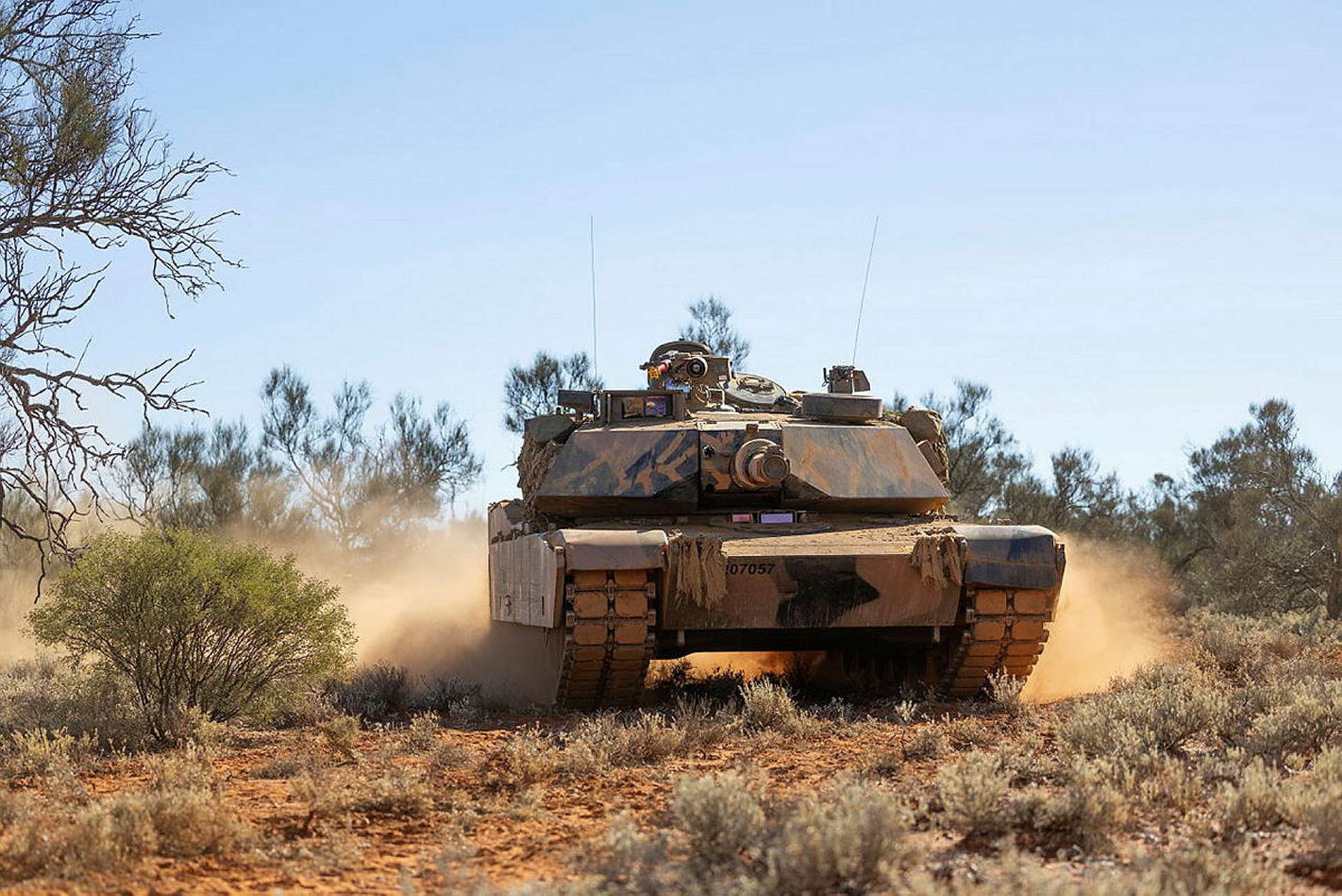
On October 17, 2024, the Australian Ministry of Defense announced a significant new contribution to Ukraine's defense, underscoring the Albanese Government's commitment to supporting Ukraine in its ongoing struggle against Russian aggression. As part of this latest package, valued at approximately $245 million, Australia will gift 49 M1A1 Abrams tanks to the Armed Forces of Ukraine, enhancing Ukraine's military capabilities and further bolstering its armored brigades.
Follow Army Recognition on Google News at this link
An Australian Army M1A1 Abrams Main Battle Tank from the 1st Armoured Regiment, drives through the Cultana Training Area, SA during Exercise Rhino Run 24. (Picture source: Australian MoD)
The move aims to strengthen the firepower and mobility of Ukrainian forces on the battlefield, complementing the military support other international partners provide. This announcement increases Australia's total military assistance to Ukraine to over $1.3 billion since the onset of Russia's full-scale invasion in February 2022, with overall support surpassing $1.5 billion.
Australian Minister for Defence Industry and Capability Delivery, the Hon. Pat Conroy MP, will attend the NATO Defence Ministers' Meeting in Brussels. He is expected to confirm the new military aid package directly with his Ukrainian counterpart. This gesture reflects Australia’s steadfast support for Ukraine and its determination to see the conflict end on Ukraine’s terms.
The M1A1 Abrams has been a cornerstone of the Australian Army's armored capabilities, known for its durability and effectiveness in providing defense against enemy fire and improvised explosive devices (IEDs). The M1A1, a main battle tank equipped with a 120mm smoothbore gun, advanced armor, and a gas turbine engine, offers a blend of firepower, mobility, and protection. It has served the Australian Defence Force (ADF) reliably for years, providing vital armored support during training exercises and potential combat scenarios.
The tanks being transferred to Ukraine are part of Australia's existing fleet, which has been set for replacement by the more advanced M1A2 Abrams SEP V3 tanks, as announced in January 2022. The Australian Army will retain a small number of M1A1 tanks during this transition period to facilitate the introduction of the new M1A2 fleet, ensuring continued capability until the new tanks are fully operational.
Australia's commitment to Ukraine extends beyond the provision of military equipment. The Australian Defence Force remains actively involved in multinational efforts to train Ukrainian military personnel as part of Operation Kudu. This initiative, carried out in cooperation with other allied nations, focuses on enhancing the skills and combat readiness of Ukraine's armed forces, ensuring they are equipped to utilize the new equipment effectively. The Albanese Government has reiterated its intent to collaborate closely with international partners and the Ukrainian Government to deliver meaningful and sustainable support. This holistic approach underscores Australia's dedication to helping Ukraine defend its sovereignty and territorial integrity, highlighting a broader commitment to global security and the rules-based international order.
The delivery of these M1A1 Abrams tanks is a clear message of Australia's solidarity with Ukraine, symbolizing its resolve to support Ukraine's defense efforts against ongoing Russian aggression. As Minister Pat Conroy reinforces Australia’s commitment in Brussels, the tanks' addition will not just enhance but significantly boost Ukraine's armored capabilities, contributing to its resilience on the front lines.
Read more: Breaking News: Australia to Send 49 M1A1 Abrams Tanks to Ukraine
- Details
- Written by: Administrator
- Category: 2024
- Hits: 5433
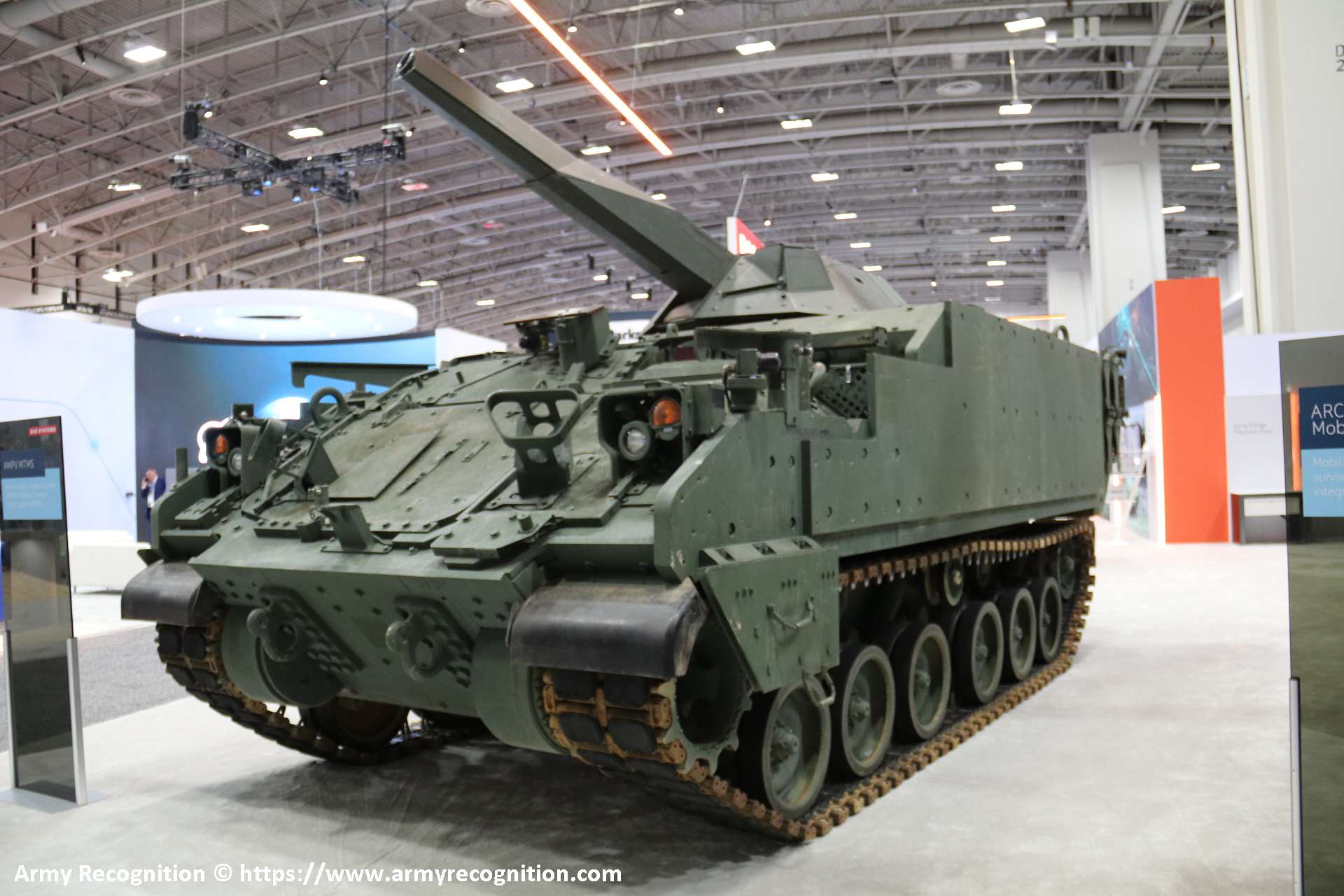
At the Association of the United States Army (AUSA) Annual Meeting & Exposition 2024, BAE Systems showcased its latest advancement in mobile artillery solutions: the Modular Turreted Mortar System (MTMS). The new system combines the versatility of the AMPV (Armored Multi-Purpose Vehicle) with the precision and firepower of the Patria NEMO remote-controlled 120mm turreted mortar system.
Follow Army Recognition on Google News at this link
At AUSA 2024, the AMPV MTMS Modular Turreted Mortar System was displayed at the BAE Systems booth. (Picture source: Army Recognition Group)
The AMPV MTMS represents a leap forward in mobile, self-propelled mortar technology, offering the U.S. Army a robust, efficient, and highly mobile indirect fire capability. The system leverages the AMPV's proven tracked armored platform, ensuring durability, mobility, and compatibility with existing U.S. Army infrastructure. Integrating the NEMO mortar turret significantly increases firepower, allowing for rapid, accurate, and remote-controlled deployment of 120mm mortar rounds.
The Armored Multi-Purpose Vehicle (AMPV) is a versatile, tracked armored vehicle developed by BAE Systems for the U.S. Army. Designed to replace the aging fleet of M113 vehicles, the AMPV provides enhanced protection, mobility, and adaptability on the modern battlefield. It is a modular platform configured for various roles, including troop transport, command and control, medical evacuation, and mortar carrier. Built on a robust chassis similar to that of the Bradley Fighting Vehicle, the AMPV offers improved survivability, better off-road performance, and increased payload capacity, making it a reliable and flexible solution for supporting mechanized infantry operations.
The NEMO (New Mortar) mortar system, developed by the Finnish Company Patria, is a remote-controlled, turreted 120mm mortar designed to provide versatile and mobile fire support. It can be integrated into various platforms, including armored vehicles and naval vessels. The NEMO system's turreted design is fully enclosed, allowing the crew to operate it remotely from within the vehicle, ensuring their safety during combat operations.
One of NEMO's standout features is its ability to "shoot on the move." Unlike traditional mortar systems that require a stationary position to fire, NEMO can deliver accurate fire support while the vehicle is in motion, enabling units to remain mobile, evade counterattacks, and adapt quickly to changing battlefield conditions. It can engage a wide range of ground targets, providing indirect fire support for infantry and mechanized units, as well as targeting enemy positions, bunkers, and light armored vehicles.
The NEMO mortar system offers a firing range of up to 10 kilometers, providing support over long distances. It is also capable of rapid, sustained fire, with a maximum rate of fire of up to 10 rounds per minute. This rate of fire, combined with its automated loading and fire control systems, enables swift targeting and efficient engagement of multiple targets. Additionally, the NEMO system's ability to fire under armor protection ensures that operators can conduct firing operations without exposing themselves to external threats, maintaining safety while delivering sustained and precise firepower.
Overall, the NEMO mortar system combines the mobility of a self-propelled platform with the firepower and versatility of a traditional mortar, offering enhanced protection, rapid deployment, and adaptability for various military operations.
The BAE Systems AMPV is fitted with a Patria NEMO 120mm mortar system offering shoot-and-move capabilities as well as direct fire against ground targets. (Picture source Army Recognition Group)
BAE Systems has been working closely with the U.S. Army to develop the AMPV MTMS, with the prototype being delivered to the Army in January 2024. The system incorporates a common top plate design, facilitating seamless integration of the NEMO turret onto the AMPV chassis. This design aims to enhance modularity, enabling future upgrades and the potential integration of other turreted systems.
Following its delivery, the AMPV MTMS underwent extensive field evaluations, assessing its performance, durability, and operational capabilities under various conditions. These evaluations are crucial for determining the system’s viability as a future asset for the U.S. Army’s armored and mechanized units.
One of the key highlights of the AMPV MTMS development was its participation in a live fire demonstration on September 10, 2024, during the Maneuver Warfighter Conference at Fort Moore, Georgia. This demonstration was a critical opportunity for military officials and defense industry experts to witness the system’s capabilities firsthand. The AMPV MTMS successfully showcased its rapid deployment and accurate fire support, reinforcing its potential as a reliable asset on the modern battlefield.
The live fire exercise demonstrated the effectiveness of the NEMO mortar turret's automated loading and targeting systems, which enable quick reaction times and enhanced precision. The turret's remote-control capabilities also allow operators to engage targets from a safe distance, providing a tactical advantage in various combat scenarios.
The AMPV MTMS is designed to meet the U.S. Army's need for a flexible and mobile mortar system that can be deployed rapidly in diverse combat situations. Integrating the NEMO turret on the AMPV platform aligns with the Army's broader modernization goals, emphasizing modularity, adaptability, and interoperability across its fleet of armored vehicles.
As the system progresses through its evaluation phases, BAE Systems remains optimistic about its future prospects. The successful demonstration at Fort Moore has generated significant interest, and further tests and assessments are expected to continue through the rest of 2024. If the evaluations conclude positively, the AMPV MTMS, with its potential for mass production, could provide the U.S. Army with a next-generation solution for indirect fire support, sparking excitement about its future.

- Details
- Written by: Triffaux
- Category: 2024
- Hits: 4432
Textron Systems is currently presenting its XM250 technology at the AUSA 2024 exhibition in the United States, which takes place from October 9 to 12. In partnership with General Dynamics Mission Systems, Textron is unveiling the XM250, a next-generation anti-vehicle munition designed to support the U.S. Army's counter-mobility and terrain-shaping operations. This Top Attack System is an innovation under the U.S. Army’s Terrain Shaping Obstacles (TSO) program, aimed at blocking the advance of enemy armored vehicles through the deployment of mines.
Follow Army Recognition on Google News at this link
Textron Systems and General Dynamics Nex-Gen XM250 Top Attack Mine System (Picture source: Army Recognition)
Compared to the XM204, the XM250 incorporates significant advancements that enhance its effectiveness in the field. While the XM204 already provided basic functions in terrain shaping, the XM250 stands out with its extended remote control capability, allowing operators to manage multiple obstacle fields located several kilometers away from a single station. This new model also benefits from a real-time detection and reporting system, providing operators with better situational awareness, and offers superior striking power with enhanced warheads for increased lethality against both armored and wheeled vehicles, including battle tanks. Additionally, the XM250 introduces the ability to recover unused munitions, enabling redeployment and significantly reducing logistical needs.
Designed for simplified use, the XM250 can be quickly installed and armed, featuring an intuitive interface that facilitates its deployment. The system’s Remote Control Station (RCS) integrates seamlessly with obstacle planning tools, allowing operators to monitor and control obstacles while aligning with mission command objectives. Features such as three-dimensional terrain analysis and automated resource calculation optimize mission planning, enabling the XM250 to be deployed as a standalone unit or as part of a more extensive and complex obstacle network. Its portability, suitable for a two-person lift, ensures secure transportation across various terrains, whether by ground vehicle or helicopter, thereby providing enhanced tactical flexibility.
The recoverable components of the XM250 allow for the reuse of unused munitions, thereby reducing resupply needs and transport demands. Operable in GPS-denied environments and compliant with Department of Defense policies as well as international agreements, the system also integrates NSA-certified encryption for secure control and management of obstacle fields. This compatibility with standard mission command infrastructure allows for efficient integration, providing troops with robust counter-mobility capabilities in diverse operational contexts.
The U.S. Army’s Terrain Shaping Obstacles (TSO) program aims to develop and deploy defense systems that create tactical obstacles to slow down, divert, or immobilize enemy armored vehicles on the battlefield. These obstacles, which include technologies such as the older XM204 Top Attack (TA) system, are designed to be autonomous and used in diverse operational scenarios to enhance the combat brigades' counter-mobility capabilities. The TSO allows forces to create temporary yet effective barriers that exploit specific terrain areas to block the advance of enemy armored formations, particularly in open and sparsely vegetated environments.
Although the XM250 is currently under development as part of the U.S. Army's Terrain Shaping Obstacles (TSO) program, several armed forces worldwide have reportedly shown interest in this advanced counter-mobility technology. The system’s unique combination of remote control, enhanced situational awareness, and real-time adaptability makes it an attractive option for countries seeking to strengthen their defensive capabilities against modern armored threats. Textron Systems has indicated that discussions are underway with allied nations in Europe and Asia, who are keen on exploring potential procurement or adaptation of the XM250 for their respective defense strategies. This growing international interest underscores the XM250’s appeal as a versatile solution adaptable to diverse operational environments and coalition standards, positioning it as a potentially significant addition to allied defense arsenals.
Several systems similar to the XM250 exist within the field of counter-mobility and terrain-shaping measures, though they vary in technology and functionality. For example, Germany’s DM22 and the U.S. Army’s M7 Spider are both recognized for their effectiveness in blocking armored vehicles. The DM22, equipped with a shaped charge, performs well against armored targets but lacks the advanced remote control capabilities provided by the XM250. Meanwhile, the M7 Spider, also used by the U.S. Army, is a remotely controlled mine network designed primarily for area denial, though it is not specialized in targeting heavy armor. In comparison, the XM250 stands out with its extended remote control, the recoverability of unused munitions, and increased firepower, making it particularly suited to the needs of modern terrain-shaping operations.
- Details
- Written by: Jérôme Brahy
- Category: 2024
- Hits: 6402
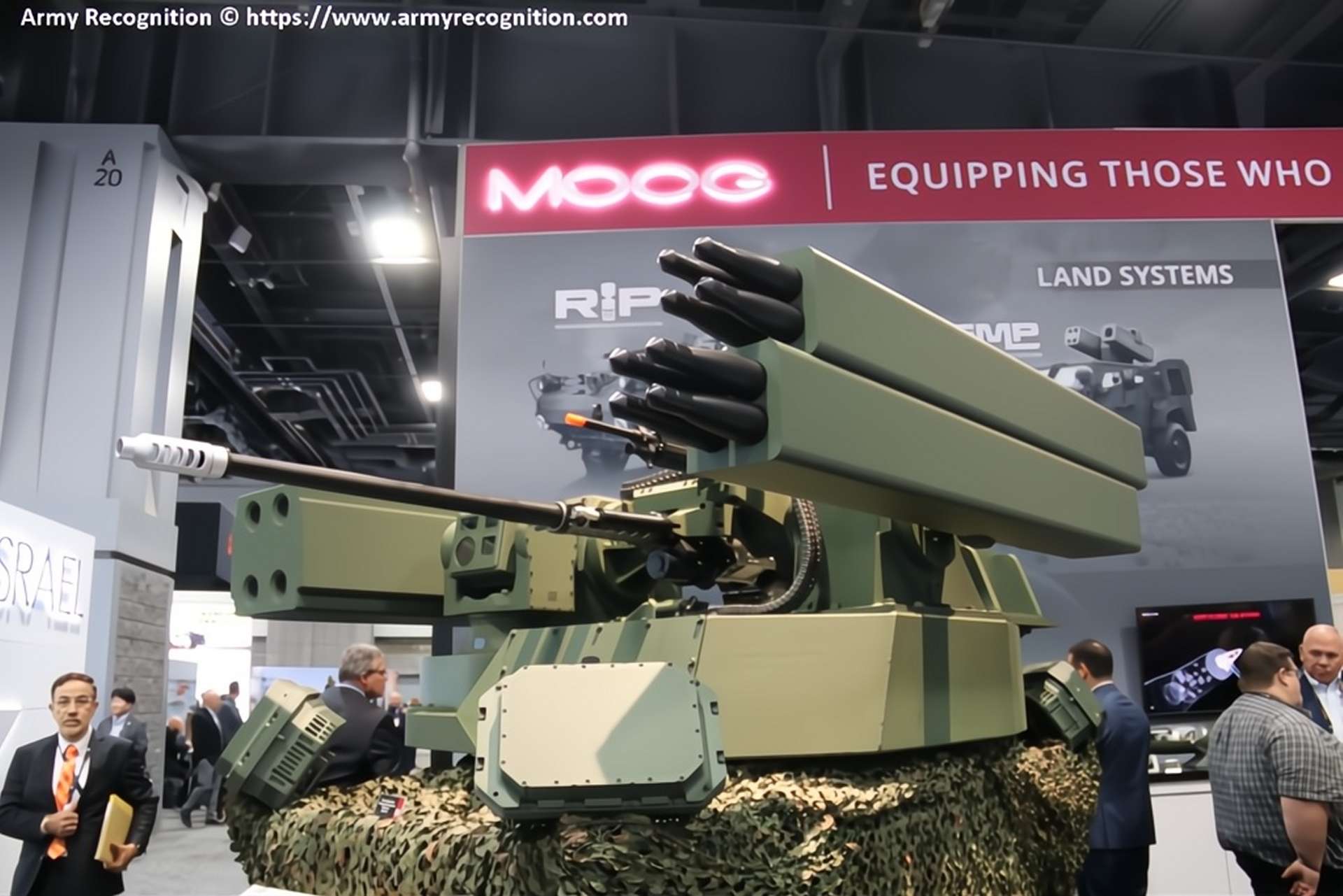
At the AUSA 2024 exhibition, Moog Inc. showcases its Reconfigurable Integrated-Weapons Platform (RIwP) in five distinct configurations, demonstrating how the RIwP supports various operational demands. The RIwP turret is displayed in two locations: on a stand in Moog’s booth, highlighting its platform-agnostic design, and integrated with General Dynamics Land Systems’ TRX Defender robotic combat vehicle. Both companies plan to alter the RIwP’s configuration daily to showcase its versatility in fulfilling multiple mission capabilities across diverse operational requirements.
Follow Army Recognition on Google News at this link
The Reconfigurable Integrated-Weapons Platform (RIwP)’s components are over 85% common across configurations, which helps to simplify logistical demands, reduce maintenance requirements, and facilitate training. (Picture source: Army Recognition)
On the first day of the exhibition, the RIwP turret in Moog’s booth featured a 30mm gun, Stinger and Coyote missile launchers, and radar systems aimed at air defense and counter-small unmanned aircraft systems (C-sUAS) missions. On the second day, a different configuration is shown, integrating an APKWS 70mm rocket launcher and Stinger launcher alongside the 30mm gun and radar capabilities. General Dynamics Land Systems also alters the configurations of the RIwP on the TRX Defender daily, leveraging the platform’s multi-mission payload capabilities to illustrate its role in defending formations from air and ground threats within a Mission Command on the Move context, reducing the need for additional units dedicated to command post protection.
Moog’s exhibit also includes a variety of its other defense technologies, including the Flexible Mission Platform (FMP), Control Actuation Systems (CAS) for precision missile guidance, a Portable Weapon Management System (PWMS), avionics systems, and integrated rotary solutions with slip rings, motion control, and media conversion. Moog also highlights its flight control systems, actuation, and active feel and trim systems, designed to support the US Army’s Future Long-Range Assault Aircraft (FLRAA).
The RIwP is designed to support a broad range of operational needs, offering compatibility with multiple vehicles, including the Stryker, JLTV, AMPV, MATV, MRAP, M113, Boxer, Commando, robotic combat vehicles, and containerized platforms. This platform is capable of integrating various weapons, such as the XM914, M2, M240, M134, M249, and other medium-caliber guns. It also supports numerous missile systems, including Stinger, APKWS, Coyote, SPIKE ER2, TOW, Javelin, Hellfire, and additional missile options, and is compatible with multiple sighting systems, including MX-GCS, RV-TAS, S3, PAAG, PASEO, and IBAS.
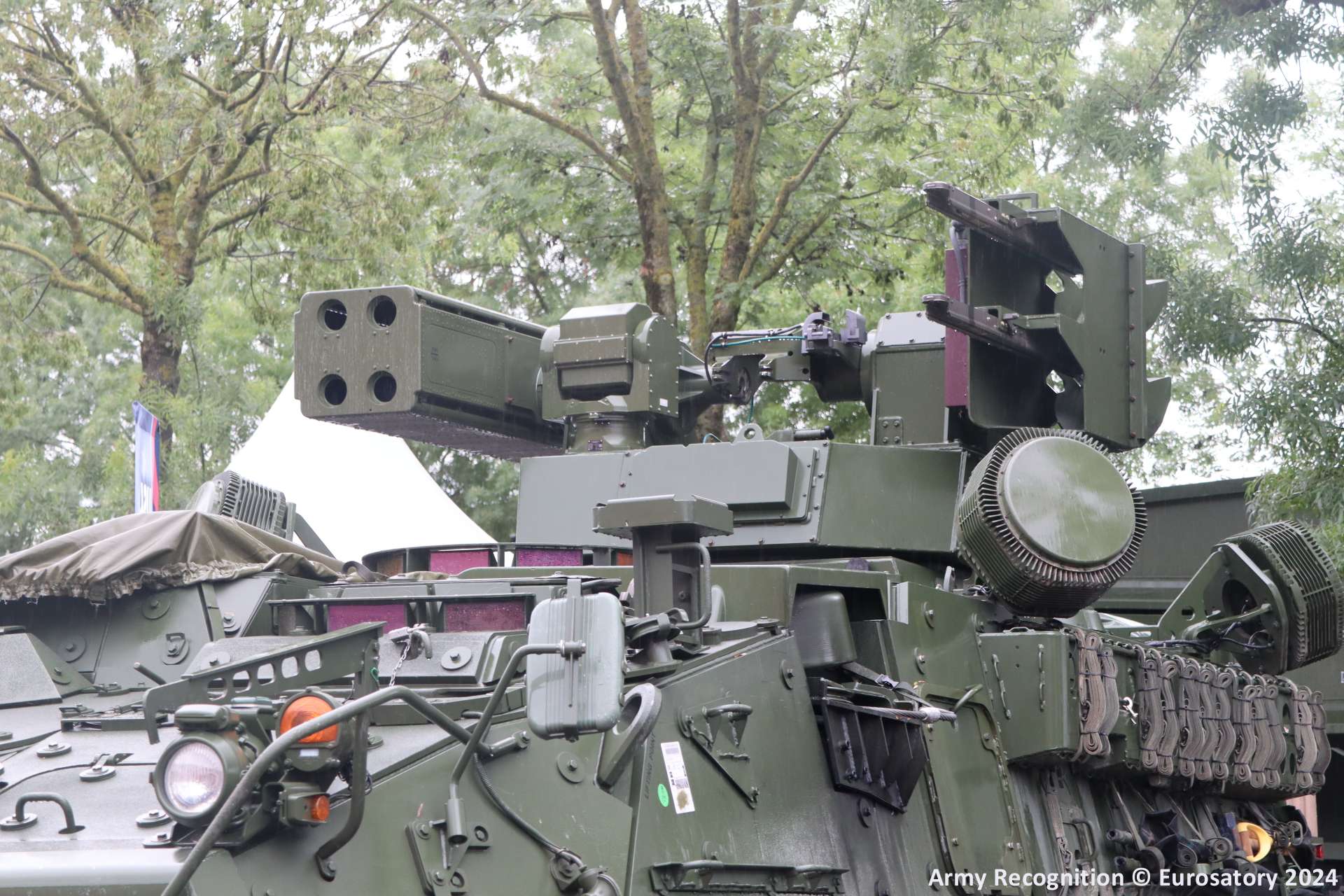
In May 2021, Moog also received a contract to provide 28 RIwP turrets for the U.S. Army’s Maneuver Short-Range Air Defense (M-SHORAD) Increment 1 program, based on the Stryker A1 platform. (Picture source: Army Recognition)
Additionally, the RIwP’s modular turret design allows for quick reconfiguration in the field, which can be performed by maintenance personnel with minimal lifting capabilities. The turret’s components are over 85% common across configurations, which helps to simplify logistical demands, reduce maintenance requirements, and facilitate training. The design includes survivability features that allow soldiers to reload under armor, with optional add-on armor available for increased protection. Further capabilities include direct radar integration, support for tethered and untethered drone integration, directed energy options, and electronic warfare effectors for counter-UAS and other non-lethal applications, as well as meteorological sensors, laser dazzlers, and shooter detection systems.
In May 2021, Moog also received a contract to provide 28 RIwP turrets for the U.S. Army’s Maneuver Short-Range Air Defense (M-SHORAD) Increment 1 program, based on the Stryker A1 platform. This specific configuration will integrate the XM914 30mm cannon, M240 7.62mm machine gun, Stinger, and Hellfire missiles, along with MX-GCS sighting systems and Moog’s Hellfire missile launcher. The RIwP configuration aligns with the M-SHORAD program's objectives, including counter-unmanned aerial systems (C-UAS) and mobile air defense capabilities. The contract covers 30 RIwP turrets, with two units designated for demonstration and spare purposes. The RIwP platform was developed based on direct battlefield feedback to support the Army’s Maneuver Short-Range Air Defense Increment 1 (SGT Stout) program, mobile C-UAS efforts, and other government operational requirements.
- Details
- Written by: Halna du Fretay
- Category: 2024
- Hits: 3782
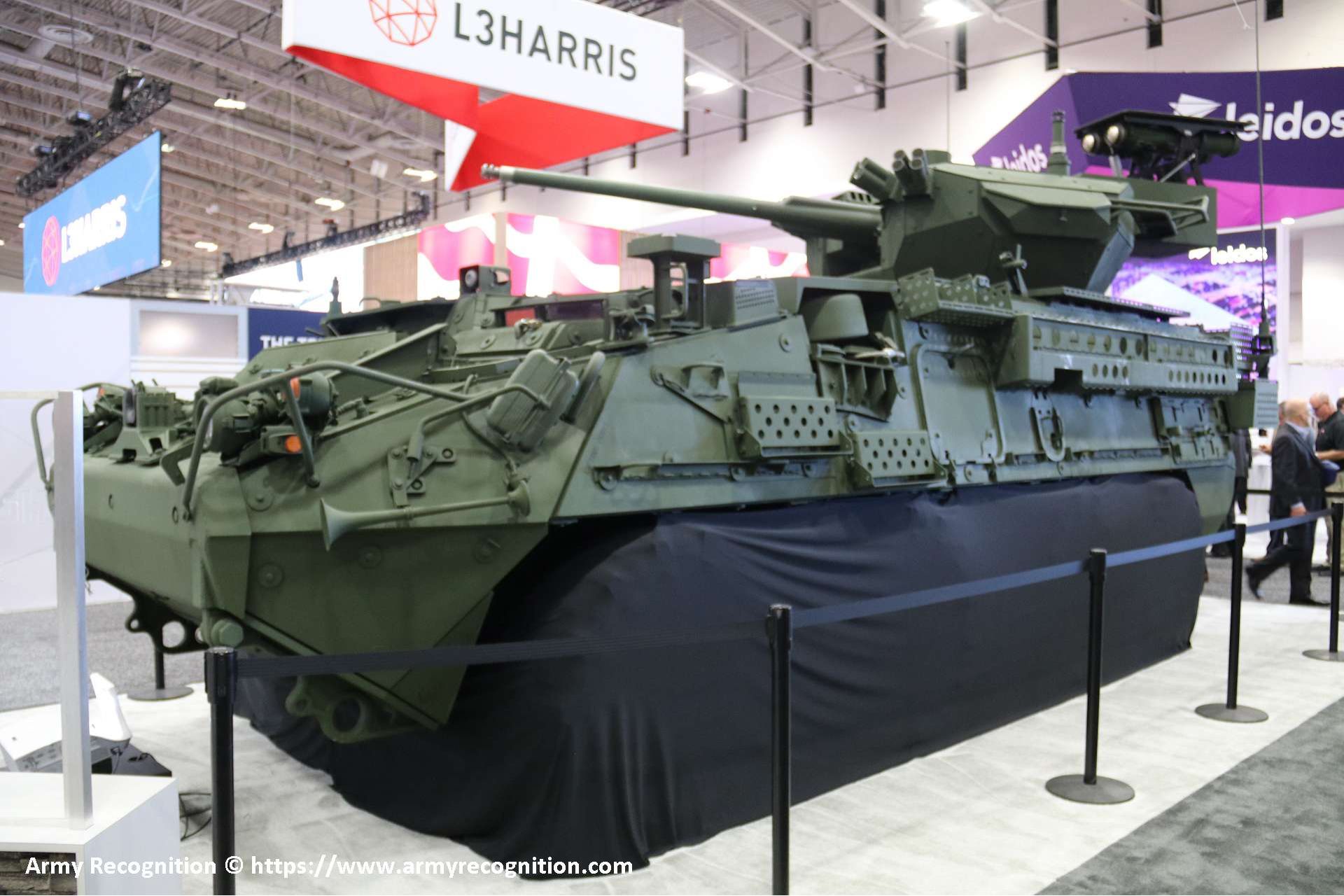
At the 2024 edition of the Association of the United States Army (AUSA) exhibition, Oshkosh Defense introduced the new 30mm Medium Caliber Weapon System (MCWS), mounted on the U.S. Army’s Stryker armored vehicle. This system, designed to increase the firepower and accuracy of the Stryker Brigade Combat Teams (SBCTs), highlights the U.S. industry’s ability to develop adaptable and effective solutions for modern operational challenges.
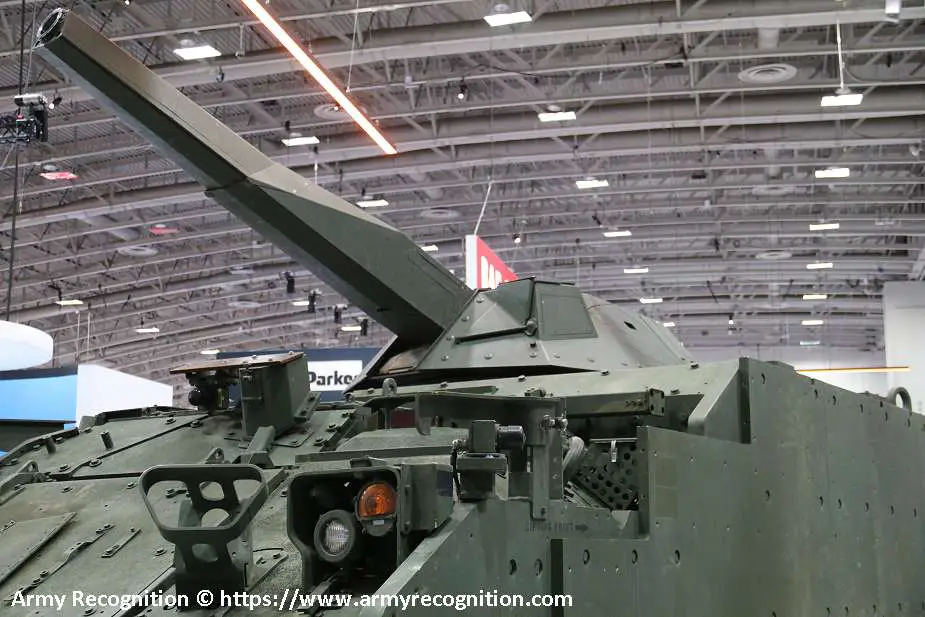
Compact and lightweight, the MCWS maintains the Stryker’s mobility and protective capabilities, allowing it to navigate challenging terrains while effectively engaging targets at long range (Picture source: Army Recognition)
The Oshkosh Defense MCWS is built to meet the needs of Stryker combat brigades, providing greater firepower and enhanced precision at extended ranges. The integration of a Javelin anti-tank missile launcher significantly expands the Stryker’s tactical versatility, allowing units to address a wider range of battlefield threats, including armored targets at greater distances. This armament configuration leverages the Rafael Samson Remote Weapon System and the XM813 30mm cannon, replacing the previous Stryker “Dragoon” model while delivering uncompromised lethality.
Since being awarded the MCWS contract in 2021, Oshkosh Defense has worked closely with the U.S. Army to tailor the weapon system to the specific requirements of the Stryker mission. In May 2024, the MCWS successfully completed the Follow-on Operational Test and Evaluation (FOT&E) at the Yakima training center, where rigorous live-fire and realistic combat simulations enabled soldiers to provide crucial feedback. To date, Oshkosh has delivered more than 100 MCWS units, with full deployment anticipated in early 2025, marking a key milestone in the Army’s modernization process.
The MCWS is designed not only for immediate operational needs but also to address future threats through advanced technology integration. Key improvements include a dual feed linkless Ammunition Handling System, allowing continuous resupply in dynamic combat scenarios, enhanced day/night optics, and increased ammunition capacity, which together enhance the unit's survivability and decision-making capability.
Compact and lightweight, the MCWS maintains the Stryker’s mobility and protective capabilities, allowing it to navigate challenging terrains while effectively engaging targets at long range. Pat Williams, head of programs at Oshkosh Defense, emphasized that soldier feedback was instrumental in refining the system’s features. “The system we’re delivering today is directly shaped by soldiers’ feedback. Their input has helped define this program’s requirements, and we’re proud to provide a system that meets their needs on the modern battlefield,” he stated.
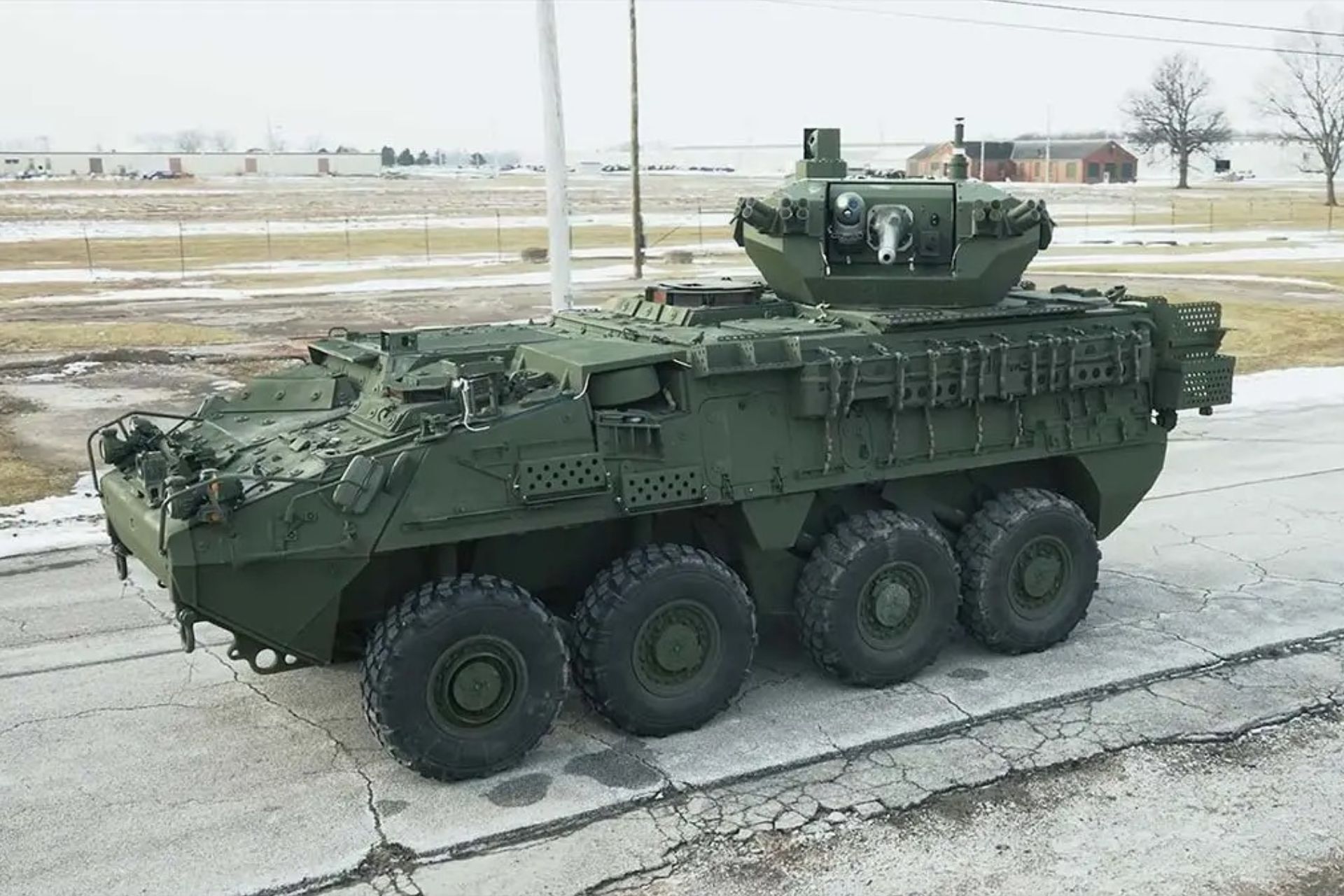
The large-scale deployment of the MCWS aligns with the U.S. Army’s modernization efforts, equipping the SBCTs with high-performance solutions while maintaining budget efficiency (Picture source: Oshkosh)
Oshkosh Defense foresees promising future applications for the MCWS beyond the Stryker Brigade Combat Teams. With its modular and lightweight design, the MCWS can be integrated onto various vehicles and platforms. For example, it has already been mounted on BAE Systems’ Armored Multi-Purpose Vehicle (AMPV) and Oshkosh Defense’s Robotic Combat Vehicle (RCV), demonstrating its suitability for both manned and unmanned operations.
The MCWS also holds significant potential for international integration. Oshkosh introduced additional armament options at AUSA to meet the specific needs of allied partners. A variant with a pop-up anti-tank guided missile (ATGM) launcher is also being considered for foreign military clients, underscoring the system’s flexibility and potential in international markets.
The large-scale deployment of the MCWS aligns with the U.S. Army’s modernization efforts, equipping the SBCTs with high-performance solutions while maintaining budget efficiency. This system is both cost-effective and operationally capable, meeting the Army’s financial and performance goals. Furthermore, the deployment of this technology reflects the Army’s commitment to enhancing troop lethality and responsiveness on the front line.
Beyond being a solution for the U.S. Army, the MCWS could serve as a strategic asset for allied forces, strengthening partner nations’ defensive capabilities. Integrating this weapon system across multinational forces could shift military engagement dynamics, fostering enhanced interoperability among allied forces.
Read more: Oshkosh’s MCWS Enhances Lethality and Precision of U.S. Stryker Units at AUSA 2024

- Details
- Written by: Triffaux
- Category: 2024
- Hits: 3329
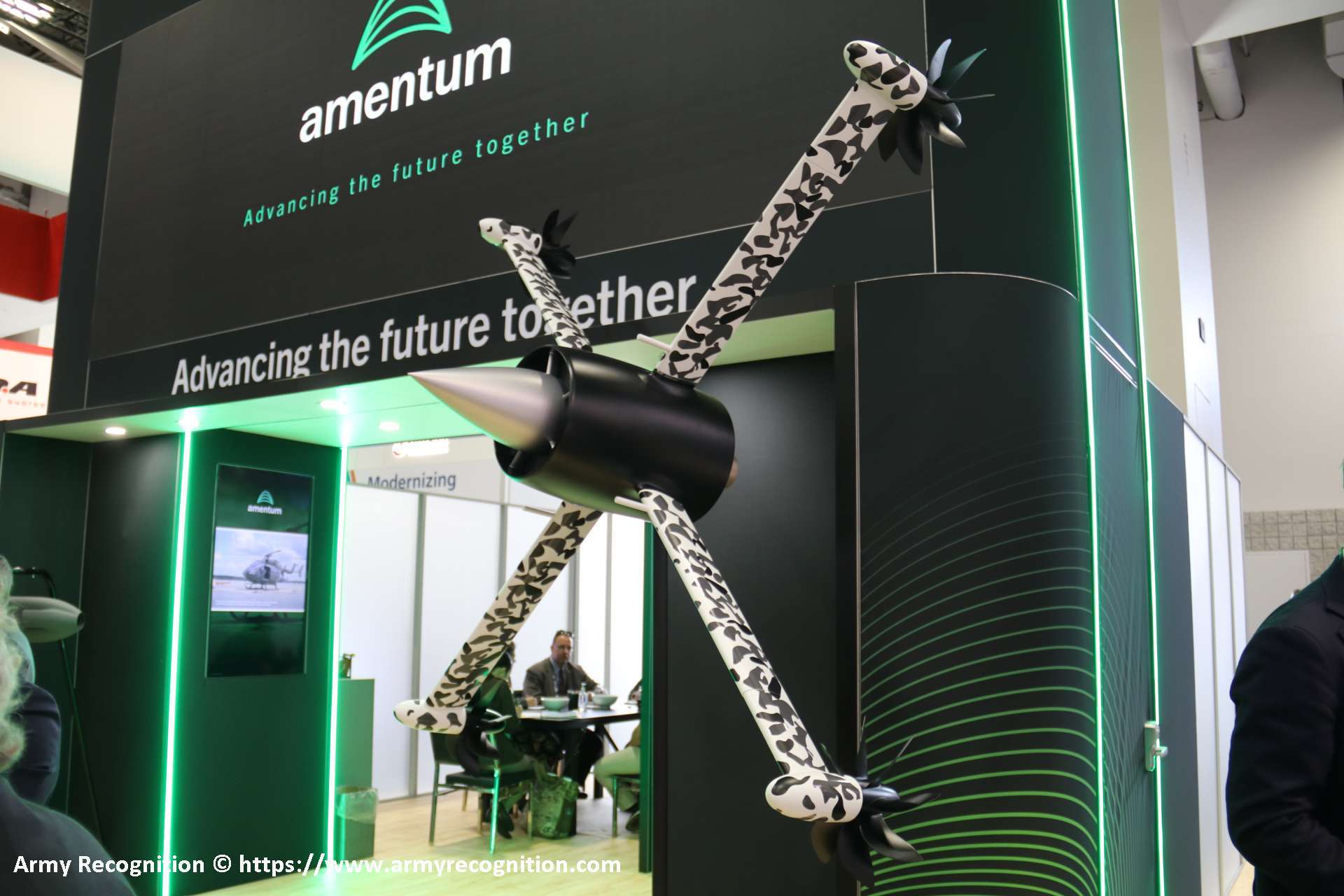
At the AUSA 2024 exhibition, held from October 9 to 11 in Washington, D.C., the American company Textron is presenting the XM204 Top Attack (TA) System, a new type of system developed under the U.S. Army’s Terrain Shaping Obstacles (TSO) program to block enemy armored vehicles by deploying mines. Equipped with autonomous sensors, the XM204 TA can launch mines to create complex tactical obstacles, combining top and bottom attacks. Its mobility could be further enhanced through drone transport, as demonstrated at the event.
Follow Army Recognition on Google News at this link
Textron XM204 Top Attack Mine System could be further enhanced through drone transport (Picture source: Army Recognition)
Textron’s XM204 Top Attack (TA) system marks a significant advancement in terrain-shaping obstacle technology, designed to meet the U.S. Army’s temporary requirements for top-attack anti-vehicle capabilities, specifically to support U.S. Army Europe Command (USAREUR). Used as a standalone solution or in conjunction with other systems, it enables the creation of complex obstacles by combining top and bottom attacks, especially when deployed alongside the XM343 Standoff Activated Volcano Obstacle (SAVO) system.
The operational concept of the XM204 TA involves several steps: once manually armed, the system activates its ground sensors and submunitions to autonomously detect, track, and engage multiple vehicle targets. Its detection and tracking process relies on seismic, acoustic, and radar sensors, paired with an explosively formed penetrator (EFP) warhead for top attack, maximizing its effectiveness against weaker vehicle armor. The operational stages include target detection, submunition deployment, engagement area scanning, target confirmation, EFP charge activation, and, ultimately, target destruction.
The U.S. Army’s Terrain Shaping Obstacles (TSO) program aims to develop and deploy defense systems that create tactical obstacles to slow down, divert, or immobilize enemy armored vehicles on the battlefield. These obstacles, which include technologies such as the XM204 Top Attack (TA) system, are designed to be autonomous and used in diverse operational scenarios to enhance the combat brigades' counter-mobility capabilities. The TSO allows forces to create temporary yet effective barriers that exploit specific terrain areas to block the advance of enemy armored formations, particularly in open and sparsely vegetated environments.
The XM204 Top Attack (TA) is an autonomous anti-vehicle system designed to attack armored vehicles from above, targeting their vulnerability in the upper armor. After being manually activated by a soldier, the XM204 uses a combination of seismic, acoustic, and radar sensors to detect, track, and identify enemy vehicles within a 100-meter radius. When a target is confirmed, the system deploys submunitions equipped with explosively formed penetrator (EFP) charges to engage and neutralize the vehicle. The EFP detonates either above or near the target, maximizing the damage to render the vehicle inoperable. Designed to function autonomously after activation, the XM204 is resistant to active protection systems, thermal and radiofrequency jamming, and deactivation attempts. It is also equipped with programmable self-destruct timers (4 hours, 48 hours, or 15 days), ensuring the area’s safety after engagement. This system thus allows the creation of effective obstacles against armored vehicles in strategic zones without requiring continuous monitoring.
The XM204 TA features a "Zone of Authority" (ZOA) with a 100-meter diameter, providing extensive engagement area coverage. It is designed to resist active protection systems, smoke, thermal and radiofrequency jamming, and mechanical deactivation attempts, making it a robust counter-mobility tool suitable for varied terrains and conditions. The system is also recoverable, reusable, and equipped with visual safety indicators to alert on its arming status.
The XM204 can be deployed quickly by hand and is resistant to unauthorized handling. It also offers three manually programmable self-destruct durations—four hours, forty-eight hours, or fifteen days—to meet specific mission requirements in the field. This system will be fielded for the first time in the U.S. Army during the 2025 fiscal year, thus meeting the Army’s modernization priorities, including long-range precision fires, next-generation combat vehicles, and soldier lethality.
Mounting the XM204 Top Attack (TA) on a drone would provide significant strategic advantages by increasing its range, mobility, and flexibility on the battlefield. While the system is currently limited to manual and ground-based deployments, integration on a drone would enable the XM204 to be transported over long distances, precisely positioned in hard-to-reach or hazardous areas, and used to create anti-vehicle obstacles in regions where ground forces cannot safely intervene. Additionally, the drone could relocate or reposition the XM204 based on enemy movements, optimizing its autonomous multi-target engagement capability through its advanced seismic, acoustic, and radar sensors. This combination with a drone would transform the XM204 into a dynamic, responsive defense system capable of creating mobile obstacles and adapting to the evolving needs of a modern combat environment.
Several stakeholders are involved in the development of this system, including the Project Manager Close Combat Systems (PM CCS) within the Joint Program Executive Office for Armaments and Ammunition, in collaboration with Textron Defense Systems and centers of excellence such as the Maneuver Support Center of Excellence. The Combat Capabilities Development Command Armaments Center also provides critical functions within the program.
- Details
- Written by: Vandenbosch
- Category: 2024
- Hits: 3626
The Huntress Turbojet, presented by WaveAerospace at the AUSA 2024 event in the United States, marks a significant advancement in the field of unmanned aerial systems. Designed as the fastest multirotor drone in the world, this system stands out with innovative technical features, making it an ideal solution for rapid reconnaissance missions. After more than five years of development, this hybrid drone is now available for pre-sale, providing armed forces with a flexible and economical option for operations in complex terrains.
The Huntress Turbojet is a Unmanned Aerial Vehicle with a top speed of 480 km/h. (Picture source: Army Recognition)
With a top speed reaching Mach 0.4, or approximately 480 km/h (300 mph), the Huntress Turbojet outperforms other multirotors in terms of performance, while requiring reduced infrastructure and significantly lower operational costs than a helicopter. With a four-meter wingspan, this drone can operate effectively in confined spaces, combining the maneuverability of a small aircraft with enhanced speed and range. Equipped with a hybrid propulsion system, it uses both electric power and JP-5 or equivalent fuel, enabling it to take off and land vertically (VTOL) on both land and sea, even under extreme Force 10 sea conditions. This versatility, combined with a two-hour endurance, provides significant operational potential.
The Huntress Turbojet is designed to function in all weather conditions, offering armed forces a unique surveillance capability, even in reduced or zero visibility. It is equipped with a phased radar altimeter and integrated inertial guidance, allowing precise operations in GNSS-denied environments. Additionally, its capability to conduct beyond-visual-line-of-sight (BVLOS) missions meets security requirements for advanced reconnaissance missions, where maintaining a safe distance from the operational area is essential.
Its payload capacity adds a modular dimension to the Huntress Turbojet, with five avionics compartments and the ability to carry up to four rail-mounted containers or advanced alert equipment (ALE). It can thus carry up to 50 kg (110 lbs) of payload, depending on fuel volume, making it adaptable to various mission types. Furthermore, its in-flight turbine shutdown and restart system ensures great flexibility, optimizing fuel consumption and endurance according to operational needs.
The Huntress Turbojet combines advanced technical specifications that enhance its robustness: a service ceiling of 6,000 meters, a maximum takeoff weight of 165 kg, and an operating temperature range from -30°C to 54°C. Meeting IP66 standards, it is designed to withstand inclement weather and ground-level icing conditions, ensuring maximum protection in various environments. WaveAerospace has thus developed an ideal solution for challenging operations, enabling armed forces to conduct rapid reconnaissance missions without exposing personnel or heavy equipment.
This next-generation drone opens promising prospects for military forces seeking to strengthen their responsiveness in diverse tactical environments. With its speed, endurance, and adaptability to the harshest conditions, WaveAerospace's Huntress Turbojet establishes itself as a key player in modern aerial surveillance, offering an efficient, reliable, and cost-effective solution for the armies of tomorrow.
- Details
- Written by: Vandenbosch
- Category: 2024
- Hits: 5026
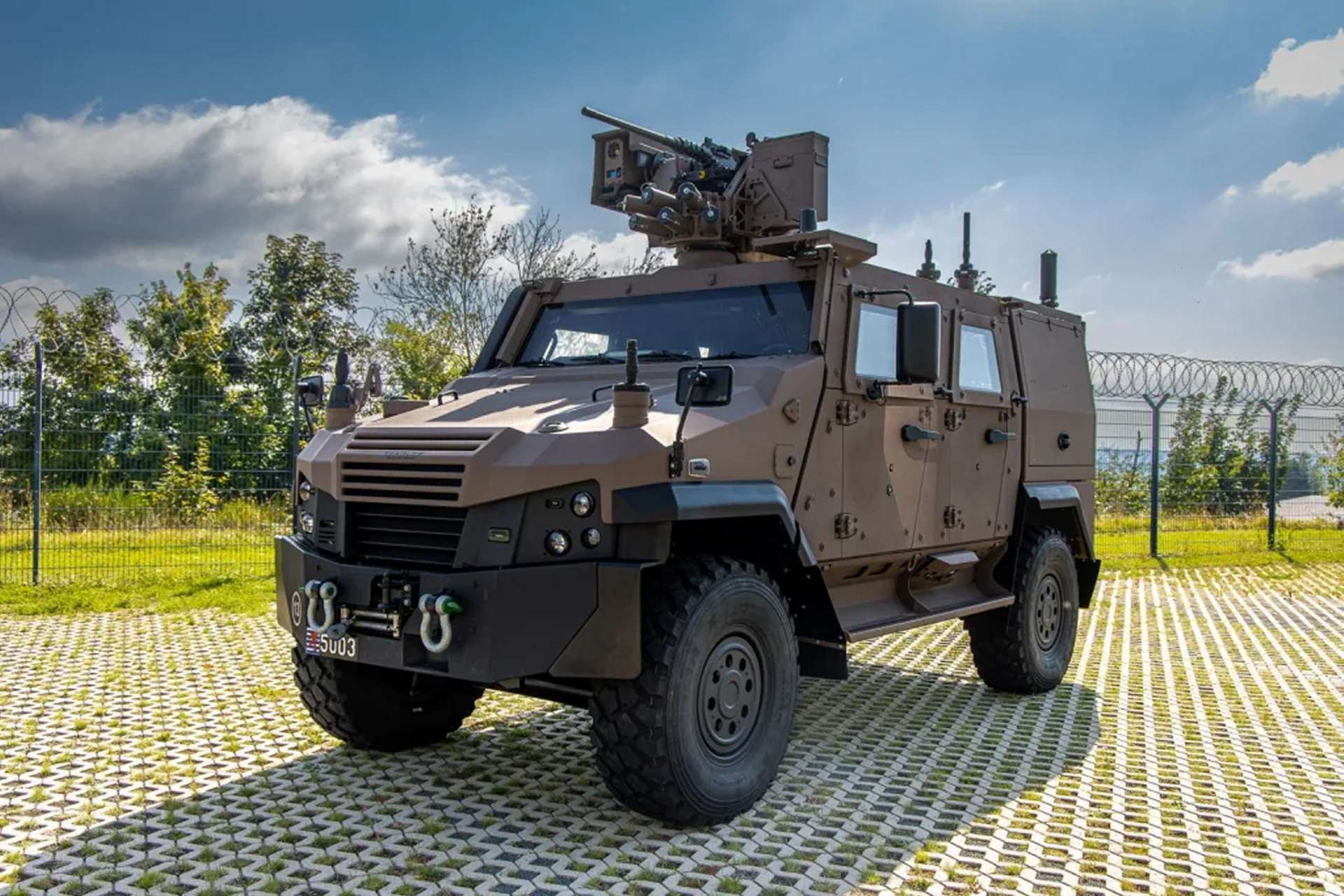
Last week, the Luxembourg Army received its first two CLRV (Command Liaison and Reconnaissance Vehicle) reconnaissance vehicles. These initial units will be used for testing and evaluation ahead of the final delivery of vehicles. The first ten production models are expected in March 2025, followed by 30 more by October 2025, and the final 40 by October 2026, replacing the Dingo and Hummer vehicles currently in service.
The CLRV is based on the Eagle V model by General Dynamics European Land Systems. (Picture source: Luxembourg Directorate of Defence)
For this acquisition, which began in June 2021, the Luxembourg Army enlisted the support of NATO’s procurement and support agency, NSPA, which will also provide logistical and technical support for the vehicles throughout their lifecycle. The total investment amounts to €226.6 million, a figure slightly below the projected budget. The maximum program budget, set at €367 million, covers the acquisition of the vehicles along with their weapon and communication systems, as well as logistical support for a lifecycle estimated at between 15 and 20 years.
The contract was awarded to the Swiss company General Dynamics European Land Systems (GDELS). The CLRV vehicles are equipped with a remotely operated DeFNder Medium turret from FN Herstal and benefit from Scorpion program communication solutions provided by Thales Belgium. Designed to carry up to four soldiers, they offer advanced reconnaissance capabilities.
Defense Minister Yuriko Backes emphasized the importance of these vehicles for the transformation of the Luxembourg Army, aiming to maintain its operational readiness and realize the binational Belgian-Luxembourg medium-type combat reconnaissance battalion project. These new vehicles, she specified, will contribute to collective defense and Luxembourg’s commitments within NATO and the European Union in the coming years. In addition to this order, the Luxembourg Army also plans to acquire 16 Griffons, 38 Jaguars, and 5 Serval vehicles, marking a significant capability leap.
The bill relating to this program, with a total budget of €2.6 billion, was presented on May 31. Referred to the Defense Commission on June 6, it will be discussed this Wednesday.
The CLRV, or Command Liaison and Reconnaissance Vehicle, is designed to meet the Luxembourg Army’s needs for reconnaissance and liaison. Based on the Eagle V model by General Dynamics European Land Systems, the CLRV retains the robust characteristics of this proven vehicle, adding specialized communication and combat equipment to better meet modern requirements. Also used by Germany, the Eagle V is a light armored vehicle with significant versatility and exceptional battlefield survivability.
The CLRV can be equipped with either a 7.62 or 12.7 mm caliber machine gun, providing adaptable firepower for reconnaissance missions or convoy protection. Weighing approximately 7 tons, the vehicle is armored to withstand ballistic threats and mine explosions, featuring reinforced armor and a V-shaped hull designed to dissipate blast forces from below. It is also equipped with advanced systems, including run-flat tires, a self-recovery winch, infrared lights, and a centralized tire inflation system, ensuring mobility across various terrains, even under extreme conditions.
With a top speed of 65 km/h on roads and a range of 700 km, the CLRV offers significant operational freedom, allowing it to cover large areas without frequent refueling. Measuring 5.77 meters in length, 2.78 meters in width, and 1.87 meters in height, the vehicle is compact yet spacious enough to carry a crew of two plus two additional soldiers. Its integrated design includes a rear-view camera to enhance visibility and facilitate maneuvering in constrained environments.
Thus, by adapting the Eagle V concept, the CLRV provides Luxembourg’s armed forces with a modern reconnaissance vehicle, capable of combining the power, protection, and mobility necessary to meet current defense commitments within both national and international frameworks.
Read more: Luxembourg Receives Its First CLRV Reconnaissance Vehicles from Scorpion Program

- Details
- Written by: Halna du Fretay
- Category: 2024
- Hits: 12020
On October 15, 2024, the U.S. Army announced the awarding of five contracts for the upcoming performance demonstration for self-propelled howitzer modernization. The companies selected for these contracts include American Rheinmetall Vehicles, BAE BOFORS, Hanwha Defense USA, General Dynamics Land Systems, and Elbit Systems USA. These contracts, awarded under Other Transaction Agreements (OTAs), total approximately $4 million across all companies.
Performance demonstrations, set to begin in November 2024, will guide several SPH-M efforts outlined in the Army’s Cannon Transformation Strategy (Picture source: Hanwha Aerospace, Bae Systems, Rheinmetall and Elbit Systems)
The Self-Propelled Howitzer Modernization (SPH-M) initiative, previously known as the Extended Range Cannon Artillery (ERCA), aims to enhance howitzer lethality by increasing range and rate of fire, using mature technologies to boost mobility, survivability, reliability, logistics support, and firepower in self-propelled artillery systems.
In October 2023, the Army ended the ERCA rapid prototyping effort, determining that further development and redesign of the 58-caliber cannon were necessary before moving into an official acquisition phase. Major General Glenn Dean, Program Executive Officer for Ground Combat Systems, confirmed this decision and explained that, as part of the new strategy, the Army is exploring both U.S. and international options to leverage mature and available industrial solutions to fill critical capability gaps.
Performance demonstrations, set to begin in November 2024, will guide several SPH-M efforts outlined in the Army’s Cannon Transformation Strategy. According to General Dean, these demonstrations are intended to support the Army’s shift from development to procurement of a mature, available, and non-developmental system. The goal is to complete all vendor performance demonstrations by the end of 2024, allowing the Army to determine if operationally suitable solutions exist that may advance to a competitive evaluation stage, potentially leading to future production contracts.
Currently, the U.S. Army employs several howitzers to meet diverse operational needs. The M109A7 Paladin, a 155 mm self-propelled howitzer, offers significant mobility and precision, especially with Excalibur-guided munitions. The M777, a 155 mm towed howitzer, is lightweight and deployable by helicopter, while the 105 mm M119A3 is used for close-range support in challenging terrain. Although gradually replaced, the 155 mm M198 remains a reliable howitzer for reserve units. These systems provide the Army with a broad range of capabilities in range, mobility, and firepower.
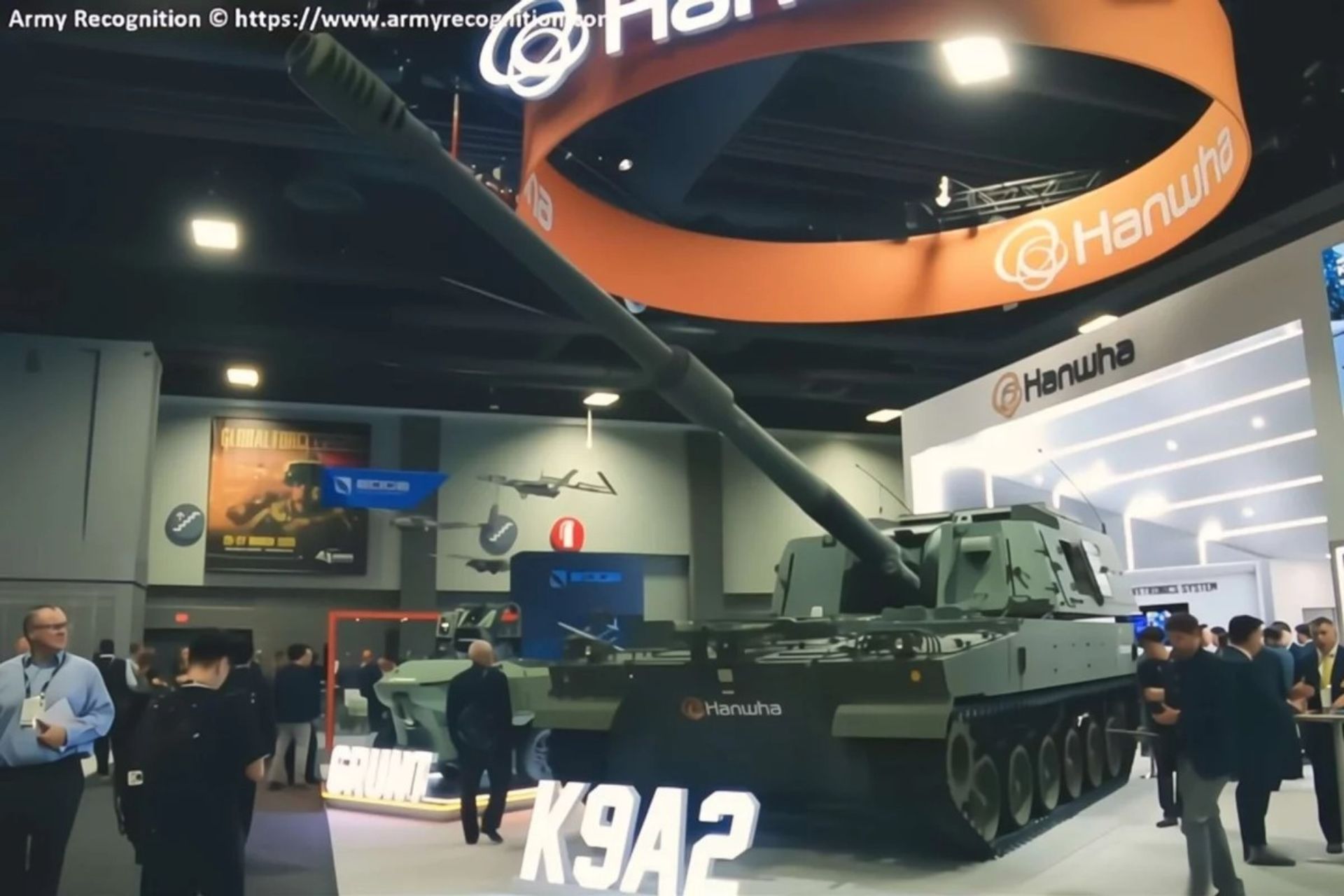
The K9A2 features a fully automatic handling system and an automatic turret, increasing its rate of fire to up to 10 rounds per minute at the push of a button, compared to the K9A1's rate of six to eight rounds per minute. (Picture source: Army Recognition)
Among the options available to meet U.S. self-propelled howitzer modernization needs under the SPH-M program, several systems produced by the selected contractors offer notable advantages. The U.S. requirements focus on increased lethality, extended range, high rate of fire, as well as excellent mobility, reliability, and enhanced survivability.
The K9 Thunder from Hanwha Defense USA, in its K9A1 and K9A2 versions, appears well-suited to U.S. Army needs. This 155 mm/52 self-propelled howitzer, deployed by the armed forces of Australia, Poland, and Egypt, combines effective firepower with enhanced mobility. With a maximum range of 40 km using rocket-assisted projectiles and a rate of fire of 6 rounds per minute, the K9 Thunder is capable of rapid strikes, including Multiple Round Simultaneous Impact (MRSI) firing.
Its automatic loader and barrel locking system during transit improve efficiency and safety, as does its 12.7 mm heavy machine gun for self-protection. Powered by a 1,000-hp MTU engine and Allison transmission, it reaches a top speed of 67 km/h and a range of 360 km, ideal for large-scale missions. Its welded steel armor, CBRN protection, and automatic fire control systems make it a comprehensive and robust system, while the K9A2 version introduces automation features that reduce crew dependency, aligning well with U.S. modernization criteria.
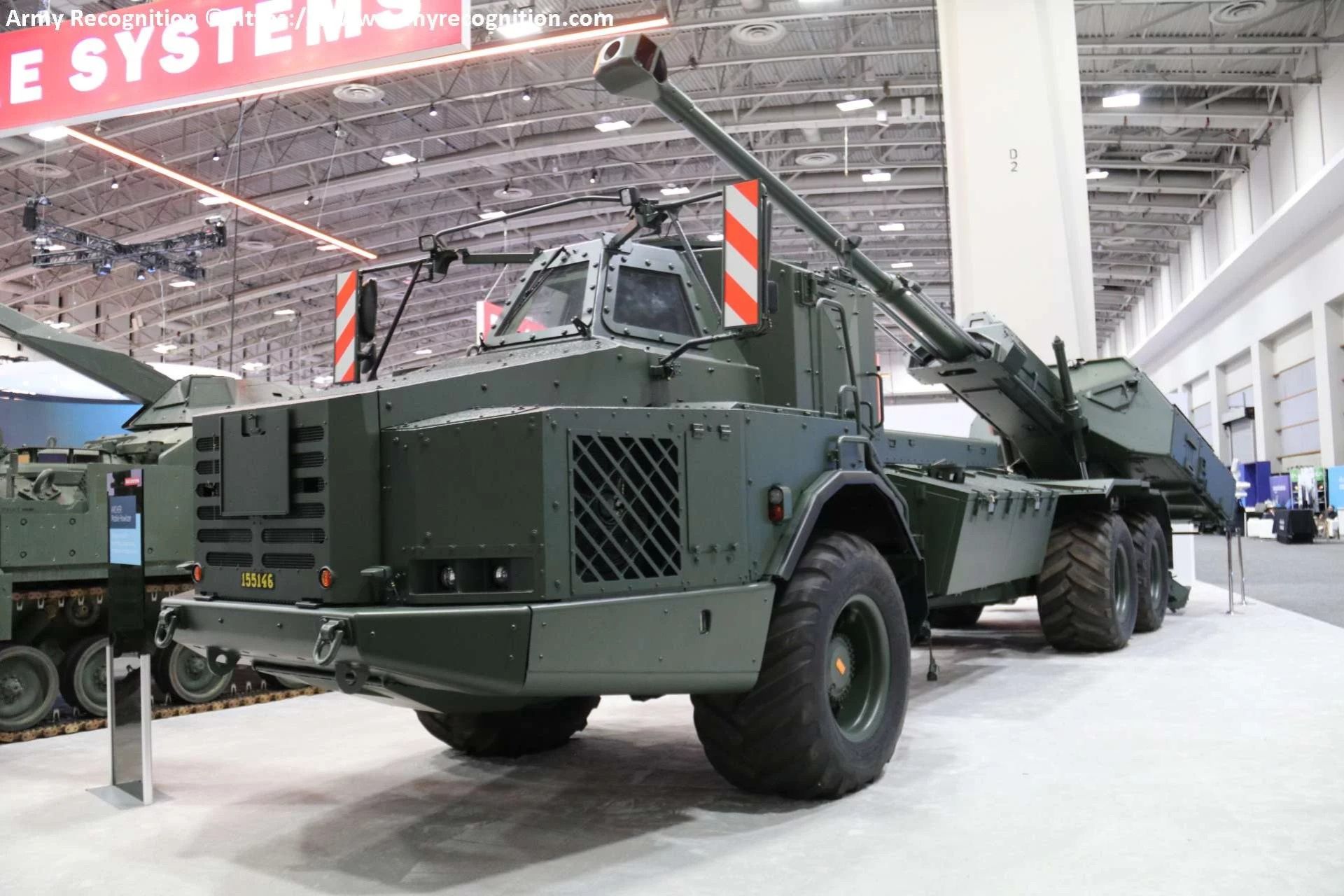
A key feature of the Archer is its exceptional mobility, allowing it to swiftly relocate after firing from its wheeled platform, thereby reducing vulnerability to enemy counter-battery fire (Picture source: Army Recognition)
The ARCHER system from BAE Systems Bofors also has distinct advantages, especially its enhanced mobility with a Volvo A30E 6x6 truck chassis, enabling rapid movement and immediate deployment. This 155 mm/52 howitzer can reach up to 60 km using Excalibur-guided munitions, meeting the U.S. Army’s precision requirements. Thanks to its fully automatic loading system, the ARCHER can fire its 21 rounds in 2.5 minutes while offering increased protection for the crew in a STANAG 4569-compliant armored cab. Though highly capable on level terrain, it may face limitations in rugged environments compared to tracked systems like the K9 Thunder. Nevertheless, it remains a viable option for operations requiring speed and precision, with a range of 500 km and a maximum speed of 70 km/h.
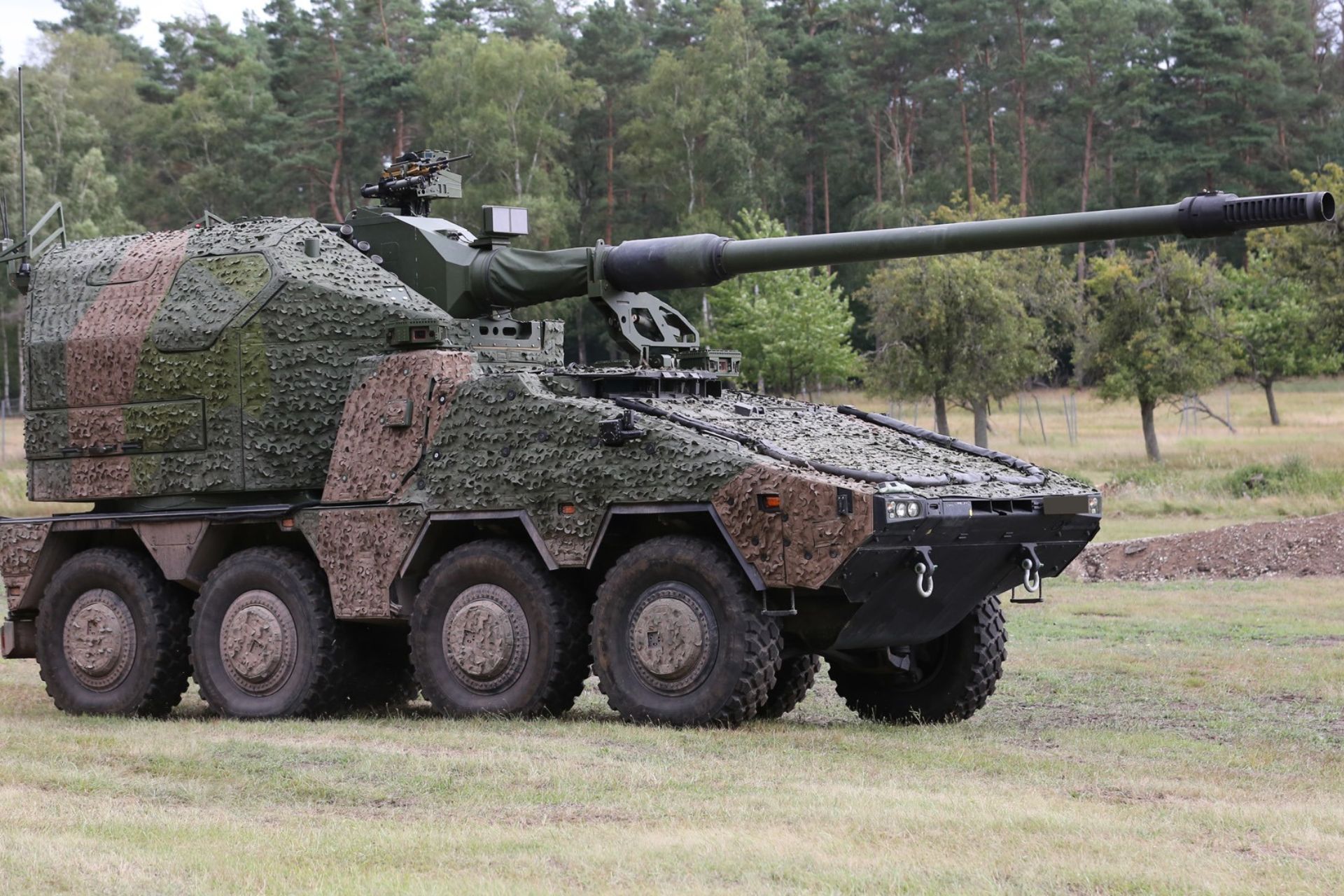
Using a 155 mm/L52 cannon, the RCH 155 benefits from Boxer’s modularity and an automatic turret (Picture source: Rheinmetall)
The RCH 155 from American Rheinmetall Vehicles, mounted on the Boxer platform, combines firepower and advanced protection, aligning well with the U.S. Army’s requirements for mobility and safety. Using a 155 mm/L52 cannon, it benefits from Boxer’s modularity and an automatic turret. Its design places the crew compartment at the front and the turret at the rear, allowing two operators to manage firing and movement functions. With a rate of fire of 9 rounds per minute and MRSI capability, the RCH 155 is optimized for rapid strikes and enhanced responsiveness, while its AMAP armor provides protection against 14.5 mm rounds and 10 kg mines. Equipped with an MTU engine producing 816 hp, it reaches a top speed of 100 km/h and offers a 700 km range, a significant advantage for long-range operations.
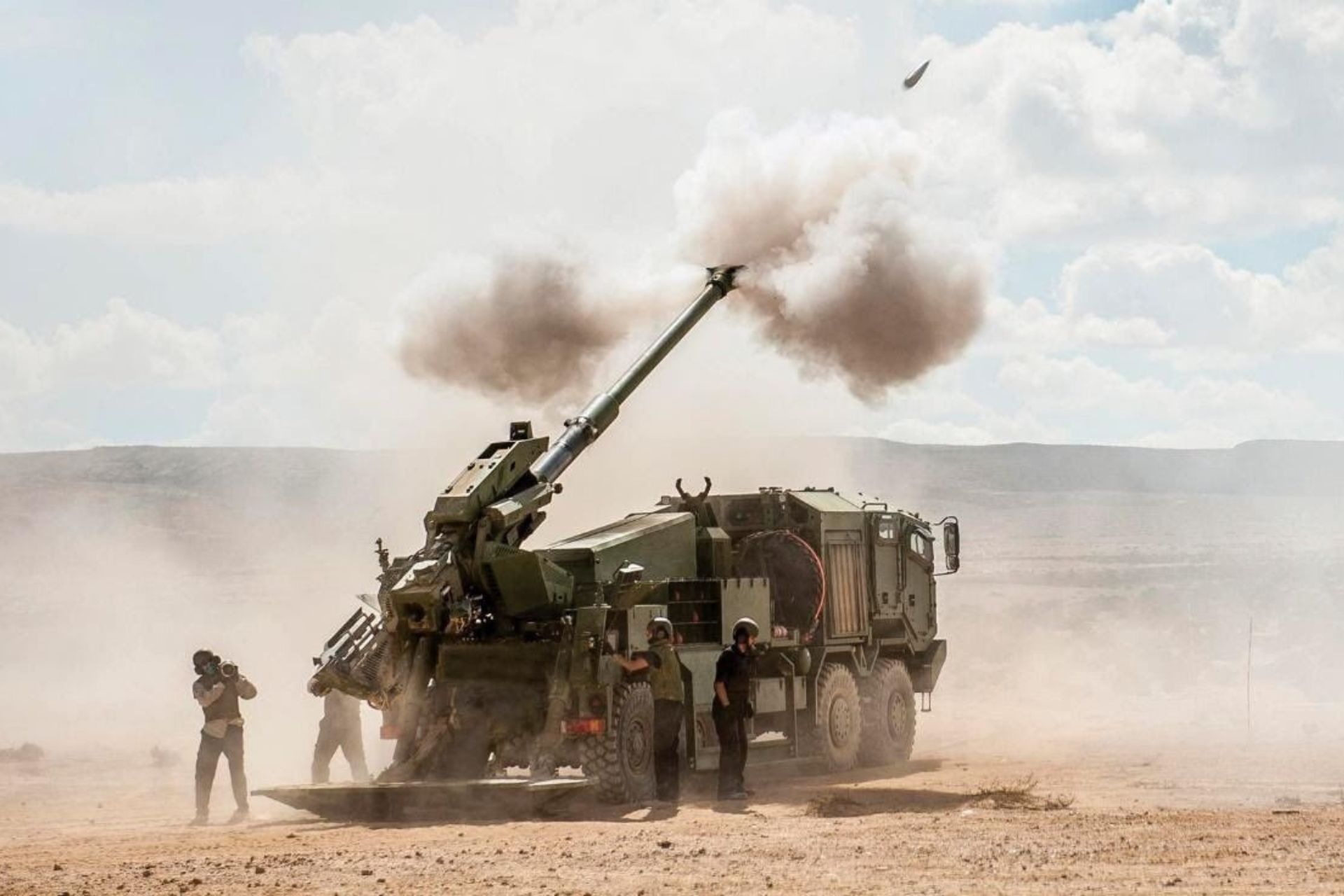
With a range of up to 41 km, the ATMOS 155 mm howitzer features a semi-automatic loading system and a rate of fire of 8 rounds per minute, enabling rapid and effective strikes (Picture source: Elbit Systems)
The collaboration between KNDS Germany and General Dynamics European Land Systems (GDELS) has led to the unveiling of the AGM (Artillery Gun Module) integrated into the PIRANHA Heavy Mission Carrier (HMC) at the Future Artillery Conference in Paris. This advanced solution combines the impressive firepower of the 155mm caliber 52 fully automated, unmanned artillery gun from KNDS with the superior tactical mobility of GDELS’s PIRANHA HMC vehicle. Designed for a crew of two, with the option for a third crew member or additional storage, the AGM on PIRANHA HMC brings notable advantages for the U.S. Army.
With its robust 10x10 Multi-Link chassis, the AGM enables firing on the move without the need for stabilizing supports, unlike conventional wheeled howitzers, enhancing its flexibility and rapid response capability. Offering a 360° firing azimuth, the system supports both indirect and direct fire on moving land and sea targets. Key features like “Shoot & Scoot” capability and MRSI (Multiple Rounds Simultaneous Impact) enhance the module's versatility for artillery support in dynamic combat environments, making it a strong candidate for U.S. forces seeking advanced firepower combined with unmatched operational mobility.
Lastly, the ATMOS 2000 from Elbit Systems is a high-performance artillery system mounted on a Tatra truck chassis in 6x6 or 8x8 configurations, offering excellent mobility while being compatible with NATO ammunition. With a range of up to 41 km, this 155 mm howitzer features a semi-automatic loading system and a rate of fire of 8 rounds per minute, enabling rapid and effective strikes. While less armored than tracked systems, the ATMOS is ideal for missions requiring rapid deployment, with a range of 1,000 km and a top speed of 80 km/h. Used by several countries, it is equipped with advanced fire control systems and an armored cab, making it a flexible solution compatible with the U.S. Army's need for mobile, effective artillery, although its adaptation to complex environments may be more limited.
Currently, the K9A2 from Hanwha Defense USA seems to be the most suitable choice for the United States. Its versatility, proven effectiveness in the field, and adaptability make it an ideal candidate for the SPH-M program. This model combines extended range, high rate of fire, enhanced mobility, and modern technology, fully meeting the U.S. Army's key performance and reliability criteria for modernization.
By choosing to work with proven, available technologies for this performance demonstration phase, the Army aims to increase efficiency in identifying and deploying optimal solutions for its self-propelled howitzers. This approach could allow the Army to more quickly and accurately meet strategic needs while using non-developmental systems to minimize risks and costs associated with new technologies.
This initiative comes at a time when the U.S. Army seeks to transform its artillery capabilities to address current and future challenges. By assessing performance demonstration results, the Army hopes to identify a sufficiently advanced solution to consider a swift transition to production and deployment.
Read more: US Army Could Select Its Next-Generation Self-Propelled Howitzer Abroad
- US Army Orders Galvion Charging Stations and Power Management Systems
- Moog’s Flexible Mission Platform competes for AUSA 2024 Best New Product Award with adaptable firepower
- WaveAerospace Develops High-Altitude Logistics Mule Designed for Autonomous Aerial Cargo Transport
- Leonardo DRS Unveils Radar-Based Top Attack Protection Capability for US Army Against Aerial Threats at AUSA 2024